Mister Baga

Luis Pato Composit

Bairrada is a region in the center of Portugal with unique conditions for wine production. Close to the Atlantic Ocean, it has sandy soils like those of Bordeaux and chalky soils like those of Burgundy. The vineyards are surrounded by pine trees and eucalyptuses that infuse the grapes with delicate flavors.

The queen varietal of the Bairrada region is the indigenous baga and the king of the baga is Luís Pato. The heir to a line of Bairrada wine makers that can be traced back to 1860, he rebelled against the idea of planting foreign varietals. “Mister Baga,” as people like to call him, has been proved right: today his baga wines are served in many of the world’s great restaurants.

On our first visit, we were received by his daughter Maria Pato. She talks about her father’s wines as if they are part of the family. Her green eyes shined when she opened two bottles of wine from a vineyard called Vinha Formal. The first was a sparkling wine with an enticing brioche aroma. The second was an elegant white made only with bical, a local white varietal.

Next, we tried a 2000 Quinta dos Moínhos, a captivating red wine made with baga. It tastes to red fruit but the tannins have been tamed by the aging process, giving the wine an aristocratic feel.

We sampled a very interesting fortified wine. Luís Pato stopped fermentation before the yeast converted all the sugar into alcohol by freezing the grape must instead of following the traditional process of adding alcohol to kill the yeast.

On our second visit, Luís Pato took us to the cellar to sample some Pé Franco wines made from ungrafted vines that predate the onset of phylloxera. They are complex and have a wonderful acidity that will help them age gracefully.

Pato talked about how much he has learned over the years. “People in Bairrada used to say that baga wines are good in only two years out of ten. When it rained before the harvest, the grapes gained a watery taste which together with rot ruined the wine.” He had the idea of pruning the grapes early in the season and use the pruned grapes to make sparkling wine. “Pruning gives the grapes more space to breathe, preventing rot and allowing me to make good wines in years with rainy Summers.”

Some of Pato’s new projects, like his 19th century-style wines, are inspired by tradition. Others, like his sweet white wine made with from red grapes using hyper-oxygenation, defy tradition.

We asked him about his daughter Filipa Pato, who is also a wine maker. “Our wines are quite different, but we share a lot of information. In New York they know me better for being Luisa’s father than for my wines.” he said with pride.

Both wine makers are experimenting with sercealinho, a grape varietal that only exists in their properties. These vines have to be watched closely because they are highly susceptible to disease. Luís’s father kept a plot of sercealinho alive that shows great potential.

Pato told us that “As a wine maker I cannot stop, I have to continue to evolve and accept new challenges. I want to make wines that my grandchildren will drink in 30 years and say, wow this wine is great.”

Every time we try Luís Pato’s brilliant, original wines we wonder: is Bairrada the best wine region in Portugal and one of the best in the world?  If you’re a wine lover, visit Luís Pato’s winery to find out.

Click here for information on how to schedule a visit to Luís Pato. 
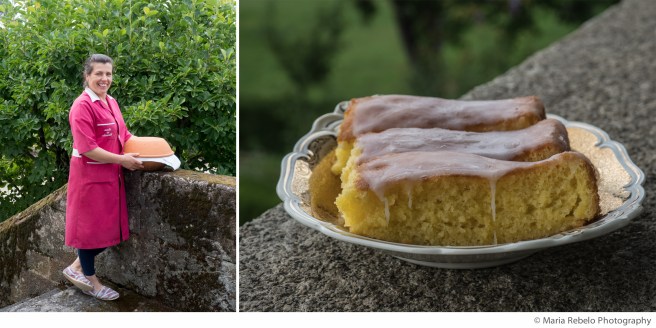
A pão de ló recipe

Pão-de-Ló QG

Fernanda Pinto is an extraordinary cook who knows how to make the most from the ingredients produced at Quinta de Guimarães. Every day at breakfast she offered us either “pão de ló” or “fatias de Resende.” Both desserts have the same base, a concoction of flour, sugar and eggs. Fatias are covered with a light sugar glaze that is sinfully delicious.

Fernanda’s versions of these traditional recipes are light and elegant. We asked her whether she would give us her pão de ló recipe to share with our readers and she agreed. What makes the cake airy and light is that the egg whites are beat separately from the yolks. Here’s the recipe:

Separate the whites and yolks of 12 eggs. Beat the whites until they are firm. Mix the yolks with 250 grams of sugar. Strain 100 grams of white flour though a fine sieve and add to the yolk mixture. Fold the whites with the yolks.  Place the batter in a cake pan lined with paper. Bake in the oven for 40 minutes at 200 degrees Centigrade (390 Fahrenheit),

This recipe produces a great pão de ló. But it does not compare with the original version because Fernanda uses three unique ingredients: the wonderful eggs laid by the chicken that roam the farm, a large cake pan with a round clay cover, and her magic touch.

Quinta de Guimarães is located at Lugar de Miguas, Sta. Marinha do Zézere, tel. 912 915 699. Click here for the quinta’s website.

Tranquility at Quinta de Guimarães

Quinta de Guimarães

The best way to experience the magic of the Douro valley is to sojourn at a local farm. It was this possibility that attracted us to Quinta de Guimarães, an estate that dates back to the year 1720. It offers rooms in an ancient manor house and in two beautifully restored country homes surrounded by vineyards.

We loved the tranquility of the quinta and the sumptuous meals that Fernanda Pinto, the property caretaker, prepares with produce from the farm. Breakfast includes country breads, homemade sausages and prociuttos, eggs from happy chicken, and traditional desserts. We enjoyed a wonderful dinner composed of spinach soup, baby goat with roasted potatoes, followed by the farm’s luscious fruit. The meal was accompanied by a bright “vinho verde” (slightly sparkling white wine) produced on the property under the label Cazas Novas.

A visit to Quinta de Guimarães is a journey to a place where time has stopped because it found perfection.

Quinta de Guimarães is located at Lugar de Miguas, Sta. Marinha do Zézere, tel. 912 915 699. Click here for the quinta’s website.


Dear chef Avelino

Composit Zélia-Edit

We are writing to thank you for the delicious food you have been cooking at Zélia in Bombarral since 1981. It’s hard to serve high-quality traditional food at affordable prices year after year. That is why so many chefs burn out and so many restaurants close. But you keep going, like a marathon runner, cheered by all the families that come to your restaurant to enjoy a great meal.

We first tried your cooking many years ago at the Bombarral wine fair. We had an amazing grilled rabbit on a magical Summer night under an ancient oak tree. Since then, we had lunch and dinner at Zélia many times. Your codfish, bathed in shimmering olive oil, surrounded by thinly-sliced fried potatoes and adorned by onions, pepper and tomato is irresistible. And the duck rice seasoned with a pinch of raisins and toasted pine nuts is the best we ever had.

Your ingredients are always excellent and everything you cook has a special touch. We like the fact that you remodeled the dining room but didn’t change the food, which is as great as always.

We wish you a long life, as wonderful as your cooking!

Restaurante Zélia is located at Rua dos Combatentes da Grande Guerra 9, Sanguinhal, Bombarral 2540-454, tel. 262 605 157.


Lunch with Dirk Niepoort

Niepoort Composit_

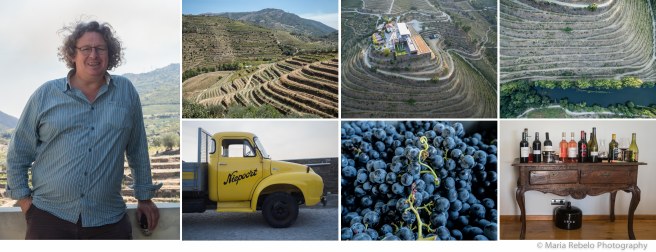
We got in touch with Dirk Niepoort, a legendary Douro valley wine maker, through a common friend. We asked Dirk whether we could come by Quinta de Nápoles to take some photographs. “Why don’t you come for lunch?” he replied. And so we did.

Dirk welcomed us to the dining room and started opening a few wine bottles. There were 20 people getting seated around the table. A few were Summer interns who came from afar to apprentice with Dirk. Others were people related to the wine business, enologists, producers, sommeliers of starred Michelin restaurants.

There were no speeches, Dirk circulated around the table sitting in different places so that he could talk to everybody. His demeanor is shy but his charisma is obvious. When he talks to someone, he makes them feel like they are the only people in the room.

The table was set with pataniscas (fried cod) and pasteis de massa tenra (turnovers) made with a sausage called alheira.  Dirk poured everybody some Redoma Reserva, his brilliant white wine made from 80-year old vines. Plates steaming with a hearty country soup were passed around. Soon our glasses were filled with an experimental “vinho verde” (green wine). We were still savoring its bright, lightly sparkling taste when another star white wine from the Niepoort stable arrived: the luxurious Coche.

When Dirk sat in our table corner, we asked him to explain his wine-making philosophy. Discussing wine with Dirk Niepoort is like playing chess with Gary Kasparov. Both are so many moves ahead that they are playing a different game. Most of the world is producing bolder wines with higher alcohol, more taste, deeper color. Dirk is doing the opposite. He wants to produce wines that are fresher, more aromatic, with less alcohol, less extraction and concentration. “Once we start drinking these lighter wines, we might find the old styles boring,” he says.

Dirk created a new project called Nat’cool to promote some of these new wines. He generously invited a few young wine makers to join this project. One of these wine makers, Luís Cândido Silva, was with us at lunch. Luis served his Primata, a wine that is easy to drink with bright acidity and only 9 percent alcohol.

Terrines of savory octopus rice filled the table as Dirk poured Blah, Blah, Blais a wine that is a testament to his generosity. Dirk gave Frederick Blais, a regular Summer intern from Canada, the opportunity to make this wine with old vines from one of the Niepoort’s estates!

A serra cheese started to circulate, accompanied by a wine with a tong-in-cheek name: Clos de Crappe. “It’s a technical disaster that worked out great,” Dirk said grinning.

Local pastries were served with an ice wine made by Dirk’s young daughter. She floated around the table like a fairy, serving her wine and enchanting everybody.

Finally, we tried two Niepoort port wines from 2005, a Late Bottled Vintage and a Colheita. These twin wines have different personalities but both share the richness and depth that only the Douro can produce.

It was time to say goodbye. We thanked Dirk for his generosity and walked towards the parking lot with the other guests. We have different professions, backgrounds and nationalities. But we all felt the same: we were descending from the mount Olympus of wine, where we had tasted nectars made for the gods.

Click here for the Niepoort wines website.

A Portuguese chair

Composit Chairs

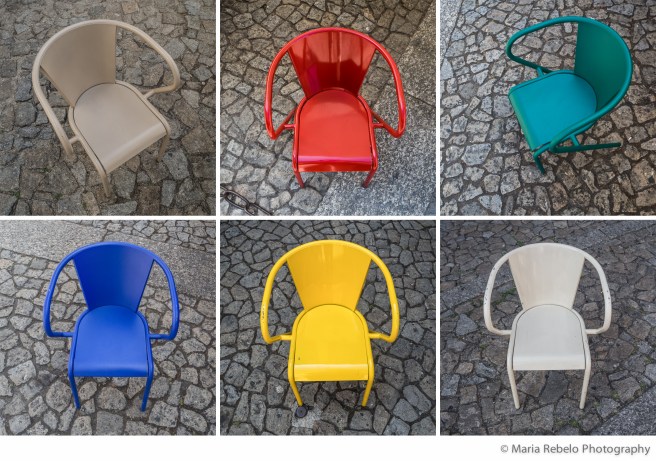
Late in the afternoon, groups of friends gather in cafés and esplanades all over Portugal to enjoy the last rays of sun and talk about their lives. They seat on metal chairs painted in bright colors that create a festive atmosphere.

These chairs were designed half a century ago by a craftsman called Gonçalo Rodrigues dos Santos. They are elegant but sturdy and can be stacked for storage. These virtues make them perfect pieces of urban furniture for enjoying leisure and celebrating friendships. If you visit Portugal be sure to try them!

The Gonçalo chair is produced by Arcalo. Click here for their web site.

Óbidos becomes a literary village

Óbidos Bookstores-Edit

It’s not like Óbidos needs any more attractions. This beautiful medieval town is a must-see destination in Portugal. Inside its castle walls live the echoes of an age of chivalry that is long gone.

Now that books are disappearing, their cellular fibers replaced by electric impulses, Óbidos has created unique bookstores in ancient spaces.

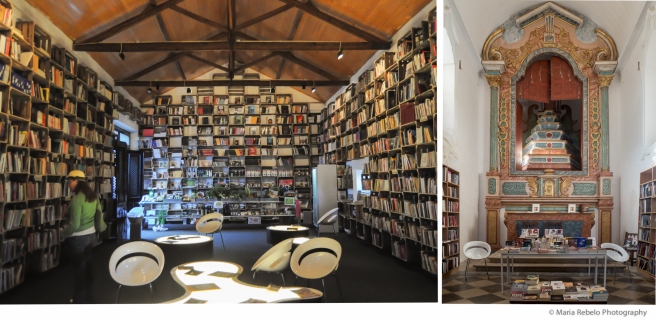
One of our favorites is Livraria do Mercado (the market bookstore). It occupies the wine cellar of an old manor house and doubles as an organic market. Here, the fruits of the land share the space with the fruits of the imagination, everything stored inside one thousand rustic wooden boxes.

Another favorite is Livraria Santiago which occupies a 12th century church. It is a peaceful place where books wait in silence for the readers who seek their blessings.

These bookstores transformed Óbidos into a literary village, a place where the thick castle walls protect the precious art of reading.

Click here to see the list of Óbidos bookstores.


The luxurious Dom Feijão

Dom Feijão

There are plenty of “tascas” in Lisbon, small informal restaurants that offer seasonal menus at low prices. But when locals want to have a nice meal with friends or family, they don’t go to a tasca. They prefer to pay a little bit more and eat at a neighborhood restaurant with better ingredients and service.

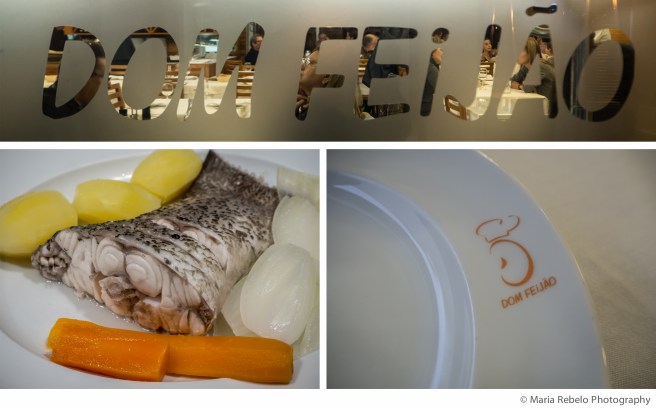
One of our favorite neighborhood restaurants in Lisbon is Dom Feijão (Sir Bean), a place with generous portions, modest prices and top-notch ingredients. What’s the catch? You have to be persistent to get a reservation or be prepared to wait for a table. The waiters don’t answer the reservations phone line when they’re very busy and they’re almost always very busy.

The restaurant is popular with families, on our last visit the place was full of grandparents, parents and children sharing the pleasures of the table.

Before we had time to open the menu, our waiter brought us some delicious fried marinated sardines and a plate of the same black-pork prosciutto they serve in heaven on special occasions.

We’d seen a large “sável,” a prized river fish, in the restaurant’s refrigerator so we asked the waiter whether we could order it. “Not today,” he replied “The sável has to be thinly sliced and marinated for a few hours. Sorry, but we cannot rush the preparation.”

We ordered instead poached cherne (sea bream). It was deliciously succulent, a reminder that when the ingredients are perfect, simple preparations are the best.

Next, we had grilled “secretos,” divine slices of fatty black pork. Two decades ago, these cuts of black pork were exported to Spain. Since then, the Portuguese have wised up and started consuming them. Exports suffered but our happiness boomed.

We ended the meal with some grilled codfish. The waiter asked what was our favorite part of the codfish so he could ask the chef to prepare it. Large tranches of codfish swimming with roasted potatoes in a sea of olive oil made our delights.

We told chef João Araújo how much we enjoyed the meal. “We’re a simple restaurant that serves traditional Portuguese food,” he said. “Our only luxury is the ingredients we use.”   This is, of course, the kind of luxury we fancy.

Dom Feijão is located near the posh Avenida de Roma at Largo Machado de Assis 7 D, tel. 21 846 4038. There’s a convenient paid garage underneath the restaurant. You can ask the waiter to validate your parking.

Extraordinary Portuguese tea

CháCamélia Composit

Camellias reign supreme in the gardens of the north of Portugal. They love the rainy, temperate climate and the slightly acidic soil. The first camellias were probably brought from China by Portuguese merchants five centuries ago. These merchants also brought back some leaves that, when infused in hot water, produced an extraordinary drink called tea.

Tea is made from the leaves of a camellia shrub called sinensis. If camellias grow so well in the north of Portugal, how come no one has tried to produce tea there in the last five centuries? The answer is that tea production requires great patience, there’s a five-year lag between the plantation and the first harvest. It also demands knowledge, dedication, and the humility to accept the whims of nature. These are the same traits necessary to produce port wine. Perhaps that is why Dirk Niepoort, whose family has traded port since 1842, and his wife Nina Gruntkowski had the courage to venture into tea production.

Knowing that Dirk and Nina share a passion for tea, a friend offered them a small tea shrub. They planted it in a cold corner of their garden in Oporto and made each other a promise. If the plant survived, they would try to produce tea in the north of Portugal. The plant thrived, so in 2011 Dirk and Nina imported 200 shrubs and planted them first in their garden in Oporto and then in one of the Niepoort properties, close to sea. This year they harvested the first leaves.

Nina took us on a tour of the lush plantation. She talks about her plants with great affection. “These are my babies,” she said with pride “they will have a very happy life.” The production process is entirely organic and the leaves are harvested manually. Haruyo san and Shigeru Marimoto, a couple who produces premium organic tea in Japan, offered Dirk and Nina technical assistance. Producing tea is as complex as producing wine. But while enologists have plenty of time to make adjustments to their wines, tea leaves are processed in just four nerve-wrecking hours right after the harvest.

We tasted several premium green teas produced by the Marimotos. Some are mixed with herbs and flowers produced in Portugal, such as lemongrass, rose petals, elder flowers, and lemon verbena. They offer a wide palate of floral, grassy and nutty flavors.

We then sampled one of Dirk and Nina’s experiments: oolong tea aged in port-wine barrels. It is a blend of east and west that is enticing and new.

Finally, Nina brought out a small can, took out some leaves and brewed one more cup of tea for us. “Try it,” she said, her eyes shining with excitement. “It is the first tea made in continental Portugal.”

We closed our eyes to sip the precious liquid. It does not taste like Chinese or Japanese tea. It has the understated elegance of a great port. And it marries the exuberance of the Douro valley with the melancholic aroma of the sea. Why did we have to wait five centuries to drink this Portuguese tea? Perhaps it was the time required to wait for someone like Dirk and Nina, someone with the audacity to forsake the ordinary to strive for the extraordinary.

Click here for the Chá Camélia web site.