The Lisbon Pousada

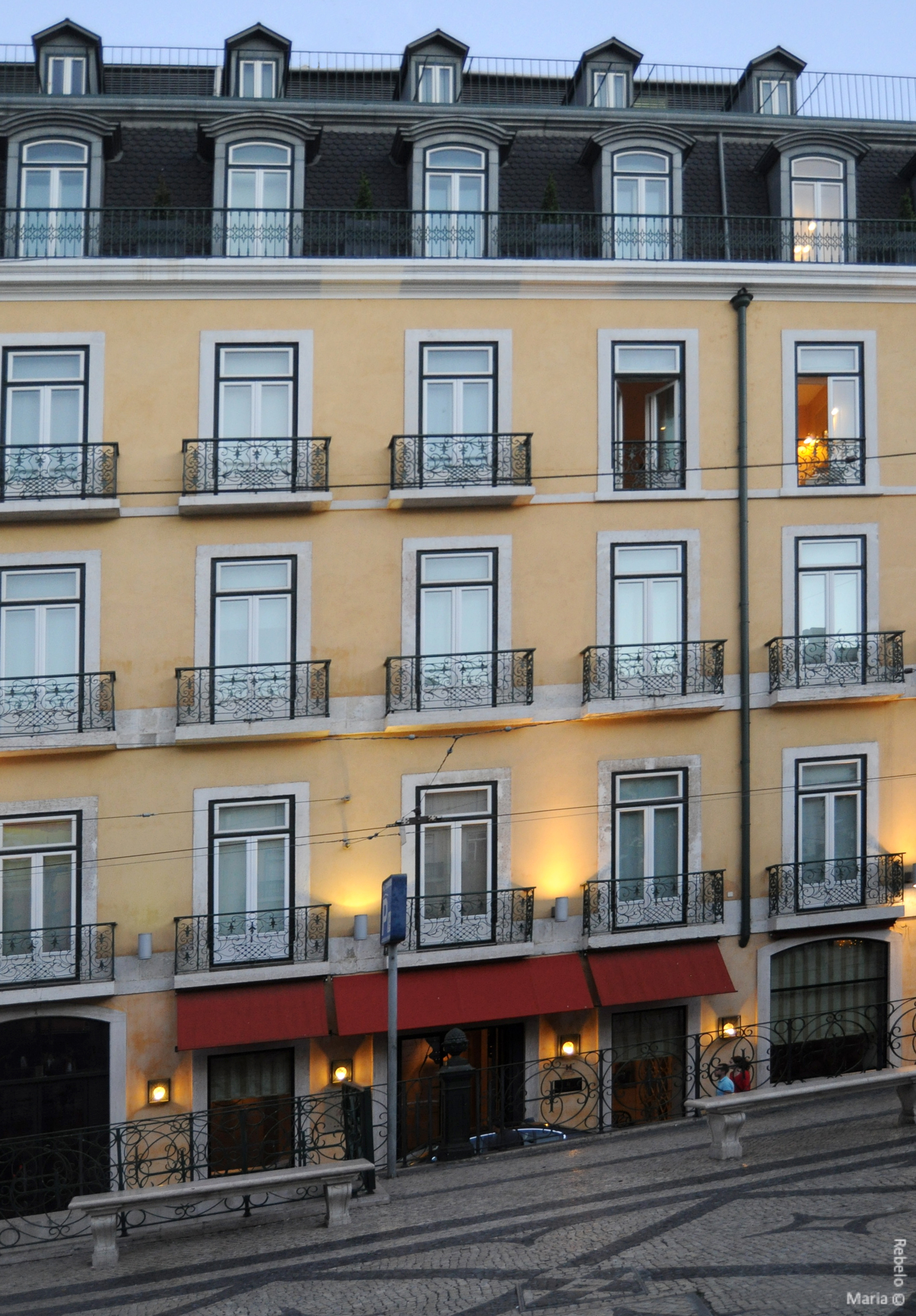
PousadaLisboaLisbon has a wonderful new historical hotel: the Lisbon Pousada, located in the old royal-palace courtyard known as Terreiro do Paço.

Until the middle of the 18th century, ministers, nobles and other power brokers constantly stamped the soil of this courtyard with their footprints. But, after the 1755 earthquake destroyed the royal palace, the king moved to Ajuda and the courtyard lost its illustrious traffic.

In the 20th century, Terreiro do Paço regained its status as the walkway of power. The new hotel occupies the Ministry of Internal Affairs building. It was here that Salazar, the man who ruled Portugal from 1926 to 1970, had his office.

The pousada is decorated with numerous historical artifacts, including models for many of the statues that adorn the city. The rooms are elegant and comfortable with windows that frame beautiful views of downtown Lisbon: stucco buildings, ancient tiles, pink roofs, the walls of St. Jorge’s castle, and the northern margin of the Tagus river. Salazar’s old office is now a spacious bedroom suite.

It is said that in stressful times, Salazar avoided the main entrance of the building, using instead a discreet back door. This back door is now closed. Surrounded by elegance and comfort, pampered by the hotel’s well-trained staff, stress is the last thing on the mind of the guests of the Lisbon Pousada.

The Lisbon Pousada is located at 31, Praça do Comércio, tel. 351 21 040 7640. Click here for the pousadas’ website and here for a large collection of photos of the hotel.

Relaxing in the Gerês pousada

Pousada do Gerês

If words could describe how great it is to stay at the Caniçadas pousada in Gerês, you would not need to drive up the Gerês mountain to find this hotel ensconced in the woods, overlooking the Cávado river. But even poets would have trouble putting into words the feeling of starting the day sitting in the hotel’s veranda, our eyes feasting on the spectacular vistas.

The origins of the hotel go back to 1951, when temporary accommodations were built for a group of engineers working on a dam on the Cávado river. Naturally, the engineers chose a location with an amazing view. In 1968, the building was converted into a hotel and an annex was built to house the chauffeurs of the wealthy patrons who came to Gerês to recharge their energies.

The staff of the pousada gave us wonderful recommendations for what to do in Gerês: trails to hike, rivers to swim, horses to ride, traditional villages to visit, and culinary specialties to try.

We greatly enjoyed these activities, but we also loved returning to the pousada at the end of the day to sit in the veranda and watch the sun bid farewell to the Gerês mountain.

The Caniçadas hotel is part of a network of hotels called pousadas. Click here for the pousadas’ website and here for a large collection of photos of the hotel.

A pink palace in the Algarve

358 - Pousada de Estói - @mariarebelophotography.comFIt takes a long time to build a beautiful palace. An Algarve aristocrat started in 1840 to build the Estoi palace in an estate near Faro. When he died, his son took over. But by 1893, the building was still unfinished and seemed destined to become a decorative ruin. It was then that a wealthy landowner bought the palace and spent a fortune on its completion. The sumptuous inauguration took place in May 1909. Decades later, the palace was abandoned.

In 2009, a century after its inauguration, Estoi opened once again, this time as a luxury historical hotel. It is a place out of a fairytale, its opulent salons and elegant gardens restored to their original glory.

Our stay at Estoi was an extraordinary experience. Some days, we relaxed by the pool and spent time admiring the statues, fountains and myriad of architectural details. Other days, we went to the beach and enjoyed the pleasures of the sea even more than usual. For we knew that when the day was done, we would have our pink palace to return to.

The Estoi palace is part of a network of historical hotels called Pousadas. Click here for the Pousadas’ website and here to see a large collection of photos of the palace.

The Óbidos Pousada

Obidos Composit The first king of Portugal, Dom Afonso Henriques, laid siege to the Óbidos castle for two months, but the moorish population resisted his attack. One moonless night, a beautiful lady came down from the castle to speak to the king. She told him that, even though she lived in the castle, she was not moorish. And that she had a recurrent dream she had to fulfill. The king was to attack the castle’s main door. At the same time, he would send a small group of soldiers to the back. There, the lady would leave an open door to let them in. Their surprise attach would secure the victory of the Portuguese troops.

The king of Portugal feared falling into a trap. But something about the lady’s demeanor convinced him to adopt her plan. The next day, the castle back door was indeed open and the Portuguese conquered Óbidos. The king looked everywhere for the beautiful lady, but she had vanished.

The castle of Óbidos was converted into a beautiful historical hotel. After entering though the front door, the one the king attacked, you find a romantic place with wonderful views of the countryside. One of the best views is just outside a door painted red. It is the door the lady left open.

In the dining room two beautiful windows, the sun and moon windows, give us a choice between seeing the sunset and the moonrise. This choice between astral spectacles is one of the many enchanting details that makes a stay at the pousada so memorable.

The pousada is the perfect place to stay at Óbidos. After all, who wouldn’t want to be treated like royalty in a medieval town?

Click here for the Pousadas’ website and here for more photos of the Óbidos Pousada.

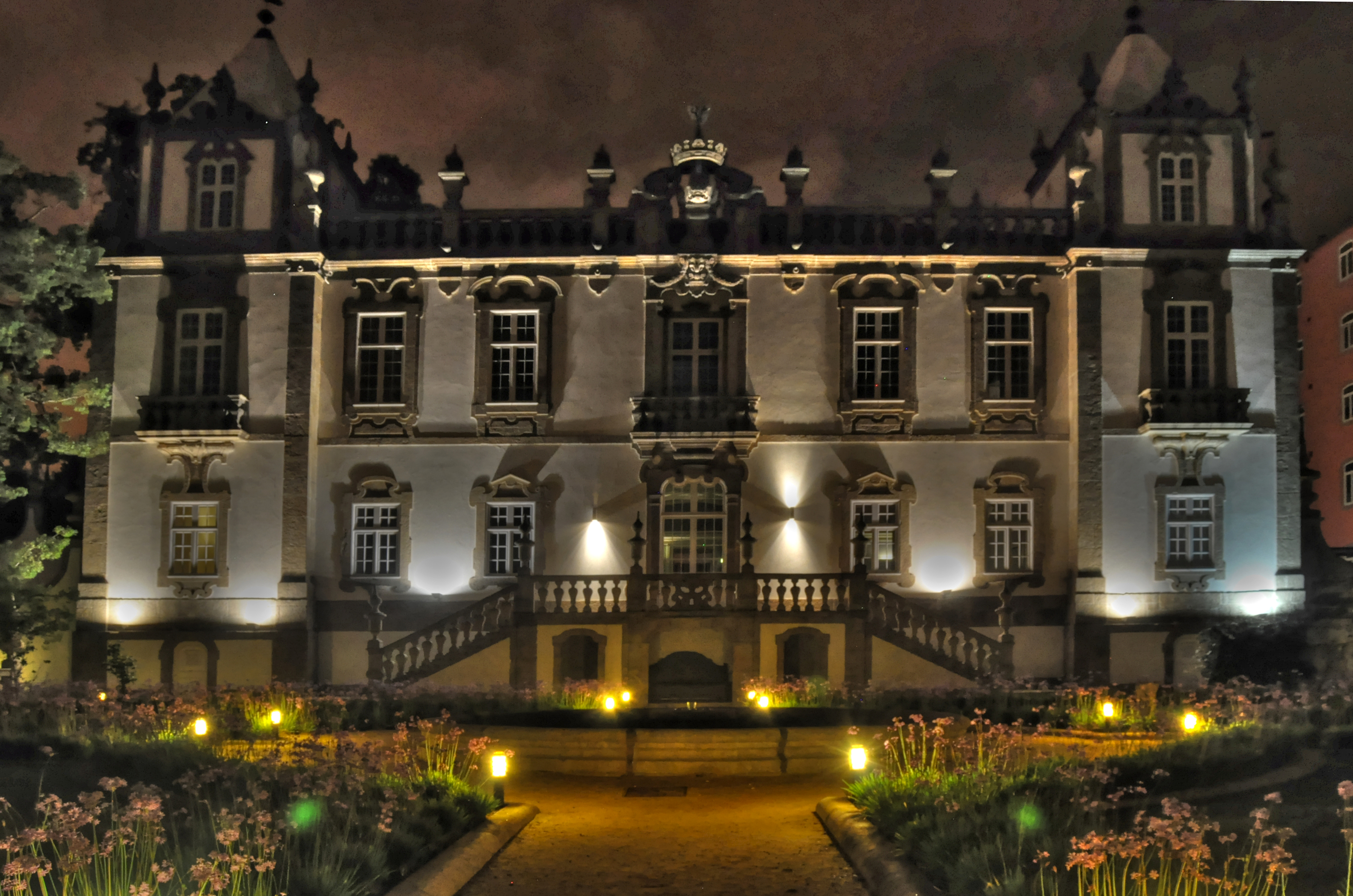
The Seteais palace

The Seteais Palace, Rui Barreiros Duarte, ink on paper, 2014.

Seteais means seven sighs, a name inspired, according to legend, by the romance between a Portuguese noble and a Moorish princess.

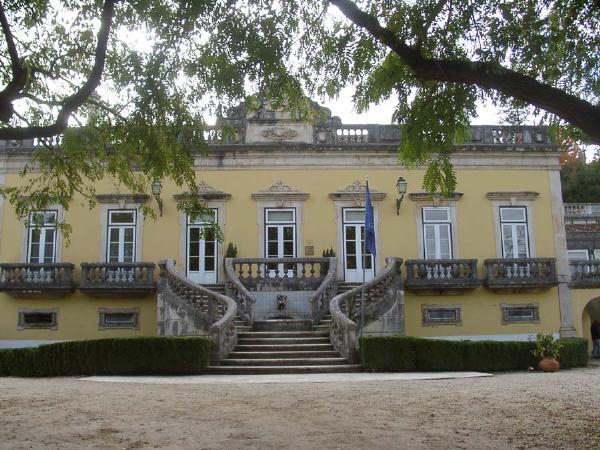
The Seteais palace was built in Sintra in 1787 by the Dutch consul and later sold to the wealthy Marquis of Marialva.

In 1954, the palace was converted into a luxury hotel. Booking a room at Seteais guarantees you’ll have a memorable experience. If you don’t stay at the hotel, you can still experience its unique atmosphere by visiting the elegant bar for a glass of white port before dinner.

In 1802, the Marquis of Marialva invited the Prince Regent, John IV and his wife for a visit. To celebrate the occasion, the Marquis built an archway decorated with busts of the royals. A Latin inscription praises the prince for his wisdom and prudence. No one could guess that five years later the Portuguese royal family would flee to Brazil to escape Napoleon’s troops.

The echoes of these twists and turns of Portuguese history have long faded. What remains, is one of the most romantic places in the world.

 Click here to see the Seteais Palace website.

On top of the world in Marvão

Marvão composit @

Some people climb the Kilimanjaro, others struggle to conquer the Himalayas. But you can feel on top of the world without hiring sherpas or buying oxygen masks. Simply drive to Marvão, a village on the São Mamede mountain, 834 km above sea level.

We spent the morning exploring the ancient castle and walking the beautiful narrow streets. After working up an healthy appetite, we walked to the Pousada for lunch. The view from the dining room is absolutely stunning.

The Pousada has some wonderful signature dishes, including codfish Santa Maria, partridge with 14 (partridge cooked with 14 ingredients), and shrimp Alentejo style. We asked chef Conceição Lourenço why codfish Santa Maria tastes so wonderfully unique. Her eyes smiled brightly for this is one of the culinary secrets she has guarded in her three decades as a chef. She confided that: “the codfish is cooked with flour made from a local mushroom; but that’s all I can say.”

We stayed for quite a while at the table mesmerized by the view. Seen from Marvão, the world below looks harmonious and the skies above divine.


Click here for the Pousadas’ website and here for more photos of Marvão.

A classic Alentejo recipe

Cozinheira

The dining room was full but Claudia Santiago, the chef at Flor da Rosa, kept her cool. She runs the kitchen like an orchestra conductor, making sure that the rhythm is just right and that all the subtleties of the cuisine of Alentejo are reflected on the plate.

After the lunch service, we told Claudia how much we liked her cooking and asked whether she had any culinary secrets. She confessed that: “we have an amazing ingredient which are the sausages made from Alentejo black pork; everything they touch turns to culinary gold.”

We asked Claudia whether she would share a recipe with our readers. She described several classic desserts but they were all too complex. So, we opted for the marinated rabbit recipe which is simple but delicious. Here it is.

Claudia Santiago’s marinated rabbit (“coelho de escabeche”)

Cook the rabbit in a rich bouillon made with parsley, mint, cloves, and carrots. Then, grill it over charcoal for a few minutes to intensify the flavor of the meat. Shred the meat. To make the marinade, fry minced onion and garlic with a bay leaf in olive oil. Add vinegar. Combine with the rabbit and let it marinade over night. Decorate with peppers and carrots and serve.

Enjoying this dish accompanied by Alentejo wine in the elegant dining room of Flor de Rosa, made us feel like lords of the manor.

Click here for the Pousadas’ website and here for more photos of Flor da Rosa.

The serene beauty of Flor da Rosa

DCIM102GOPRO

On the way to Flor da Rosa, a medieval castle converted into an historical hotel, we traveled through small villages lost in time and fields of cork and olive trees. Nothing prepared us for the sight of the castle standing proudly on the Alentejo plain.

The hotel has 24 rooms with beautiful views of the countryside and a swimming pool that overlooks the castle. The space is designed to offer guests great privacy. And the staff is so attentive that they made us feel like royalty.

The next morning, we woke up in luxurious silence, far from the cacophony of modern life. We relaxed by the pool until it was time for lunch. We then headed to the restaurant where we tried some wonderful renditions of the local gastronomy: purslane soup, fish in coriander sauce, and marinated rabbit. These courses were followed by cheese from Nisa and Serpa. Our taste buds were celebrating these amazing gifts from the shepherds of Alentejo when a sampling of desserts arrived. They had uncommon names like “sericaia” and “encharcada,” and rightly so for everyday words cannot begin to describe these sweet creations.

We had a great time sightseeing around Crato, the village where the hotel is located. In the late afternoon, the church bell reminded us that the sun would soon retire and that it was time to return to the castle. As we crossed the vaulted arches, we heard birds singing. These are the same sounds that were heard in the castle during the middle ages. Flor da Rosa is a precious time capsule that preserves the beauty of an age gone by.

Click here for the Pousadas’ website and here for more photos of Flor da Rosa.

A magical Summer soup

Composit 3F©

When we sat down for dinner in the beautiful esplanade of the Arraiolos Pousada, we expected good food and attentive service. We got much more than that. We were served a series of delicious dishes that harmonized perfectly with Alentejo wine and made us feel we were at the right place, at the right time.

The dinner started with two soups, a Summer cucumber soup, followed by a tomato soup with quail egg. We then had “migas” (an Alentejo specialty made with bread) with wild asparagus and lamb grilled with rosemary. The grand finale was a sampling of traditional convent desserts updated with great refinement.

We congratulated the chef, Elizabete Velez, who told us that she learned to cook with her mother and grandmother in a small village in Alentejo. She offered to give us the recipe for her delicious Summer cucumber soup because it is very easy to make. Here it is.

Elizabete Velez’s Summer cucumber soup

Get the very best cucumbers you can find. Peel them (this step is key because the peel is very bitter) and remove their seeds. Dice the cucumbers, season them carefully with salt, pepper, and great olive oil. Puree the mixture in a blender. Pour into small bowls, placing one or two ice cubes in each bowl. Garnish with toasted slivered almonds, small strips of cucumber peel, and Portuguese sausage (preferably from Alentejo!).

Imagine eating this soup in a warm Summer evening, as the sun sets over a grove of olive trees and the stars wait their turn to shine on the Arraiolos castle. It’s magical!

Click here for the Pousadas’ website and here for more photos of the Arraiolos Pousada.