An ancient esplanade

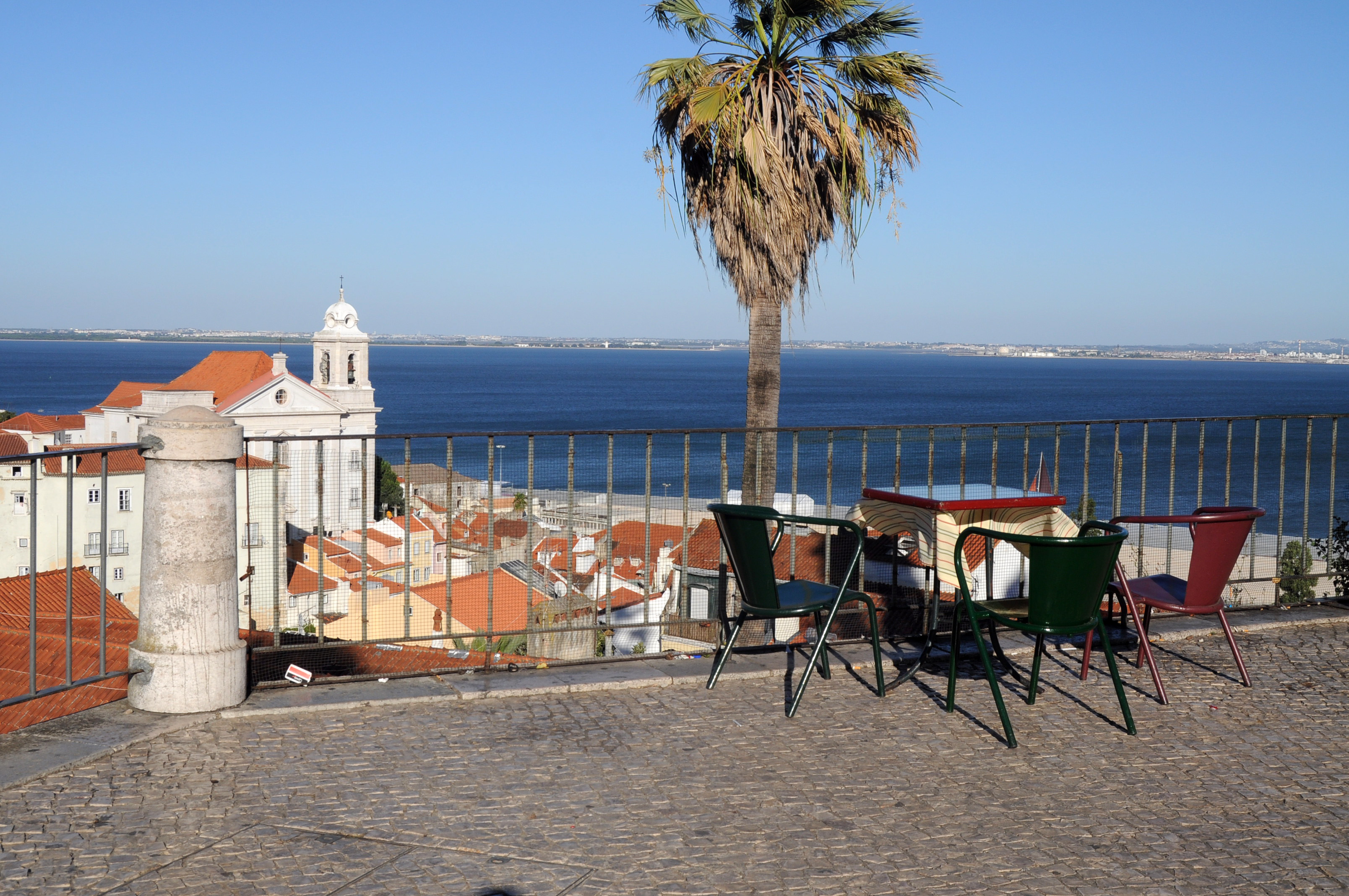
Being a tourist in Alfama, the neighborhood of St. Jorge’s castle in Lisbon, can be exhausting. After a few hours of walking up and down the narrow streets, we deserve to stop for a refreshment. There’s no better place to enjoy a cold, draft beer than the esplanade at Cerca Moura. That’s the name of the defensive wall first built by the Visigoths and then rebuilt by the Moors. Here you have the same same view of the river Tagus that was once enjoyed by Romans, Moors, Suevi, and Visigoths. But, unlike them, you don’t have to be on the lookout for hoards of invaders.

Cerca Moura, Largo das Portas do Sol 4, Lisbon, tel. 21-887-4859.

Waiting in Cascais

Cascais_75F

Some visitors like to stay in Lisbon to have the excitement of the capital city on their doorstep. Others prefer the seclusion of Sintra with its romantic palaces and lush vegetation.

If you’re visiting the Lisbon region, there is a third option: you can stay in Cascais, a picturesque beach resort, 30 km north of the capital. From Cascais you can take the train to Lisbon, following a scenic route along the Tagus river. You can also rent a car and visit Sintra, Colares, and Cabo da Roca.

The great writer Samuel Beckett vacationed in Cascais in the late 1960s and early 1970s. Beckett stayed at the Cidadela de Cascais, an old fort converted into a hotel favored by Portuguese writers. This hotel has recently been beautifully renovated to add modern comforts to its historical location and expansive ocean views.

Once Beckett got to Cidadela, he simply stayed there, enjoying the moments when the sea paints the sky with white mist. It’s not surprising that the author of a play about waiting in vain knew to stay still when beauty arrives.

The Cidadela de Cascais is located on Avenida Dom Carlos I, Cascais, tel. 214814300. This hotel is part of a network of historical hotels called Pousadas. Click here for our post on the Pousadas and here for the Pousadas web site.

Humble art

LisboaCacilheiro

Art is made of constraints. When architect Frank Gehry received a commission to build whatever he wanted, he turned it down. Sometimes, artists create their own constraints. The French writer George Perec wrote a 300-page novel, “La Disparition,” without using the letter “e.”

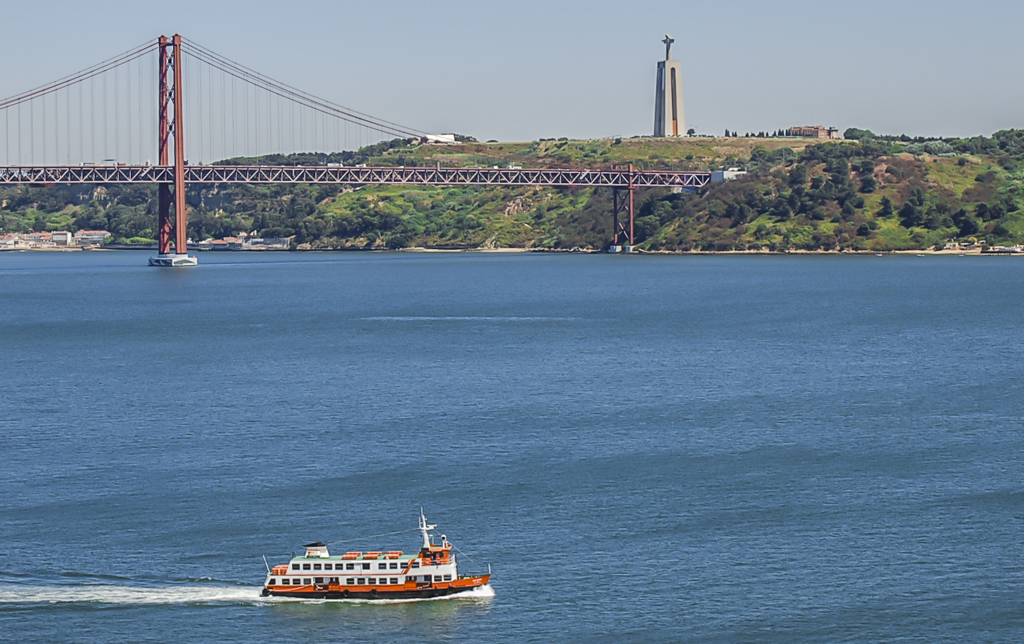
Other times, circumstances dictate the constraints. When artist Joana Vasconcelos was invited to represent Portugal in the Venice Biennale, the problem was that Portugal does not have a permanent pavilion at the fair. The artist’s solution was to use a ferry boat that was about to be dismantled both as a floating pavilion and exhibition piece. So, after spending a lifetime between the margins of the Tagus river, this humble boat has become a work of art!

The ferry boats that cross the river Tagus are called “cacilheiros.” They’re a great, inexpensive way to travel on the Tagus. Click here to see their schedule.

A bohemian hotel

HotelEstrela

If you’re tired of boring, conventional hotels, the Hotel da Estrela might be just the place for you. It is a former school transformed into a bohemian boutique hotel with a great vibe and lots of charm.

The hotel is located in the quiet Campo de Ourique neighborhood. But, when you’re ready for sight seeing, all you have to do is board the famous tram 28 which will take you to Rossio, Chiado, or St. Jorge’s castle.

Choosing where to eat when you come back is easy. Around the corner, you have a great restaurant run by chef Vitor Sobral called Tasca da Esquina, (which makes sense, since “esquina” means corner).

But choosing where to have dessert is a more complex issue. The hotel serves a wonderful “pão de ló,” sugar, eggs and flour transformed into pure bliss. Nearby, you have Pastelaria Aloma, which won the prize for the best “pastel de nata” in Lisbon two years in a row. And then there’s a tiny store that serves the world’s best chocolate cake!

The hotel has a nice garden where you can eat a picnic prepared by the hotel’s restaurant. It’s the perfect place to woo someone you love. If you need inspiration for what to say, just visit the nearby house where the great poet Fernando Pessoa lived. It works every time!

The Hotel da Estrela is located on Rua Saraiva de Carvalho 35,  Lisbon, tel. 211 900 10; click here for the hotel’s web site. Click here and here for more information on Tasca da Esquina and Cervejaria da Esquina, respectively. For information on the life-changing best chocolate cake in the world click here. Pastelaria Aloma is on Rua Francisco Metrass 67, Lisbon, tel. 213 963 797. The Fernando Pessoa house is on Rua Coelho da Rocha, 16, Lisbon. Click here for their web site.

Top 3 Lisbon tourist sites

Lisboa_116F
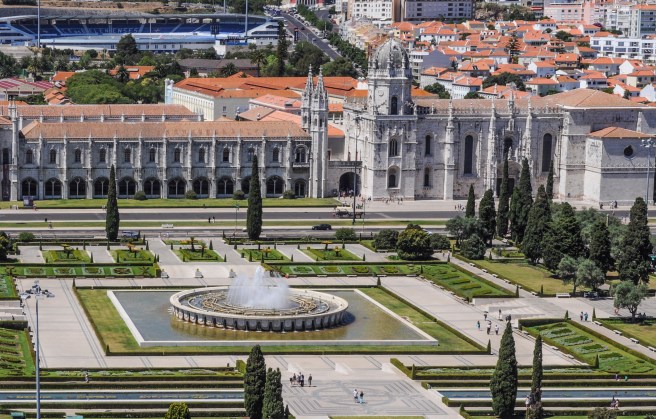
Jerónimos monastery, Maria Rebelo, digital print image, 2012.

Marie Rattazzi, a grandniece of Napoleon, was a beautiful socialite. She married an Italian prime minister and was friends with Alexander Dumas and Victor Hugo. The books she wrote about her travels give us a unique glimpse into the life of 19th century European nobility.

When Rattazzi’s “Portugal at a Glance” was published in 1880, the Portuguese complained that it was full of errors and misconceptions. But her list of favorite Lisbon sites stands the test of time. Here it is:

1) The Terreiro do Paço, bathed by the waters of the Tagus river. […] Yes, the Tagus is truly beautiful and I admire it with all the sincerity of my soul. […] It is vast, with spacious, luminous horizons and one of the world’s most splendid harbors.

2) The Rossio, a very beautiful plaza, the busiest in Lisbon.

3) The Tower of Belem and the Jerónimos monastery. The Tower of Belém has a square form flanked by turrets, watchtowers, oculi, lancet windows, and sculptured balconies. Its pure Gothic architecture produces an admirable effect. Near the tower rises the ancient Jerónimos monastery. The main entrance and the facade are one of the most beautiful examples of the opulent Gothic style. […] This remarkable monument was built in Restelo, the beach from where Vasco da Gama sailed to India. The convent, contiguous to the church, is immense. […] The Arab-style cloister has sculptured laces so perfect and beautiful that I would gladly spend consecutive days in contemplative admiration. It is wonderful!

If you’re in Lisbon for a short visit, you’ll be well served by these timeless recommendations.

Portuguese zen

Bola de Berlim

A “bola de Berlim” (Berlim ball) is deliciously simple: fried dough filled with pastry cream and coated with sugar. How can we enjoy this treat in an era of constant calorie counting?

Here’s the strategy. Do you know those times when we’re annoyed by the small predicaments of life? We’re waiting in an endless line, lock our keys inside the car, step on a puddle of oil, or lose our umbrella as it starts to rain. Instead of getting frustrated, we smile and think: we earned a bola de Berlim!

We rush to a pastry store and ask without a trace of guilt: “uma bola de Berlim, por favor.” We then enjoy the bola for what it really is: a necessary moment of zen.

This Bola de Berlim is from Tartine, a wonderful new bakery in Chiado where you can enjoy breakfast, brunch and other light meals. Tartine is located on Rua Serpa Pinto, 15, Lisbon, tel. 213429108. Click here for their website.

The queen’s in the palace

JV_205-Edit

Her grandfather, who worked in an antique shop, believed that it takes several generations to create a great artist. Maybe this belief was the point of departure for Joana Vasconcelos, who often draws inspiration from age-old artisan techniques. Some of her pieces have a colossal scale, shoes built with pots and pans, giant wrought-iron teapots, towers fashioned out of champagne bottles. But she also makes small, whimsical objects.

In 2012, the Palace of Versailles invited Vasconcelos to showcase her work. The artist filled the palace with glamorous objects made of humble materials: feathered helicopters, ceramic lobsters, giant fabric sculptures, outsize hearts built with plastic cutlery. She dedicated the exhibition to the Portuguese women who work in Paris as concierges.

From March 23 to August 25, Vasconcelos shows her work in a perfect setting: the Ajuda royal palace in Lisbon. Portugal abolished the monarchy in 1910. But, in the arts, Joana Vasconcelos is our reigning queen.

Click here to visit Joana Vasconcelos’ web site. You can see her exhibition at Ajuda from 10 am to 7 pm every day except on Wednesdays. On Saturday the exhibition stays open until 9 pm. Click here for more information.

Portuguese fast food

H3

Portuguese cuisine is definitely slow food. You have to wait for the fish to grill, the clams to open, the meat to roast, or the shrimp to cook. If you’re in a hurry, Portuguese cafés offer a wide array of finger foods to eat on the go: tasty codfish cakes (bolos de bacalhau), delicious small pies (empadas), crunchy paninis (tostas mistas), and much more.

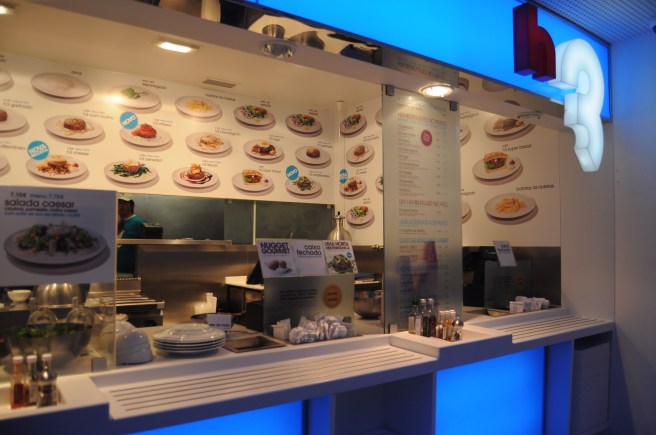
But, if you’re in need of something quick and more substantial, try a Portuguese hamburger chain called H3. They cook to order delicious hamburgers made with great ingredients. Start with the wonderful “croquetes de alheira” as a appetizer. Then, choose one of the many burger configurations, with toppings ranging from mushrooms to foie gras. You’ll see why this fast-food chain is growing so fast.

Click here for the H3 website (choose “onde” to see a list of locations). 

Street art in Lisbon

Maria Keil
Maria Keil’s Fisherman, Maria Rebelo, digital print image, 2012.

The most beautiful tiles in Lisbon are not in majestic palaces or soaring cathedrals. They decorate humble subway tunnels and ordinary streets like Infante Santo.

Keil do Amaral, the architect who designed the subway in the late 1950s, was dismayed that there were no funds budgeted to cover the bleak cement walls. His wife, the painter Maria Keil, suggested the use of inexpensive tiles and offered to design them for free.

Keil filled the subway with elegant modernist tiles that brought the art of tile making into the 20th century. She continued, throughout her life, to dress the walls of the city with tiles that make Lisbon feel young and pretty. If you’re visiting the capital, here’s a challenge for you: how many of Maria Keil murals can you find?

A friendly restaurant

Salsa&Coentros

The Portuguese do not like to divulge their favorite neighborhood restaurants, so we’re violating social norms by telling you about Salsa & Coentros (parsley and coriander). It is a delightful restaurant in Lisbon’s Alvalade neighborhood which serves food from the Alentejo and Trás-os-Montes provinces.

Dining at Salsa & Coentros is like visiting a friend who makes wonderful meals with local ingredients such as míscaros (wild mushrooms), cação (dogfish), partridges, wild asparagus, black pig, and fresh octopus.

If you become a regular visitor to Portugal, you’re likely to meet friends who are great home cooks. Until then, you can enjoy the traditional cuisine of Portugal at Salsa & Coentros.

Salsa e Coentros is located at Rua Coronel Marques Leitão, n. 12, Lisbon. Tel. 218410990.