Two columns

The writer Christopher Hitchins summarized his first impressions of Lisbon with the words, “Mediterranean though it can feel, Portugal is the only European country that has the Atlantic Ocean lapping around in its capital city.’’

We can sense the energy of the Atlantic on the iconic Cais das Colunas, a quay adorned by two columns in Terreiro do Paço. The undulation of the Tagus river echoes the waves of the ocean beyond. The columns mark Portugal as the point of departure and the sea as our destiny.

Oporto smugness

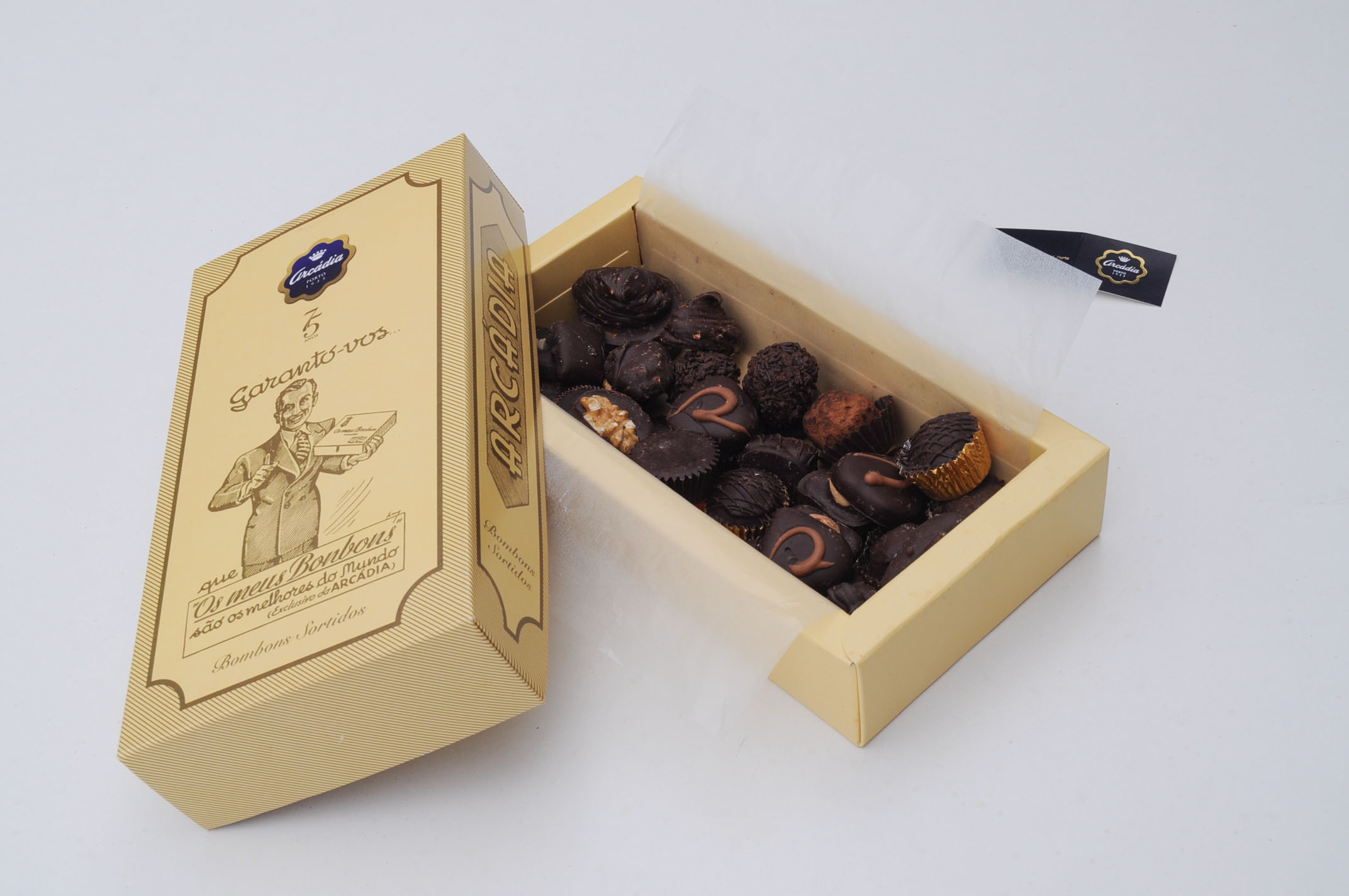
Oporto residents have been smug since 1933. That’s the year when Arcadia, a wonderful artisanal chocolate maker, opened its doors in that northern city. In France, chocolatiers compete for the title of Meilleur Ouvrier de France and the winners receive plenty of fame and recognition. But these are not the ways of Portugal, where we often keep quiet about our great things. So, Arcadia remained under the radar for decades.

In 2010, Arcadia started opening stores outside of Oporto so the rest of the country could finally find out what they’d been missing. There’s a lot to catch up with, from dark chocolate made with São Tomé cocoa, to port wine bonbons, beautiful chocolate roses, and delicious “cat tongues.” No wonder Oporto residents were so smug!

Arcádia, Rua do Almada, 63, Porto, tel. 22 200 15 18, Av. de Roma 14D, Lisboa, tel. 21 840 8670, email online@arcadia.pt. Click here for the Arcadia website. You can also buy Arcadia chocolates at Portfolio, a store in the  Lisbon airport. Click here for their website.

The resilient beauty of Lisbon

On November 1, 1755, Lisbon woke up with the rumble of a devastating earthquake. By the end of the day the city was covered with ashes and rubble, stripped of its magnificent buildings and opulent commerce.

What was left? In the words of Alfredo Mesquita: “There was still the Tagus river, blue and bewitching, cloaked in velvet by the crystal clear sky which is studded with stars by night and gilded with sunlight by day. And the noble, melancholic majesty with which the city reclines, its feet bathing in the waters, elegant and regal, on the throne of its seven hills.”

Alfredo Mesquita, Lisboa, Empreza da História de Portugal, Livraria Moderna, 1903.

Contemporary art in Cascais

If you’re interested in contemporary art, be sure to visit the Cascais museum devoted to the Portuguese painter Paula Rego. Her work is housed in a striking building designed by Eduardo Souto de Moura, a Portuguese architect who received the Pritzker prize in 2011. Rego uses ordinary faces, objects, and landscapes from Portugal to paint unusual scenes that challenge visual and social conventions.

Rossio’s wild memories

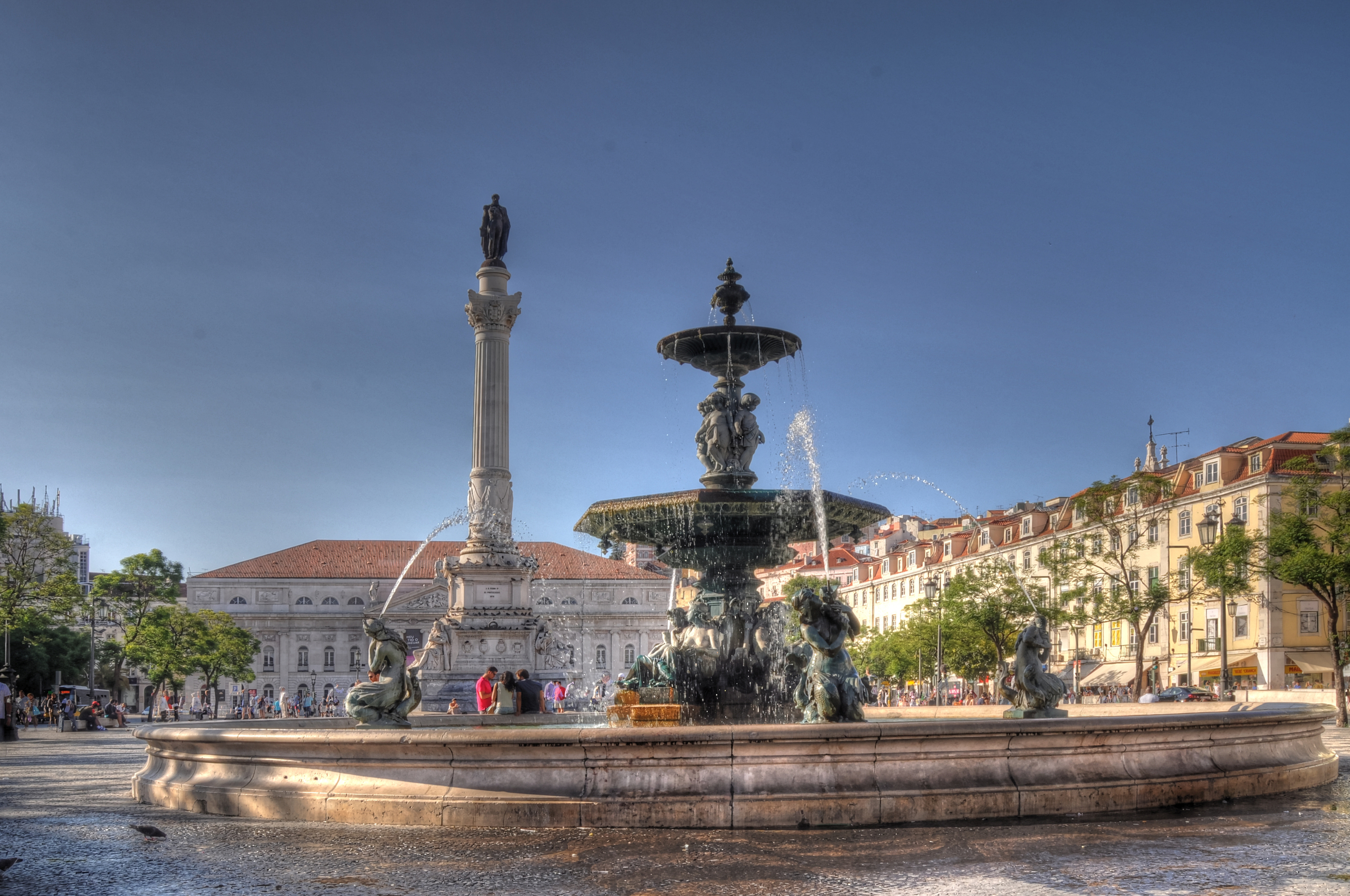
Rossio, Maria José Rebelo, digital print image, 2012.

Rossio, one of Lisbon’s main plazas, is an aristocratic lady who has seen it all: war and peace, prosperity and poverty. Bullfights were once staged in the middle of the square. In 1515, King Manuel arranged a duel in Terreiro do Paço between an elephant and a rhinoceros. At the sight of its armored opponent, the elephant panicked, broke its enclosure, and fled toward Rossio.

Even its monuments have improbable histories. The statue of D. Pedro IV, King of Portugal and Emperor of Brazil, was inaugurated by his daughter, D. Maria II, but the monument remained unfinished for fourteen years. Finally, in 1867, a tall column was erected. A statue of Emperor Maximilian happened to be in Lisbon in transit to Mexico when news arrived that he had been shot. Rumor has it that the statue was bought at a discount and used in Rossio.  It was a fine way to save money, since all emperors look alike atop a high column.


In search of the muses

Martinho da Arcada, Maria José Rebelo, monochrome digital print image, 2012.

Martinho da Arcada, a café in Terreiro do Paço, is a time capsule. It shows us what Lisbon cafés looked like in the first part of the 20th century. It is an austere place and, yet, it was here that the poet Fernando Pessoa wrote some of the best poetry in the Portuguese language.

Do the muses still gather at Martinho da Arcada, waiting to whisper their rhymes to those willing to listen? There’s only one way to find out. Take a pen and a pad of paper, sit down at one of the tables, order some coffee, and watch what happens.

Portugal’s navigators

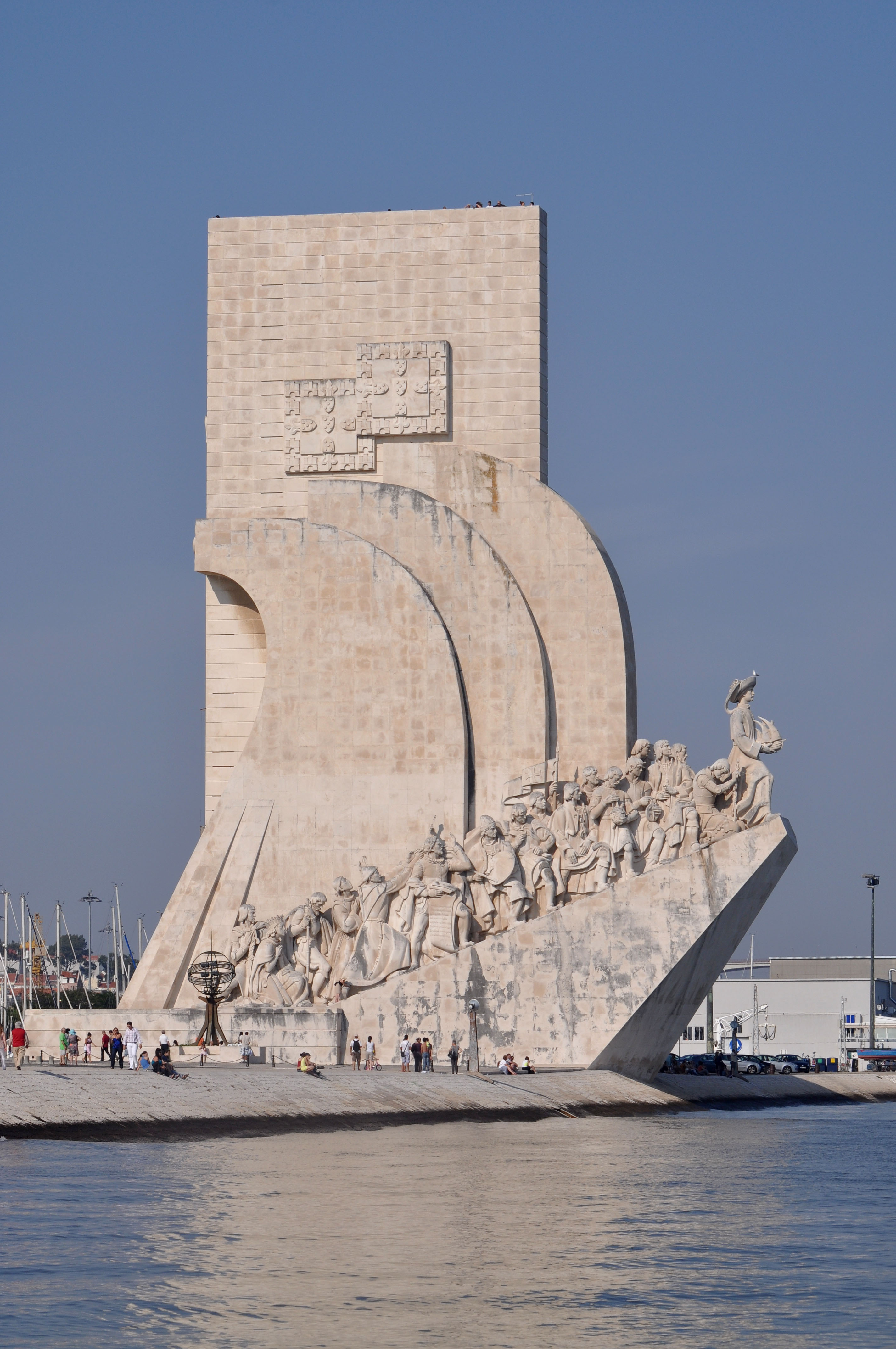
The centerpiece of the 1940 Portuguese World Fair was a large plaster sculpture celebrating Portugal’s age of discovery. Two decades later, this sculpture was rebuilt in cement and stone. It has a terrace on top that you can reach by elevator. It is well worth the climb to enjoy the magnificent view of Lisbon.

The monument is shaped like a ship prowl. Both sides are crowded with statues of monarchs, sailors, scientists, missionaries, writers, and artists. They’re all jostling for a good position on the narrow decks, thinking that, if they’re going to stand still until the end of time, they might as well get a nice view of the Tagus river.

Prince Henry the Navigator secured the prime spot. He stands right in front of the monument with a stern look on his face. Some say that he’s thinking about the perils that Portuguese explorers had to endure. But a more popular theory is that he’s simply afraid of being pushed into the river. Despite his nautical fame, Prince Henry never learned to swim.

The cape at the end of the world

When the Greek geographer Ptolomeu mapped the world in 2 A.C., Cabo da Roca, Europe’s most western point, was the end of the world. Today we know that the world does not end here. But the cape, located 42 km northwest of Lisbon, is still very much worth visiting. It is a place of stunning beauty created by the warmth of the sun, the power of the wind, and the vastness of the ocean.

Sailing on the Tagus river

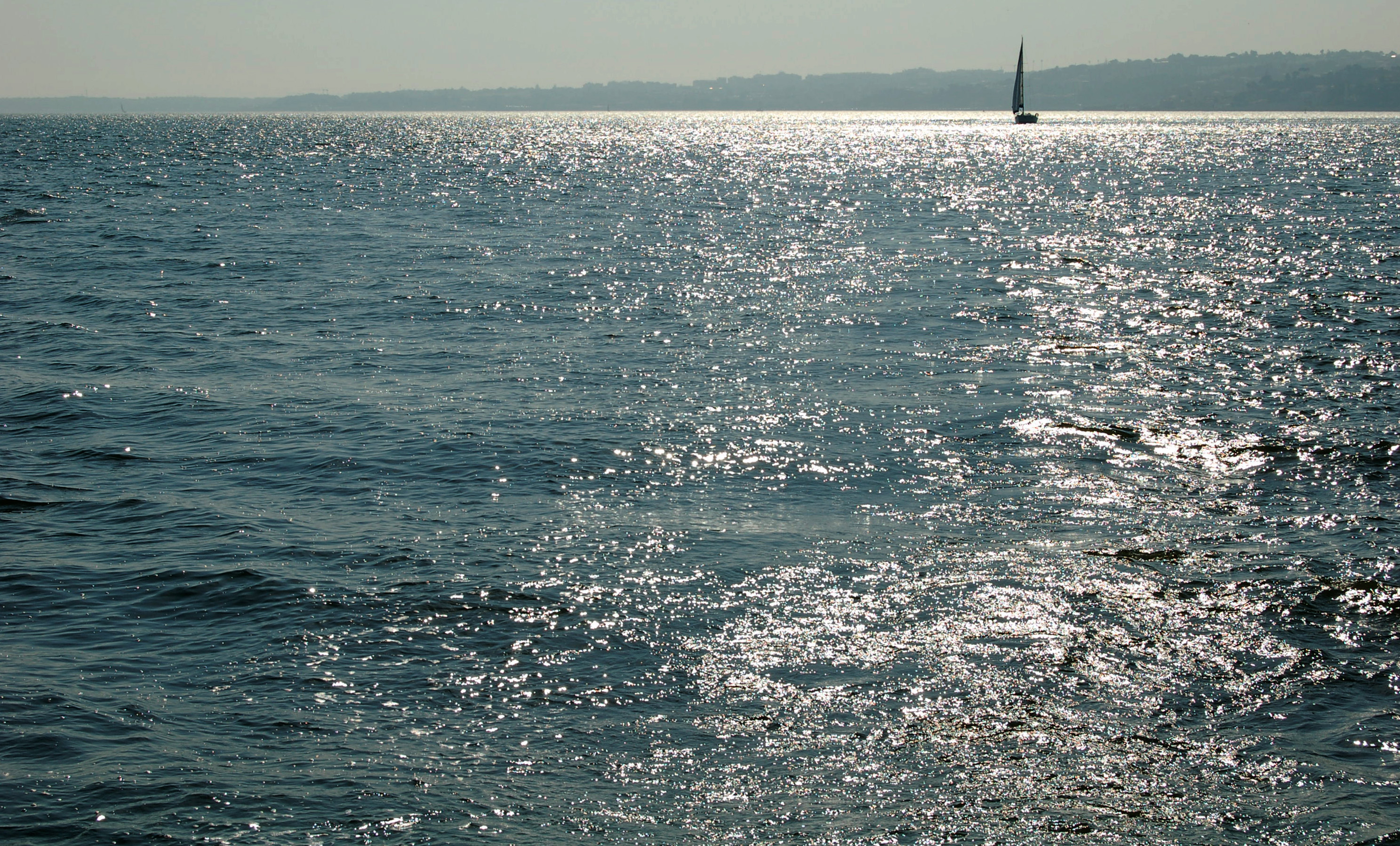
You can climb the seven hills, visit the ancient neighborhoods, stroll on Rossio and Chiado, marvel at the monuments in Belem, but you’ll not fully appreciate Lisbon until you’ve seen it from the Tagus river.

The easiest way to travel on the river is to board one of the Cacilheiros that shuttle passengers between the river margins. But nothing compares to the thrill of crossing the Tagus waters on a sailboat. Traveling in luxurious silence, guided by the trade winds, the currents wash away our cares and we feel like we had a month of vacation rolled into a few hours.

We follow the path of so many sailors who left Lisbon not knowing if they’d make it back. When these explorers survived the perilous seas and reached the blue calm of the Tagus river, they saw Lisbon as an echo of paradise, glowing in warm light, dressed in bright white and festive orange, welcoming their return.

To see the schedule of the cacilheiros click here. The best way to sail on the Tagus is to have a generous friend who has a sailboat and invites you to come along. If this method does not work for you, a second possibility is to email António Matos at topematos@hotmail.com. He is a sailing pro who can set you up with a boat and a crew. And he’s very nice, so you might become friends.

Lisbon’s most famous café

If you are near Chiado, don’t miss the chance to have an espresso in Lisbon’s most famous café, A Brasileira. The poet Fernando Pessoa spent here many golden hours, writing words that became immortal. If you want to pay homage to his genius, do not take a photo with the awkward Pessoa statue resting in the esplanade. Sit instead at a table and write a poem.

The blank page can be intimidating, so it might help you to know that Pessoa’s first poem was a modest effort. When he was seven, his widowed mother decided to remarry and start a new life in South Africa. Pessoa, worried that she might leave him behind in Lisbon, gave her this poem :

Here I am in Portugal
In the land where I was born
As much as I adore it
I love you even more

These simple words were Pessoa’s ticket to South Africa. So, summon the muses and write their whispers on your blank page. Who knows where those words might take you!