Pizza in Lisbon

It happens to the best of us. You are in Lisbon, enjoying the fresh fish and the wonderful seafood when, suddenly, you have a craving for pizza! There’s no need to rush to the airport and fly to Naples. You can satisfy your longing for Italian food in Lisbon.

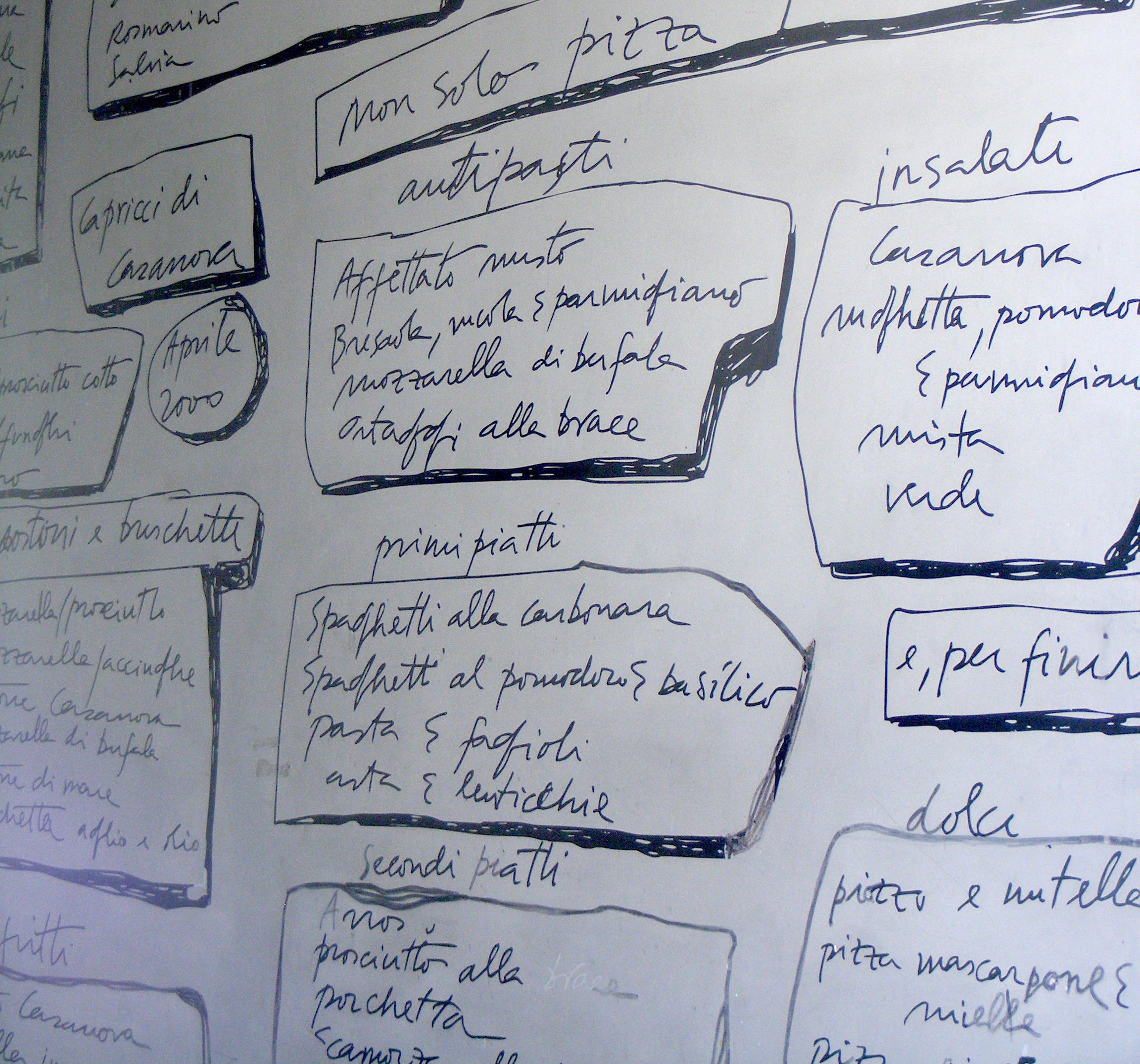
In the 1970s, Maria Paola Porru moved from Italy to Portugal to study cinema. Years later, she opened Casanostra, a restaurant in Bairro Alto, planning to go back to the movie industry once she made some money. But the restaurant was so successful that she continued to run it while working as a sound engineer in several motion pictures.

A few years ago, Porru opened the Pizzeria Casanova in a beautiful location by the Tagus river. The Pizzeria does not accept reservations and there is often a long line. It is here that young people go to see and be seen because, while they wait for some of the best pizza on this side of the Tiber, they feel they’re in a movie.

Restaurante Casanostra, Travessa do Poço da Cidade, nº 60, Bairro Alto, Lisboa, tel. 21 342 59 31, email Italma@sapo.pt. Restaurante Casanova, Avenida Infante Dom Henrique Cais da Pedra à Bica do Sapato, Loja 7, Lisboa, tel. 218877532. 

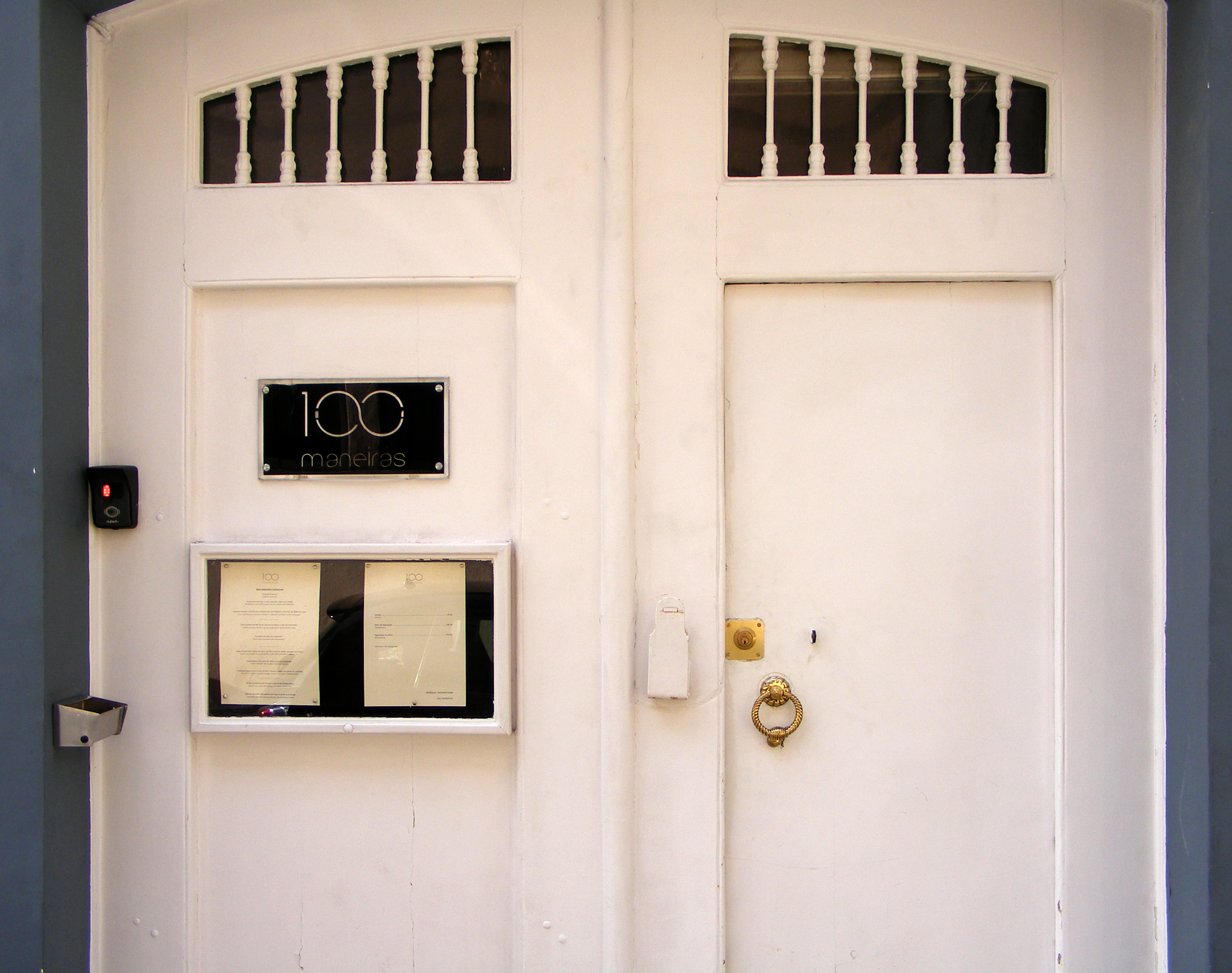
100 maneiras

The name is a play on words. “Cem maneiras” means one-hundred ways. But trade the “c” for an “s,” and you get “sem maneiras,” which means without etiquette. Both expressions hint at what makes this tiny restaurant in Lisbon’s Bairro Alto so special.

Yugoslavian chef Ljubomir Stanisic is a magician who combines traditional Portuguese ingredients in inventive ways. But his restaurant is not one of those culinary temples where diners must eat in reverent silence, heads bowed in a show of appreciation for the chef’s genius. The atmosphere at 100 Maneiras is unpretentious, and the only important etiquette rule is that guests have some great gourmet fun.

Restaurante 100 Maneiras, Rua do Teixeira, 35, Bairro Alto, tel. 910 307 575, email: info@restaurante100maneiras.com. Click here for 100 Maneiras’ web site.

Tram number 28

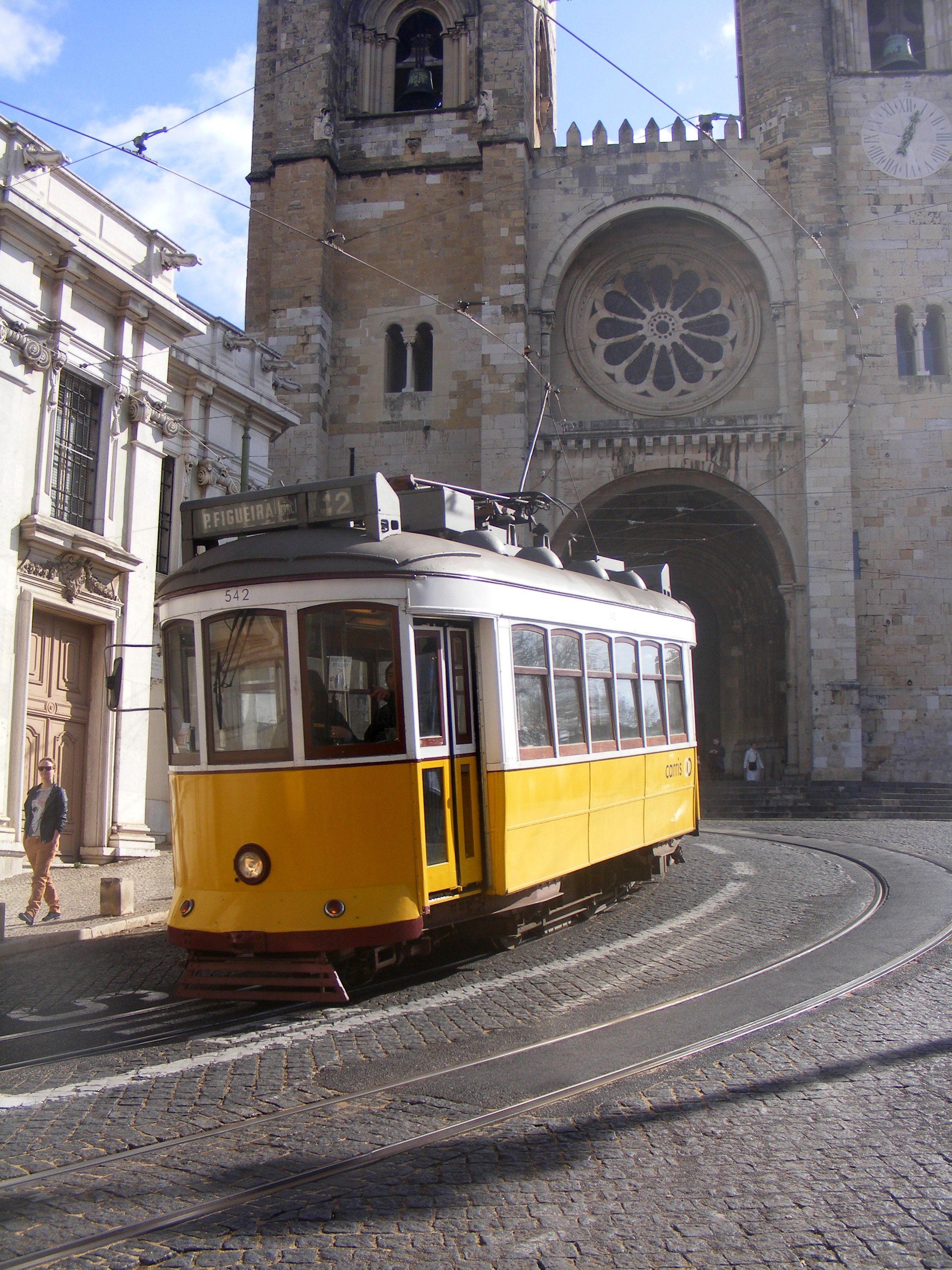
One of Lisbon’s hallmarks are the “eléctricos,” the yellow trams that have helped residents negotiate the city’s narrow streets and steep hills since 1901. A very popular way to see Lisbon is to board tram number 28.

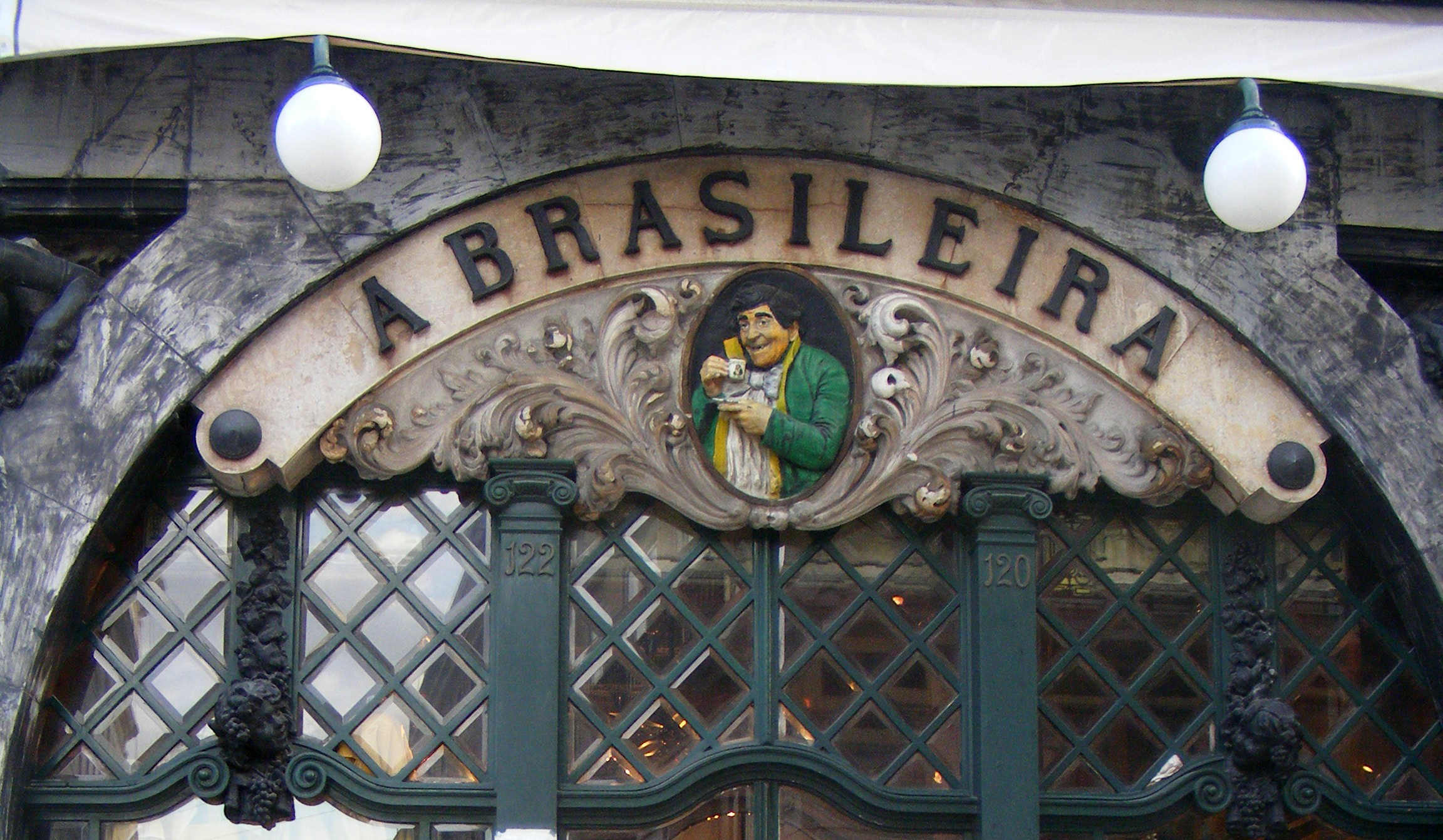
You can make Campo de Ourique your first stop and have a wonderful lunch at Tasca da Esquina. Save some room for dessert because, around the corner, you can eat a slice of life-changing chocolate cake. Don’t drink coffee yet; the tram takes you to Chiado where you can have an espresso at Brasileira, one of poet Fernando Pessoa’s favorite cafés.

Next, the 28 goes downtown. You can stroll in Rossio and sit in the esplanade of Café Nicola, enjoying the views and drinking another cup of coffee. Then, walk to Terreiro do Paço through Rua do Ouro (goldsmith street) or Rua da Prata (silversmith street). In Terreiro do Paço you can contemplate the Tagus river and have yet another coffee at Martinho da Arcada, another Fernando Pessoa favorite.

Now that you are fully caffeinated, board the 28 to go uphill to Alfama, the only neighborhood that survived the 1755 earthquake. You can walk to St. Jorge’s castle and enjoy the sunset views. Then, back to Chiado, where you can have a great dinner at Cantinho do Avilez, followed by some ice cream at Santini. As the day ends,  you’ll realize that the tram 28 is much more fun than the Orient Express.

Café Nicola

Nicola, a famous café in Lisbon, opened its doors in the late 18th century. Run by an Italian emigrant, it became popular in literary and political circles. Here, you could listen to the latest government gossip, conspire against the prince regent, or hear Bocage, a bohemian poet, improvise brilliant verses.

All this fun came to an end with the Napoleonic invasions—French officers adopted the Nicola as their gathering spot. So, when the French retreated in 1808, Nicola threw a grand independence party.

In 1929, Nicola moved to its current location, featuring the art deco architecture that you can see today.

At Nicola you can do it all, improvise poetry, start an insurrection, celebrate independence, and have a great cup of coffee.

Santini’s artisan gelato

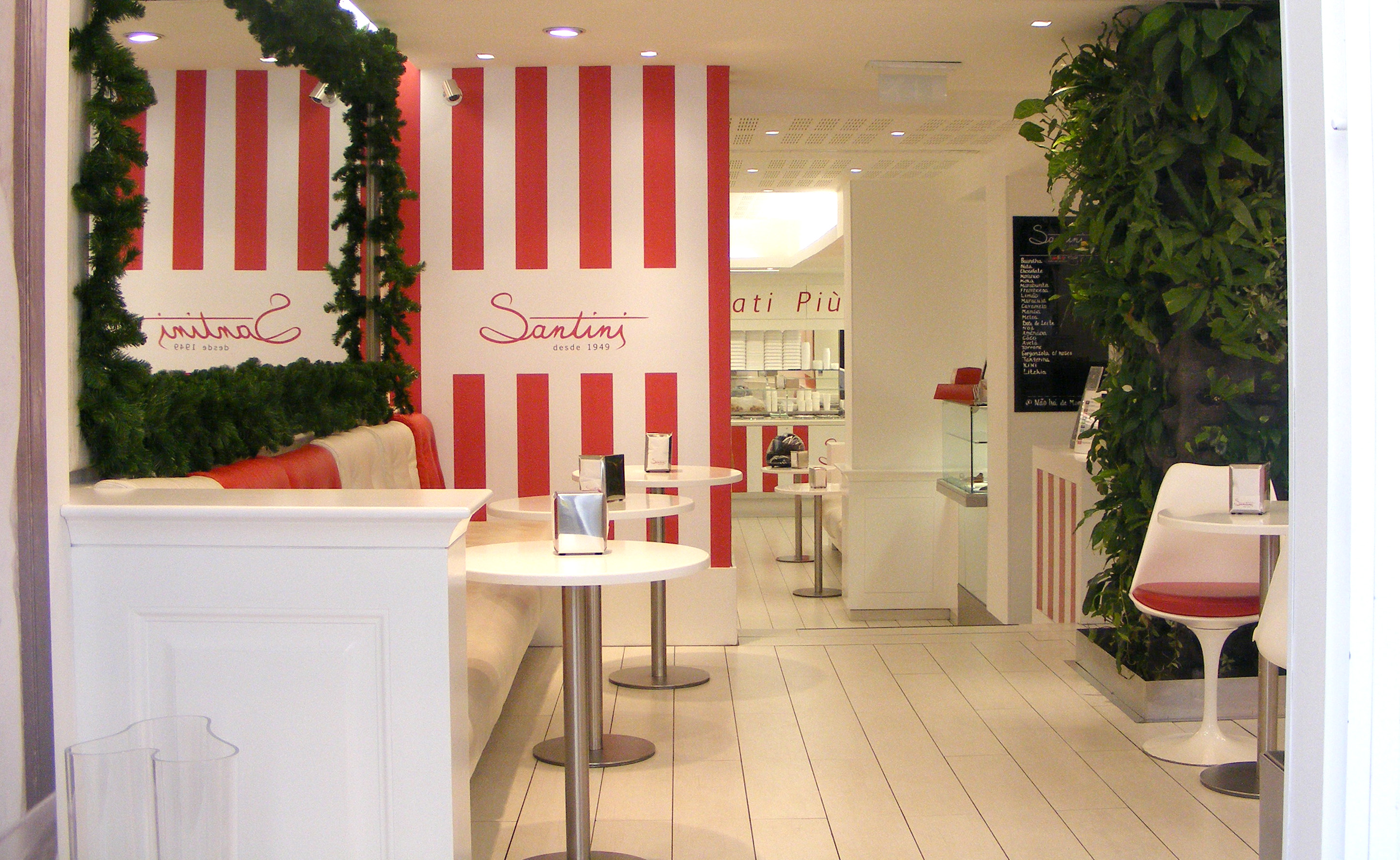
In 1949 an Italian called Attilio Santini opened a gelato store in Estoril, an idyllic beach resort near Lisbon. There was a tradition of gelato making in his family; his great grandfather had a gelato store in Vienna. Santini’s approach was simple: make the gelato fresh every day using only the very best cream and fruit. Word of mouth quickly made Santini famous in the 1950s. It helped that many of Europe’s dethroned kings and queens lived in Estoril and became loyal customers. One of these customers, Juanito, is now better known as King Juan Carlos of Spain.

There was a feeling of elegance, of relaxed optimism about the 1950s that you can see in the lines of the Fiat cinquecento or hear in Miles Davis’ recording of ‘Round Midnight. It is this sweet feeling that you can still taste today in a Santini gelato.

Santini has currently three locations, one in Lisbon, near Chiado (Rua do Carmo, 9) and two others in beach resorts near Lisbon (S. João do Estoril, Rua Nova da Estação, 5, and Cascais, Av. Valbom, 28F). There can be long lines in the Summer. The wait is an opportunity to consider which of the more than 50 varieties we are going to try. We don’t want to rush into this decision! Click here for Santini’s website.

In love with Lisbon

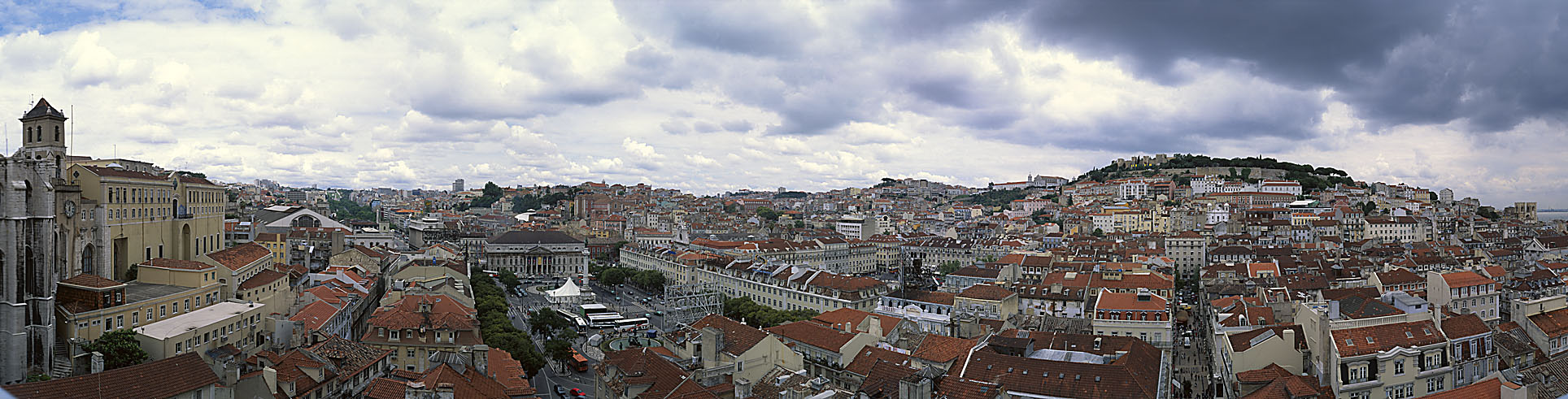
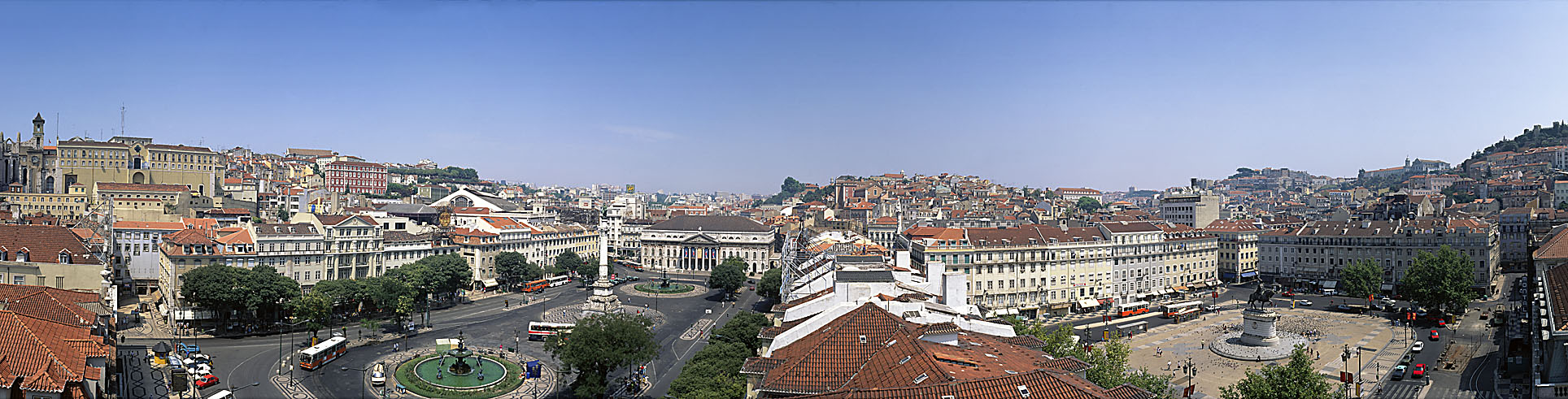
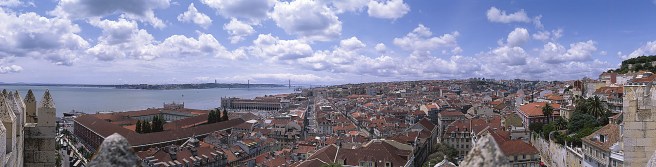
Panoramic views of Lisbon, Luis Pavão, chromogenic prints, 1990.

In 1581 a Spaniard came to Lisbon and fell madly in love with a Portuguese woman. There is nothing unusual about this incident; it happens all the time. What is uncommon, is that this Spaniard was also a great writer: his name is Miguel Cervantes. Here’s how Cervantes describes Lisbon in his novel, The Trials of Persiles and Sigismunda:

“Here love and honesty go hand in hand, courtesy never lets arrogance swagger, and bravery keeps frailty away. Its residents are pleasant, polite and discrete in matters of love. This is Europe’s largest city, the gateway to the treasures of the Orient, which from here flow to the world. Its busy harbor accommodates countless vessels and an undulating forest of ship masts. The beauty of the women enchants and arouses, the bravery of the men astonishes. In sum, this is the land that offers the most copious and holy tribute to heaven.’’

We do not have a portrait of the Portuguese woman who enchanted Cervantes, but the photos above show the splendor of the city that so impressed him (if you click on the images, you’ll see them on a larger scale).  Luis Pavão, a wonderful Portuguese photographer, created these panoramic views without any digital gimmickry. He took these photos with a camera that he built using a design proposed by the Lumiére brothers in 1901 .

This is Europe at its best: a place where a Portuguese photographer uses the forgotten plans of two French dreamers to illuminate the words of a Spanish writer who fell in love with Lisbon at first sight.

Click here to see more work by Luis Pavão on his website. You can see a photo of his panoramic camera on the top left side of his homepage.

The tower of Belém

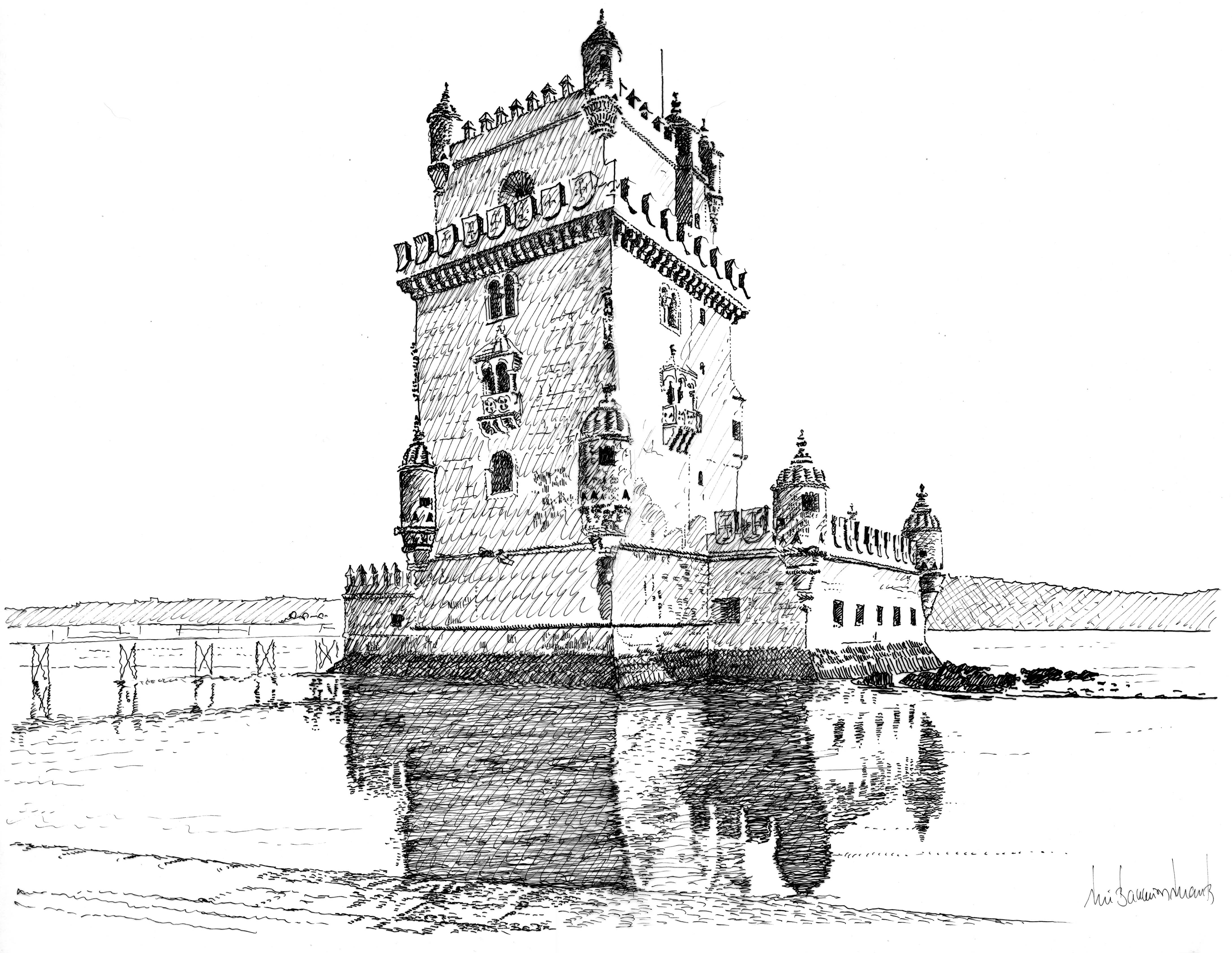
The Belém tower, Rui Barreiros Duarte, ink on paper, 2011.

Many guidebooks describe the tower of Belém as a chess piece forgotten on the Tagus river. The poet Fernando Pessoa thought that there is much more to the tower than this first impression. In 1925, he wrote an English-language guide to Lisbon, titled “What the Tourist Should See.” This book, discovered only in 1988, was meant to restore Lisbon to its rightful place as one of the great European cities. Here’s what Pessoa writes about the tower of Belém:

“This marvel of oriental architecture was erected in the Restelo beach, famous as the point from which the ships sailed forth for the Great Discoveries, and was meant for the defense of the river and of the Portuguese capital. It was King Manuel I who ordered its erection; its was built within the river, and the project is due to the great master of “laced” architecture, Francisco de Arruda. It was begun in 1515 and completed six years afterwards. Later the river sank away, from that point, leaving the Tower definitely connected with the shore. […]

The Tower of Belem, seen from the outside, is a magnificent stone-jewel, and it is with astonishment and a growing appreciation that the stranger beholds its peculiar beauty. It is lace, and fine lace at that, in its delicate stonework which glimmers white afar, striking at once the sight of those on board ships entering the river. It is no less beautiful inside; and from its balconies and terraces there is a view of the river and of the sea beyond, which is not easily forgotten.”


Berrio: a romantic esplanade

Berrio is the name of a spectacular esplanade in the beach of Parede, 20 km from Lisbon. It is the perfect place to go for coffee on a sunny afternoon. Even though it is located by the “marginal,” the coastal road that connects Lisbon to Cascais, when you are there, you feel like you are on a sea voyage.

If you take a date to Berrio, choose your date very carefully. Swept by the beauty of the sea and sky, you might find yourself speaking words chosen by the waves and whispered by the wind; words like: “You know, Berrio was the first ship from Vasco da Gama’s fleet to come back with news that they had found the seaway to India. It arrived in Cascais, not far from here. I could say that I, too, have been on a journey, and that I found my way in you. But I would never liken a search for cardamom and pepper to my quest for you. How could I compare earthly dust with your ethereal beauty?”

Berrio, Avenida Marginal, Praia da Parede, Tel. 21-457-7356, email: geral@berrio,net. Click here for website.

Tea and scones at the Vicentinas

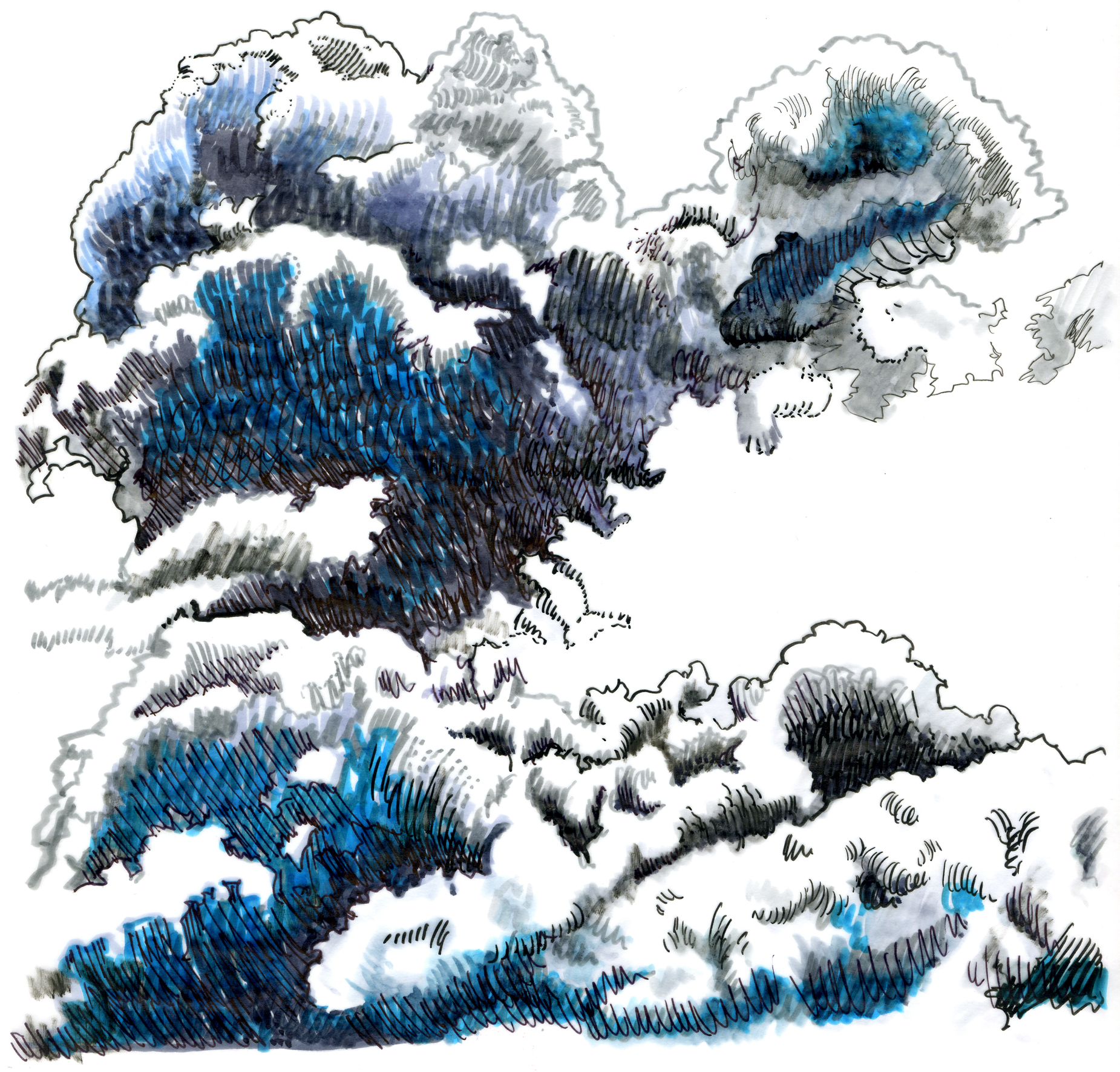
Nuvens, Rui Barreiros Duarte, ink on paper, 2011.

Clouds also deserve a break and, on their day off, they occasionally travel to Lisbon. Mostly, it’s the cirrus and stratus, the pretty, socialite clouds that come looking for a good time. But, sometimes, they let the nimbus clouds tag along and then it rains.

These rainy days are a blessing to the ancient trees scattered throughout the city, fruits of the seeds that Portuguese sailors brought from all over the world. For the tourist, a rainy day is an opportunity to try some of the best tea and scones in Lisbon. These have been served for more than 30 years at the Vicentinas, a tea shop in Rua de São Bento. The proceeds go to charity, which makes these wonderful scones taste even better.

As Vicentinas, Rua de São Bento, 700
, Lisboa

, Tel: 213 887040.

Lamprey is in season!

Lampreia (lamprey) is a very strange fish that, somehow, gained favor with emperors and kings. The Romans included it in banquets prepared for Julius Caesar. The oldest known Portuguese cookbook, a 16th century collection of recipes attributed to Infanta D. Maria, has a single fish recipe that describes how to prepare and cook lamprey.

You don’t have to conquer Gaul or marry royalty to eat lamprey. Many Portuguese restaurants offer this delicacy between January and April. It is usually served stewed, accompanied with rice. You find excellent lamprey at Solar dos Presuntos, a traditional Lisbon restaurant where you can dine like a king.

Restaurante Solar dos Presuntos, Rua das Portas de Stº Antão, 150, Lisbon. Tel. 21 342 42 53, GPS coordinates: 38º43’07″N and 9º08’51″O. Click here for their website.