The world’s best chocolate cake

Who created the world’s best chocolate cake?  Gaston Lenôtre? Pierre Hermé? Jacques Torres? Guess again. The cake is made with French chocolate, but the chef’s name is Portuguese: Carlos Braz Lopes.

His cake has three chocolate meringue disks layered with chocolate mousse and topped with a chocolate ganache. He started selling it in a tiny store in an obscure corner of Lisbon’s Campo d’Ourique neighborhood. But the cake is so good that word of mouth attracted chocolate lovers from all over the world.

The French gourmet Brillat-Savarin wrote that discovering a new recipe brings more happiness than discovering a new star. There is no better way to savor the truth in this aphorism than to taste a slice of Carlos Braz Lopes’ wondrous cake.

O Melhor Bolo de Chocolate do Mundo by Carlos Braz Lopes, Rua Coelho da Rocha 99, Campo de Ourique, Lisboa, tel. 21 396 53 72, email: geral@omelhorbolodechocolatedomundobycbl.com. 

O Cantinho do Avillez

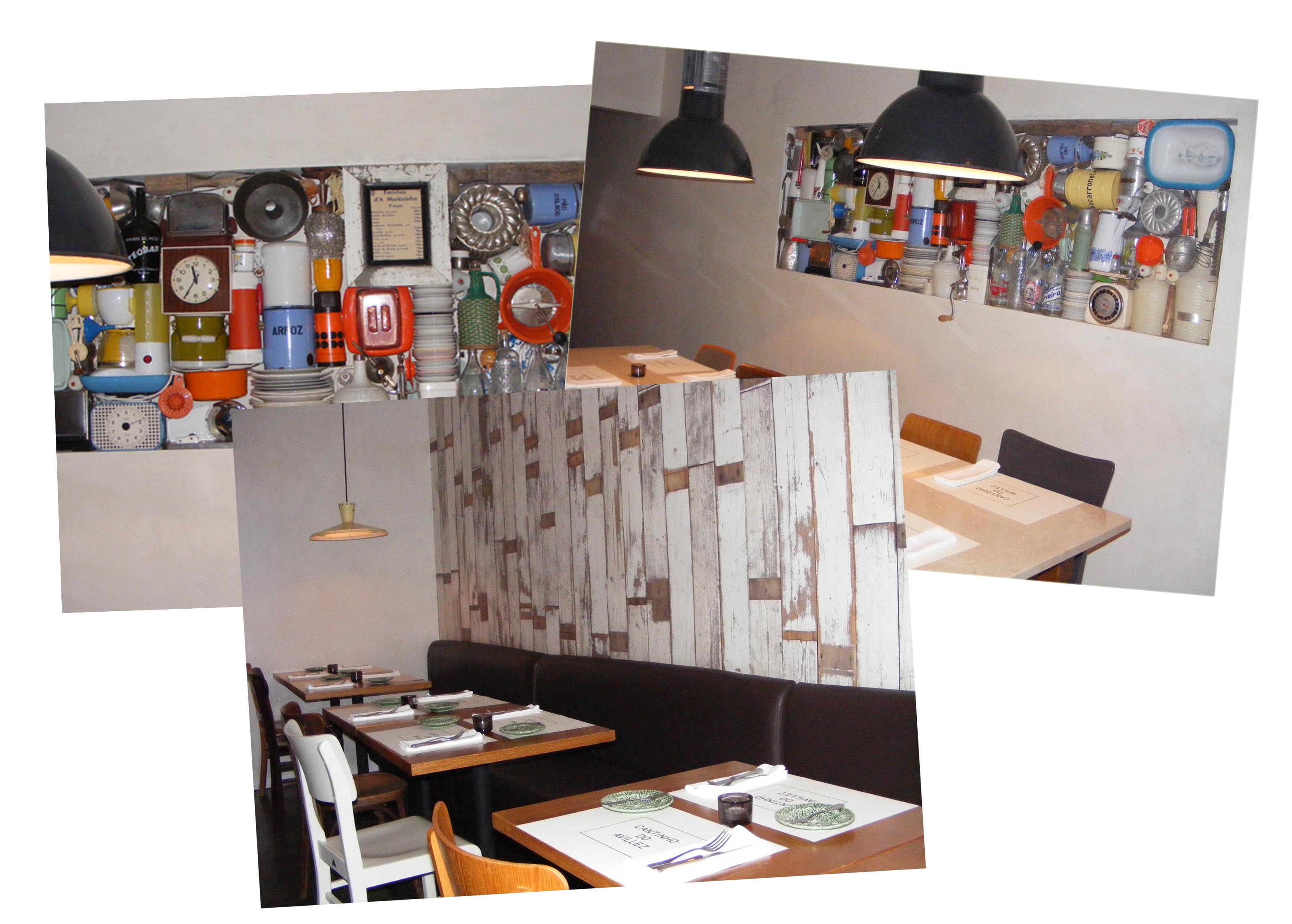
This small restaurant near Chiado has a funky, bohemian décor that makes it look like a theater set. The servers, all implausibly good looking and articulate, are clearly trained actors.

Chef José Avillez directs this food theater. He has great credentials, having apprenticed with Alain Ducasse and Ferran Adrià. Here he cooks traditional fare with original variations that create new layers of taste.

It is difficult to choose from the menu because everything is so delicious. There is vegetable tempura that is crunchy and crisp, savory partridge turnovers with an intense, gamey flavor, homemade canned tuna with a pungent mayonnaise of ginger and lime, sautéed chicken liver and grapes perfumed with Port wine, and so much more.

When you leave O Cantinho you feel like you’ve just seen a wonderful play that you would love to see again.

Rua dos Duques de Bragança, 7, Lisboa, tel. 21-199-2369. Click here for the restaurant’s website. Reservations are a must.

Pasteis de Belém

When you land in the Lisbon airport, there’s a heightened anticipation for what comes next. There’s the usual ritual of waiting in line, searching for your luggage, going through customs, all transforming you from in transit to landed. But here, arriving isn’t the best part. You drive out of the airport towards the river Tagus. As you get close, you first see the seagulls. Then, you see the Tower of Belém and the Jerónimos Monastery, monuments to the many “caravelas” that departed from a nearby dock. A marble Henry the Navigator leads a pack of explorers, pointing the way to the new world. But that’s not why you came here. You came here for a small pastry shop just down the road.

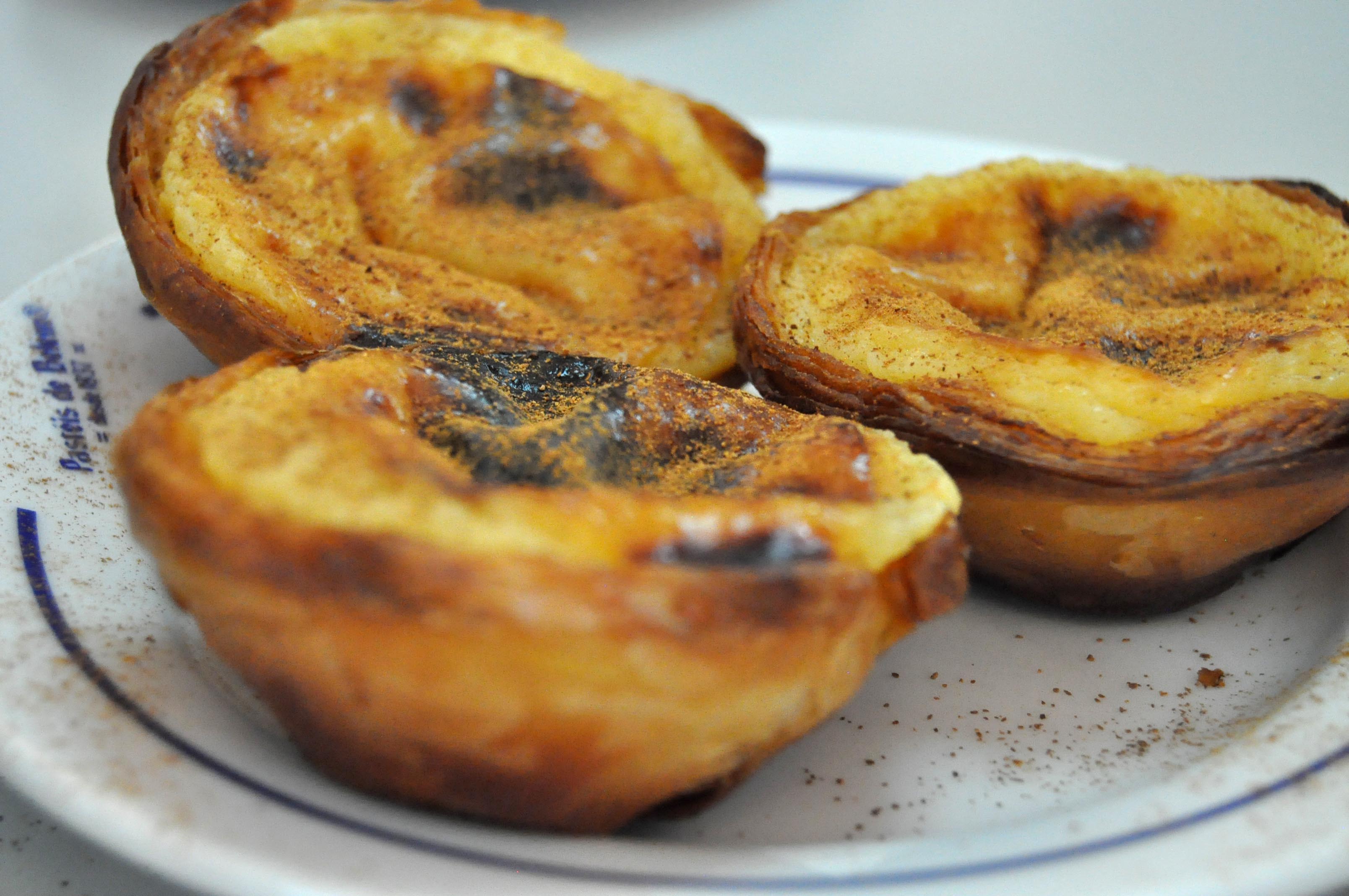
In 1834, the government closed down all Portuguese convents and monasteries. The friars of the Jerónimos Monastery needed a source of income. So, like other religious orders in Portugal, they used their ancient recipes to make pastries for sale. The Jerónimos monks made little cups of flaky pastry dough filled with custard and topped with cinnamon. All monastery pastries are delicious, but these “pasteis de Belém” are a piece of heaven. The recipe hasn’t changed since the pastry shop opened in 1837, and everything about it is shrouded in mystery. Only three master patissiers, who prepare the cream and dough in the “Oficina do Segredo” (secret workshop), know the recipe.

These pastries are ephemeral bites of cinnamon and warmth. They must be eaten right away, never saved for later. Every coffee shop in Portugal produces an imitation, but none quite captures the lightness of the dough, the creaminess of the filling. These imitations even bear a different name: “pasteis de nata.” Because there is only one place in the world where you can get “pasteis de Belém.”

Antiga Confeitaria de Belém, Rua de Belém, 84-92, Lisbon. Tel. 21-363-7423. Email: pasteisdebelem@pasteisdebelem.pt. Click here for website.


Reverso’s jewels

“Verso” means rhyme. “Reverso” means the other side. Portugal has a long jewelry tradition. At Reverso you see the other side: the work of contemporary jewelers, not just from Portugal but from all over the world. Many of these pieces are quite affordable. Their value is not measured in ounces and carats but in originality and creativity. Paula Crespo, Reverso’s owner, loves to show her work and that of other artists. And she makes Reverso rhyme with elegance.

Galeria Reverso, Rua da Esperança, nº 59/61, 1200 – 655 Lisboa, Tel. 213 951 407, mail@reversodasbernardas.com, click here for website.

LXfactory

In his story “The Library of Babel,” Jorge Luis Borges describes a library with an infinite number of books. Each book consists of pages with random combinations of characters, spaces, and punctuation. Most books are gibberish. But the library also contains all books that have been written and will be written. The problem is finding the meaningful books amongst all the nonsense.

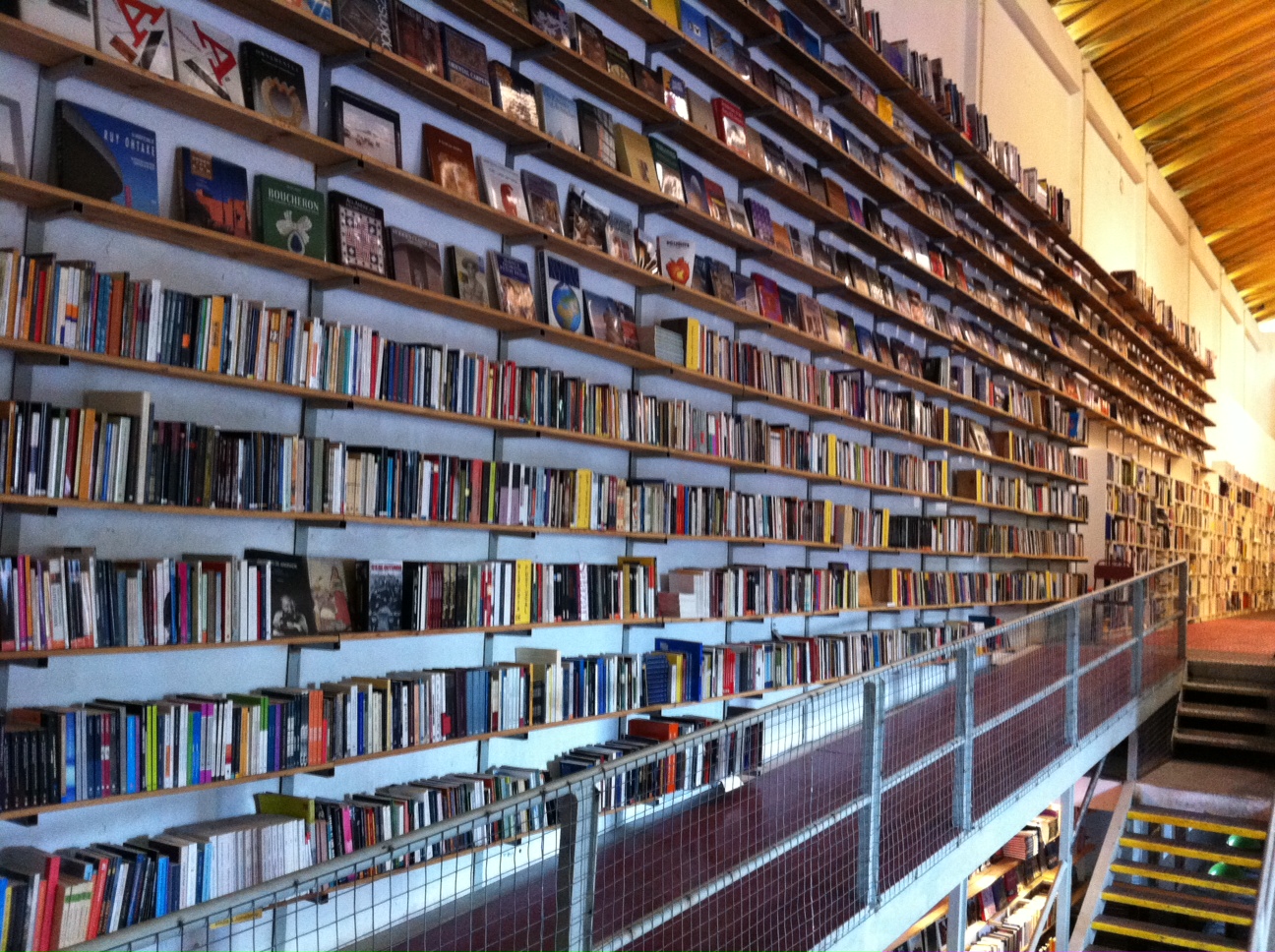
The story’s protagonist would probably love the bookstore “Ler Devagar” (slow reading). This bookstore is part of the LXfactory, a Lisbon arts center housed in a 19th century textile factory. At the LXfactory you can listen to live music, see the work of contemporary artists, and eat in the restaurant located in the old factory canteen. You’ll have time for all these activities because “Ler Devagar” has a book selection that is both good and finite.

Lxfactory, Rua Rodrigues de Faria, 103, Lisboa, tel. 21 314 33 99, email lxfactory@mainside.pt, click here for website.

The light of Lisbon


Almost fifty years ago, when Jackie was young, she traveled from England to Sweden. There, she met a young Portuguese called José Catarino. She liked his handsome looks and calm demeanor.  Jackie returned to England and José to Portugal. And that was supposed to be the end of the story.

But Jackie could not forget José. So, she looked for a job in Lisbon. She found one, as an English tutor to the children of a wealthy Portuguese family. As her flight landed in Lisbon, she marveled at the warm light that made the rooftops look pink. She promised silently that, if she could, she would stay in this enchanted city. It took her some time to find José. But, once she found him, she never let him go.

Jackie Catarino became a painter. Her canvases burst with bold shapes of contrasting colors. And, under the edges, where the shapes meet, lies the shimmering light that she first saw on the rooftops of Lisbon.

Beer and seafood in Lisbon

OLYMPUS DIGITAL CAMERA
When Portuguese chefs are not working, they like to gather at Cervejaria Ramiro to enjoy some beer and seafood.

The restaurant is located in an unglamorous part of Lisbon and looks like an ordinary place. What makes it unique is its extraordinary seafood.

Ramiro does not serve farmed shrimp that arrives, tired and frozen, from far away lands. Instead, they offer you precious fresh shrimp from the Algarve. They prepare exquisite “carabineiros,” large shrimps once abundant in Spain but now available only in Portugal. They cook tender clams, a wonderful crab called “santola,” and salty percebes brought warm to the table.

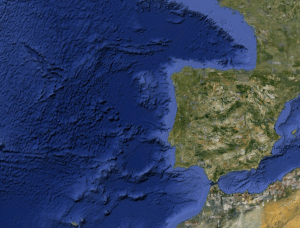
Even though Ramiro is in business since 1956, it is excluded from tourist guides for national security reasons. If the Spaniards learned about Ramiro’s seafood, they might invade Portugal.

Av. Almirante Reis, nº1 – H, 1150-007 Lisboa, tel. 21 885 10 24, email geral@cervejariaramiro.pt, click here for website.

America discovers Portugal

Americans discovered France, Italy, and more recently,
Spain, as vacation destinations.  But Portugal has remained terra incognita. That is changing. The New York Times has written a steady stream of articles about Portugal. Most are about Lisbon; about the places to go, the culinary renaissance, the new restaurants, the new museums, the relaxed atmosphere, and the art scene. But the Times has also discovered Cascais and Évora. The Wall Street Journal tells its readers that “In Portugal you can pack seven days worth of castles, clubbing, seafood, shopping and luxury hotels into one perfectly affordable long weekend.” Now, perhaps Woody Allen will consider directing a movie about a writer who comes to Lisbon and discovers that the secret to eternal youth is a daily bath of piri-piri sauce.

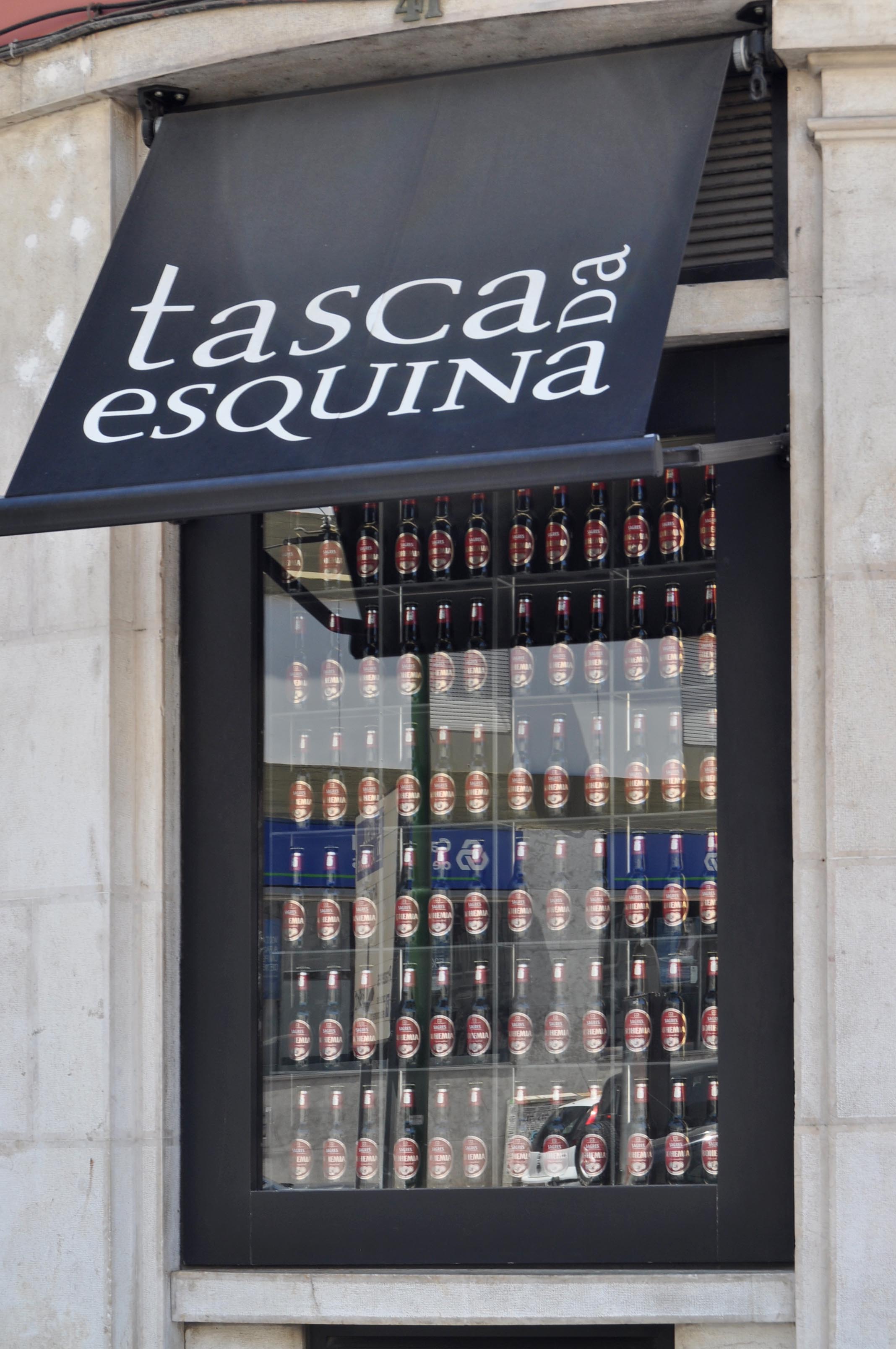
Tasca da Esquina

“Tasca” means a modest establishment that serves cheap wine and “petiscos” (the Portuguese word for “tapa”). When well-known chef Vitor Sobral opened this restaurant he probably called it tasca to signal its affordable price. But the quality is excellent.

There is a daily menu featuring small dishes, all original, all prepared with great care. There is also a degustation.

Three star food almost at tasca prices, that is what you get at Tasca da Esquina. Reservations are a must.

Rua Domingos Sequeira 41C , Campo de Ourique,  1350-119 Lisboa, Tel. 919 837 255, email info@tascadaesquina.com. Click here for web site.