Repentina

repentina Composit

Several people recommended that we try Repentina, a humble tasca in Poiares famous for its baby goat roasted in a wood-fired oven. Its name is a twist on the word “repente” which means in a flash. We first visited the restaurant last year. When the waiter brought the menu, we said we didn’t need it, we wanted to try their famous roasted goat. Incredulous, the waiter explained that “If you want to eat baby goat, you have to call us a day ahead and reserve the order. We only roast enough meat for the people who reserved it.” Well, no wonder the locals like say that nothing is easy in the Douro valley. Disappointed, we ordered a large beef cutlet that arrived perfectly grilled accompanied by salad and a delicious tomato rice.

This year, we made sure to call ahead to secure our roasted goat servings. We were told that the best time to show up is at 1:00 pm, just as the roast comes out of the wood ovens.

We arrived at the appointed hour and sat in the dining room overlooking the Douro valley. The air was filled with enticing aromas that heralded the arrival of the roast to the table. The taste is indeed exceptional, which explains why this place in the middle of nowhere attracts so many customers.

The restaurant is run by the Cunha family. Fernando who is 82, still operates the ovens. His wife Soledade runs the kitchen together with her daughter Ana Paula. Their son Fernando junior runs the restaurant.

I asked Fernando Cunha what is the alchemy that produces such satisfying flavors. He told us that “You have to get the best ingredients, the goats have to be small and tender, the wood for the fire has to produce the right temperature, the seasoning has to be harmonious and fresh. All the details are important. Our name may be Repentina but we do not cook in a flash. We do everything slowly so we get it right.”

Mercearia Prado

Prado (loja) Composit

António Galapito, the chef of Prado, a new restaurant in Lisbon, had a problem. Despite his large ensemble of proficient waiters, service was at times slow. The reason was that customers asked many questions about the provenance of the ingredients used in the restaurant.

Galapito took an unusual step to solve this problem: he opened Mercearia Prado, a grocery store that stocks the products he cooks with. So now his waiters can say: you find our ingredients in the grocery store around the corner.

Mercearia Prado is the perfect place to enjoy a light lunch or to shop for a gourmet picnic. Its shelfs are brimming with wines, cheese, prosciutto, canned fish, bread, vegetables, gourmet sandwiches, jams, and desserts. The products are so carefully curated that you can shop blindfolded and be certain that everything you choose tastes great!

Mercearia Prado is located at Rua das Pedras Negras, 37, Lisbon, tel. 960 280 492. 

A glass of Jampal wine?

OLYMPUS DIGITAL CAMERA

André Manz, a Brazilian soccer player turned entrepreneur, was searching for a place to build offices on the outskirts of Lisbon. He liked a small village near Mafra called Cheleiros. There, he bought the Orchard of the Holy Spirit (Pomar do Espírito Santo), named for its proximity to the Holy Spirit chapel. His wife Margarida fell in love with the orchard and convinced André to use it to build their home and locate the offices elsewhere.

When they moved to Cheleiros, an elderly lady called Dona Celeste told André that in the old days everybody in the village made their own wine. There were 43 wine presses in a village with only 800 people. André said that it would be cool to produce wine and Dona Celeste seized the opportunity to sell him her abandoned vineyard.

When enologists came to study the old vines, they concluded that the red grapes were “castelão” but they couldn’t identify the white grapes. André told Dona Celeste about their difficulties and she replied “Young people don’t know anything! Those grapes are jampal.” This is a grape varietal that was considered extinct. It produces small grapes so, in years gone by when quantity trumped quality, farmers replaced it with higher-yielding varietals. The wine institute sent technicians to certify that the grapes are indeed jampal and André became the world’s sole producer of jampal wine.

In the first few years, André bottled the wine in plain bottles. He gave a few to his friends and consumed the rest in his household. On the occasion of an important lunch, André decided to put some labels on the wine. He called it Dona Fátima, the name of his mother in law. When the bottles arrived at the table, Dona Fátima was delighted. “Why did you name the wine after me?” she asked André with curiosity. “Because of its acidity,” quipped André.

When Julia Harding and Jancis Robinson were working on their book, The World of Grapes, they contacted André to see if they could get a bottle of jampal wine. They liked it so much that they included it in their selection of the 50 best Portuguese wines.

Since then, it has become very hard to buy one of the 6,000 bottles of Dona Fátima produced every year.  If you see one in a wine store make sure you get it. If not, drive to the village of Cheleiros, to try one of the world’s most unique wines.

Click here for Manzwine’s web site.


DOC

DOC Composit

DOC is a restaurant sited on a dock on the Douro river. With chef Rui Paula at the helm, DOC takes us on a culinary journey of aromas and flavors that harmonize with the wines of the Douro valley.

The menu has a lot of fun starters, ranging from an intense oxtail with carrot to a delicate octopus carpaccio with pomegranate. Main courses include appetizing fish and seafood rices and classics of Portuguese cuisine like codfish with corn bread, a fish stew called caldeirada, and roasted baby goat.

The dessert list offers a sampling of many miniature desserts. Our favorite is a crispy crêpe filled with crème brûlée.

The presentations are beautiful and the food is prepared with great technical skill. The role of modern cooking techniques is not to surprise or shock but to refine and enhance the traditional flavors of Portuguese gastronomy. It is this approach that makes the cuisine of Rui Paula so deliciously unique.

A trip to the Douro valley is not complete without a pilgrimage to DOC, a temple of Portuguese food on the shores of the Douro river.

DOC is located on Estrada Nacional 222, Armamar, tel. 254 858 123. Click here for the restaurant’s web site.

Mindful coffee from Flor da Selva

Flor da Selva Composit

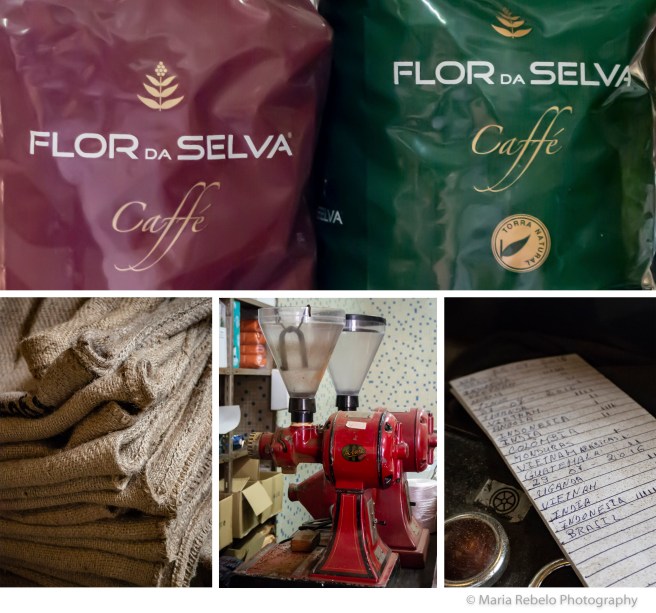
Most cups of coffee are drank in a hurry. They’re just a flash of bitterness and a shot of caffeine. Flor da Selva (jungle flower), the coffee produced by the last traditional roaster in Lisbon, is a gateway to a very different experience. This is coffee made to be savored mindfully.

We spent a delightful afternoon with Francisco Monteiro at Flor da Selva’s roasting workshop in the Madragoa neighborhood. His family’s company, founded in 1950, has preserved the secrets of the traditional roasting processes abandoned by most producers. They source green coffee beans directly from the best plantations around the world and roast them gently with oak fire wood. The coffee acquires a round, harmonious taste that contrasts with the metallic tang often associated with gas roasting. Our visit helped us rediscover the taste, aroma, and mystery of coffee.

We took several Flor da Selva blends of Arábica and Robusta beans to try at home. Preparing the coffee is a ritual that deepens the appreciation for this fine beverage. We like to brew Flor da Selva with the pour-over method, using a filter that ensures that the water is in contact with the coffee for the time necessary to soak up all the flavor from the beans.

First, we weight 29 grams for two cups. Then, we grind it finely, but not as finely as if we were making espresso, otherwise the water takes too long to pour through. We heat  filtered water at 205 Fahrenheit and pour it slowly over the grinds. The air fills with delicate aromas. Then a thick, golden foam develops (if the foam is thin and white, the coffee is too weak). Finally, we heat the cups with hot water, discard the water and pour the coffee. We drink it slowly, enjoying its lush, exotic taste. And we smile.

Flor da Selva moved to Rua Academia Recreativa e Musical de Sacavém, Lote 49, Armazém nº 13,  Sacavém, tel. 213 965 384, email info@florselva.com. Click here for their website.
Sleeping by the Tagus at the Altis Belém

Altis Hotel Composit

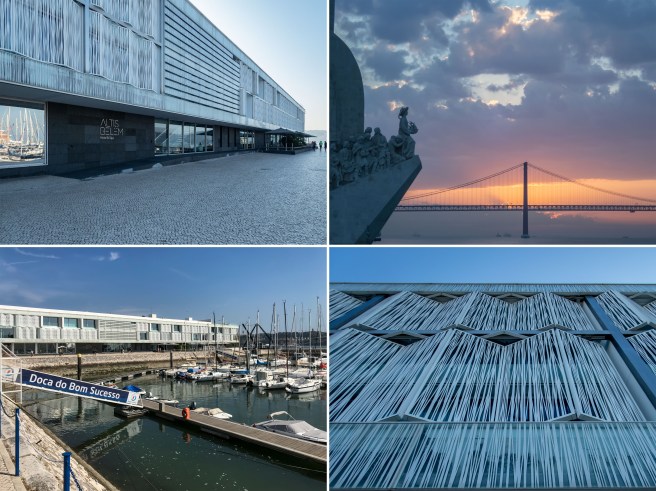
It is so wonderful to wake up in the Altis Belém hotel and see that the Tagus river is waking up too, still dressed in the same colors as the sky, flowing lazily towards the sea. We get a glimpse of the Belém tower getting ready for the visitors that come see her. And we spot the statue of Prince Henry the navigator, patiently waiting for the sun to bring the orange hues that make the light of Lisbon unforgettable.

The hotel rooms have beautiful white shutters that look like modern paintings, creating negative space around the boats in the harbor. And what a pleasure it is to have breakfast in the esplanade. The river is so close that we can eavesdrop on its waves chatting about Lisbon.

The Hotel Altis Belém is located at Doca do Bom Sucesso, Lisboa. Click here for the Altis Belém web site.

Legendary moments at Quinta da Boavista

Quinta da Boa Vista Composit

Some quintas in the Douro valley experienced one legendary moment. But Quinta da Boavista experienced two. The first came in May 1809 when Joseph James Forrester rented the quinta to work on his masterpiece, a detailed map of the Douro river. This map quickly became an indispensable reference for port-wine makers. It also made Forrester one of the most important figures in the port-wine trade. Forrester fought for the production of high-quality wines that reflected the unique terroir of the Douro valley. As a recognition for his service, king Dom Pedro V made him a Baron.

The second moment happened thanks to Marcelo Lima and Tony Smith, a duo of entrepreneurs who bought the quinta in 2013. They realized that the grapes from Boavista, grown in some of the Douro’s tallest terraces, are like precious stones. So they went in search of a master jeweler who could polish them. They knew that the ideal person would be Jean-Claude Berrouet, the enologist responsible for 44 vintages of Château Pétrus. But he had retired in 2007, took very few consulting jobs and had never worked in Portugal.

In July 2013, Marcelo and Tony brought Jean-Claude to Boavista. The enologist stood on the varanda of the house of the Baron of Forrester for a long time contemplating an iconic vineyard named Oratório (oratory) after its shape. When he finally broke the silence, he said “Ça c’est fort!” Marcelo and Tony smiled–they had found his jeweler. Since then, Jean-Claude has worked with Rui Cunha, the quinta’s resident enologist, to perfect the way in which wines from different parcels are blended. He also brought his profound knowledge of the Bordeaux oak barrel producers to choose the ideal barrels for aging the grapes from each vineyard.

When the first vintage of Oratório came out, Marcelo, Tony, and Jean-Claude sat on the terrace overlooking the vineyard. Jean-Claude took time to evaluate the color of the wine, appreciate its delicate aromas and to take a few sips. When he finally broke the silence, he said “C’est un grand vin!”

Click here for the website of Quinta da Boavista.

The fox hole

OLYMPUS DIGITAL CAMERA

There are very few great restaurants in the Douro valley. This scarcity has an historical origin: most vineyard owners used to live in Oporto. When they visited the Douro during the harvest, their meals were prepared by the wife of the caretaker or by some other talented local cook. So, a tradition of eating in restaurants never developed.

We were curious when Abílio Tavares da Silva, the Quinta de Foz Torto winemaker, promised to take us to a wonderful restaurant. Abílio drove us to a small village called Ervedosa do Douro and introduced us to Dona Maria da Graça Gomes. For many years, she worked as a cook for the great families of the Douro valley. Her dream of opening a restaurant came true in 2011 with the help of her two children, Rosário who runs the dining room and shares the cooking duties, and Fernando who helps manage the restaurant and curates the wines. The people of the village of Ervedosa are known as “raposas” (foxes), so they called the restaurant A Toca da Raposa (the Fox Hole).

We liked the food so much that we kept returning to Toca da Raposa during our Douro visit. We asked Rosário to choose our meals and she filled our table with culinary delights. The “pataniscas de bacalhau” a combination of codfish, potatoes and parsley are light and flavorful, the best we ever tried. The eggs with alheira (a sausage made with bread and fowl) are delicious. We loved the satisfying taste of the fatty baby-goat rice cooked in the oven. The flavorful “salpição” rice cooked with beans and salpicão sausage made at the restaurant is a revelation.  We marveled at the quality of the codfish and at the flavor of the grilled pork butt.

For dessert, Rosário brought us slices of cheese with an assortment of delicate jams made of strawberries, white grapes, quince, blackberries, orange, and zucchini.

Ervedosa is surrounded by vineyards that produce some of the best wine in the Douro valley. And at Toca da Raposa, it has food that is as great as the wine.

Toca da Raposa is located at Rua da Praça in Ervedosa do Douro, tel. 254 423 466.


Red gold from the Douro valley

Abílio Tavares da Silva

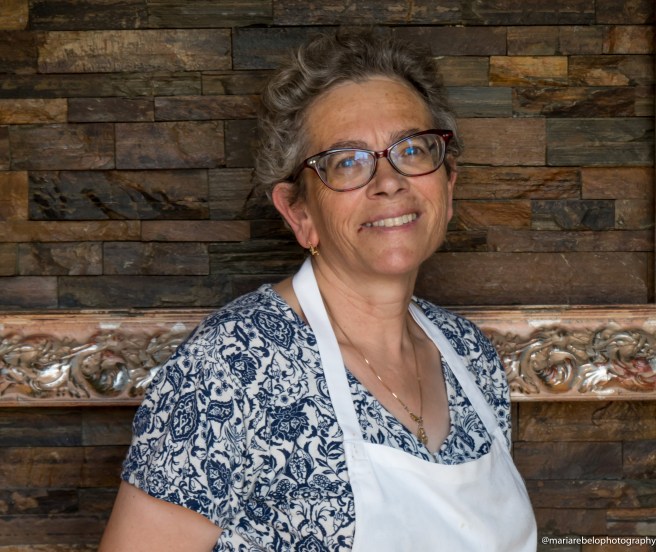
“God gave Douro precious wines so that people would come and find all the other treasures,” says Abílio Tavares da Silva. He is a successful software engineer who fell under the spell of the Douro valley. After going back to school to study enology at the famed UTAD in Vila Real, he uprooted his family from Lisbon to the Douro. Abílio bought Foz Torto, an estate with perfect sun exposure, and began producing wonderful wines. It was only then that he found the other treasures.

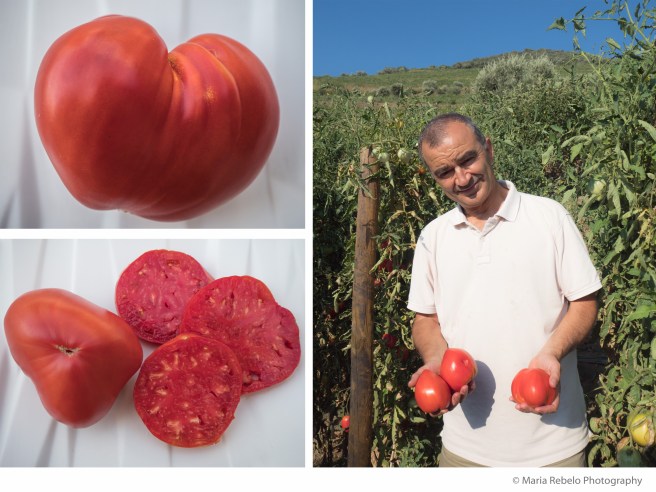
One day, someone brought local heirloom tomatoes to a gathering of wine producers. “I had never tasted tomatoes like those, so I decided to plant some tomatoes at Foz Torto. In July and August, the Douro is very hot and this heat produces extraordinary results. The plants struggle, their roots are forced to go deep in search of the last few drops of water. That is why the tomatoes are not watery; they are firm and full of flavor.”

As soon as we sat down for lunch, a beautiful plate of heirloom tomatoes arrived. Abílio had picked them in the morning to make sure they were perfectly ripe. They had a luscious red color, an intense flavor, and the perfect balance of sweetness and acidity. These heirloom tomatoes are as good as fine wine.

Abílio smiled, pleased with our reaction. “It is not just the heat that produces these results,” he explained. “The soil in the Douro valley comes from sedimentary rock that was at the bottom of the ocean millions of years ago. When the rock disaggregated, it became home to a lush microbiological ecosystem that made the soil rich in micronutrients. These micronutrients make all the difference in the production of fruits and vegetables.”

After lunch, we drove to Foz Torto. In the vineyard, Abílio explained how the design of the beautiful Douro terraces evolved in response to the shortage of labor and the need to avoid soil drainage. He then showed us his fruit trees and vegetable garden. The figs, peaches and strawberries were dripping with sweetness. They are more satisfying than the most sumptuous desserts.

“In the old days, the Douro farms were self sufficient, they had wonderful orchards and great vegetable gardens. When the train came to the Douro, the farms started buying fruit and vegetables from the rest of the country and focused on the production of port wine. The tradition of growing fruits and vegetables was lost. But there’s a group of wine producers that is bringing back those old crops.”

Together with Celeste Pereira from the event company alldouro.com  and journalist Edgardo Pacheco, Abílio organizes an annual competition for the best heirloom tomato in the Douro valley. The tomatoes are tasted blind by a panel of chefs, enologist and food writers. Wine makers from many quintas participate in the event.

This year, the competition takes place at Quinta do Vallado on August 24. On August 25 there’s an agricultural market where people can taste heirloom tomatos, olive oil, fleur de sel, Douro wines, and traditional local food. If you’re on the Douro valley, do not miss the opportunity to participate in these unique gastronomical events. And if you go, please cheer for Abílio Tavares da Silva, we hope that his extraordinary heirloom tomatoes win the first prize!

To participate in the heirloom tomato competition events please email   greengrape@greengrape.pt.The events are free.

A widow from Colares and her extraordinary wines

Viuva Gomes Composit

About 25 years ago, we hosted a friend who’s a great wine connoisseur for a couple of weeks in Lisbon. He tried Portuguese wines from different regions and always had something nice to say. But we noticed that his enthusiasm for these wines paled in comparison to his passion for the French wines that filled his cellar.

Towards the end of his stay, we had dinner at a small restaurant that had a rare wine on its list. “This wine is amazing!” exclaimed our friend after taking a sip. “How many more bottles do you have?,” he asked the waiter. “Two,” the waiter replied. “That is perfect. I am spending two more nights in Lisbon. Can we make dinner reservations for both nights and also reserve the two bottles?”

The wine that so impressed our oenophile friend was a 1969 Viúva Gomes. Its origin goes back to 1808, the year when José Gomes da Silva built a cellar in the village of Almoçageme to produce wines in Colares, near Sintra.

The tiny Colares region is home to two unique grape varietals: the white Malvasia and the red Ramisco. These grapes survived the onset of phylloxera in the 19th century because they are planted on clay soils covered with sand that protected the roots from the deadly bug.

After Gomes da Silva died, his widow and sons continued to produce wine which they sold under the label Viúva Gomes (viúva is the Portuguese word for widow). Their company was sold in 1920 and resold in 1931. By 1988, it was once again up for sale. It was then that José Baeta seized the opportunity to buy the vineyards, the cellar and a treasure trove of vintages going back to beginning of the 20th century.

We knocked on the door of the 1808 cellar and soon José Baeta came to greet us. Visiting this building full of old bottles and ancient wine barrels made from precious woods is a voyage into the 19th century.

José spoke with great passion about the unique character of the Viúva Gomes wines. We sampled a wonderful 2016 white Malvasia that is exuberant, with hints of salt from the Atlantic Ocean. We then tried a red Ramisco from 2009. It is an alluring, intense wine with notes of dried cherries. While most wines pale in the presence of food with bold flavors, the Viúva Gomes Ramisco holds its own and helps the meal sparkle.

Only 2,000 bottles of white and 4,000 bottles of red are produced every year. “I always run out of wine to sell before the year ends,” says José Baeta. With the help of his son Diogo, José is trying to expand his production, finding the right soils to plant more vines.

Drinking a bottle of Viúva Gomes is an extraordinary experience. These are nectars  made from the rarest vines, caressed by the Atlantic winds and guarded by millions of grains of sands.

The cellar of Viúva Gomes is located at Largo Comendador Gomes da Silva, 2 Almoçageme, Colares, tel. 219 290 903 and 967 248 345, email  info@adegaviuvagomes.com . Click here for the Viúva Gomes website.