Billy Collins, a former U.S. poet laureate, has a new book called The Rain in Portugal. He says that the title is an admission of his difficulties in constructing rhymes.
The rhyming possibilities of “Portugal” are much more limited than those of “Spain.” Yet, Collins finds a way capture the poetry of life in Portugal. Here’s an excerpt of the poem that contains the title of the book.
On Rhyme
“[…] instead of recalling today where it pours mostly in Spain I’m going to picture the rain in Portugal.
How it falls on the hillside vineyards, on the surface of the deep harbors where fishing boats are swaying.
And in the narrow alleys of the cities where three boys in t-shirts are kicking a soccer ball in the rain ignoring the window cries of their mothers.”
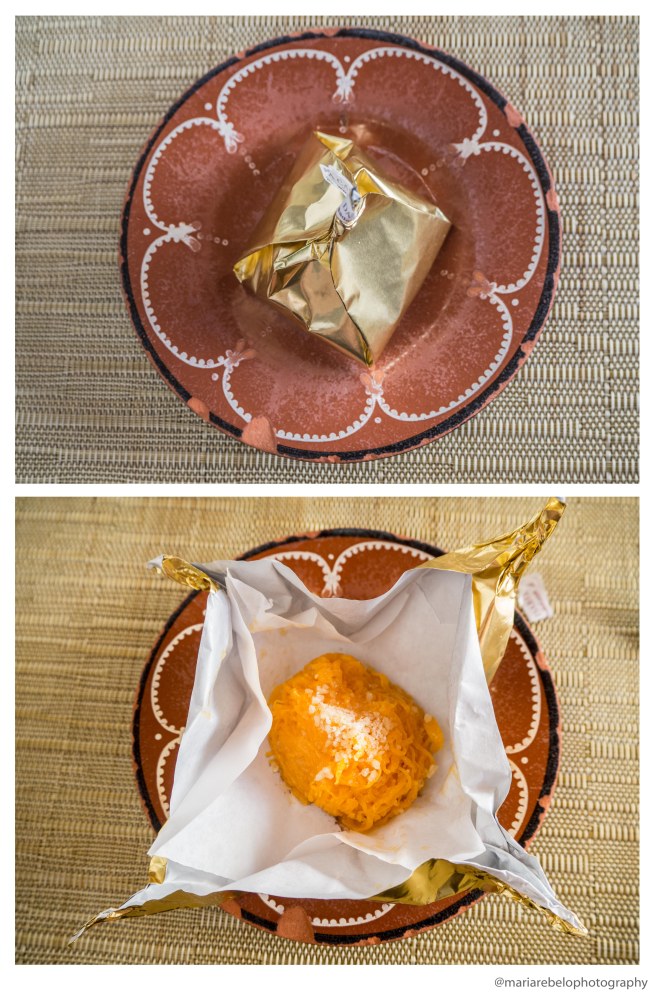
The most revered noble in the kingdom of Algarve does not own land or royal charters. Dom Rodrigo is a dessert that has been produced since the 18th century. It looks like a gift, wrapped in colored foil and tied with a ribbon.
Alchemists all over the world tried to turn lead into gold. In Algarve, cooks tried to turn eggs, sugar, cinnamon and almonds into joy. And they succeeded!
We had lunch at the São Lourenço do Barrocal restaurant in a beautiful room overlooking the fields. The house wines, produced on the property by Susana Esteban, a Spanish enologist who fell in love with Portugal, are interesting and full of character.
The food is simple but delicious. We tried the grilled beef with “migas” and the wild boar. The desserts are delightful: traditional “gadanhas,” lemon and olive oil pudding, and a cake made with nuts and honey.
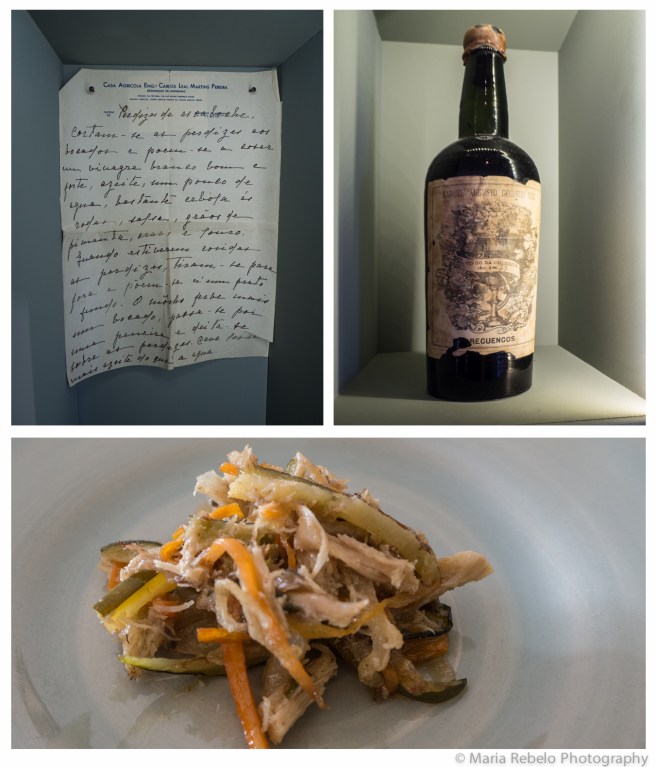
The highlight of the meal was the marinated partridge. The texture was perfect and each bite had layers of tangy vinegar and wholesome olive oil.
We were reminded of Saint Teresa of Ávila who once accepted an invitation to eat partridges. When people expressed surprise that a nun known for her poverty vows agreed to a luxurious meal, Teresa explained that “santidad es santidad mas perdices son perdices,” meaning sainthood is great but so are partridges.
The partridges at São Lourenço do Barrocal are prepared according to a recipe written by the great-grand mother of the owner of the estate, José António Uva. The recipe is on display in the dining room, next to a precious 1875 bottle of fortified wine from Reguengos de Monsaraz. It is a privilege to share this treasured recipe from the heart of Alentejo with you, dear reader:
Marinated partridges
Cut the partridge in pieces and cook it in strong white wine vinegar, olive oil, a small amount of water, and plenty of onion slices (use more olive oil than water). Season with whole black peppercorns, cloves and bay leafs. When the partridge is cooked, remove it from the pot and place it in a deep dish. Reduce the sauce left in the pot, strain it and pour it over the partridge.
Click here for the web site of São Lourenço do Barrocal.
We hope the gods of the sea will forgive us, but São Lourenço do Barrocal made us forget the ocean and its waves. We were dazzled by the exuberant fields covered with white daffodils, surrounded by the simple elegance of the old farm buildings.
São Lourenço has been in the family of its current owner, José António Uva, since the 19th century. It once employed 50 families who lived and worked on the farm. The estate was occupied in 1975, the year in which José António was born, as part of the wave of expropriations that followed the 1974 revolution. After the property was returned to the Uva family in 1984, the abandoned fields were replanted and the farm was brought back to life. But the buildings that once served as cellars and accommodation for the workers remained in ruins.
After studying in Paris and working in London, José António returned to Alentejo. While thinking about his future, he rebuilt a small house for his own use and a water tank that served as a swimming pool. He decided to devote four years to turning the estate into a hotel. Instead, the project took 14 years. Eight of these years were spent working with Eduardo Souto de Moura, the Pritzker laureate architect who oversaw the reconstruction project. Instead of using the property as a canvas to design new buildings, Souto de Moura followed a humble approach: he preserved and highlighted the beauty of the vernacular buildings that were there.
The interiors were decorated by José António’s wife, Ana Anahory. She used a wide range of artifacts, from antique agricultural implements to the heads of animals once hunted on the property. Her exuberance contrasts with the restraint of Souto Moura’s style. But, somehow, this creative tension works, making the space interesting and alive.
There are great hiking trails on the property with beautiful views of Reguengos de Monsaraz and the surrounding country side. One of the highlights is a menhir that is 7,000 years old.
It is heartwarming to see the natural beauty of a place where humans lived in the distant past so well preserved for the future.
Click here for the web site of São Lourenço do Barrocal.
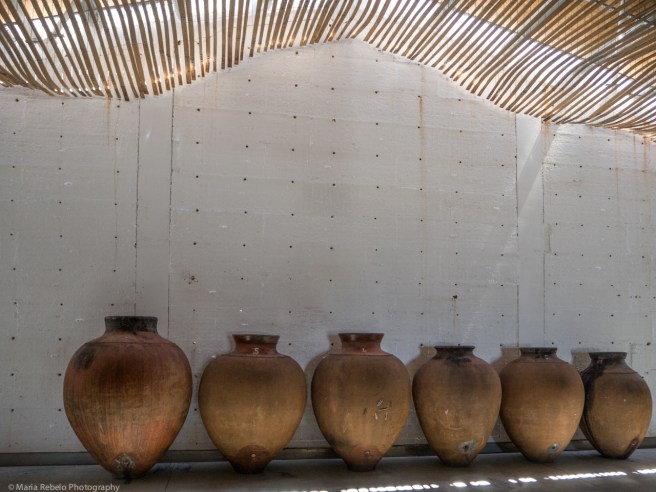
In Roman times, wine making was a simple affair. The grapes were crushed and stored in large clay amphoras where the fermentation occurred naturally. The skins, seeds, and stems were stirred. Then, the pomace fell to the bottom of the amphora, acting as a filter so that the wine, extracted through a spigot, ran clear.
Wine makers in Alentejo are using old amphoras, too large to be made in modern ovens, to revive these ancient ways of making wine.
We’ve been looking forward to trying these wines. After our recent visit to Esporão, we finally got our chance—we brought home a bottle of their amphora-made Moreto wine.
Drinking it was a grand occasion. After all, this was the kind of wine with which Caesar celebrated the conquest of Gaul, the wines with which Mark Anthony wooed Cleopatra. We closed our eyes and sipped the precious liquid. It tasted pure and clean. Suddenly, the Romans adage ‘in vino veritas,’ in wine truth, had a new meaning.
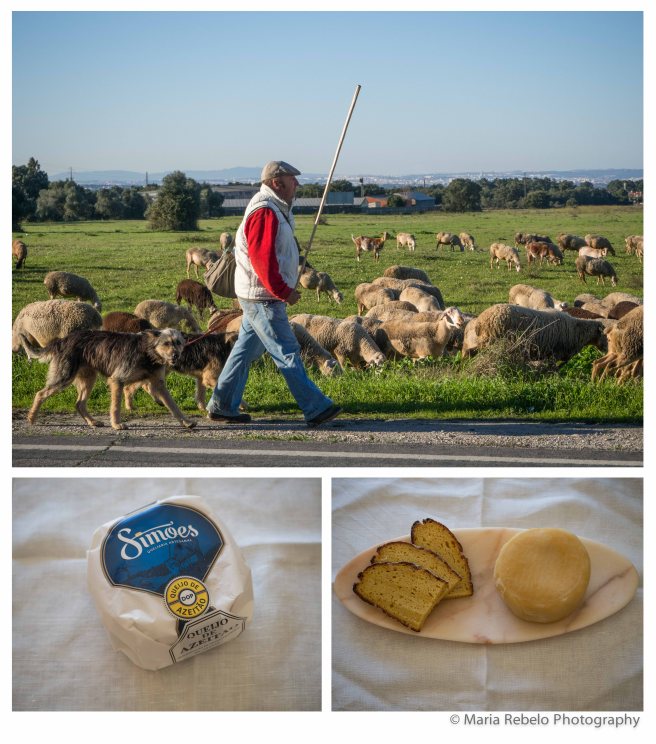
In the beginning of the 19th century, a farmer called Gaspar Henriques de Paiva moved from the Beira region to Azeitão, near Lisbon. He liked his new home, but craved the taste of the famous cheese made in Beira’s Estrela mountain. In 1830, Gaspar brought some “bordalesa” sheep from the Estrela mountain to Azeitão and arranged for a shepherd to come once a year to help him make cheese.
Gaspar owned only a few sheep, so his cheeses were small in size and his production low in volume. But the cheese was so great that it quickly gathered fame. Gaspar taught his neighbors how he made cheese with only three ingredients: sheep milk, cardoon and salt. Soon there were several cheese producers in Azeitão.
We traveled to Azeitão to try the cheeses made by the current generation of producers. When we asked the locals about their favorite cheese, they we unwilling to take sides. Finally, someone agreed to talk under condition of anonymity: “the best cheese in Azeitão is made in the village of Quinta do Anjo (Angel’s farm) and the best producer in Quinta do Anjo is Rui Simões,” he whispered, making sure he was not overheard.
We were lucky to get this tip because Rui Simões’ cheese is sold in only a few places, so we might have missed it.
We liked all the cheeses we tried in Azeitão, but there was indeed something special about the ones made by Rui Simões. They have an addictive creamy, salty, satisfying taste. Now that we are no longer near Azeitão, we crave them. Maybe we’ll buy some “bordalesa” sheep…
The existence of one of Lisbon’s best fish restaurants has been a closely guarded secret for more than half a century. Its name is “Último Porto” (the last harbor). Now that the secret is out, we might as well confess everything.
The restaurant is tucked away in the corner of one of Lisbon’s harbors (Rocha do Conde de Óbidos). It is not a glamorous place. But for fish lovers it is heaven.
There are tables inside and an esplanade surrounded by containers that is very pleasant when the weather is warm. It is easy to park and the walk to the restaurant is beautiful with the river in front of us and the city on our back.
“Último Porto” opens only for lunch and it is always full of locals. Grilled fish is the main event and the stars of the show are the “salmonetes” (mullets). Their skins are colored with yellow and orange hues, their flavors as bold as their colors. But, there are many other great choices, from sea bass to codfish.
Many restaurants showcase their fish in a refrigerated display. Others bring a fish platter to the table so that customers can choose what they want. At Último Porto, the fish is treated like a work of art—shielded from light and protected from the elements. It only leaves the refrigerator to go to the grill where it is cooked to perfection. It is this care that makes the last harbor our first choice for grilled fish in Lisbon.
Último Porto is located in the Estação Marítima Da Rocha Conde d’Óbidos, tel. 21 397 9498. It only serves lunch and reservations are a must.
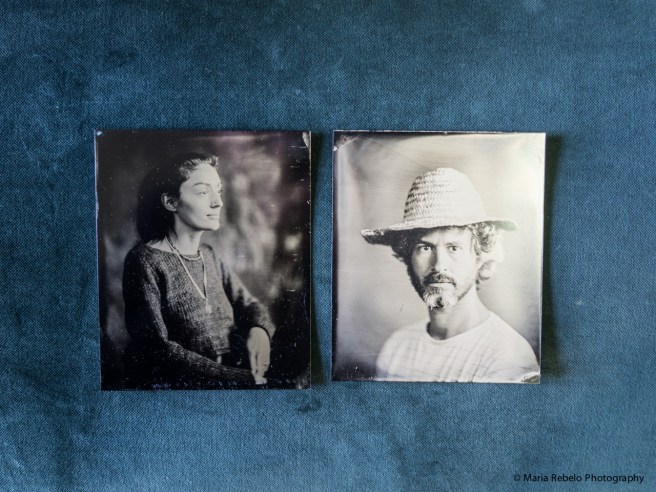
In the 19th century, photographers were sorcerers who could conjure life-like images that were exhilarating. Today, photos are so common that much of the wonder of the early days of photography is lost.
We were curious when we heard about Silverbox, a studio in Lisbon that specializes in portraits taken with an old photographic process. The studio is located in an elegant early 20th-century building. We entered the ornate iron elevator and pressed the key of the 4th floor to embark on our trip to the past of photography. Rute Magalhães, who runs the studio with Filipe Alves, was waiting for us.
Rute and Filipe are architects who fell in love with alternative photographic processes. After trying different methods, they specialized in wet collodium. This technique, invented in 1851 by a sculptor called Frederick Archer, was widely used between 1855 and 1880. Rute and Filipe mastered this difficult process after years of experimentation under the tutelage of Quiin Jacobson, an American authority on early photographic processes.
To take a photo, Rute and Filipe coat a glass plate with collodium and then immerse it in a silver nitrate solution that makes the plate sensitive to light. Before the collodium dries, they place the glass plate in a view camera and take the exposure. The plate is then bathed in a fixing agent and washed with water. The result is a precious image that is exhilarating.
Silverbox is located on Rua Braamcamp, nº88 4 esq. in Lisbon, email info@silverbox.pt, tel. 915074612 /218057735. Click here for their web site.
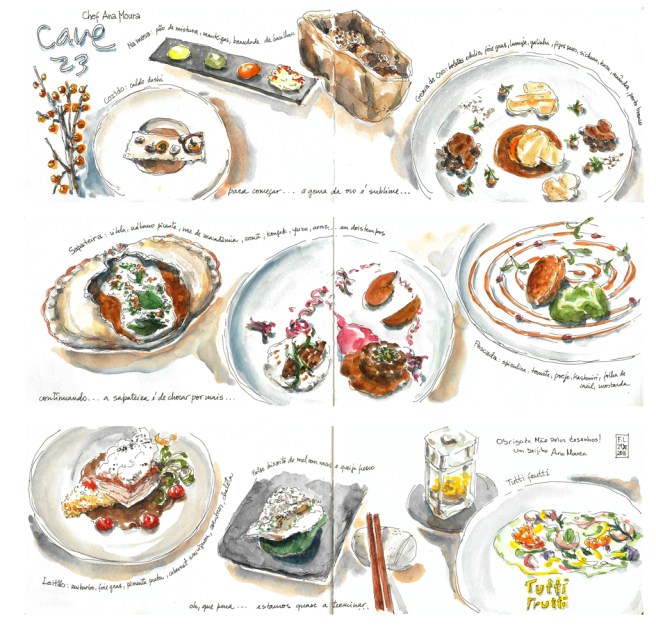
Dinner at Cave 23, ink and watercolor on paper, Fernanda Lamelas, December 2016.
Ana Moura, the young chef at Cave 23 in Lisbon, was born in a family of gourmands who planed vacations around restaurant outings. Her father, António Moura, runs a jewelry firm that produces sumptuous pieces of handcrafted filigree. Her mother, Fernanda Lamelas, is an architect and a talented watercolor painter.
It is easy to find traces of parental influence in Ana’s food: there’s an architectural quality to the presentation and an intricate detail that makes each dish look like a piece of jewelry. The hake, as white as a pearl, came adorned with a spirulina mayonnaise, dressed with a bouillabaisse sauce, and accompanied by pennyroyal, mustard, curry leaves, Alentejo bread, manga and white truffles. The cheese tart was encrusted with a ruby-red muscatel gelatin, delicate milk paper and honey foam.
Ana’s cuisine is centered on the flavors of the Portuguese cuisine. She uses foreign ingredients—Indian bread, Japanese roots, Vietnamese puffed rice—but only to make local ingredients shine brighter.
A passage through Arzak, a famous Basque restaurant, left Ana with a taste for bold flavors. She served us a large shrimp paired with bone marrow, the two flavors enhancing each other. The sublime crab soup was made with broth reduced for two days.
The menu features creative combinations of flavors that work well together: the rabbit rice came with persimmon, the crab meat with a radish bisque, the shrimp with a mousse of arugula and Azores cheese.
Cave 23 is a new star in the firmament of Lisbon restaurants. Our dinner was an intense, memorable experience.
Sadly, Ana Moura and her team left Cave 23 in the end of March, 2017. We can’t wait to be part of Ana’s next culinary adventure!
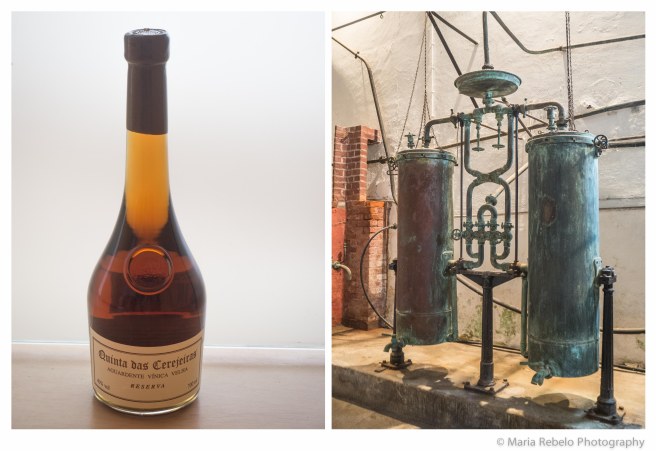
“In Bombarral, each generation produces brandy for the next,” explained Ana Reis, one of the heirs of Quinta do Sanguinhal, a wine estate in Bombarral that dates back to 1871. We were standing in a room full of contraptions that were used to distill brandy a century ago. After distillation, the precious liquid sleeps for decades in oak barrels before it emerges with a beautiful orange color and a bouquet of alluring aromas.
The Bombarral region has ideal conditions to produce fine brandies. Everyone there seems to have an old casket of brandy at home to share with friends on special occasions.
If you don’t have friends in Bombarral, you can buy the wonderful brandy made by Ana Reis’ family at Quinta das Cerejeiras. It has a smooth taste, full of depth and wisdom. We love drinking it in the Winter, imagining the sunshine of the ancient Summer that produced this liquid gold.
Click here for information about the wines and brandies produced at Quinta do Sanguinhal and Quinta das Cerejeiras.




 Salt of Portugal