Viseu turned upside down

Mesas

Roman cities are generally organized around two perpendicular streets, the “cardo” and the “documanus.” In Viseu, an elegant city in the interior of Portugal, the cardo is called Rua Direita. This ancient street has been turned upside down by an installation called Mesas (the Portuguese word for tables). Artists Pedro Rebelo and Ricardo Jacinto suspended in the air tables once used by jewelers, tailors, office workers, school children, card and ping-pong players. These tables project sounds recorded while they were in use, inviting us to celebrate the people who study, work, and play in this city.

Mesas is part of Ephemeral Gardens, a great annual event which fills the streets of Viseu with art, music, dance, theater, and gastronomy. Click here for more information.

The place to be in Lisbon

Palácio Valle Flôr compositF©For the price of ordinary accommodations in London or Paris, you can stay in an extraordinary palace in Lisbon. It’s all thanks to José Dias, an entrepreneur who made a fortune producing cocoa to feed Europe’s insatiable appetite for chocolate. After many years of hard work on the island of São Tomé, Dias returned to Lisbon. He received the title of Marquis of Valle Flor and began the construction of a magnificent palace.

The Marquis bought land with breathtaking views of the Tagus river and hired architects to design a building with perfect proportions. He then decorated it with great refinement, commissioning elegant furniture, beautiful paintings, graceful sculptures, and radiant stained-glass windows. After its inauguration in 1915, the palace became a fashionable gathering place for the royal family, celebrities, and nobility.

With the death of the Marquis in 1932, the edifice entered a period of slow decay. To save this work of art from oblivion, Dionísio Pestana, a successful hotelier, bought the building in 1992 to convert it into a luxury hotel.

It took almost ten years to restore the edifice and equip it with modern comforts. The result is the Pestana Palace, a hotel favored by a long list of celebrities that includes Bill Clinton and Madonna. The Marquis of Valle Flor would surely love to see that his palace is, once again, the place to be in Lisbon.

The Pestana Palace is located at Rua Jau, 54, tel. 210401711 , email: guest@pestana.com. Click here for the hotel’s web site and here to see more photos of the palace.

Quinta do Monte d’Oiro

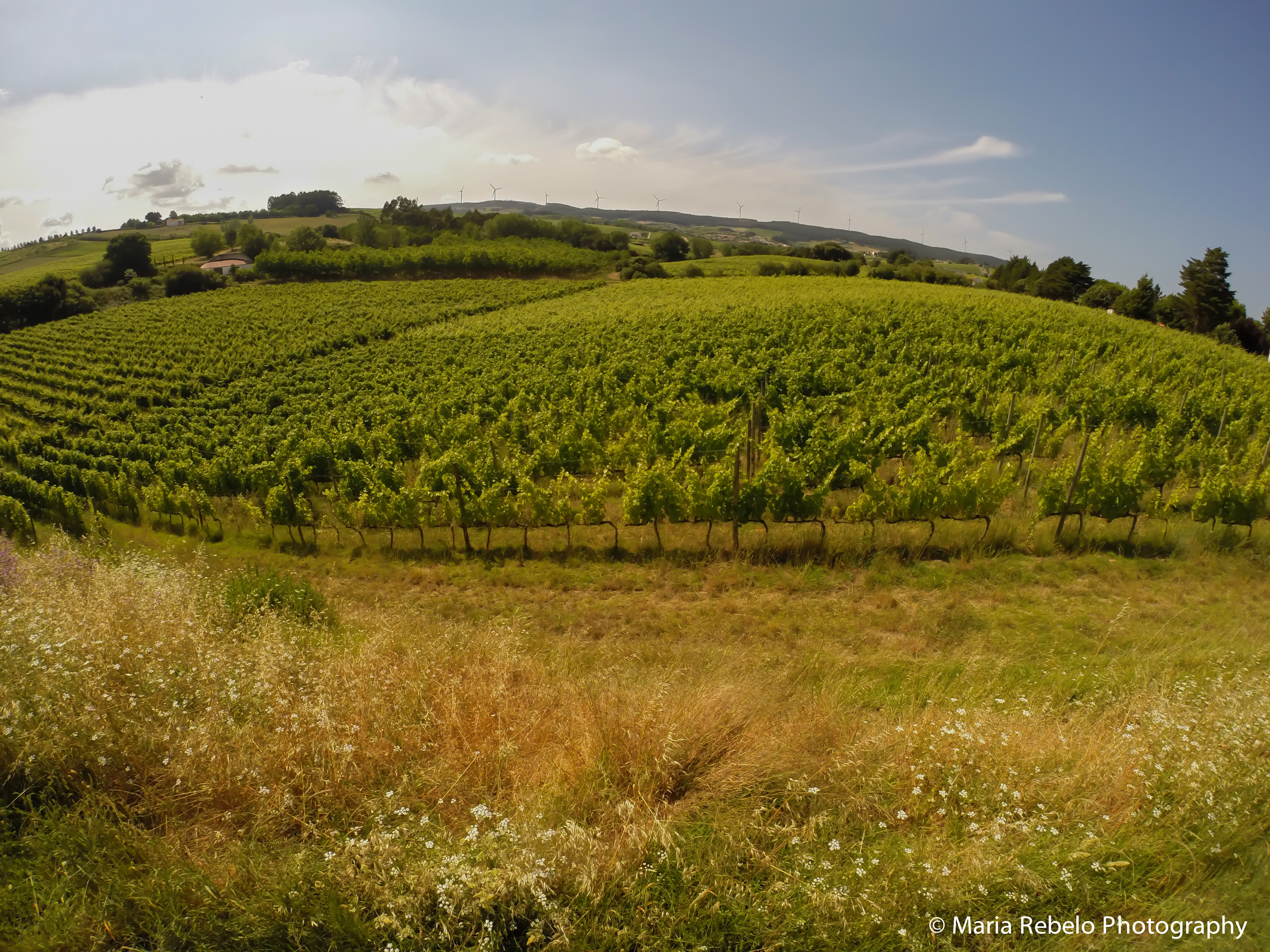
DCIM101GOPRO
The name of this wine estate near Lisbon means golden hill farm. It is a fitting designation because this is a place where grapes are treated like gold and wines are made with a jeweler’s precision.

The soil of the farm is similar to that of Côtes du Rhône, so José Bento dos Santos, the farm’s owner, planted the same grape varieties that thrive in that French region: Syrah and Viognier.

Graça Gonçalves, the estate’s enologist, talks about each parcel of the farm as if they are old friends. She knows their qualities and shortcomings and choses cultivation methods that help each of them thrive. We ask which is her favorite parcel and quickly realize it is an impolite question. Graça does not answer, but when she talks about parcel 24 her eyes shine more than usual. This parcel is planted with Syrah grapes that came from old vines in Côtes du Rhône. Each plant is different and it is this variety that creates the quinta’s top wines, such as the aptly named Syrah 24.

When harvest time approaches, Graça walks through the vines, taking samples to analyze in the lab, tasting the grapes, imagining the wines that will be produced. When the time is right, the grapes are picked by hand and carefully selected. There are then numerous decision to make, such as how to press the grapes and whether to stage the wine in French oak barrels or stainless steel vats. Why such meticulous care? Graça explains: “Wine is roughly 14 percent alcohol and 85 percent water, so there is only one percent for the fruits of the vine to create emotion.” It is impossible not to feel this emotion when you open a bottle of Quinta do Monte d’Oiro wine.

Click here for the Quinta do Monte d’Oiro website.

Black figs

Figos

When you go to the market buy black figs, recommends the Portuguese writer Sophia de Mello Breyner Andresen in her poem The Morning Walk: “but figs are not black, they are blue on the outside and pink on the inside and they all shed a tear made of honey.”

The best of both worlds

Azeitonas Bel Canto-F

Portugal is a country with century-old traditions. But it is also a place where a new generation is creating the future.

Consider the fruits of the Olea europaea, commonly know as olives. If you visit a Portuguese farmers market, you’ll find delicious olives cured in traditional ways. But if you dine at Belcanto, José Avillez’s wonderful restaurant in Lisbon, you’ll be served three invented olives. The first, a spherical olive that explodes in the mouth, is an homage to Avillez’s apprenticeship at elBulli. The second is a delicious black olive in a light crunchy tempura. The third is an inverted dry martini: the liquid is olive juice and the “olive” is a sphere of gin.

Which do you prefer, tradition or modernity? In Portugal you don’t have to choose.

Belcanto is located at Largo do São Carlos in Lisbon, tel. 21-342-0607.

Making love last

Mangerico

In Portugal, June is devoted to celebrating the popular saints. In Lisbon we celebrate Santo António on the 13th, in Oporto São João on the 24th, and in Sintra São Pedro on the 29th.

There is an old custom of writing a verse and offering it with a “manjerico” (a pot of miniature basil) to our loved one. According to tradition, if we smell the manjerico with our nose, it dies quickly. We should instead pat it gently with our hand and smell the hand. Then, the manjerico will last and, presumably, so will our love.

Amazing produce

DCIM100GOPRO

Older people often complain that food doesn’t taste as good as it once did. Are they right or it is just that everything tastes better when we’re young? We can answer this question thanks to Herdade do Freixo do Meio, an Alentejo estate.

In 2001, the Herdade adopted organic production methods and planted old varieties of fruits and vegetables that were left behind by the industrialization of agriculture. They also started to raise black pigs, Barrosa cows, Alentejo turkeys, and other animals, letting them roam free. You can see and taste the amazing results by visiting their store in Lisbon’s Ribeira market.

When you try their products, you quickly realize that older people are right: food used to taste much better. The good news is that Herdade do Freixo is bringing that taste back!

Click here for the Herdade do Freixo do Meio web site.

Wild life in Mafra

TapadaMafra2

When the Portuguese kings and queens stayed at the Mafra Palace, they enjoyed hunting at a local game reserve called Tapada de Mafra. The Tapada is now a national park that offers many fun activities for kids. There are train rides, donkey rides, archery lessons, and falconry demonstrations. You can see deer, wild boar, foxes, and other animals in their natural habitat.

Our favorite activity at Tapada is taking horse-ridding lessons. A 30-minute lesson costs only 5 euros. But riding an elegant horse in the beautiful Tapada grounds, always makes us feel like royalty.

Click here for the Tapada’s web site. Mafra is an easy 40 km drive from Lisbon on the A8 highway. Horse-ridding lessons are offered between 9:30 am and 12:00 pm. It is a good idea to call in advance to make reservations (Tel. 261 81 4240 or reservas@tapadademafra.pt).

The art of seeing

Pedras na praia

We can be artists without drawing, painting, dancing or playing music. All we need is to see the world with child-like wonder. Here’s how Lourdes de Castro, a great Portuguese artist, demonstrates the art of seeing:

“When the tide is low, I hear the sound of the waves pouring over the stones, rolling them day and night, for years, centuries until pieces of basalt become smooth. A pebble is a work of art!”

Portugal’s landscape is an immense canvas inviting you to become an artist. Come and see!

A memorable sandwich

Sandes de leitão- ©mariarebelophotography.com

The Earl of Sandwich is credited with the idea of placing food inside two slices of bread. But it was Portuguese peasants who turned this aristocratic whim into something sublime.

In ancient times, peasants in Mealhada, a town in the Bairrada region, used to offer their largest pigs to the nobles who owned the land. The peasants were left with small pigs called “leitão” (“laytaoum”).  They roasted them in wood ovens, seasoned with garlic, bay leaves, olive oil, and plenty of white pepper. The meat, cut into slices and served inside country bread, produced amazing sandwiches.

One of our favorite side trips from Lisbon is to drive the 90 km to Mealhada to enjoy a freshly-made “leitão” sandwich, accompanied with local sparkling wine. On the way there, we visit the beautiful Batalha monastery. On the return, we stop by the enchanting Bussaco Palace for coffee and pastry. The delicious food and beautiful scenery always make for memorable trips.

There are many good restaurants in Mealhada serving “leitão à moda da Bairrada” (leitão Bairrada style). Two of our favorites are Meta dos Leitões (IC2, Estrada Nacional 1, Sernadelo, Mealhada, tel. 231 209 540, email: casadesarmento@gmail.com) and Pedro dos Leitões (Rua Alvaro Pedro no 1 Sernadelo, Mealhada, tel. 231 209 950).