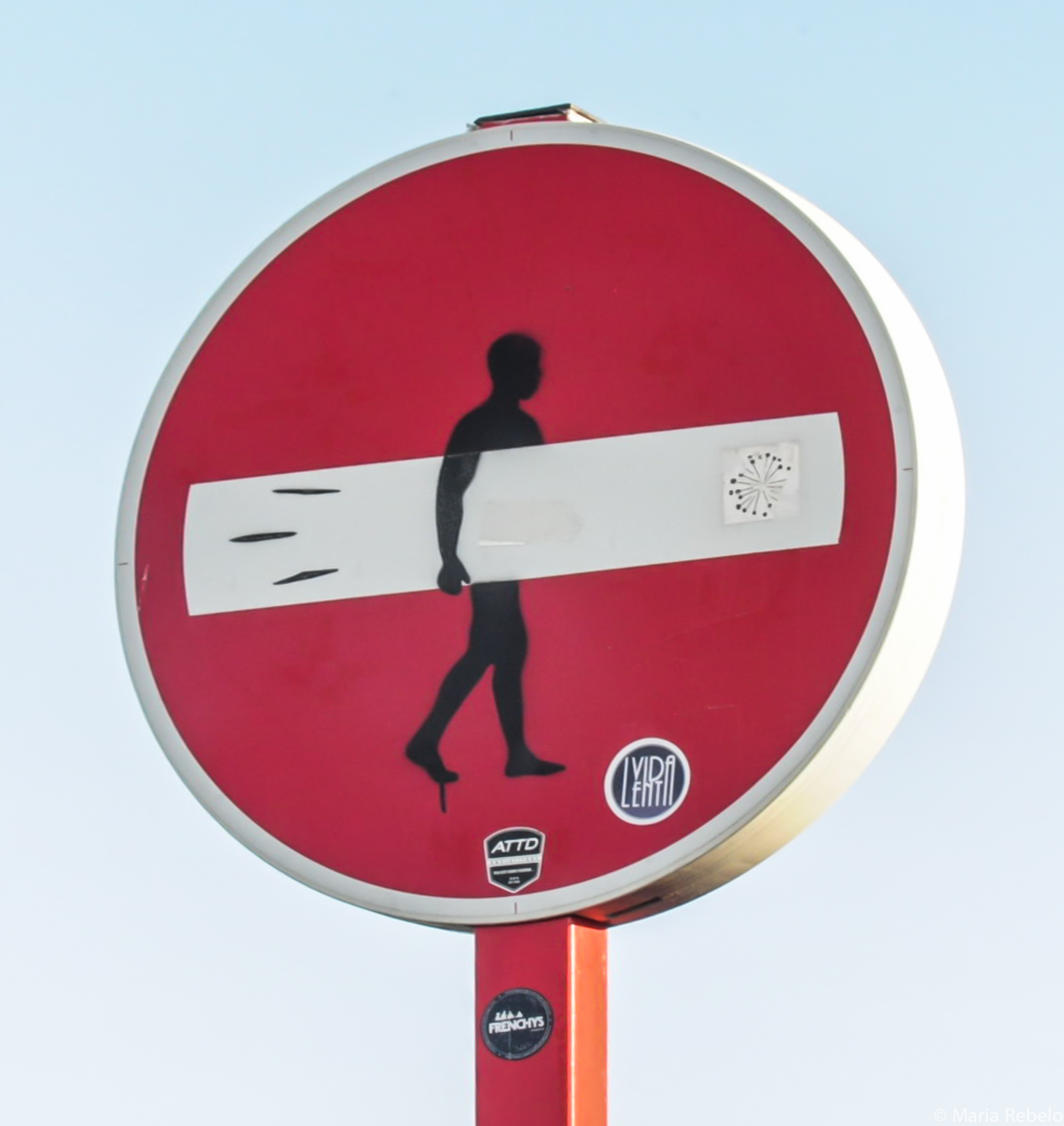
You can sense the relaxed atmosphere in Baleal, a beach near Peniche favored by surfers, when you see a do-not-enter sign transformed into a surf’s-up sign.
Baleal
Baleal, a beach in the Peniche region, used to be an island but it is now connected to land by a thin strip of sand. Its name comes from the Portuguese word for whale (baleia) for, in ancient times, whales were hunted nearby.
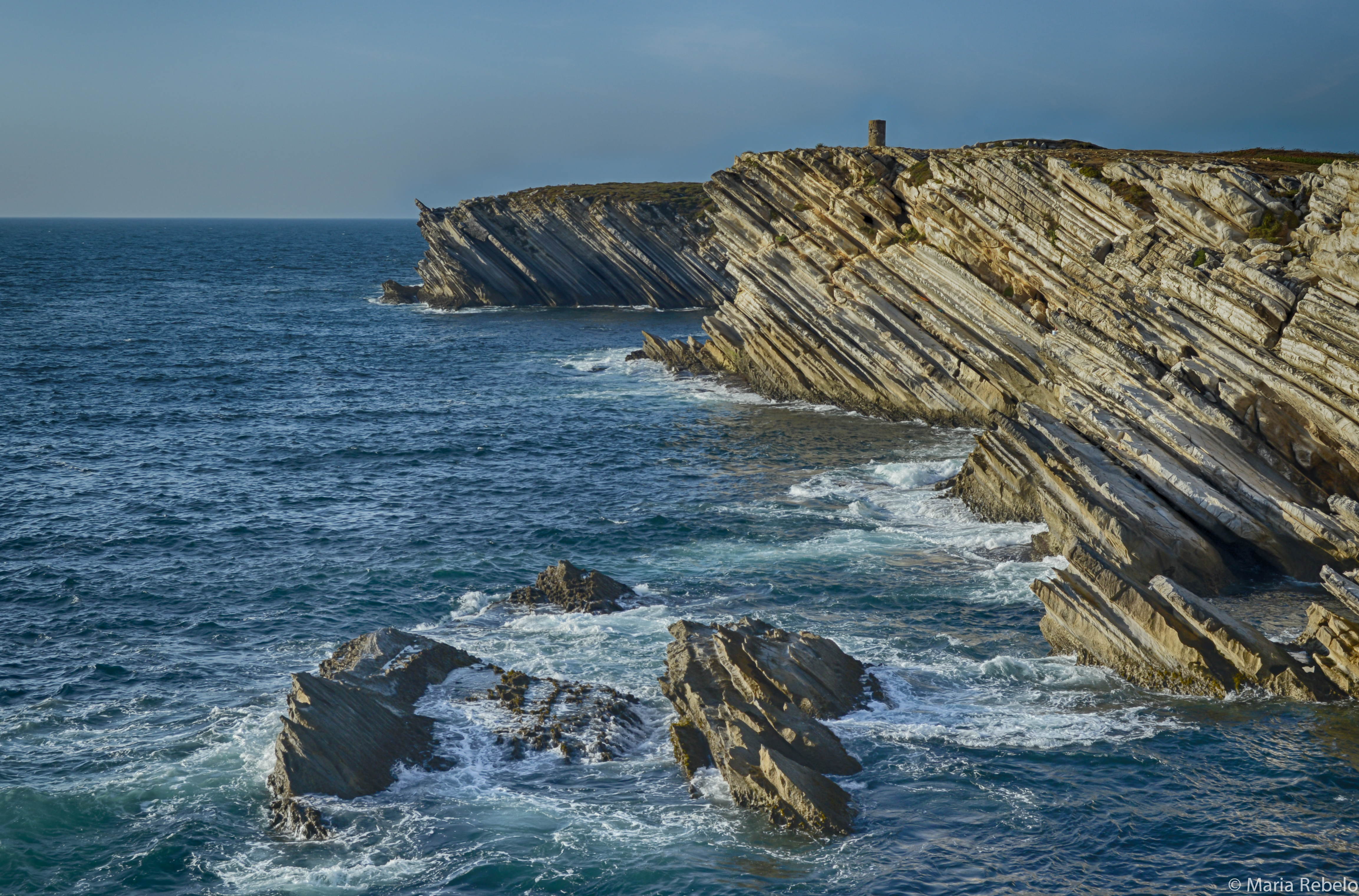
Baleal has many charming houses with beautiful ocean views. But its hallmark is a dramatic rock formation sculpted by the sea.
In his 1923 book “The Fishermen,” the writer Raul Brandão singles out Baleal as the most beautiful beach in Portugal. Surfers, who flock to Baleal every Summer, seem to agree.
Farmers markets
We love going to farmers markets. We always imagine we are in a museum and study the whimsical shapes of the vegetables, the exuberant colors of the fruit, and the amazing aromas.
Most of these fruits and vegetables cannot withstand long distance travel or extended stays in supermarket shelves. But what they lack in endurance they more than make up in taste and smell.
We enjoy talking to the fruits and vegetable vendors. They always have interesting insights about their produce as well as about life. So, if you see a sign saying “Mercado,” follow it. You’ll find food for your body and wisdom for your soul.
The photo shows three generations of wonderful fruits and vegetable vendors: Dona Natividade, her daughter in law and her granddaughter.
A famous beach house
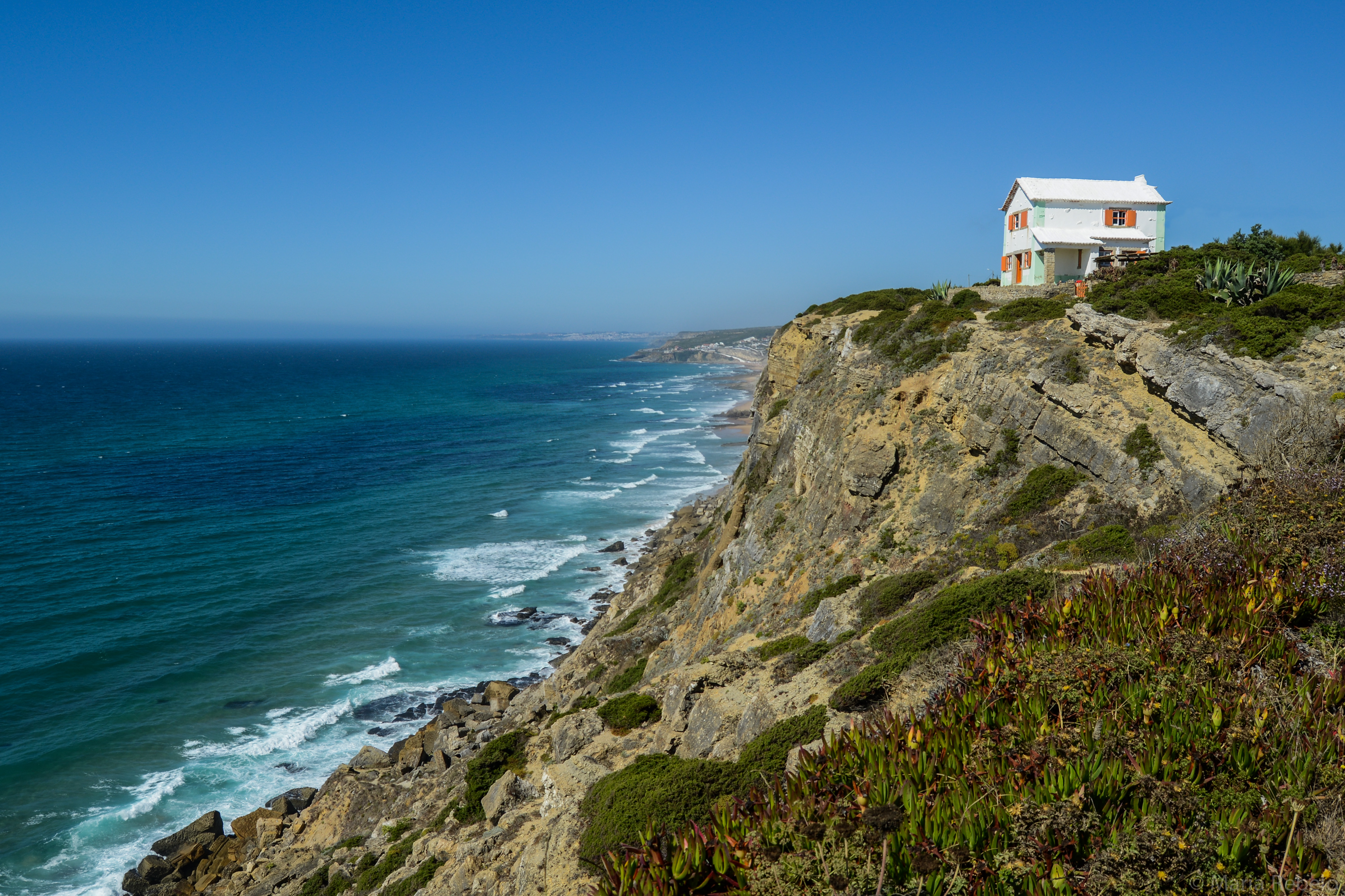
One of the most famous beach houses in Portugal is Casa Branca (white house) in the village of Azenhas do Mar. Architect Raul Lino designed it in 1920 to be his Summer home. Lino had to choose between building within the village perimeter to gain access to electricity and running water, or to forego these modern comforts and place the house on a cliff with an incredible ocean view. For him, the choice was obvious.
Raul Lino is famous for synthesizing the vernacular traditions that go back to Roman times to create the archetypal Portuguese house. The Casa Branca is based on this archetype, but Lino made two surprising choices. Instead of using the traditional green color for the windows, he chose bright orange. Then, he painted the orange roof tiles white, thus accentuating the orange of the windows.
Orange is the complementary of blue and so the windows of Casa Branca became the complement of the sea. It’s as if, to be beautiful, the sea needs someone admiring it from the window.
The place to ask
On the steps of the stairs that lead to the lookout point at Azenhas do Mar, gently inscribed in white chalk, are the words: “eu vou casar contigo” (I’m going to marry you).
Was this promise well received? Did they exchange wedding vows and live happily ever after? We’ll never know. What we do know is that Azenhas do Mar is a perfect place for a marriage proposal.
A village by the sea
The French use the expression “village perché” to describe a village on top of a hill, overlooking the surrounding landscape. One of the prettiest village perchés in Portugal is Azenhas do Mar. Built on a cliff in the Colares region near Sintra, it has amazing views of the Atlantic ocean.
If you rent a house in Azenhas do Mar, you can spend the day listening to the waves and watching the sea try different shades of blue and green. It’s a very fine use of time.
Romantic lakes
Azores, a Portuguese archipelago, is a place of immense beauty. One example of the rare gifts that nature bestowed on Azores is the Lagoa das Sete Cidades (seven-cities lake) in the São Miguel island. It consists of a green and a blue lake located inside an ancient volcano.
According to a local legend, there was a princess with green eyes who fell in love with a shepherd with blue eyes. When the king did not approve their marriage, the princess and the shepherd cried and cried. Their love bore no fruit but their tears formed two adjacent lakes, one green and one blue.
Kite surfing
Daedalus, a Greek architect, designed wings so that his son Icarus could fly. This early venture into extreme sports did not work out, but great progress has been made since then.
One of the most thrilling new sports is kite surfing. Powered by large kites, surfers dance to the music of the waves and the choreography of the wind. Their feats look impossible. Surely these are Olympic athletes or Bolshoi dancers taunting us mere mortals with their effortless acrobatic elegance.
As it turns out, kite surfing is much easier than it looks. Spend a couple of weeks in one of Portugal’s many surf schools and you too will be able to glide.
A fisherman’s place
Fishermen have a hard life. They go out in the dark, defying the waves to cast their nets on a uncertain sea. On good nights, their boats return full of fish, pursued by seagulls looking for a free meal.
In Peniche, fishermen used to celebrate a good catch in a shack where they cooked fish and vegetables in a makeshift oven. Their food was better than anything served in a royal banquet because it was prepared with the freshest, greatest ingredients that nature has to offer. So, every meal turned into a celebration.
Over time, this shack was renovated and converted into a restaurant called Tasca do Joel. Gourmets flock to its out-of-the-way location, knowing that they’ll find something special: great ingredients that shine through simple, traditional preparations paired with the best Portuguese wines. And the same feeling of celebration that once gathered Peniche fishermen around a rustic oven.
Tasca do Joel is located on Rua do Lapadusso, 73, Peniche. Tel. 262 782 945. Email: tascadojoel@gmail.com. Click here for their web site.
Nannarella
Why would an Italian couple move with their children from Rome to Lisbon to open a gelato store? And why would they name it after a 1950s actress that no one remembers? We don’t know, but what’s important is that they came.
They use Italian technology and the best Portuguese ingredients, such as water from the Estrela mountain, Vigor milk, Delta coffee, Pantagruel chocolate, rocha pears, Port wine, and Óbidos ginja. The result is gelato so indescribably delicious that we feel the urge to sing: con Nannarella la vita è bella!
Nannarella is located on Rua Nova da Piedade, 68 in Lisbon in the Principe Real neighborhood.