Humble art

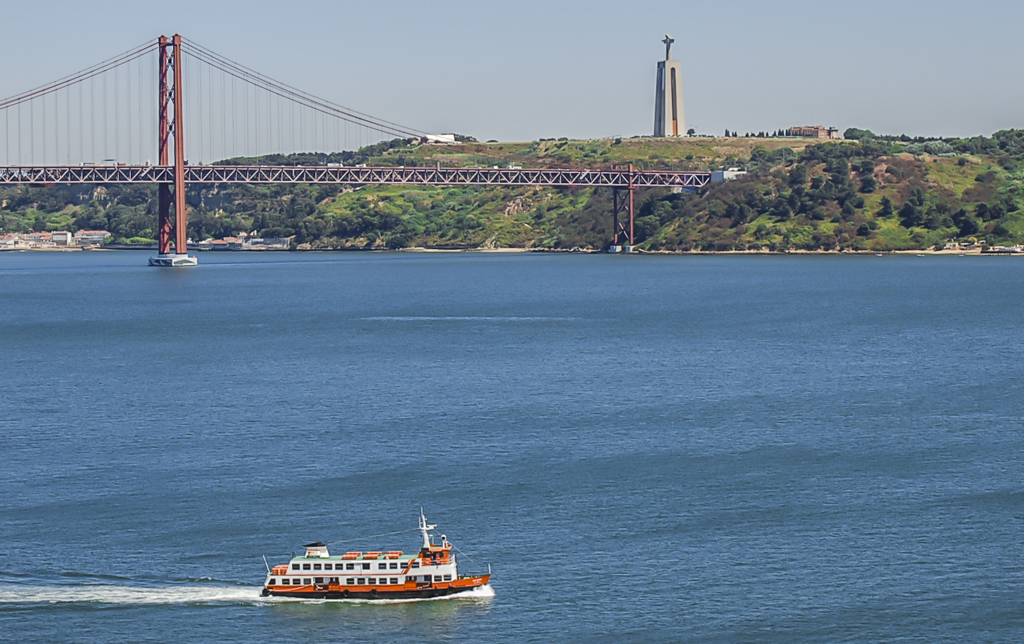
LisboaCacilheiro

Art is made of constraints. When architect Frank Gehry received a commission to build whatever he wanted, he turned it down. Sometimes, artists create their own constraints. The French writer George Perec wrote a 300-page novel, “La Disparition,” without using the letter “e.”

Other times, circumstances dictate the constraints. When artist Joana Vasconcelos was invited to represent Portugal in the Venice Biennale, the problem was that Portugal does not have a permanent pavilion at the fair. The artist’s solution was to use a ferry boat that was about to be dismantled both as a floating pavilion and exhibition piece. So, after spending a lifetime between the margins of the Tagus river, this humble boat has become a work of art!

The ferry boats that cross the river Tagus are called “cacilheiros.” They’re a great, inexpensive way to travel on the Tagus. Click here to see their schedule.

The art of the suffix

O Malhadinhas

The Portuguese love to use the suffixes “inho” (pronounced eeño) and “zinho” (zeeño). They change the meaning of words in subtle, endearing ways. Instead of calling your friend Pedro, you call him Pedrinho. It means little Pedro, dear Pedro. It says you care about him.

If the gender of the word is feminine, you use “inha” (eeña ) or “zinha” (zeeña ). To greet your friend Maria you say “olá Mariazinha,” and Maria is guaranteed to smile.

These suffixes don’t apply only to proper names. To ask for a favor, ask for a “favorzinho,” and you’re more likely to see it granted. “Obrigado” means thank you, but to say a special thank you, you say “obrigadinho.”

In the 16th century, the Portuguese arrived in Japan where “obrigado,” became “arrigato.” But we didn’t stay for long, so the Japanese never learned to say “arrigatinho.”

In contrast, the Portuguese stayed in Brazil time enough for Brazilians to learn the ways of the “inho.” That’s why Brazil has been blessed with talented soccer players like Ronaldinho and brilliant bossa nova musicians like Toquinho.

Would the Japanese play beautiful soccer and sing bossa nova if they had mastered the art of the “inho”? You bet.

A Portuguese symposium

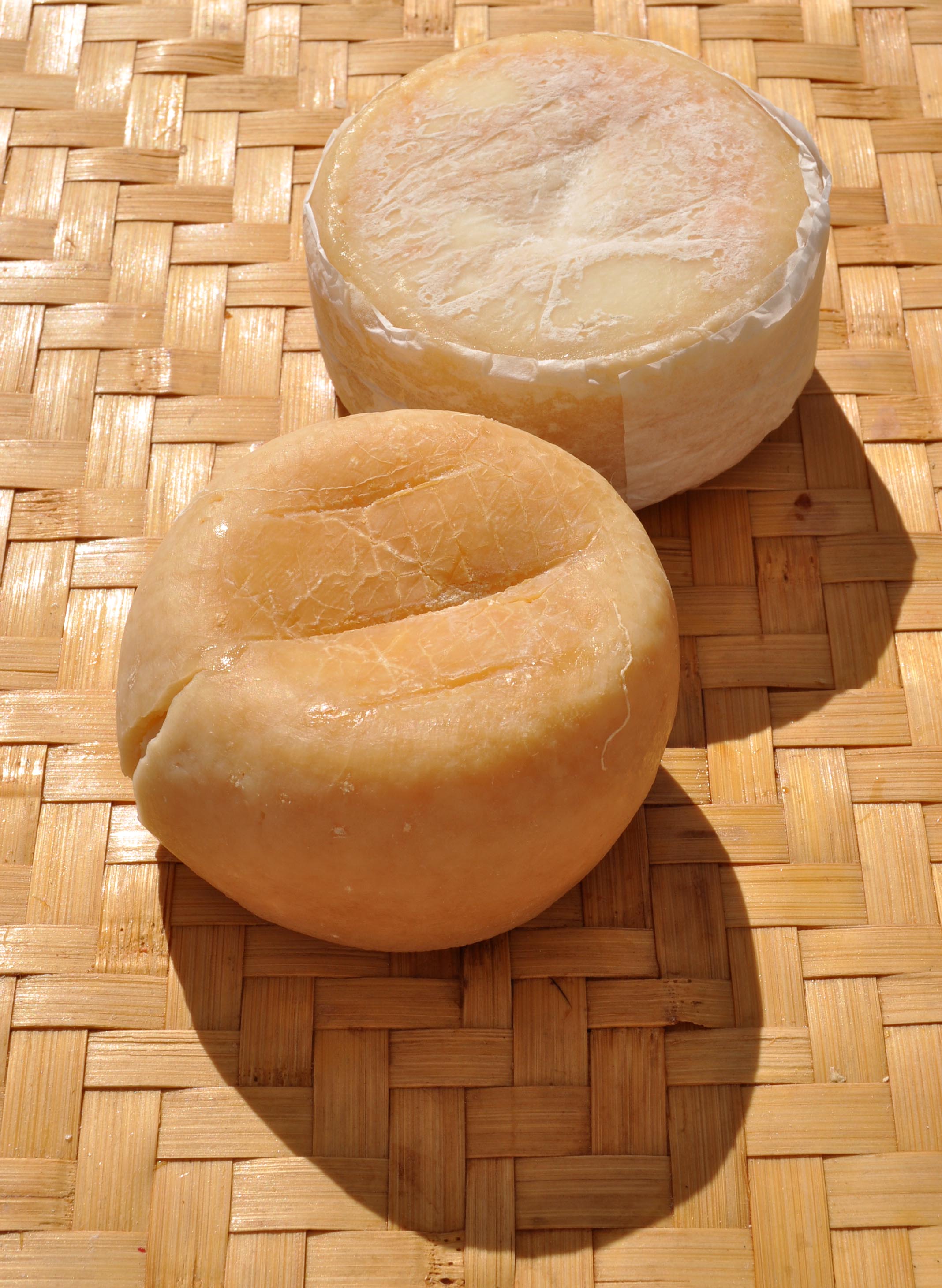
Queijo de AzeitãoSymposium is a Greek word that means drinking together. It refers to parties in which people sat around, drinking wine and talking about life. One of these parties, attended by Socrates, was immortalized by Plato in his writings.

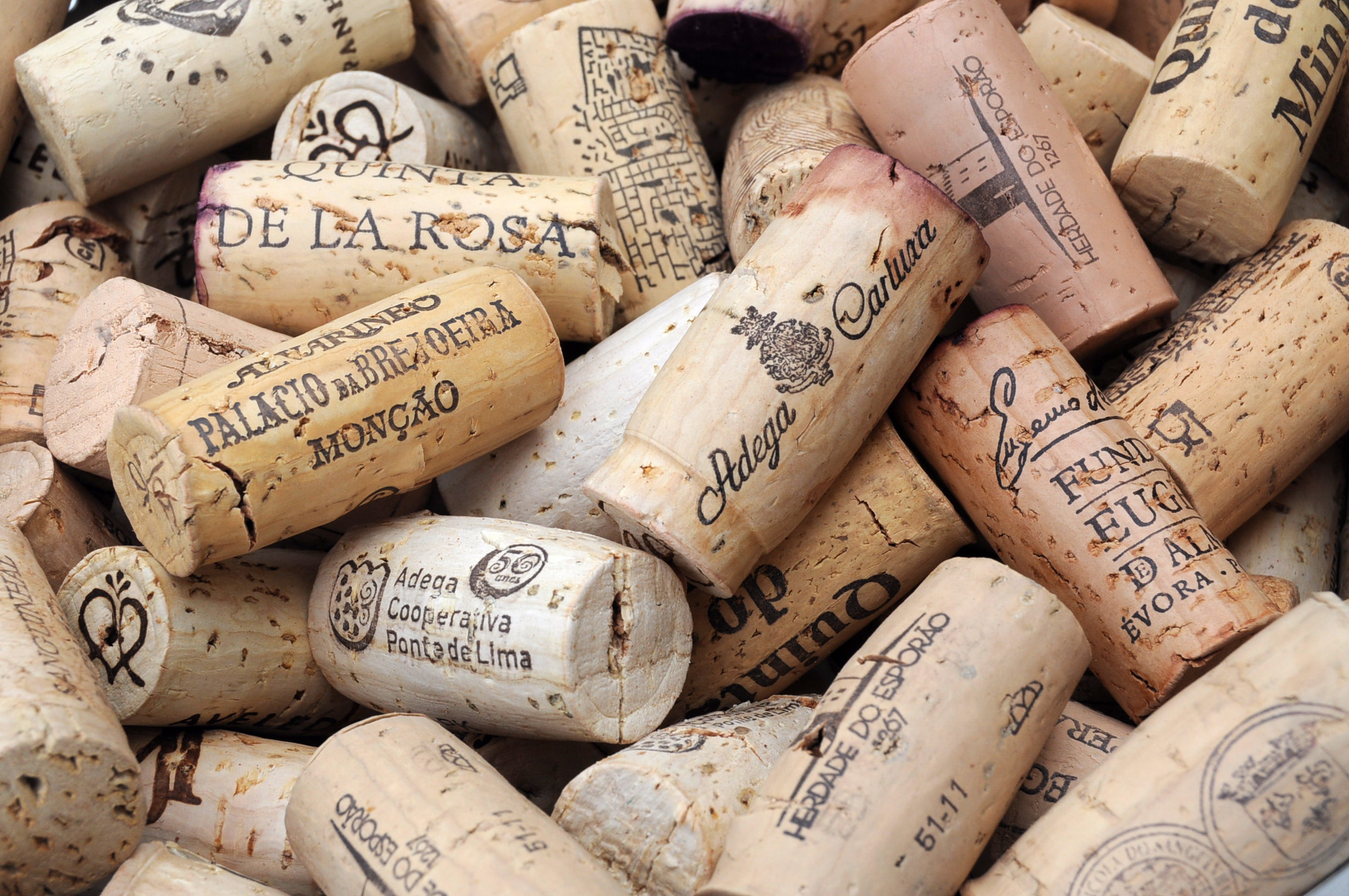
You can easily recreate a symposium atmosphere in Portugal. First, invite some great friends. Second, procure three great ingredients: rustic bread, Azeitão cheese and Piriquita wine.

Azeitão is produced with sheep milk in small farms in the Arrábida mountain with the same techniques used to make Serra cheese in the Estrela mountain. But different pastures make different cheese, so Azeitão has a taste all of its own. Piriquita is a wine from the nearby Palmela region, produced with a grape varietal known as Castelão or Piriquita.

This wine and cheese are a heavenly pairing. So, you’ll have a good time, even if no philosophers show up. But, if you’re lucky, the conversation will be so brilliant that people will still talk about your party in 2500 years.

The Azeitão cheese produced by Fernando & Simões in Quinta do Anjo is one of our favorites. 

A bohemian hotel

HotelEstrela

If you’re tired of boring, conventional hotels, the Hotel da Estrela might be just the place for you. It is a former school transformed into a bohemian boutique hotel with a great vibe and lots of charm.

The hotel is located in the quiet Campo de Ourique neighborhood. But, when you’re ready for sight seeing, all you have to do is board the famous tram 28 which will take you to Rossio, Chiado, or St. Jorge’s castle.

Choosing where to eat when you come back is easy. Around the corner, you have a great restaurant run by chef Vitor Sobral called Tasca da Esquina, (which makes sense, since “esquina” means corner).

But choosing where to have dessert is a more complex issue. The hotel serves a wonderful “pão de ló,” sugar, eggs and flour transformed into pure bliss. Nearby, you have Pastelaria Aloma, which won the prize for the best “pastel de nata” in Lisbon two years in a row. And then there’s a tiny store that serves the world’s best chocolate cake!

The hotel has a nice garden where you can eat a picnic prepared by the hotel’s restaurant. It’s the perfect place to woo someone you love. If you need inspiration for what to say, just visit the nearby house where the great poet Fernando Pessoa lived. It works every time!

The Hotel da Estrela is located on Rua Saraiva de Carvalho 35,  Lisbon, tel. 211 900 10; click here for the hotel’s web site. Click here and here for more information on Tasca da Esquina and Cervejaria da Esquina, respectively. For information on the life-changing best chocolate cake in the world click here. Pastelaria Aloma is on Rua Francisco Metrass 67, Lisbon, tel. 213 963 797. The Fernando Pessoa house is on Rua Coelho da Rocha, 16, Lisbon. Click here for their web site.

Top 3 Lisbon tourist sites

Lisboa_116F
Jerónimos monastery, Maria Rebelo, digital print image, 2012.

Marie Rattazzi, a grandniece of Napoleon, was a beautiful socialite. She married an Italian prime minister and was friends with Alexander Dumas and Victor Hugo. The books she wrote about her travels give us a unique glimpse into the life of 19th century European nobility.

When Rattazzi’s “Portugal at a Glance” was published in 1880, the Portuguese complained that it was full of errors and misconceptions. But her list of favorite Lisbon sites stands the test of time. Here it is:

1) The Terreiro do Paço, bathed by the waters of the Tagus river. […] Yes, the Tagus is truly beautiful and I admire it with all the sincerity of my soul. […] It is vast, with spacious, luminous horizons and one of the world’s most splendid harbors.

2) The Rossio, a very beautiful plaza, the busiest in Lisbon.

3) The Tower of Belem and the Jerónimos monastery. The Tower of Belém has a square form flanked by turrets, watchtowers, oculi, lancet windows, and sculptured balconies. Its pure Gothic architecture produces an admirable effect. Near the tower rises the ancient Jerónimos monastery. The main entrance and the facade are one of the most beautiful examples of the opulent Gothic style. […] This remarkable monument was built in Restelo, the beach from where Vasco da Gama sailed to India. The convent, contiguous to the church, is immense. […] The Arab-style cloister has sculptured laces so perfect and beautiful that I would gladly spend consecutive days in contemplative admiration. It is wonderful!

If you’re in Lisbon for a short visit, you’ll be well served by these timeless recommendations.

A dream palace

Sintra_PalácioPena
The Pena Palace, Maria Rebelo, digital print image, 2012.

The story of the Pena Palace begins in the 16th century. King Dom Manuel was hiking in Sintra when he sighted Vasco da Gama’s sailboats arriving in Cascais from their voyage to India. To celebrate da Gama’s feat, the king built a monastery on the top of the Sintra mountain. But, over time, the building fell into disrepair and was eventually abandoned.

When Ferdinand Saxe-Coburg-Gotha, the husband of Queen Dona Maria II, visited Sintra, he saw the derelict monastery surrounded by a barren landscape. Ferdinand imagined a beautiful palace and an enchanted forest. He bought the property in 1838 and restored the old monastery to use as a Summer residence. Later, he built an adjacent palace with larger rooms to accommodate state functions. The monastery is pink and the new palace yellow, so they are easy to tell apart.

Around the palace, Ferdinand created artificial lakes and an irrigation system. He studied the soil and supervised the plantation of trees brought from all over the world.

In 1853, Dona Maria died and Pedro, the couple’s elder son, inherited the Portuguese throne. Ferdinand was offered the throne of Spain, but he loved living in Pena so much that he refused the offer. The Pena Palace is the dream of a German prince who fell in love with Portugal.

The art of traveling

FrancesMayes

Travel is like many other things in life–we get what we put into it. So much of the pleasure of travel is anticipation: plotting the route, learning about history and culture, imagining the sights, preparing the senses for new tastes and aromas. Travel guides help us with the planning, but they often urge us to rush from site to site, accumulating tourist points until we’re totally exhausted and eager to return home.

There’s so much we can learn about the art of travel from the writer Frances Mayes. In chapter 2 of her book “A Year in the World,”  Mayes describes how she navigated through Portugal without compass, astrolabe or GPS. She knows when to slow down to enjoy the scenery, how to spot a good restaurant that no guidebook has noticed, how to be open to happenstance. And her writing places us on location, enjoying our vacation before it even starts!

Portuguese zen

Bola de Berlim

A “bola de Berlim” (Berlim ball) is deliciously simple: fried dough filled with pastry cream and coated with sugar. How can we enjoy this treat in an era of constant calorie counting?

Here’s the strategy. Do you know those times when we’re annoyed by the small predicaments of life? We’re waiting in an endless line, lock our keys inside the car, step on a puddle of oil, or lose our umbrella as it starts to rain. Instead of getting frustrated, we smile and think: we earned a bola de Berlim!

We rush to a pastry store and ask without a trace of guilt: “uma bola de Berlim, por favor.” We then enjoy the bola for what it really is: a necessary moment of zen.

This Bola de Berlim is from Tartine, a wonderful new bakery in Chiado where you can enjoy breakfast, brunch and other light meals. Tartine is located on Rua Serpa Pinto, 15, Lisbon, tel. 213429108. Click here for their website.

The queen’s in the palace

JV_205-Edit

Her grandfather, who worked in an antique shop, believed that it takes several generations to create a great artist. Maybe this belief was the point of departure for Joana Vasconcelos, who often draws inspiration from age-old artisan techniques. Some of her pieces have a colossal scale, shoes built with pots and pans, giant wrought-iron teapots, towers fashioned out of champagne bottles. But she also makes small, whimsical objects.

In 2012, the Palace of Versailles invited Vasconcelos to showcase her work. The artist filled the palace with glamorous objects made of humble materials: feathered helicopters, ceramic lobsters, giant fabric sculptures, outsize hearts built with plastic cutlery. She dedicated the exhibition to the Portuguese women who work in Paris as concierges.

From March 23 to August 25, Vasconcelos shows her work in a perfect setting: the Ajuda royal palace in Lisbon. Portugal abolished the monarchy in 1910. But, in the arts, Joana Vasconcelos is our reigning queen.

Click here to visit Joana Vasconcelos’ web site. You can see her exhibition at Ajuda from 10 am to 7 pm every day except on Wednesdays. On Saturday the exhibition stays open until 9 pm. Click here for more information.

Cherishing the mackerel

RBD_desenho-cavala
A cavala, Rui Barreiros Duarte, ink on paper, 2012.

Fernand Point’s famous cookbook, Ma Gastronomie, includes two mackerel recipes. But in Portugal this fish, known as “cavala,” has never been popular. When fish mongers find mackerel mixed with other fish, they often give it away.

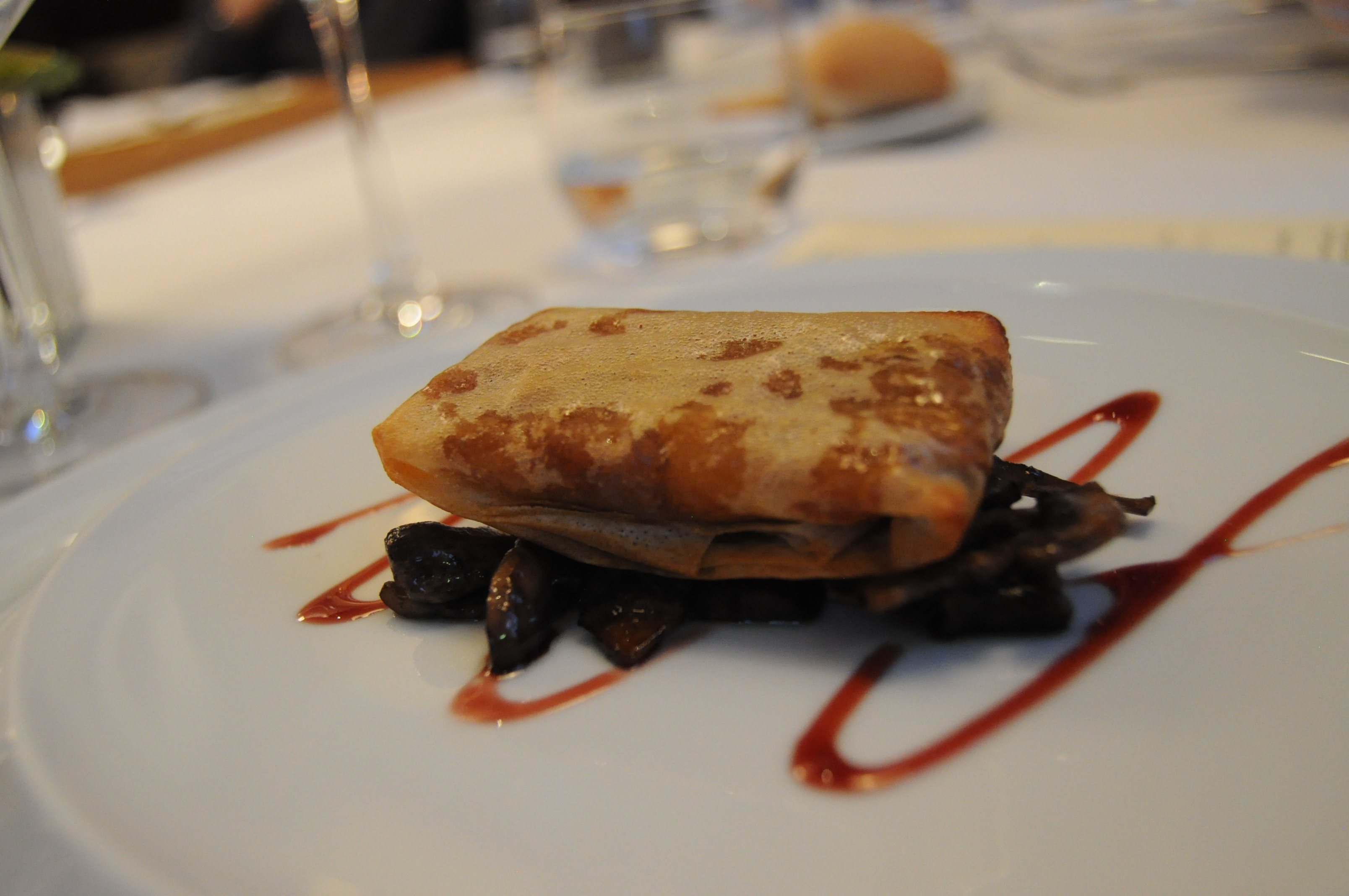
We worry that our national indifference toward the mackerel might make it swim to France in search of recognition. Luckily, chef José Avillez decided to pay tribute to this wonderful fish at his restaurant, Belcanto.  His recipe starts with a traditional “salmoura”: the fish is soaked in water, salt and sugar. It is then sliced and marinated in an infusion of rice vinegar and green apples. Finally, the mackerel is seared and served with delicately pickled vegetables.

If you go to Belcanto, please order this delicious dish. Help us keep the mackerel on the Portuguese coast!

Cavala Belcanto

Belcanto is located at Largo de S. Carlos, 10 in Lisbon. Tel. 213-420-607.