The delights of Alkazar

Alcacer - @mariarebelophotography.com

Helena Silva was born and raised in Alcácer do Sal. As a kid, she was fascinated by the history of this ancient city and wanted to become an archeologist to find out more about its past.

Instead, Helena opened a gourmet store called Alkazar (the Arab name for Alcácer do Sal) on the city’s main street, overlooking the Sado river. With the patience of an archeologist, she gathered the best products from the region.

Alcácer is known for the production of salt, pine nuts and rice, so these products have pride of place in Helena’s store. But there are also interesting wines, artisanal honey, appetizing canned fish, regional sweets, and much more.

Our favorite discovery was “pinhoada,” a highly-addictive nougat made with local pine nuts and honey. There’re many good reasons to visit the wonderful town of Alcacer do Sal. But the taste of the pinhoada alone justifies a visit.

Helena Silva’s store, Alkazar Gourmet is located on Rua Machado dos Santos n º4, 7580-162 Alcácer do Sal, Tel. 265088739.

Cooking pork and clams on the trail of Jamie Oliver

OLYMPUS DIGITAL CAMERA

We asked Dália Soromenho, the chef/owner of Porto Santana in Alcácer do Sal,  what alchemy made her pork and clams so magical. “I don’t give out my recipes,” she said sternly. “But I have to confess that I taught the recipe to Jamie Oliver when he came to the restaurant,” she continued with pride. “That is like telling everybody!” we argued. Dália relented and shared her recipe with us. So, here it is dear reader, the recipe for the best pork and clams we ever tasted.

Dália Soromenho’s Pork and Clams Recipe

Dália likes to cook this recipe with two cuts of pork: either “pá” (shoulder) of black pork or “cachaço” (neck) of white pork. The quality of the ingredients is essential.

First, marinate the pork cut into cubes with minced garlic and “pimentão,” a paste made of red peppers and salt. Then, slowly simmer the pork in lard until it becomes deliciously tender. The cooked pork can be refrigerated at this point. When you are ready to serve, fry the pork in lard in a frying pan over high heat. Place the clams on top of the pork and cover until the clams open. Cut the potatoes into small pieces and fry them separately. Add the potatoes to the pork-and-clams combination, season with chopped coriander and serve your lucky guests

“You’re welcome to come back to cook the recipe with me,” Dália offered as we said goodbye. We surely will!

Porto Santana is located at Senhora Santana, Alcacer do Sal, tel. 969 020 740.


Quinta Dona Maria

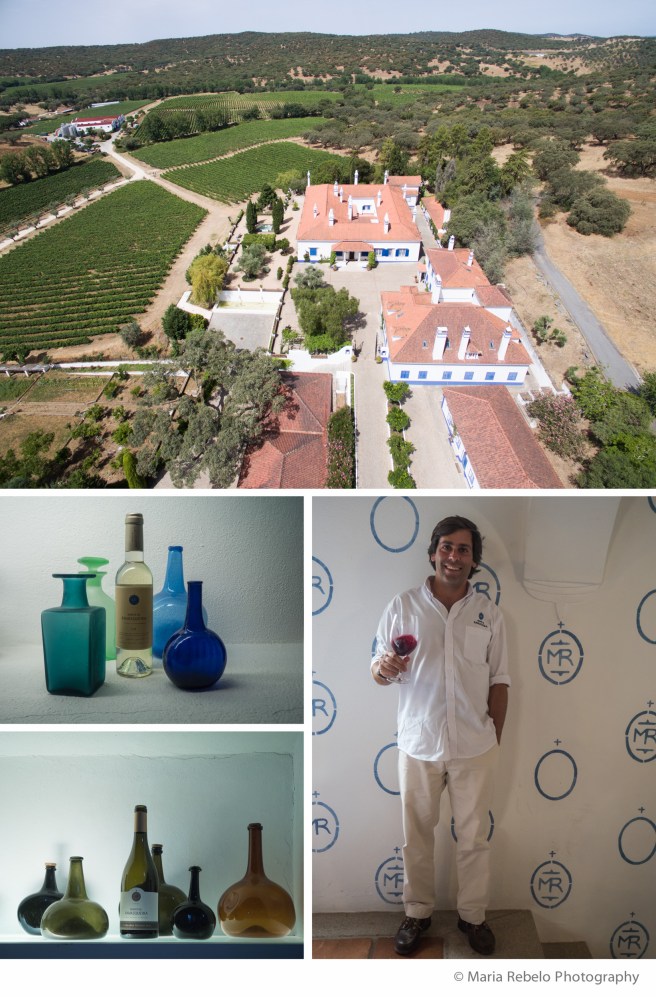
Quinta D. Maria Winery

Estremoz is a town in Alentejo famous for its white marble. The same geological conditions that fashioned its pristine stones created limestone soils perfect for wine production. So it’s no wonder that there are so many wineries around Estremoz.

The prettiest of them all is Quinta Dona Maria. The estate, which dates back to 1718, was purchased by King João V and offered to Dona Maria, a courtesan with whom he fell in love. In the 19th century, the estate was bought by the Reynolds, a family of British merchants who came to Portugal to produce cork and wine. The current owner, Julio Bastos, inherited the estate from an aunt who married into the Reynolds family.

Bastos got his passion for wine from his father. Every year, father and son came to the harvest so that young Julio could be initiated into the mysteries of wine making. Bastos is particularly fond of Alicante Bouschet, a varietal brought to Alentejo by his family in the 19th century.

Eager to produce extraordinary wines, Bastos entered into a partnership with Lafite Rothschild. But when the Rothschild team started uprooting his old family vines to plant French varietals, Basto decided to go his own way.

He nurtured the old vines and used 17th century marble tanks to tread the grapes. The result are wines with a unique personality: rich and earthy with elegant aromas and a smooth finish.

Production volumes are low, so these wines are hard to find. If you’re traveling in Alentejo, stop by Quinta Dona Maria and take home these exquisite wines made in soils nourished by the love of the land and blessed by the richness of marble.

Click here for the website of Quinta Dona Maria.

The painter arrived!

OLYMPUS DIGITAL CAMERA

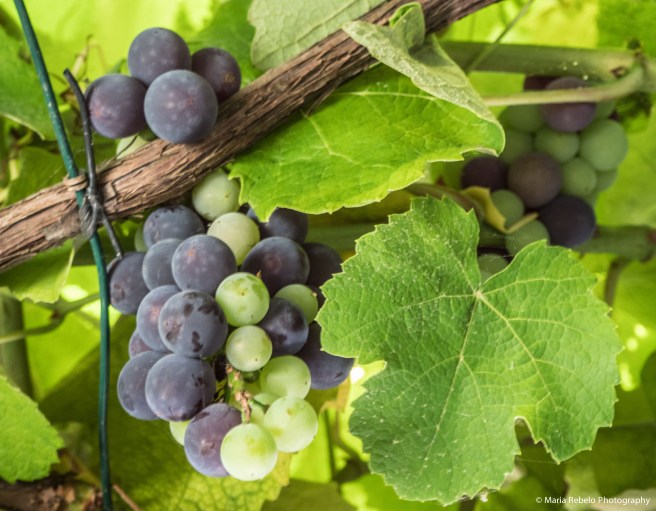
Between March and July the grapes wear bright green colors. But, once August comes, some grapes trade their green garments for red clothes, others change into bright yellow hues. When this makeover occurs, wine makers say that the “painter arrived,” as if some celestial artist came to color the grapes one by one.

After the painter arrives, the period of maturation begins. A few weeks later, it is time for the harvest, the culmination of all the work done by man, women and nature in the vineyard.

In Portugal, the painter has arrived everywhere and in some areas of the Douro valley and Alentejo the harvest is well under way. All we can do is wait until the colorful grapes turn into memorable wines we can share with friends.

A perfect blend in Alentejo

Composit Monte da Ravasqueira- 2Sometimes you have to look far to find what you have near. The enologist Pedro Pereira Gonçalves left his homeland in search of a new world, first in Australia and then in Chile. But he found his calling back in Portugal at Monte da Ravasqueira, in the heart of Alentejo.

The estate was purchased by José Manuel de Mello, a successful entrepreneur, in 1943. He turned the 3,000 hectares into a family retreat where he bred Lusitano horses and planted vines, cork and olive trees.

What attracted Pedro to the property, still owned by the Mello family, are its unique virtues. Twelve dams help create a micro climate with cooler temperatures.  And even though the Atlantic Ocean is 120 km away, it cools the nights because there are no mountains in its way. While most of Alentejo is flat, Ravasqueira has slopes with different sun exposures that produce diversity in sugar and acid levels.

Pedro uses high-resolution aerial photographs to study each individual vine so that grapes can be combined into ideal blends. The result is wines that are truly made in the vineyard.

We tried some great examples. An enticing 2015 dry premium rosé with delicate fruit flavors and rich minerality. A 2014 premium white, aged in contact with the lees, that combines freshness with complexity. An elegant 2014 red called Vinha das Romãs, made from vines planted where an ancient pomegranate orchard once grew. The pomegranate roots are still there, lending the wine unique flavors and aromas.

Our wine tasting was followed by an appetizing lunch during which the Ravasqueira wines proved their ability to pair perfectly with food. The feast started with a gazpacho and continued with two traditional main courses: codfish with cornbread and roasted goatling.  The finale was a “mille feuilles” layered with artisanal jams made on the property, accompanied by exuberant port-style fortified wines.

Monte da Ravasqueira is a perfect blend of passion and technique, of tradition and modernity. It is a place where the Atlantic breezes join forces with the Alentejo sun to create exquisite wines.

Monte da Ravasqueira is located near Arraiolos, tel. 266-490-200, email ravasqueira@ravasqueira.com. Click here for information about how to schedule a visit.

Serra d’Ossa

Composit Serra D'Ossa.JPG

It was an act of bravery. We drove up the serpentine road to Serra d’Ossa to dine at a restaurant we couldn’t find on trip advisor!  But a trusted local source told us that this was the place to go if we wanted to taste the rustic food of Alentejo. And so we went.

We were welcomed by Paula Patinho who owns the restaurant with her husband Francisco. Her mother cooks and her father makes the house wine. We were surprised by the menu prices: they were half of what we would have paid in Évora or Estremoz.

Francisco suggested that we start with “sopa de cação” (dogfish soup), continued with a tomato and fried meat soup, and ended with “lagartos,” thin strips of black pork grilled to perfection. The flavors are bold but harmonious perhaps because all the ingredients were local, cultivated in the same lands by the same people.

The house wine is staged in stainless steel. It tastes pure and smooth and pairs perfectly with the food.

We asked Francisco what makes the food taste so great. “There is a deceiving complexity to the cuisine of Alentejo,” he explained. “The preparations look simple but pushing the flavors to a higher level takes time and requires many ingredients.”

Our audacity was greatly rewarded. We discovered an inexpensive restaurant that does justice to the rich culinary tradition of Alentejo.

Serra d’Ossa is located on Rua Principal, 77, Aldeia da Serra D’Ossa, Redondo, tel. 266-909-037.

A white palace in Estremoz

Composit Estremoz

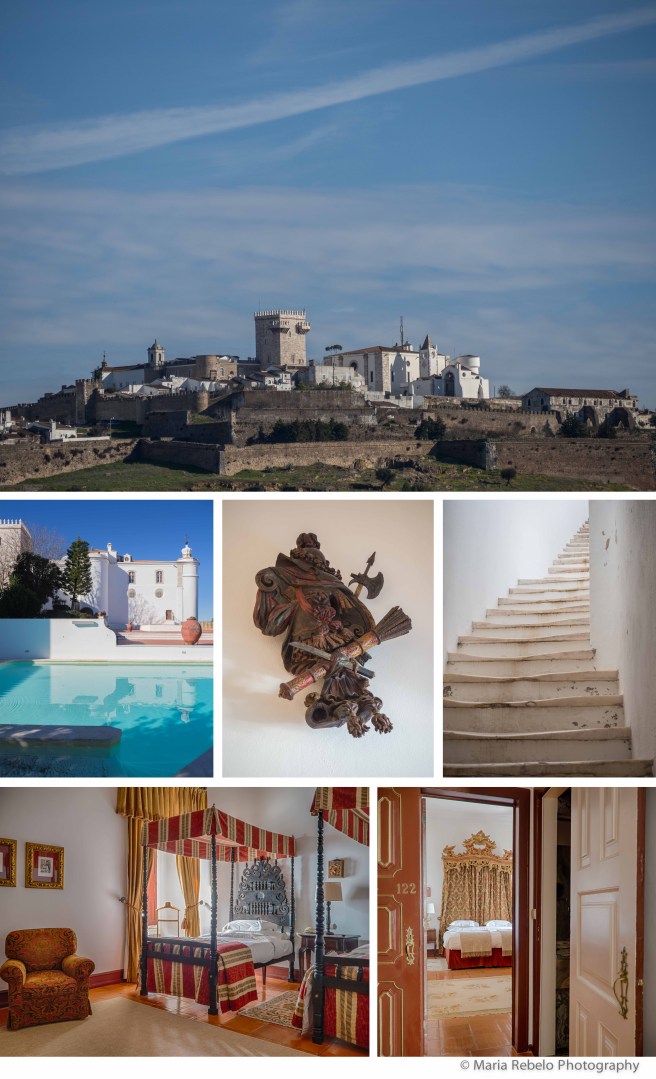
Estremoz is a village in Alentejo built on a hill by king Dom Afonso III in 1258.  It was once an important citadel that guarded the Portuguese kingdom from potential aggressors.

In 1360, king Dom Dinis built a royal palace in Estremoz for his wife Isabel of Aragon. It was in this palace that king Dom Manuel appointed Vasco da Gama as the commander of the fleet that sailed to India, beginning a new chapter in world history.

The palace, converted into an historical hotel, is sumptuously decorated with antique paintings and furniture. Corridors and stairs are covered with the famous white marble excavated from local quarries.

The war trophies that hang in the dining room reminded us of the momentous decisions made in this palace. And they made us appreciate even more the tranquil days we spent with only one difficult decision to make: which of the 22 wineries in Estremoz to visit.

Here’s a link to the pousadas’ website. You can find a large collection of photos of the pousadas at www.mariarebelophotography.com.

Magano

Composit Magano

When lunch time comes, some Lisbon residents dream about being magically transported to the plains of Alentejo. “O Magano,” a restaurant in the Campo de Ourique neighborhood, is a place where these dreams come true. Open for more than a decade, it brings to the capital untranslatable Alentejo delights such as “pézinhos de coentrada” and “carne de alguidar.”

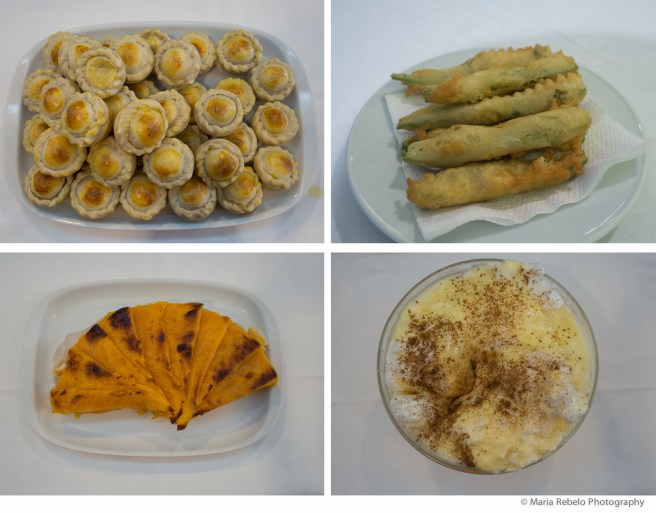
We told our waiter that we wanted to try a little of everything. “I can bring you the menu or you can leave it up to me,” he said with a twinkle in his eyes. We agreed to put him in charge and soon the table was covered with small plates of codfish with chickpeas, grilled peppers, favas with chouriço, miniature pies, green bean tempura, and marinated partridge with razor-thin fried potatoes.

“This was a wonderful lunch,” we said, complimenting our waiter on his choices “It’s not a problem if you want to skip it,” he said “but I had something else for you to try.” He went to the kitchen and brought back a steaming terrine of tomato broth. He carefully placed a piece of bread on each soup plate. Then, he poured the tomato broth and toped each piece of bread with a slice of grouper. The result was pure culinary satisfaction.

We made it clear that we didn’t have room for dessert. “I understand,” our waiter said with an enigmatic smile. He then brought us a plate with “queijadas,” “lérias,” “fidalgo,” and a Portuguese version of “îles flottantes.” “Just in case you change your mind and decide to end the meal on a sweet note,” he said. It was a pleasure to succumb to these temptations.

Magano means mischievous boy in the slang of Alentejo. Our waiter is a magano who knows that no one can resist the brilliant simplicity of the food of Alentejo.

O Magano is located at Rua Tomás Anunciacão 52 in Lisbon, tel. 21 395 4522. Reservations are a must. 

Sainthood is great but so are partridges

Perdiz Escabeche

We had lunch at the São Lourenço do Barrocal restaurant in a beautiful room overlooking the fields.  The house wines, produced on the property by Susana Esteban, a Spanish enologist who fell in love with Portugal, are interesting and full of character.

The food is simple but delicious. We tried the grilled beef with “migas” and the wild boar. The desserts are delightful:  traditional “gadanhas,” lemon and olive oil pudding, and a cake made with nuts and honey.

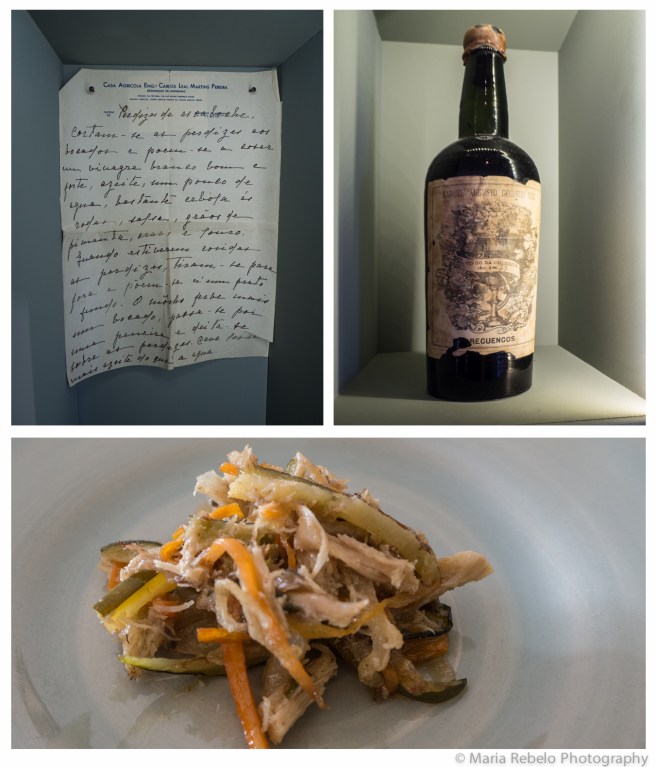
The highlight of the meal was the marinated partridge. The texture was perfect and each bite had layers of tangy vinegar and wholesome olive oil.

We were reminded of Saint Teresa of Ávila who once accepted an invitation to eat partridges. When people expressed surprise that a nun known for her poverty vows agreed to a luxurious meal, Teresa explained that “santidad es santidad mas perdices son perdices,” meaning sainthood is great but so are partridges.

The partridges at São Lourenço do Barrocal are prepared according to a recipe written by the great-grand mother of the owner of the estate, José António Uva. The recipe is on display in the dining room, next to a precious 1875 bottle of fortified wine from Reguengos de Monsaraz. It is a privilege to share this treasured recipe from the heart of Alentejo with you, dear reader:

Marinated partridges

Cut the partridge in pieces and cook it in strong white wine vinegar, olive oil, a small amount of water, and plenty of onion slices (use more olive oil than water). Season with whole black peppercorns, cloves and bay leafs. When the partridge is cooked, remove it from the pot and place it in a deep dish. Reduce the sauce left in the pot, strain it and pour it over the partridge.

Click here for the web site of São Lourenço do Barrocal.


Eternal beauty in the heart Alentejo

Composit São Lourenço

We hope the gods of the sea will forgive us, but São Lourenço do Barrocal made us forget the ocean and its waves. We were dazzled by the exuberant fields covered with white daffodils, surrounded by the simple elegance of the old farm buildings.

São Lourenço has been in the family of its current owner, José António Uva, since the 19th century. It once employed 50 families who lived and worked on the farm. The estate was occupied in 1975, the year in which José António was born, as part of the wave of expropriations that followed the 1974 revolution. After the property was returned to the Uva family in 1984, the abandoned fields were replanted and the farm was brought back to life. But the buildings that once served as cellars and accommodation for the workers remained in ruins.

After studying in Paris and working in London, José António returned to Alentejo. While thinking about his future, he rebuilt a small house for his own use and a water tank that served as a swimming pool. He decided to devote four years to turning the estate into a hotel. Instead, the project took 14 years. Eight of these years were spent working with Eduardo Souto de Moura, the Pritzker laureate architect who oversaw the reconstruction project. Instead of using the property as a canvas to design new buildings, Souto de Moura followed a humble approach: he preserved and highlighted the beauty of the vernacular buildings that were there.

The interiors were decorated by José António’s wife, Ana Anahory. She used a wide range of artifacts, from antique agricultural implements to the heads of animals once hunted on the property. Her exuberance contrasts with the restraint of Souto Moura’s style. But, somehow, this creative tension works, making the space interesting and alive.

There are great hiking trails on the property with beautiful views of Reguengos de Monsaraz and the surrounding country side. One of the highlights is a menhir that is 7,000 years old.

It is heartwarming to see the natural beauty of a place where humans lived in the distant past so well preserved for the future.

Click here for the web site of São Lourenço do Barrocal.