Bordallo Pinheiro

If you’re looking for last-minute holiday gifts, check out Bordallo Pinheiro, an irreverent Portuguese ceramics brand. 

Rafael Bordallo Pinheiro, born in 1846 to an artistic family, learned to draw and paint with his father. He started his career as a cartoonist focused on political satire and then brought the same playful spirit to his ceramics work. 

His cabbage-shaped tableware, exuberant animal motifs, and unique use of bright colors and textures become iconic, recognized for their artistry and distinct Portuguese flair. 

These timeless pieces have been crafted in the same factory in Caldas da Rainha since 1884. But the old factory is also learning new tricks. Over the past 15 years, contemporary designers have been invited to answer the question: what would Bordallo Pinheiro design today? Their imaginative answers honor the legacy of the great ceramist, producing pieces that, like the originals, surprise and delight.

Bordallo Pinheiro ceramics bring fun and joy to our dining tables, turning every meal into a special occasion.

Click here for the Bordallo Pinheiro website.

Art and nature at Serralves

Hidden behind unassuming walls, the Serralves Foundation can be easily missed. But this beautiful park and contemporary art center in Porto is a must-visit destination.

Its story began in 1925 when Carlos Cabral, the 2nd Duke of Vizela, attended the International Exhibition of Modern Decorative and Industrial Arts in Paris with architect José Marques da Silva. The duke returned to Porto with the dream of building an Art Deco house on his family’s property. To realize this vision, he enlisted Marques da Silva and a cadre of French architects, including Charles Siclis, who worked on the villa, and Jacques Gréber, who designed the gardens. 

Siclis’ watercolor of a pink house on a hill became the blueprint for the elegant villa we know today. It took until 1944 to turn that sketch into reality. The cost was so extravagant that in 1955 Carlos Cabral sold the estate to Delfim Ferreira, a wealthy entrepreneur. To ensure that his dream villa would live on, Cabral imposed the condition that the house would be preserved without alterations.

In 1987, the Portuguese government acquired the estate to convert it into a contemporary art center. For the first time, this home, which was the subject of great fascination in Porto, was opened to the public. As soon as we step into the villa, we feel a desire to wear tuxedos from Saville Row and Chanel gowns so we can do justice to the elegance of the place. The villa’s intricate decor and aesthetic harmony are mesmerizing. 

In 1999, the new Museum of Contemporary Art, designed by renowned architect Álvaro Siza was inaugurated. Since then, it has become a beacon for contemporary art in Porto. With each passing year, the exhibition program expands, and the collection welcomes new works and new artists. 

In 2019, the House of Cinema dedicated to filmmaker Manoel de Oliveira and other auteur directors was inaugurated. More recently, the Álvaro Siza Wing added new exhibition spaces where delicately lit pristine walls patiently wait for the arrival of new canvases. 

Spread across 18 hectares, the Serralves Park is dotted with sculptures amid lush trees. Visitors can stroll on the Liquidambar Promenade, explore the Treetop Walk for stunning park views, or visit the gardens of the villa. 

Serralves is a place where nature relaxes the body and art stimulates the mind.

The Serralves Foundation is located at Rua D. João de Castro, 210, Porto.

Pearly plates from Estremoz

Ela Pedra

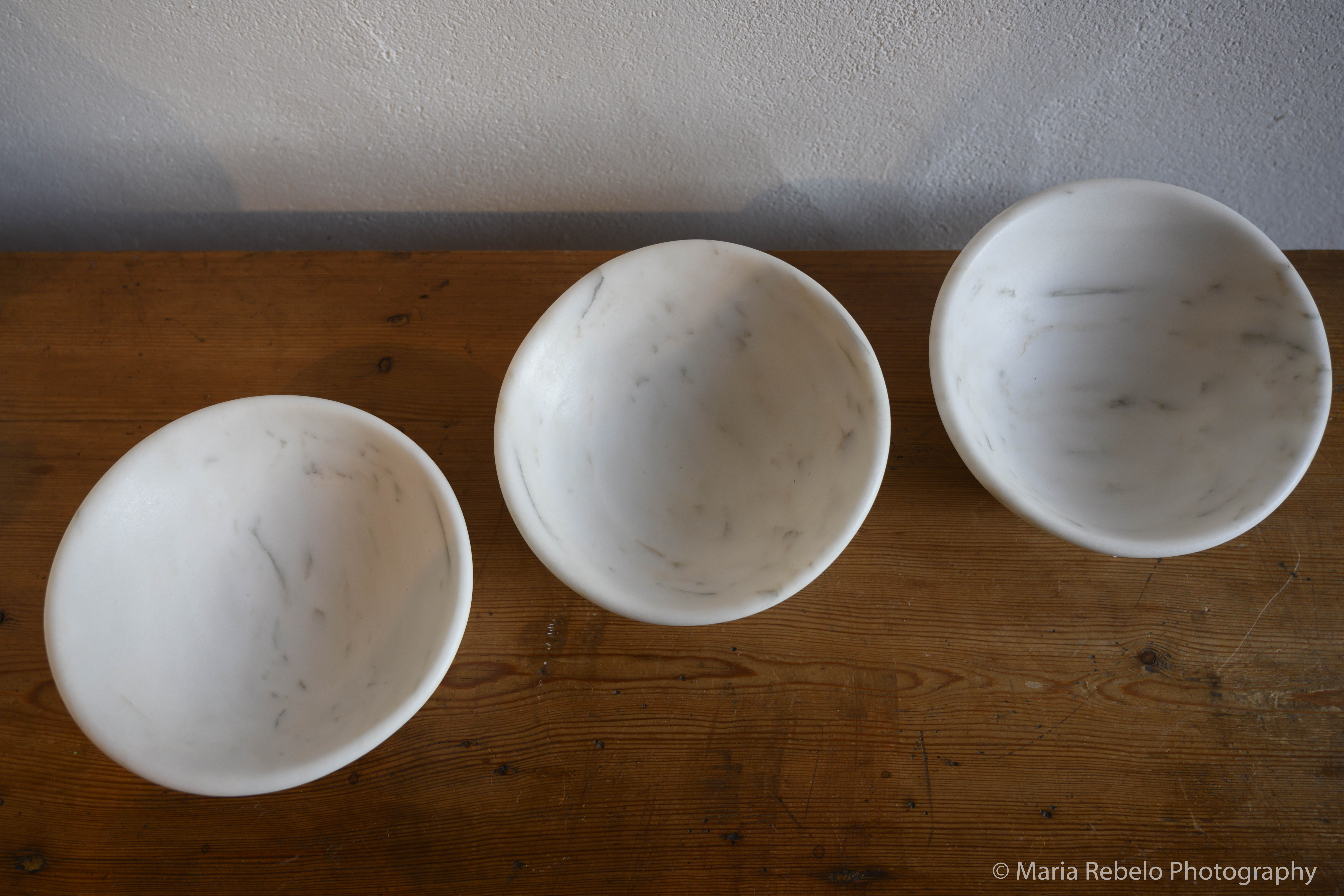
During a delightful lunch at Gadanha in Estremoz, we praised the marble serving pieces used at the restaurant. Chef Michele Marques offered to introduce us to Filipa André, the person who makes them.

Filipa owns a gallery in Largo Dom Dinis, right by the royal palace of Estremoz. She told us how in school she longed to get into the marble sculpting classes that were open only to boys. Many years later, Filipa fulfilled her dream of learning how to work with the pearly marble of Estremoz.

Her pieces have an understated elegance that makes the food served on them shine. Every time her plates and bowls grace our dinner table people ask us: where did you get them? Now you know.

Filipa André’s gallery, Elapedra is located at Largo D. Dinis n. 13 in Estremoz, email elapedra.etz@gmail.com, tel.963273440.

The river of forgetfulness

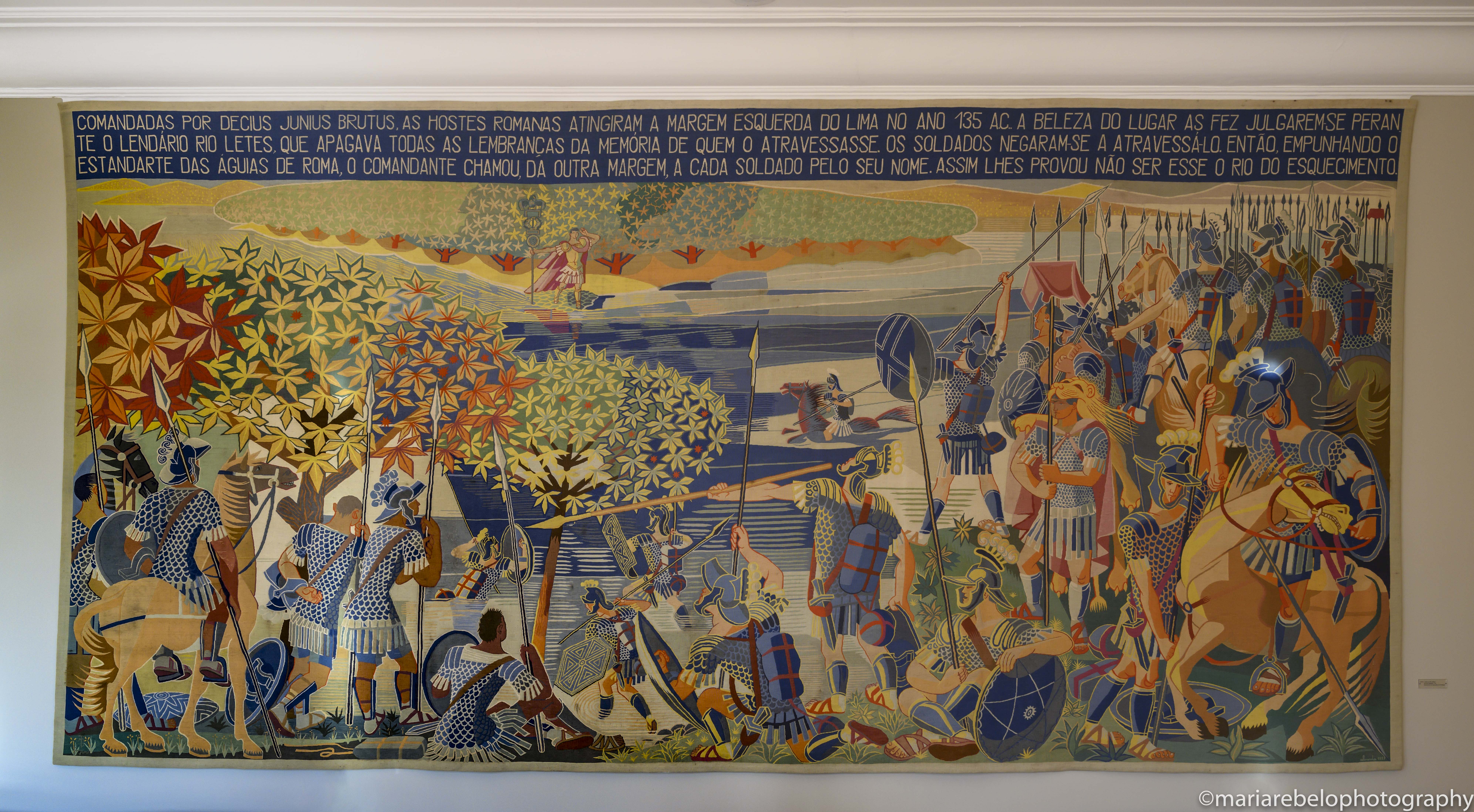
Tapeçaria -106 - Pousada de Viana do Castelo, Monte de Santa Luzia - @mariarebelophotography

The bar of the Viana do Castelo Pousada has a beautiful tapestry designed by the great artist Almada Negreiros and produced by the Portalegre Tapestry Manufacture in 1957.

The tapestry depicts the arrival of roman armies, commanded by Decius Junos Brutus, to  the left bank of the Lima river in 135 BC. The beauty of the place convinced the romans that they had found Lethes, the mythical river of forgetfulness that erased all the memories of those who crossed it.

The army stood still, no soldier dared to cross the river. Holding the roman banner in his hand, Brutus crossed the river. Once he reached the right margin, he called each soldier by his name to prove that his memory was intact. Reassured, the rest of the army crossed the river.

Silk drawings

Scarves FL

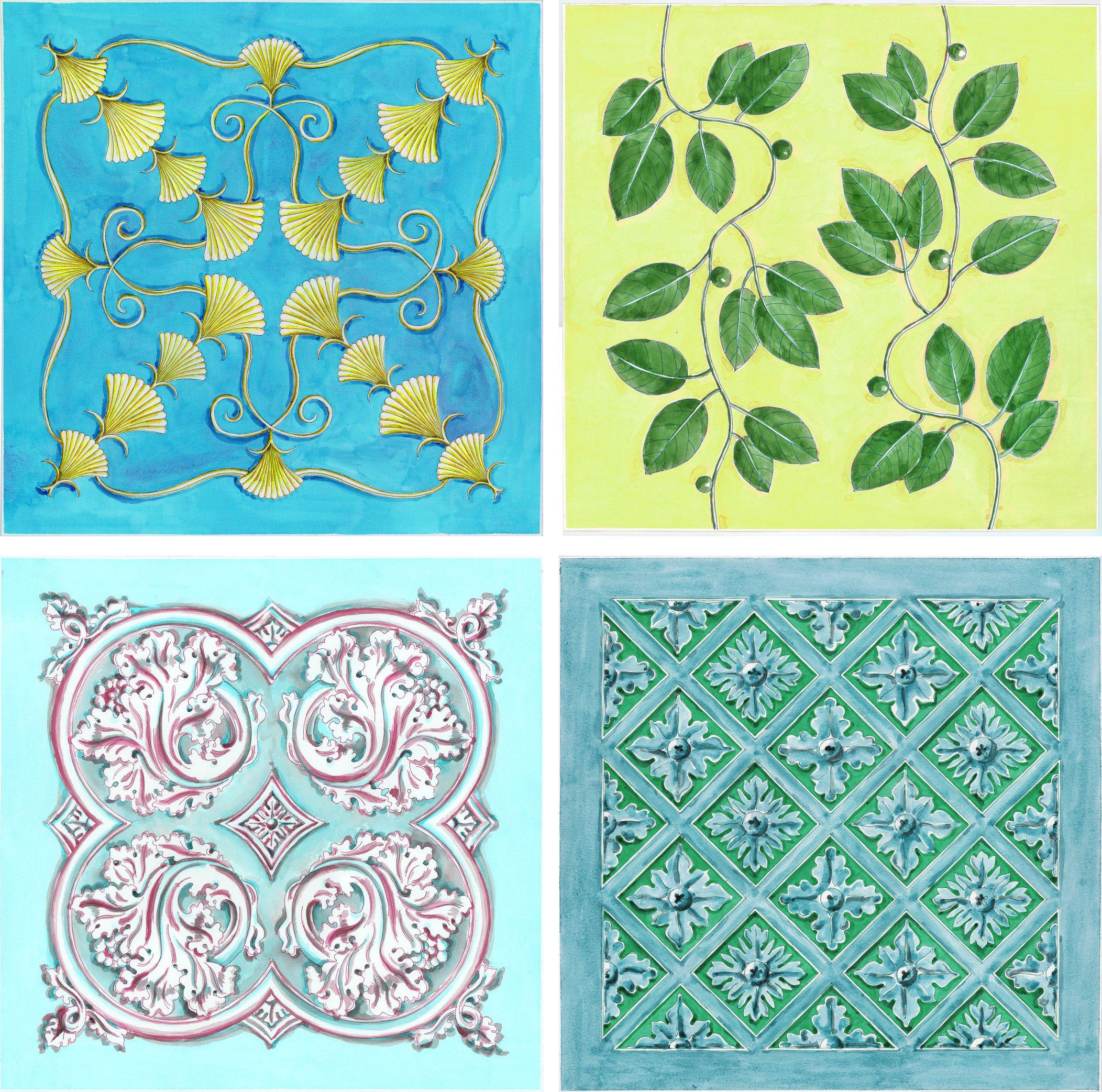
When Fernanda Lamelas travels, she tends to disappear. We’ll find her in a quiet corner seeing beauty that often goes unnoticed. Trained as an architect, Lamelas became an avid watercolorist who carries her paints everywhere. Her brushes dance on white paper, making the paints flow with precision and grace. It looks easy, but it takes a lifetime of observation to choose which lines to draw, which contours to omit.

Fernanda accumulated a large collection of sketchbooks filled with drawings from her travels. But they lied in a quiet corner gathering dust. Seeking to infuse life into these sketchbooks, Fernanda used the drawing of an architectural motif from the Carmo Convent in Lisbon to make a silk scarf. The scarf received so much praise that Fernanda felt encouraged to produce more designs. And so details from Rossio in Lisbon, the Serralves Foundation in Oporto, the Pena Palace in Sintra and from many other places came alive on canvases made of silk.

If you’re looking for a memento of a blissful vacation in Portugal, it’s hard to find anything more elegant than a Lamelas scarf.

Click here for the website of Fernanda Lamelas Arts.

Modern luxury at the Four Seasons Hotel Ritz in Lisbon

Ritz

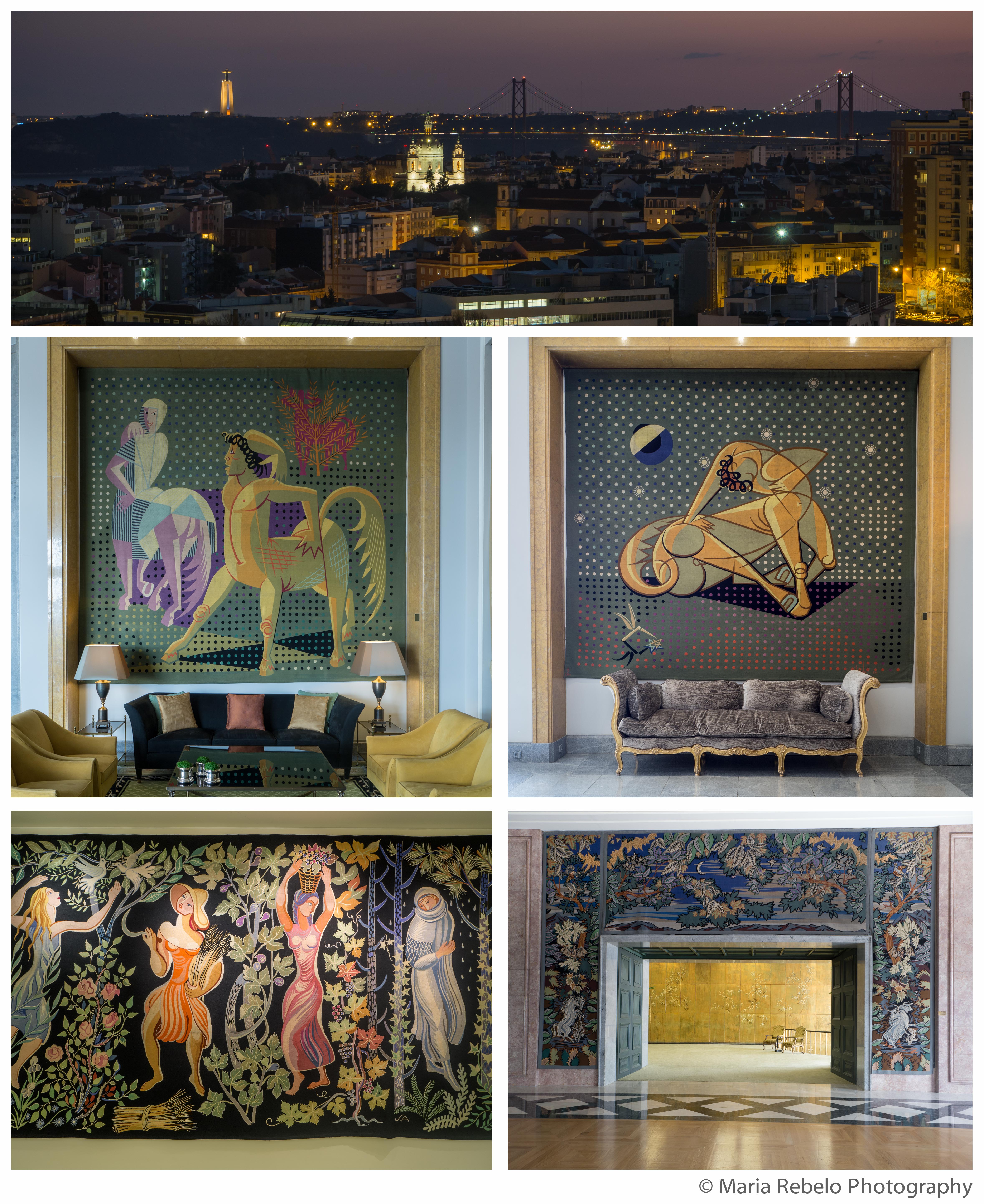
António Salazar, the man who ruled Portugal from 1932 to 1968, detested extravagance so he resisted the idea of building a Ritz hotel in Lisbon. But a group of entrepreneurs convinced him to support the project. Salazar visited the hotel before the inauguration and disliked what he saw. He exited through the back door and never came back. Despite Salazar’s disapproval, the Lisbon Ritz was a huge success.

The entrepreneurs tapped Porfirio Pardal Monteiro to be the architect. It was an inspired choice. Monteiro used the Parthenon and the Erechtheum to guide his search for the ideal location. But he avoided the temptation to build a hotel that imitates the past. Instead, he drew inspiration from Le Corbusier to design a modern building with beautiful proportions.

Monteiro was friends with the great painter Almada Negreiros. He engaged Almada and other artists to produce works of art for the new hotel. The result is a stunning art collection that creates unique interior spaces. Almada designed exuberant tapestries with centaurs and etched agricultural motifs into black granite using gold leaf. His wife Sarah Afonso produced a joyous allegory of the seasons. Querubim Lapa, Martins Correia, Carlos Botelho and many others contributed to the collection of roughly 600 works of art.

The hotel has 4 elevators for the guests and 12 elevators for the staff. When it opened in 1959, it had 330 rooms and 400 employees. Even though the ratio is no longer the same, the service is still flawless. Run by the Four Reasons group, the hotel has been regularly renovated to continue to offer outstanding comfort. The elegant breakfast room is the perfect place to start your morning in Lisbon. The rooftop was converted into a modern gym with a running track that offers expansive views of the city.

The Four Seasons Hotel Ritz is one of Europe’s grand hotels, a unique combination of architecture, art, comfort, and hospitality that creates an unforgettable experience.

The Four Seasons Hotel Ritz in Lisbon is located at Rua Rodrigo da Fonseca, 88, tel. (21) 381-1400. Click here for the hotel website. 


Worshiping the sun in Belém

MAAT Composit

If you’re visiting Lisbon, we recommend spending an afternoon in the Belém neighborhood. We like to start by sitting at one of the tables of the old Confeitaria de Belém to enjoy an espresso with a warm pastel de Belém. We eat the pastry slowly, taking small bites while the aroma of cinnamon and vanilla surround us and the taste of cream, eggs and sugar melts in our mouth.

We are then ready to stroll by the river to the Belém tower. Before the 1755 earthquake, the tower was close to the middle of the river. It was equipped with cannons meant to protect the city from pirates. But instead of scaring marauders, the beautiful tower made Lisbon more alluring and desirable.

Our next stop is the Monument to the Discoveries. It marks the point of departure of the caravels that sailed into the unknown seas to discover new lands.  From there, we cross the garden surrounded by olive trees to visit the Jerónimos Monastery. It is a majestic monument that celebrates the age of discovery in a gothic style that makes exuberant use of maritime motifs.

After spending much of the afternoon visiting the past, it’s time to look at the future. We like to arrive 45 minutes before sunset to the next destination: the new Museum of Art, Architecture and Technology, known as MAAT. Designed by British architect Amanda Levet, the sensuous building looks like a ship that could sail into space. Its roof has become a favorite destination for sun worshipers. Standing there, we see the Tagus river change into orange vests to praise the star that divides night and day while the white museum glows in the golden light. Five centuries after the construction of the Belém tower the MAAT makes Lisbon feel young and desirable again.

The MAAT is located at Av. Brasília, Central Tejo in Belém, Lisbon. Click here for the MAAT’s website. 


Two geniuses

Fernando Pessoa

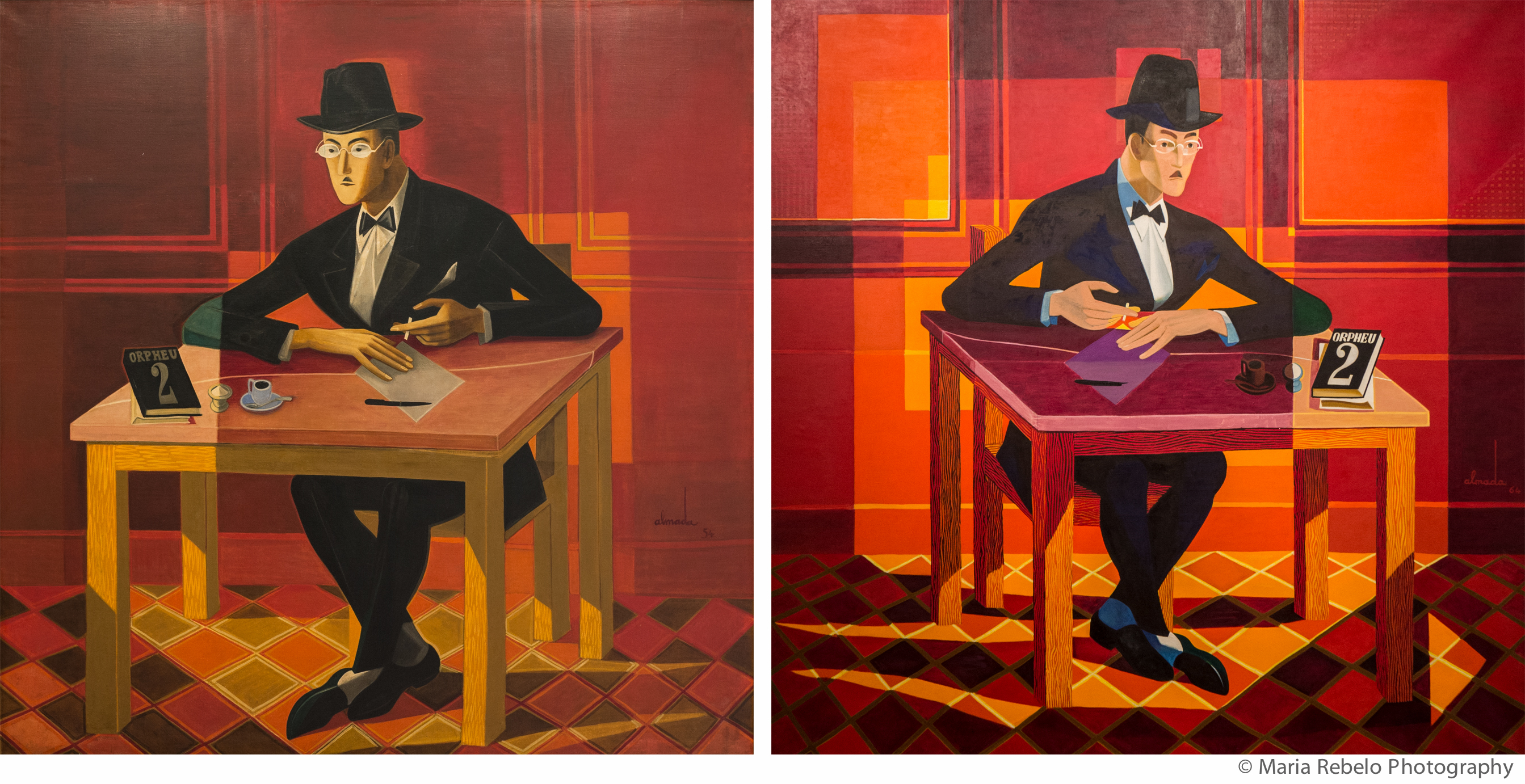
We often celebrate rulers and conquerers, but a country without artists is just a mount of dust. Artists are the tellers of tales, the architects of meaning. During the 20th century, Portugal was recreated by the writing of Fernando Pessoa and reshaped by the painting of José de Almada Negreiros. They left us a country with a richer identity and a deeper imagination.

The paintings in the photo bring together these two great Portuguese artists. The first painting (on the left) was commissioned in 1954 by the owner of a restaurant where Orpheus, a modernist group that included Almada and Pessoa, used to gather. The second painting (on the right), commissioned by the Calouste Gulbenkian Museum in 1964, is a mirror image of the original.

Pessoa visited Almada’s first exhibition and declared that the painter was not a genius. Out of respect, Almada did not paint Pessoa while the poet was alive. Because the exuberant portrait that the painter carried in his mind and later transferred to canvas shows that Almada was a genius.

If you’re in Lisbon, do not miss the exhibition of the works of Almada Negreiros on display at the Calouste Gulbenkian Museum until June 7, 2017.


Ephemeral gardens in Viseu

OLYMPUS DIGITAL CAMERA

Every year, the Ephemeral Gardens festival jolts Viseu, a serene city in the interior of Portugal. Sandra Oliveira organizes this grand event, inspiring a large troupe of collaborators to adorn Viseu with modern art and serenade it with contemporary music.

Shops become installation spaces, ancient churches double as music venues, old walls serve as canvases for street art. Every plaza seems to have its own DJ, every garden its own sculpture show.

Stores, bookshops, restaurants, and bars stay open until late. The flowers of the linden trees blend their fragrance with the aromas of chocolate, vanilla and popcorn. There are workshops to attend, movies to watch, performances not to miss. It is a wonderful celebration of the many ways in which the old inspires the new.

The Ephemeral Gardens (Jardins Efémeros) festival runs from July 1 to 10, 2016. All events are free. Click here to see the program. 

Portuguese pop art

RBD_Pastéis de nata edit
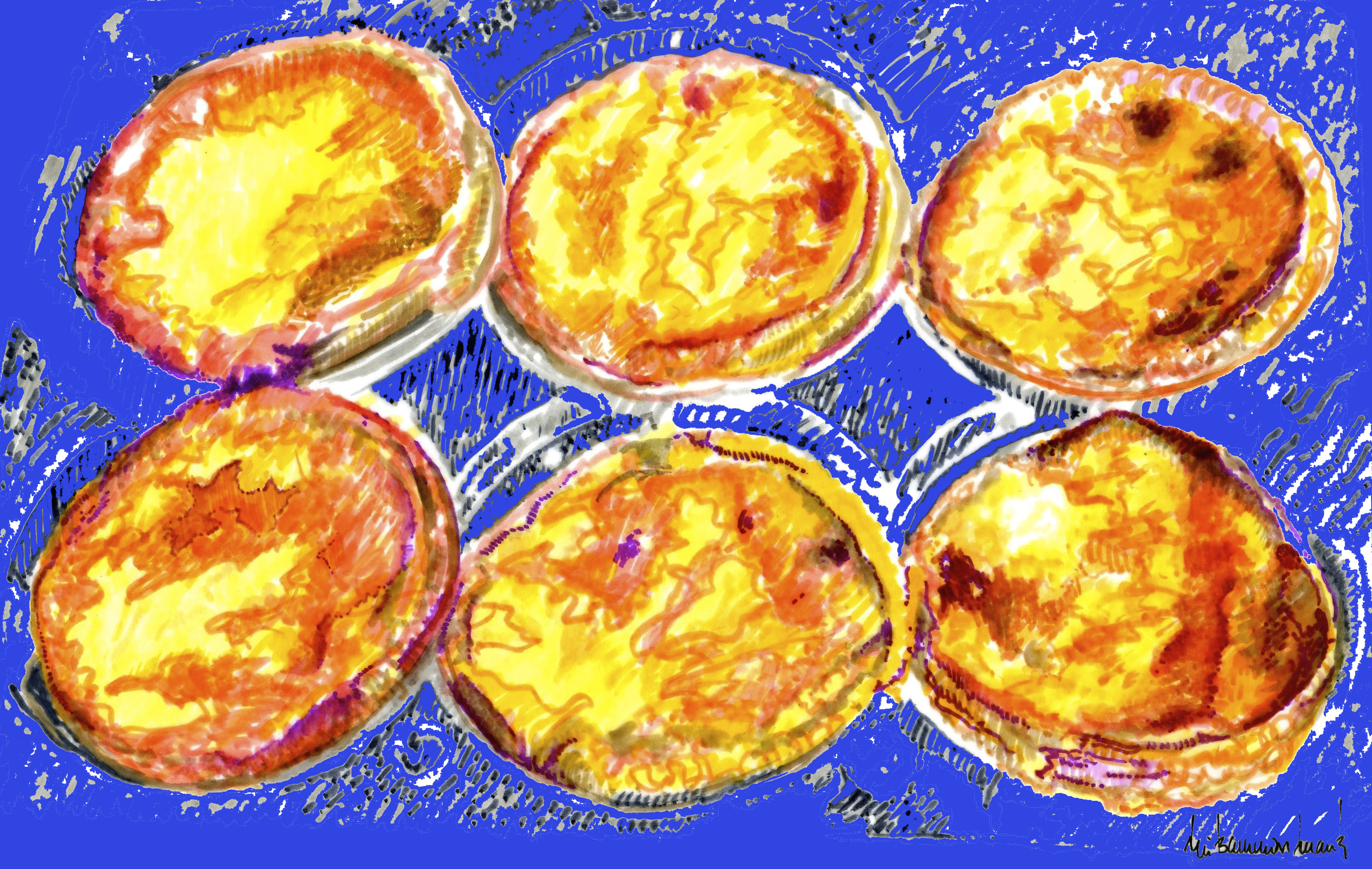
Pasteis de nata, Rui Barreiros Duarte, ink on paper, 2014.

Andy Warhol captured the essence of American culture using simple images: the appeal of convenience with cans of soup, the allure of fame with portraits of Marilyn Monroe, the love of brands with bottles of Coca Cola.

We wonder how Warhol would have captured the essence of Portugal. A good candidate image is the pastel de nata. It is sweet, with an exotic touch lent by vanilla and cinnamon. The crust gives it substance and the combination is unforgettable.