Bordallo Pinheiro

If you’re looking for last-minute holiday gifts, check out Bordallo Pinheiro, an irreverent Portuguese ceramics brand. 

Rafael Bordallo Pinheiro, born in 1846 to an artistic family, learned to draw and paint with his father. He started his career as a cartoonist focused on political satire and then brought the same playful spirit to his ceramics work. 

His cabbage-shaped tableware, exuberant animal motifs, and unique use of bright colors and textures become iconic, recognized for their artistry and distinct Portuguese flair. 

These timeless pieces have been crafted in the same factory in Caldas da Rainha since 1884. But the old factory is also learning new tricks. Over the past 15 years, contemporary designers have been invited to answer the question: what would Bordallo Pinheiro design today? Their imaginative answers honor the legacy of the great ceramist, producing pieces that, like the originals, surprise and delight.

Bordallo Pinheiro ceramics bring fun and joy to our dining tables, turning every meal into a special occasion.

Click here for the Bordallo Pinheiro website.
The bells of Mafra

RBD_Mafra_dezembro
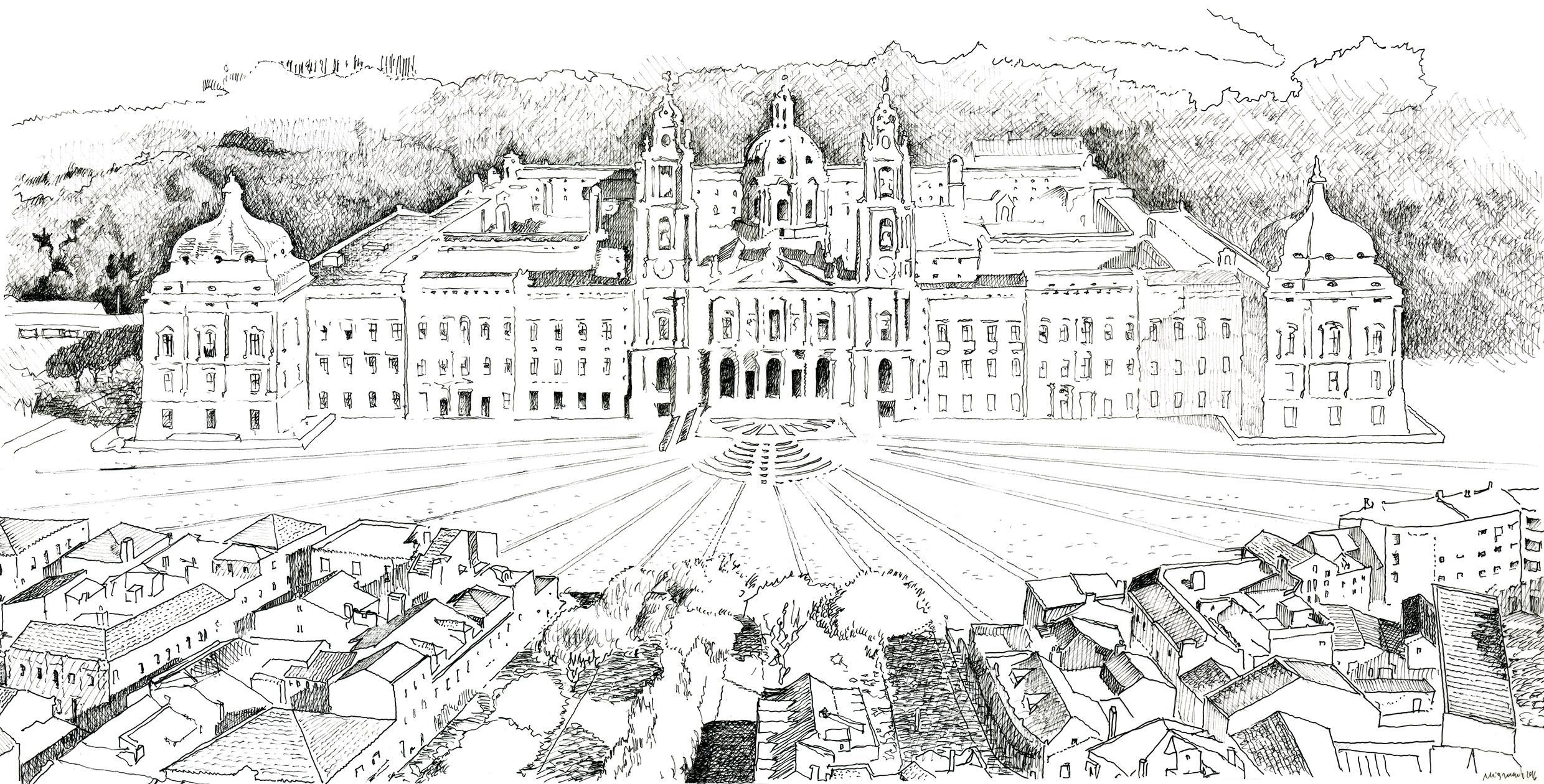
The Mafra Convent, Rui Barreiros Duarte, ink on paper, December 2016.

In 1711, king Dom João V vowed that if he was blessed with a son, he would construct a convent in Mafra. When a son was born in 1714, Dom João V spared no expense to fulfil his promise. By one count, the building has 880 rooms and 4,500 doors and windows. The convent includes a magnificent palace for the royal family and a basilica made of the purest marble, with intricate altars lavishly decorated with gold leaf.

To top it all, the king commissioned a 200-ton carillon. According to legend, when the craftsmen quoted the price of the carillon, they remarked that the cost seemed too dear for a small country like Portugal. Offended, the king replied: “I didn’t realize the bells were so cheap! I would like two sets.”   And so, two sets were made. Nicholas Levach made 57 bells for the North tower in Liége.  Willem Witlockx made 49 bells for the South tower in Antwerp.

The convent has many other bells: liturgical bells used in religious ceremonies, lecture bells that signaled the beginning and end of study periods, agony bells that rang when a monk was dying, refectory bells that reminded monks of their meal times, and the codfish bell that sounded in days when people should abstain from eating meat.

The carillon and some of the other bells were used to mark the passage of time with minuets and other compositions. In a world where musical sounds were rare, the bells of Mafra filled the village with harmony and grace.

Lisbon wakes up

rbd_praca-do-rossio_lisboa_peq-c
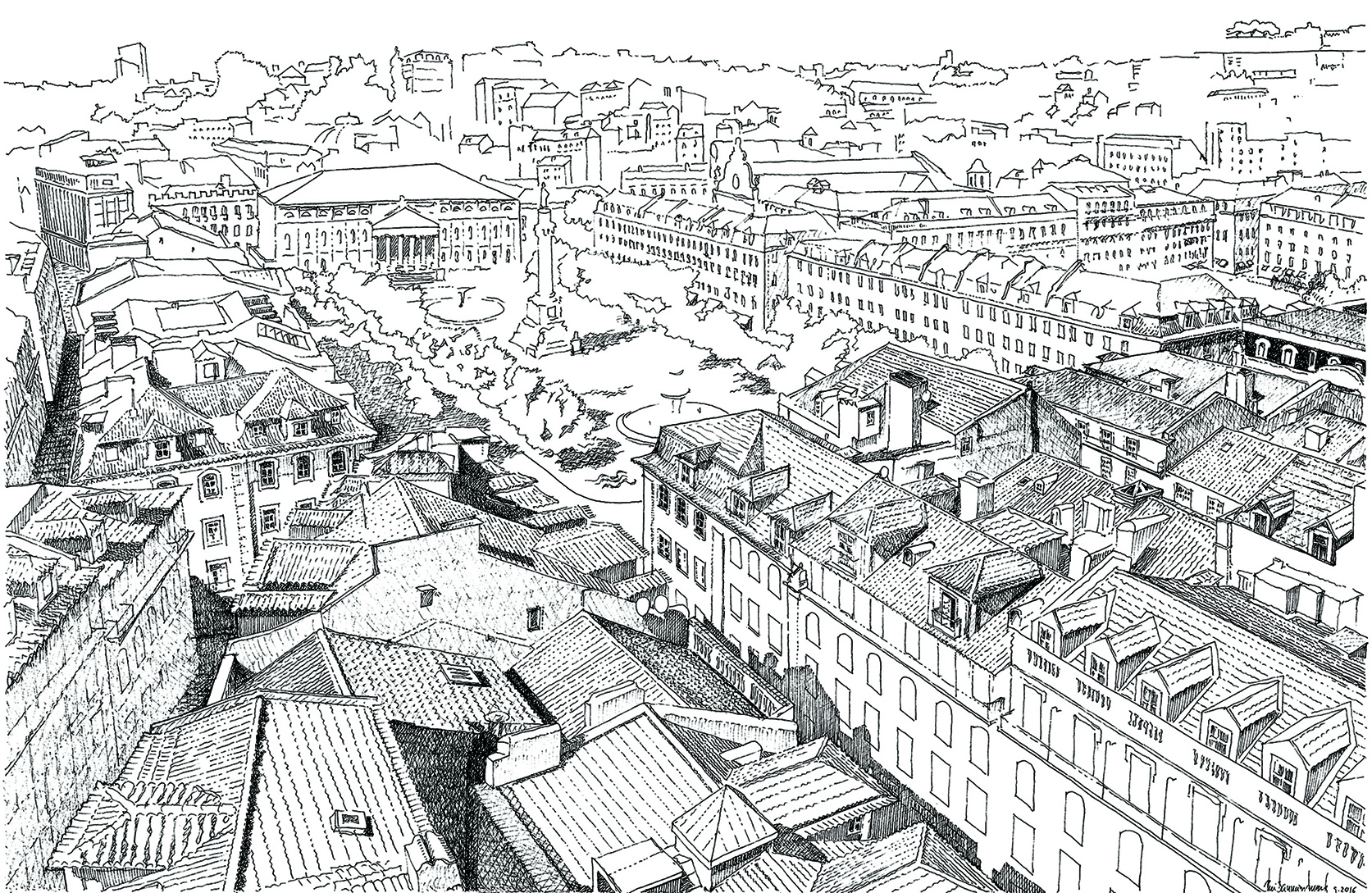
Rossio, Rui Barreiros Duarte, ink on paper, December 2016.

We envy the early risers. They see Lisbon wake up, dress in pale blue light, put on a cinnamon fragrance and get ready to enchant its visitors.


We’re often asked about the drawings used on our blog. They’re the work of architect Rui Barreiros Duarte. For the first time, he’s selling a few original drawings like the one on this post. The sizes are around 60 cm x 40 cm and the prices around 200 euros. If you’re interested, email apprbd@gmail.com .

Beauty in the details

Desenhos de Janelas
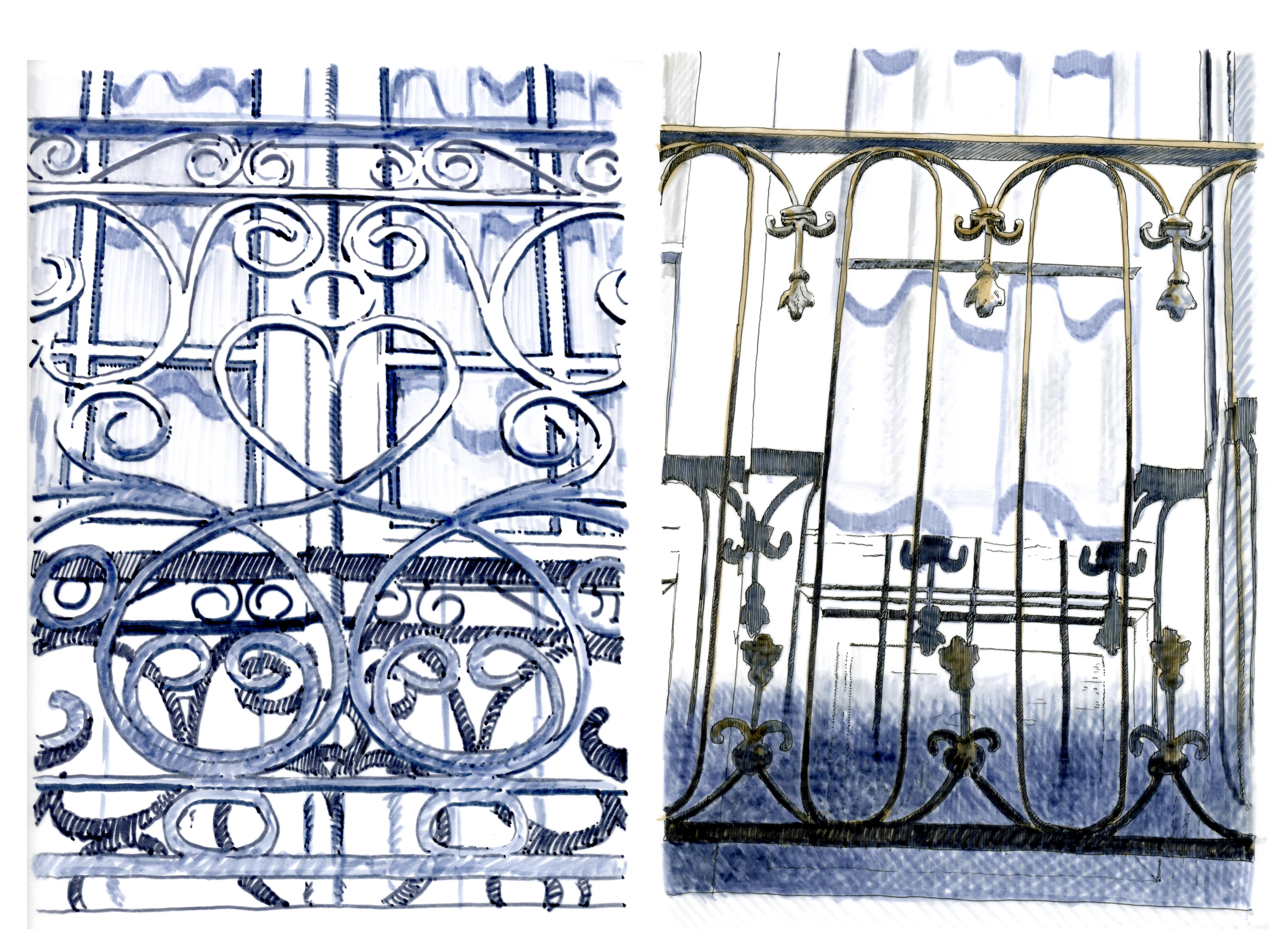
Varandas, Rui Barreiros Duarte, ink on paper, 2016.

When you visit Portugal you need to sleep well to rest your eyes, because as soon as you wake up there’s so much to see!

A walk in an old neighborhood is a visual feast of architectural details. Doors, windows, roofs, and balconies tell us about the craftsmanship of their builders and the dreams of their owners. Each is a distinctive brush stroke on the beautiful canvas that is Portugal.

Oh Porto!

O Porto, Rui Barreiros Duarte, ink on paper, 2015.

Portugal’s second largest city and the unofficial capital of the North is called Oporto. The city has an older feel than Lisbon. While much of Lisbon was destroyed by the 1755 earthquake, Oporto preserved its meandering medieval streets and ancient buildings.

Oporto is a place full of surprises. The city looks austere, but its granite architecture is just a ruse to make the gorgeous Douro river look even more seductive. Life in Oporto is hectic, but residents always take the time to give visitors a warm reception. There are plenty of restaurants that look ordinary but serve great food. And there are many hidden treasures in the port-wine caves that store, sometimes for centuries, the precious nectars from the Douro valley.

The Portuguese call the city Porto, while the English call it Oporto. There are two theories about this discrepancy. The most plausible is that the English, hearing the Portuguese say “o Porto” (which means “the city of Porto”), combined the article and the noun into Oporto. The most romantic is that the name came from visitors falling in love with the city and sighing “Oh Porto!” We side with the romantic theory.

Click here for a guide of where to stay and what to do in Oporto.