Imagining new worlds at the Sagres pousada

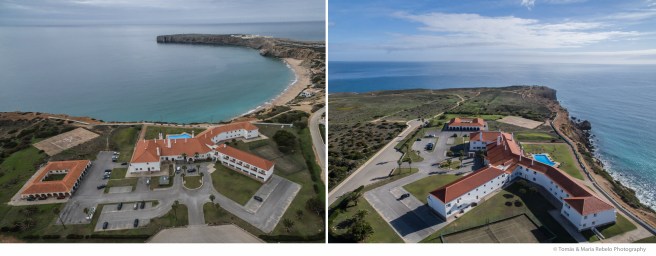
Pousada de Sagres

Every Portuguese kid learns that Sagres is the place “where land ends and the sea begins.” It was here that Henry the Navigator launched the voyages that led to the discovery of new worlds.

The Sagres pousada has a spectacular location on a cliff that overlooks the fort built by Henry the Navigator in the 15th century. In 1587, the fort was captured by the British pirate Francis Drake who used it as a base of operation for two turbulent months. Rebuilt after the 1755 earthquake, the fort stands as a tribute to the golden age of discovery.

There’s a lot to do and see near the pousada: alluring beaches, small fish restaurants, quaint villages, and expansive seascapes. But it is also great to relax in the veranda of our room and contemplate the sea that enticed the Portuguese to leave the safety of their homeland to venture into the unknown.

Here’s a link to the pousadas’ website. You can find a large collection of photos of the pousadas at www.mariarebelophotography.com.


An 18th century oasis

Casa de Sezim composit

Where can we start to tell you what a privilege it is to stay at Casa de Sezim in Guimarães? This manor house is the perfect place to experience the glamour of aristocratic life.

The house is built around a tower that remounts to 1376. The magnificent salons and the expansive veranda were added in the 18th century. It was at this time the famous hand-crafted wall papers were ordered from Zuber in France.

These papers fill the walls with the adventures of Dom Quixote and glimpses of faraway lands: India and the United States. Zuber made two editions of the papers with American landscapes, one for Casa de Sezim and the other for the White House in Washington D.C.

We arrived with a long list of places to visit in the vicinity. But we fell under the spell of Casa de Sezim and decided to relax and spend some time in this 18th century oasis. Why go far in search of beauty when you have it near?

Casa de Sezim is located in Guimarães at Rua de Sezim. Click here for their web site.


The governor’s palace

Palácio do Governador

Just when we think that Lisbon told us all her secrets, the city finds new ways to surprise and delight us. This time we discovered a new hotel called Palácio do Governador (the governor’s palace).  Located near the Tagus river, it occupies a 16th century manor house that once belonged to the governor of the Belém neighborhood.

The governor’s room overlooks the Tower of Belém which used to be connected to the house through an underground passage. Near this passage, you can find the ruins of a Roman factory that produced garum, a fish sauce used in Roman cuisine.

We had a wonderful stay. The hotel integrates old and new with ease, offering  comfortable rooms and elegant public spaces. The service is attentive and the location is perfect.

Our only source of anxiety was the temptation to forego breakfast at the hotel and walk over to the Confeitaria dos Pasteis de Bélem to start the day with a heavenly pastel de Belém.


Palácio do Governador is located on Rua Bartolomeu Dias 117, in Lisboa, tel. 212 467 800. Click here for the hotel’s website.

Santa Maria do Bouro in the light of eternity

Composit Amares, exposição

The granite walls of the Santa Maria do Bouro Pousada belong to a Cistercian monastery built in 1162 by the first king of Portugal. They aged perfumed by incense and lulled by religious chants.

The monks enjoyed their meals sitting around an imposing stone table. The kitchen had two fountains that supplied water, several wood-fire stoves and a fireplace used for roasting. A large chimney released the appetizing food aromas to the skies above. Perhaps the monks wanted to advertise their talents, in case there were opportunities for good cooks in heaven.

This golden age gave way to an era of slow decline. Eventually, the monks moved out. Wild animals and vegetation moved in.

Just when the old monastery had gotten used to oblivion, a small group came for a visit. They wanted to turn the ruins into an historical hotel.  Among them was a quiet man who stared in silence at the granite walls. He is an architect called Eduardo Souto de Moura who would one day win the Pritzker prize.

In his reconstruction plan, Souto Moura left the walls exposed to showcase their beauty. He avoided imitating the old, so he complemented the granite with new materials. The ivy that embraced windows and columns was allowed to stay and a green roof was built to welcome the vegetation back to the building.

Everything in this beautiful hotel breathes harmony and tranquility. The rooms have expansive views of the surrounding mountains.  And there are many spaces, indoors and outdoors where we can enjoy a glass of wine or a cup of tea.

The kitchen was transformed into an elegant dining room and the large chimney became a skylight. The ancient stone table is still there, covered with irresistible desserts that would make the old monks proud.

Today, the walls of Santa Maria do Bouro stand with the confidence they will be beautiful in the light of eternity. And we think they’re right.

Here’s a link to the pousadas’ website. You can find a large collection of photos of the pousadas at www.mariarebelophotography.com.

Tranquility at Quinta de Guimarães

Quinta de Guimarães

The best way to experience the magic of the Douro valley is to sojourn at a local farm. It was this possibility that attracted us to Quinta de Guimarães, an estate that dates back to the year 1720. It offers rooms in an ancient manor house and in two beautifully restored country homes surrounded by vineyards.

We loved the tranquility of the quinta and the sumptuous meals that Fernanda Pinto, the property caretaker, prepares with produce from the farm. Breakfast includes country breads, homemade sausages and prociuttos, eggs from happy chicken, and traditional desserts. We enjoyed a wonderful dinner composed of spinach soup, baby goat with roasted potatoes, followed by the farm’s luscious fruit. The meal was accompanied by a bright “vinho verde” (slightly sparkling white wine) produced on the property under the label Cazas Novas.

A visit to Quinta de Guimarães is a journey to a place where time has stopped because it found perfection.

Quinta de Guimarães is located at Lugar de Miguas, Sta. Marinha do Zézere, tel. 912 915 699. Click here for the quinta’s website.


A joyous view

Vista Alegre-Montebelo

In the early 19th century, Portugal’s royal family and nobility served their meals on expensive porcelain imported from China. José Pinto Bastos, an entrepreneur,  saw in this fashion a business opportunity: he decided to produce porcelain in Portugal. It was a risky venture because the process for porcelain production was a closely guarded secret. So, Pinto Bastos started by making glass and crystal to finance his porcelain experiments.

He found the name of his brand and the perfect location for his factory on a hill near Ilhavo that overlooks the “ria,” an elongated body of water where fresh water mixes with salty water. On top of the hill there’s a beautiful church built in 1696 by a bishop who liked the location because of its “vista alegre” (joyous view).

In 1824, Pinto Bastos built a house adjacent to the chapel and a factory called Vista Alegre. There, he started to unravel the secrets of porcelain making. A team of workers labored day and night to feed large ovens with coal or wood so they could burn at 1,400 degrees Celsius for 40 hours in a row.

After much trial and error, a few pieces of porcelain were finally produced. But these pieces had a light gray color which was much less attractive than the pure white of Chinese porcelain.  Out of desperation, Pinto Bastos sent his son to Sèvres, the famous French porcelain factory, to ask for technical assistance. The young man came back with bad news: porcelain production requires a rare mineral rock called kaolin. Pinto Bastos was not deterred, he searched all over Portugal for this precious rock. Eventually, he found a large deposit a mere 20 km from his factory.

By 1835 Vista Alegre was producing excellent porcelain. Over the years, it became one of Portugal’s most cherished brands and a very successful business.

When, after a long sleep, China woke up to the world in the late 20th century, it flooded the market with cheap porcelain. Vista Alegre had trouble competing and for a while it looked like Portugal would, once again, buy all its porcelain from China. But Vista Alegre found new owners who modernized its factories. They also built a new hotel around the original Pinto Bastos family home, an interesting museum that traces the history of Vista Alegre, and stores where visitors can buy the company’s products.

The new wing of the hotel overlooks the “ria” and the old Pinto Bastos house was converted into elegant suites. It is a thrill to stay in this porcelain palace and enjoy its joyous view.

Click here for the website of the Montebelo Vista Alegre hotel. 

Fairy tales

Composit Fairy Tales

In October 1956, the Duke of Edinburgh embarked on a long tour of the Southern Hemisphere without his wife, Queen Elizabeth II. There were rumors that the couple was going to separate.

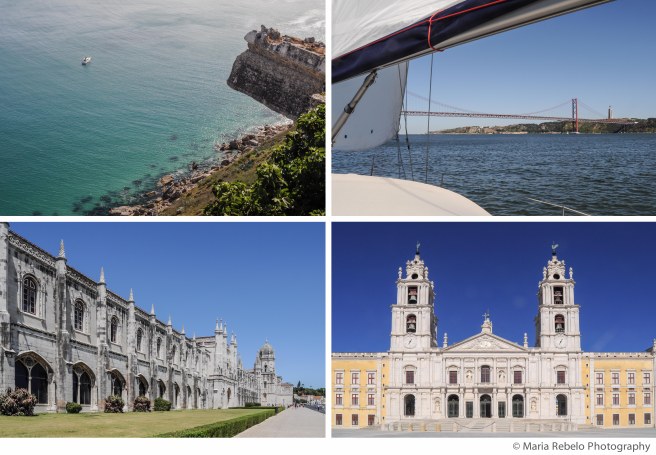
When the Duke arrived in Portugal in February 1957, the Queen flew from England to meet him. For four days the royal couple did what so many other tourists do in Portugal. They ate canned sardines, sailed on the Tagus river, toured the Jeronimos monastery,  visited Mafra and the Nazaré beach. Then, they flew back to England and lived happily ever after.

Portugal is a place where fairy tales can come true.

A white palace in Estremoz

Composit Estremoz

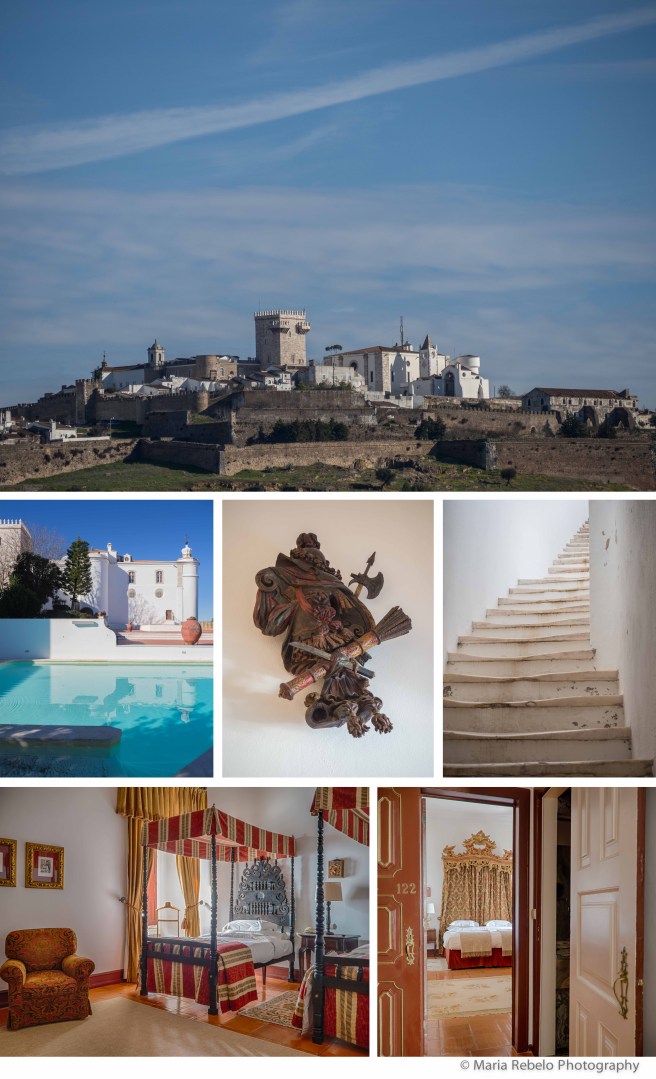
Estremoz is a village in Alentejo built on a hill by king Dom Afonso III in 1258.  It was once an important citadel that guarded the Portuguese kingdom from potential aggressors.

In 1360, king Dom Dinis built a royal palace in Estremoz for his wife Isabel of Aragon. It was in this palace that king Dom Manuel appointed Vasco da Gama as the commander of the fleet that sailed to India, beginning a new chapter in world history.

The palace, converted into an historical hotel, is sumptuously decorated with antique paintings and furniture. Corridors and stairs are covered with the famous white marble excavated from local quarries.

The war trophies that hang in the dining room reminded us of the momentous decisions made in this palace. And they made us appreciate even more the tranquil days we spent with only one difficult decision to make: which of the 22 wineries in Estremoz to visit.

Here’s a link to the pousadas’ website. You can find a large collection of photos of the pousadas at www.mariarebelophotography.com.

The Portuguese Tea Company

Composit Companhia do Chá.jpg

Portugal played a leading role in the trade with the Far East after Vasco da Gama discovered the sea way to India in 1498. One of the commodities brought from the orient by the caravels were the dried leaves of a plant called Caméllia sinensis. The Portuguese called these leaves and their infusion chá, after the Cantonese word chàh. Their Dutch rivals preferred a word from China’s Fujian province: tea.

When Catherine of Braganza, a Portuguese princess, married Charles II of England in 1662, her trousseau included a basket of tea leaves. She used them to throw tea parties at court. These parties were such a success that drinking tea became a fashion that endures.

Two centuries later, Wenceslaus de Moraes, a Portuguese diplomat who lived in the orient, wrote a poetic book called The Cult of Tea. His goal was to introduce Europeans to the ancient art of serving tea.

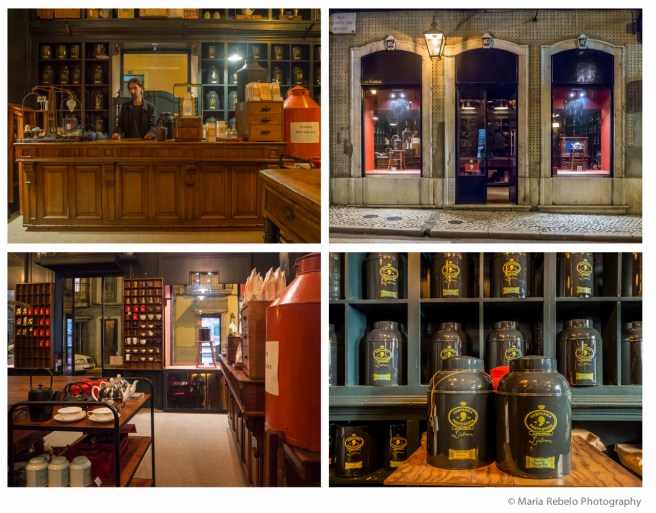
Despite these historical connections, Portugal didn’t have a purveyor of fine teas until an Argentinian called Sebastian Filgueiros came to live in Lisbon. Trained as a tea sommelier, he decided to create the Companhia Portugueza de Chá (the Portuguese tea company). The company’s logo combines the profile of Catherine of Braganza with the word Lisbon handwritten by Wenceslaus de Moraes.

Sebastian travels often to the Far East in search of new producers. His favorite teas are the Darjeelings from India and the old black teas from China. But he is very proud of the teas made in Portugal. He’s been able to source two wonderful teas from Azores. The first is a delicate white tea made in cooperation with a research institute. The second is a rare Oolong from the Gorreana plantation. Sebastian sells a fragrant earl grey produced with bergamot oil from Alentejo and his own tea blend called Lisbon breakfast.

When he talks about tea, Sebastian has all the time in the world. And there’s a lot to talk about, from the harvest and oxidization of the leaves, to the way each tea is prepared and served. He speaks softly, as if the secrets of tea are for our ears only. It is worth listening because on the shelves of his store lies a world of tantalizing aromas and flavors waiting to be discovered.

The Companhia Portugueza do Chá operates in Rua do Poço dos Negros, 105, near Chiado, tel. 21-395-1614.


Portuguese pousadas

composit-pousadas

It was so hard to travel in old times! There were no hotels or restaurants. Some towns had modest inns where guests could rest and eat a simple meal. But on many nights, travelers slept under the stars hoping they would find a village in the morning where they could buy some food.

The only way to travel in style was to be a member of the royal family or high nobility. You would then have access to an informal network of palaces, castles, and convents that took great pride in their hospitality. The arrival of an illustrious guest was a cause for celebration. A banquet would be prepared and the best wine brought out of the cold cellars and warmed by the fireplace.

The meals ended with elaborate desserts which William Beckford, a well-traveled English nobleman, described as “an admirable dish of miracles, well seasoned with the devil and prettily garnished with angels and moonbeams.”

This informal network of convents and palaces worked well in Portugal until the 19th century. But after the monastic orders were abolished in 1834, convents felt into disrepair. In 1910, the monarchy was abolished and many noble families could no longer maintain their palaces.

The tradition of hospitality was never lost, because it is an integral part of the Portuguese character. But the beautiful buildings and the recipes perfected for centuries in their kitchens seemed condemned to oblivion.

In the 1940s, the Portuguese government started buying old palaces, castles and monasteries to convert them into historical hotels called pousadas. Vintage furniture was restored. Old recipe books were dusted and their secrets put back into use.

With their fairy-tale locations, these hotels offer unforgettable experiences. You’ll find great food and wine, the best dessert tables in the country, and a staff that treats every guest as an opportunity to celebrate the traditions of Portugal.

Here’s a link to the pousadas’ website. You can find a large collection of photos of the pousadas at www.mariarebelophotography.com.