What’s your favorite Madeira?

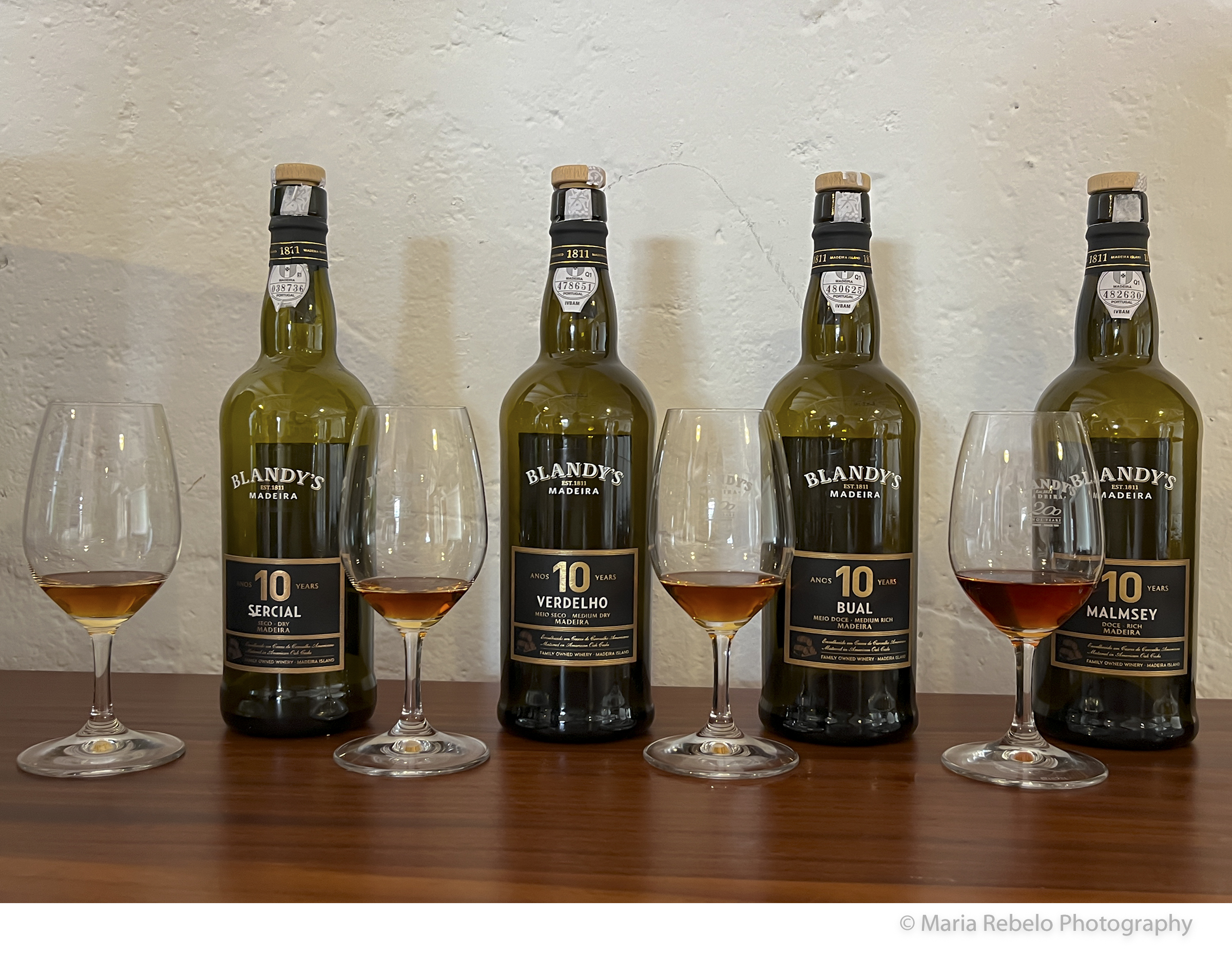
If you’re looking for a fun holiday activity for your grown-up friends, we have just the thing: a Madeira wine tasting. We suggest starting with the four classic styles, each named after the white grape varietal used in its production: Sercial, Verdelho, Bual, and Malmsey. 

These wines have a combination of sweetness and acidity that enchants the palate. But each style is distinct. Sommeliers often serve the dry Sercial and medium-dry Verdelho as aperitifs and the medium-sweet Bual and sweet Malmsey as dessert wines. 

Madeiras are fortified wines. Winemakers add neutral vinic alcohol at 96 degrees to stop the fermentation process through which yeast converts grape fructose into alcohol. As a result, not all fructose is converted into alcohol and the wine retains some residual sugar. Fortification has been used since the mid-18th century to give Madeiras the endurance they needed to survive long sea voyages.  

Francisco Albuquerque, Blandy’s winemaker, says he generally stops the Sercial fermentation after ten days. For Malmsey, he suspends the fermentation after two days, so there’s a lot more sweetness left in the wine. Perhaps that is why, according to Shakespeare, the Duke of Clarence, condemned to death for treason against his brother King Edward IV, asked to be drowned in a cask of Malmsey. 

Shippers discovered that Madeiras improve when they cross the equator in the hulls of sailboats. To mimic this effect, producers expose Madeiras to heat. For superior Madeiras this exposure happens in warm cellars, where the wines age for several years in old American oak casks before they’re ready for our enjoyment. The longer they stay in oak barrels, the more complex they become. 

So, which Madeira do you favor? And which do your friends prefer? It’s great fun to find out! 

Tasting Malvasias in Madeira

Prince Henry the Navigator was an early-day venture capitalist. He financed expeditions on small boats called caravels to find new lands, keeping 20 percent of the resulting profits. His first big success came in 1419 when his navigators discovered an island covered by a laurel forest. They named it Madeira, the Portuguese word for wood.  

The prince brought sugar cane from Sicily to Madeira, where it thrived because of the abundance of water and subtropical climate. The island became Europe’s leading sugar producer until the first half of the 16thcentury, when Brazil supplanted it.

Prince Henry was also interested in wine, in part because of its use in liturgic services. The best 15th-century wine was made in Crete from a white varietal called Malvasia Cândida and produced with overripe grapes. 

The Jesuits planted Malvasia Cândida from Crete in a small region of Madeira called Fajã dos Padres. Today, this varietal is rare on the island. It was superseded by Malvasia de São Jorge, a hybrid created in the 1950s by Leão Ferreira de Almeida and generally used to make Madeira Malmsey. 

Manuel Malfeito, our friend who’s an enology professor, brought to Madeira a bottle of fortified wine made in Crete from Malvasia Cândida so we could compare it with Malmsey. “Perhaps this is the first time in 500 years that a wine from the original Malvasia Cândida is drunk on the island of Madeira!” said Manuel with glee. 

How do the two wines compare? The wine from Crete is pleasant and intensely sweet. The Madeira Malmsey has much more depth because of its acidity. This acidity comes in part from Madeira’s volcanic soils, which are rich in iron, manganese, and magnesium. 

It is the combination of sweetness and acidity that makes Madeiras so exquisite. Each glass of Madeira wine is a gift from a prince.

The sublime wines of the Madeira island

Novice wine drinkers like slightly sweet wines, while wine connoisseurs favor wines with acidity. Madeira wines have the best of both worlds, a pleasant sweetness and a refined acidity. 

These wines are named after their terroir—a volcanic archipelago of captivating beauty. When Portuguese navigators discovered it in 1419, it had lush woods, so they called it Madeira, the Portuguese word for wood.

Like Ports, Madeiras are fortified wines. The process by which yeast turns fructose into alcohol is interrupted by adding neutral, vinic alcohol. As a result, some fructose remains, giving the wine its sweetness.

Producers begin the aging process by gently heating the wine. Winemakers developed this technique after discovering that wines improved significantly when subject to tropical temperatures during sea voyages. 

Entry-level wines are heated in large tanks for at least three months, a process called “estufagem.” More noble wines are stored in hot, humid attics for at least two years, a process known as “canteiro.” Heat ruins most wines. But not Madeiras—their acidity gives them the fortitude to survive the heat and age beautifully.

There are five main grape varietals used in Madeira production. Sercial makes dry wines, Verdelho medium-dry, Bual semi-sweet, and Malmsey sweet. Tinta Negra is perhaps the most versatile of all the Madeira varietals, capable of producing a range of styles, from nutty dry to luscious rich.

The drier wines are generally served as aperitifs and the sweeter wines as dessert wines. But Madeiras are very versatile. For example, Sercial is an excellent pairing for oysters and sashimi. 

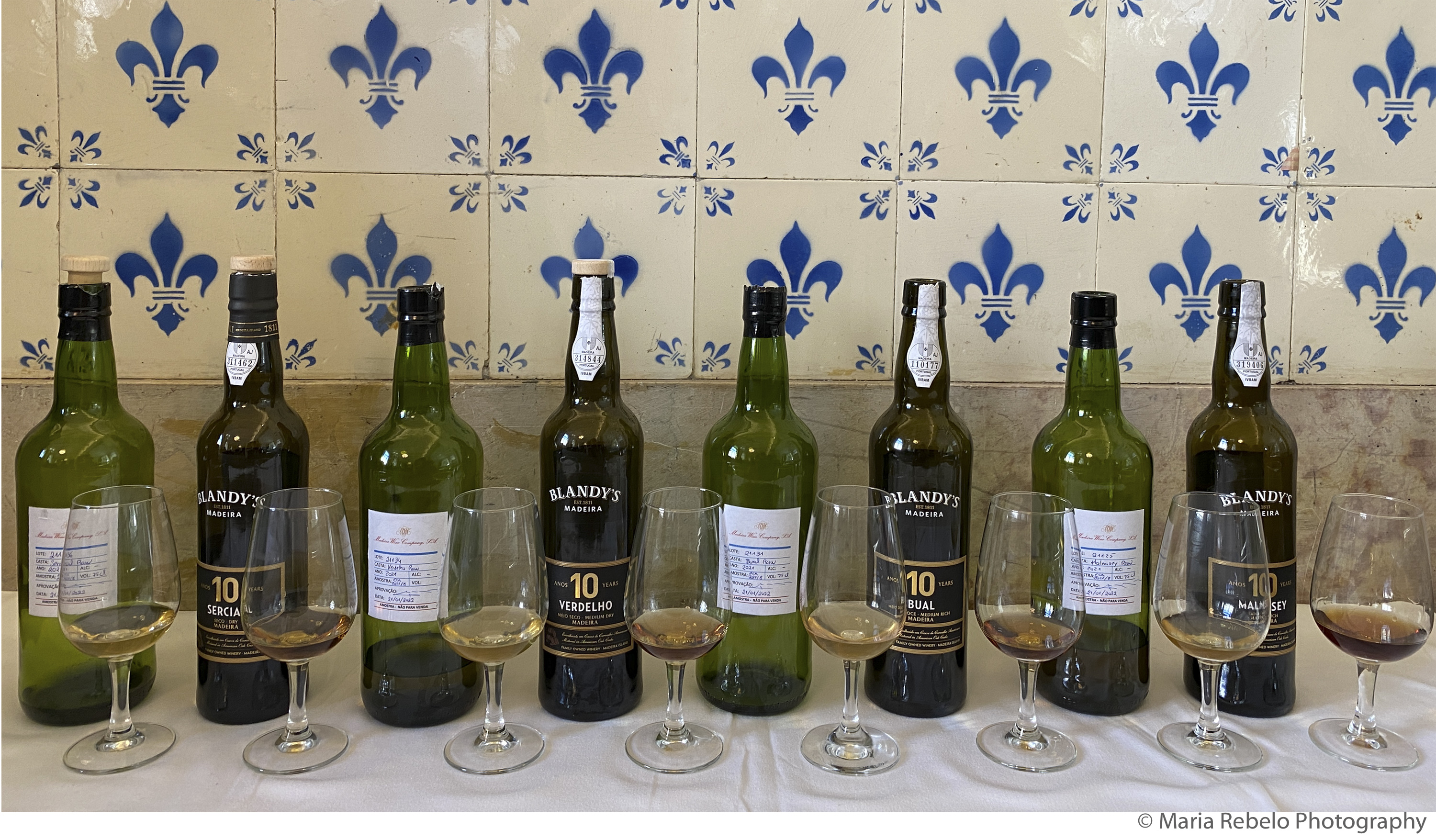
We had the privilege of tasting Madeiras with Chris Blandy, the CEO of Blandy’s, a company that has produced Madeira wine since 1811. We compared wines made from Sercial, Verdelho, Bual, and Malmsey with “raw” versions of these wines. The raw wines have just been fortified but have not been heated or aged. This tasting showed us the enormous impact of heating and aging on wine quality. Water evaporates, concentrating and refining flavors. In some 20-year-old Madeiras, only 8 percent of the original wine remains, but what is left is sublime. 

Chris refilled our tasting glasses. “These wines are moreish,” he says, using a quaint British expression that refers to food or drink that make us ask for more. No wonder that in Shakespeare’s play Henry IV, Sir John Falstaff sells his soul to the devil for a glass of Madeira. We’re so lucky to drink these extraordinary wines without losing our souls!

Click here for the Blandy’s website.

Madeira wine

MadeiraMadeira is a fortified wine produced in the island of Madeira. Brandy is added during fermentation to kill the yeast and prevent it from converting all the sugar into alcohol. The result is a sweet wine that can endure the changes in temperature that used to occur during shipping.

George Washington and Thomas Jefferson kept their cellars well stocked with Madeira. So did John Adams, who said that a few glasses of Madeira made anyone feel capable of being president. Perhaps for this reason, both the signing of the American Constitution and the Declaration of Independence were celebrated with Madeira.

There are several different types of Madeira, depending on the varietals used in their production. The most popular varietal, Malvasia or Malmsey, produces a sweet, smooth wine. Sercial makes an excellent dry aperitif. Verdelho makes an elegant semi-dry wine. Bual produces a dark amber semi-sweet wine.

They’re all irresistible, which is why, in Shakespeare’s play Henry VI, Falstaff is accused of selling his soul to the devil for a glass of Madeira.