Luís Pato’s precious inheritance

In 1964, João Pato, father of the iconic Bairrada winemaker Luís Pato, installed a new piece of equipment at his winery in the village of Amoreira da Gândara: a rectifying chamber fitted to the traditional copper alembic. It enabled him to distill, with unusual precision, wine made from Baga, Bairrada’s emblematic red grape.

Distillation is, at its core, an act of selection. The wine is heated so that alcohol and aromatic compounds vaporize, then condensed back into liquid. But not all that emerges is equal. The first flow is harsh and volatile, the last coarse and heavy. Only the middle portion, known as the “heart,” carries purity, balance, and the true character of the wine. João entrusted the slow, exacting work to his right-hand man, Avelino Ribeiro, who distilled the wine twice, each time keeping only the heart.

João produced brandy between 1965 and 1985, the year before he died. The spirit was first aged in Portuguese chestnut casks and later transferred to used Port barrels, long favored for maturing fine brandies. João left the barrels as an inheritance for his son.  

In the 1990s, Luís moved the brandy into barrels that had previously held his most celebrated wines — Pé Franco Quinta do Ribeirinho, Vinha Pan, and Vinha Barrosa — layering the spirit with further echoes of Bairrada’s finest terroirs.

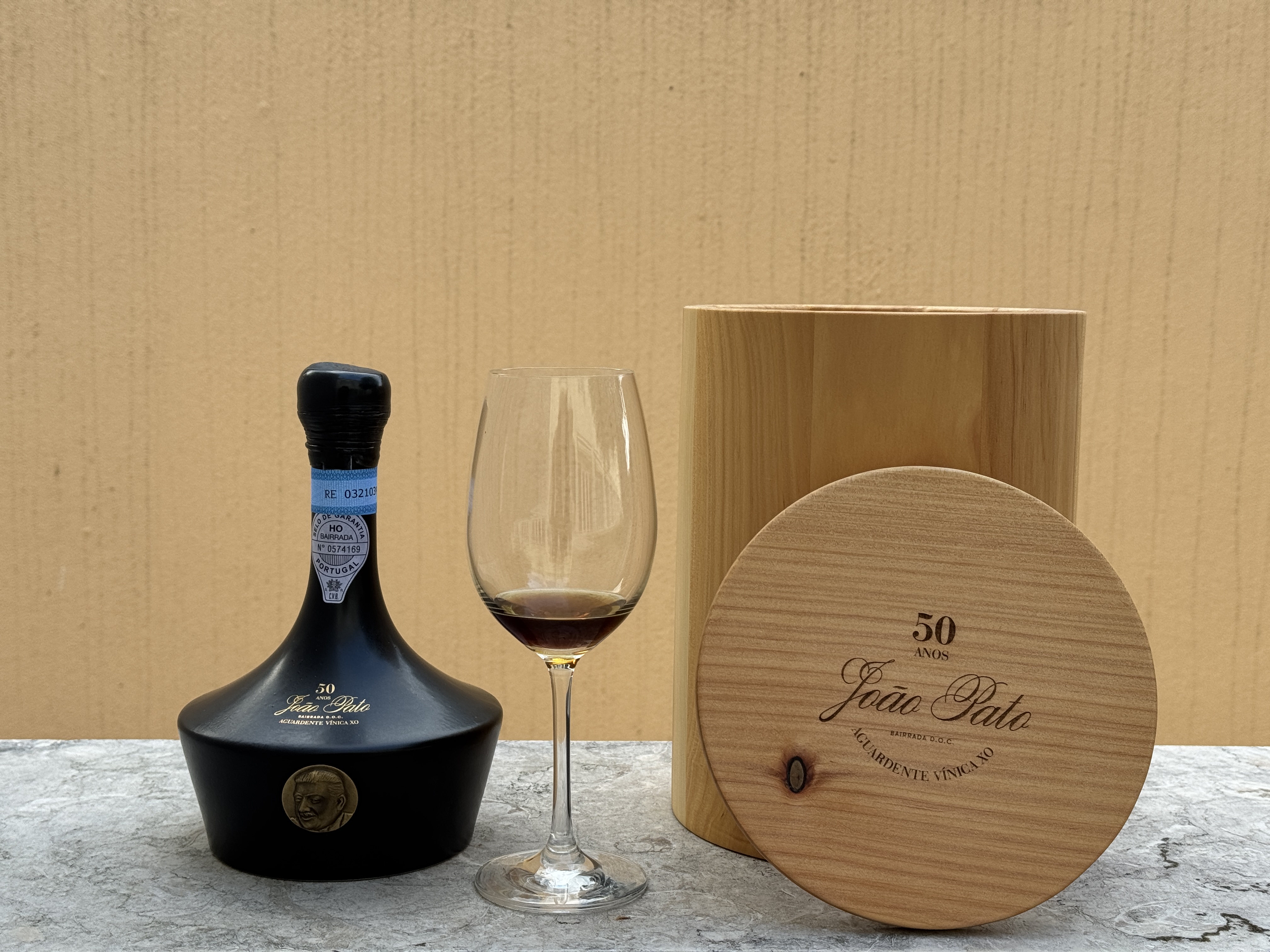
Half a century after the first distillation, Luís released only a handful of bottles. Each feels like an heirloom: an elegant black porcelain vessel resting inside a handmade wooden box, the lid closing with the soft click of a magnet, as if sealing a secret.

Winemakers whimsically call the liquid that evaporates during aging the angel’s share. In this case, the angels were clearly thirsty. Of every six liters laid down fifty years ago, barely enough is left today to fill a single 700-milliliter bottle. But what remains is the essence: flavors and aromas deepened and refined by time.

In the glass, the brandy glows deep amber. Its aroma rises with quiet confidence, warm wood, dried fruit, and a hint of smoke. On the palate, it is rich and profound, inviting slow, reverent sipping.

Sommeliers who have tasted it often describe it as incomparable, a fitting judgment for a brandy that is part of Bairrada’s history.
The wondrous old brandies of Quinta do Rol

Lourinhã is one of the few regions demarcated to produce high-quality brandy, known in Portugal as “aguardente vínica.” Like Cognac and Armagnac, Lourinhã imposes strict rules on brandy production to guarantee quality and authenticity. This dedication to excellence has led locals to affectionately nickname the region Lourinhac.

While many local grapes are not ideal for table wine, they are perfect for brandy. The fertile soils yield grapes with higher water content. The proximity to the ocean moderates the temperature, resulting in less maturation and lower alcohol concentration. The cool nights enhance the grapes’ acidity. This acidity helps the delicate fruit and floral notes of the wine carry over into the brandy and provides a stable foundation for the aging process.

Quinta do Rol is the main distillery in Lourinhã. In 1995, Carlos de Mello Ribeiro, an accomplished manager, acquired the estate from his family and invested in producing premium brandy. He had the attributes essential for success: capital, managerial skill, and patience—high-quality brandy requires 12 years of aging to develop its depth of flavor, delicate vanilla aroma, and seductive amber color. What he lacked was a detailed knowledge of the production process. To fill this gap, Carlos and his enologist, Pedro Correia, traveled to Armagnac and Cognac to learn from French producers, who generously shared their secrets.

Upon returning to Portugal, Carlos committed to using traditional methods without shortcuts. He installed a copper distillation engine like those used in Armagnac and planted Tália grapes, the varietal favored in France for brandy production under the name Ugni Blanc. Since then, he has accumulated 30 years’ worth of precious brandies, aged first in new oak and then in used oak barrels. 

The region’s freshness also lends itself to producing interesting white wines. Carlos crafts a wonderful sparkling wine with Arinto and Pinot Noir and a great white wine with Arinto and Chardonnay. He also makes a delicious Moscatel.

The first king of Portugal, Dom Afonso Henriques, granted the Lourinhã region to a French knight called Jourdain, who fought valiantly in the conquest of Lisbon. The knight would likely be proud of Lourinhac’s success in the world of brandy.