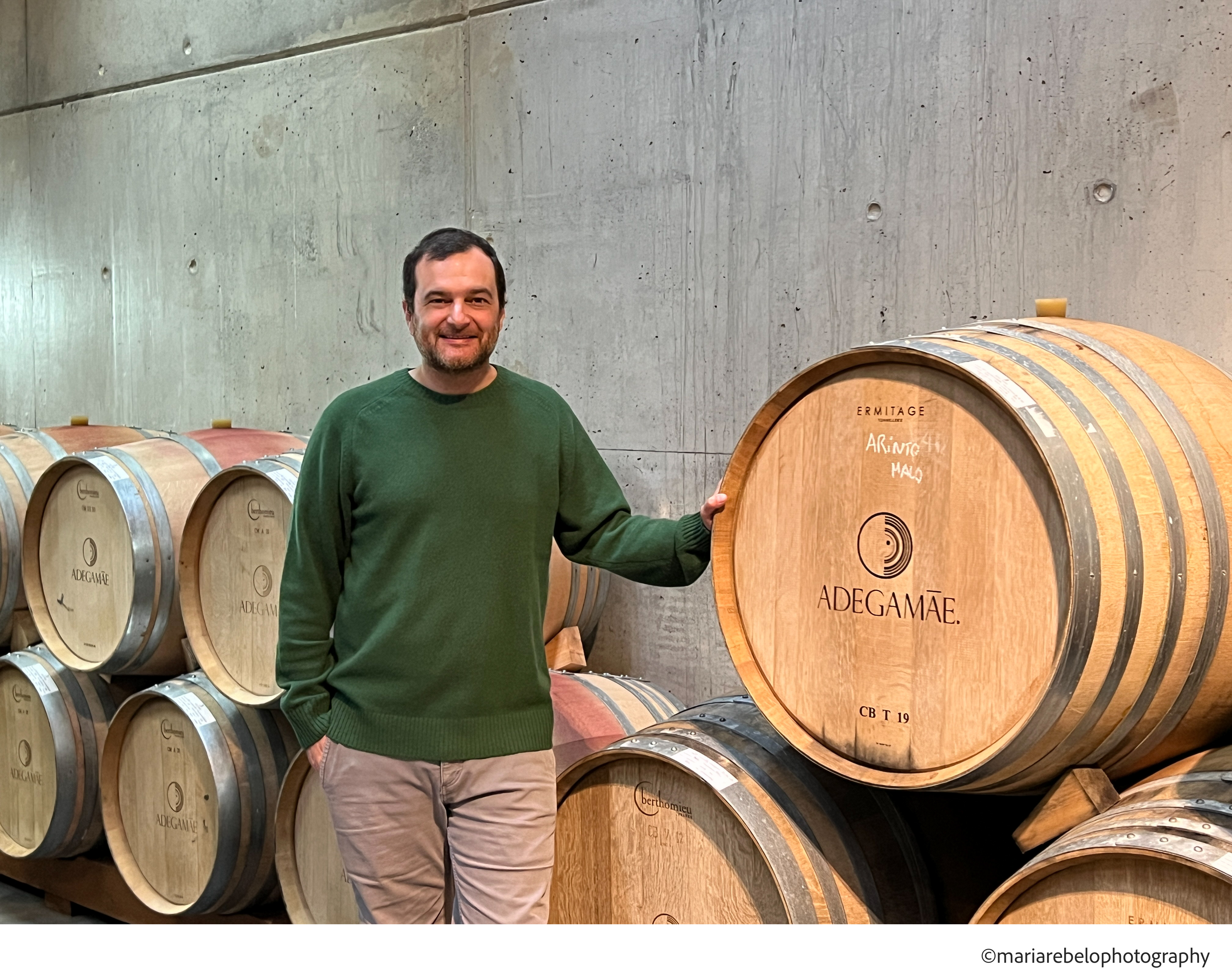
Diogo Lopes, a star winemaker

In 2023, Grandes Escolhas, a leading wine magazine, named Diogo Lopes “Enologist of the Year.” The seeds of this recognition were planted in his childhood. While most of his friends spent their summers by the sea, Diogo stayed on his grandfather’s farm in the mountains of Covilhã. A passionate vintner, his grandfather produced 2,000 liters of wine each year—enough to enjoy with family and share with friends. The experience of harvesting grapes left a lasting impression on young Diogo.

Though he studied at the Military Academy with the intention of becoming a naval officer, the pull of the land proved stronger than the lure of the sea. He transferred to the School of Agriculture, where two encounters shaped his future: one with the legendary enology professor Virgílio Loureiro, and the other with celebrated winemaker Anselmo Mendes. In 2001, Mendes invited Diogo to join one of his harvests. Their collaboration has endured ever since. “Anselmo is my enological father,” Diogo says. 

The best place to experience Diogo’s wines is Sal na Adega, a restaurant that treats codfish with the reverence it deserves. It is located next to Adega Mãe, the winery where Diogo crafts his wines.

The clay- and limestone-rich soils of Torres Vedras are ideal for sparkling wines. A striking example is Adega Mãe’s Pinot Noir espumante, which is aged for 45 months. It has a beguiling copper hue and an invigorating freshness. We could not imagine a more brilliant companion until Diogo opened an arresting Brut Nature made from Arinto and Chardonnay. In France, Chardonnay is traditionally paired with Pinot Noir, but here, it has found a dazzling new partner in Portugal’s Arinto. The chemistry between these two grapes is extraordinary. Crisp codfish cakes arrived, perfectly complementing the elegance of both sparkling wines.

Next, Diogo poured a glass of Vital, made from grapes grown in the Montejunto mountains, just eight kilometers from the sea. The terroir, rich in limestone, lends the wine subtle iodine notes and remarkable complexity. It was a perfect match for codfish Brás style, a comforting blend of shredded cod, fried potatoes, and eggs, prepared tableside.

The culinary climax came with the restaurant’s signature dish: codfish cachaço (collar). Diogo paired it with the 2017 Terroir Branco, a masterful blend of Arinto and Viosinho, a Douro varietal that has flourished in this coastal terroir.  Made without haste, like in the old days, it is a wine Diogo’s grandfather would surely have cherished.

The meal concluded with a remarkable surprise: a late-harvest made from Sémillon and Petit Manseng. It was dessert in a glass, with notes of orange and fig that enchanted the palate.

If you’re looking for a memorable gastronomic journey, make your way to Sal na Adega. There, you’ll find not only superb codfish dishes but also the exceptional wines of a star winemaker whose journey from childhood harvests to national acclaim is worth celebrating.
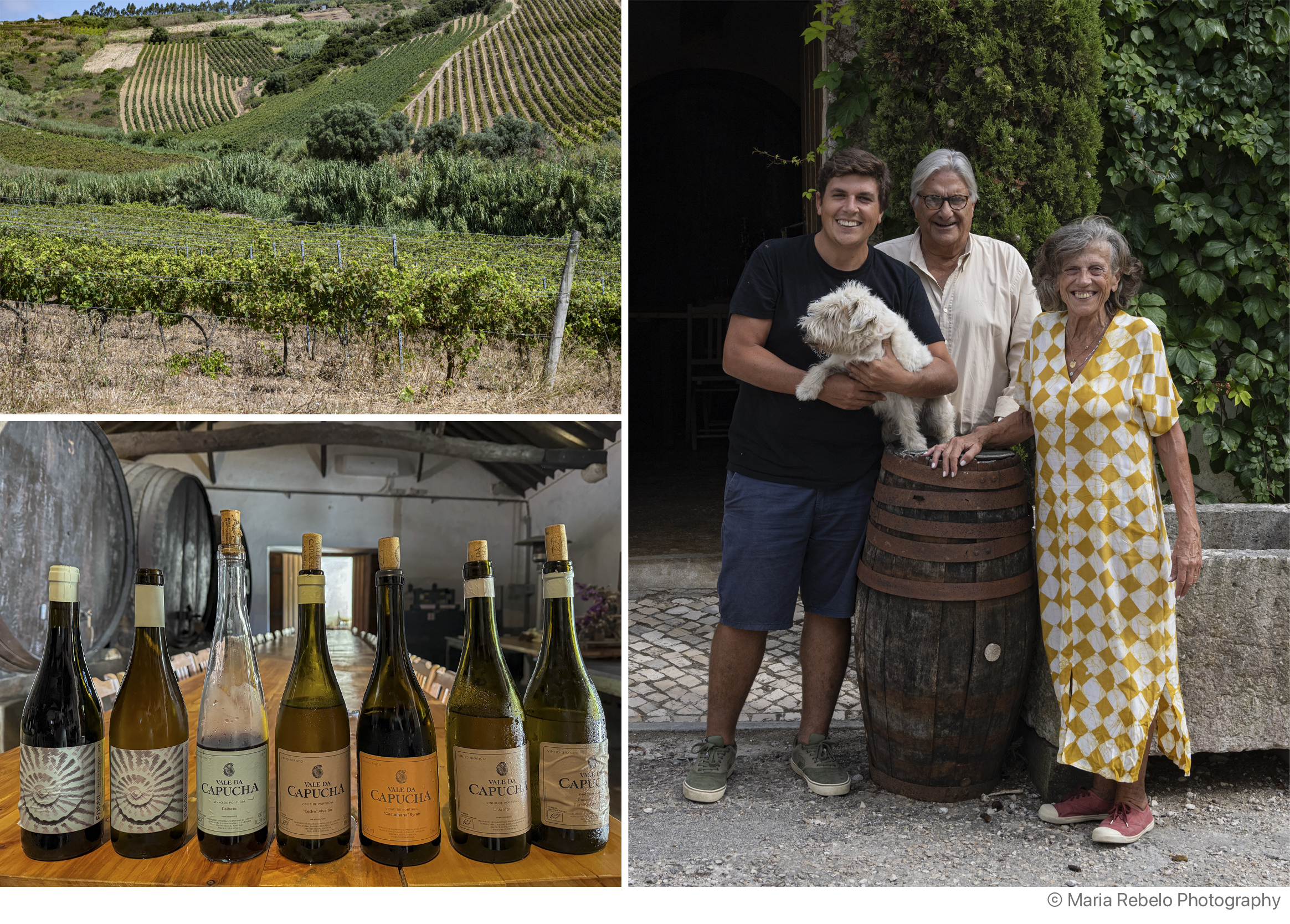
Vale da Capucha’s artisan wines

As we arrived at Vale da Capucha, a wine estate in Torres Vedras near Lisbon, a small, cute dog ran up to greet us. “His name is Arinto,” Manuel Marques said as he walked towards us, “all of our dogs are named after grape varieties.”

For the Marques family, producing great wine was never a choice–it was their destiny. Manuel’s great-grandfather was a winemaker, and his grandfather acquired Vale da Capucha to expand the family’s wine production. The estate was famous because it belonged to António Batalha Reis, the first director of the Torres Vedras School of Viticulture. This school taught local farmers how to graft vines onto American rootstock, protecting them from phylloxera, the disease that devastated European vineyards in the late 19th century.

Manuel’s grandfather raised his family on this farm. When he passed away, Teresa, Manuel’s mother, inherited the house and some of the land. She and Afonso, her husband, had busy lives in Lisbon, so they were unsure what to do with the property. But in 2005, the couple came for a weekend and fell in love with country life. They never returned to Lisbon, embracing their new chapter in rural Portugal. 

Pedro, Manuel’s brother, had studied enology and saw immense potential in the farm’s terroir for producing high-quality white wines with significant aging potential. The estate’s proximity to the ocean fosters a cool climate, which preserves the acidity in the grapes. At the same time, the limestone-rich soil, packed with 400-million-year-old fossils, lends minerality and complexity to the wines. Manuel joined the venture as the commercial director, and a new era for Vale da Capucha began.

In 2006, the family replanted the vineyards with carefully selected white grape varieties: Fernão Pires, widely grown in the Lisbon region, and Arinto from nearby Bucelas. They also introduced Antão Vaz from Alentejo, as well as Gouveio and Viosinho from the Douro Valley. At Vale da Capucha, these grape varieties developed a distinctive profile, gaining salinity and freshness.

The family made their first wine in 2009 and released it in 2011. Another significant milestone came in 2012, when they embraced biological agriculture to fully express the land’s natural character. Today, Vale da Capucha produces around 60,000 bottles annually. They rely exclusively on wild yeast for fermentation, handpick all their grapes, and practice minimal enological intervention, allowing the wine to reveal the essence of the terroir and tell the story of each vintage.

As we walked through the farm, we saw many animals. The farm raises Alcobaça-spotted pigs, turkeys, and Bresse chickens—Paul Bocuse’s favorite breed–to supply the kitchen with wonderful organic meats.

Manuel invited us to the wine cellar to taste some wines surrounded by old barrels that testify to the estate’s rich history. We started with a 2018 blend of Arinto and Fernão Pires, which impressed us with its stunning color, freshness, and vibrant character. Then, we sampled the 2019 Arinto made from a blend of three different parcels. It has elegant citrus notes, intense minerality, and salinity. These are wines that will age gracefully, becoming more complex and refined with time.

Next, we tasted an interesting Alvarão, a playful twist on Alvarinho, a grape from the Vinho Verde region. A 2019 Fossil “palhete” followed. This wine, made with 80 percent white grapes (Arinto) and 20 percent red grapes (mostly Castelão), is what people used to drink in this region one century ago. Despite its red hue, the wine drank like a white, bursting with freshness. To finish, we sampled a 2014 Syrah—light, earthy, and with only 13 degrees of alcohol–a singular expression of this variety.

The influence of the Atlantic Ocean, with its waves crashing just eight kilometers from the vineyards, gives these wines a distinct character. No wonder they captured the attention of sommeliers and wine enthusiasts searching for something exceptional.

Lunch with Manuel, Afonso, and Teresa in the dining room of the manor house was a gastronomic feast. We were treated to delicious vegetables served with local cheese and country bread, followed by a magnificent roasted lamb and rice made from the animal’s giblets. The 2019 Arinto was the perfect lunch companion, its bright acidity enhancing the flavors of the food.

It was an unforgettable visit to Vale da Capucha, a place where winemaking traditions, organic farming, and a refined understanding of winemaking come together to produce outstanding wines.

Once a month, Vale da Capucha hosts a lunch featuring cozido, a traditional Portuguese stew, paired with their wines. It’s a word-of-mouth event eagerly awaited by those in the know. Occasionally, they announce it on their Instagram page. If you see the posting, don’t miss the opportunity to meet this remarkable family and taste wines that are bringing international acclaim to the Torres Vedras region.