Dona Luisa’s famous codfish recipe

composit-solar-dos-amigos-2

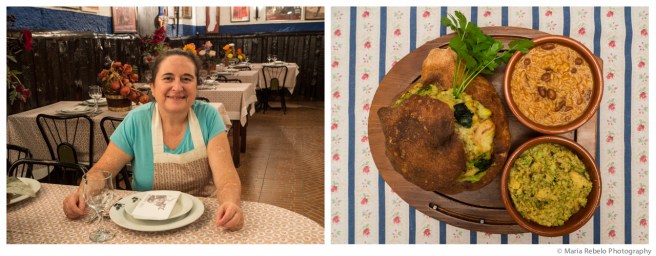
A year ago, we had a memorable meal at Solar dos Amigos, a restaurant in the small village of Guisado near Caldas da Rainha. We returned this year for another great experience. Our lunch started with succulent lamb chops, grilled to perfection. They were followed by a wispy, tasty “Bacalhau à Campino” (peasant style codfish) served inside the hearty country bread that is baked at the restaurant.

Dona Luisa Nunes, the restaurant’s owner and chef, is in great form and so is her octogenarian father who continues to produce a delightful wine that pairs perfectly with the food served at the Solar.

When we praised her famous codfish Campino style, dona Luisa offered to give us the recipe so we could share it with you, dear reader. Follow the instructions and you’ll have a delicious codfish meal. But, will it taste as good as when dona Luisa prepares it?  Not a chance!

Codfish Campino style

Soak 4 slices of salted codfish for two days, changing the water periodically to remove the salt.

Boil the cod for 15 minutes. Reserve the water, remove the skin and the bones, and shred the fish by hand. Boil a green cabbage and drain the water (dona Luisa favors a pusa-drum-head cabbage, known in Portugal as “repolho coração de boi”).  Open the top of a country bread, remove the inside of the bread and soak it for 5 minutes in the water used to boil the codfish. Carefully drain the water from the bread.

Combine olive oil and sliced garlic in a frying pan. Add the soaked bread, the shredded codfish, the cabbage and 2 pounds of cooked red beans. Season with salt and pepper and let the mixture simmer gently for a few minutes. Place the mixture inside the country bread, cover with the bread lid, season with olive oil and place in the oven for a few minutes, until the bread turns golden. Decorate with parsley sprigs and serve.

Solar dos Amigos is located on a small village called Guisado, 100 km north of Lisbon. The restaurant’s address is Rua Principal, 49, Guisado, Caldas da Rainha. Even though the restaurant is large, it is a good idea to make reservations. Their telephone number is 262-877-135. Click here for their website.

The blessing of the breeze

Pousada de Palmela.jpg

When you look out the window from your room at the Pamela pousada, you understand why the medieval king Sancho I built a castle on this location. You see mountains and valleys and the sea in the distance. Who would not want to conquer this piece of paradise? A castle was needed to ward off invaders.

The pousada and the surrounding castle are a spectacular wedding venue. There is a terrace called Pátio do Pessegueiro with a fabulous view of Troia and Setúbal and an indoor courtyard that is perfect for a banquet.

The restaurant staff told us how much they look forward to the wedding services. “It’s hard work but it is very rewarding to see two people start a happy life together.” How do you know the marriage will be blissful?, we asked. “There’s an old belief that when the wedding is blessed by the breeze the marriage is happy. And there’s always a breeze in Palmela.”

Here’s a link to the pousadas’ website. You can find a large collection of photos of the pousadas at www.mariarebelophotography.com.

Extraordinary food in Estremoz

Composit Gadanha Mercerearia.jpg

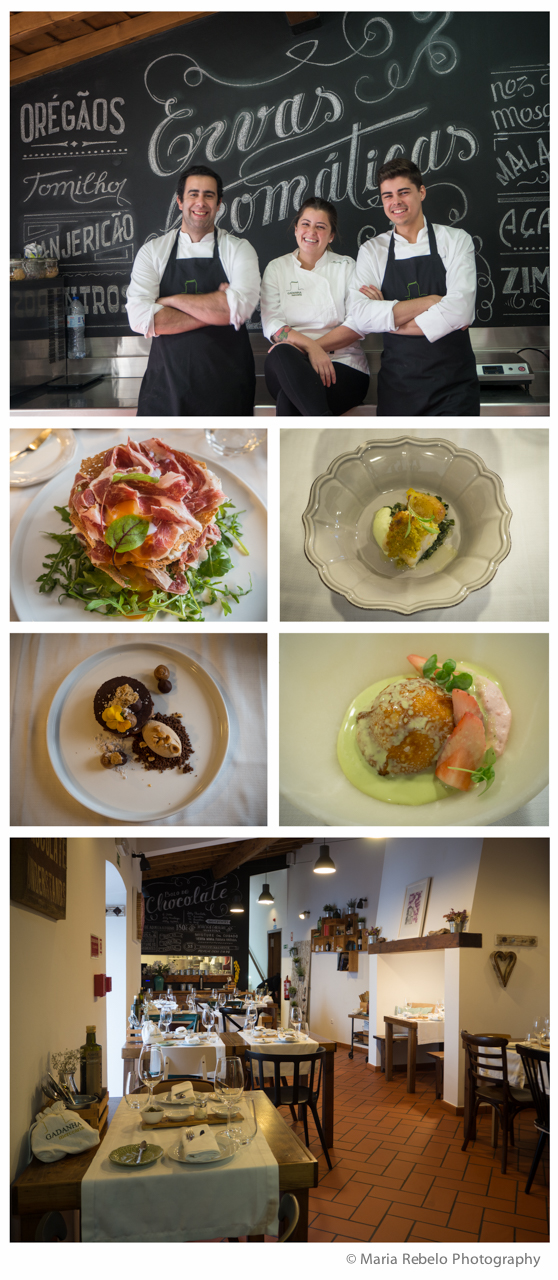
As soon as we entered, we felt that there was something special about Gadanha, a small restaurant in downtown Estremoz. The back wall is decorated with a chocolate cake recipe hand written by Michele Marques, the Brazilian chef who runs the restaurant. The dining room is furnished with old chairs and tables that give the place a cozy feeling.

We asked our waitress whether it was possible to sample a few items from the menu. Our culinary feast began with a plate of goat cheese, pears, walnuts and honey, accompanied by a thyme ice cream. This ethereal combination of flavors from Greece made us feel like gods dining on Mount Olympus.

A plate of delicious lamb croquettes paired with a roasted garlic aioli brought us back to earth. They were followed by one of the restaurant’s signature dishes: an ingenious “mille feuilles” constructed with thin slices of Alentejo bread, codfish and black pork prosciutto. The flavors of Alentejo shined on the next plate: a sausage called “farinheira” toped with fried quail eggs and accompanied by apple purée. The savory part of the meal ended with another signature dish: a delicious slow-cooked codfish topped with a crust made from cornbread, rosemary and thyme.

An extravagant combination of hazelnut and chocolate brought us to the realm of sweetness. It was followed by graceful “îles flottantes” covered with an orange crust, served with strawberries and a basil-infused crème anglaise.

We asked our waitress whether we could compliment the chef on our extraordinary meal. Michele came to our table with a radiant smile. We asked her an indiscreet question: “How does a Brazilian chef open a restaurant in the middle of Alentejo? “I fell in love with someone from Alentejo,” she told us. “That love waned but I liked Alentejo so much that I stayed.” We asked Michele where she gets her inspiration. “I did not grow up with the traditional recipes of Alentejo, I have a different culinary background.” she answered. “But I am inspired by the amazing products that the region has to offer.”

Michele introduced us to her business partner, Mário Vieira, her close collaborators, sous chef Alberto Muralha and pastry chef Gonçalo Carvalho, and all the dining room staff. “The restaurant is a team effort,” she stressed. “We’re all essential to the quality of the food and service. I have to pick the right people to make sure that everything we do, we do with love.“

It is clear that someday soon stars will shine on this restaurant in Alentejo. But we don’t need official accolades to know that Gadanha serves extraordinary food prepared with love.

Gadanha is located at Largo Dragões de Olivença, 84 A in Estremoz, tel. 268 333 262. Click here for their website.


The setting of the sun

sunset-at-areia-branca

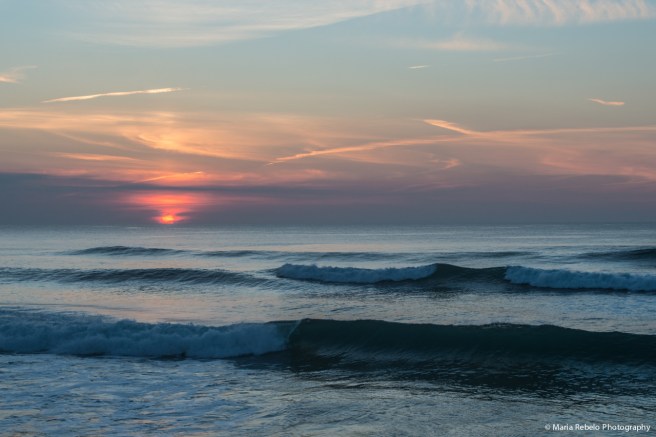
Yesterday the elements were tired after so many performances. The wind stayed at home but the waves came, dressed in white linen. The sun was in an orange garb brought from the far east. Seagulls danced to the roar of the waves while the sun kneeled in reverent prayer until the blue curtains were drawn.

Today a new season begins. We wish you a blissful New Year and we hope you’ll come see the spectacle of the sun setting on the Portuguese sea.

Tasting moscatel in Setúbal

composit-jmf

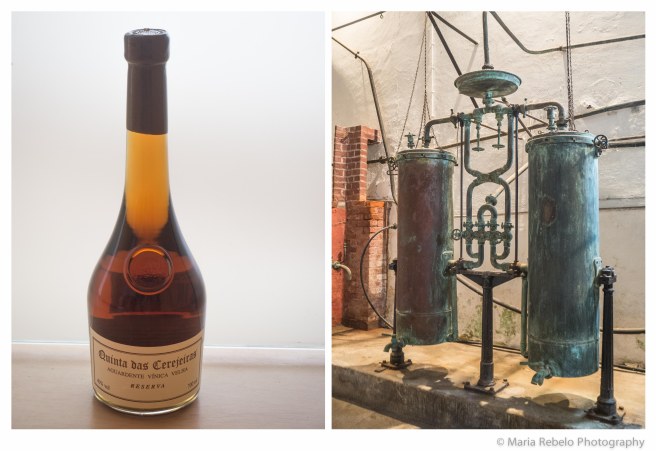
No one knows for sure how moscatel, a white grape from Egypt, arrived in the Setúbal peninsula, near Lisbon. What we know is that moscatel took to the region, producing wines that are perfect to start or end a meal. Over the years, the grape mutated into a new varietal—purple moscatel—that only exists in Setúbal. It is sweeter and more aromatic than its white cousin.

Moscatel wines are produced in the same way as port wine. The grapes are fermented for 4 or 5 days. The fermentation is then arrested before the yeast turns all the sugar into alcohol by adding “aguardente vínica” (brandy) to kill the yeast. The result is a fortified wine that is sweet and has 17 to 18 degrees of alcohol.

A great way to learn about moscatel is to visit José Maria da Fonseca’s winery in Azeitão. Founded in 1834 by a mathematician turned wine maker, it is one of the oldest wine companies in Portugal.

After one of his moscatel wines won a prestigious prize in Paris in 1855, Fonseca decided to export his wines to Brazil. A ship loaded with barrels of moscatel crossed the Atlantic. But the wine did not sell in Brazil and the ship returned with most of its original cargo. The sea voyage did wonders for the wine: in nine months the wine seemed to have aged 15 years, gaining complexity and depth. This moscatel, known as “torna viagem” (round trip), continues to be produced today with barrels carried by Sagres, a beautiful sailboat owned by the Portuguese navy.

José Maria da Fonseca ’s moscatel cellar contains bottles from every vintage since 1880 except for 1936-37 and 1939-40 when production was disrupted by the Spanish civil war and the Second World War, respectively.

It is great fun to do a blind tasting of moscatel wines at José Maria da Fonseca’s. Everybody has preconceptions about which wine will be their favorite. Some are sure they will favor the rarer purple moscatel or the older vintages. Others think that they will prefer the newer wines. Surprises abound. You will learn a lot about moscatel and a little about yourself.

Click here for information about visits to José Maria da Fonseca’s winery.


A faithful friend

OLYMPUS DIGITAL CAMERA

Portugal’s favorite fish does not swim in Portuguese waters. Since the 16th century, Portuguese fishermen have sailed to Newfoundland in search of gadus morhua, more commonly known as codfish. The French call the bland-tasting fresh cod “cabillaud” and the more appetizing salted cod “morue.” In Portugal this distinction is superfluous because only the salted variety is appreciated. So, one word suffices: “bacalhau.”

Since cod has very little fat, once it is cured in salt it keeps for a long time without becoming rancid. For this reason, dried codfish was often consumed by those who lived far from the coast in days of religious abstinence from meat like Christmas Eve.

The quality of the cod depends on the size of the fish (the larger the better) and the type of cure. To produce the best cod, the cure must begin on the boat, shortly after the fish is captured. This cure continues on land, usually in open-air pavilions. Lesser cod is stored frozen in the boat and cured only on land. Much of the codfish consumed in Portugal is cured in Ílhavo, a region with abundant sea salt.

Two popular sources of cod are Norway and Canada, but the best cod is caught in Iceland by Portuguese fishermen.

Before cooking, salted cod is soaked in water for two or three days to re-hydrate and remove most of the salt. The fish is then ready to be combined with symbiotic ingredients such as garlic, potatoes and olive oil.

The commerce of “bacalhau” is so important that there’s a whole street in Lisbon, Rua dos Bacalhoeiros, that was once reserved for codfish vendors.

In good times and bad, the Portuguese gather at the table to share this fish we call “fiel amigo” (faithful friend). It is a delicacy that comes from afar but has the taste of home.

Lisbon wakes up

rbd_praca-do-rossio_lisboa_peq-c
Rossio, Rui Barreiros Duarte, ink on paper, December 2016.

We envy the early risers. They see Lisbon wake up, dress in pale blue light, put on a cinnamon fragrance and get ready to enchant its visitors.


We’re often asked about the drawings used on our blog. They’re the work of architect Rui Barreiros Duarte. For the first time, he’s selling a few original drawings like the one on this post. The sizes are around 60 cm x 40 cm and the prices around 200 euros. If you’re interested, email apprbd@gmail.com .

Eating with the best people in Vila Real

OLYMPUS DIGITAL CAMERA

“I’m sorry, but we cannot accommodate you. We won’t have a free table any time soon,” said Eleutério Lameirão in a serious tone that agrees with his solemn name. His small restaurant, located in a residential area of Vila Real, was full of regular customers.

Before we left, we took a glance at the menu and found a quote by Julia Child: “People who love to eat are always the best people.” Inspired by this quote, we decided to wait. Eleutério gave us a puzzled look, but fifteen minutes later he had a table for us.

We ordered rissois, fried breaded dough shaped like a half moon with a shrimp or meat filling. Eleutério brought them to the table and waited around to see our reaction. They were crispy on the outside and full of flavor on the inside.  When we said “wow, these are amazing!” Eleutétio abandoned his shy demeanor and smiled, pleased by our reaction. He went back into the kitchen and brought us a plate of codfish cakes. These were also extraordinary: light, airy and slightly crunchy, a four-part harmony of cod, parsley, egg, and potato.

Finally, we had small sardines called “petingas,” incredibly fresh, fried and seasoned to perfection. They came with an hearty bean rice that melted in the mouth and blended with the salty sardines.

The restaurant was still very busy but Eleutério came to chat with us. He told us that the menu is always small, three or four items made with the best fresh ingredients and modestly priced. The recipes have been refined over many years and require great attention to detail. “It is hard work because there’s no room for distractions. Everything has to be right, the timing, the temperature, the seasoning. But it is worth it because when everything is right the taste is amazing,” he said. If you ever have the privilege of eating at O Lameirão, we think you’ll agree.

The restaurant O Lameirão is located on Rua da Cruz, Vila Real, tel. 259 346 881.

Perfection at Adraga

Composit Adraga.JPG

When we were very young, our parents used to take us to an idyllic beach with crystal blue waters and natural rock archways sculpted by the sea. In the end of the afternoon, we often had dinner in a small restaurant right on the beach.  It was simple fare: “percebes” (gooseneck barnacles), grilled fish, and salad. But the flavor and aromas were amazing and so was the spectacle of the sun setting on the ocean. We forgot the name of the beach and that is just as well, for places change and fail to live up to our memories of them.

During a visit to Sintra this summer, we decided to have lunch in the nearby Adraga beach. As soon as we arrived, we realized that this was the beach from our childhood!  There were little kids playing in the same rock archways we once loved and bathing in the same blue waters we so much enjoyed.

We sat at the beachside restaurant and ordered “percebes,” grilled fish, and salad. We kept our expectations low. Surely, the food has changed. Then the seafood and fish arrived, fresh, full of flavor, meticulously prepared. It was as if we were going back in time, to a simplicity and authenticity that are so rare today.

We complimented Jorge Pimenta and his mother Suzette, the restaurant owners, on the quality of their food. They responded with modesty: “Everything we do is simple but we try to do it well.  The percebes were caught this morning right on the beach. The fish is very fresh. All we do is respect the ingredients that the sea brings to us.”

The reasonably-priced wine list has many great choices. But in a restaurant where everything is local, it makes sense to drink the magical wine produced nearby in Casal de Santa Maria by a Russian Baron who is 103 years old.

The same family has owned the Restaurante da Adraga for four generations. In the beginning of the 20th century, queen Dona Amélia used to come here to eat fish while the king hunted in the Sintra mountain. One century later, the Adraga restaurant continues to delight anyone who loves great food, whether or not they have royal blood.

Restaurante da Adraga is located at Praia da Adraga, 143, Sintra, tel. 219280028. Reservations are a must. Ask for a table near the windows facing the beach for a spectacular view.