If you’re interested in contemporary art, be sure to visit the Cascais museum devoted to the Portuguese painter Paula Rego. Her work is housed in a striking building designed by Eduardo Souto de Moura, a Portuguese architect who received the Pritzker prize in 2011. Rego uses ordinary faces, objects, and landscapes from Portugal to paint unusual scenes that challenge visual and social conventions.
Marcel Proust could vividly recall the taste and smell of his aunt’s madeleines. Those memories inspired his masterpiece, Remembrance of Things Past.
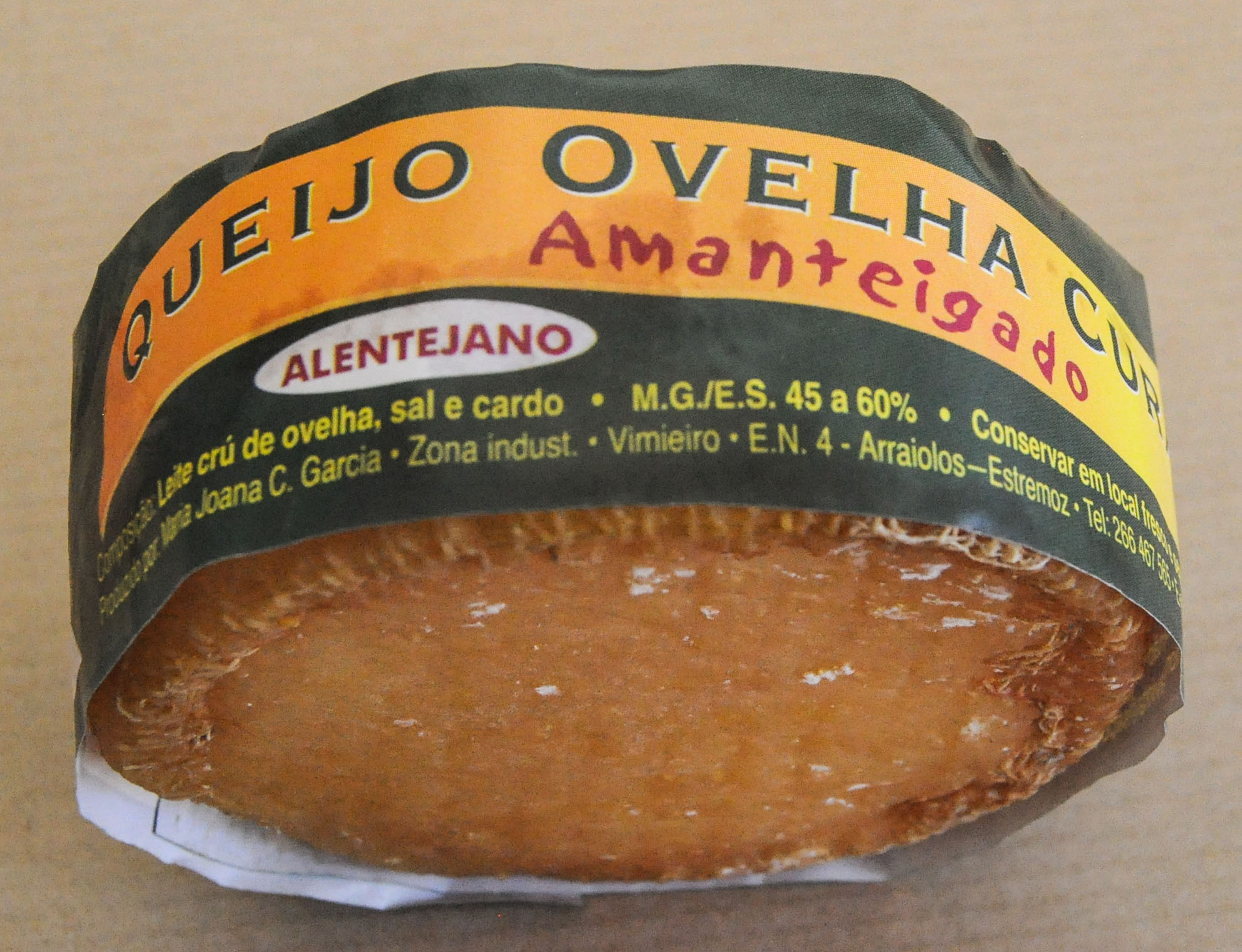
Joana Garcia remembered the taste and smell of the cheese she ate as a child with her grandmother in Alentejo. Those memories inspired her to recreate that long-lost flavor. She quit her job as a lawyer, moved to Alentejo and bought 500 sheep. After trying endless combinations of milk, salt and cardoon, she found the taste of her youth. Garcia’s masterpiece is called Queijo Monte da Vinha. It is a delicious, soft, buttery cheese with the precious taste of a distant past.
You can try Queijo Monte da Vinha at the wonderful Tasca da Esquina restaurant in Lisbon. You can buy it at Mercearia Creativa, a gourmet grocery store where you’ll find many other great Portuguese products (Av. Guerra Junqueiro, 4A, Lisbon, tel. 218-485-198). Click here for the Monte da Vinha website.
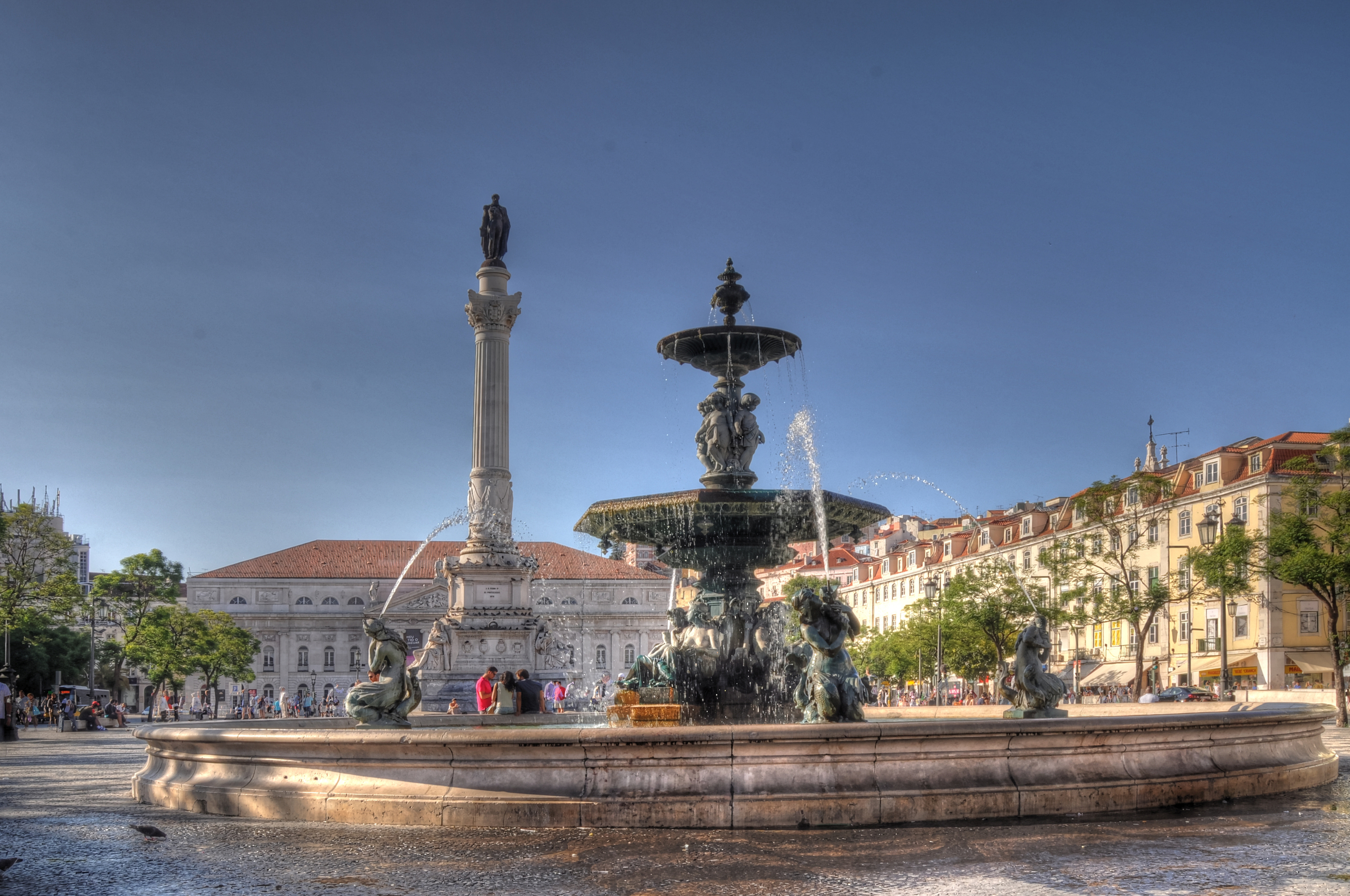
Rossio, Maria José Rebelo, digital print image, 2012.
Rossio, one of Lisbon’s main plazas, is an aristocratic lady who has seen it all: war and peace, prosperity and poverty. Bullfights were once staged in the middle of the square. In 1515, King Manuel arranged a duel in Terreiro do Paço between an elephant and a rhinoceros. At the sight of its armored opponent, the elephant panicked, broke its enclosure, and fled toward Rossio.
Even its monuments have improbable histories. The statue of D. Pedro IV, King of Portugal and Emperor of Brazil, was inaugurated by his daughter, D. Maria II, but the monument remained unfinished for fourteen years. Finally, in 1867, a tall column was erected. A statue of Emperor Maximilian happened to be in Lisbon in transit to Mexico when news arrived that he had been shot. Rumor has it that the statue was bought at a discount and used in Rossio. It was a fine way to save money, since all emperors look alike atop a high column.
Martinho da Arcada, Maria José Rebelo, monochrome digital print image, 2012.
Martinho da Arcada, a café in Terreiro do Paço, is a time capsule. It shows us what Lisbon cafés looked like in the first part of the 20th century. It is an austere place and, yet, it was here that the poet Fernando Pessoa wrote some of the best poetry in the Portuguese language.
Do the muses still gather at Martinho da Arcada, waiting to whisper their rhymes to those willing to listen? There’s only one way to find out. Take a pen and a pad of paper, sit down at one of the tables, order some coffee, and watch what happens.



 Salt of Portugal