
Wild fish with large fillets, firm flesh, and few pin bones are increasingly rare. Tuna, turbot, salmon, grouper, and seabass have become the aristocracy of the sea, commanding pride of place and soaring prices on fine-dining menus worldwide. One redeeming consequence of this scarcity is the reappraisal of fish once dismissed as having little commercial value.
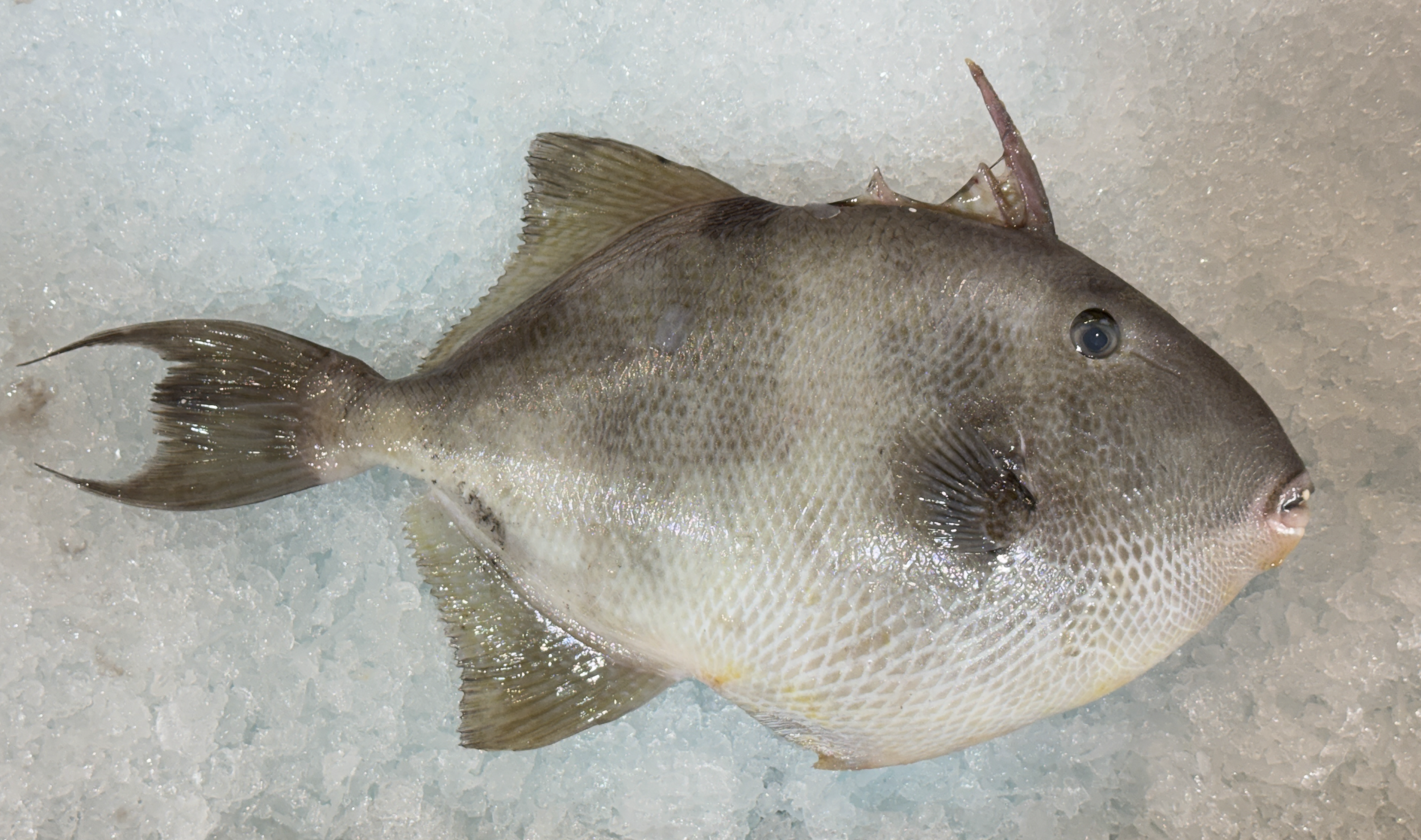
One such species is the triggerfish. It is known in Portugal as peixe-porco (pig fish), an unfortunate name derived from the grunting sound it makes when lifted from the water. Triggerfish has a thuggish reputation: it survives surprisingly long out of water and can bite hard with teeth built to crush shells. At sea, it is fiercely territorial and will even attack sharks that venture too close to its nest.
On the plate, it comes second only to John Dory (peixe-galo). Feeding on sea urchins, crustaceans, clams, mussels, and small fish, it develops clean, firm, white flesh. It is protected by a tough, leathery skin and a locking dorsal spine, held in place by a smaller second spine and released by pressing it–the mechanism that gives the fish its English name.
In Portugal, fishermen often grill it whole over charcoal until the skin chars and peels away, revealing succulent flesh. It is also excellent fried, baked, or stewed, provided the skin is removed before cooking.
If you see peixe-porco on a menu, don’t hesitate to order it!
 Salt of Portugal