Susana Esteban’s thrilling wines

Susana Esteban agreed to present her wines at the Arraiolos Pousada in September. It was an act of generosity because the harvest was in full motion, and she’s a perfectionist. Like the photographer Cartier-Bresson, she’s always looking for the decisive moment. The moment when the grapes are perfectly ripe to be gently harvested by hand, when the fermentation has run its course and worked its magic, when the oak barrels have refined the wine without changing its temperament.

As soon as Susana started talking, the sun set as if sensing that another star had arrived. Her Portuguese is seasoned with a charming accent–she was born in a Spanish region called Galicia. After graduating in enology, she decided to do an internship in the Douro valley, a place that was then remote and isolated. She stayed and worked in the Douro during her formative years. Then, like the swallows, she went south in search of something new– vineyards where she could develop her style and make wines that can age and evolve for many decades.

She made her first wine in 2011. It is called Procura, the Portuguese word for search. Susana found what she was searching for in the hills of São Mamede in Portalegre–centenarian vines full of character. They needed a lot of care, but Susana nursed them back to health with patience and affection.

Susana is cloning the old vineyards to preserve their genetic material and pass it onto the new vineyards that she is planting. None of her vineyards, new or old, are irrigated. The thirsty vines produce low quantity but high quality. 

We first tried a rosé made from Aragonês and purple muscatel that is pleasantly aromatic and light in alcohol–a perfect summer drink. 

Then, we tasted an exquisite white wine made in amphoras called Tira o Véu (removing the veil). The first time Susana made it, in 2019, she witnessed a rare phenomenon: a veil formed on top of the amphora. It is a film created by yeast highly prized in the production of sherries. No one knows what makes it occur, but every year the veil returns to make this wine more seductive and mysterious.

Next, we drank an alluring red wine made with Touriga Nacional and Aragonês. For Susana producing wine is an adventure, so she calls it Aventura. We’re lucky to be part of this thrilling experience that results in a wine full of freshness and minerality.

Finally, we tried the wonderfully harmonious 2016 red Procura. It combines a field blend with Alicante Bouschet from ancient vines aged in oak to round the tannins. It is a “vinho de guarda,” a wine with great longevity that will improve and surprise with the passage of time. We’re so lucky that Susana found the vineyards she was looking for!

Dona Octávia’s culinary wealth

We loved the sausages served during our epic lunch at Páteo Real. Chef Filipe Ramalho offered to call Dona Octávia, the sausage maker, to see if we could meet her. She agreed, so we drove through the golden plains of Alentejo to a small village called Cano. Blinded by the exuberant sunlight, we knocked on a green door marked Salsicharia Canense. Dona Octávia welcomed us inside, greetings us with glasses of cold water that quenched our thirst. 

She’s been making sausages for 40 years. Her parents had eight children, so there were many mouths to feed. Everybody had to work to help out. The only education available to Dona Octávia was learning how to make sausages with her grandmother. 

She opened Salsicharia Canense with her husband in 1997. People quickly noticed that her sausages were finer than the rest. “I enjoy my work and try to make everything I do special,” Dona Octávia confided. She has always used local ingredients–pigs raised in Alentejo and herbs from her garden or the nearby Portalegre mountain. She uses no preservatives or foreign spices, and all her sausage casings are natural and hand-sewn.

Dona Octávia says she was born poor but now feels rich because her son João returned to Cano to work with her and preserve her culinary knowledge. It’s the kind of wealth that trickles down to us all.

Salsicharia Canense is located at Rua de São José, Cano. You can order their products by calling 962 938 107.

Funchal’s farmers market

If you’re visiting Funchal, the capital of the Madeira archipelago, make sure you stop by Mercado dos Lavradores, the farmer’s market. It is a place full of color—exuberant fruits fight for attention with fragrant spices and strings of hot red and yellow peppers. 

The fish stalls overflow with large tuna, red and black bodião, and slender scabbardfish. The latter lived inconspicuously, deep in the ocean, until fishermen discovered them in the 17th century. Despite their scary look, scabbardfish became a mainstay of Madeira cuisine. Often served fried accompanied by fried bananas, it is delicious!

Howard’s Folly

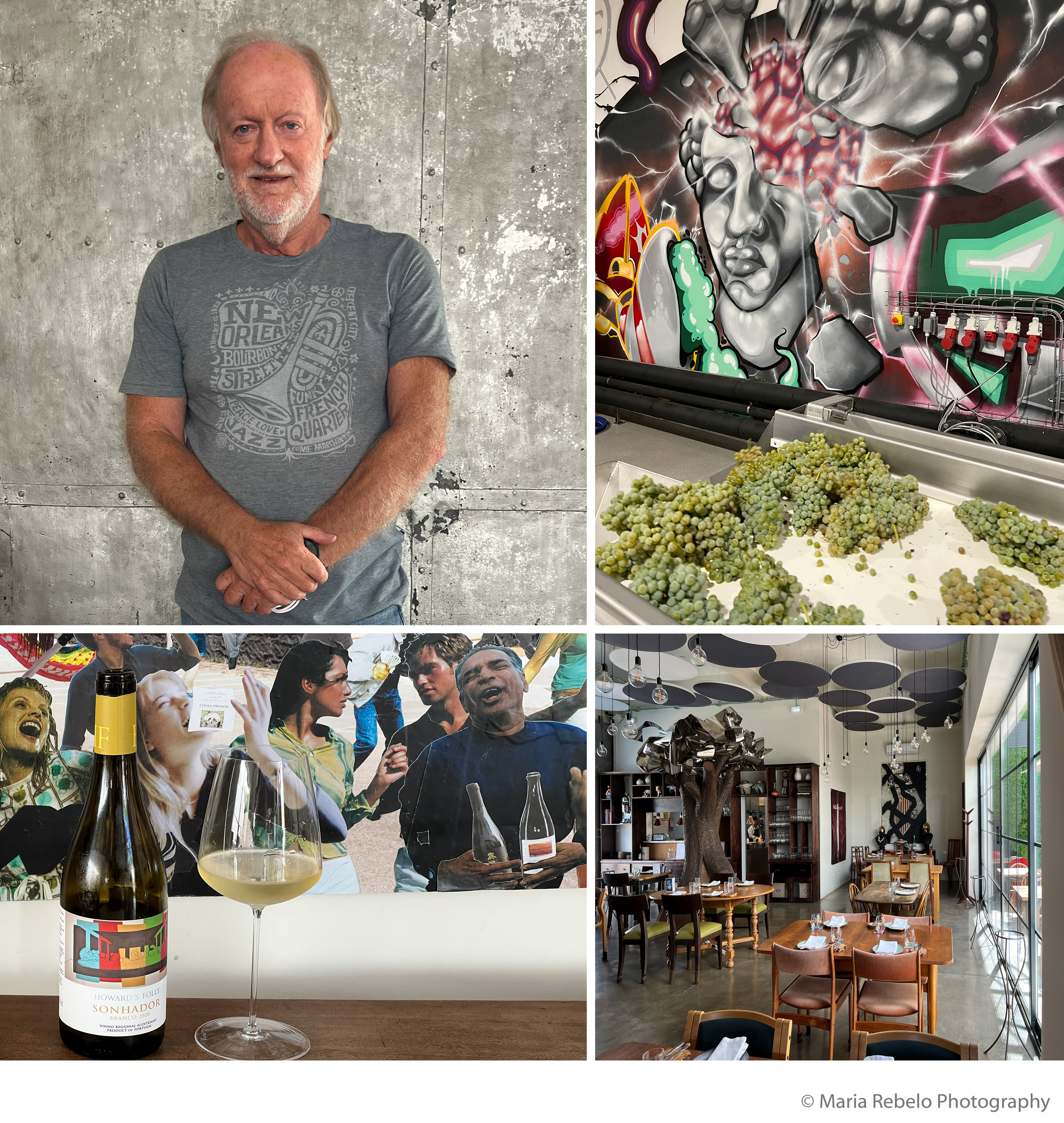
It is great fun to visit Howard’s Folly in Estremoz. The restaurant, winery, and art gallery are a joint venture between Howard Bilton, a British financier, and David Baverstock, a legendary winemaker. 

After studying enology in his home country, Australia, David worked in France and Germany. Before returning home, he vacationed in Portugal and met his future wife, Maria Antonieta. He returned to Australia to work in the Barossa Valley, where Maria joined him. But Maria was homesick, and in 1982 the couple came back to Portugal. David worked in the Douro valley until 1992, when he became chief winemaker at Herdade do Esporão in Alentejo. He felt at home in the endless plains that reminded him of Australia. His thirty harvests at Esporão helped establish Alentejo as an important wine region.  

Howard’s Folly is an exuberant place. It occupies a large building that was once a “grémio da lavoura,” an agriculture association. There is art everywhere. Sewing machines turned into miniature tractors bought in the local market, pig sculptures, and much more.

David shows us the winery with its colorful walls painted by a graffiti artist. Freshly picked grapes are arriving to be sorted, crushed, and cooled with dry ice. 

We head to the restaurant. The food, prepared by chef Hugo Bernardo, is Portuguese with a whimsical British twist. The butter has a strong umami taste because it is mixed with Marmite, a salty yeast extract popular in Britain. 

David opens a delightful white wine called Sonhador (dreamer), made from old vines planted in the hills of São Mamede in Portalegre. It is an excellent companion for the codfish and chips that soon arrived at the table. Then we try the Winemaker’s Choice, a velvety red that pairs beautifully with a delicious shitake mushroom salad.

Lunch ends with a glass of 1991 Carcavelos. The wine, produced at Quinta dos Pesos by the Manuel Bulhosa family, was stored in barrels and almost forgotten. David and Howard convinced the family to sell them some barrels so that David could make a blend. The result is spectacular.  

David retired from Esporão and was planning to take it easy. But Ravasqueira convinced him to join them as chief winemaker. And that is lucky for us. We’ll be able to enjoy many more of David’s harvests to come!

Howard’s Folly is located at Rua General Norton de Matos in Estremoz, tel. 268 332 151.

A sublime pumpkin tart

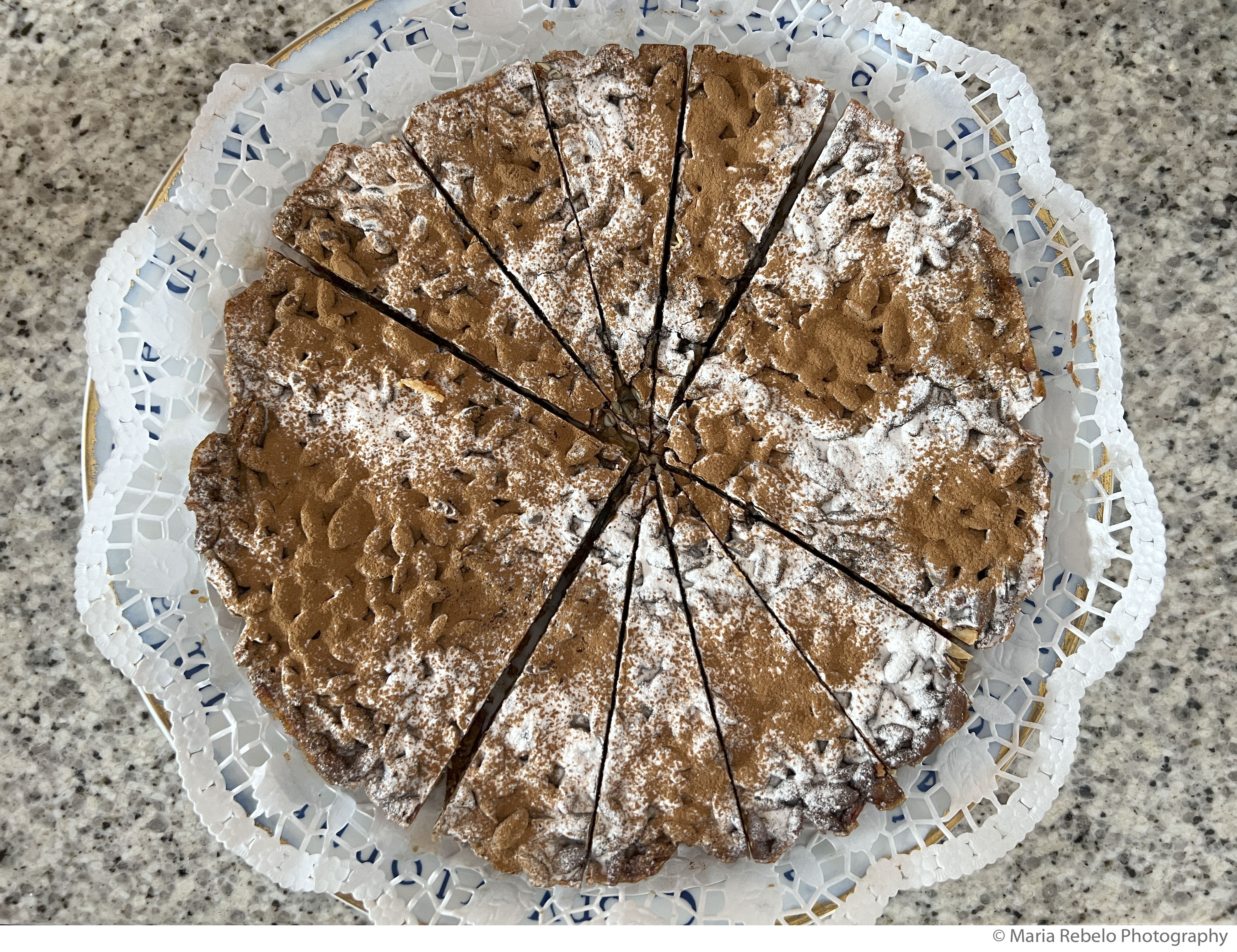
Edgardo Pacheco is a Portuguese journalist who writes with eloquence and grace about gastronomy. He knows so many people in the food world that he managed to surprise us on our home turf. He arrived at our house with an irresistible sweet tart. When we asked him about the provenance of this delight, he revealed it came from the town nearby!

The tart was created in 2018 for the local pumpkin festival by a young chef called Sílvia Batista. It has a flour, butter, and sugar base, a pumpkin-pulp filling, and a topping made with pumpkin seeds, sugar, and butter. The combination is sublime.

Silvia makes the tart with her mother, Diná, and sells it in Lourinhã, where it is quickly gathering fame. The chef didn’t name the tart after herself. She called it “Dona Isabel” in honor of Isabel Mateus, who, with her husband, discovered a nest of dinosaur eggs in a local beach. 

Creating a brand-new recipe requires skill. But the naming of the tart reveals another important ingredient: generosity. Sílvia has both talent and generosity in abundance. We can’t wait to taste what else she’ll make!

Click here for Sílvia Batista’s web site. You can buy or order her tart at O Casco, Rua Dr. Francisco de Sá Carneiro, Lt 22 R/Ch Dto. Lourinhã, tel. 910 121 280.

How do we tell the king?

We used to buy jams endorsed by the British monarchs, figuring that centuries of sampling jams at tea time gave them the practice required to select the cream of the jam crop.

We quite liked the British jams until one fateful lunch at Toca da Raposa in Ervedosa do Douro. A sampling of jams arrived without fanfare at dessert time. When we tried them, we experienced a whole new level of deliciousness!  

What makes these jams so sublime? Their fruit comes from the Douro valley, a place where the scorching summer heat and a wealth of soil micronutrients create unique conditions that intensify aromas and flavors. And each batch is handcrafted by Dona Graça, a legendary cook, and her talented daughter, Rosário. The two leave nothing to chance, shunning the use of preservatives and making adjustments small and large to ensure that the results are perfect. 

There is an orange jam chockfull of strips of orange rind that delight the palate and an orange and hot pepper jam with the ideal combination of sugar and spice. There are jars of jam brimming with perfectly ripe whole figs; a surprisingly delicious zucchini jam; amazing jams made with must from grapes used to produce port wine; jams made from a rare peach variety that grows amidst the vines, and much more.

The jams favored by his royal majesty pale by comparison with the wondrous jams from Toca da Raposa! The question is: how do we tell the king?

Toca da Raposa is located at Rua da Praça in Ervedosa do Douro, tel. 254 423 466.

Alentejo’s star wine grape

In the middle of the 19th century, Henri Bouschet crossed Petit Bouschet, a combination of Aramon and Teinturier de Cher conceived by his father, with Grenache. The new varietal, Alicante Bouschet, produces wines with a beautiful dark-red color. 

Over time, the French lost interest in Alicante Bouschet. But the grape found its home in Alentejo, where it flourished and transformed, becoming one the region’s most emblematic varietals. 

Alicante Bouschet was first planted in Alentejo at the end of the 19th century by the Reynolds, a British family that purchased Herdade de Mouchão. It is the star of the wines made by Julio Bastos, an heir to the Reynolds family, at Quinta Dona Maria

The photo shows some beautiful Petit Verdot (on the right) and Alicante Bouschet (on the left) grapes picked at Monte da Ravasqueira. Like Petit Verdot, most red grapes have white pulp. That is why we can make white wine from red grapes (“blanc de noirs”). If we extract the red-grape juice and avoid contact with the skins, the result is a white wine. If we allow for some skin contact, we get a rosé.  

Both the skin and pulp of Alicante Bouschet grapes are red. This type of grape is called tintoreira (dyeing) because it gives color to the wine. But it has much more to offer: enticing aromas, structure, concentration, and aging ability. Open up a bottle of Alentejo wine, and you’ll see!

Dinning with Marlene

When we dined at Marlene Vieira’s new restaurant, appropriately called Marlene, the place was packed. But, like a star performer, Marlene made us feel like she was cooking just for us, often coming to our table to chat about the food she served. 

The meal started with a variation on one of her classic themes, the “filhós de berbigão” that she serves at Zun Zum, her more casual restaurant. This time, the filhós, a star-shaped shell made from fried dough, was gloriously stuffed with foie gras, reineta apple, and a Madeira-wine gel. 

Next, came a trompe l’oeil preparation. It looked like cheese topped with prosciutto. But the cheese turned out to be an egg cooked at low temperature that, mixed with the prosciutto, created a festival of umami sensations.

We were taken to the sea by a delicate combination of violet shrimp from the Algarve accompanied by a gazpacho made with the shrimp’s head, topped with a percebes tartlet. 

Then, we returned to land with two crusty loaves of bread, one made with wheat and rye and the other with white corn. They came with fragrant olive oil made in Trás-os-Montes at Quinta de São Miguel do Seixo. 

The next menu entry was a delicate part of the codfish called cocochas seasoned with parsley and pine nuts. We reached the mid-point of our culinary journey with tasty white truffles and morel mushrooms stuffed with requeijão

They were followed by a ravishing sole dressed in an asparagus sauce, butter, and caviar. We reached the climax with a savory pudding made with an eel broth seasoned with saffron and topped with the eel’s skin. It is sublime!

Dessert was a delightful pine nut mousse with apple granita and pineapple from the Azores. The petit fours were lovely: merengue with a strawberry cream, tangerine leaves, and macaroons stuffed with almonds and eggs.

We’re lucky to have a chef like Marlene Vieira, who studied the past to invent the future of our culinary tradition!

Marlene is located at Av. Infante D. Henrique, Doca do Jardim do Tabaco, Lisboa, tel. 351 912 626 761, email marlene@marlene.pt.

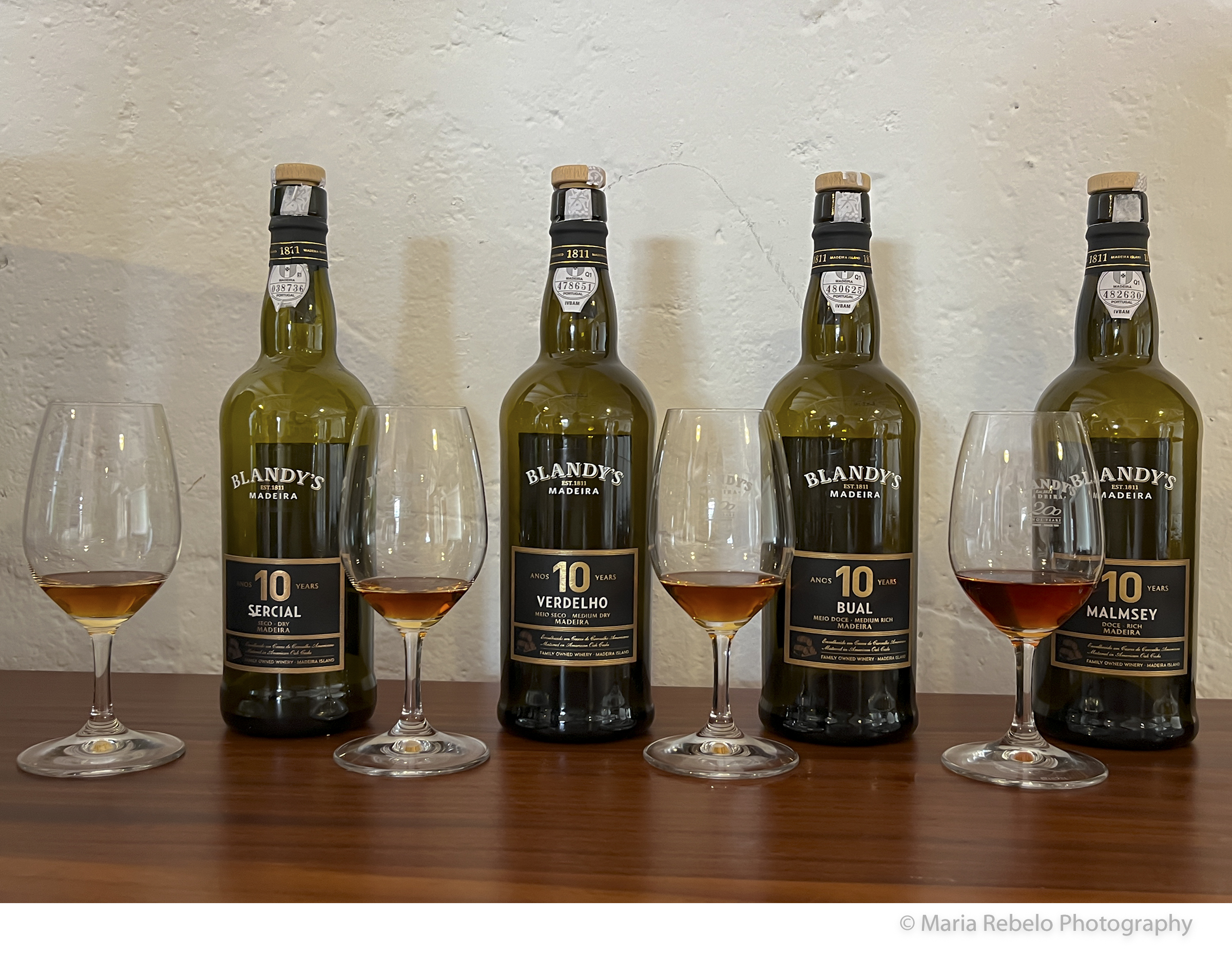
Tasting Malvasias in Madeira

Prince Henry the Navigator was an early-day venture capitalist. He financed expeditions on small boats called caravels to find new lands, keeping 20 percent of the resulting profits. His first big success came in 1419 when his navigators discovered an island covered by a laurel forest. They named it Madeira, the Portuguese word for wood.  

The prince brought sugar cane from Sicily to Madeira, where it thrived because of the abundance of water and subtropical climate. The island became Europe’s leading sugar producer until the first half of the 16thcentury, when Brazil supplanted it.

Prince Henry was also interested in wine, in part because of its use in liturgic services. The best 15th-century wine was made in Crete from a white varietal called Malvasia Cândida and produced with overripe grapes. 

The Jesuits planted Malvasia Cândida from Crete in a small region of Madeira called Fajã dos Padres. Today, this varietal is rare on the island. It was superseded by Malvasia de São Jorge, a hybrid created in the 1950s by Leão Ferreira de Almeida and generally used to make Madeira Malmsey. 

Manuel Malfeito, our friend who’s an enology professor, brought to Madeira a bottle of fortified wine made in Crete from Malvasia Cândida so we could compare it with Malmsey. “Perhaps this is the first time in 500 years that a wine from the original Malvasia Cândida is drunk on the island of Madeira!” said Manuel with glee. 

How do the two wines compare? The wine from Crete is pleasant and intensely sweet. The Madeira Malmsey has much more depth because of its acidity. This acidity comes in part from Madeira’s volcanic soils, which are rich in iron, manganese, and magnesium. 

It is the combination of sweetness and acidity that makes Madeiras so exquisite. Each glass of Madeira wine is a gift from a prince.

The Paimogo fort

There are two ways to reach the fort of Her Lady of the Angels of Paimogo. During low tide, we can walk on the white beach sand while the cool sea waters bathe our feet. We can always go by land, through rolling hills painted with sepia colors that contrast with the shimmering blue of the sea. Either way, the fort awaits us at the end of our journey. 

Built in 1674, it maintains its original architecture. It has two spacious rooms on each side of the main door. In the back, a chamber with thick walls and a vaulted ceiling stored ammunition. Side stairs lead to a terrace with magnificent views. In the distance, we see the Berlenga island surrounded by the infinite sea. Below, the bay of Paimogo offers shelter from the storms.  

The fort was part of a line of defense that stretched from Cascais to Peniche, protecting the coast against pirates and other aggressors. It was used in 1808 during the Napoleonic invasions and again in 1832 during the civil war that pitched two royal brothers, Pedro and Miguel, against each other. Since then, the fort has retired from military pursuits. It is a peaceful place where we can marvel at the beauty of the land and the splendor of the sea.

The Paimogo fort is located 3.5 km north of Praia da Areia Branca.