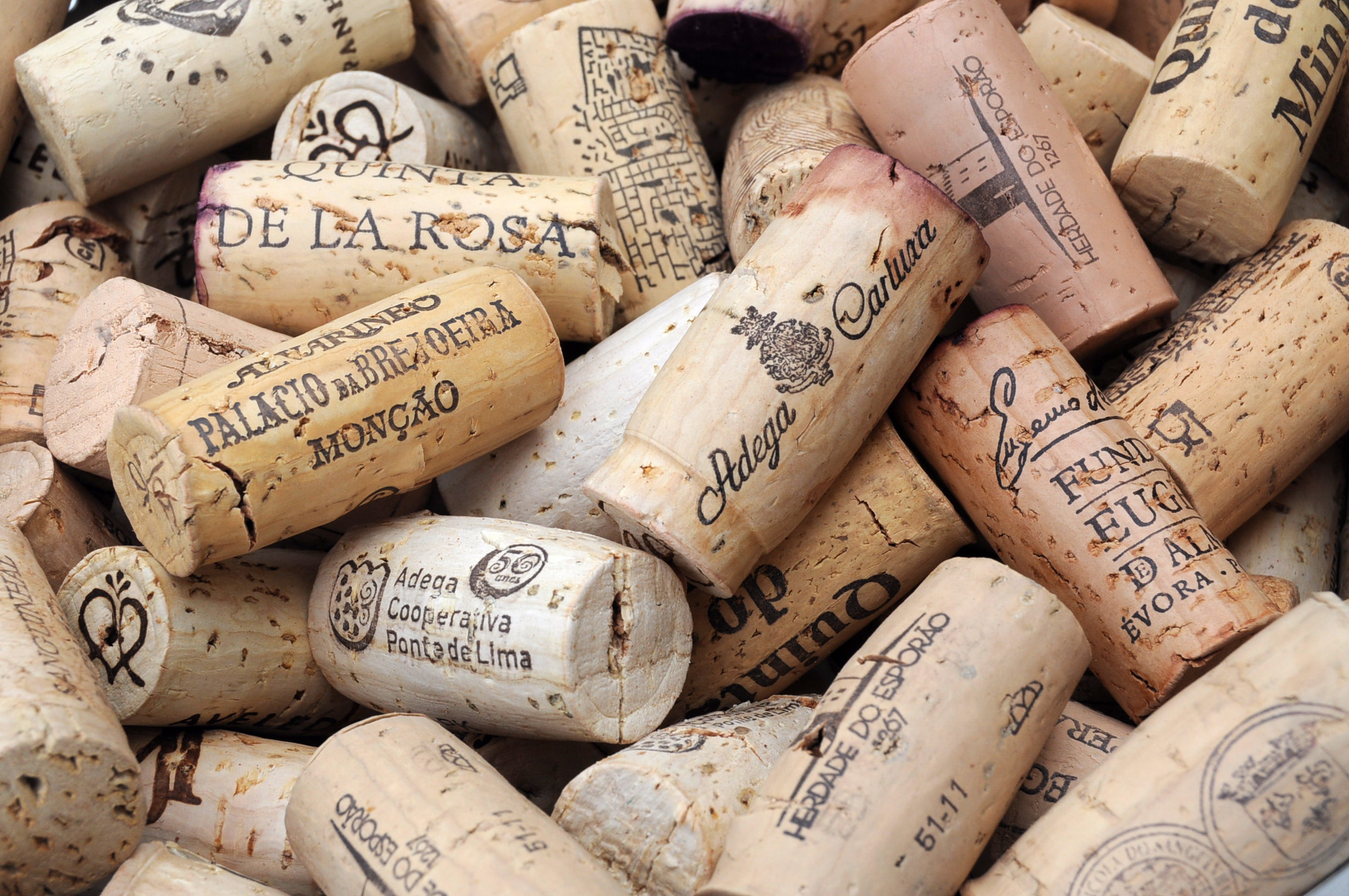
You can’t judge a book by its cover, but you can rate a wine by its cork. Low-quality wines use plastic corks or other cork substitutes that do not allow the wine to breathe. The next step up in the quality ladder are wines that use stoppers made of agglomerate cork. Better wines have solid corks, and the very best wines have beautiful waxed corks with the winery’s name carefully imprinted. So, when a wine critic is not available, use the cork as your guide!
Author: saltofportugal
Driving in Portugal

Portugal has one of the world’s best highway systems, so it is easy to drive around the country’s 36,000 square miles. But driving in the two largest cities, Lisbon and Oporto, is a different story.
Lisbon has wide avenues, built after the 1755 earthquake, as well as many new tunnels and overpasses. But, whenever the Lisbon soccer teams lose, drivers are irritated and drive in aggressive, erratic ways. Since the Oporto soccer team wins most of the championships, it’s a bad idea to drive in Lisbon. It is much better to use public transportation, the subway, buses, trams, and taxis.
In Oporto, drivers enjoy the serenity afforded by their soccer victories. But the medieval streets in the center of Oporto were designed for vehicles with only one horse power. Driving a car requires constant care and attention. Here too, the subway, trams, buses and taxis will take you reliably everywhere.
There’s another reason why city driving is a bad idea. Every moment focused on traffic lights and road lanes, can be better spent contemplating the aristocratic beauty of Lisbon and Oporto.
Waiting in Cascais
Some visitors like to stay in Lisbon to have the excitement of the capital city on their doorstep. Others prefer the seclusion of Sintra with its romantic palaces and lush vegetation.
If you’re visiting the Lisbon region, there is a third option: you can stay in Cascais, a picturesque beach resort, 30 km north of the capital. From Cascais you can take the train to Lisbon, following a scenic route along the Tagus river. You can also rent a car and visit Sintra, Colares, and Cabo da Roca.
The great writer Samuel Beckett vacationed in Cascais in the late 1960s and early 1970s. Beckett stayed at the Cidadela de Cascais, an old fort converted into a hotel favored by Portuguese writers. This hotel has recently been beautifully renovated to add modern comforts to its historical location and expansive ocean views.
Once Beckett got to Cidadela, he simply stayed there, enjoying the moments when the sea paints the sky with white mist. It’s not surprising that the author of a play about waiting in vain knew to stay still when beauty arrives.
The Cidadela de Cascais is located on Avenida Dom Carlos I, Cascais, tel. 214814300. This hotel is part of a network of historical hotels called Pousadas. Click here for our post on the Pousadas and here for the Pousadas web site.
Why the British don’t eat salted cod
Some British guidebooks tell their readers that eating salted cod is a strange Portuguese custom that they should avoid. There’s an historical reason for this point of view. When Henry V married Catherine de Valois in 1420, England was in the midst of the One Hundred Years’ War. Perhaps for this reason, the royal couple had a frugal wedding feast. The 600 guests ate boiled salted cod served on slices of stale bread. The meal was so bad that the British have avoided salted cod ever since.
Portuguese restaurants offer many codfish preparations. If you’re a salted cod neophyte, we suggest that you start with something simple: codfish carpaccio. The codfish is sliced razor thin and combined with an infusion of garlic and olive oil.
You can taste a great version of this preparation at Mãe d’Água, a wonderful restaurant in Bombarral near Lisbon. Imagine how different British cuisine would be if Mãe d’Água had catered Henry V’s wedding.
The cure for the vacation blues
Much of a vacation’s pleasure comes from anticipation. The joy of saying: my holiday in Portugal starts next week! The vacation begins and you relax, enjoying the food and scenery. Then, someone up there presses the remote control and puts time on fast forward. Soon, you’re counting how many days are left, feeling the vacation blues.
Luckily, a cure for this malaise is right at hand: simply go shopping for some great souvenirs! No, we’re not talking about useless knick knacks. Buy items you can wear, like the T-shirts produced by the brand Perdição de Maria (Maria’s perdition). They feature local motifs: sardines, lamp posts, trams, Portuguese guitars, etc. You can’t buy these clothes anywhere else, they’re a piece of vacation you can take home. Because every time you wear them they’ll remind you of the fun you had in Portugal.
You can buy Perdição de Maria’s clothes in many stores in Lisbon. One convenient shop is Portfolio at the airport.
Humble art
Art is made of constraints. When architect Frank Gehry received a commission to build whatever he wanted, he turned it down. Sometimes, artists create their own constraints. The French writer George Perec wrote a 300-page novel, “La Disparition,” without using the letter “e.”
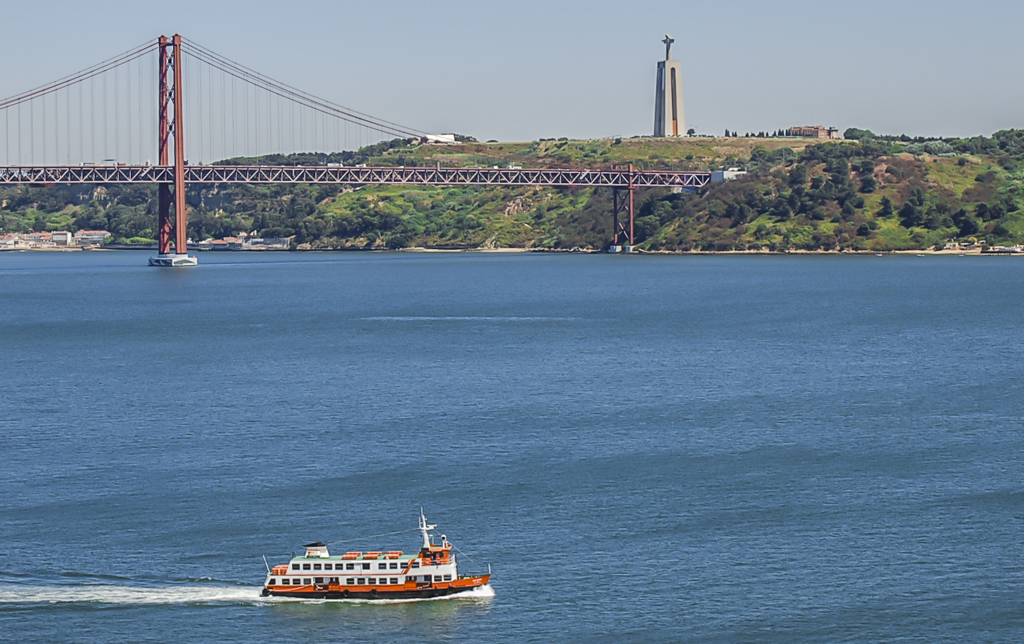
Other times, circumstances dictate the constraints. When artist Joana Vasconcelos was invited to represent Portugal in the Venice Biennale, the problem was that Portugal does not have a permanent pavilion at the fair. The artist’s solution was to use a ferry boat that was about to be dismantled both as a floating pavilion and exhibition piece. So, after spending a lifetime between the margins of the Tagus river, this humble boat has become a work of art!
The ferry boats that cross the river Tagus are called “cacilheiros.” They’re a great, inexpensive way to travel on the Tagus. Click here to see their schedule.
The art of the suffix
The Portuguese love to use the suffixes “inho” (pronounced eeño) and “zinho” (zeeño). They change the meaning of words in subtle, endearing ways. Instead of calling your friend Pedro, you call him Pedrinho. It means little Pedro, dear Pedro. It says you care about him.
If the gender of the word is feminine, you use “inha” (eeña ) or “zinha” (zeeña ). To greet your friend Maria you say “olá Mariazinha,” and Maria is guaranteed to smile.
These suffixes don’t apply only to proper names. To ask for a favor, ask for a “favorzinho,” and you’re more likely to see it granted. “Obrigado” means thank you, but to say a special thank you, you say “obrigadinho.”
In the 16th century, the Portuguese arrived in Japan where “obrigado,” became “arrigato.” But we didn’t stay for long, so the Japanese never learned to say “arrigatinho.”
In contrast, the Portuguese stayed in Brazil time enough for Brazilians to learn the ways of the “inho.” That’s why Brazil has been blessed with talented soccer players like Ronaldinho and brilliant bossa nova musicians like Toquinho.
Would the Japanese play beautiful soccer and sing bossa nova if they had mastered the art of the “inho”? You bet.
A Portuguese symposium
Symposium is a Greek word that means drinking together. It refers to parties in which people sat around, drinking wine and talking about life. One of these parties, attended by Socrates, was immortalized by Plato in his writings.
You can easily recreate a symposium atmosphere in Portugal. First, invite some great friends. Second, procure three great ingredients: rustic bread, Azeitão cheese and Piriquita wine.
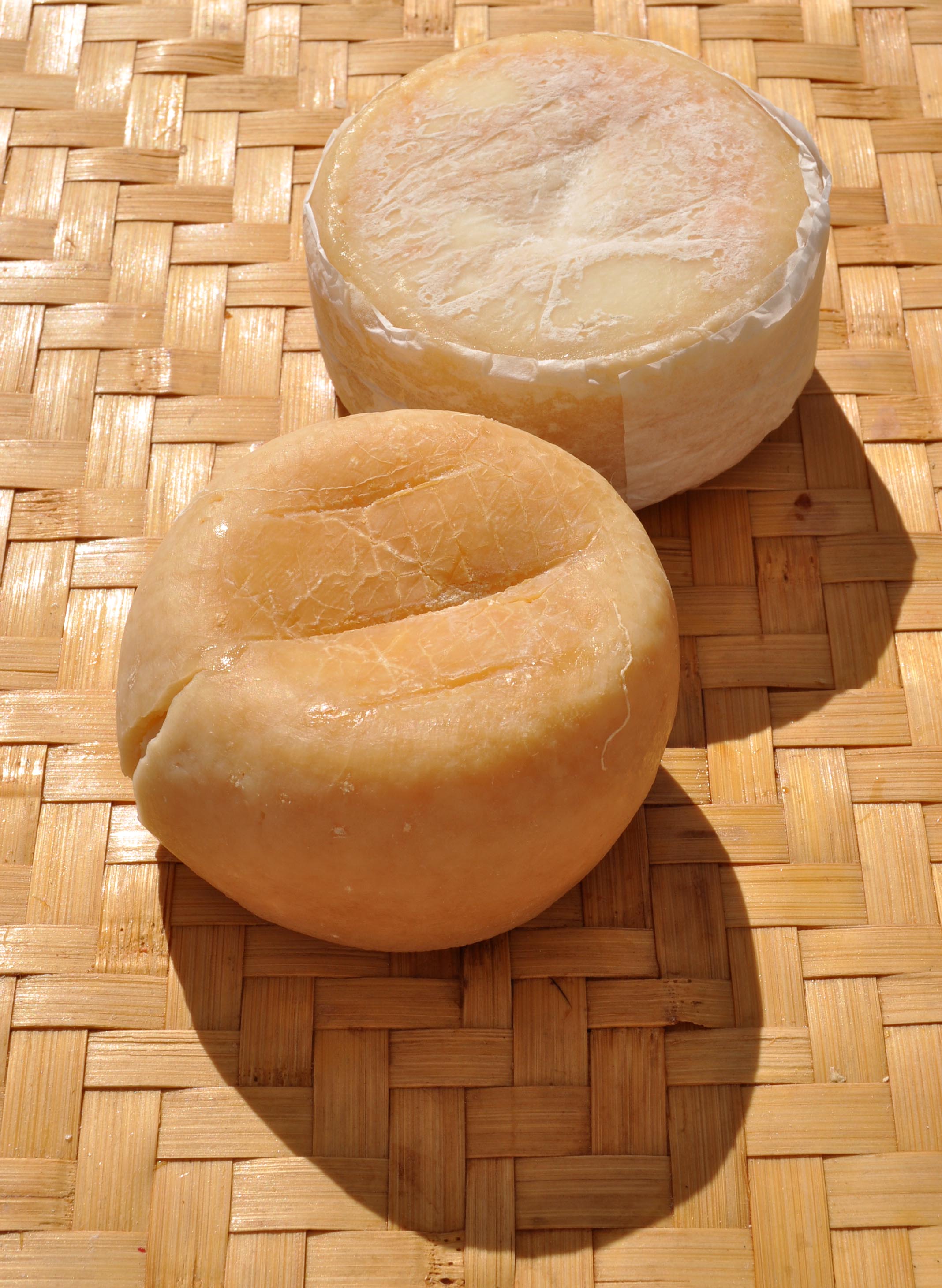
Azeitão is produced with sheep milk in small farms in the Arrábida mountain with the same techniques used to make Serra cheese in the Estrela mountain. But different pastures make different cheese, so Azeitão has a taste all of its own. Piriquita is a wine from the nearby Palmela region, produced with a grape varietal known as Castelão or Piriquita.
This wine and cheese are a heavenly pairing. So, you’ll have a good time, even if no philosophers show up. But, if you’re lucky, the conversation will be so brilliant that people will still talk about your party in 2500 years.
The Azeitão cheese produced by Fernando & Simões in Quinta do Anjo is one of our favorites.
A bohemian hotel
If you’re tired of boring, conventional hotels, the Hotel da Estrela might be just the place for you. It is a former school transformed into a bohemian boutique hotel with a great vibe and lots of charm.
The hotel is located in the quiet Campo de Ourique neighborhood. But, when you’re ready for sight seeing, all you have to do is board the famous tram 28 which will take you to Rossio, Chiado, or St. Jorge’s castle.
Choosing where to eat when you come back is easy. Around the corner, you have a great restaurant run by chef Vitor Sobral called Tasca da Esquina, (which makes sense, since “esquina” means corner).
But choosing where to have dessert is a more complex issue. The hotel serves a wonderful “pão de ló,” sugar, eggs and flour transformed into pure bliss. Nearby, you have Pastelaria Aloma, which won the prize for the best “pastel de nata” in Lisbon two years in a row. And then there’s a tiny store that serves the world’s best chocolate cake!
The hotel has a nice garden where you can eat a picnic prepared by the hotel’s restaurant. It’s the perfect place to woo someone you love. If you need inspiration for what to say, just visit the nearby house where the great poet Fernando Pessoa lived. It works every time!
The Hotel da Estrela is located on Rua Saraiva de Carvalho 35, Lisbon, tel. 211 900 10; click here for the hotel’s web site. Click here and here for more information on Tasca da Esquina and Cervejaria da Esquina, respectively. For information on the life-changing best chocolate cake in the world click here. Pastelaria Aloma is on Rua Francisco Metrass 67, Lisbon, tel. 213 963 797. The Fernando Pessoa house is on Rua Coelho da Rocha, 16, Lisbon. Click here for their web site.
Top 3 Lisbon tourist sites

Marie Rattazzi, a grandniece of Napoleon, was a beautiful socialite. She married an Italian prime minister and was friends with Alexander Dumas and Victor Hugo. The books she wrote about her travels give us a unique glimpse into the life of 19th century European nobility.
When Rattazzi’s “Portugal at a Glance” was published in 1880, the Portuguese complained that it was full of errors and misconceptions. But her list of favorite Lisbon sites stands the test of time. Here it is:
1) The Terreiro do Paço, bathed by the waters of the Tagus river. […] Yes, the Tagus is truly beautiful and I admire it with all the sincerity of my soul. […] It is vast, with spacious, luminous horizons and one of the world’s most splendid harbors.
2) The Rossio, a very beautiful plaza, the busiest in Lisbon.
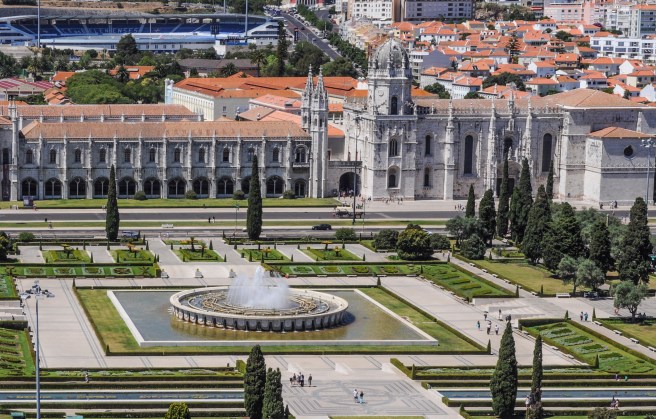
3) The Tower of Belem and the Jerónimos monastery. The Tower of Belém has a square form flanked by turrets, watchtowers, oculi, lancet windows, and sculptured balconies. Its pure Gothic architecture produces an admirable effect. Near the tower rises the ancient Jerónimos monastery. The main entrance and the facade are one of the most beautiful examples of the opulent Gothic style. […] This remarkable monument was built in Restelo, the beach from where Vasco da Gama sailed to India. The convent, contiguous to the church, is immense. […] The Arab-style cloister has sculptured laces so perfect and beautiful that I would gladly spend consecutive days in contemplative admiration. It is wonderful!
If you’re in Lisbon for a short visit, you’ll be well served by these timeless recommendations.