Street art in Lisbon

Maria Keil
Maria Keil’s Fisherman, Maria Rebelo, digital print image, 2012.

The most beautiful tiles in Lisbon are not in majestic palaces or soaring cathedrals. They decorate humble subway tunnels and ordinary streets like Infante Santo.

Keil do Amaral, the architect who designed the subway in the late 1950s, was dismayed that there were no funds budgeted to cover the bleak cement walls. His wife, the painter Maria Keil, suggested the use of inexpensive tiles and offered to design them for free.

Keil filled the subway with elegant modernist tiles that brought the art of tile making into the 20th century. She continued, throughout her life, to dress the walls of the city with tiles that make Lisbon feel young and pretty. If you’re visiting the capital, here’s a challenge for you: how many of Maria Keil murals can you find?

Portuguese lesson: how to order an espresso

Uma bica, Rui Barreiros Duarte, ink on paper, 2012.

You can order an espresso by saying:  “Um espresso, por favor. “ (oom espresso poer faevoer). “Um” means “one,” and “por favor” means “please.” This method works fine, but the Portuguese don’t use the word espresso. So, here’s how to order coffee like a local.

In Lisbon, an espresso is called a “bica” (pronounced beeca), so the right thing to say is: “Uma bica por favor” (ooma beeca poer faevoer). In case you’re wondering, “bica” means spout, so the name probably comes from the spout that channels the coffee into the cup.

Now that we covered the basics, let’s discuss some advanced topics. There are two types of “bica.” The “bica curta” (beeca coorta) is a short espresso, sometimes so short that you can barely taste any coffee. A “bica cheia” (beeca sheia) is a long espresso. Your choice of bica reveals a lot about your personality. People who like the “bica curta” are usually intense, while those who enjoy the “bica cheia” tend to be more relaxed.

In Oporto they call an espresso a “cimbalino” (ceenbaleeno) in homage to La Cimbali, a popular Italian brand of espresso machines. Foreigners who know this arcane fact are often honored with a state banquet and given the keys to the city.

Where can you find a list of the best coffee shops in Portugal?  There’s no such list. With more than three centuries of experience brewing coffee, Portugal has as many great coffee shops as beautiful beaches.

Wellington’s wine

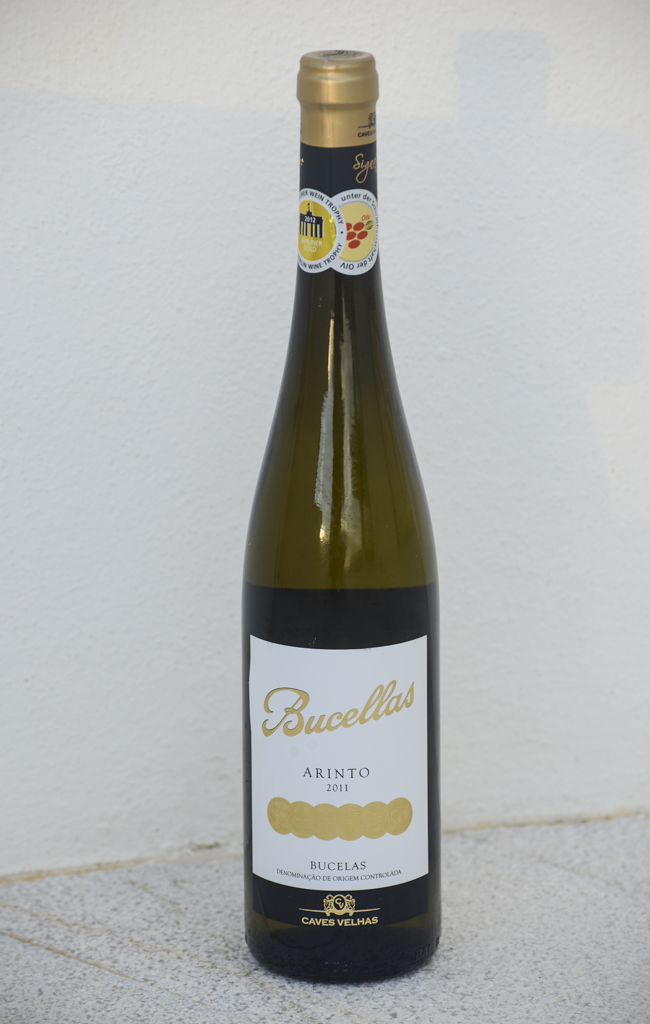
DSC_1082-FDuring the Napoleonic wars, the Duke of Wellington stationed his troops in the Bucelas region, north of Lisbon. There, he drank a white wine made with Arinto, an indigenous varietal. He enjoyed it so much that, after the war, he imported large quantities back to England. Wellington offered some bottles of Bucelas to King George III, who claimed that they cured him of a troublesome kidney disease. The wine continued to gather fame during the Victorian era. German Rieslings were known in England as “Hock,” so London wine merchants called Bucelas “Portuguese Hock.”

When the British publisher Henry Vizetelly arrived in Portugal in 1877 to work on a book about wine, his first stop was Bucelas. He writes that the young wines are “remarkably fresh in flavor,” and the older wines are “rounder and more aromatic” with a “soft, almondy after taste.” He concludes that: “Certainly purer wines than these are not easily met with.”

Bucelas was enjoyed by Thomas Jefferson and Charles Dicken, but its fame dwindled over time. If you’re in Portugal, make sure to try this inexpensive, wonderful wine. Wine fashions come and go, but the remarkable freshness of Bucelas is here to stay.

A medieval battle

Batalha-1
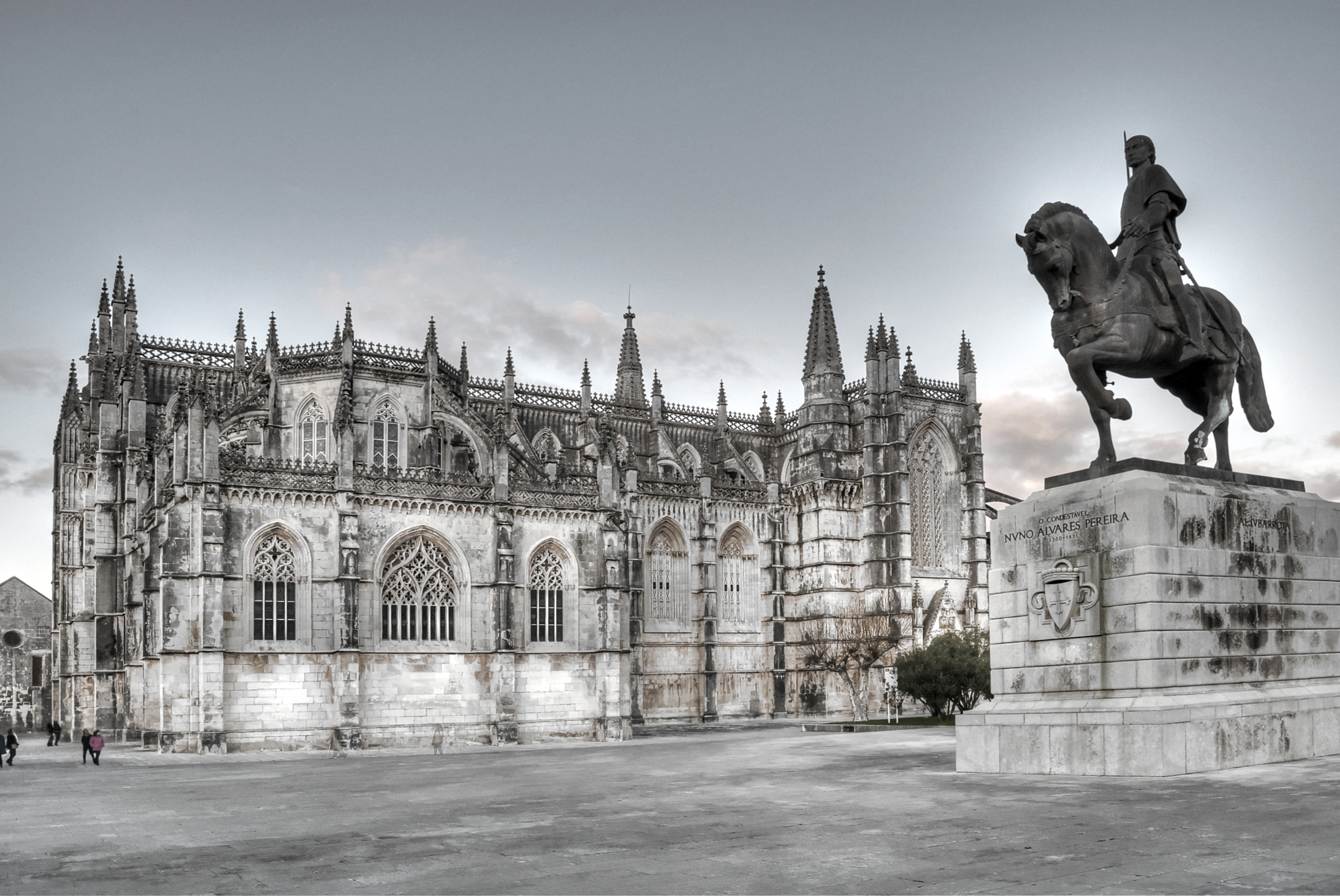
Batalha, Maria Rebelo, digital print image, 2012.

When King Ferdinand died, his daughter Beatriz, wife of the king of Castille, inherited the Portuguese throne. The people rebelled at the prospect of Castillian domination and proclaimed John, half brother of Ferdinand, king of Portugal.

In 1385, a Castillian army with 31,000 men marched towards Lisbon to enforce the rights of Queen Beatriz. A Portuguese army with 6,500 men marched to their encounter. The battle, one of the most important in medieval warfare, took place in Aljubarrota, near the town of Leiria. The Portuguese chose their positions carefully, digging ditches that prevented the Castilian cavalry from advancing. Against all odds, Portugal emerged victorious.

King John went on to marry Philippa of Lancaster and have seven children who brought Portugal great glory. One of them is Henry the Navigator.

To express his gratitude for the miraculous victory at Aljubarrota, King John built the Monastery of Batalha. If you’re traveling in the center of Portugal, don’t miss the chance to visit this beautiful monument that marks the beginning of Portugal’s golden age.

A friendly restaurant

Salsa&Coentros

The Portuguese do not like to divulge their favorite neighborhood restaurants, so we’re violating social norms by telling you about Salsa & Coentros (parsley and coriander). It is a delightful restaurant in Lisbon’s Alvalade neighborhood which serves food from the Alentejo and Trás-os-Montes provinces.

Dining at Salsa & Coentros is like visiting a friend who makes wonderful meals with local ingredients such as míscaros (wild mushrooms), cação (dogfish), partridges, wild asparagus, black pig, and fresh octopus.

If you become a regular visitor to Portugal, you’re likely to meet friends who are great home cooks. Until then, you can enjoy the traditional cuisine of Portugal at Salsa & Coentros.

Salsa e Coentros is located at Rua Coronel Marques Leitão, n. 12, Lisbon. Tel. 218410990. 

A gourmet fish

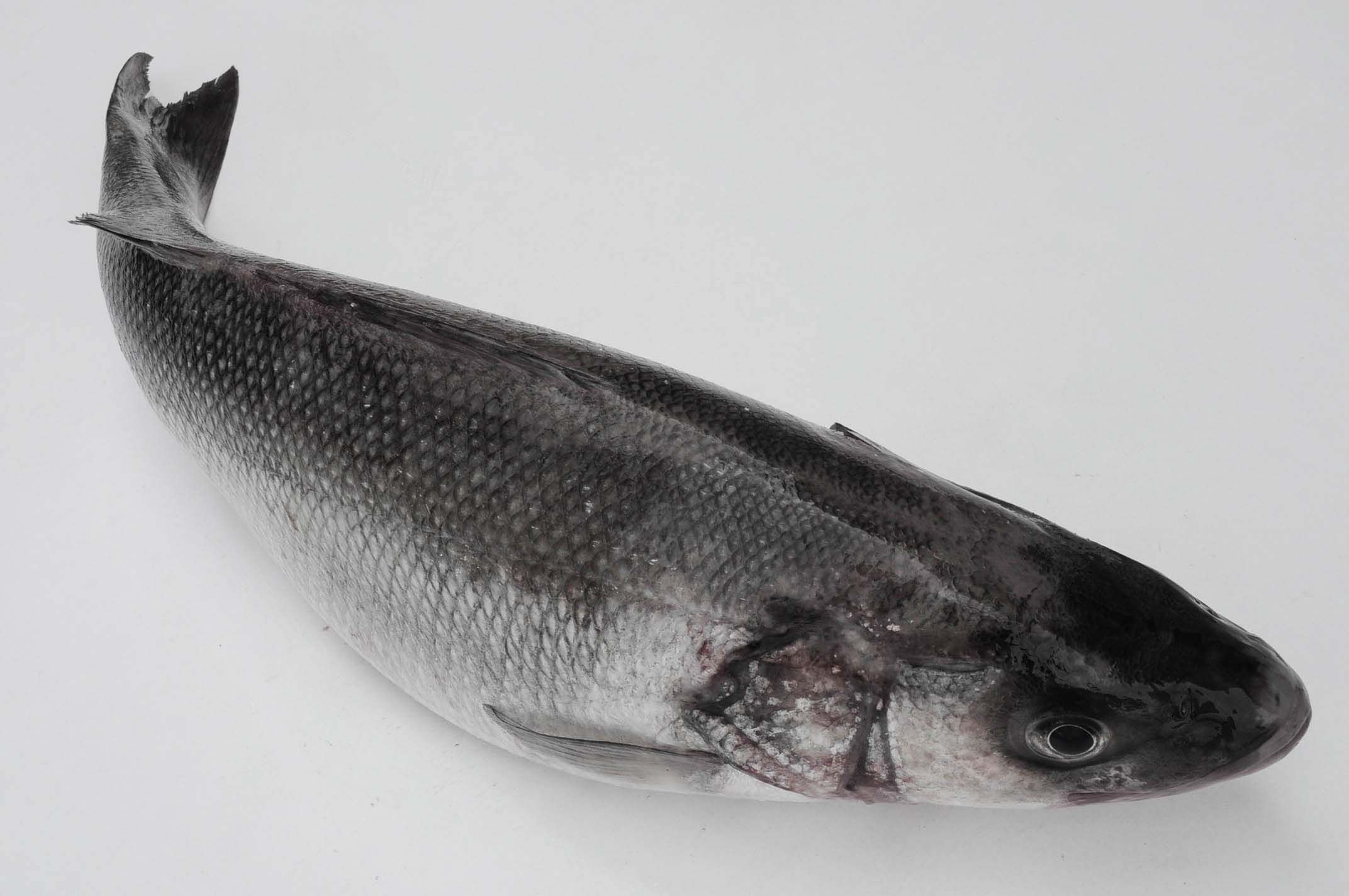
Robalo, Maria Rebelo, digital print image, 2012.

Portuguese restaurant waiters like to give all fish equal opportunity. Ask them about one variety and they’ll tell you that it’s very very fresh and very very good. Ask about another variety, and you’ll hear much the same.

After the waiter sings the praises of all fish on the menu, we usually choose a robalo. This species is known in English as “common snook,” but there’s nothing common about it. The robalo is a voracious, discerning foodie who loves to feast on small crabs. As a result, it has a really unique taste. Try it, and you’ll see that it is very very delicious.

A children’s song

SaiaCarolina2This recording is a reworking of “A saia da Carolina” (Carolina’s skirt), a traditional Portuguese song that kids learn in kindergarten. The lyrics are about a little girl who wears a skirt with a lizard print. She shows a precocious sense of fashion, using animal fabrics way before René Lacoste embroidered a crocodile on his blazer.

Pedro Rebelo (concertina and production) and Sergio Rebelo (guitar). The drawing is by Ana Duarte, a new Portuguese fashion designer well on her way to success and fame. Check out her clothes collection here.

A regal cake

BoloRei

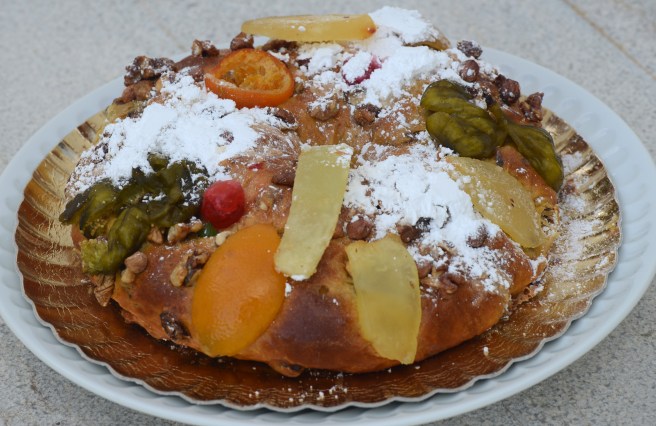
During the Christmas season, Portuguese pastry stores transform many tons of flour, sugar, eggs, port wine, and candied fruit into the popular king’s cake (bolo rei).

Bolo rei was introduced in Portugal in the second half of the 19th century by Confeitaria Nacional, a pastry store in downtown Lisbon. It was based on France’s “gateaux des rois,” a royal cake forbidden during the French revolution until pastry chefs renamed it the “people’s cake” (gateaux des sans culottes).

Over time, Confeitaria Nacional’s recipe was imitated and adapted, and bolo rei became an integral part of Portuguese culture. So much so that, when the monarchy was abolished in 1910, the Portuguese parliament renamed it Republic’s cake. But the awkward name never caught on.

Pastry stores used to hide two objects inside the cake: a gift (a trinket or, in some cases, a gold coin) and a dried fava bean. The gift has been eliminated but the fava bean is still included. According to tradition, whoever gets it has to buy the next cake.

The custom of hiding a fava bean inside a cake originated in the ancient Roman festival of Saturnalia. The person who found the fava bean became king of the Saturnalia and served as the festival’s master of ceremonies.

If you’re in Portugal during the Christmas season, make sure you try some bolo rei. It’s a sweet piece of European history.

Two columns

The writer Christopher Hitchins summarized his first impressions of Lisbon with the words, “Mediterranean though it can feel, Portugal is the only European country that has the Atlantic Ocean lapping around in its capital city.’’

We can sense the energy of the Atlantic on the iconic Cais das Colunas, a quay adorned by two columns in Terreiro do Paço. The undulation of the Tagus river echoes the waves of the ocean beyond. The columns mark Portugal as the point of departure and the sea as our destiny.

Oporto smugness

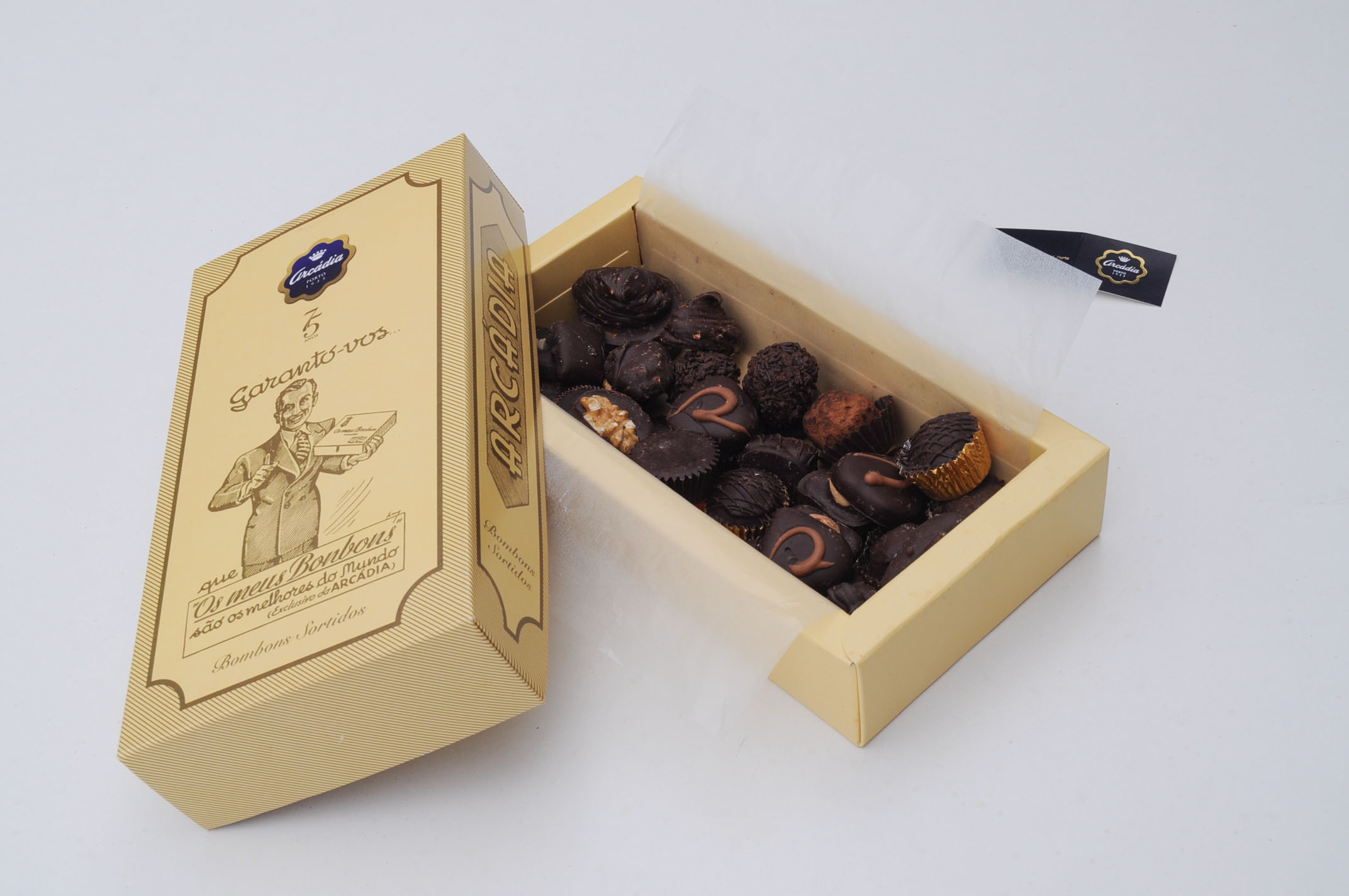
Oporto residents have been smug since 1933. That’s the year when Arcadia, a wonderful artisanal chocolate maker, opened its doors in that northern city. In France, chocolatiers compete for the title of Meilleur Ouvrier de France and the winners receive plenty of fame and recognition. But these are not the ways of Portugal, where we often keep quiet about our great things. So, Arcadia remained under the radar for decades.

In 2010, Arcadia started opening stores outside of Oporto so the rest of the country could finally find out what they’d been missing. There’s a lot to catch up with, from dark chocolate made with São Tomé cocoa, to port wine bonbons, beautiful chocolate roses, and delicious “cat tongues.” No wonder Oporto residents were so smug!

Arcádia, Rua do Almada, 63, Porto, tel. 22 200 15 18, Av. de Roma 14D, Lisboa, tel. 21 840 8670, email online@arcadia.pt. Click here for the Arcadia website. You can also buy Arcadia chocolates at Portfolio, a store in the  Lisbon airport. Click here for their website.