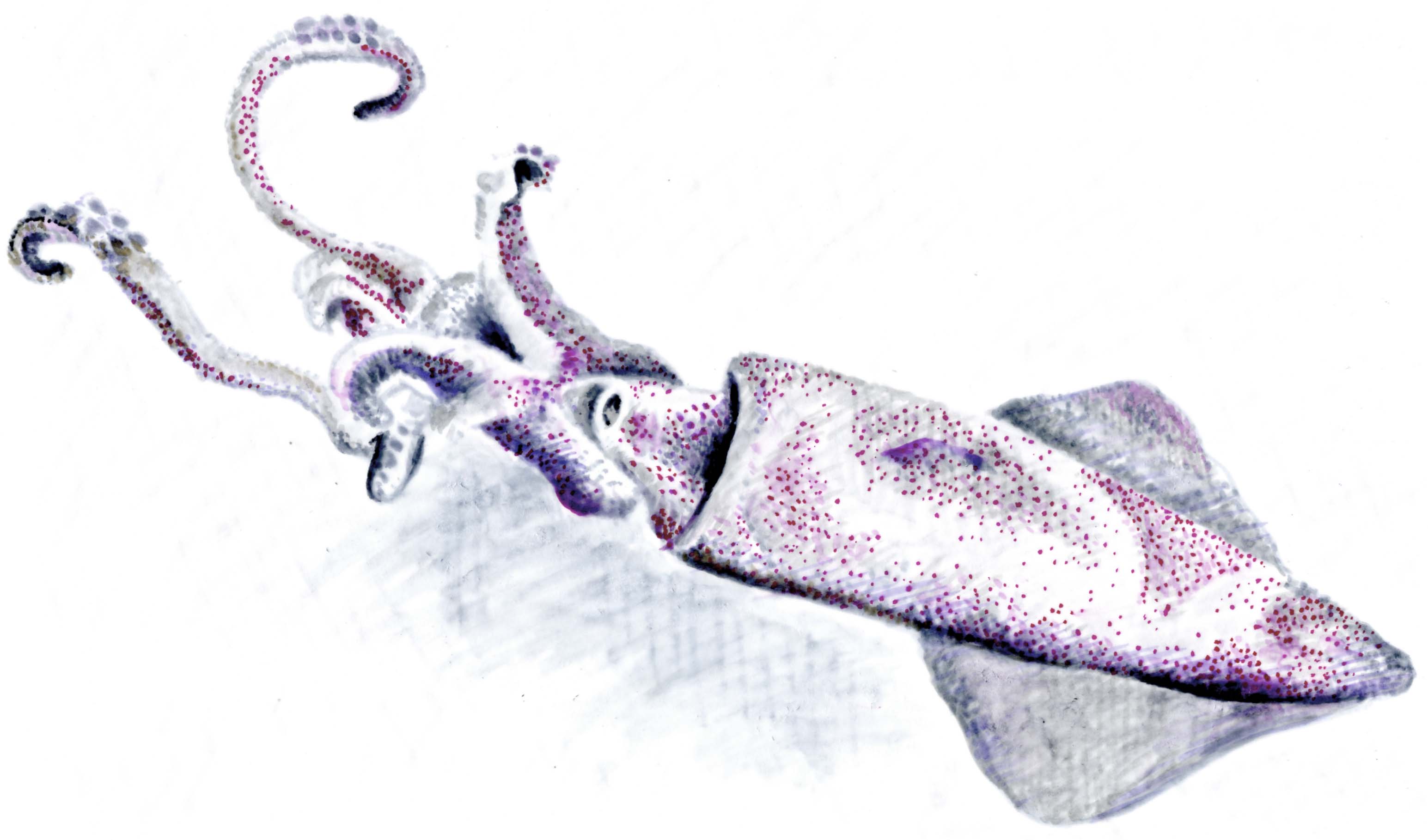
Pink glamour

Lula, Rui Barreiros Duarte, ink on paper, 2012.

The squid is a sea socialite, always hopping from shrimp to smelt parties, elegant and glamorous in its pink-dotted design gown. This cephalopod has in recent years become a globe trotter. Every day, billions of squid travel by road, sea and air to the menus of fashionable restaurants around the world. But all this roving takes a toll on the delicate mollusk, which arrives tired and frozen, long on frequent-flyer miles and short on taste.

If you’re in Portugal, don’t miss the chance to try some fresh squid. The best way to cook it is “Algarve style” (lulas à Algarvia):  the squid is lightly fried in olive oil, garlic, and bay leaves. It’s a simple preparation and yet, it produces sublime results that do justice to the squid’s diaphanous freshness.
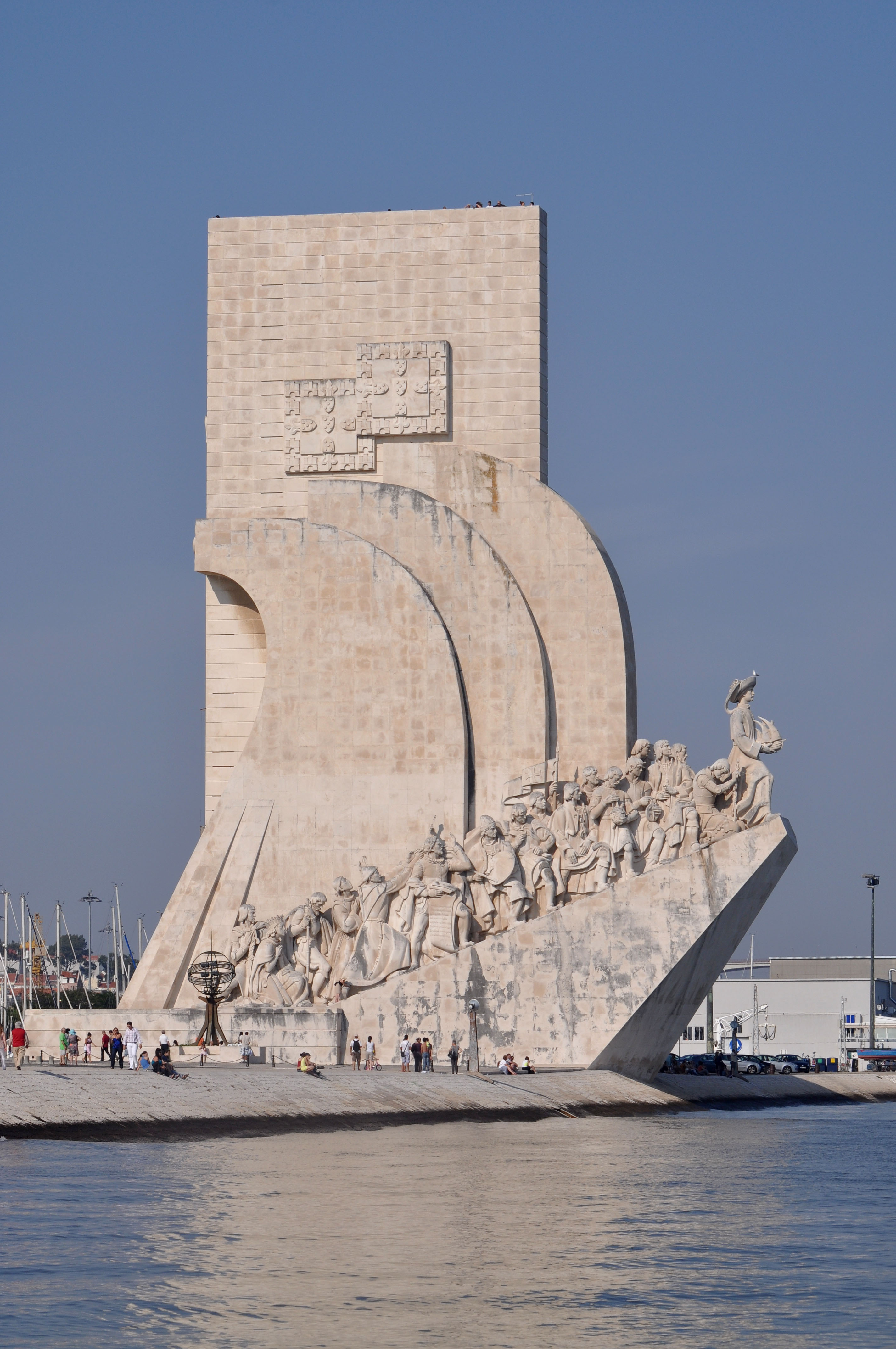
Portugal’s navigators

The centerpiece of the 1940 Portuguese World Fair was a large plaster sculpture celebrating Portugal’s age of discovery. Two decades later, this sculpture was rebuilt in cement and stone. It has a terrace on top that you can reach by elevator. It is well worth the climb to enjoy the magnificent view of Lisbon.

The monument is shaped like a ship prowl. Both sides are crowded with statues of monarchs, sailors, scientists, missionaries, writers, and artists. They’re all jostling for a good position on the narrow decks, thinking that, if they’re going to stand still until the end of time, they might as well get a nice view of the Tagus river.

Prince Henry the Navigator secured the prime spot. He stands right in front of the monument with a stern look on his face. Some say that he’s thinking about the perils that Portuguese explorers had to endure. But a more popular theory is that he’s simply afraid of being pushed into the river. Despite his nautical fame, Prince Henry never learned to swim.

A supreme chicken

One of the simple pleasures of Portuguese cuisine is roasted chicken with piri-piri, a spicy sauce made with peppers that came originally from Africa.

Frango da Guia, a small roasted chicken, is very popular in the Algarve. But the best roasted chicken we have ever had is from Frango Saloio, a tiny take-out place in the municipal market of the town of Lourinhã, 70 km north of Lisbon. You see no tourists there, only locals who wait while their chicken is cooked to perfection over red-hot coals. Lines can be long during the Summer, so please don’t tell anyone about this place!

Frango Saloio is located in Mercado Municipal, Loja 2, Lourinhã, tel. 917 272 385.

Sweet Algarve

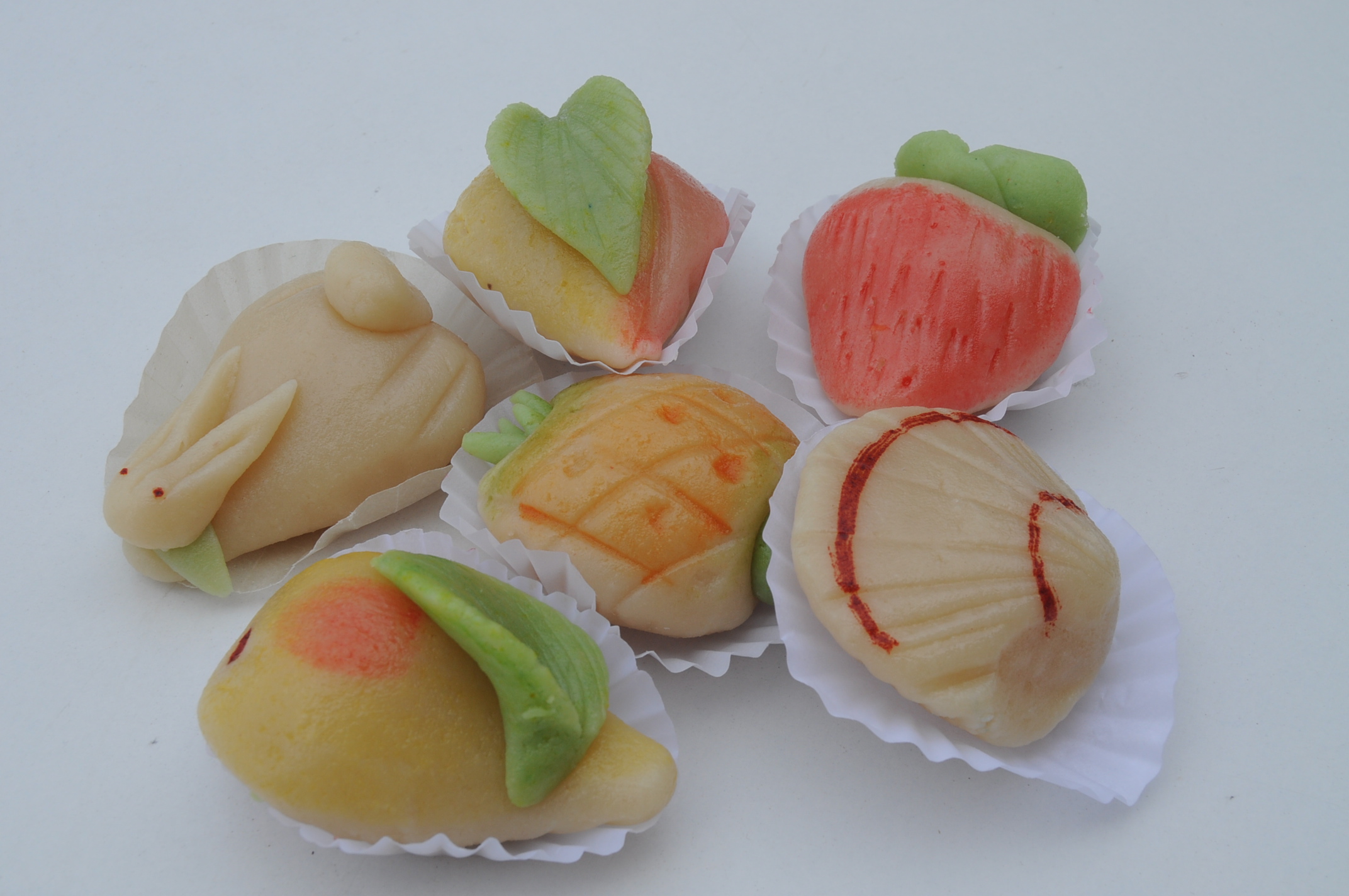
Algarve is much more than gorgeous beaches and perfect weather. It is also delicious sweets made with eggs, almonds or figs. The most famous are the Dom Rodrigos. But the prettiest are doces finos (fine sweets) like the ones shown in the photo, made with the wonderful marzipan that only almonds from Algarve can produce. These local treats are one more reason why life in the Algarve is so sweet.

The doces finos in the photo are from Pastelaria Beira-Mar, Avenida Infante Sagres 61-A, Quarteira, tel. 289 314 748.

A place of serenity

You can have an unforgettable vacation at Casas da Areia, a beautiful retreat on the margins of the Sado river, one hour south of Lisbon. Here, you can rent one of four fisherman huts built from local materials. They have striking African-inspired thatched roofs and impeccable minimalist design.

There are many pristine beaches close by. But, once you settle at Casas da Areia, you’ll probably just want to enjoy the magnificent vistas and bike around the gorgeous Sado estuary. Don’t be surprised if you find yourself talking to Christian Louboutin about the serenity of this place; he has a house nearby.

After staying at Casas de Areia, it’s hard to stop asking your friends “did I tell you about my unforgettable vacation in Portugal?”

You can find more information about Casas na Areia here.

Jewelry lessons

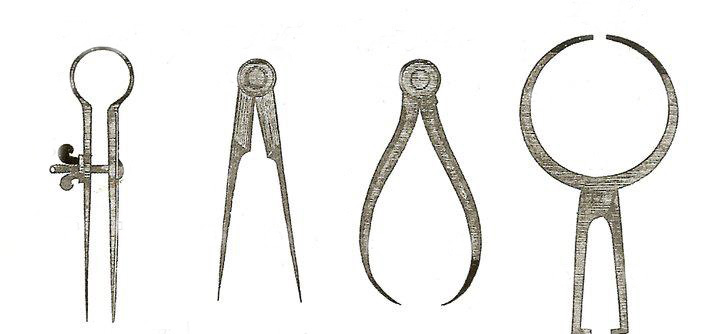
Lisbon is a city that always took its jewelry seriously. In his 1610 census of Lisbon, Friar Nicolau de Almeida counted 70 goldsmiths and 62 silversmiths. Gil Vicente, one of Portugal’s greatest playwrights, was also a jeweler. And two of Lisbon’s main streets are Rua do Ouro (gold street) and Rua da Prata (silver street).

It should come as no surprise that Lisbon is a great place to learn the art and craft of jewelry making. You can take courses at Reverso, a wonderful jewelry gallery. These classes are a great way to make your vacation memorable and learn something precious.

Click here to see the schedule of Reverso’s courses, so you’ll know when to book your flight to Lisbon!

An eternal river

The small town of Carrasqueira, close to Alcácer do Sal, has one of the most unusual monuments in Portugal: a primitive wharf made with sticks and planks, know as “cais palafítico.” Fishermen built the wharf in the 1950s and 60s to gain easier access to the riches of the Sado river: clams, oysters, octopus and fish.

Sitting on this wharf, it is easy to imagine the past, when Phoenicians sailed the Sado carrying the precious salt harvested from the river marshes.  It is also easy to imagine the future, since the majestic Sado will continue to flow for as long as time flows.

The cape at the end of the world

When the Greek geographer Ptolomeu mapped the world in 2 A.C., Cabo da Roca, Europe’s most western point, was the end of the world. Today we know that the world does not end here. But the cape, located 42 km northwest of Lisbon, is still very much worth visiting. It is a place of stunning beauty created by the warmth of the sun, the power of the wind, and the vastness of the ocean.

Great traditional cuisine in Oporto

Looks can be deceiving. Adega S. Nicolau, a restaurant in the Ribeira area of Oporto, has no celebrity chef or design furniture. But it serves amazing food: grilled fish, fried sardines, roasted codfish, fried octopus, and much more. The star of the menu is the “posta de vitela arouquesa” a steak of veal from Arouca seared to perfection, the best we have ever had.

Everything on the menu follows traditional recipes, but the food is hard to imitate. It takes enormous confidence to trust the quality of the ingredients and let them shine through simple preparations. It is this confidence that Adega S. Nicolau has been building since 1930.

Adega S. Nicolau, R. São Nicolau, 1, Ribeira, Oporto. Tel. 222-008-232.