Sailing on the Tagus river

You can climb the seven hills, visit the ancient neighborhoods, stroll on Rossio and Chiado, marvel at the monuments in Belem, but you’ll not fully appreciate Lisbon until you’ve seen it from the Tagus river.

The easiest way to travel on the river is to board one of the Cacilheiros that shuttle passengers between the river margins. But nothing compares to the thrill of crossing the Tagus waters on a sailboat. Traveling in luxurious silence, guided by the trade winds, the currents wash away our cares and we feel like we had a month of vacation rolled into a few hours.

We follow the path of so many sailors who left Lisbon not knowing if they’d make it back. When these explorers survived the perilous seas and reached the blue calm of the Tagus river, they saw Lisbon as an echo of paradise, glowing in warm light, dressed in bright white and festive orange, welcoming their return.

To see the schedule of the cacilheiros click here. The best way to sail on the Tagus is to have a generous friend who has a sailboat and invites you to come along. If this method does not work for you, a second possibility is to email António Matos at topematos@hotmail.com. He is a sailing pro who can set you up with a boat and a crew. And he’s very nice, so you might become friends.

How the angels like it

The village of Alfeizerão, near Nazaré, is famous for its sponge cake. The original recipe came from the Spanish kingdom of Castile, so the cake used to be called Pão de Castela (bread from Castile).  When the Portuguese started trading with Japan, in the 16th century, they introduced it to the residents of the port of Nagasaki. The cake remains popular in Japan, where it is called Castella or Kasutera. In Portugal, the name of the cake changed in the 19th century to Pão de Ló, probably after a cook nicknamed Ló.

Pão de Ló is usually a dry cake, but the nuns of Alcobaça’s Cister Order developed a version that is wonderfully soft and moist. When the religious orders were abolished in the 19th century, the nuns gave their recipe to a family from Alfeizeirão that offered them shelter. Five generations later, the same family still uses this recipe to make Pão de Ló at Casa Ferreira in Alfeizerão.

During a recent visit, we asked our server at Casa Ferreira what makes their cake so special. She answered without hesitation: “we make Pão de Ló the way the angels like it.” We could not confirm the veracity of this claim but, after trying the cake, it struck us as completely plausible.

Casa Ferreira, Rua 25 de Abril, 215, Alfeizerão, tel. 262 990 719.

A legendary beach

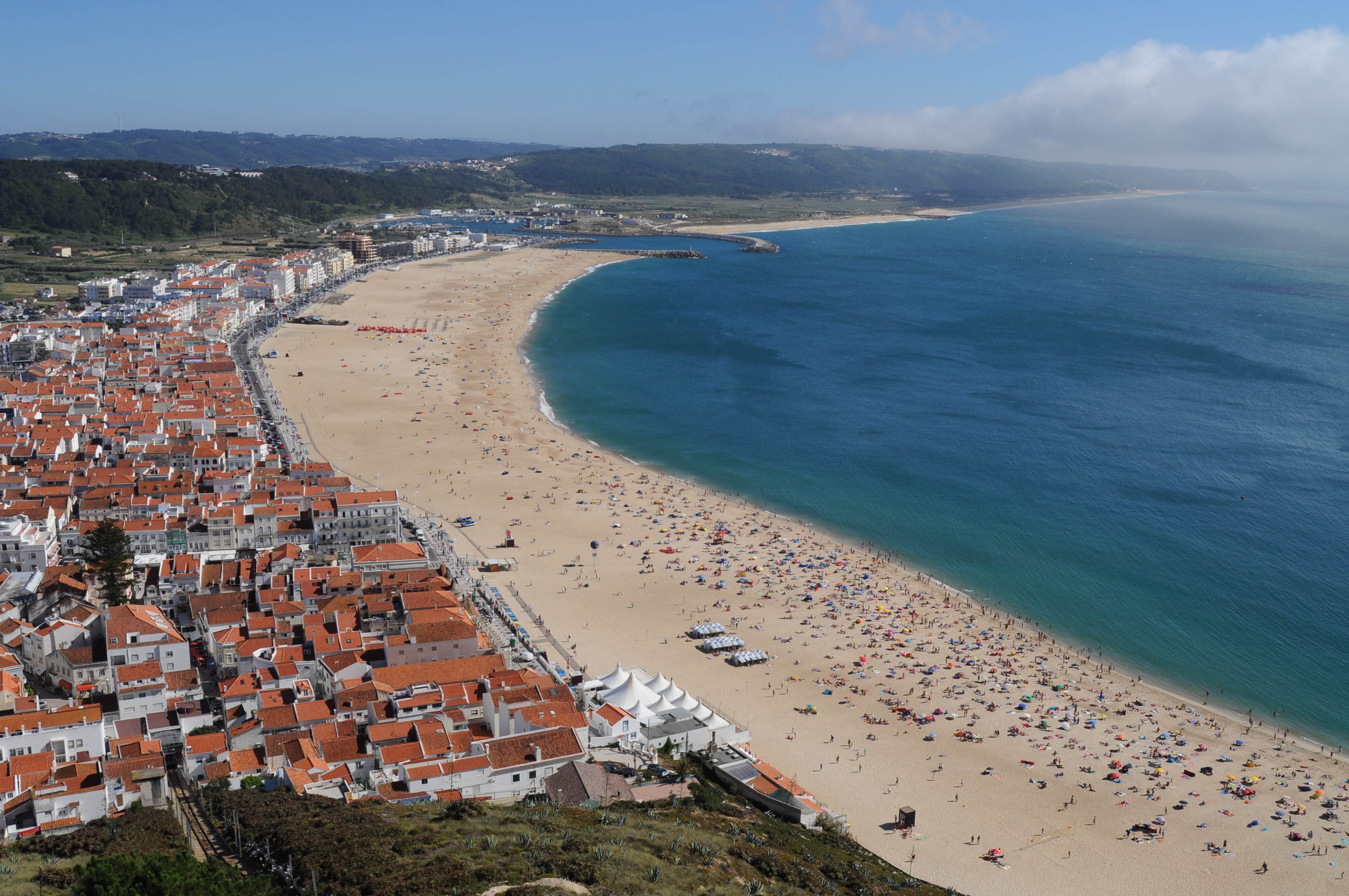
Nazaré is a picturesque fishermen village where women once wore seven layers of brightly-colored petticoats. Its claim to fame comes from two legends, separated by more than eight centuries.

The first legend dates back to 1182. D. Fuas Roupinho, a nobleman, was chasing a dear on a foggy day. He was so engrossed in the hunt that, when the deer suddenly jumped off a cliff, he followed in pursuit. He prayed for his life and his prayer was answered for his horse stopped right at the edge of the cliff.

The second legend is very recent. Nazare’s north beach has one of the largest sea canyons in the world. This canyon produces enormous waves. It was here that, in 2011, the Hawaian Garrett McNamara set a record for the largest wave ever surfed.

McNamara says he will keep coming back to Nazaré. So will many other thrill seekers and beach lovers.

A Portuguese sardine answers the Proust questionnaire

A Portuguese Sardine, Rui Barreiros Duarte, ink on paper, 2012.

In the late 19th century it was fashionable to make a list of questions and keep a notebook with the answers supplied by friends and family. The answers of the French writer Marcel Proust were so admired that these lists became known as Proust questionnaires.

To our knowledge, no fish has ever answered a Proust questionnaire until now. Here are the answers offered by a Portuguese sardine.

Your favorite virtue: I’m rich in omega-3, but it’s hard to buy things with it.
Your main fault: Being a sustainable species. People think I’m replaceable!
Your idea of happiness: A world-wide ban on canning small, cute fish.
Your idea of misery: Being smoked; do I look like a cigar to you?
Your favorite food: Plankton!
Where would you like to live: The island of Sardinia.
What others misunderstand about you: There’s no need to chop off my head; I don’t bite!
What you don’t understand about others: Why they hate my guts.
Favorite expression: Let then eat hake!
Favorite motto: Salty is the new sweet, silver the new gold.

A Portuguese folk song

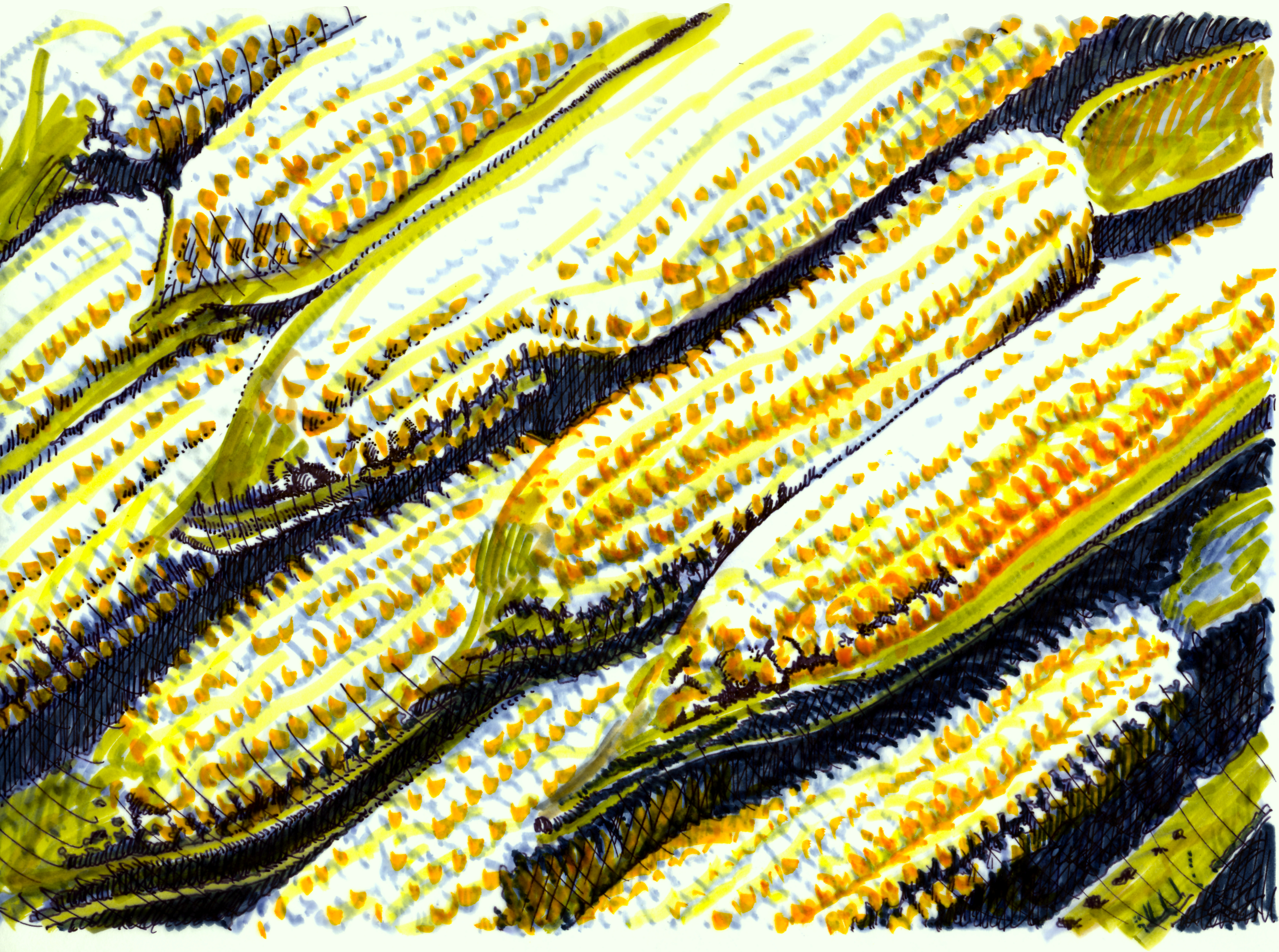
Milho verde, Rui Barreiros Duarte, ink on paper, 2012.

Milho verde (green corn) is a Portuguese folk song made famous by the singer José Afonso. It is a song that was probably sang by farmers, in sync with the rhythm of their labor as they tended the fields. This version uses the soundscape of a Portuguese farmers market as the background.

Pedro Rebelo (concertina and soundscape) and Sergio Rebelo (dobro).

Heavenly pillows

No trip to Portugal is complete without visiting Sintra and no visit to Sintra is complete without eating a travesseiro at Piriquita. Travesseiro means large pillow, and that is what these pastries look like. But, instead of cloth and feathers, these pillows have layers of puff pastry filled with an egg and almond cream.

Despite many attempts, no one has been able to copy these travesseiros since Piriquita first opened its doors to the public in 1952. Some say that fairies sprinkle them with star dust. Others claim to hear sirens singing while they prepare the pastry. All we know is that for us, mere mortals, these heavenly travesseiros are one more reason to go to Sintra.

Piriquita-Antiga Fábrica de Queijadas, Rua Padarias 1/7, Sintra, tel. 219 230 626. Lines can be long in the Summer but, if you go up the street, you’ll find a second Piriquita café with much shorter lines (please don’t tell anyone!).

An enchanted bookstore

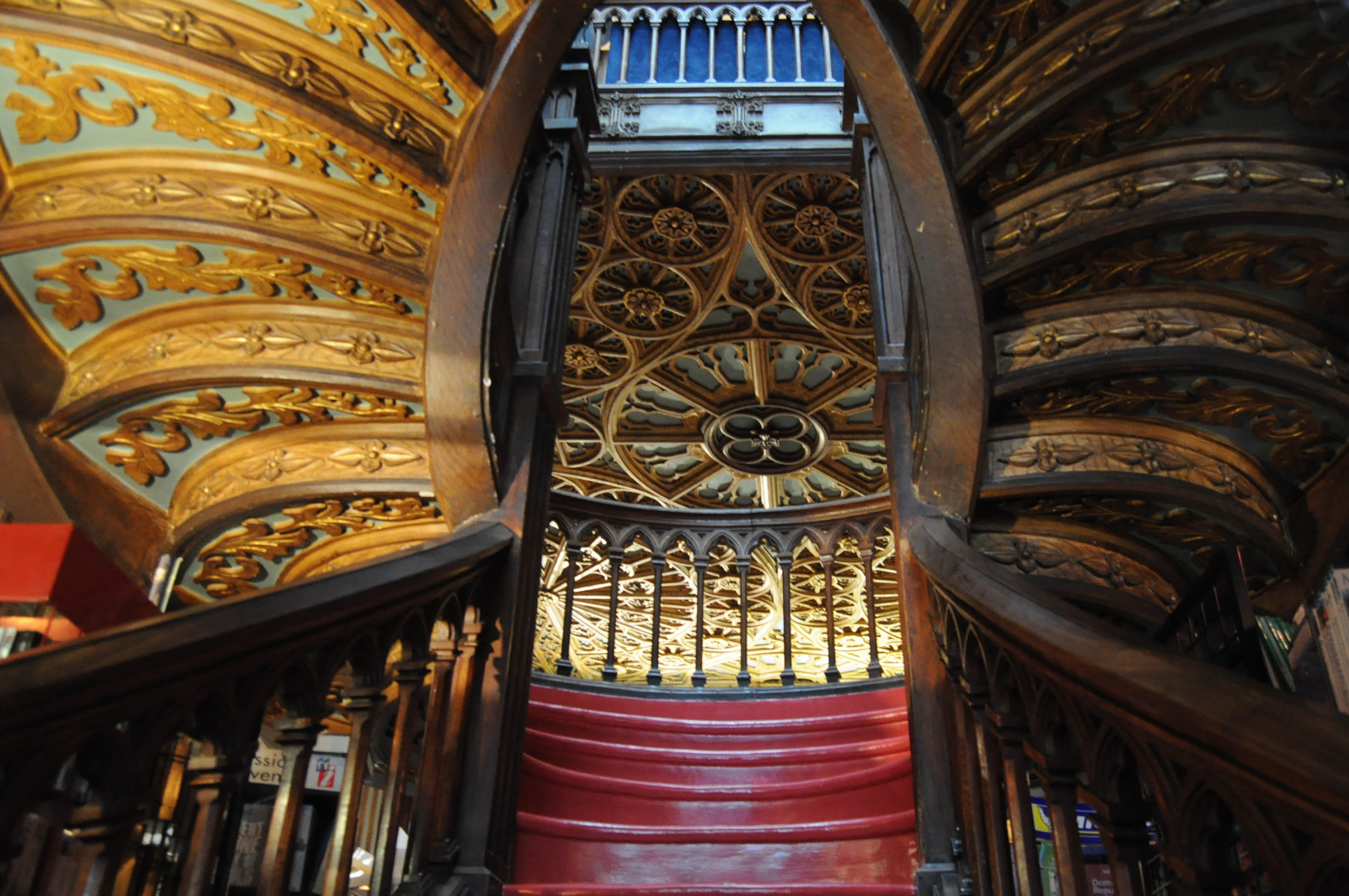
Lello, a bookstore in Oporto founded in 1906, is famous for its exuberant neogothic architecture. In the early 1990s an English teacher called Joanne Rowling spent many hours here, in the small coffee shop on the second floor, working on a book about wizards. The book’s hero, a boy called Harry Potter, goes to Hogwarths, a school of witchcraft and wizardry whose revolving staircase and gothic motifs are likely to have been inspired by Lello’s interior.

If you visit Oporto, don’t miss the chance to visit Lello. And, if you do, please buy a book. In a world where bookstores are becoming extinct, we need to preserve places where we can still find magic.

Lello bookstore, Rua das Carmelitas 144, Porto.

All pigs are equal

But some pigs are more equal than others. There is a clear hierarchy among Portuguese pigs. The black pig is at the top of the heap. This aristocratic swine feasts on acorns and is often exported to Spain to be turned into Iberian ham. Restaurants use fanciful names to describe cuts from this animal: secretos (secrets), presas (prey), and plumas (feathers).

Next on the social scale, we have the “leitão,” the famous suckling pig that is roasted to perfection in the Bairrada region and served with sparkling wine.

The rank below is occupied by the “porco bísaro,” a pig with big ears that is a cousin of the wild boar. Its tasty meat has made it all the rage in the north of the country.

The normal pig is at the bottom of the snout ladder. But the meat from this humble animal is essential to sublime preparations, such as pork with clams and presunto (Portugal’s version of prosciutto) with melon. It just goes to show that we should ignore social conventions and treat all pigs as equal.

The most elegant palace in Oporto


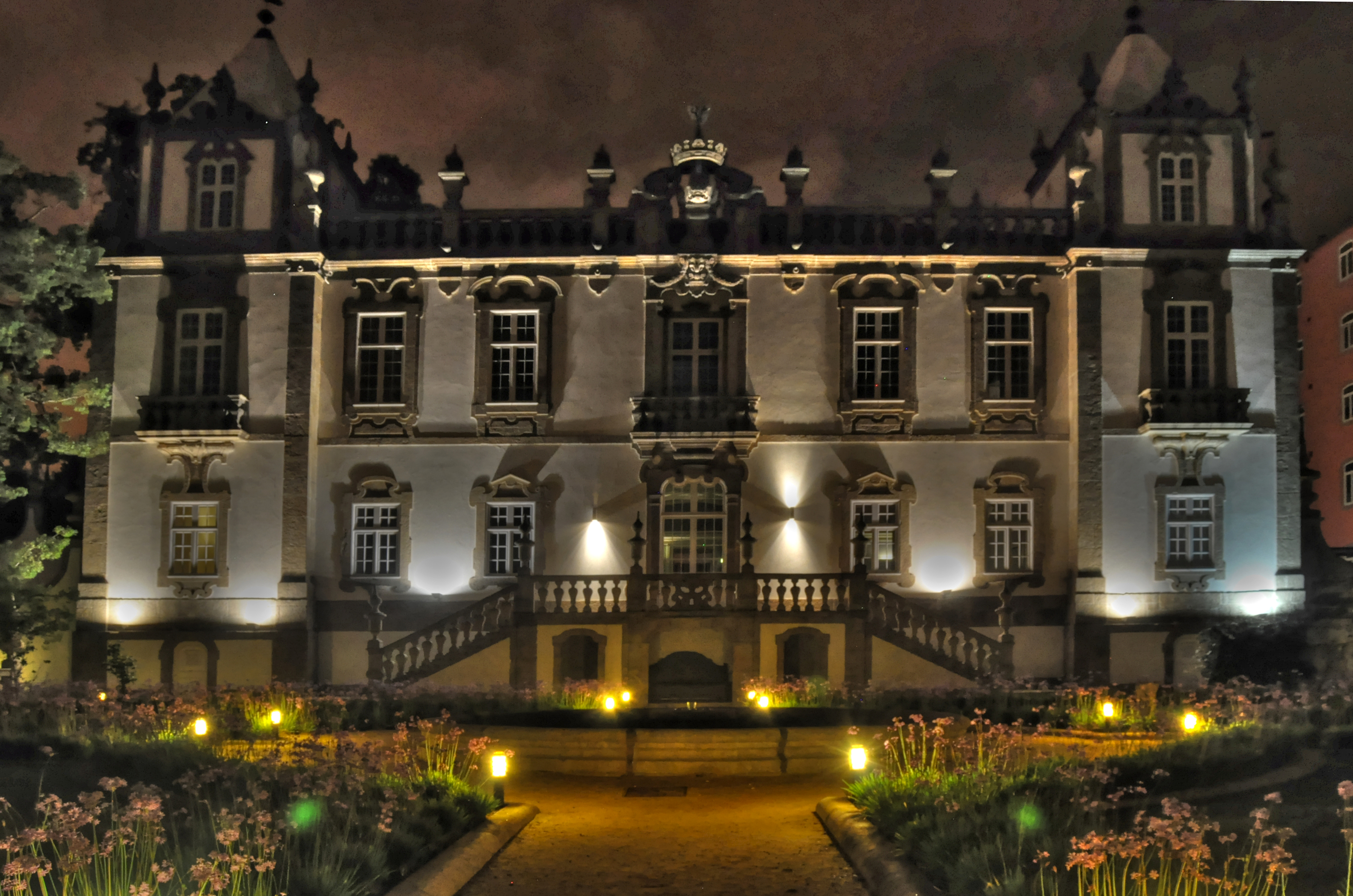
It took two architects to create this incredible hotel on the margins of the Douro river. The first, the Italian Nicolau Nasoni, designed the Freixo Palace in the 18th century for the family of a rich cleric, Jerónimo de Távora. The second, the Portuguese Fernando de Távora, a relative of the original owner, transformed it into a luxury hotel.

Built in 1750, Freixo became the most elegant palace in Oporto. It was here that king Luis I stayed when he visited the city in 1872. But the century that followed the royal visit was one of decline and decay. A soap factory was built on the grounds. Later, this factory was converted into a distillery. Later still, the palace became the headquarters of the Harmonia flour factory. A flour mill was built on the palace gardens and many of the palace rooms were used for storage. When the city of Oporto bought the palace in 1986, it was little more than a romantic ruin.

In 1995 the restoration project led by Fernando Távora and his son brought the palace to its original glory. The elegant rooms were restored to create a spacious dining area and beautiful meeting spaces. The old flour mill was reconfigured to accommodate comfortable guest rooms that have stunning views of the Douro river. Freixo is, once again, the most elegant palace in Oporto.

Palacio do Freixo, Estrada Nacional 108, Porto, tel. 225-311-000, email: guest@pousadas.pt. Click here for the hotel’s website.

Portugal’s star wine varietal

Touriga Nacional, Rui Barreiros Duarte, ink on paper, 2012.

There is a Portuguese saying, “muita parra, pouca uva,” (leafs are many but grapes are few) that applies to Touriga nacional. This varietal has very small grapes. But they burst with flavor through a thick skin that gives the wine an intense red color. Touriga has been planted for centuries in the Dão region but has little name recognition outside of Portugal.

If you are a wine lover, it is worthwhile to learn how to say Touriga nacional (toereega nacional), because this grape is destined for stardom. So, when the Touriga frenzy takes over the world, you’ll be able to say: I drank those fantastic Touriga wines when they were great buys because almost no one outside Portugal knew about them.