That’s what the Roman poet Marcus Lucanus wrote about Troy. It means “no stone is without a name.”
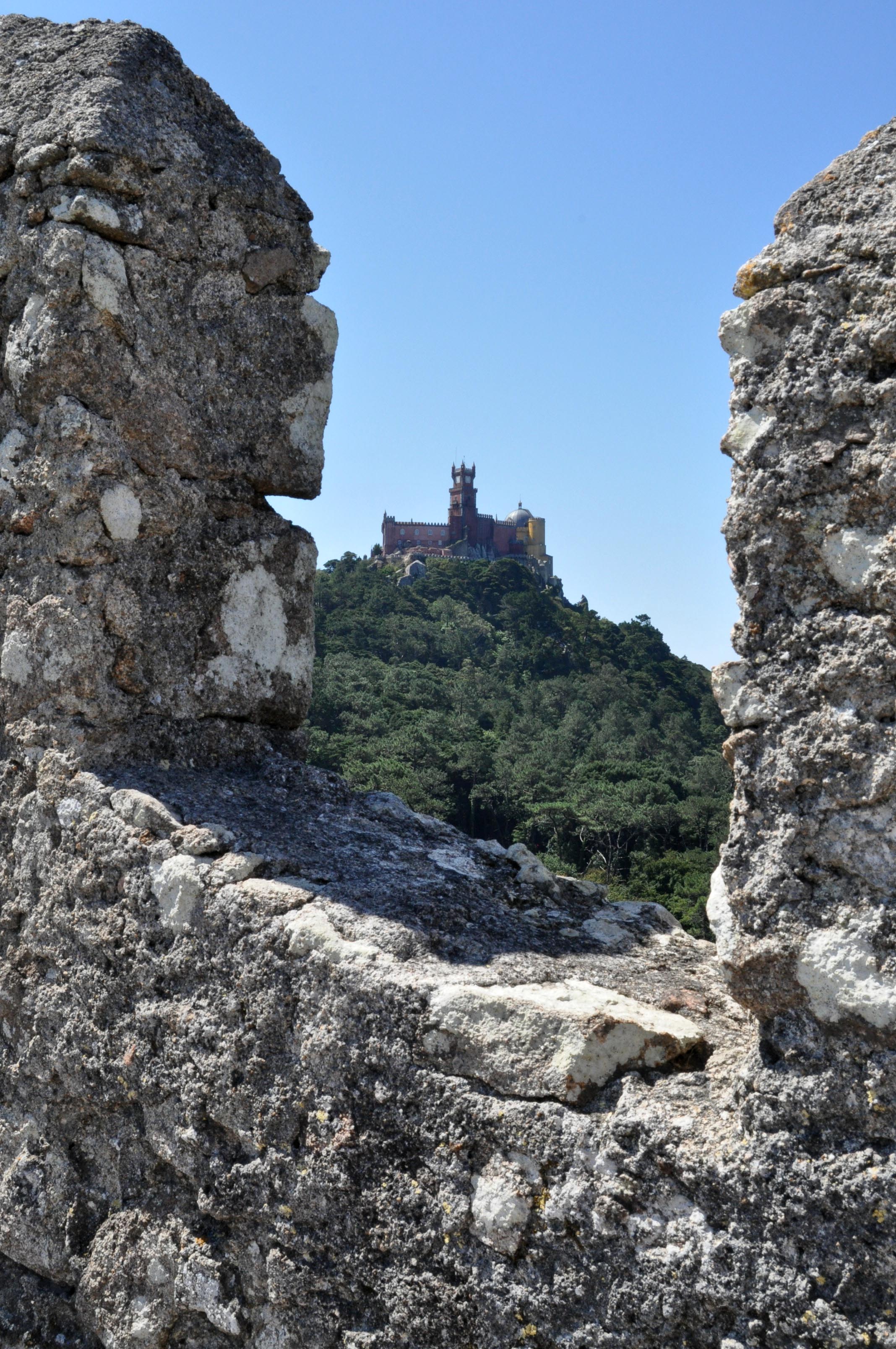
Portugal has beautiful scenery, wonderful food, perfect weather. But what makes this country truly unique is its history. Africans, Celts, Jews, Moors, Phoenicians, Romans, Suevi, Visigoths, they all shared this corner of the world. They all left their marks on the Portuguese landscape. Monuments to their triumphs, ruins from their defeats are everywhere. No stone is without a name.
Coimbra, Rui Barreiros Duarte, ink on paper, 2011.
Coimbra is famous for its university, one of the oldest in the world. It is a beautiful city that seduces its visitors slowly, with its winding streets, ancient buildings, and academic traditions. According to an old folk song “Coimbra is most alluring when you try to say goodbye.” Hans Christian Andersen, the author of “The Little Mermaid” and other popular fairytales, visited Coimbra in 1866 and fell under its spell. Here’s what he wrote:
“We drove along the Mondego river whose broad bed displayed more dry sand than running water. Yet, what freshness and forest charm all around! The city rose as the loveliest flower in the whole bouquet. Coimbra rests upon the mountain side, one street higher than another. The streets are narrow, crooked, and rise continually. Shops and bookstores are here in abundance.
From the cloister of Santa Cruz the streets ascend towards the university, an extensive building that occupies the highest site in the city. Up there, through the dilapidated walls of the fortress, one enters the botanical garden, which is rich in rare flowers and trees.
I met some students all in their medieval garb: one went by himself, reading; three others passed in lively conversation with the guitar strung over the shoulder; their wild pranks in these surroundings put me in a cheerful mood; it was as if I lived back in an earlier century.”
Many visitors arrive in Portugal with their body clocks disoriented by jet lag. They lie awake in the early hours of the morning, stranded between dream and reality.
If you’re close to the ocean, this is your chance. Go to the beach and walk on the immaculate sand. Watch the sea put aside its black nightgown and try on different shades of blue. These simple moments can be extraordinary. Here’s how the writer Raul Brandão describes them in his 1923 book, The Fishermen:
“There are mornings when the dust of the sea mixes with the blue dust of the sky. A fresh, moist breeze, vibrant and salty comes from afar, from the deep, from an endless groundswell that makes us feel that life has no limits.”
Who created the world’s best chocolate cake? Gaston Lenôtre? Pierre Hermé? Jacques Torres? Guess again. The cake is made with French chocolate, but the chef’s name is Portuguese: Carlos Braz Lopes.
His cake has three chocolate meringue disks layered with chocolate mousse and topped with a chocolate ganache. He started selling it in a tiny store in an obscure corner of Lisbon’s Campo d’Ourique neighborhood. But the cake is so good that word of mouth attracted chocolate lovers from all over the world.
The French gourmet Brillat-Savarin wrote that discovering a new recipe brings more happiness than discovering a new star. There is no better way to savor the truth in this aphorism than to taste a slice of Carlos Braz Lopes’ wondrous cake.
O Melhor Bolo de Chocolate do Mundo by Carlos Braz Lopes, Rua Coelho da Rocha 99, Campo de Ourique, Lisboa, tel. 21 396 53 72, email: geral@omelhorbolodechocolatedomundobycbl.com.
A cataplana is a copper pan made of two clam shells that can be sealed with a clamp. The origins of this cooking contraption are lost in time. In the early 20th century Portuguese hunters carried cataplanas loaded with onions and tomatoes, so they could cook game on a wood fire. Later, in the 1960s, the cataplana became a popular way to cook fish and shellfish in the Algarve. Since then, it has become a hallmark of Portuguese cooking.
There is something magical about the moment when the waiter brings a cataplana to the table. And it is not hard to imagine that, as he opens the pan, he murmurs the same secret incantation used in the banquets of the Arabian Nights to make the meal unforgettable.
You can buy a cataplana at Loja Pollux Hotelaria, Rua da Madalena, 263, Lisboa, tel. 218-811-291, email: hotelaria@pollux.pt or at A Vida Portuguesa, Rua Anchieta 11 in Chiado, Lisboa, tel. 213 465 073.
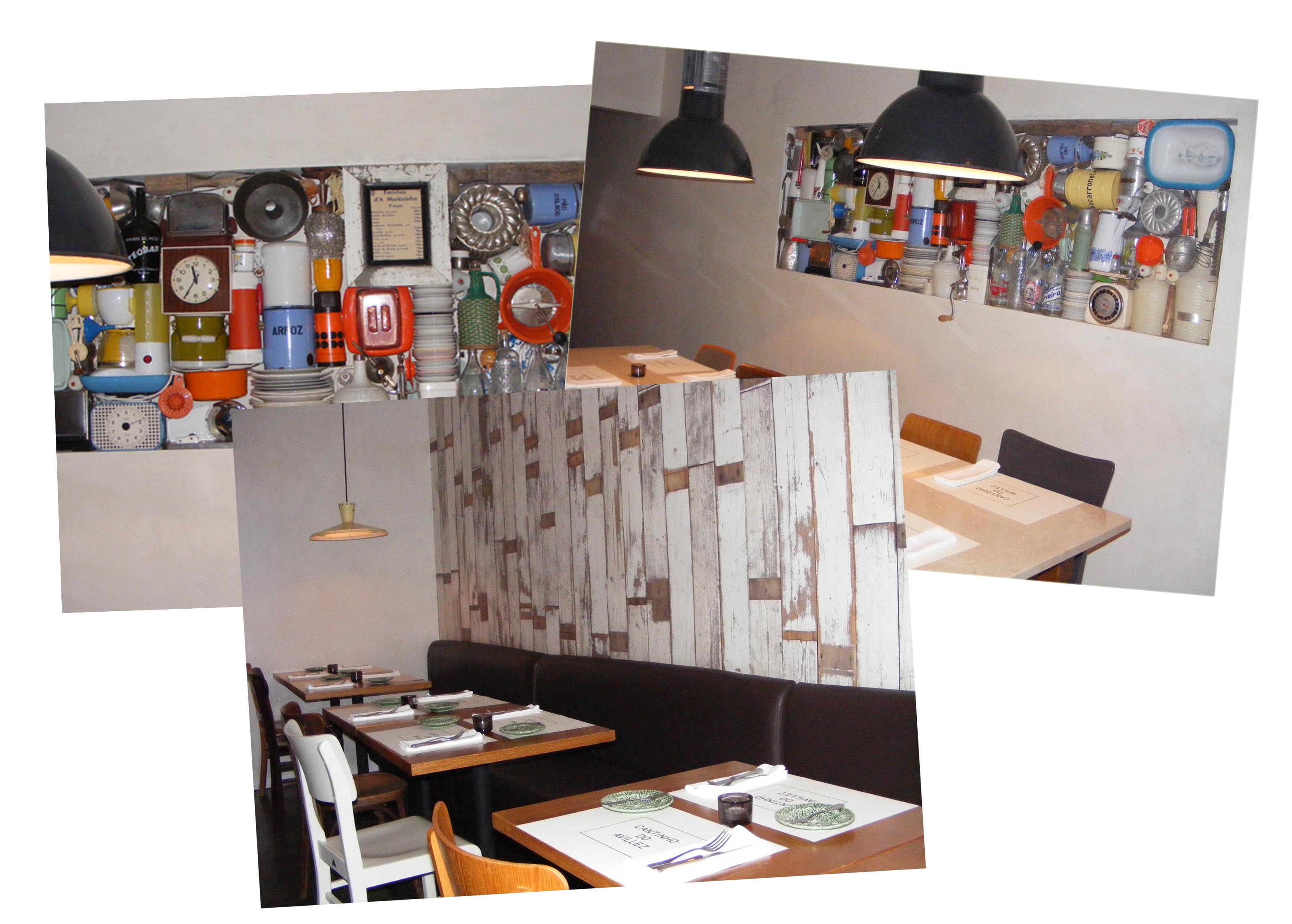
This small restaurant near Chiado has a funky, bohemian décor that makes it look like a theater set. The servers, all implausibly good looking and articulate, are clearly trained actors.
Chef José Avillez directs this food theater. He has great credentials, having apprenticed with Alain Ducasse and Ferran Adrià. Here he cooks traditional fare with original variations that create new layers of taste.
It is difficult to choose from the menu because everything is so delicious. There is vegetable tempura that is crunchy and crisp, savory partridge turnovers with an intense, gamey flavor, homemade canned tuna with a pungent mayonnaise of ginger and lime, sautéed chicken liver and grapes perfumed with Port wine, and so much more.
When you leave O Cantinho you feel like you’ve just seen a wonderful play that you would love to see again.
Rua dos Duques de Bragança, 7, Lisboa, tel. 21-199-2369. Click here for the restaurant’s website. Reservations are a must.
Fernando Pessoa, Rui Barreiros Duarte, ink on paper, 2012.
It is not easy to write about the great poet Fernando Pessoa. Even if we weight every syllable, our words are still too heavy to describe his graceful prose and sublime rhyme. So, perhaps we should stick to the facts.
Pessoa was born in Lisbon in 1888. His father, a journalist, died when he was young. His mother remarried and moved to Durban, South Africa, where Pessoa received a British education.
After returning to Lisbon in 1905, Pessoa earned a modest living making translations and writing business letters. He published poems, essays and literary criticism, but remained unknown during his lifetime.
Many of his poems were written in coffee shops, at Brasileira in Chiado or in Terreiro do Passo’s Martinho da Arcada. He wrote under different identities, each with its own personality and distinctive style. Some say that Pessoa and his four major pen names, Álvaro de Campos, Ricardo Reis, Alberto Caeiro, and Bernardo Soares are the five finest Portuguese poets.
Pessoa died in 1935, at age 47, one year after publishing his first major book, The Message. He left a literary treasure trove: a trunk full of poetry and prose, including The Book of Disquiet, which, published in 1982, created a new wave of interest in the poet.
Reading Pessoa can change your life, at least that’s what happened to the Italian writer Antonio Tabucchi. A chance encounter with Pessoa’s poem “A Tabacaria” (The Tobacco Shop) made him fall in love with the poet’s work and with the language and culture of Portugal.
Here are the first lines of “A Tabacaria” translated by Richard Zenith. Read them at your own peril.
“I’m nothing.
I’ll always be nothing.
I can’t want to be something.
But I have in me all the dreams of the world.”
Pêra Manca is a cult wine produced near Évora, in Alentejo. It has a long pedigree that is intertwined with the history of Portugal. Pedro Álvares Cabral took bottles of Pêra Manca in the voyage that resulted in the discovery of Brazil, in 1500. The wine continued to gather fame, wining gold medals in Bordeaux in 1879 and 1898, but its production ended with the death of the vineyard’s owner in 1920.
In 1990 the Eugénio de Almeida Foundation resumed the production of Pêra Manca, aging the wine in the cellar of a 1580 Jesuit monastery. Francisco Colaço do Rosário, an enologist who did a groundbreaking study of the Alentejo varietals, selected an old vineyard for this project.
The white Pêra Manca is made with Antão Vaz and Arinto grapes. The red Pêra Manca is made with Trincadeira and Aragonês grapes and it is produced only in exceptional years.
It is a wonderful wine for a special occasion. After all, it was good enough to celebrate the discovery of Brazil.
Click here for the Eugénio de Almeida Foundation Cartuxa winery website.
Neptune rode the seas on a copper chariot. Surfers make do with much less, gliding the waves on their slender boards. Portugal is a great place to learn the art of surfing. There are many beaches with dependable, tubular waves, and schools that provide instruction, equipment, and lodging. Every year, hundreds of visitors arrive in Portugal as ordinary humans and leave transformed into gods of the waves, ready to challenge Neptune to a race.
TAP, Portugal’s national airline, is not immune to the cost cutting pressures common to the industry. But it has a new fleet of large, confortable Airbus airplanes and it is promoting a warm attitude that you can feel in this music video that gathers the Portuguese Mariza, the Angolan Paulo Flores, and the Brazilian Roberta Sá.
When you set foot on a TP flight, you are already in Portugal and magical moments can happen. On a recent flight, a passenger was about to fill a glass with water from a bottle sitting on the counter in the kitchen area. A stewardess quickly intervened saying, “that is my bottle, let me open one for you.” Then, to ease the awkwardness of the moment, she pointed to her bottle and said: “I kissed that water; if you drank it you would learn all my secrets.” Any airline can get you from here to there, handle baggage, count frequent-flyer miles. But which other airline provides such spontaneous moments of poetry?

 That’s what the Roman poet Marcus Lucanus wrote about Troy. It means “no stone is without a name.”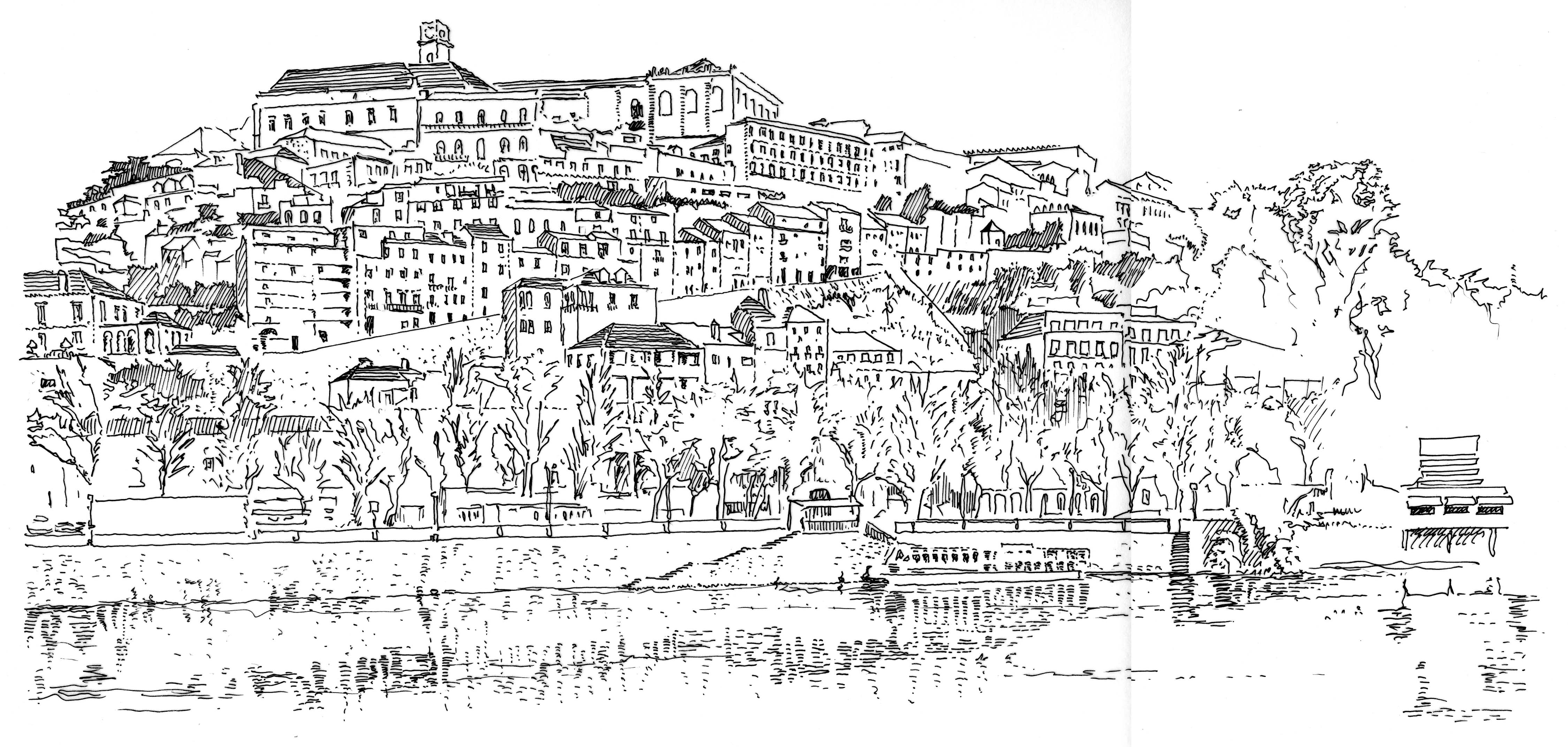





 Salt of Portugal