Days like this at Gaveto

Gaveto is a restaurant in Matosinhos where winemakers from the Douro Valley and the Vinho Verde regions often gather. It is easy for regulars to take for granted the meticulous selection of ingredients, the flawless execution of each dish, and the impeccable service. But this restaurant took a lifetime to build. 

Its founder, Manuel Pinheiro, began his culinary journey at age 12, working in Porto at the home of the banker António Borges. At age 18, Manuel got a job in a restaurant owned by the Borges family. He started by hauling coal for the stove and washing countless pots and pans. Over time, he learned to cook, to run the kitchen, and to manage the dining room. Ten years later, Manuel put all this knowledge to use by buying a small restaurant in Porto and turning it into a popular spot.

In 1984, while shopping for fish at the Matosinhos market, Manuel learned that a spacious restaurant called Gaveto was up for sale. Tempted by the opportunity to attract a larger clientele, he purchased the place. The investment was so large that his wife Margarida cried for two weeks, worrying that they might soon be ruined. 

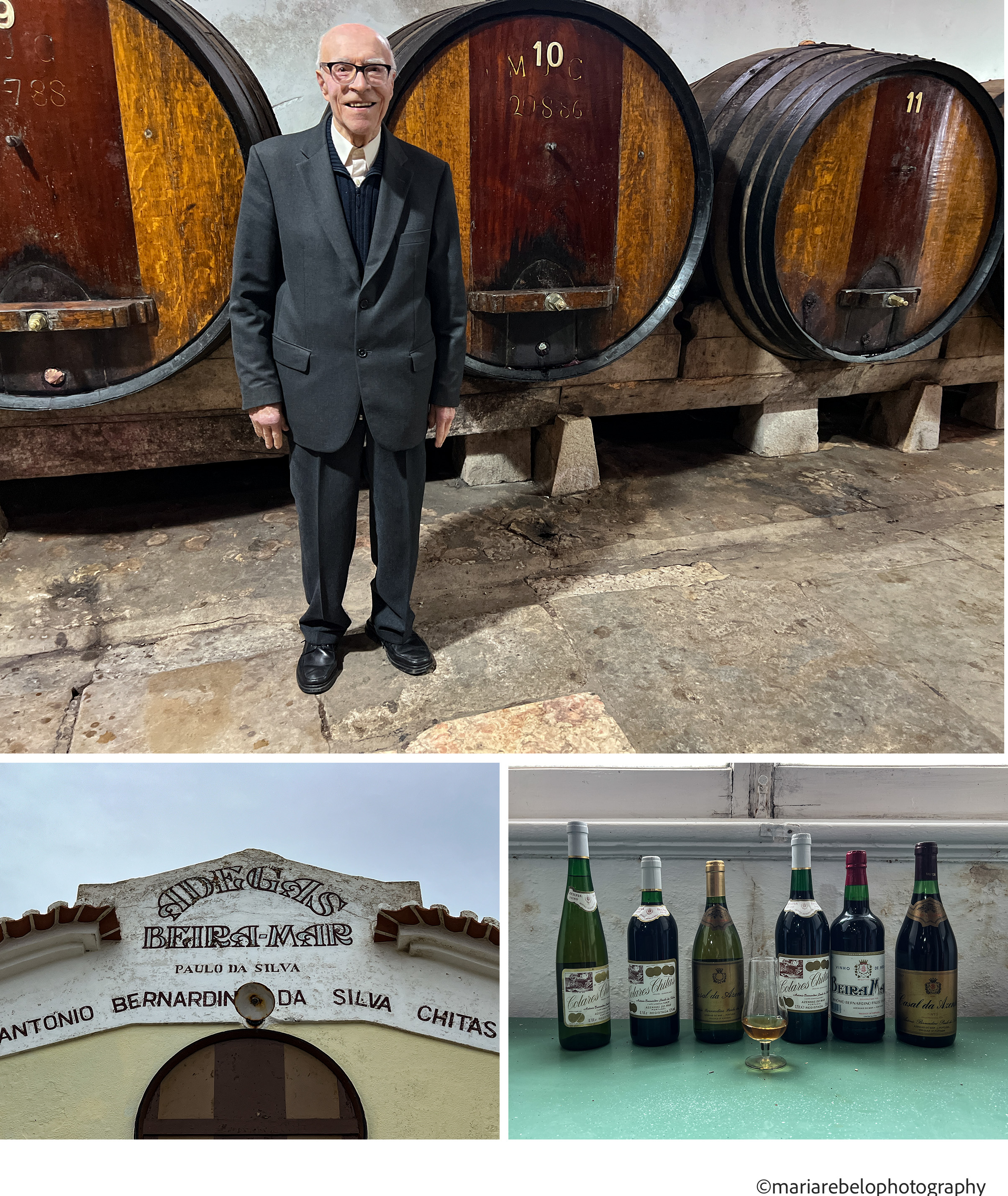
Manuel involved his two sons, João Carlos (in the photo with his father) and José Manuel, in the business. Together, they turned Gaveto into a gastronomic landmark and built one of Portugal’s most impressive wine collections. Whenever they serve a rare wine from their cellar, João posts a photo of the bottle on Instagram captioned with his signature phrase: “There are days like this.” 

The menu includes only traditional Portuguese fare, yet the offerings are so tempting that we always struggle with our choices. During our last visit, we hesitated about whether to get the iconic lobster rice, the legendary lamprey, the exquisite tiger shrimp, the perfectly grilled fresh fish, or the tripe with beans, which former President Mário Soares considered the best in the country. 

When dessert time came, we debated whether to opt for one of the many puddings and tarts, get the traditional pão de ló, or taste the fine cheese that Manuel procures in the Estrela Mountain. These were not easy decisions. And at Gaveto, every day is like this.

Art and nature at Serralves

Hidden behind unassuming walls, the Serralves Foundation can be easily missed. But this beautiful park and contemporary art center in Porto is a must-visit destination.

Its story began in 1925 when Carlos Cabral, the 2nd Duke of Vizela, attended the International Exhibition of Modern Decorative and Industrial Arts in Paris with architect José Marques da Silva. The duke returned to Porto with the dream of building an Art Deco house on his family’s property. To realize this vision, he enlisted Marques da Silva and a cadre of French architects, including Charles Siclis, who worked on the villa, and Jacques Gréber, who designed the gardens. 

Siclis’ watercolor of a pink house on a hill became the blueprint for the elegant villa we know today. It took until 1944 to turn that sketch into reality. The cost was so extravagant that in 1955 Carlos Cabral sold the estate to Delfim Ferreira, a wealthy entrepreneur. To ensure that his dream villa would live on, Cabral imposed the condition that the house would be preserved without alterations.

In 1987, the Portuguese government acquired the estate to convert it into a contemporary art center. For the first time, this home, which was the subject of great fascination in Porto, was opened to the public. As soon as we step into the villa, we feel a desire to wear tuxedos from Saville Row and Chanel gowns so we can do justice to the elegance of the place. The villa’s intricate decor and aesthetic harmony are mesmerizing. 

In 1999, the new Museum of Contemporary Art, designed by renowned architect Álvaro Siza was inaugurated. Since then, it has become a beacon for contemporary art in Porto. With each passing year, the exhibition program expands, and the collection welcomes new works and new artists. 

In 2019, the House of Cinema dedicated to filmmaker Manoel de Oliveira and other auteur directors was inaugurated. More recently, the Álvaro Siza Wing added new exhibition spaces where delicately lit pristine walls patiently wait for the arrival of new canvases. 

Spread across 18 hectares, the Serralves Park is dotted with sculptures amid lush trees. Visitors can stroll on the Liquidambar Promenade, explore the Treetop Walk for stunning park views, or visit the gardens of the villa. 

Serralves is a place where nature relaxes the body and art stimulates the mind.

The Serralves Foundation is located at Rua D. João de Castro, 210, Porto.

Ceia, our favorite place for supper

The initial thrill of a new experience often fades with repetition, a phenomenon psychologists call hedonic adaptation. Somehow, this human trait does not manifest itself at Ceia, a restaurant in Lisbon that keeps reinventing itself, serving food that is always interesting, new, and delicious. 

Ceia’s culinary team is currently headed by Chef Renato Bonfim, who previously worked at Adega, a Michelin-starred Portuguese restaurant in California. The menu is inspired by the pristine produce from Herdade no Tempo, a beautiful estate in Alentejo that follows regenerative agriculture practices. 

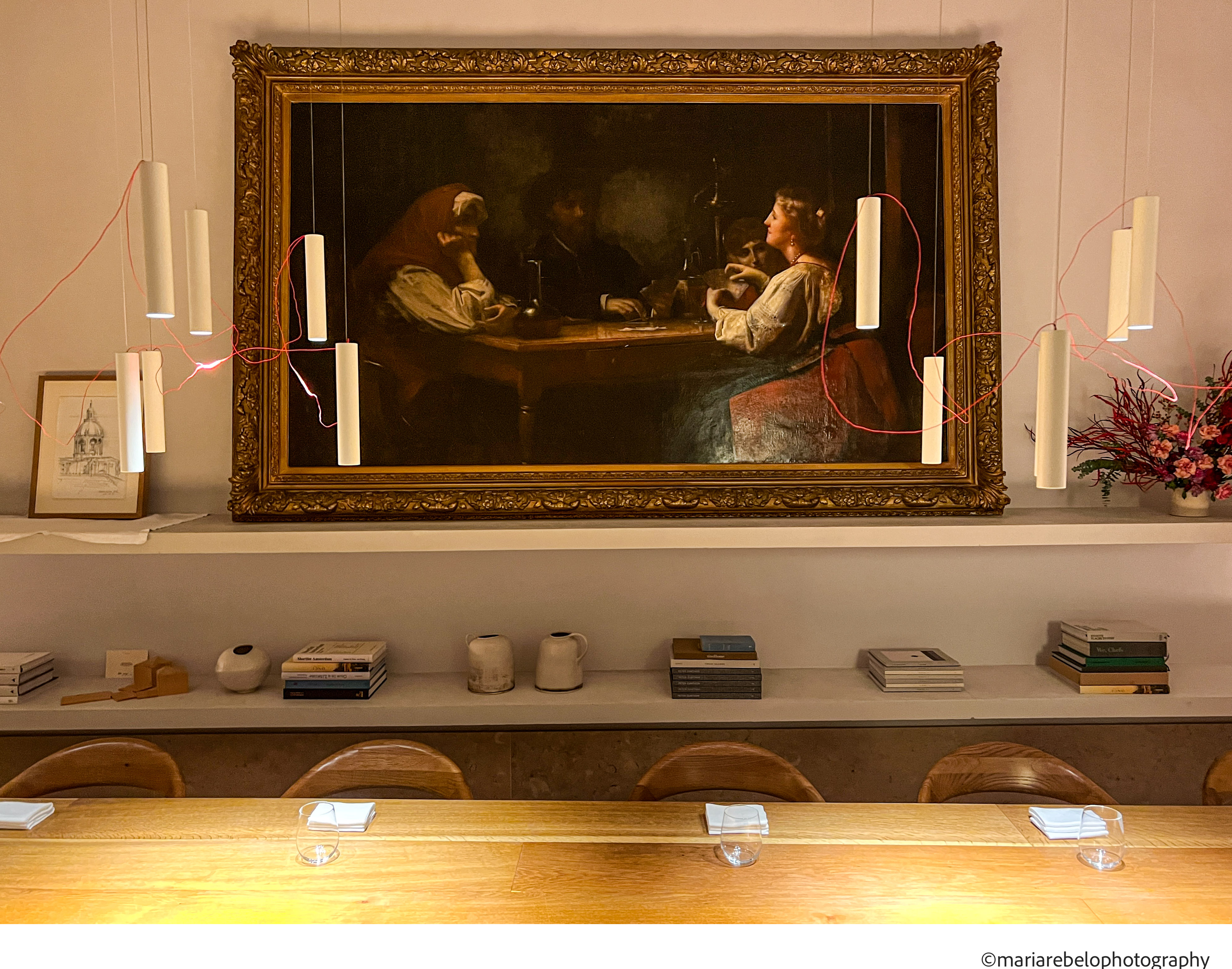
The restaurant, which is part of a project called Silent Living, is located on the ground floor of Santa Clara, an intimate hotel with privileged views of the Tagus River and the Pantheon. Kristin Liebold, a member of the Silent Living team, welcomed us to the spacious courtyard of the historical building that dates back to 1728. She presented us each with glasses of Ode, a refreshing wine crafted near Lisbon from Arinto grapes. As we mingled with other guests, Kristen appeared to whisper a magical incantation. Then a door swung open, unveiling a dining room so perfect it could be the setting for a Vermeer painting.

As we gathered around the table, Renato and his teammates Ricardo Cruz and Tiago Ramos came to greet us and, like the three kings, they brought three offerings. First, slices of sourdough bread accompanied by a sumptuous butter from the Azores and a luscious spread crafted from butter and a type of sausage called alheira. Second, a crispy tartelette made with perfectly seasoned lírio (greater amberjack) and vegetables. Finally, exquisite polenta cubes topped with aioli, garlic, and cheese and nestled in wooden boxes filled with bright yellow corn. Dardas, a bright vinho verde (green wine) made with the Avesso varietal, kept us in great company.

As we debated which of these offerings had most captivated our taste buds, Ricardo introduced a new chapter to our culinary adventure: an algae chowder. It is based on shio koji, a salted Japanese pudding encircled by algae cooked in a Bulhão Pato style. The preparation was crowned with a leaf of the rare Mertensia maritima. We were instructed first to eat the leaf, savor its unique oyster flavor, and then blend a small glass filled with chowder with the algae. The result was an unexpectedly delightful harmony of flavors.

As our glasses filled with a silky Dona Paulette from Quinta de Lemos in the Dão region, we were brought plates of octopus grilled in charcoal, topped with kale, and seasoned with an inventive mole made from grilled peppers and pomegranate—another unusual but perfect combination of flavors and textures.

The next dish featured crispy sarraceno wheat mixed with chanterelles and shiitake mushrooms seasoned with a sauce made from shallots, beer yeast, dehydrated apricots, and raisins. There was so much flavor to process that we closed our eyes to let our brain focus on the gastronomic sensations. A late harvest from the Douro Valley called Aneto complemented the earthy flavors of the dish with a delicate, effusive sweetness.

A sparkling wine made by Sidónio de Sousa in Bairrada ushered the arrival of a turbot from the Azores delicately cooked, dressed with beurre blanc and kombucha, topped with fermented turnip and kohlrabi and finished with a few drops of garum. This Roman fish sauce, which is once again being produced in the Troia peninsula after a hiatus of 15 centuries, added a unique depth to the dish. 

The meat course was a succulent black pork served with a rich purée made from Jerusalem artichokes, chestnuts, and purple onion. It was served with a robust vinhão, a red wine made from a dyer grape called Sousão produced in the vinho verde region by Vale da Raposa. 

The first dessert was an ensemble of panna cotta, chocolate, and matcha powder, garnished with leaves from Madeira that taste like passion fruit. A white port made by Alves de Sousa called Oliveirinha added a velvety smoothness to this symbiosis of flavors.

The second dessert was ginger and pumpkin cooked with Chinese spices, a praline made from pumpkin seeds and seasoned with pollen. 

Our meal concluded with a refreshing lemongrass tea, quindin, a Brazilian coconut pudding, and truffles crafted from 70 percent pure chocolate from the island of São Tomé.

We lingered at the table, talking with the other guests about the culinary experience we had just enjoyed, so replete with unexpected pleasures and delights that we felt like we were dining at Ceia for the very first time.

Ceia is located at Campo de Santa Clara, 128. Lisbon. Click here for the restaurant’s website.

Finding the secret of longevity in Colares

The rain fell hard, trying to make up for the dry spring and summer.  But we were not deterred. We drove through the narrow road that leads to Colares to meet a legendary winemaker: the 97-year-old Paulo da Silva, affectionately known as Chitas (pronounced cheetahs), the nickname he inherited from his grandfather.

We stopped at Adega Beira Mar, which means cellar by the sea, an apt description. Paulo came out to greet us, his slender figure dressed in a dark suit. It was chilly inside the building, but he did not seem to mind. “Is it the cold or the wine that is the secret of your longevity?” we asked. Paulo replied with a smile. “My father liked to say that drinking a bottle of our wine with lunch and another with dinner would extend your life. But I prefer a small glass of wine with my meals.”

Paulo has an amazing memory for dates, facts, and figures. He tells us the building was erected in 1898 by his grandfather. “This place has seen it all: the two world wars, the Great Depression.” 

In Colares, the vine planting process is unique. Farmers dig holes in the sand until they find a clay bed where they can plant the vine roots. The sandy soil served as a natural barrier against phylloxera, an insect that devastated many European vineyards in the latter half of the 19th century. 

With wine production declining in other regions, Colares thrived. Many producers prospered by exporting their wine to Brazil. Paulo’s grandfather, António, was a foreman for one of these exporters, Manuel José Colares. António’s work ethic and dedication were so great that Manuel bequeathed him part of his business. But when the Great Depression came, Brazil did not pay for the wine, and most companies went bankrupt. The few that survived have since been sold or closed. Only Paulo’s Adega Beira Mar remains in the same family. “The wines have earned 71 prizes since 1889, two just last year,” he tells us. 

Over the past few decades, the construction of summer residences in Colares has gradually encroached upon the land occupied by vineyards, reducing it to 30 hectares. Paulo da Silva owns some vines, but for most of his life, he was what the French call a “negociant,” a savvy wine merchant. His expertise lies in identifying superior wines, aging them to perfection, and then selling them.  “Time is the secret of Colares wine,” he explained. The region’s two signature varietals, the white Malvasia and the red Ramisco, need time to develop complexity and finesse.

On one occasion, the former President of Portugal, Jorge Sampaio came to visit Paulo. The president asked, “What is the oldest wine in the cellar?” “It is from 1955,” responded Paulo. “You kept that wine for too long,” said the president. “It has surely gone bad.” Paulo fetched a bottle from 1955 and offered it to the president. A few weeks later, the president called in the evening to say, “We tried that wine at dinner tonight, and it was exceptional. I learned something new— Colares wines have a remarkable longevity.”

We sampled a Malvasia from 1996 that was lively and crisp, with aromas of citrus and green olives and a hint of saltiness on the palate. A marvel!

Paulo led us to see some Ramisco vines he had planted in the sandy soil near the cellar just two years ago. “Look how well they’re doing,” he said with pride. He then gestured towards an unoccupied section of the yard. “Over there, I’m planning to build a new cellar to boost our production,” he explained.

Perhaps Colares wines are the secret to eternal youth and vigor. We purchased a few bottles to test this theory. It promises to be an enjoyable experiment.

Madeira’s honey cake

The origin of the honey cake remounts to Madeira‘s “white gold” era. This period began in the 15th century when Henry the Navigator brought sugar cane from Sicily to plant in Madeira. The island became Europe’s main sugar supplier until the first half of the 16th century when Brazil took over this role. 

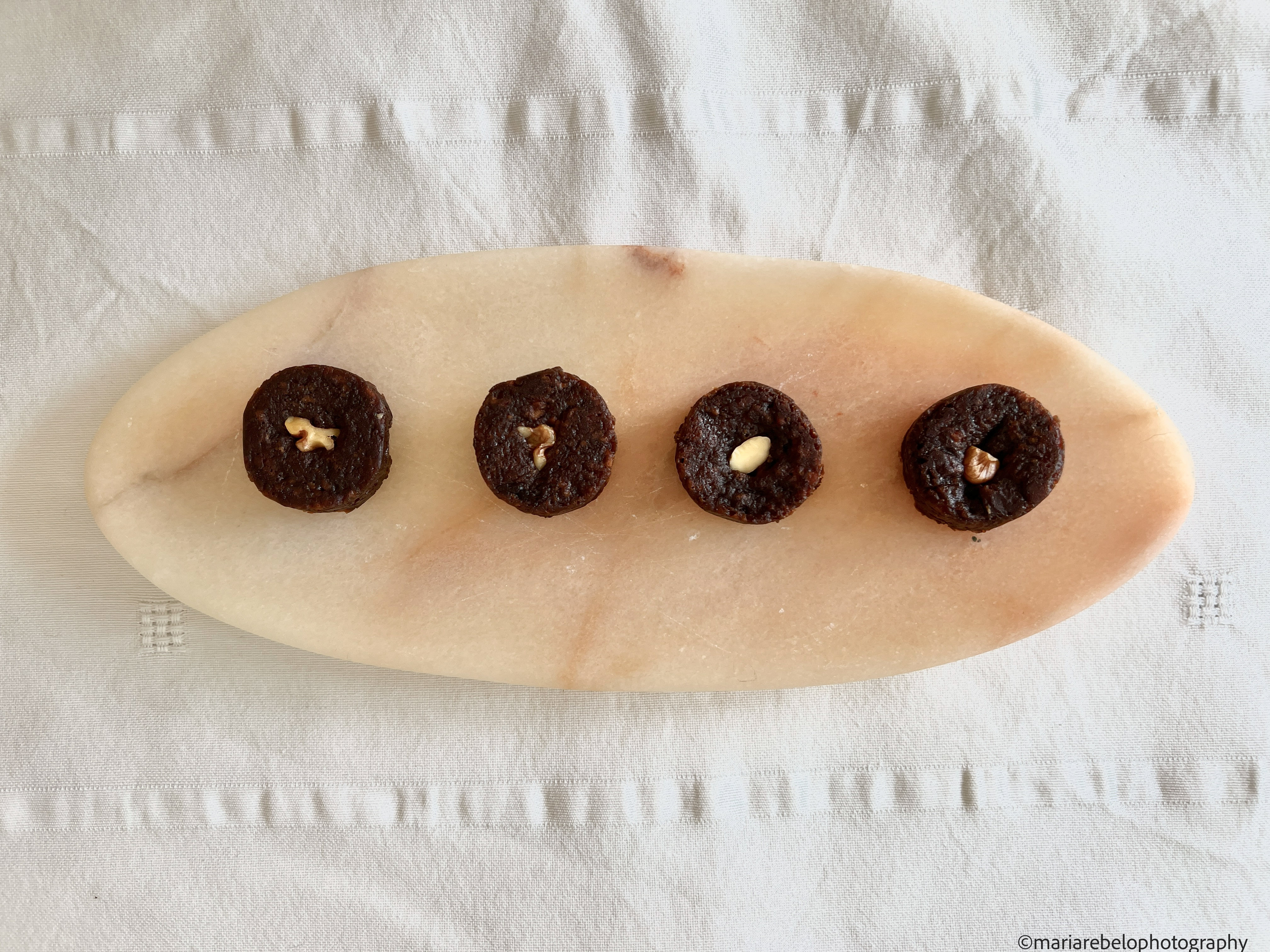
The honey cake recipe has been refined over the years. Despite its name, the cake does not contain honey. It combines flour, yeast, nuts, dried fruit, spices, and Madeira wine with sugar cane molasses, known in Madeira as sugar cane honey. 

The molasses imparts a rich flavor and contributes to a long shelf life–the cake lasts about a year. Historically, these cakes provided sailors with a sweet reminder of home during lengthy sea voyages.

Ringing in the New Year with a slice of Madeira honey cake is a delightful experience.

Below, we share a version of the recipe created by the great Maria de Lurdes Modesto. It takes more than a week to make a Madeira cake. But there’s an easier way to taste this wonderful dessert: visit Madeira in 2024!

We wish you a happy New Year that is as sweet as a Madeira honey cake.

Madeira’s honey cake (recipe by Maria de Lurdes Modesto)

Ingredients

  • Wheat Flour: 160g
  • Baker’s Yeast: 5g
  • Lukewarm Water: 0.25dl
  • Lard: 200g
  • Butter: 125g
  • Cane Honey: 450ml
  • Flour: 465g
  • Sugar: 250g
  • Orange Zest and Juice: From one large orange
  • Walnuts (Chopped): 250g
  • Almonds (Chopped): 75g
  • Fennel Seeds: 10g
  • Cinnamon: 20g
  • Cloves: 5g
  • Sweet Madeira Wine (Bual or Malmsey): 1 tablespoon
  • Additional Decorations: Walnuts, citron (optional), almonds
  • Grease: For the baking pans

Preparation

Start a day before baking. Prepare the yeast mixture with 160g of wheat flour, 5g of baker’s yeast, and 0.25dl of lukewarm water. Mix well, cover, and leave in a warm, draft-free area.

On the day of baking

Gently melt 200g of lard and 125g of butter in a saucepan. Once melted, add 450ml of cane honey.

Sift 465g of flour with 250g of sugar into a large bowl (traditionally an “alguidar”). Make a well in the center. Pour the prepared yeast mixture into the well. Add the melted fats and honey (which should now be warm) to the well. Start mixing the ingredients. Add the zest and juice of one large orange. Knead well until the dough is smooth and lump-free.

Mix in 250g of chopped walnuts, 75g of almonds, and 12g of citron (called cidrão in Portuguese, it is a citrus fruit often candied and used in cakes like Bolo Rei). Add the spices: 10g of fennel seeds, 20g of cinnamon, and 5g of cloves. Stir in a generous tablespoon of sweet Madeira wine. Knead the mixture thoroughly by hand. Cover the bowl and place it in a warm, draft-free spot.

Let it rest for 2 to 4 days. After the resting period, portion the dough into 250g or 500g amounts, depending on the desired size of the cakes. Use round, shallow, well-greased baking pans without a hole in the center. Decorate the cakes with walnuts, citron (if available), and/or almonds.

Preheat the oven to 190°C (approximately 374°F). Bake for about 30 minutes or until done. Place the baked cakes on wire racks to cool. Once cooled, cover them with a cloth and let them rest for 2 to 3 days. Finally, wrap the cakes in parchment paper and store them in airtight containers.

A potato called raíz de cana

On the night before Christmas, Portuguese tables are graced with food from near and far. Local staples like cabbage and olive oil accompany codfish from the icy waters of Norway, Iceland, and Newfoundland. Potatoes, originally brought from South America in the 16th century, are a mainstay of the culinary feast.

It is thought that the first potato planted on Portuguese soil was “raíz de cana.” It became popular on the west coast of Portugal because its firm texture makes it ideal to use in fish stews or cook with salted skate, a local delicacy.

Raiz de cana has an irregular shape that makes it difficult to peel, so over time, it lost favor with cooks. It might have vanished if it weren’t for Raul Reis, an entrepreneur who moved from Luxembourg to Sobral, near Lourinhã. He discovered raíz de cana in a small village called Cesaredas and began cultivating it. Thanks to Raul, these potatoes are now featured in Portugal’s finest restaurants.

João Rodrigues, a famous Portuguese chef, liked raíz de cana so much that he created some recipes that showcase it. One of them is the recipe for potato salad we share below. 

You can try the recipe with another potato variety or visit João Rodrigues’ new restaurant in Lisbon (Canalha) to taste the real thing!

Potato salad

Ingredients

  • 8 raíz de cana potatoes
  • 2 large pickled cucumbers (cornichons)
  • One rose onion
  • 3 tablespoons of chives
  • One egg
  • ½ garlic clove
  • Sweetened yogurt
  • 1 tablespoon of mustard
  • Water from the pickles
  • White wine vinegar
  • Sunflower oil
  • Salt
  • Fleur de sel
  • Pepper
  • Olive oil

Preparation

  1. In a glass, combine the egg, mustard, sunflower oil, olive oil, and vinegar. Use an immersion blender to mix everything very slowly and thoroughly.
  2. Season the mixture with salt and pepper.
  3. Add yogurt, grate the garlic into it, and put in a little bit of the pickle juice to taste. Mix everything well.
  4. Thoroughly wash the potatoes with their skins on.
  5. Place the potatoes in a pot with cold water and salt, then bring them to a boil to cook.
  6. Once cooked, remove the potatoes, peel them, and season with olive oil and fleu de sel.
  7. Cut the potatoes in halves and arrange them on a serving dish.
  8. Top the potatoes with the previously prepared mayonnaise.
  9. Finish by sprinkling chopped red onion, cucumber pickles, and chives over the top.

The allure of the Vidago Palace Hotel

Vidago is a spa town in the north of Portugal favored by the aristocracy and the royal family for the curative powers of its waters. King Carlos commissioned the building of the Vidago Palace Hotel. However, in 1908 the king was assassinated, and by the time the hotel opened its doors on October 6, 1910, Portugal had just become a republic. 

A century after its inauguration, the Vidago Palace welcomed guests once more in 2010 after extensive renovations guided by the Portuguese architect Álvaro Siza Vieira, a Pritzker Prize laureate.

As you veer off the main road and pass through the entrance gate, an impressive pink edifice with 365 windows, one for each day in a common year, comes into view. Upon crossing the entryway, we are greeted by regal purple columns framing an expansive staircase reminiscent of those seen in classic Hollywood films. For a moment, you might expect Rita Hayworth, dressed in a glamorous gown, descending the stairs to rendezvous with Cary Grant.

The walls of the ground floor corridors are adorned with exuberate paintings. The former ballrooms, now transformed into the dining room and breakfast area, have a mezzanine level to accomodate the orchestras that enchanted the dance floor with their smooth melodies. 

Surrounding the hotel, there’s a picturesque golf course and a lush park with many trails to explore, as well as charming water stations that look straight out of a fairy tale.

Álvaro Siza Vieira made every corner of the palace more elegant while remaining faithful to the original architecture. The result is a hotel that captures the allure and optimism of the Belle Époque. 

M.O.B., stellar wines from the Dão region

In 2010, a leisurely lunch in the picturesque Dão region brought together four wine producers. Three came from the Douro Valley: Jorge Serôdio Borges, Jorge Moreira, and Francisco Olazabal. Their host was Álvaro de Castro, a renowned winemaker from the Dão region, known for the finesse of his wines.

Jorge Serôdio Borges and his wife lead Wine & Soul, a cornerstone of excellence in the Douro Valley. Jorge Moreira has achieved great recognition for his project, Poeira, and for the wines he has made at Quinta de La Rosa. Francisco Olazabal heads the iconic Quinta do Vale Meão. This estate was planted in the late 19thcentury by his great-grandmother, Dona Antónia Ferreira, the person who sowed the seeds of the success that the Douro Valley enjoys today.

The three friends are passionate about the freshness and refinement that can be found in old Dão wines. During lunch, they mused about one day making wine together in the Dão region.

A year later, Álvaro de Castro reached out, encouraging them to make this dream come true: “I need your help to promote the Dão region. There’s an aging producer looking to lease his estate, Quinta do Corujão, in Seia. If you’re serious about launching a project in the Dão region, this is a good opportunity.”

The Douro winemakers visited the 10 hectares of vineyards cultivated on granite terroir at 550 meters of elevation at the base of the Estrela Mountain. They decided to lease the property to make wine together. They called their brand M.O.B., a memorable name composed from the initials of their surnames.

By going to a different region, the three masters of the Douro Valley became students once again. The same varietals behave very differently in Dão and in the Douro Valley. In the Dão region, the climate is cooler, and the soils are granitic. In the Douro region, the summers are hot, and schist is prevalent in the soils.

Douro wines are famous for their intensity. In the Dão, the trio embraced a low extraction approach, aging the wine in old oak barrels that round the tannins without imparting new flavors to the wine. The result is lighter wines that are delicate and transparent, preserving the fruit’s freshness and showing an almost floral character. 

M.O.B. was a success because wine enthusiasts quickly recognized the exceptional quality-to-price ratios of the wines. Five years after their first harvest, the trio purchased Quinta do Corujão and leased five hectares of old vineyards in Gouveia, where white and red grapes are planted together. 

Their outstanding introductory wine is called “Lote 3” because it is a harmonious blend of the three emblematic grape varietals from the Dão region: Touriga Nacional, Afrocheiro, and Jaen. Their stellar premium wines bear the names of Seia and Gouveia before the Roman occupation (“Senna” and “Gauvé”).

A crucial element in the M.O.B. project is the strong camaraderie and mutual respect the winemakers have for each other. Like in Alexandre Dumas’s famous novel, their motto is: “All for one, and one for all.” 

Throughout the harvest season, they take turns visiting the vineyards daily, each making decisions informed by the insights of the vintner who visited the day before and leaving information for the one who follows the next day. This relay race produces wines that win our palate with their charm and elegance.

M.O.B. is a story of three musketeers who journeyed from the Douro Valley to the Dão region, where, thanks to a close-knit friendship, they conquered a new terroir and crafted exceptional wines.

Quinta da Côrte

Perhaps it’s the way the sunlight falls on the steep hill that slopes down to the river or the breathtaking vistas of century-old vineyards. Quinta da Côrte has an enchantment all its own.

This 18th century estate in the Douro Valley once belonged to a family that supplied their prized grapes to renowned port winemakers. Philippe Austruy, a French entrepreneur and wine enthusiast, fell in love with the estate and purchased it in 2013. The boutique hotel opened its doors in 2018. 

The restoration of the buildings and wine cellars was a labor of love, meticulously executed in the traditional style, featuring clay-tiled roofs and yellow-ochre trims around windows and ceilings.

The interior spaces were curated by Pierre Yovanovitch, a designer whose taste was honed during his tenure with Pierre Cardin. Yovanovitch created warm, inviting interiors that blend a sense of place with whimsical elements that surprise and delight.

Each of the eight rooms has a unique personality. All offer great comfort and sweeping views of the Douro Valley. The bathrooms in the main house are adorned with traditional tiles and ceramics that harken back to an era gone by. 

Mornings at Quinta da Côrte start with a splendid breakfast served in the kitchen, right by the spacious chimney where sausages used to be smoked.

Then, there’s a world of possibilities waiting outside. Explore the many trails through the vineyards, take a dip in the granite swimming pool, rest in one of the lookout points, enjoying the spectacular landscape, or visit the cellars, where you can savor the estate’s precious ports and elegant table wines. The port wine cellar stores impressive chestnut barrels, too big to fit through the doors. How did they get in? They were assembled inside the cellar in 1938.

The dedicated staff attends to every detail. A stay at Quinta da Côrte isn’t a typical hotel experience; it’s more like being a guest at the home of a dear friend with impeccable taste.

Quinta da Côrte is located near Valença do Douro, near Pinhão. Click here for their website.

Jezzus Pizzaria

Blessed are those who open affordable restaurants that serve delicious food, for they bring joy to the world. Diogo and Tiago de Jesus, two brothers born into a family of restaurateurs, opened a pizzeria in Rua da Guiné, a quiet street near the busling Almirante Reis Avenue. Tong in cheek, they called it Jezzus.

Inside the small restaurant, a dedicated team of cooks fires up mouthwatering Napolitan-style pizzas in an Italian oven fitted with a volcanic stone from Mount Vesuvius. The menu offers a mix of classics, like the timeless Margherita, and inventive creations inspired by Portuguese cuisine. These nouvelle pizzas include “Bulhão Pato,” which tastes like the namesake clam sauce, “Oh Pear,” featuring Rocha pears, and “Oh Diabo!,” adorned with slices of sinnfully spicy Portuguese sausage

The five-cheese pizza adds to the traditional parmesan a tetrad of Portuguese cheeses: blue cheese from Azeitão, a rare velvet cheese made from the milk of serpentine goats, and “grande do viso,” a cow milk cheese with a rind washed in red wine. Our favorite pizza is Holly Sardine, made with immaculate marinated sardines from the Algarve.

While you wait for your pizza to cook, you can feast on a plate of savory black pork sausages or try the luscious artisanal burrata with tomato confit and basil pesto.

The exceptional quality of the ingredients, sourced from small, local producers, stands out. The pizzaria buys its flour from Paulino Horta, an artisanal miller. They ferment the dough from 47 to 72 hours using sourdough yeast, resulting in a light, easily digestible crust.

Diogo and Tiago say that making pizzas as good as theirs at home would be a miracle. We wholeheartedly agree.

Jezzus is located at Rua da Guiné, 1A, Lisboa, tel. 21-814-2186.