Pure chocolate

ClaudioCoralo

Claudio Corallo is an Italian who, in the 1970s, moved to the former Portuguese islands of São Tomé and Principe to make chocolate. He uses the original cocoa plants brought from South America which have low yields but produce perfect beans. Corallo roasts these beans with great care, so they never burn. He then breaks them by hand to remove the germ that makes other chocolates taste bitter. The result is pure chocolate that tastes delicious without the addition of milk or vanilla.

We are lucky that Claudio married Bettina, a Portuguese because their sons came back to Lisbon. They opened a coffee and chocolate shop that serves as the unofficial meeting point for all the gourmets in the city.

The bonbons are amazing, the tablets unforgettable, the sorbet indescribable. They make us realize that all the other chocolates were youthful indiscretions, passing flings. Corallo is the one.

Corallo’s store is in the Principe Real neighborhood, on Rua Escola Politécnica, 4, tel. 21 386 2158.

Cherries are in season!

DSC_9106FFarmer markets are bursting with cherries! They all taste great, but the very best cherries in Portugal come from Fundão, near the Estrela mountain. This region has unique conditions that produce exceptional cherries: granitic soils that are sheltered from the winds and cold days followed by temperate Springs.

Fundão cherries are everywhere in Lisbon; in the menus of the best restaurants and in vans stationed throughout the city. Don’t miss this chance to try Fundão’s red gold!

Why the British don’t eat salted cod

CodfishCarpaccioF

Some British guidebooks tell their readers that eating salted cod is a strange Portuguese custom that they should avoid. There’s an historical reason for this point of view.  When Henry V married Catherine de Valois in 1420, England was in the midst of the One Hundred Years’ War. Perhaps for this reason, the royal couple had a frugal wedding feast. The 600 guests ate boiled salted cod served on slices of stale bread. The meal was so bad that the British have avoided salted cod ever since.

Portuguese restaurants offer many codfish preparations. If you’re a salted cod neophyte, we suggest that you start with something simple: codfish carpaccio. The codfish is sliced razor thin and combined with an infusion of garlic and olive oil.

You can taste a great version of this preparation at Mãe d’Água, a wonderful restaurant in Bombarral near Lisbon. Imagine how different British cuisine would be if Mãe d’Água had catered Henry V’s wedding.
Mãe d’Água is in Sobral do Parelhão, Bombarral, Rua 13 de Maio 26, 2540-467 Carvalhal, tel.262 605 408, email geral@restaurantemaedagua.com. Click here for their website and here for our post on the restaurant.

A Portuguese symposium

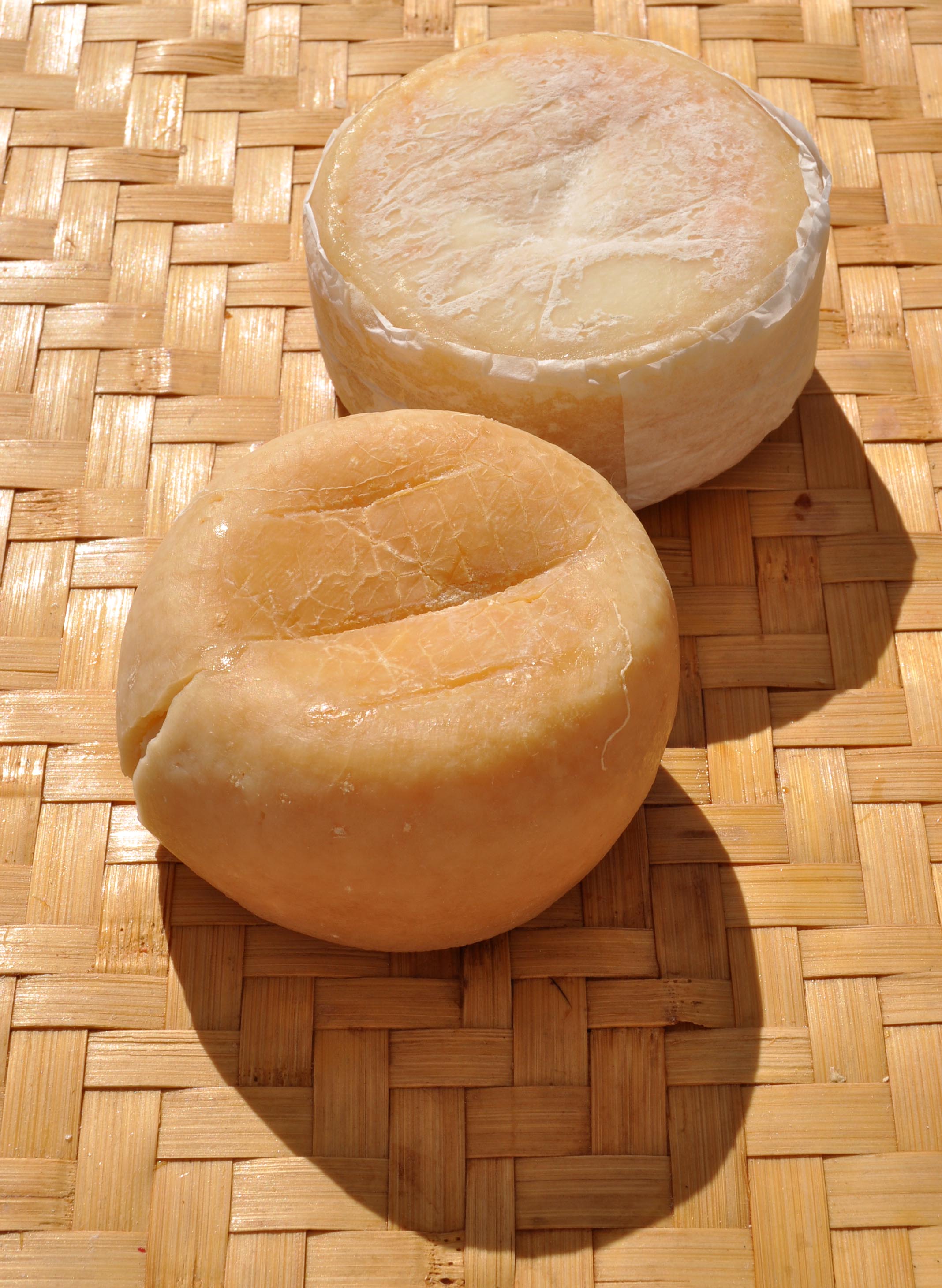
Queijo de AzeitãoSymposium is a Greek word that means drinking together. It refers to parties in which people sat around, drinking wine and talking about life. One of these parties, attended by Socrates, was immortalized by Plato in his writings.

You can easily recreate a symposium atmosphere in Portugal. First, invite some great friends. Second, procure three great ingredients: rustic bread, Azeitão cheese and Piriquita wine.

Azeitão is produced with sheep milk in small farms in the Arrábida mountain with the same techniques used to make Serra cheese in the Estrela mountain. But different pastures make different cheese, so Azeitão has a taste all of its own. Piriquita is a wine from the nearby Palmela region, produced with a grape varietal known as Castelão or Piriquita.

This wine and cheese are a heavenly pairing. So, you’ll have a good time, even if no philosophers show up. But, if you’re lucky, the conversation will be so brilliant that people will still talk about your party in 2500 years.

The Azeitão cheese produced by Fernando & Simões in Quinta do Anjo is one of our favorites. 

Have you tried salted cod?

Bacalhau

Bacalhau (cod) is a fish with a bland taste. But, once it is salted and dried in the sun, it becomes the perfect foil for garlic and olive oil. The Portuguese have enjoyed salted cod for more than two centuries. Lucas Rigaud, chef at the court of D. Maria I, included two cod recipes in his 1780 cookbook.

In 1778, Queen D. Maria eliminated the cod sales tax to help the fisherman and the poor. When the Queen returned from a boat ride on the Tagus river, she was greeted by ships decorated with garlands, overflowing with people cheering to the sound of music and fireworks. D. Maria was so touched, that she did the unthinkable. With tears in her eyes, the Queen sent away her coach and walked unguarded amid the crowd to the royal palace in Terreiro do Paço.

If you’re visiting Portugal, give salted cod a try. There’s something truly unique about food that can bring a distant queen so close to her people.

Chestnuts roasted on an open fire

November 11 is the day dedicated to S. Martinho (St. Martin), a Roman soldier who gave half of his cape to a beggar during a heavy snow storm. Impressed by this gesture, the sun came out and melted the snow. Centuries later, the star still remembers the saint’s generosity and shines with gusto to give us a taste of Summer in Autumn.

The Portuguese celebrate these warm days with a feast called magusto (magoostoo). We gather outdoors to eat roasted chestnuts and drink a small glass of jeropiga, a fortified wine. It’s an ancient tradition that reminds us that there’s no place like Portugal.

A supreme chicken

One of the simple pleasures of Portuguese cuisine is roasted chicken with piri-piri, a spicy sauce made with peppers that came originally from Africa.

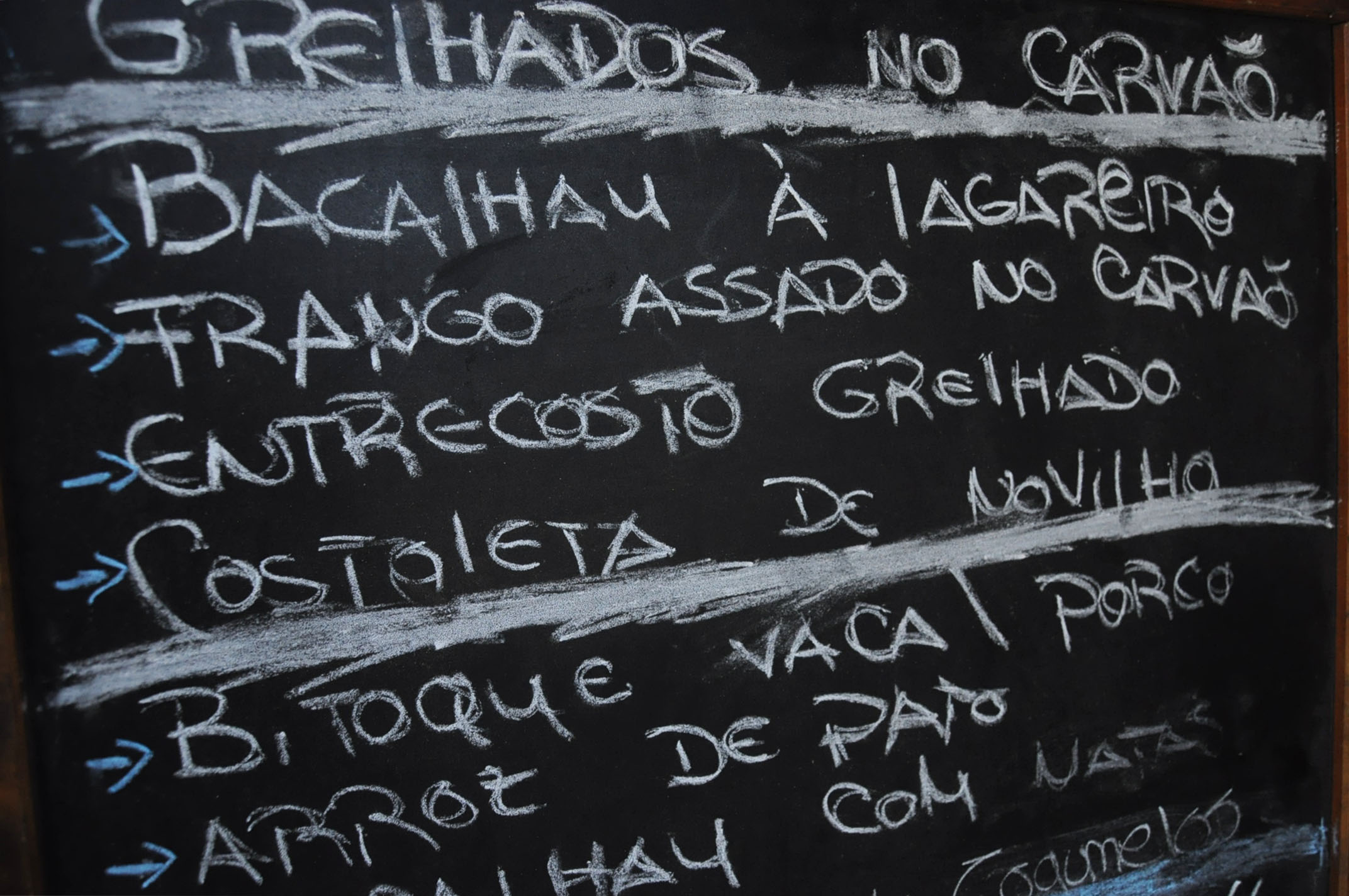
Frango da Guia, a small roasted chicken, is very popular in the Algarve. But the best roasted chicken we have ever had is from Frango Saloio, a tiny take-out place in the municipal market of the town of Lourinhã, 70 km north of Lisbon. You see no tourists there, only locals who wait while their chicken is cooked to perfection over red-hot coals. Lines can be long during the Summer, so please don’t tell anyone about this place!

Frango Saloio is located in Mercado Municipal, Loja 2, Lourinhã, tel. 917 272 385.

All pigs are equal

But some pigs are more equal than others. There is a clear hierarchy among Portuguese pigs. The black pig is at the top of the heap. This aristocratic swine feasts on acorns and is often exported to Spain to be turned into Iberian ham. Restaurants use fanciful names to describe cuts from this animal: secretos (secrets), presas (prey), and plumas (feathers).

Next on the social scale, we have the “leitão,” the famous suckling pig that is roasted to perfection in the Bairrada region and served with sparkling wine.

The rank below is occupied by the “porco bísaro,” a pig with big ears that is a cousin of the wild boar. Its tasty meat has made it all the rage in the north of the country.

The normal pig is at the bottom of the snout ladder. But the meat from this humble animal is essential to sublime preparations, such as pork with clams and presunto (Portugal’s version of prosciutto) with melon. It just goes to show that we should ignore social conventions and treat all pigs as equal.

The joy of cooking

Happiness researchers find that emotional peaks, moments of great joy or sadness, have a lasting impact on our happiness. Travel vacations give us a chance to collect nuggets of joy that we can savor in the future. A great way to relive a vacation in a foreign country is to cook some of the food we tried. Tastes and smells have the power to put us in another place and time.

So, how can you cook some Portuguese dishes after vacationing in Portugal? The Portuguese cuisine is an intuitive affair and recipes are notoriously vague, with instructions like: “follow the usual procedure,” or “use sugar qb.” The ubiquitous cooking expression qb is an abbreviation of “quanto baste,” which means “just the right amount.”

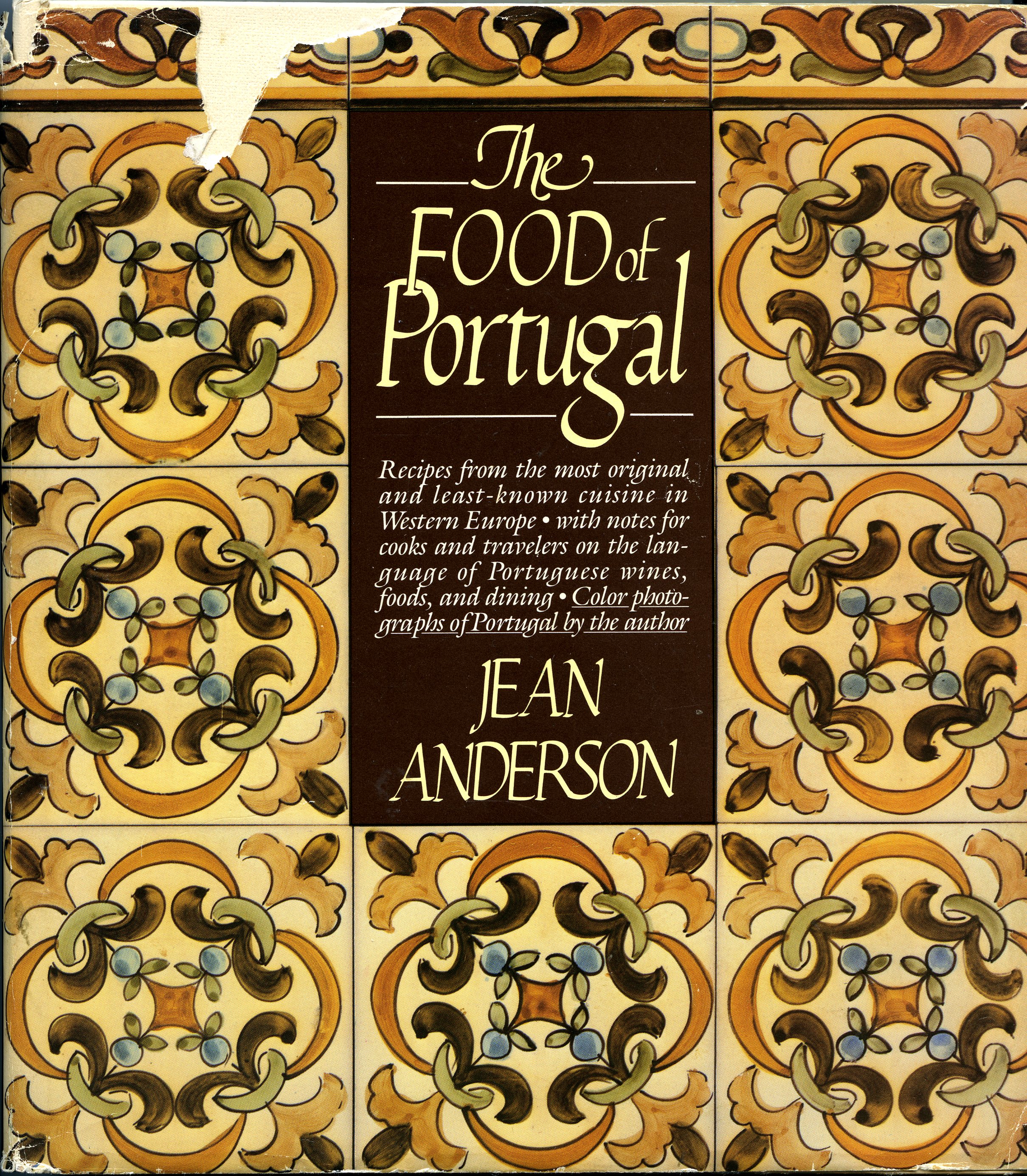
We are lucky that a talented American cookbook author, Jean Anderson, wrote detailed recipes for many classic Portuguese dishes. With her book “The Food of Portugal” in hand, you can cook food that will remind you of dining in a medieval city, a Port-wine quinta or a beach-side restaurant. These memories will bring you happiness, qb.

The Portuguese oranges of Louis XIV

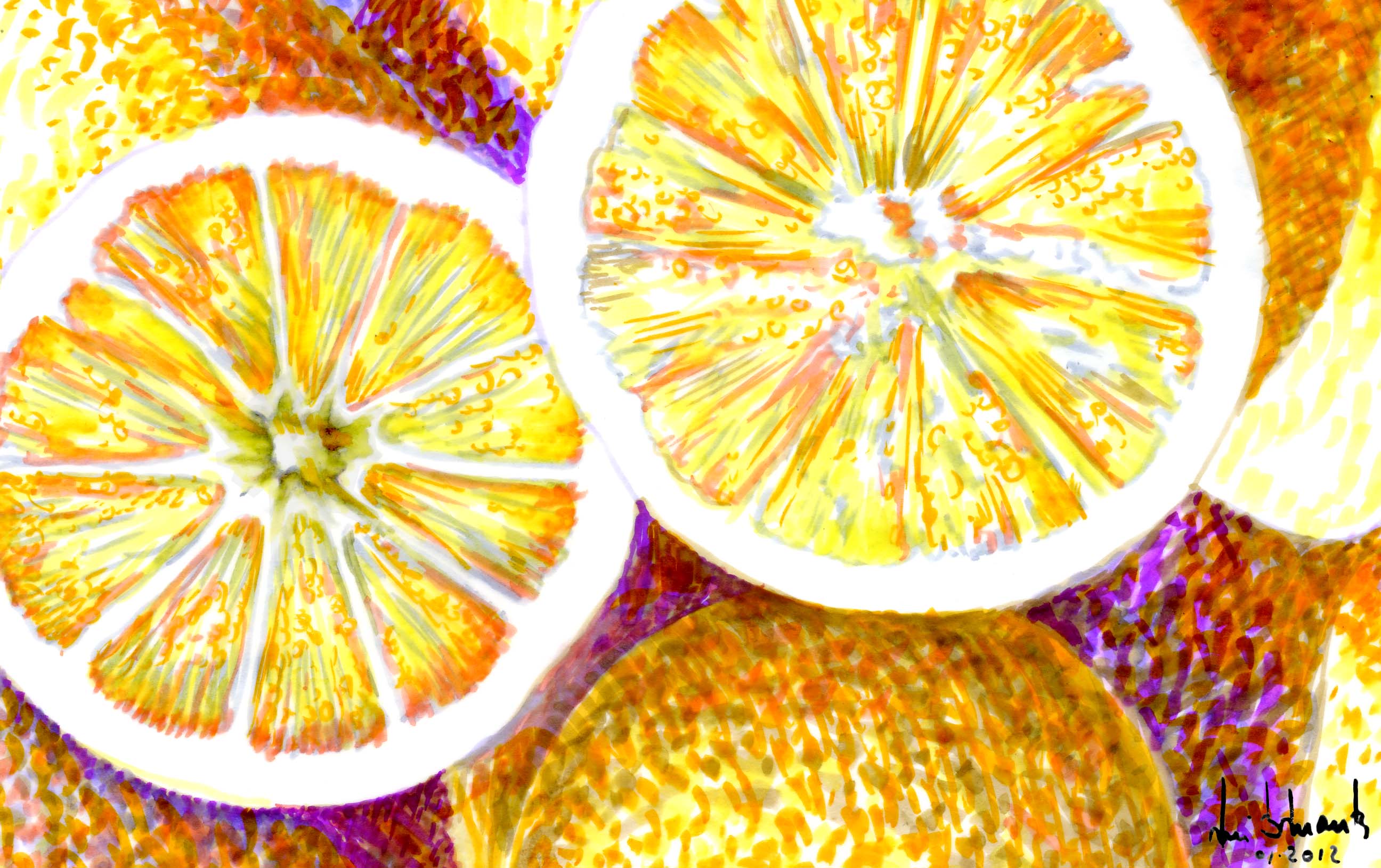
As laranjas Portuguesas de Luis XIV, Rui Barreiros Duarte, ink on paper, 2012.

“Portugal,” “Portugal,” cried the street vendors in 17th century Paris. They were selling a novelty fruit: sweet oranges from Portugal. European oranges were bitter, good only to make marmalade.  That all changed when the Portuguese brought sweet-orange trees from India and China. These trees produced the most fashionable fruit in Europe. Portuguese oranges were so expensive, that Moliére used them in his play The Miser to signify extravagance. Louis XIV, who thought that sweet oranges looked like the sun, adopted them as his personal symbol and did not rest until he had his own “orangerie.”

If you visit Portugal, order a freshly squeezed orange juice in an outdoors café in an old neighborhood. Imagine yourself in the 17th century. Enjoy this luxurious drink that only kings and nobles can afford. Doesn’t it taste sweet?