Revisiting Santa Clara

If god is in the details, then Santa Clara, our favorite hotel in Lisbon, is truly blessed. We arrived on a Friday afternoon, weary from a bumper-car-like ride through the city’s busy streets. As soon as we entered Santa Clara, a sense of calm embraced us.

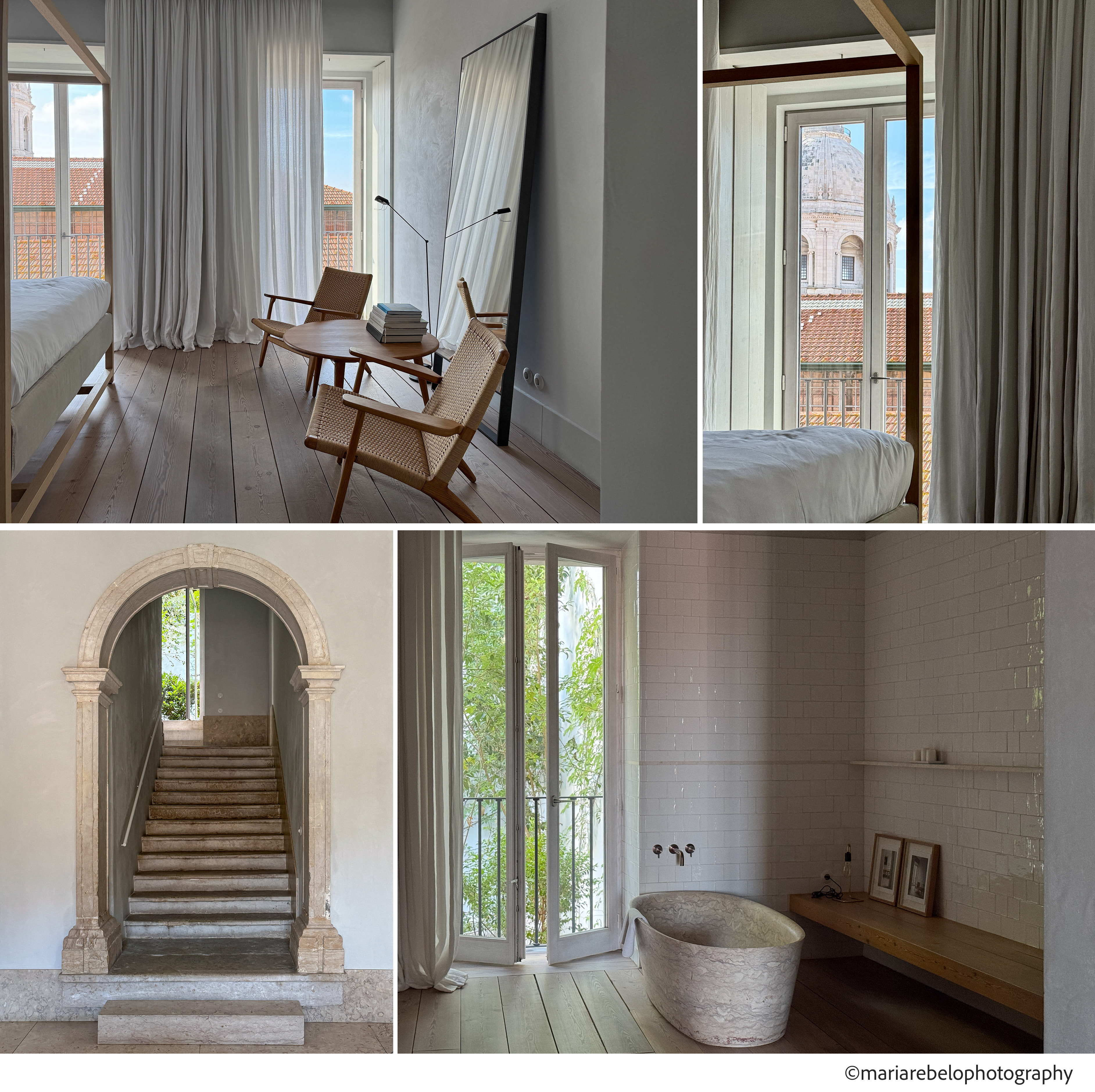
We climbed the stairs slowly, savoring each step. The old lioz, the marble of Lisbon, turned pale by the passage of time blends seamlessly with the soft pink of the newer lioz, creating harmony between past and present.

Our bedroom felt like home. A spacious foyer welcomed us with a plush sofa and a generous bowl of ripe cherries. From the west-facing windows, Lisbon unfolds in all its grandeur: the Pantheon’s majestic dome rising above a sea of orange rooftops, its white stone luminous against the blue shimmer of the Tagus River. More than three centuries in the making, the Pantheon reminds us that some things are worth the wait.

To the east, the bathroom windows open to a tranquil garden planted with lemon trees, where a small choir of birds greeted us. 

The walls and closets are painted in a soft grey that is the perfect frame for the Pantheon’s radiant white. A simple geometry gives the room a sense of serenity. Pine planks draw the eye outward, to views framed by curtains that sway like skirts of ballet dancers caught in a gentle breeze.

In the bathroom, a grand bathtub, hewn from a single block of marble, stands beside two cylindrical basins sculpted from solid stone. Handmade tiles catch and scatter the light, while a thin line of marble placed at eye level evokes a far-off horizon, separating earth from sky.

After dinner, we retired to our room with the sense of being where we belonged. In the morning, sunlight poured in—joyous and bright. We made our way to breakfast—coffee, fresh bread, sweet fruit, creamy yogurt, eggs, and wild mushrooms. We lingered at the table, reluctant to part with this place that is so quietly beautiful.

Santa Clara 1728 is located at Campo de Santa Clara, 128 in Lisbon, tel. 964 362 816, email booking@silentliving.pt. Click here for the hotel website.

Évora’s Octant

We arrived at Octant, a hotel nestled on the Alentejo plains near Évora, as the day was winding down. The sun was still casting its glow, though it looked tired. It had shined since dawn so the wildflowers—freshly asperged with rain—could bloom across the fields in vibrant yellows and purples. 

After an extensive renovation, the hotel reopened in 2021. Its entrance hall has been decorated with bright Alentejo motifs. The spacious rooms offer expansive views of the surrounding countryside. Scattered across the property are several small pools, perfect for serene contemplation during the warm summer months.

The hotel has a relaxed atmosphere and offers three luxuries: the tranquil silence of the Alentejo, the brilliant stars during the night, and the dazzling light during the day. What else could one possibly need?

Click here for the hotel’s website.

The allure of the Vidago Palace Hotel

Vidago is a spa town in the north of Portugal favored by the aristocracy and the royal family for the curative powers of its waters. King Carlos commissioned the building of the Vidago Palace Hotel. However, in 1908 the king was assassinated, and by the time the hotel opened its doors on October 6, 1910, Portugal had just become a republic. 

A century after its inauguration, the Vidago Palace welcomed guests once more in 2010 after extensive renovations guided by the Portuguese architect Álvaro Siza Vieira, a Pritzker Prize laureate.

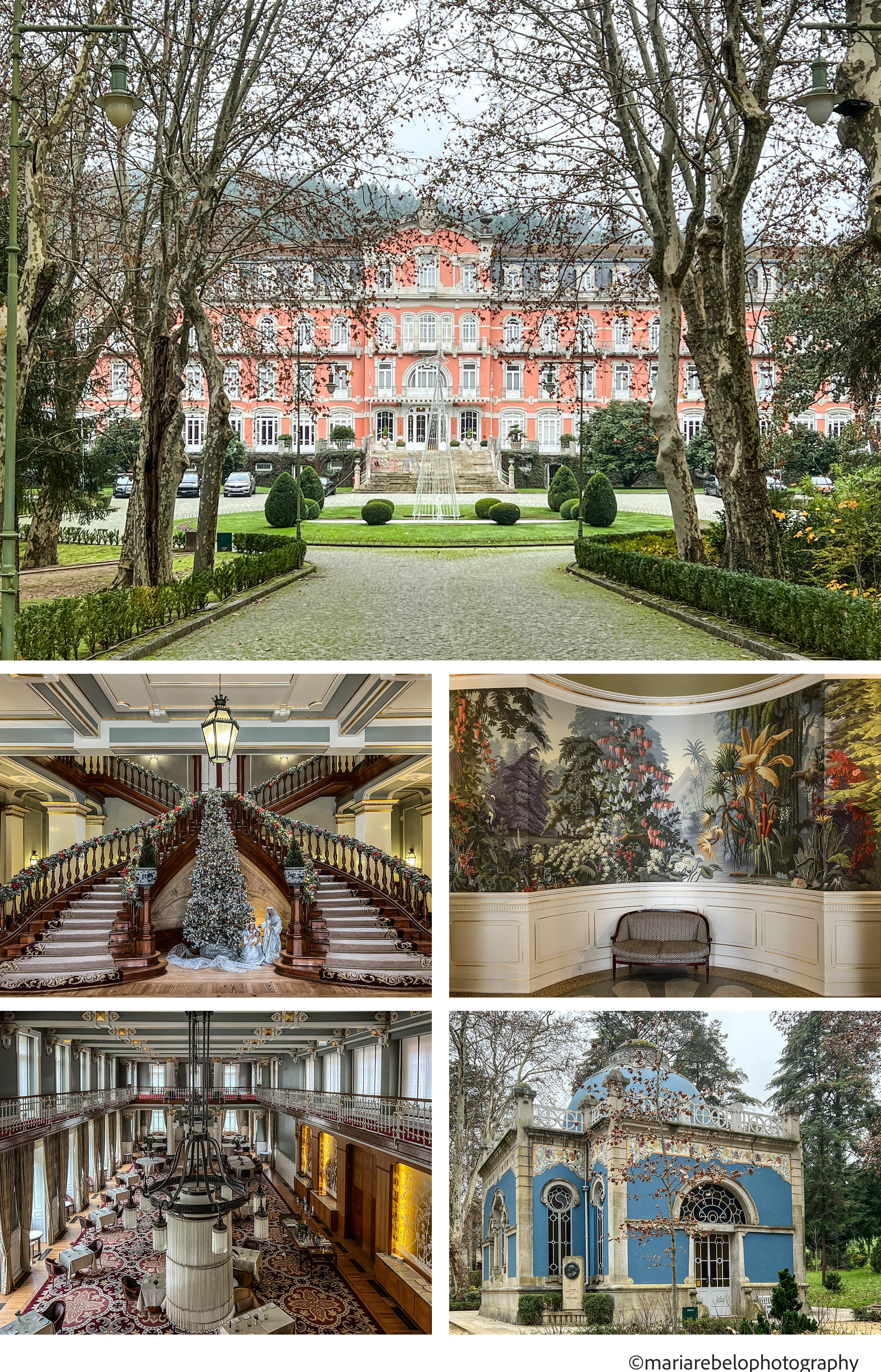
As you veer off the main road and pass through the entrance gate, an impressive pink edifice with 365 windows, one for each day in a common year, comes into view. Upon crossing the entryway, we are greeted by regal purple columns framing an expansive staircase reminiscent of those seen in classic Hollywood films. For a moment, you might expect Rita Hayworth, dressed in a glamorous gown, descending the stairs to rendezvous with Cary Grant.

The walls of the ground floor corridors are adorned with exuberate paintings. The former ballrooms, now transformed into the dining room and breakfast area, have a mezzanine level to accomodate the orchestras that enchanted the dance floor with their smooth melodies. 

Surrounding the hotel, there’s a picturesque golf course and a lush park with many trails to explore, as well as charming water stations that look straight out of a fairy tale.

Álvaro Siza Vieira made every corner of the palace more elegant while remaining faithful to the original architecture. The result is a hotel that captures the allure and optimism of the Belle Époque. 

A new historical hotel at Alcobaça

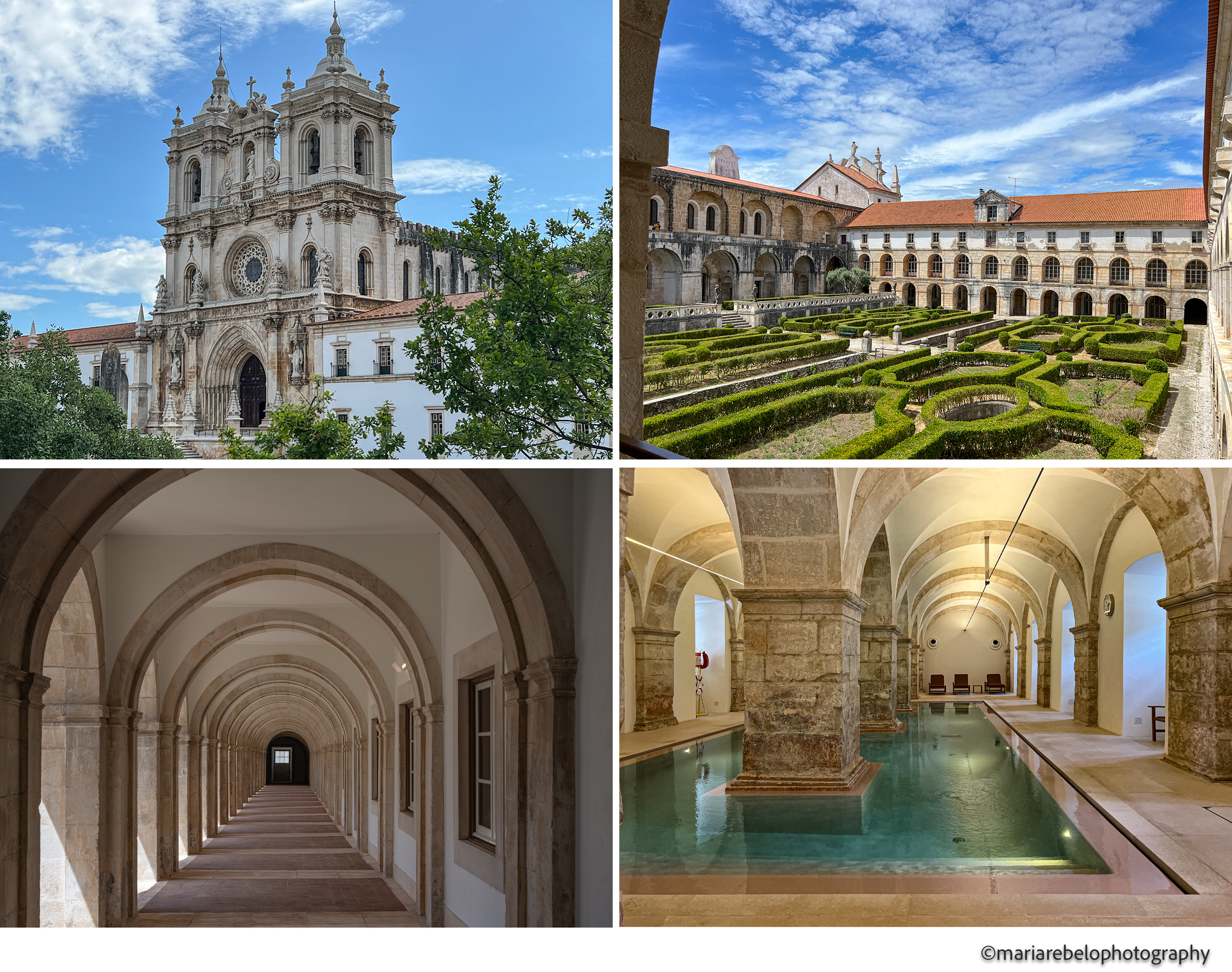
The Montebello Mosteiro de Alcobaça is a graceful new hotel nestled within the ancient walls of a Cistercian monastery. Eduardo Souto Moura, a Portuguese architect who received the Pritzker Prize, oversaw the rehabilitation project. Moura endeavored to preserve most of the monastery’s original structure, skillfully incorporating wood and marble elements that blend with the original materials, creating a seamless fusion of the present and past.

Each guest room has its own distinct character, but they all offer a serene refuge from the demands of modern life. A stunning interior pool where green waters flow amongst imposing arches evokes a sense of grandeur reminiscent of the glorious Caracalla baths.

The hotel’s central location makes it an ideal starting point to explore Nazaré‘s colossal waves, the charming medieval town of Óbidos, and the magnificent Mafra convent.

The history of the monastery intertwines with the birth of Portugal. On February 2, 1140, Dom Afonso Henrique, the first king of Portugal, placed the monastery’s foundation stone near the confluence of the Alcoa and Baça rivers. Later, in 1153, the king bequeathed the Cistercian Order vast expanses of fertile lands, stretching from the Candeeiros mountain range to the sea.

These were gestures of religious devotion but also political acts. The young monarch sought to express gratitude to his cousin Bernard of Clairvaux, the head abbot of the Cistercian Order, for his unwavering support. The king also hoped that Bernard would persuade Pope Alexander III to recognize Portugal as an independent nation. 

Bernard succeeded. In 1179, Pope Alexander III issued the Bula Manifestis Probatum, confirming “by the apostolic authority to your exalted domain the kingdom of Portugal with full honors of a kingdom and the dignity befitting kings.”

The architecture of the Alcobaça Monastery drew close inspiration from the Clairvaux Abbey, the spiritual home of the Cistercian monks. Construction began in 1153, but the first Portuguese king did not live long enough to witness its completion. It was Afonso II, his great-grandchild, who inaugurated the monastery 85 years later. 

Over the subsequent seven centuries, the Alcobaça Monastery flourished and expanded. Initially constructed in a Gothic style, the church was later decorated with Baroque elements. In 1755, a splendid library was added, featuring gracefully curved walls, evocative paintings, and colorful marble floors. But after the abolition of the religious orders in 1834, the vast building gradually fell into disrepair until the restoration project that resulted in the new hotel started twelve years ago.

Today, the Clairvaux Abbey rests in ruins, but the Alcobaça Monastery still stands. It has withstood the ravages of time, surviving the earthquake of 1755, the floods of 1722, the pillaging by Napoleon’s troops in 1810, and so much more. Meticulously restored, it shares its unique heritage with all those who visit.

The address of the Montebello Mosteiro de Alcobaça is Rua Silvério Raposo 2, Alcobaça, tel. 262 243 310.

Sleeping by the river in Porto

We love falling asleep to the sound of the river flowing by at the Douro Riverside in Porto. Adjacent to its older sibling, the Freixo Palace, the hotel occupies the site where a company called Floral produced soaps, candles, and perfumes between 1888 and 1990. 

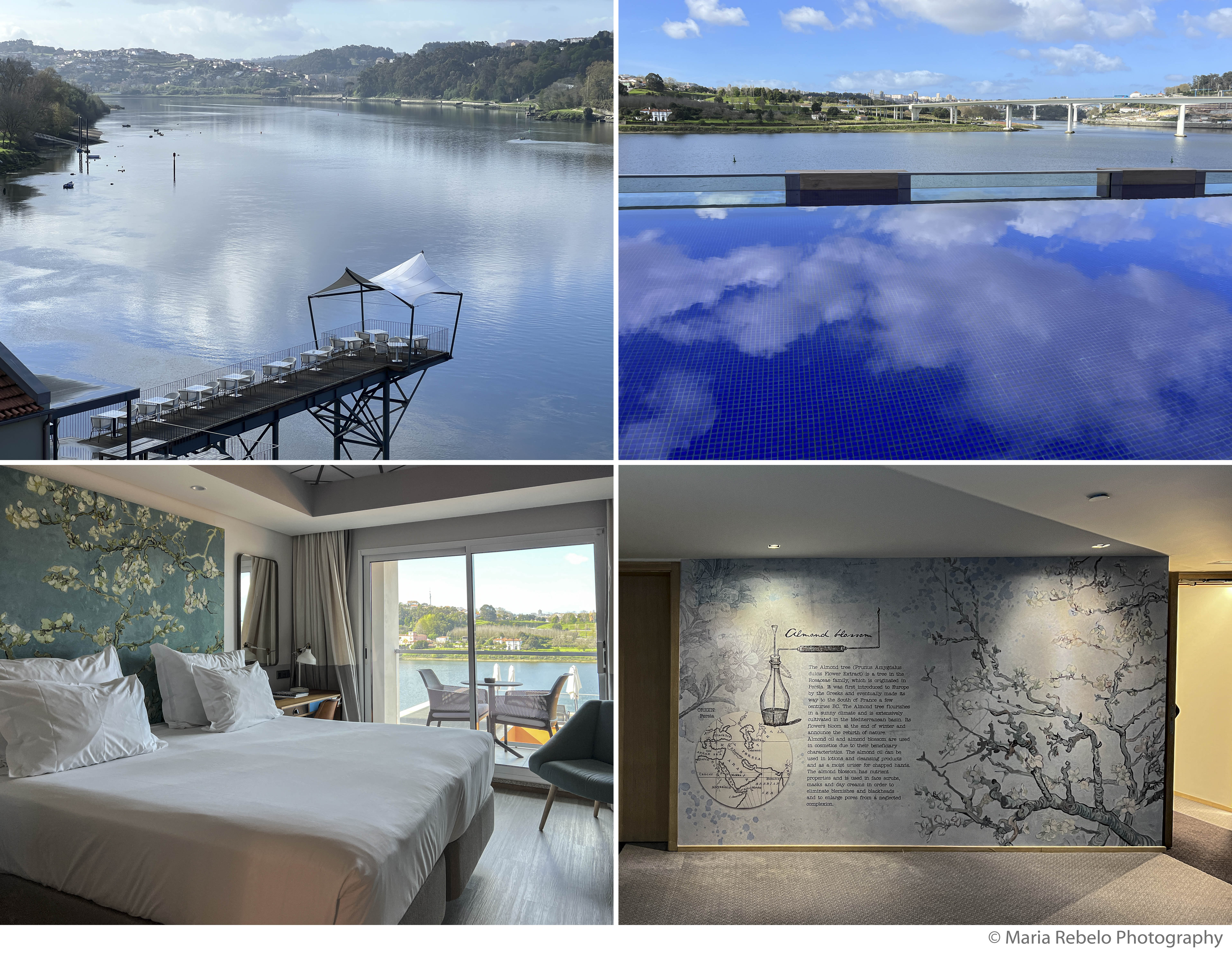
Floral’s imposing brick chimneys, built by master Lino Soares Guedes, were meticulously restored. The formulations used to produce the scents prized by the city’s aristocracy adorn the walls. And the flowers are back, lending their aromas and elegance to the interiors. 

But it is the river that plays the lead role. Its views are everywhere, from bedrooms, balconies, public interiors, and terraces. An infinity pool creates the illusion that its waters mix with the river. But the Douro keeps to itself and looks straight ahead as it flows to the sea.

The Pestana Douro Riverside is on Av. Escritor Costa Barreto nº60, Porto. Click here for the hotel website.
A convent in Alentejo

It is hard to believe that there’s a monastery larger than Lisbon’s Rossio plaza in the middle of Alentejo. Driving on the winding roads of the d’Ossa mountain, we almost lost faith. But we were climbing, and that is always a good omen. Convents often occupy mountain tops so that monks can be closer to heaven.

The first glimpse of the building is easy to miss. The sprawling monastery hides behind 600 hectares of olive trees, pines, oaks, ashes, and oleanders. After a few more twists and turns, we arrived at the Convent of São Paulo.

Marília Nanitas came out to greet us. She works for the foundation that manages the hotel. “Can you tell us the story of this place?” we asked with curiosity.  “I can tell you a good lie, which is better than a half-truth,” she replied teasingly. Then, she lent us a book about the history of the convent. 

What we learned from this tome is that it took centuries to build this monastery. The first edifice was a hermitage erected in the year 315. In 446, an earthquake partially destroyed the structure. When in 715 the Arabs invaded the region, the hermits abandoned the sanctuary.

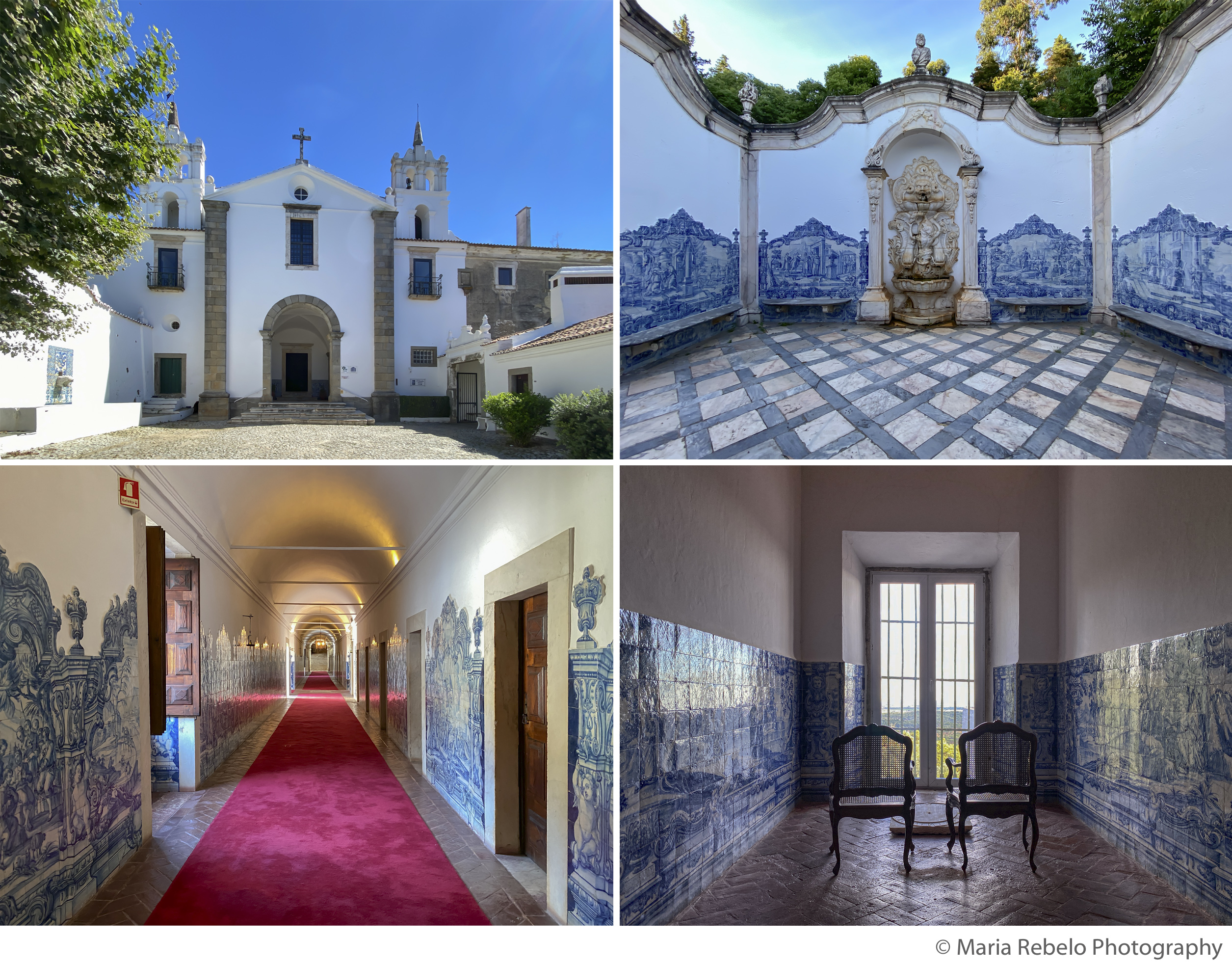
The second king of Portugal, Sancho I, decided in 1182 to rebuild the hermitage as a monastery. In 1372, Dona Brites, the daughter of King Dom Pedro I and Inês de Castro, donated her lands near the convent to the monks. The royal family provided steady support, financing the glorious collection of cobalt blue tiles installed between 1710 and 1725. 

After the state abolished religious orders in 1834, the convent was disputed for 37 years by two municipalities, Estremoz and Redondo. Before leaving the monastery, the monks protected the tiles with plaster walls. It is thanks to their ingenuity that more than 50,000 tiles have survived to this day.

When the government auctioned the convent and the surrounding lands, Henriqueta Leotte Tavares purchased it with her dowery. It was a dream to own a place like this. But also a burden, a responsibility to history. Over the next two centuries, Henriquetta’s family used their income from agriculture to restore the convent. The first generation built a factory that made tiles to repair the roof. The second generation hired carpenters to rebuild the doors and windows. 

Henrique Lotte Tavares, a chemical engineer, belongs to the third generation. He has no descendants, so he decided to turn the convent into a hotel to preserve it for posterity. Between 1989 and 2009, Henrique oversaw countless renovations.  In 1993, he created a foundation to manage the hotel and continue the restoration work.

How was life in the monastery? The Latin word “silentio” inscribed in the tiles reminded the monks of their vow of silence. There are many fountains, perhaps because the sound of flowing water makes silences feel less awkward. The monks could talk only on their way to lunch or dinner. To make the most out of these convivial moments, the friars walked slowly through the corridor that leads to the dining room, which became known as “passos perdidos” (lost steps).

We too walked slowly on the long corridors of the convent to savor the moments spent in this beautiful place so far from the hurries of modern life, so close to the tranquility of heaven.

The Convento de São Paulo is located at Aldeia da Serra d’Ossa in Redondo, Évora. Click here for the hotel’s website.

Ease and tranquility in Alentejo

João Rodrigues spends most of his time flying as a pilot. Perhaps it’s in the sky that the muses inspire him. When he is on the ground, João runs Silent Living, a company that is reinventing the art of hospitality.

On a warm summer day, we got on the road to Casa no Tempo, a Silent Living guest house in Alentejo. It is a secluded place where only the wind brings news of the outside world.  

At first sight, the house looks ordinary. It has a rectangular geometry with thick stone walls and a roof covered with weathered orange tiles. Then, we notice that the proportions are perfect. The sinuous swimming pool confirms that this is no ordinary place. Filled with emerald water, it looks as if it is made of salt.  

The house is spacious, with large windows that frame the landscape. A light breeze flows through the rooms as if it owns the place. Walls, doors, and windows are painted with white hues that soften the sunlight. The floor is paved with cubes of orange tile that convey warmth and comfort. It all adds up to a wonderful sense of ease and tranquility.

A vaulted arch shades a courtyard with a large wooden table and some benches. While we went for a quick swim, two cooks set up the table for lunch with plates of local cheese, plump olives, and a basket of country bread. Glasses of refreshing white wine accompanied a gazpacho made from sweet tomatoes. The main course was lamb roasted with potatoes, a rustic dish that is deeply satisfying. The dessert was an appetizing fruit tart that came with cups of strong coffee. 

After this delightful lunch, we sat in the courtyard watching the sun paint the landscape with layers of golden light. The sound of bells heralded the arrival of a herd of goats that strolled by the house without a care in the world. Then, a peaceful silence returned to this place where everything is simple and everything is perfect. 

Click here for the Silent Living website.

Amália’s beach house

Portugal would be different without the fado singer Amália Rodrigues. Her voice could speak for us all, expressing feelings that words cannot describe. Born poor, she went on to sing fado all over the world. The foreign audiences did not understand her words. But it did not matter, her voice said it all. 

In the 1960s, Amália and her husband César started to look for a place to build a house that could serve as a retreat. They bought a cliff overlooking the ocean in a sleepy Alentejo village called Brejão and hired Francisco da Conceição Silva, an architect popular with high society, to design a house. The property has access to a shell-shaped beach covered with fine sand. Everybody calls it Amália’s beach.  

Whenever we came to the beach, we tried to get a glimpse of the house. But the architect made sure that the singer had the privacy she craved–the home is invisible to outsiders.

Amália had no children, so she left the house to a foundation that funds a retirement home for artists and other causes. In 2016, the foundation started renting the house to guests. It is a singular pleasure to spend time in such a unique place.

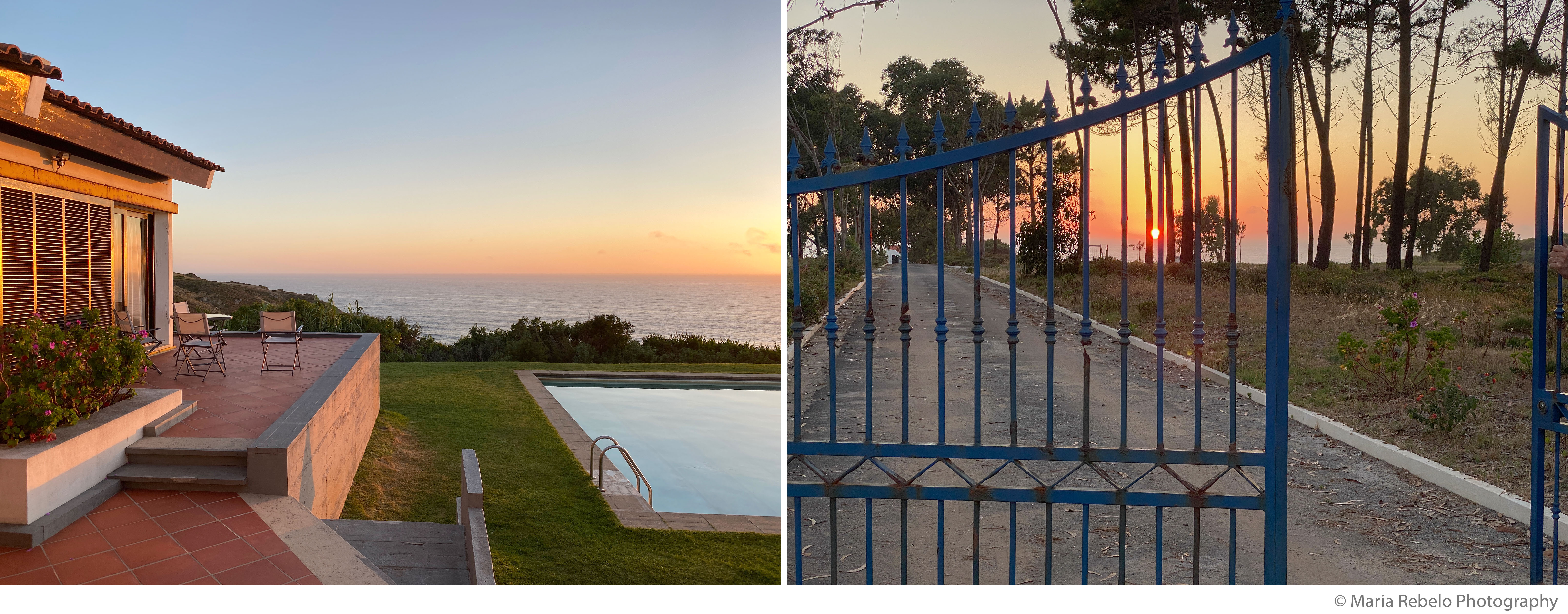
There are two bedrooms and a large sitting and dining area. The floors are paved with terracotta tiles. The ceilings, covered with exotic wood, slope down to frame the spectacular views. The furniture is sparse perhaps to make room for the sea which fills the house with its presence. Outside, a swimming pool reflects the Alentejo sky.

During our stay, the sun was, like Amália, moody and prone to stage fright. One hour it hid behind clouds, another it filled the house with its radiant warmth. But the sunset was always spectacular. 

Ana Monteiro and Rui Maurício, a charming young couple, care for the property. They are helped by Eugénia Afonso, who worked for the singer for 25 years. Eugénia told us that Amália had simple tastes. She liked to sleep late and then go to the beach. She loved flowers and preferred simple foods: vegetable soups, grilled sardines, snails, and fried codfish. 

The house has no Amália memorabilia except for a few well-chosen photographs. Still, it is difficult not to feel the strength of the singer’s personality and the void that she left.

Just as we were leaving, an adorable little girl came running towards the house. She is Ana and Rui’s daughter. “What’s her name?” we asked. “She is called Amália,” said Rui, smiling.

You can book Herdade Amália through this link.

The Vintage House

We can take the winding road that leads to the elegant bridge designed by Gustav Eiffel. Or ride the old train that stops at the local station, decorated with bright blue tiles. Our preference is to arrive by boat, carried gently by the river. But no matter how we get to Pinhão, a quaint town at the center of the Douro valley, we always feel like staying.

The perfect place to stay is a sprawling yellow edifice on the bank of the river. It was once a warehouse that stored the precious brandies used to produce port wine. In 1997, the building was converted into the Vintage House hotel. 

What makes the Vintage House unique are the generous views of the Douro. We can wake up, open the window and sense the mood of the river. Everyday is different. Sometimes, the Douro dresses in festive blues and greens. Other times, it chooses yellows and browns, to give the small tributary that named the town (the Pinhão river) a chance to shine.

The roads of the Douro valley are narrow, forcing us to drive slowly and admire the glorious landscape. There is so much to see that we crisscross the valley many times. At the end of the day, we are always tired. And we love falling asleep in the Vintage House, knowing that in the morning the river will be there to greet the start of another memorable day in the Douro valley.

The Vintage house is located at Rua António Manuel Saraiva, 5085-034, Pinhão, Douro, Portugal. Click here for the hotel’s website.

Quinta de Ventozelo

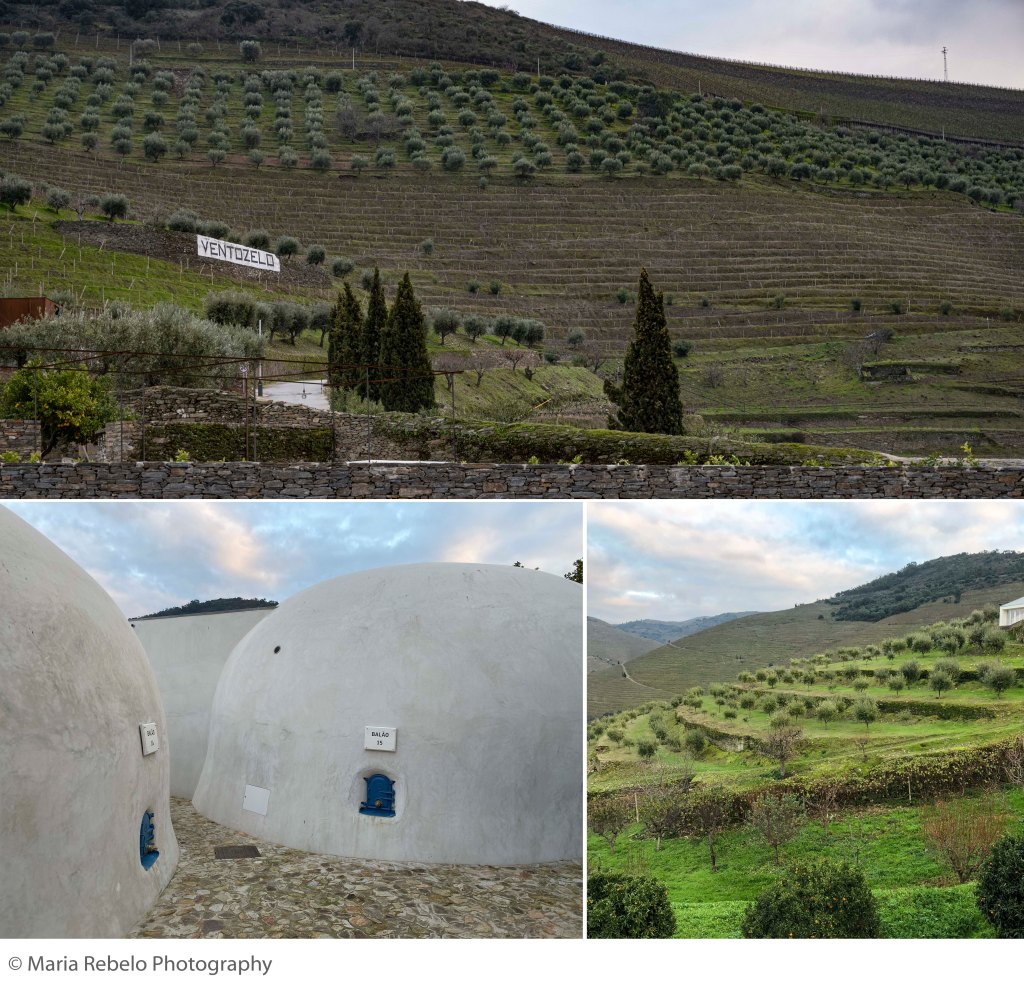
There is a new jewel in the Douro valley called Quinta de Ventozelo. The setting is not new, the estate has produced wine since the beginning of the 16th century. But there are 29 new gems–luxurious rooms with magnificent vistas located in various houses throughout the quinta. Some houses have old roofs built with the same schist used to brace the terraces that hold the vines. Others are built out of giant balloons that once stored 80,000 liters of port wine. 

The sprawling estate is the perfect place to create wonderful memories. Of the rolling hills descending towards the river to bade in its green waters. Of the breeze caressing the silvery leaves of the olive trees. Of the restful silence punctuated only by the sounds of nature. Of the joy of sitting outdoors at sunset savoring a glass of wine in the company of friends. 

You can drive to the quinta, but it is much more spectacular to take the boat from Pinhão and arrive at the dock by the river. Arriving is the easy part. Leaving is hard to do. 

Quinta de Ventozelo is located in Ervedosa do Douro, S. João da Pesqueira. Click here for the quinta’s website.