Wines of the land and sea at Serenada

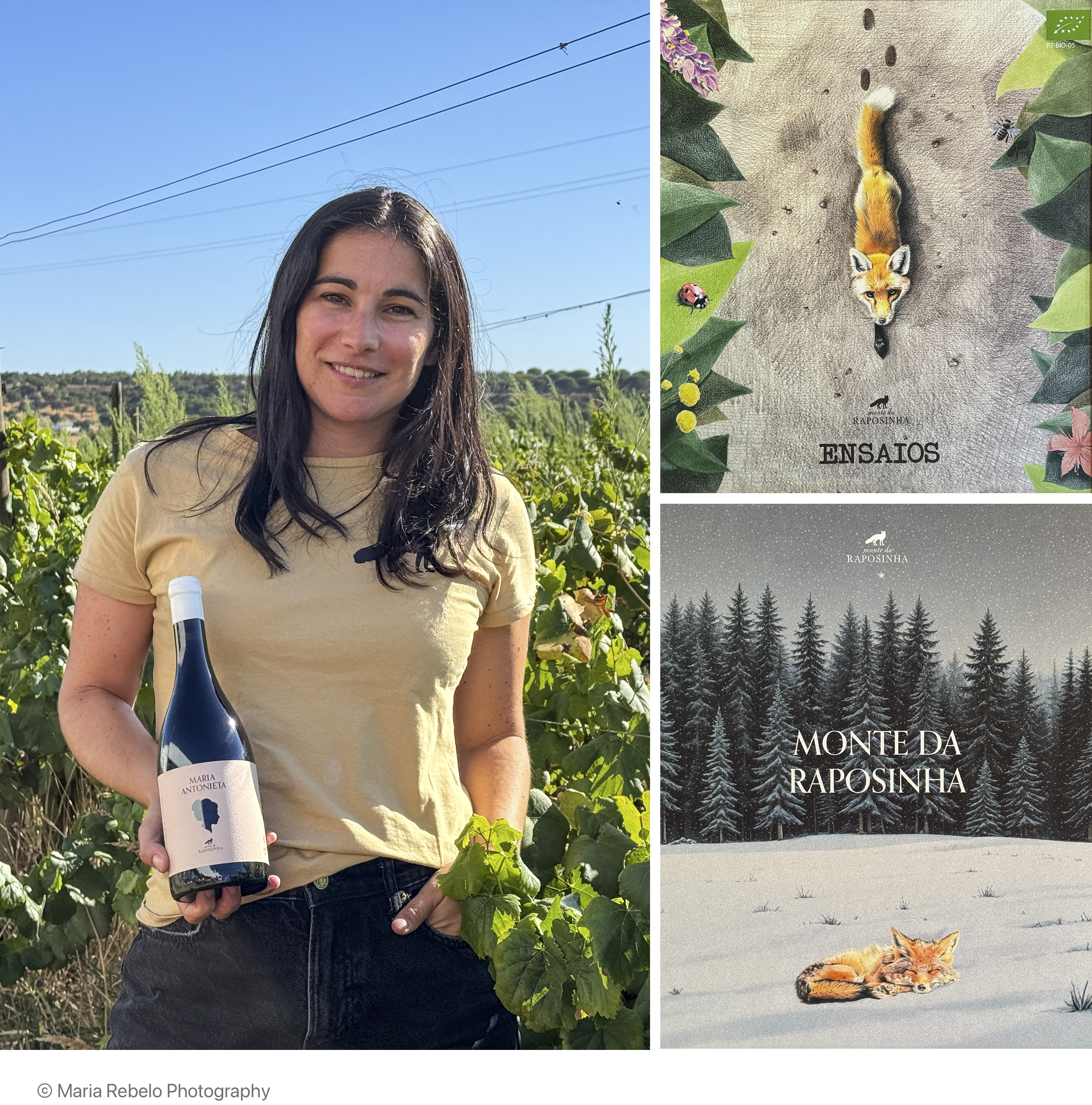
A woman named after a flower crafts enchanting wines on a farm called Serenada, which her family has owned for over three centuries. It sounds like a fairy tale, but the wines are as real as the spell they cast.

As a young girl, Jacinta Sobral had no idea she was destined to become a winemaker. In 1961, one year after getting married, her father, António Sobral, planted a vineyard at Serenada with twelve grape varietals. He crafted his wines with little more than his hands, heart, and the wisdom gained through experience. The vineyard thrived, and in 1970, he decided to plant more vines.

As for Jacinta, she wandered down a different path. She studied the secrets of chemistry and became a microbiologist. But in 2004, as António’s health began to fade, he expressed a desire to teach Jacinta to make white wine. “Anyone can make red wine, but white wine—that is art,” he said. António showed Jacinta the delicate process of decanting free-run juice while preserving the fine lees, which enhance the wine’s texture and complexity.

When António passed away in 2006, he left various properties to his other children but bequeathed Serenada to Jacinta. She felt like a spell had been cast, binding her to the vines. Determined to honor her father, she enrolled in a Master’s program in Agricultural Engineering. There, she found that her background in microbiology was like a magic key, unlocking the mysteries of winemaking. She immersed herself in enology textbooks and crisscrossed Europe to learn from other producers. 

Serenada is rich in geological diversity. There are schist soils near the ancient Grândola mountain, veins of manganese and iron, and fields of clay and sand. These nutrient-poor soils stress the grapevines, prompting them to grow deeper roots in search of water and minerals. The cooling Atlantic breeze slows grape ripening, fostering complex flavors while preserving acidity. The result is wines that are fresh, balanced, and vibrant.

Unburdened by convention and free to follow her imagination, Jacinta began exploring different vinification and aging techniques, from fermenting the must in Roman clay amphoras to aging bottles in a cave once mined for pyrite, the mineral known as fool’s gold.

The most remarkable discovery came in 2017 when Jacinta submerged wine bottles 15 meters deep into the ocean. There, the bottles slept in silence, rocked by the waves and shielded from the sun’s light. Eight months later, when Jacinta tasted the wine, she was astonished. These ocean-aged wines were unlike any she had experienced—smooth, ethereal, as if blessed by the ocean’s spirit.

Serenada has a handful of rooms where you can stay, each offering a peaceful retreat surrounded by pines and oak trees. Guests can enjoy scenic walking and cycling trails, delicious meals, picnics, and wine tastings.  It’s the perfect place to savor Jacinta’s mesmerizing wines that capture the essence of land and sea.

Serenada is located near Grândola in Alentejo. Click here for their website. 
Évora’s Octant

We arrived at Octant, a hotel nestled on the Alentejo plains near Évora, as the day was winding down. The sun was still casting its glow, though it looked tired. It had shined since dawn so the wildflowers—freshly asperged with rain—could bloom across the fields in vibrant yellows and purples. 

After an extensive renovation, the hotel reopened in 2021. Its entrance hall has been decorated with bright Alentejo motifs. The spacious rooms offer expansive views of the surrounding countryside. Scattered across the property are several small pools, perfect for serene contemplation during the warm summer months.

The hotel has a relaxed atmosphere and offers three luxuries: the tranquil silence of the Alentejo, the brilliant stars during the night, and the dazzling light during the day. What else could one possibly need?

Click here for the hotel’s website.

Hamilton Reis’ exhilarating wines

Extreme sports, like surfing giant waves, captivate enthusiasts with their exhilarating adrenaline rush. Hamilton Reis’ family wine project, Natus, offers this kind of thrill. The production is organic; the vines are not irrigated; the fermentation relies only on wild yeast and takes place first in the large clay pots that the Romans used and then in old oak barrels. The grapes are picked by hand and trodden by foot. Most modern winemaking techniques are set aside to produce wines with minimal intervention but meticulous attention to detail. Like a master surfer, Hamilton can afford to take these risks because of his extensive experience and depth of knowledge.

Natus means born in Latin. Hamilton chose the name to indicate that he and his family started this project from the ground up. They bought four hectares of land in Vidigueira, Alentejo in 2008. For ten years, Hamilton nurtured the soil so it could recover from decades of chemical abuse with herbicides and pesticides. During that time, he learned about the climate and the varietals planted in the region and talked to the elders about the local wine-making traditions. Those traditions are, for Hamilton, as much part of the terroir as everything else. 

He built a house for his family in the middle of the field so he could take care of the vines as if they were part of his family. The cellar is invisible. It lies underground so that gravity can help unload the grapes. 

An important aspect of the location is the absence of barriers between the land and the sea. The Mendro mountain, situated east of the property, forms a shell that keeps the cool air from the sea. The resulting climate produces elegant wines that are low in alcohol and yet rich in complexity, depth, and freshness. 

These unique wines are difficult to buy because only about 6,000 bottles are produced in each year. Hamilton is determined not to increase production to a level that would compromise his ability to maintain personal control over every aspect of the process. However, to meet the demand for his wines, he has initiated a new venture named Intus, the Latin word for “inside.” This wine is crafted from grapes sourced from a select group of farmers who refrain from irrigating their vines and agree to adopt the rigorous biodynamic methods that Hamilton champions. Like Natus, Intus wines are characterized by their low extraction and alcohol content. However, they undergo fermentation in stainless steel, which preserves the pure essence of the fruit.

The Natus label has a secret. Those who discover it get a glimpse of what Hamilton sees every day: vines that produce wines made without compromises, perfectly in tune with nature.

The Natus vineyards are on Estrada da Cancelinha in Vidigueira, Alentejo. Click here for the Natus website.

The Cante of Alentejo

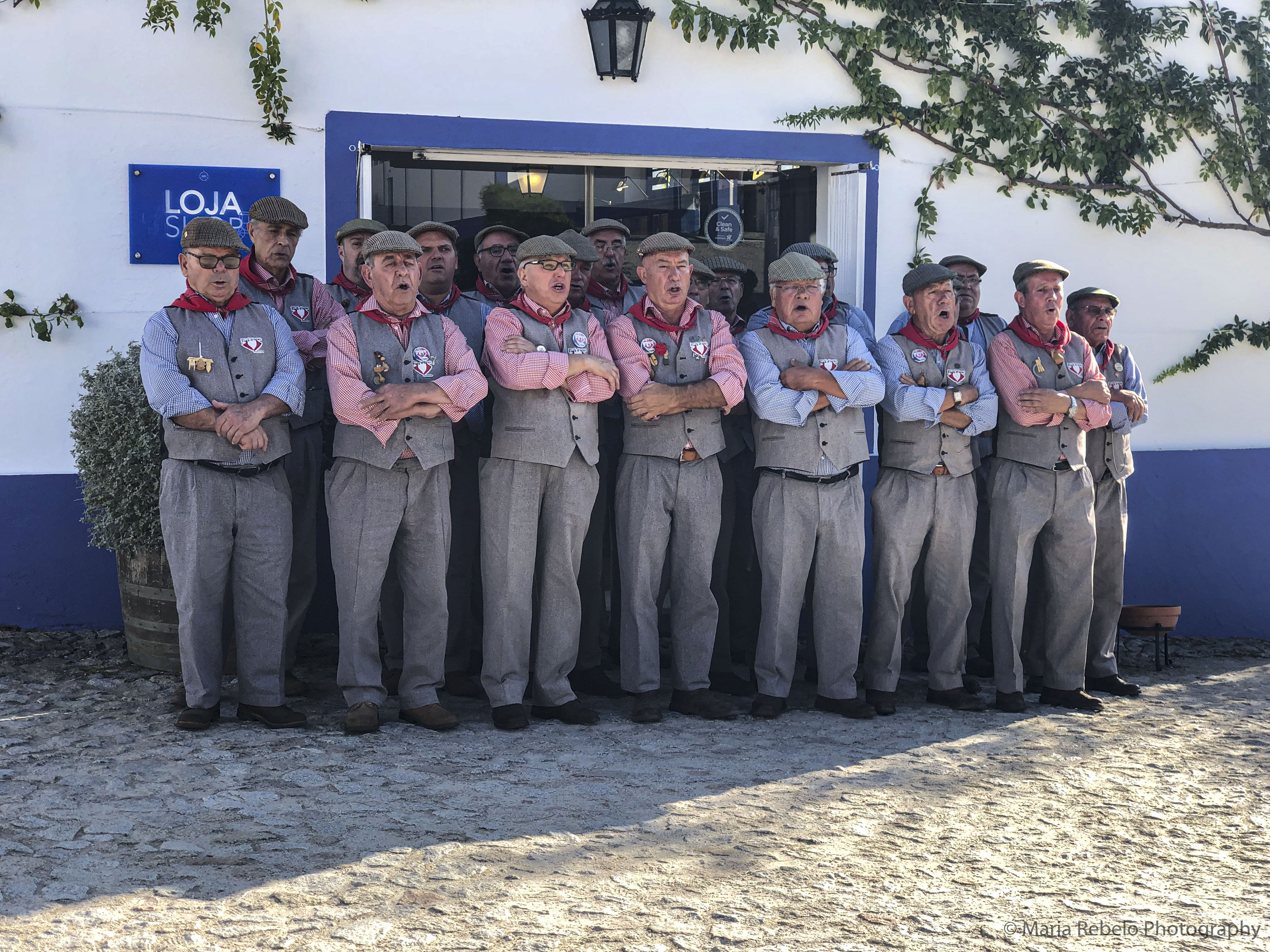
Rows of laborers stand motionless, like a battalion poised for battle. The “ponto” starts singing a few verses alone. The “alto” responds often singing the same melody a major third above the ponto. Then, the choir sings, their voices soaring towards the sky. This style of music is called “cante.” UNESCO recognized it in 2014 as part of the Intangible Cultural Heritage of Humanity. 

The tunes are generally in a major key, but the people of Alentejo imbue their singing with such a sense of longing that they make major scales sound minor. The tempo is languid, like the rhythm of life in Alentejo, a place where the summer’s sweltering heat eases the pace of everything.  

The verses are simple and sincere. They speak about toiling in the fields, love, faith, the fruits of the land, and the hardships of life.

As the day winds down, people often congregate at local taverns to drink a glass of amphora wine with bread, olives, and some black-pork sausages. Someone sings a few verses, someone else responds, and the group spontaneously burst into song. It is a privilege to hear these voices that carry with them the soul of Alentejo. 

Field recording of Fora d’horas group singing at Monte da Ravasqueira by Vasco Rosa Santos. Sound editing by Pedro Rebelo.


Porto Côvo

There are so many seashore towns in Portugal that it’s hard to single one out. But Porto Côvo, an old fisherman’s hamlet on Alentejo’s Vicentine coast, deserves special mention. It is blessed with sandy beaches bathed by turquoise waters and a view to the enigmatic Peachtree Island where two forts, now in ruins, once kept pirates at bay. 

In the late 18th century, Jacinto Fernandes Bandeira, a successful businessman, bought a vast stretch of land in Porto Côvo. He hired an architect to draw plans to populate the area and turn it into a significant harbor. The king rewarded these efforts by granting him, in 1805, the title of Baron of Porto Côvo da Bandeira. 

Bandeira’s plan was inspired by the grid system used to rebuild downtown Lisbon after the 1755 earthquake. The construction of Porto Côvo did not adhere closely to it, but its sense of geometry prevailed, giving the town a harmonious feeling.

In the center, the farmers market brims with fresh fruits from land and sea. Local restaurants turn these products into appetizing meals. Our favorite is Lamelas, a place where chef Ana Moura serves veritable culinary pearls. We owe these riches to Baron Jacinto Fernandes Bandeira who first recognized the beauty of Porto Côvo.

Dining by candlelight at Quinta Dona Maria

We arrived late in the afternoon and waited outside the imposing marble gate. Before we could say ‘abracadabra’ or some other incantation, the gate opened, welcoming us to Quinta Dona Maria, a magnificent wine estate in Alentejo. 

Isabel Bastos came to greet us. We walked with her to the palace’s chapel and sat down to hear her recount the story of Quinta Dona Maria. The estate was a gift from King John V to Dona Maria, a lady of the court with whom the king fell in love. Dona Maria left no descendants, so the property was sold in a public auction upon her death. The Reynolds, a family of merchants from southern England, purchased it. They renamed the estate Quinta do Carmo in honor of an image of the Lady of Carmo they bought for the chapel in 1752. The estate currently belongs to Júlio Bastos, Isabel’s husband, who descends from the Reynolds family. 

Júlio’s grandfather started producing fine wines on the estate. The project was so successful that in a blind tasting with the Rothschilds held in the late 1980s, the wines from Quinta do Carmo tied with Lafitte Rothschild. Impressed by this feat, the Rothschilds proposed Júlio Bastos a partnership. But the two winemakers had different objectives and approaches. Júlio is passionate about the old vines planted with the traditional varietals of Alentejo, most of all Alicante Bouschet, a varietal brought by the Reynolds from France to Alentejo. The Rothschilds wanted to replant the vineyards with French varietals that could appeal to the international market. Eventually, the two parties separated. In this process, the Rothschilds kept the brand Quinta do Carmo, so Júlio renamed his wines and estate Quinta Dona Maria. 

We walked to the wine cellar to see the 18th-century marble tanks where the grapes are still crushed by foot treading. The tanks were brimming with grapes that were starting the fermentation process that transmutes earthly grape juice into heavenly wine. Isabel served us an enticing rosé with pleasing fruit notes and refreshing acidity. Next, we tried a delightful white Viognier that shows how much this French grape shines in the soils of Alentejo. The tasting ended with pomp and circumstance provided by two sumptuous Dona Maria red reserves from 2005 and 2008.

It was time to go to the palace. The large door creaked as it slowly opened to show us rooms lit by candlelight that made us feel like we were back in the 18th century. Júlio joined us for dinner. His love for the land, food, and wine of Alentejo were evident throughout the meal. 

The dinner, prepared by Filipe Ramalho from Páteo Real and Beatriz Tobinha, the palace’s resident chef, was a memorable feast. It started with Filipe’s famous tart made from chestnut-flower sausage, pears cooked in wine, quince marmalade, and chard. Then there was a slew of appetizers: tomato and watermelon salad, roasted peppers with bacon, slices of the brilliant sausages made at Salsicharia Canense, plates with savory Alentejo cheeses, and chickpeas with pickled codfish salad. A rich white Dona Maria reserve delicately aged in oak was an enthralling gastronomical companion.

Next came the main dishes: cação (a fish popular in Alentejo) in coriander sauce, pheasant in escabeche sauce and marinated carrots, and duck croquettes with black garlic mayonnaise. A splendid Dona Maria red reserve from 2017 made from old vines complemented the food with its festive taste of berries and hints of spices. 

The dessert was an almond and pumpkin tart paired with the famed Júlio B. Bastos Alicante Bouschet, named after Júlio’s father. The wine’s acidity, tannins, and fruit sing to the palate in perfect harmony.

Glancing at the watch, we saw the two hands pointing to midnight. We knew from fairy tales that it was time to leave. We thanked Isabel and Júlio for their warm hospitality and drove back to our hotel. We slept peacefully but woke up wondering: was the dinner at Quinta Dona Maria a dream? 

Click here for the website of Quinta Dona Maria.

Susana Esteban’s thrilling wines

Susana Esteban agreed to present her wines at the Arraiolos Pousada in September. It was an act of generosity because the harvest was in full motion, and she’s a perfectionist. Like the photographer Cartier-Bresson, she’s always looking for the decisive moment. The moment when the grapes are perfectly ripe to be gently harvested by hand, when the fermentation has run its course and worked its magic, when the oak barrels have refined the wine without changing its temperament.

As soon as Susana started talking, the sun set as if sensing that another star had arrived. Her Portuguese is seasoned with a charming accent–she was born in a Spanish region called Galicia. After graduating in enology, she decided to do an internship in the Douro valley, a place that was then remote and isolated. She stayed and worked in the Douro during her formative years. Then, like the swallows, she went south in search of something new– vineyards where she could develop her style and make wines that can age and evolve for many decades.

She made her first wine in 2011. It is called Procura, the Portuguese word for search. Susana found what she was searching for in the hills of São Mamede in Portalegre–centenarian vines full of character. They needed a lot of care, but Susana nursed them back to health with patience and affection.

Susana is cloning the old vineyards to preserve their genetic material and pass it onto the new vineyards that she is planting. None of her vineyards, new or old, are irrigated. The thirsty vines produce low quantity but high quality. 

We first tried a rosé made from Aragonês and purple muscatel that is pleasantly aromatic and light in alcohol–a perfect summer drink. 

Then, we tasted an exquisite white wine made in amphoras called Tira o Véu (removing the veil). The first time Susana made it, in 2019, she witnessed a rare phenomenon: a veil formed on top of the amphora. It is a film created by yeast highly prized in the production of sherries. No one knows what makes it occur, but every year the veil returns to make this wine more seductive and mysterious.

Next, we drank an alluring red wine made with Touriga Nacional and Aragonês. For Susana producing wine is an adventure, so she calls it Aventura. We’re lucky to be part of this thrilling experience that results in a wine full of freshness and minerality.

Finally, we tried the wonderfully harmonious 2016 red Procura. It combines a field blend with Alicante Bouschet from ancient vines aged in oak to round the tannins. It is a “vinho de guarda,” a wine with great longevity that will improve and surprise with the passage of time. We’re so lucky that Susana found the vineyards she was looking for!

Dona Octávia’s culinary wealth

We loved the sausages served during our epic lunch at Páteo Real. Chef Filipe Ramalho offered to call Dona Octávia, the sausage maker, to see if we could meet her. She agreed, so we drove through the golden plains of Alentejo to a small village called Cano. Blinded by the exuberant sunlight, we knocked on a green door marked Salsicharia Canense. Dona Octávia welcomed us inside, greetings us with glasses of cold water that quenched our thirst. 

She’s been making sausages for 40 years. Her parents had eight children, so there were many mouths to feed. Everybody had to work to help out. The only education available to Dona Octávia was learning how to make sausages with her grandmother. 

She opened Salsicharia Canense with her husband in 1997. People quickly noticed that her sausages were finer than the rest. “I enjoy my work and try to make everything I do special,” Dona Octávia confided. She has always used local ingredients–pigs raised in Alentejo and herbs from her garden or the nearby Portalegre mountain. She uses no preservatives or foreign spices, and all her sausage casings are natural and hand-sewn.

Dona Octávia says she was born poor but now feels rich because her son João returned to Cano to work with her and preserve her culinary knowledge. It’s the kind of wealth that trickles down to us all.

Salsicharia Canense is located at Rua de São José, Cano. You can order their products by calling 962 938 107.

Howard’s Folly

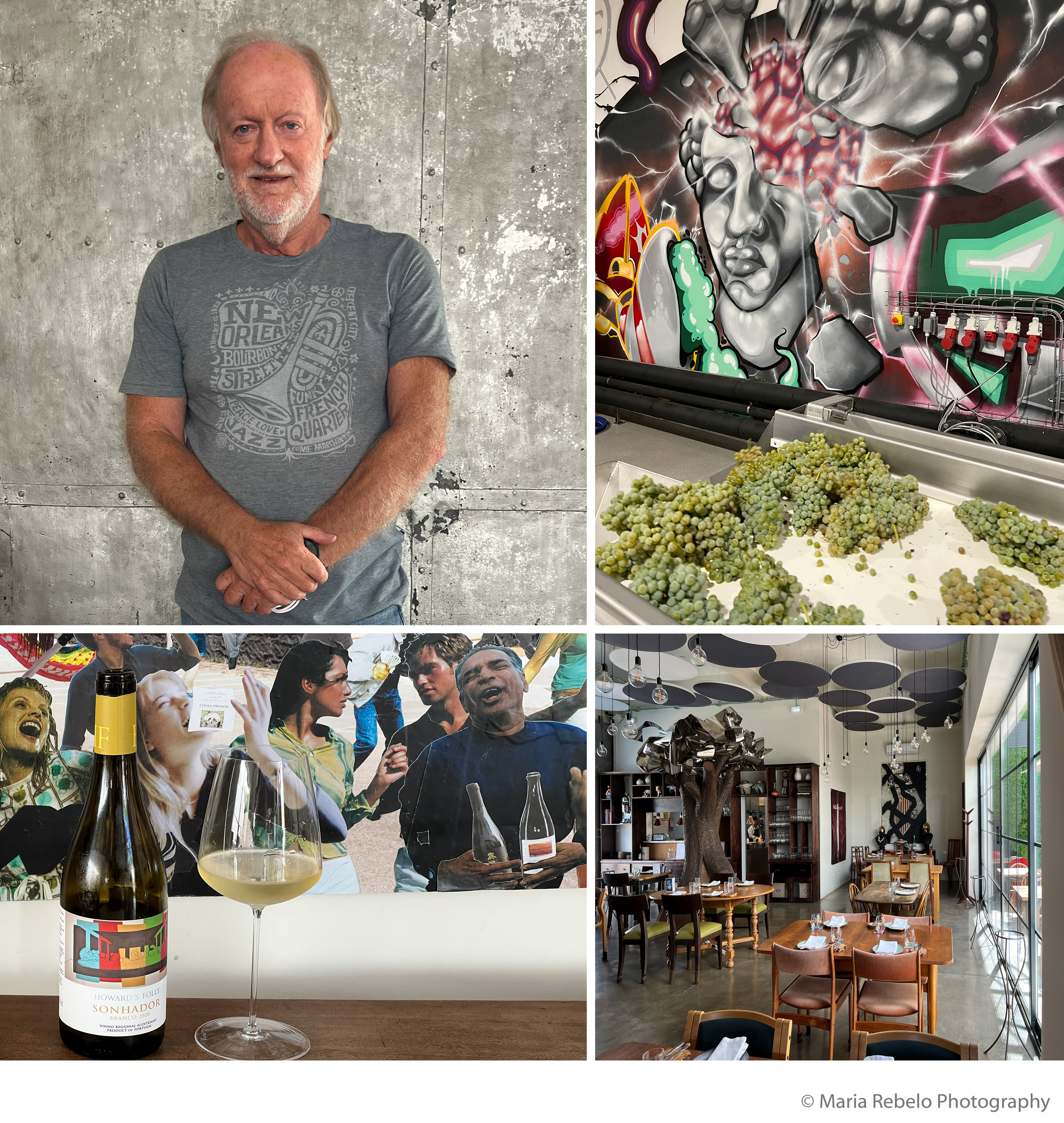
It is great fun to visit Howard’s Folly in Estremoz. The restaurant, winery, and art gallery are a joint venture between Howard Bilton, a British financier, and David Baverstock, a legendary winemaker. 

After studying enology in his home country, Australia, David worked in France and Germany. Before returning home, he vacationed in Portugal and met his future wife, Maria Antonieta. He returned to Australia to work in the Barossa Valley, where Maria joined him. But Maria was homesick, and in 1982 the couple came back to Portugal. David worked in the Douro valley until 1992, when he became chief winemaker at Herdade do Esporão in Alentejo. He felt at home in the endless plains that reminded him of Australia. His thirty harvests at Esporão helped establish Alentejo as an important wine region.  

Howard’s Folly is an exuberant place. It occupies a large building that was once a “grémio da lavoura,” an agriculture association. There is art everywhere. Sewing machines turned into miniature tractors bought in the local market, pig sculptures, and much more.

David shows us the winery with its colorful walls painted by a graffiti artist. Freshly picked grapes are arriving to be sorted, crushed, and cooled with dry ice. 

We head to the restaurant. The food, prepared by chef Hugo Bernardo, is Portuguese with a whimsical British twist. The butter has a strong umami taste because it is mixed with Marmite, a salty yeast extract popular in Britain. 

David opens a delightful white wine called Sonhador (dreamer), made from old vines planted in the hills of São Mamede in Portalegre. It is an excellent companion for the codfish and chips that soon arrived at the table. Then we try the Winemaker’s Choice, a velvety red that pairs beautifully with a delicious shitake mushroom salad.

Lunch ends with a glass of 1991 Carcavelos. The wine, produced at Quinta dos Pesos by the Manuel Bulhosa family, was stored in barrels and almost forgotten. David and Howard convinced the family to sell them some barrels so that David could make a blend. The result is spectacular.  

David retired from Esporão and was planning to take it easy. But Ravasqueira convinced him to join them as chief winemaker. And that is lucky for us. We’ll be able to enjoy many more of David’s harvests to come!

Howard’s Folly is located at Rua General Norton de Matos in Estremoz, tel. 268 332 151.

Alentejo’s star wine grape

In the middle of the 19th century, Henri Bouschet crossed Petit Bouschet, a combination of Aramon and Teinturier de Cher conceived by his father, with Grenache. The new varietal, Alicante Bouschet, produces wines with a beautiful dark-red color. 

Over time, the French lost interest in Alicante Bouschet. But the grape found its home in Alentejo, where it flourished and transformed, becoming one the region’s most emblematic varietals. 

Alicante Bouschet was first planted in Alentejo at the end of the 19th century by the Reynolds, a British family that purchased Herdade de Mouchão. It is the star of the wines made by Julio Bastos, an heir to the Reynolds family, at Quinta Dona Maria

The photo shows some beautiful Petit Verdot (on the right) and Alicante Bouschet (on the left) grapes picked at Monte da Ravasqueira. Like Petit Verdot, most red grapes have white pulp. That is why we can make white wine from red grapes (“blanc de noirs”). If we extract the red-grape juice and avoid contact with the skins, the result is a white wine. If we allow for some skin contact, we get a rosé.  

Both the skin and pulp of Alicante Bouschet grapes are red. This type of grape is called tintoreira (dyeing) because it gives color to the wine. But it has much more to offer: enticing aromas, structure, concentration, and aging ability. Open up a bottle of Alentejo wine, and you’ll see!