The convent of the blue monks

Composit Évora

When we entered the Pousada dos Loios in Évora, we stepped on grounds that have seen war and peace, creation and destruction. The Arabs built a castle on this site that was destroyed by fire during the Portuguese war of 1383-85. In 1485, a local noble built a convent for the order of Loios on top of the castle ruins.

The villagers called the members of this order the blue monks because of the color of their robes. These religious men lived an austere life, working and praying in silence. Their serenity and wisdom led the royal family to choose them as confessors.

The convent was severely damaged by the 1755 earthquake and later rebuilt through the efforts of an enterprising priest. In 1834, Portugal abolished religious orders and the convent was closed down.

In 1963, the ancient building was converted into an historical hotel.  The cells of the monks were turned into comfortable rooms and elegant suites. The courtyard became a spacious breakfast room.

The Pousada is in the center of Évora and yet inside its thick stone walls the clatter of the city vanishes. Staying here for a few days felt like a long vacation. We were content and at ease in the convent of the blue monks.

The Pousada dos Loios in Évora is located on Largo do Conde de Vila Flor, tel. 351 266 730 070. Click here for the pousadas’ website and here for a large collection of photos of the hotel.


A tavern called Wednesday

Quarta-Feira rest composite

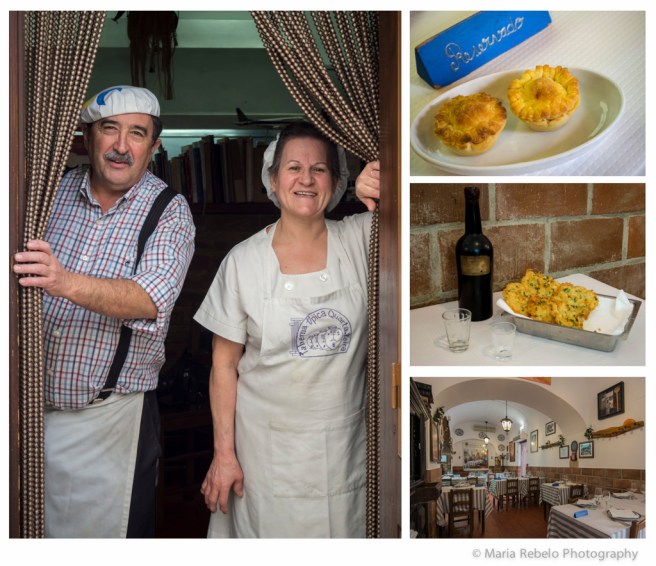
André Freire, the manager of the beautiful Évora pousada, urged us to try a tavern called Quarta Feira (the Portuguese word for Wednesday). “It’s a special place,” André said with a smile. “There’s no menu; you have to trust Zé Dias, the owner, and go with the flow.”

As soon as we entered the restaurant, we became friends with Zé Dias. He moved to Évora from a village in Beira Alta called Quarta Feira, the name he used for the restaurant. Dias worked as a typographer until he opened this tavern 25 years ago with Luisa Batista, a great local cook.

Dias’ enthusiasm for food, wine and life in Alentejo is infectious. Everything he serves comes from people he knows well, from the producers of cheese and sausages to the maker of the clay pots that are integral to Luisa Batista’s cooking. When we asked Dias how he managed to convince Paulo Laureano, a renowned Portuguese enologist, to make the house wine for Quarta Feira, Dias replied “Of course he said yes; we’ve been friends for a long time.”

Our dinner started with slices of local sausages and prosciutto made with black pork from Alentejo. Then a warm sheep cheese seasoned with oreganos arrived, busting with flavor. Next, we had some wonderful mushrooms cooked in mushroom water, seasoned with olive oil, garlic and coriander. “The secret is all in the timing,” Dias tells us and we believe him because at this point we believe everything he says.

The meal’s main event was the house specialty: black iberian pork shoulder marinated in wine cooked slowly in a clay pot. It was so delicious that our taste buds scintillated with delight. The dessert was composed of dried figs, walnuts, cooked quince, and samplings of two conventual desserts.

The meal ended with a glass of licoroso from Herdade do Mouchão. This sweet wine with notes of fruits and spices was a perfectly simple ending to a simply perfect meal.

Zé Dias is a philosopher king who disguises as a tavern owner so that he can share with his guests the joy of living in Alentejo.

Taberna Típica Quarta Feira is on Rua do Inverno 18, Évora, tel. 266 707 530.

Ebora cerealis

OLYMPUS DIGITAL CAMERA

If you’re traveling in Alentejo, follow the advice of ancient travelers and spend some time in Évora. The city is included in the Antonine itinerary and is mentioned in Pliny the Elder’s Natural History as Ebora Cerealis in reference to the surrounding fields of cereals.

Évora was occupied by Celts, Gauls, Phoenicians, and Persians. But it was Quintus Sertorius, the general who conquered the city in 80 B.C., that gave Évora its architectural jewel: a Roman temple with elegant corinthian columns. Known as the temple of Diana, it is more likely to have been dedicated to Jupiter.

There’s much to see in Evora: a beautiful basilica, elegant university buildings, and peaceful convents. And the food and wine are great everywhere.  You can choose a restaurant blindfolded and have a wonderful meal. If Pliny was writing today, he might call the city Ebora Delicia.

Adventures on the peach tree island

Composit do Pessegueiro-3One of the most captivating beaches in Portugal is the Pessegueiro (peach tree) beach near Porto Covo in Alentejo. It is wonderful to seat on the sand feeling the sea breeze and enjoying the view of the Pessegueiro island. The island looks so mysterious that it is impossible to resist the temptation to plunge in the emerald waters and swim a shore. It is great fun to explore the 15th century fort and the ruins that date from Roman times.

In the afternoon, it is fantastic to go horseback ridding along the coast. Claudia Castanheira and Paulo Rosa of Herdade do Pessegueiro provide all you need: well-trained, intelligent horses, horse-riding instruction, and a picnic. Riding a horse through trails and sand dunes, feeling one with nature is an unforgettable adventure.

Click here for the Herdade do Pessegueiro web site.

The past and future of Portuguese wine

AmphorasCrato

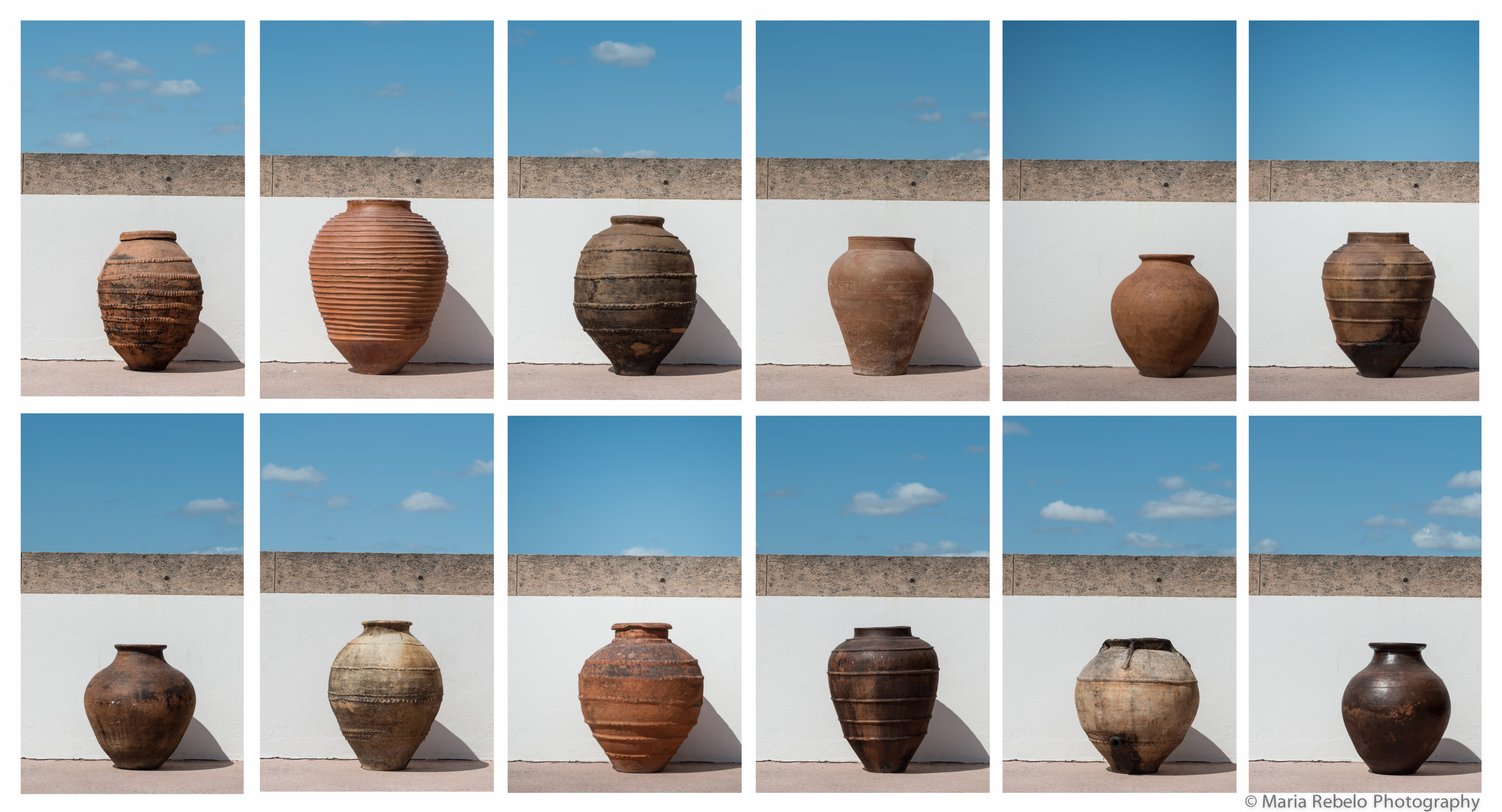
The Flor da Rosa Pousada in Crato has a beautiful collection of “talhas” (clay amphoras) made by potters in Alentejo.  The small amphoras were used to store olives or olive oil. The large ones were used to produce wine, a tradition that goes back to Roman times.

Several Portuguese wine makers are rediscovering the lost art of producing wine in amphoras. One of them is Dirk Niepoort, a great producer from the Douro region. We can’t wait to try these wines which bring the past into the future!

Click here for the Pousadas’ website and here for more photos of Flor da Rosa.

Old and new

Terras D'Alter composit @

We happened to be the first to arrive at a friend’s dinner party. He suggested it would be fun to decant the bottle of wine we had brought to do a blind tasting.

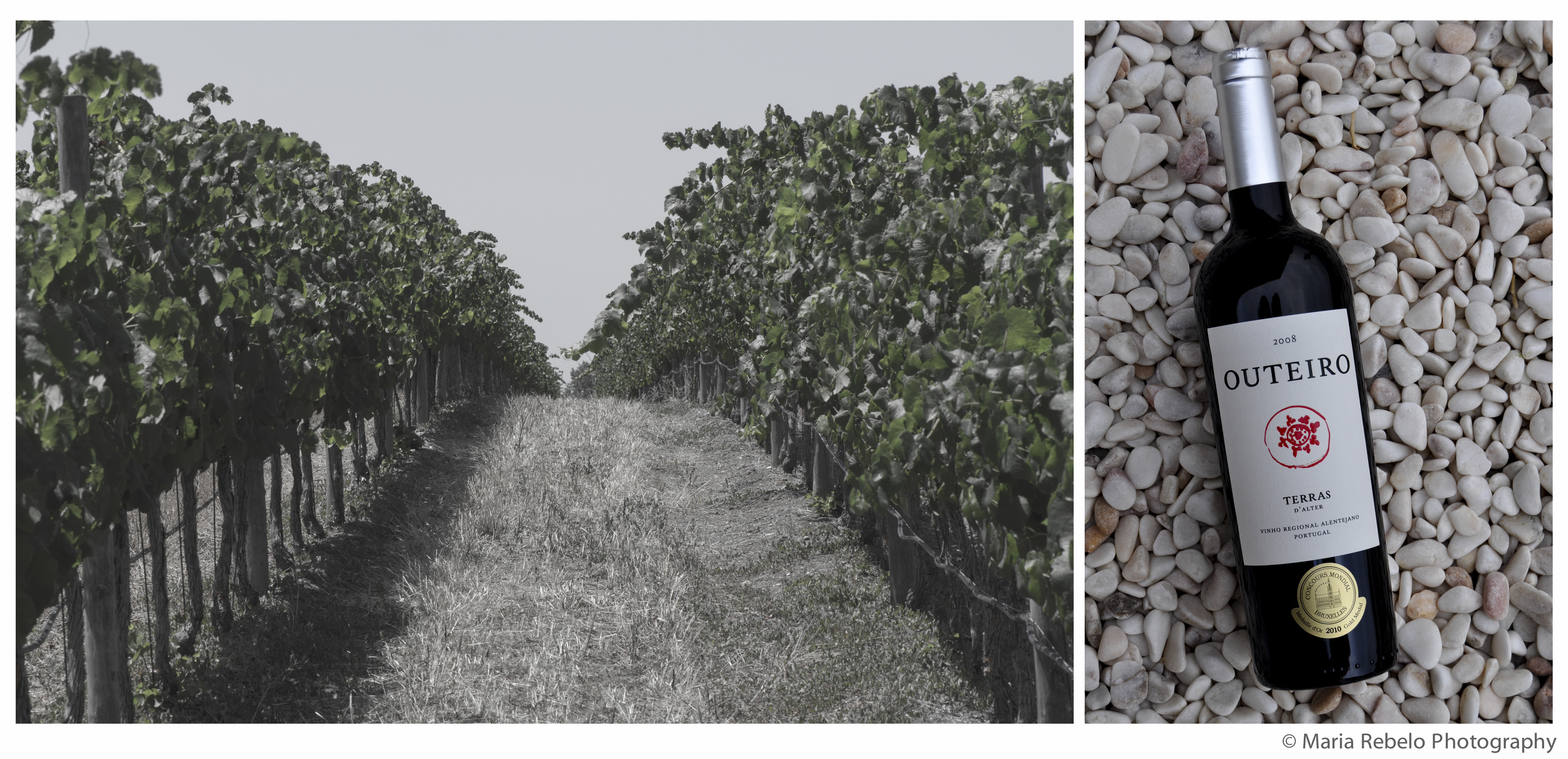
When the other guests arrived, our host asked everybody to guess the provenance of this very special wine. Glasses were filled and moments of silence ensued while everybody focused on taste and smell. Many highly appreciative comments followed. Some guests thought that the wine was from the old world, probably from France, perhaps from Côtes du Rhône. Others thought it was a wine from the new world, possibly from Australia. The wine was Terras d’Alter, Outeiro, 2008.

Terras d’Alter has impeccable old-world credentials. The grapes come from old quintas in Alentejo.  But the wine is made by an Australian enologist, Peter Bright, who eschews traditional wine-making methods in favor of new-world technology. The result is the best of the old and new worlds.

When we drink Terras d’Alter, we feel transported to a sun-drenched day in Alentejo, our body soaking in the warmth, our mind relaxed by the endless vistas. How can other wines compete with this feeling?

Click here to see the web site of Terras d’Alter.


Portuguese Madonas

Composit SantasIf you visit Crato, a beautiful village in Alentejo, don’t miss the chance to see the wonderful collection of Madonas housed in the Flor da Rosa Pousada.

The statues were carved in limestone, gilded and painted in Portuguese workshops during the 15th and 16th century. We can tell that the images were not drawn from the artists’ imagination because the faces are unmistakably Portuguese. How did the artists choose the women who inspired these  sculptures? Perhaps they saw in their humanity a glimpse of the divine.


The Crato castle was converted into a beautiful historical hotel called Flor da Rosa, which is part of the Pousadas network. Click here for the Pousadas’ website and here for photos of the castle.

On top of the world in Marvão

Marvão composit @

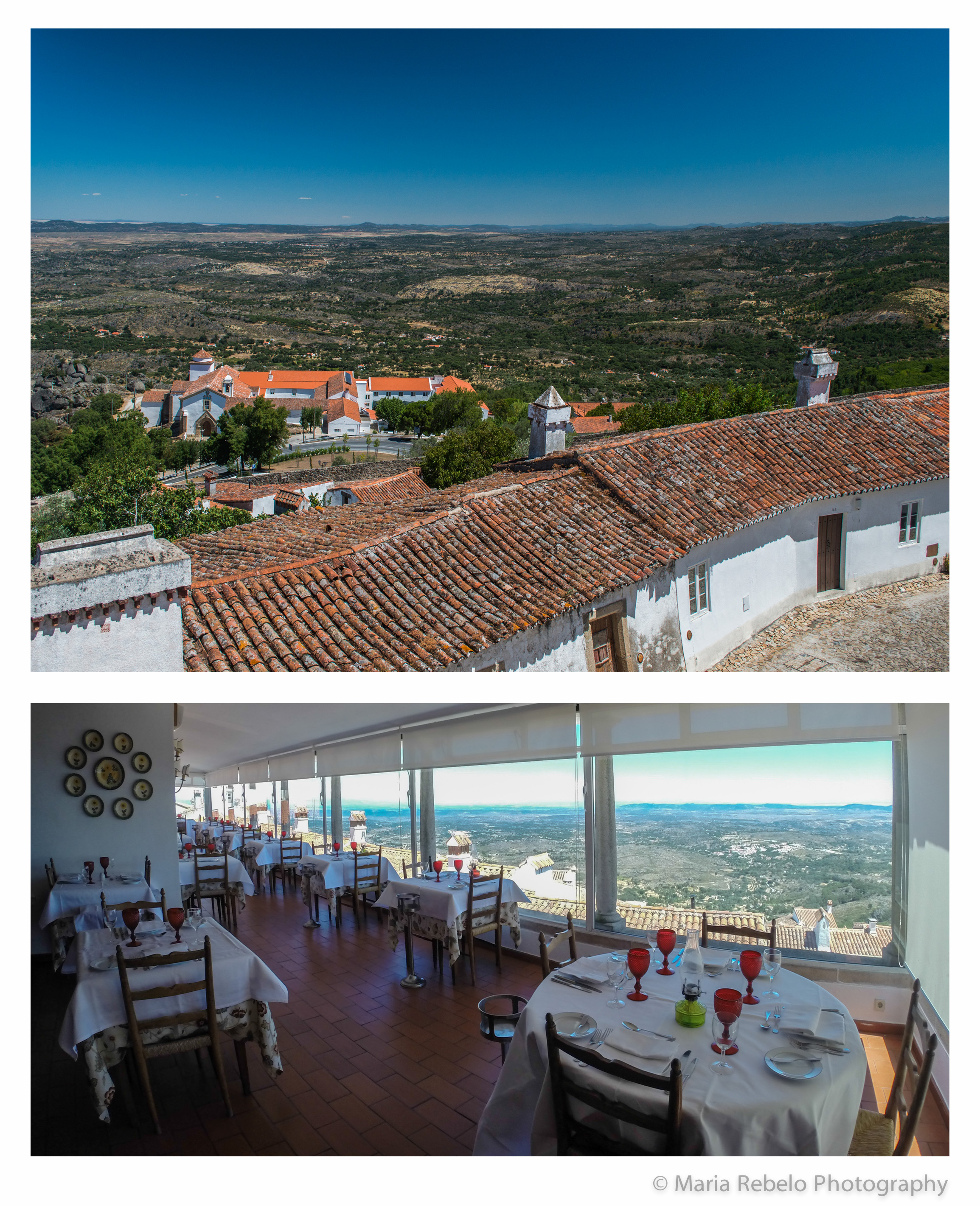
Some people climb the Kilimanjaro, others struggle to conquer the Himalayas. But you can feel on top of the world without hiring sherpas or buying oxygen masks. Simply drive to Marvão, a village on the São Mamede mountain, 834 km above sea level.

We spent the morning exploring the ancient castle and walking the beautiful narrow streets. After working up an healthy appetite, we walked to the Pousada for lunch. The view from the dining room is absolutely stunning.

The Pousada has some wonderful signature dishes, including codfish Santa Maria, partridge with 14 (partridge cooked with 14 ingredients), and shrimp Alentejo style. We asked chef Conceição Lourenço why codfish Santa Maria tastes so wonderfully unique. Her eyes smiled brightly for this is one of the culinary secrets she has guarded in her three decades as a chef. She confided that: “the codfish is cooked with flour made from a local mushroom; but that’s all I can say.”

We stayed for quite a while at the table mesmerized by the view. Seen from Marvão, the world below looks harmonious and the skies above divine.


Click here for the Pousadas’ website and here for more photos of Marvão.

The allure of Monsaraz

RBD_Monsaraz_2b
Monsaraz, ink on paper, Rui Barreiros Duarte, 2014.

Monsaraz is a medieval village perched on a hill in Alentejo. Squint at the landscape and you see an abstract painting of white and pink shapes. Open your eyes and you see a world of peace and tranquility. Faint are the echoes of the battle in which Geraldo Sem Pavor (Gerald the fearless) first conquered the town from the moors in the 12th century. Gone are the busy years, early in the 14th century, when king D. Dinis built a castle to ensure that this strategic hill would forever remain Portuguese. The soldiers who kept watch from the castle towers were replaced by photographers who shoot with their cameras the majestic view.

Vinicius de Moraes, the Brazilian poet who wrote the lyrics of Girl from Ipanema, recorded his feelings about this Alentejo village: “Thank you, Monsaraz, but I do not want to see you ever again because, if I do, I will stay forever inside your white walls amidst your men and women with eyes full of honesty.”

Amalia’s beach

AmaliaBeach

The great fado singer Amalia Rodrigues built a beautiful house on a cliff with an expansive view of the ocean. The adjacent beach is called Amalia in her honor.

To visit this magical place, you need to drive to Brejão, a village on the southern tip of the Alentejo coast. Stop in one of the coffee shops and ask for directions to the beach (you have to follow a hidden path alongside a small brook).

This secluded beach is a perfect setting for declarations of love. The spirit of the place will inspire you. But if words fail you, you can always say: this beach was named after Amalia, a singer who sang about the joy of love and the pain of loss. I brought you here because I love you and I never want to lose you.

Few people know that you can rent Amalia’s house by emailing the Foundation Amalia Rodrigues (secretariado@amaliarodrigues.pt). But now you do!