Because we were born 150 years apart, we did not have a chance to meet the Baron of Forrester, the British port wine trader who championed the Douro Valley. But we know Abílio Tavares da Silva, another outsider who became one of Douro’s best ambassadors.
Originally a tech entrepreneur, Abílio sold his company in 2000 and retired at the age of 40 to pursue his passion for winemaking. He does not believe in taking shortcuts, so he built his expertise from the ground up by earning an enology degree at the University of Trás-os-Montes e Alto Douro. He also began his search for the ideal vineyards.
In 2004, he acquired Foz Torto, a picturesque estate near Pinhão, close to the confluence of the river Torto with the Douro. Planted with old vines, it offers stunning views of the Douro Valley. Abílio teamed up with Sandra Tavares da Silva, a star enologist, to craft his wines. Despite having the same surnames, Abílio and Sandra are not relatives. But they share a passion for making wines that combine elegance with great aging potential. Their portfolio includes a lavish red from 80-year-old vines and a beguiling white from 40-year-old vines grown in Porrais, 600 meters above sea level.
Abílio describes his winemaking philosophy as simple, yet as he explained his process, we quickly filled a notebook with intricate details. The caliber of his wines reflects not just the superior quality of the grapes but also the meticulous attention to detail that his engineering mindset brings to every facet of production—from managing the vineyards year-round, harvesting the grapes when they reach the perfect balance of sugar and acidity, controlling fermentation temperatures, and choosing the ideal aging processes.
Every August, Abílio helps organize a competition to select the finest heirloom tomatoes in the Douro Valley. This event brings winemakers together and showcases the Douro’s uniqueness. The poor schist soil encourages plants to grow deep roots, resulting in not only extraordinary wines but also exceptional fruits, herbs, vegetables, and olive oil. A few drops of the olive oil Abílio produces at Foz Torto can turn a simple salad into a culinary offering worthy of Mount Olympus.
For us, Abílio is much more than a gifted winemaker. He is a source of inspiration and a role model. When we grow up, we want to be like him.
We heard from the culinary rumor mill that a famous Lebanese chef had moved to Lisbon and opened a restaurant called Touta. So, on a warm spring evening, we climbed the hill from Estrela to Campo de Ourique to try it out.
Rita Abou Ghazaly welcomed us into the gracious dining room decorated with Middle Eastern motifs. She served us hibiscus and rose-petal kombucha while Lebanese music filled the air with the same microtones we hear in fado.
Dinner started with a basket of Lebanese bread and cheese bonbons—crispy cheese treats wrapped in phyllo dough. Next came a plate of hummus, a combination of chickpeas and tahini sauce that is a staple of Middle Eastern cuisine. This rendition was the best we ever tried. It was topped with soujak meat, pickles, and aquafaba, a sumptuous emulsion of chickpea water that resembles whipped egg whites. It was quickly followed by grilled cabbage with lentils and beetroots delicately seasoned with cured lemons.
We tried a delicious soup made with a local fish called mero. It reminded us of cação soup, a traditional Alentejo recipe. Finally, we had a spectacular grilled black pork served with black beans, carob marshmallows, and a barbecue sauce made from molasses. Dessert was a simply perfect sweet croquette.
“What made you decide to open a restaurant in Lisbon?” we asked Rita. “Ask Waël,” Rita said, laughing, “it’s all his doing.” Waël Haddad told us he has had a crush on Lisbon since his first visit ten years ago. “I kept returning and brought my friend Rita and my cousin Touta, a celebrated Lebanese chef. With every visit, our love for the city deepened, and so we started looking for a restaurant location. We explored various neighborhoods until we stumbled upon this perfect spot with a ‘for sale’ sign. Now, here we are, living our dream.”
Chef Cynthia Bitar, affectionately known as Touta, came to greet us. She inherited her passion for cooking from her mother, a famous Middle East caterer. Touta has always been obsessed with cooking. “When I was a child and went on play dates, I often cooked in my friend’s kitchens. I think about food during the day and dream about it at night.”
She returned to her family’s catering business after training at the Paul Bocuse Academy in Lyon. But, like Waël and Rita, Touta fell for Lisbon’s charms. She was drawn to the similarity between Lebanese and Portuguese cuisines, the quality of local ingredients, and the warmth of the people. “I found amazing produce in the farmers markets. Try this carrot.” She sliced a small carrot in half so we could experience its aroma and enjoy its sweet taste.”
Touta took us to the grocery store at the back of the restaurant. Its shelves are full of products from Lebanon and jars with pickles, jams, fermented drinks, and preserved citruses that she prepared. We stayed past midnight, bewitched by Touta’s sensuous cuisine, sampling everything from molasses and infusions to spices like sumac and za’atar.
In the 15th and 16th centuries, trade with Africa, Asia, and South America turned Lisbon into a hub for global talent. The diverse influx of people profoundly influenced Portuguese culture, cuisine, and art. It is wonderful to see Lisbon once more attracting people who will bring the city to new heights. Welcome, Waël, Rita, and Touta!
Touta is located at Rua Domingos Sequeira 38 in Lisbon 960 49 49 49. Click here to go to the restaurant’s website.
If you’re looking for a unique gift from Lisbon for a food-loving friend, we have just the thing. Can the Can, a restaurant in Terreiro do Paço, sells flasks of garum. This fermented fish sauce created by the Greeks was coveted throughout the Roman Empire. Like Asian fermented fish sauces, it enhances flavor, adding a rich umami taste.
The Troia peninsula in Setúbal is home to sprawling remains of piscinae, large basins used by the Romans for salting and fermenting fish. Along Portugal’s Atlantic seaboard, this region is ideal for garum production, thanks to its plentiful fish stocks and a climate favorable for fermentation.
Maria da Luz and Vitor Vicente, two entrepreneurs, revived the production of garum in Troia using mackerel (favored by the Greeks), swordfish, tuna, sea bream, octopus, mullets, and sardines (our favorite).
In the Roman Empire, garum was a symbol of extravagance. Pliny the Elder described it in his Natural History as a “liquoris exquisiti,” an exquisite liquor. Priced on par with the rarest perfumes, it was reserved for the tables of the affluent. Today, thanks to Can the Can, this nearly forgotten delicacy is both accessible and affordable.
Can the Can is located at Terreiro do Paço, 82/83 in Lisbon. Click here for their website.
Extreme sports, like surfing giant waves, captivate enthusiasts with their exhilarating adrenaline rush. Hamilton Reis’ family wine project, Natus, offers this kind of thrill. The production is organic; the vines are not irrigated; the fermentation relies only on wild yeast and takes place first in the large clay pots that the Romans used and then in old oak barrels. The grapes are picked by hand and trodden by foot. Most modern winemaking techniques are set aside to produce wines with minimal intervention but meticulous attention to detail. Like a master surfer, Hamilton can afford to take these risks because of his extensive experience and depth of knowledge.
Natus means born in Latin. Hamilton chose the name to indicate that he and his family started this project from the ground up. They bought four hectares of land in Vidigueira, Alentejo in 2008. For ten years, Hamilton nurtured the soil so it could recover from decades of chemical abuse with herbicides and pesticides. During that time, he learned about the climate and the varietals planted in the region and talked to the elders about the local wine-making traditions. Those traditions are, for Hamilton, as much part of the terroir as everything else.
He built a house for his family in the middle of the field so he could take care of the vines as if they were part of his family. The cellar is invisible. It lies underground so that gravity can help unload the grapes.
An important aspect of the location is the absence of barriers between the land and the sea. The Mendro mountain, situated east of the property, forms a shell that keeps the cool air from the sea. The resulting climate produces elegant wines that are low in alcohol and yet rich in complexity, depth, and freshness.
These unique wines are difficult to buy because only about 6,000 bottles are produced in each year. Hamilton is determined not to increase production to a level that would compromise his ability to maintain personal control over every aspect of the process. However, to meet the demand for his wines, he has initiated a new venture named Intus, the Latin word for “inside.” This wine is crafted from grapes sourced from a select group of farmers who refrain from irrigating their vines and agree to adopt the rigorous biodynamic methods that Hamilton champions. Like Natus, Intus wines are characterized by their low extraction and alcohol content. However, they undergo fermentation in stainless steel, which preserves the pure essence of the fruit.
The Natus label has a secret. Those who discover it get a glimpse of what Hamilton sees every day: vines that produce wines made without compromises, perfectly in tune with nature.
The Natus vineyards are on Estrada da Cancelinha in Vidigueira, Alentejo. Click here for the Natus website.
Gaveto is a restaurant in Matosinhos where winemakers from the Douro Valley and the Vinho Verde regions often gather. It is easy for regulars to take for granted the meticulous selection of ingredients, the flawless execution of each dish, and the impeccable service. But this restaurant took a lifetime to build.
Its founder, Manuel Pinheiro, began his culinary journey at age 12, working in Porto at the home of the banker António Borges. At age 18, Manuel got a job in a restaurant owned by the Borges family. He started by hauling coal for the stove and washing countless pots and pans. Over time, he learned to cook, to run the kitchen, and to manage the dining room. Ten years later, Manuel put all this knowledge to use by buying a small restaurant in Porto and turning it into a popular spot.
In 1984, while shopping for fish at the Matosinhos market, Manuel learned that a spacious restaurant called Gaveto was up for sale. Tempted by the opportunity to attract a larger clientele, he purchased the place. The investment was so large that his wife Margarida cried for two weeks, worrying that they might soon be ruined.
Manuel involved his two sons, João Carlos (in the photo with his father) and José Manuel, in the business. Together, they turned Gaveto into a gastronomic landmark and built one of Portugal’s most impressive wine collections. Whenever they serve a rare wine from their cellar, João posts a photo of the bottle on Instagram captioned with his signature phrase: “There are days like this.”
The menu includes only traditional Portuguese fare, yet the offerings are so tempting that we always struggle with our choices. During our last visit, we hesitated about whether to get the iconic lobster rice, the legendary lamprey, the exquisite tiger shrimp, the perfectly grilled fresh fish, or the tripe with beans, which former President Mário Soares considered the best in the country.
When dessert time came, we debated whether to opt for one of the many puddings and tarts, get the traditional pão de ló, or taste the fine cheese that Manuel procures in the Estrela Mountain. These were not easy decisions. And at Gaveto, every day is like this.
Hidden behind unassuming walls, the Serralves Foundation can be easily missed. But this beautiful park and contemporary art center in Porto is a must-visit destination.
Its story began in 1925 when Carlos Cabral, the 2nd Duke of Vizela, attended the International Exhibition of Modern Decorative and Industrial Arts in Paris with architect José Marques da Silva. The duke returned to Porto with the dream of building an Art Deco house on his family’s property. To realize this vision, he enlisted Marques da Silva and a cadre of French architects, including Charles Siclis, who worked on the villa, and Jacques Gréber, who designed the gardens.
Siclis’ watercolor of a pink house on a hill became the blueprint for the elegant villa we know today. It took until 1944 to turn that sketch into reality. The cost was so extravagant that in 1955 Carlos Cabral sold the estate to Delfim Ferreira, a wealthy entrepreneur. To ensure that his dream villa would live on, Cabral imposed the condition that the house would be preserved without alterations.
In 1987, the Portuguese government acquired the estate to convert it into a contemporary art center. For the first time, this home, which was the subject of great fascination in Porto, was opened to the public. As soon as we step into the villa, we feel a desire to wear tuxedos from Saville Row and Chanel gowns so we can do justice to the elegance of the place. The villa’s intricate decor and aesthetic harmony are mesmerizing.
In 1999, the new Museum of Contemporary Art, designed by renowned architect Álvaro Siza was inaugurated. Since then, it has become a beacon for contemporary art in Porto. With each passing year, the exhibition program expands, and the collection welcomes new works and new artists.
In 2019, the House of Cinema dedicated to filmmaker Manoel de Oliveira and other auteur directors was inaugurated. More recently, the Álvaro Siza Wing added new exhibition spaces where delicately lit pristine walls patiently wait for the arrival of new canvases.
Spread across 18 hectares, the Serralves Park is dotted with sculptures amid lush trees. Visitors can stroll on the Liquidambar Promenade, explore the Treetop Walk for stunning park views, or visit the gardens of the villa.
Serralves is a place where nature relaxes the body and art stimulates the mind.
The initial thrill of a new experience often fades with repetition, a phenomenon psychologists call hedonic adaptation. Somehow, this human trait does not manifest itself at Ceia, a restaurant in Lisbon that keeps reinventing itself, serving food that is always interesting, new, and delicious.
Ceia’s culinary team is currently headed by Chef Renato Bonfim, who previously worked at Adega, a Michelin-starred Portuguese restaurant in California. The menu is inspired by the pristine produce from Herdade no Tempo, a beautiful estate in Alentejo that follows regenerative agriculture practices.
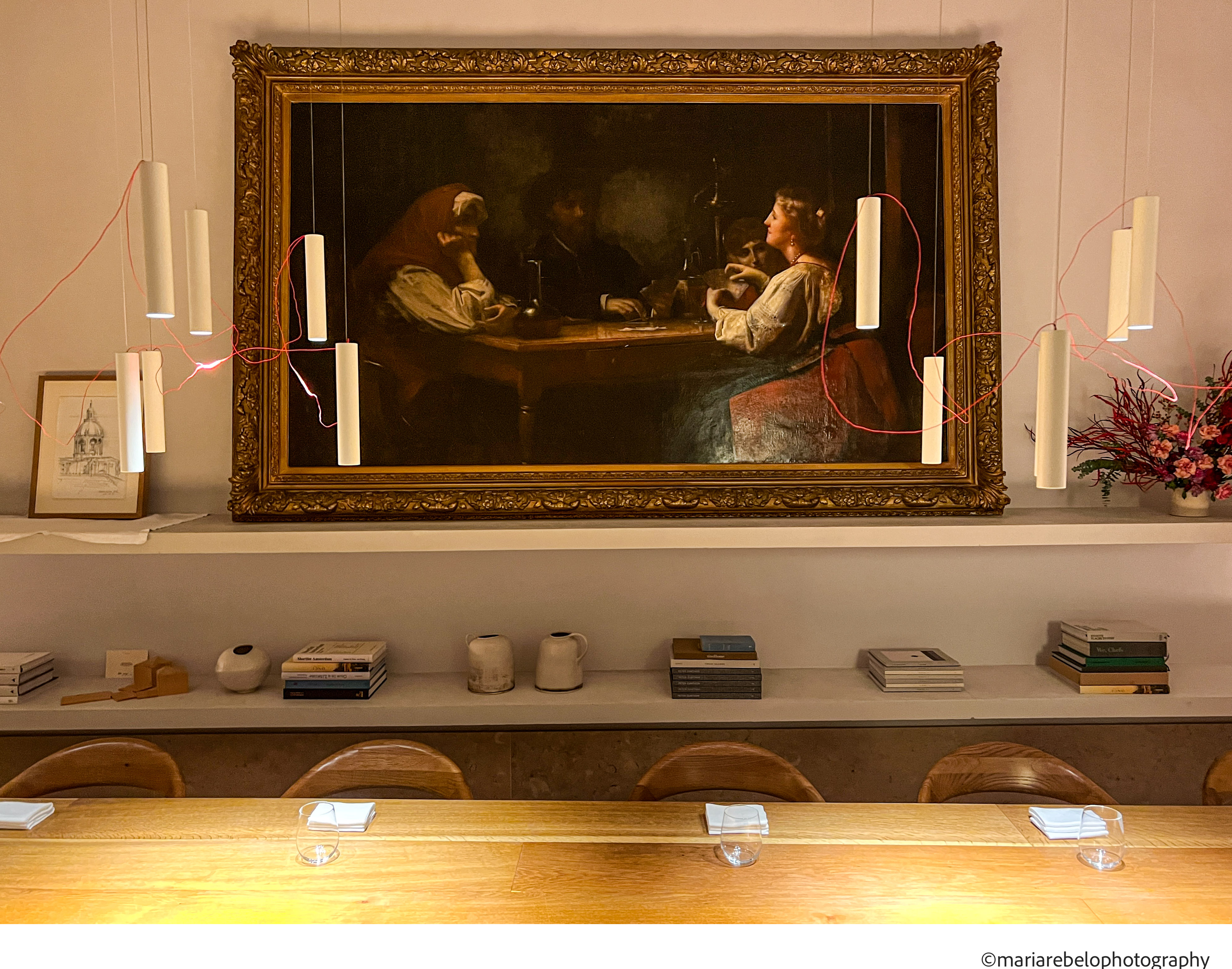
The restaurant, which is part of a project called Silent Living, is located on the ground floor of Santa Clara, an intimate hotel with privileged views of the Tagus River and the Pantheon. Kristin Liebold, a member of the Silent Living team, welcomed us to the spacious courtyard of the historical building that dates back to 1728. She presented us each with glasses of Ode, a refreshing wine crafted near Lisbon from Arinto grapes. As we mingled with other guests, Kristen appeared to whisper a magical incantation. Then a door swung open, unveiling a dining room so perfect it could be the setting for a Vermeer painting.
As we gathered around the table, Renato and his teammates Ricardo Cruz and Tiago Ramos came to greet us and, like the three kings, they brought three offerings. First, slices of sourdough bread accompanied by a sumptuous butter from the Azores and a luscious spread crafted from butter and a type of sausage called alheira. Second, a crispy tartelette made with perfectly seasoned lírio (greater amberjack) and vegetables. Finally, exquisite polenta cubes topped with aioli, garlic, and cheese and nestled in wooden boxes filled with bright yellow corn. Dardas, a bright vinho verde (green wine) made with the Avesso varietal, kept us in great company.
As we debated which of these offerings had most captivated our taste buds, Ricardo introduced a new chapter to our culinary adventure: an algae chowder. It is based on shio koji, a salted Japanese pudding encircled by algae cooked in a Bulhão Pato style. The preparation was crowned with a leaf of the rare Mertensia maritima. We were instructed first to eat the leaf, savor its unique oyster flavor, and then blend a small glass filled with chowder with the algae. The result was an unexpectedly delightful harmony of flavors.
As our glasses filled with a silky Dona Paulette from Quinta de Lemos in the Dão region, we were brought plates of octopus grilled in charcoal, topped with kale, and seasoned with an inventive mole made from grilled peppers and pomegranate—another unusual but perfect combination of flavors and textures.
The next dish featured crispy sarraceno wheat mixed with chanterelles and shiitake mushrooms seasoned with a sauce made from shallots, beer yeast, dehydrated apricots, and raisins. There was so much flavor to process that we closed our eyes to let our brain focus on the gastronomic sensations. A late harvest from the Douro Valley called Aneto complemented the earthy flavors of the dish with a delicate, effusive sweetness.
A sparkling wine made by Sidónio de Sousa in Bairrada ushered the arrival of a turbot from the Azores delicately cooked, dressed with beurre blanc and kombucha, topped with fermented turnip and kohlrabi and finished with a few drops of garum. This Roman fish sauce, which is once again being produced in the Troia peninsula after a hiatus of 15 centuries, added a unique depth to the dish.
The meat course was a succulent black pork served with a rich purée made from Jerusalem artichokes, chestnuts, and purple onion. It was served with a robust vinhão, a red wine made from a dyer grape called Sousão produced in the vinho verde region by Vale da Raposa.
The first dessert was an ensemble of panna cotta, chocolate, and matcha powder, garnished with leaves from Madeira that taste like passion fruit. A white port made by Alves de Sousa called Oliveirinha added a velvety smoothness to this symbiosis of flavors.
The second dessert was ginger and pumpkin cooked with Chinese spices, a praline made from pumpkin seeds and seasoned with pollen.
Our meal concluded with a refreshing lemongrass tea, quindin, a Brazilian coconut pudding, and truffles crafted from 70 percent pure chocolate from the island of São Tomé.
We lingered at the table, talking with the other guests about the culinary experience we had just enjoyed, so replete with unexpected pleasures and delights that we felt like we were dining at Ceia for the very first time.
Ceia is located at Campo de Santa Clara, 128. Lisbon. Click here for the restaurant’s website.
Perhaps it’s the way the sunlight falls on the steep hill that slopes down to the river or the breathtaking vistas of century-old vineyards. Quinta da Côrte has an enchantment all its own.
This 18th century estate in the Douro Valley once belonged to a family that supplied their prized grapes to renowned port winemakers. Philippe Austruy, a French entrepreneur and wine enthusiast, fell in love with the estate and purchased it in 2013. The boutique hotel opened its doors in 2018.
The restoration of the buildings and wine cellars was a labor of love, meticulously executed in the traditional style, featuring clay-tiled roofs and yellow-ochre trims around windows and ceilings.
The interior spaces were curated by Pierre Yovanovitch, a designer whose taste was honed during his tenure with Pierre Cardin. Yovanovitch created warm, inviting interiors that blend a sense of place with whimsical elements that surprise and delight.
Each of the eight rooms has a unique personality. All offer great comfort and sweeping views of the Douro Valley. The bathrooms in the main house are adorned with traditional tiles and ceramics that harken back to an era gone by.
Mornings at Quinta da Côrte start with a splendid breakfast served in the kitchen, right by the spacious chimney where sausages used to be smoked.
Then, there’s a world of possibilities waiting outside. Explore the many trails through the vineyards, take a dip in the granite swimming pool, rest in one of the lookout points, enjoying the spectacular landscape, or visit the cellars, where you can savor the estate’s precious ports and elegant table wines. The port wine cellar stores impressive chestnut barrels, too big to fit through the doors. How did they get in? They were assembled inside the cellar in 1938.
The dedicated staff attends to every detail. A stay at Quinta da Côrte isn’t a typical hotel experience; it’s more like being a guest at the home of a dear friend with impeccable taste.
Quinta da Côrte is located near Valença do Douro, near Pinhão. Click here for their website.
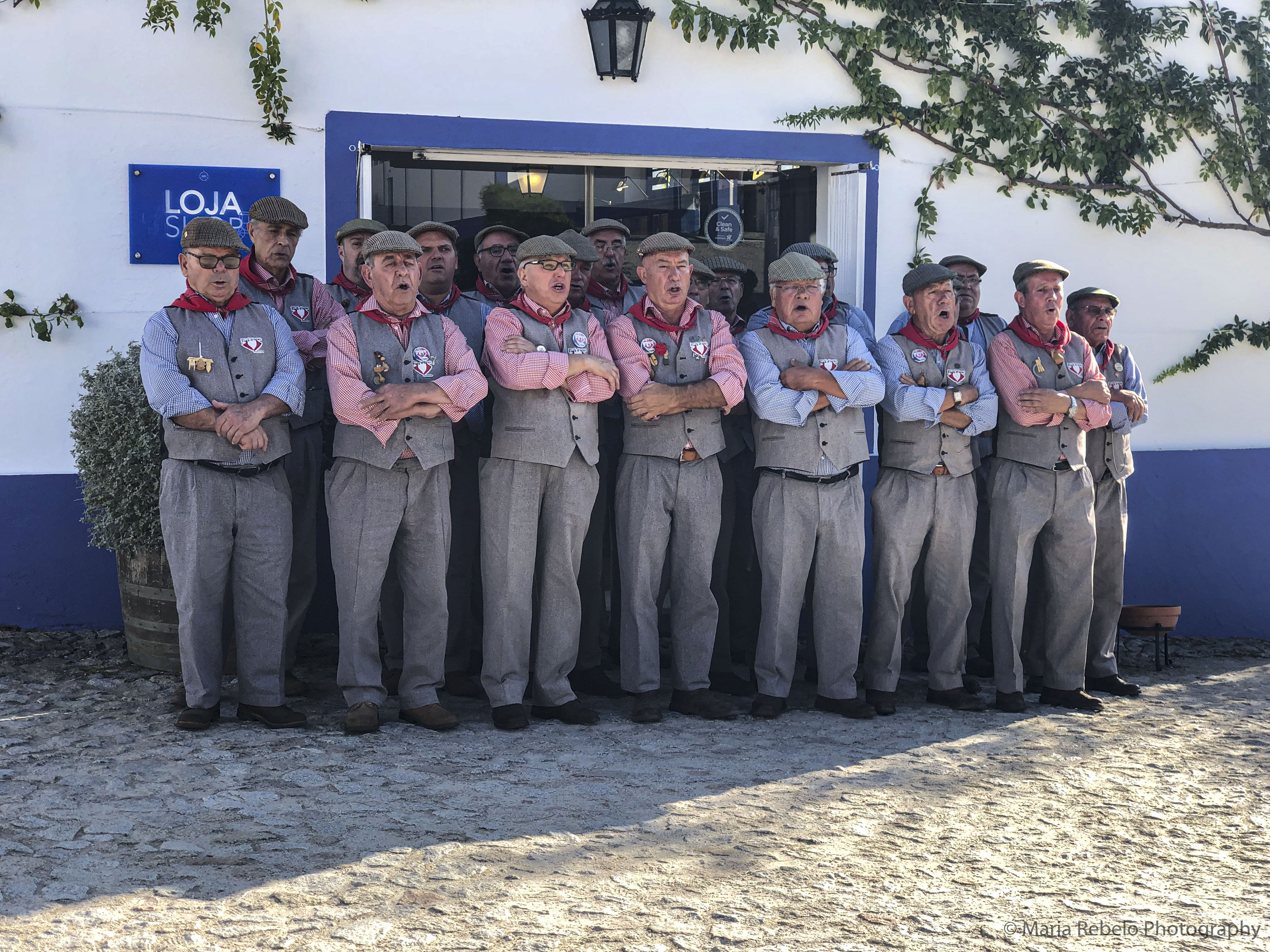
Rows of laborers stand motionless, like a battalion poised for battle. The “ponto” starts singing a few verses alone. The “alto” responds often singing the same melody a major third above the ponto. Then, the choir sings, their voices soaring towards the sky. This style of music is called “cante.” UNESCO recognized it in 2014 as part of the Intangible Cultural Heritage of Humanity.
The tunes are generally in a major key, but the people of Alentejo imbue their singing with such a sense of longing that they make major scales sound minor. The tempo is languid, like the rhythm of life in Alentejo, a place where the summer’s sweltering heat eases the pace of everything.
The verses are simple and sincere. They speak about toiling in the fields, love, faith, the fruits of the land, and the hardships of life.
As the day winds down, people often congregate at local taverns to drink a glass of amphora wine with bread, olives, and some black-pork sausages. Someone sings a few verses, someone else responds, and the group spontaneously burst into song. It is a privilege to hear these voices that carry with them the soul of Alentejo.
Field recording of Fora d’horas group singing at Monte da Ravasqueira by Vasco Rosa Santos. Sound editing by Pedro Rebelo.
In July 1419, Portuguese navigators discovered an island covered by a lush forest in the middle of the Atlantic Ocean. They named it Madeira, after the Portuguese word for wood. Prince Henry, the son of King João I, paid for the expedition. He acted like a venture capitalist, funding sea voyages in return for 20 percent of what his sailors discovered.
Madeira was formed five million years ago by a volcanic eruption. Only four percent of the island is visible. The rest lies beneath the sea. It is a place of rare beauty, with lofty mountains and cobalt-blue waters.
Where should you stay in Madeira? We usually pick Funchal, the capital, as our base. There are plenty of hotels to choose from. We often stay at the Pestana Casino Park, an architectural landmark designed in 1966 by Oscar Niemeyer, one of the greatest architects of the 20th century. Niemeyer sought to preserve the island’s beauty and its picturesque, welcoming character. He succeeded, using the privileged location to create a sensuous building in harmony with the natural surroundings.
What should you do in Madeira? Here are our top-10 favorite activities.
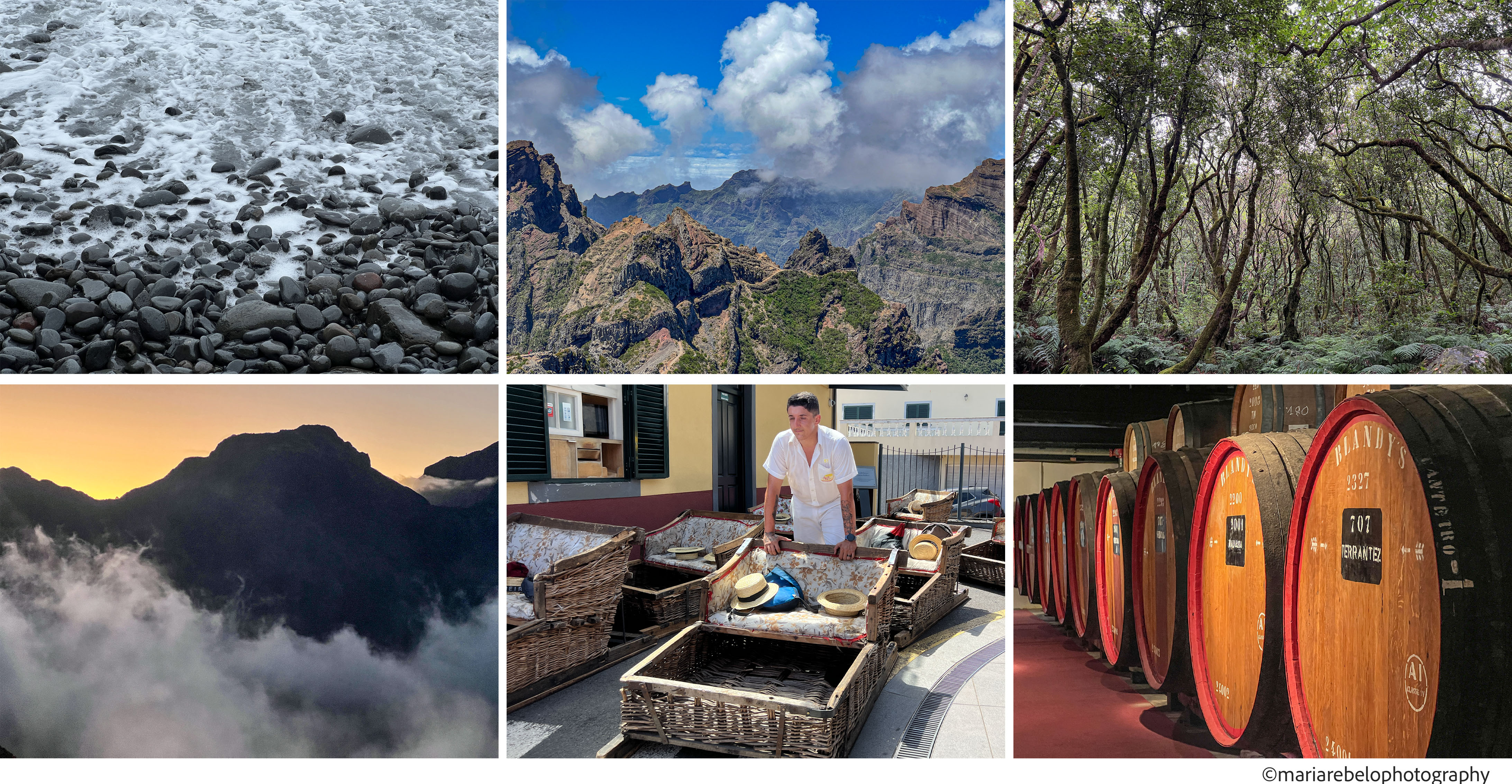
1. Enjoy the beaches. We love the contrast of the black sand and the white sea foam. There is nothing like idling on the beach and bathing in the Atlantic ocean. Some favorite locations are Ponta de São Lourenço, Porto Moniz, and Garajau.
2. Climb every mountain. Watching the sunset or sunrise in the mountains is an unforgettable experience. The breezes push the clouds up the mountains. Then, when the winds relent, the clouds descend like ethereal waterfalls.
Pico do Areeiro, 1818 meters above the sea, is the highest peak that can be reached by car. It has several trails with awe-inspiring views. Cabo Girão, one of the first places sighted by the navigators, is an impressive lookout point.
Before driving or climbing up a peak or lookout point, it is prudent to check visibility conditions using the island’s webcam system.
3. Walk alongside a levada. In 1427, the Portuguese started building channels called levadas to bring water from the rainy north to the drier south, where most people live. A network of approximately 3,000 kilometers of levadas crisscrosses the island. Walking alongside these channels allows us to experience the magic of the Laurissilvia—the original forest that covered Madeira. There are so many walks that it takes a lifetime to explore them all. So far, our favorite is the Levada dos Balcões. The filmmaker Werner Herzog says that we know the world by walking. Madeira is the perfect place to put this credo into practice.
4. Visit a rum distillery. Henry the Navigator imported sugar cane from Sicily to plant in Madeira. At the time, sugar was so rare it was called white gold. Madeira became Europe’s leading sugar supplier until the first half of the 16th century when Brazil replaced it. Today, the island’s sugar is mainly used to make sugar-cane rum.
At Porto da Cruz, you can visit a rum factory powered by a steam engine that is a relic of the first industrial revolution. The rum is used to make a popular local drink called poncha.
Scurvy, a disease caused by vitamin C deficiency, was a common seafaring affliction in the 15th and 16thcenturies. Sailors discovered they could protect against the disease by drinking a mixture of lemon, sugar-cane rum, and honey. They called this concoction poncha, an adaptation of the English word punch. In the mid-20th century, the drink became popular with locals who often recommend it as a remedy for various maladies. Beware that there’s no medical evidence of poncha’s curative powers.
5. Visit Cámara de Lobos, a quaint fishing village where Whiston Churchill vacationed in 1950. He enjoyed spending time by the harbor painting watercolors of the seascape. Bar number 2, a gathering spot for fishermen, is famous for its poncha. The settlers found a colony of sea lions along the shoreline. They called these creatures “lobos marinhos” (marine wolves) and named the place after them. The sea lions have since migrated to the desert islands off the Madeira coastline.
5. Go to the Funchal farmers market. It is a feast of color, where tropical fruits vie for attention with exuberant spices. The island is so fertile that everything grows there, acquiring a unique taste imparted by the volcanic soil. We love the local bananas, which, just like Madeira wine, combine enticing sweetness with a pleasant acidity. At the fish stalls, you can see the riches of the sea—the black scabbard (called espada in Portuguese) that is a local favorite, the impressive tuna, and the colorful bodião.
6. Explore the nuns’ valley and dine at Eira do Serrado. In 1566, French pirates laid siege to the island for 15 days, ransacking Funchal and killing many of its residents. The nuns of the Santa Clara Convent sought refuge in the heart of the island in a place now known as the nuns’ valley. They took with them their treasure, amassed over time from the donations of affluent families. The mother superior and the prioress buried the treasure in secret but they died without divulging its whereabouts. So, the treasure is still in the nuns’ valley, waiting to be found.
You can drive from the valley to the mountaintop to dine at the Eira do Serrado hotel. It serves one of the best espetadas (succulent beef cubes artfully seasoned and grilled on laurel skewers) on the island. The restaurant’s veranda has breathtaking views of the encircling peaks and the nuns’ valley. Gazing upon this panorama, the poet Miguel Torga reflected, “Nietzsche said that you need wings to love the abyss. I’d posit that humans can adore the abyss as well, as long as they are born in Madeira.”
7. Visit Santana and Quinta do Furão. Santana is famous for its palheiros, houses painted in blue and red hues covered with straw-thatched roofs. Quinta do Furão is a hotel with generous views of the north of the island. Before dinner, you can visit the vineyards and see an old wine press like those described by the Roman historian Cato the Elder circa 160 BCE. It is wonderful to dine in the esplanade at Quinta do Furão, cooled by the breeze, our eyes feasting on the magnificent vistas.
8. Sail the ocean blue. Sailing on the waters surrounding Madeira helps us imagine the exhilaration felt by the Portuguese explorers when they first caught sight of the island. You might encounter playful dolphins or see a flock of cagarras—birds that like to slumber while gently drifting upon the water’s surface.
9. Ride a toboggan. Back in the 19th century, residents of Monte, a charming hilltop town overlooking Funchal, turned baskets used to carry vegetables into makeshift toboggans for exhilarating downhill rides. Today there are many “carreiros” who bring tourists down the hill, steering the toboggans with the help of shoes fit with robust rubber soles that function as brakes. There are often long lines, but the thrilling ride is worth the wait.
10. Visit Blandy’s Lodge. Located in downtown Funchal, Blandy’s Lodge is the ideal place to learn about the wine that shares its name with the island. It is an elixir so alluring that it catalyzed global trade. Naval engineering, shipbuilding, logistics, and finance came together so that royals and aristocrats could enjoy Madeira wines all over the world.
Madeira wine is fortified—the yeast’s conversion of grape fructose into alcohol is interrupted by the addition of 96-proof vinic alcohol. The result is a wine that retains some sweetness. Following fortification, the wine is stored in hot attics for about three months. The natural warmth concentrates and caramelizes the wine, producing a delightful amber tint. Then, the wine is aged for at least five years. At Blandy’s, you can visit the attic where the wines are naturally exposed to heat, and the cellars where they age inside large American oak barrels. Then, embracing the advice of the ancient Greeks—”know thyself”—you can discover your favorite Madeira style: sercial (dry), verdelho (medium dry), bual (medium sweet), or malmsey (sweet).
Some final words: locals say that staying in Madeira for more than two weeks, makes it likely you will move to the island.



 Salt of Portugal