The octopus capital

St. Luzia (Polvo) Composit

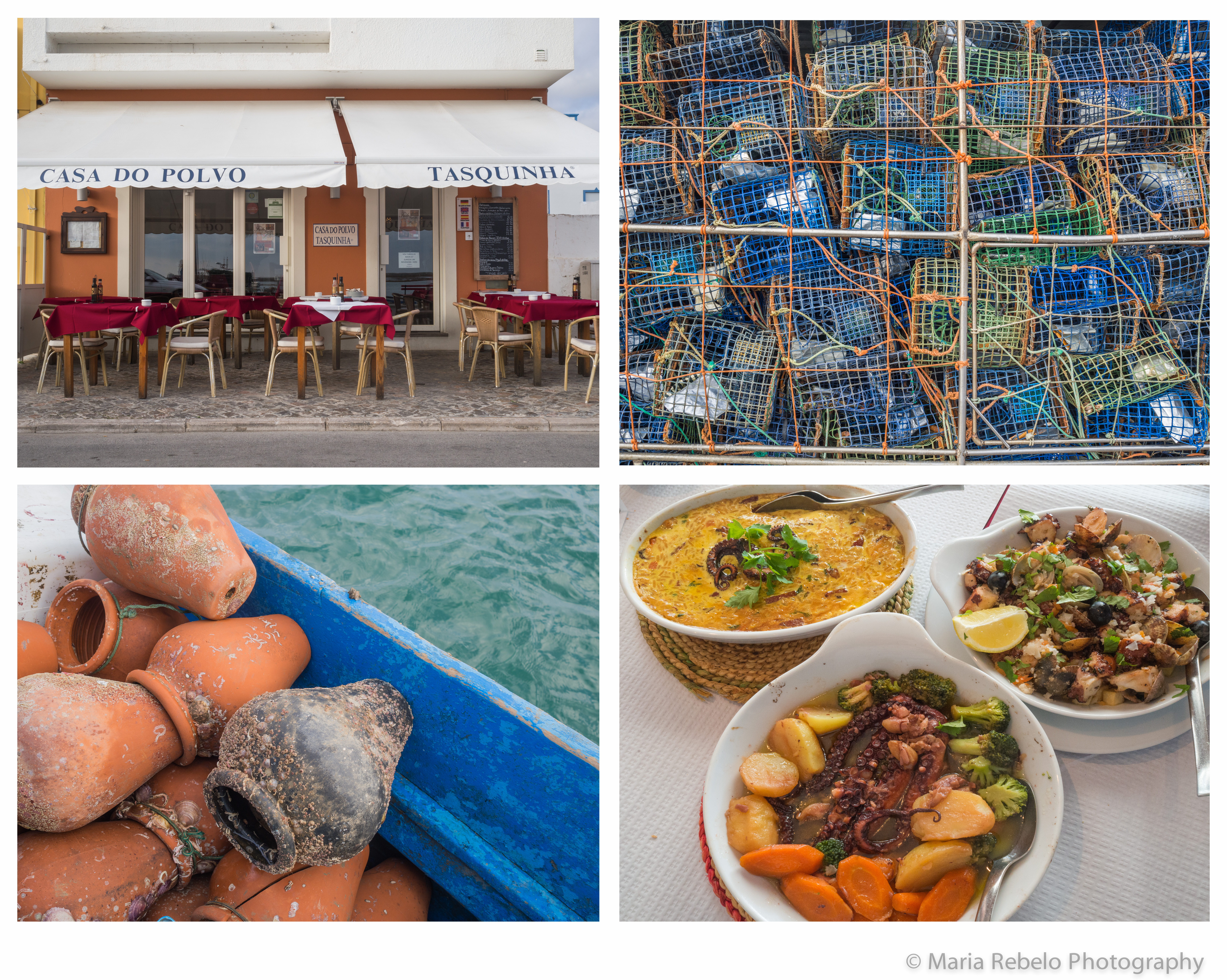
The best octopus in Portugal comes from Santa Luzia, a small village near Tavira in the Algarve. The locals proudly call it octopus capital.

The shores of Santa Luzia are full of small shrimp that attract the octopi. Old-time fishermen lay clay pots called “alcatruz” in the water. The octopi cuddle in these pots to sleep and get caught when the pots are removed from the water.

Younger fishermen don’t like to wait for the mollusks to fall asleep, so they prefer to use a “covo,” a plastic trap with a sardine inside.

Old timers swear that the octopus caught with the alcatruz tastes much better than the one caught with the covo. But young and old agree that Casa do Polvo is a great place to eat octopus. There are many preparations to choose from, including carpaccio, stewed, fried, and roasted. Our favorite is “polvo panado,” octopus combined with egg and bread crumbs and then fried. No matter which preparation you choose, the octopus is tender and delicious.

If you’re traveling in the Algarve, it is a great idea to include Santa Luzia on your itinerary. You’ll have the opportunity to enjoy a wonderful meal and earn the right to brag that you’ve visited the octopus capital.

Casa do Polvo is on Avenida Eng. Duarte Pacheco, N. 8, Santa Luzia, Tavira. Tel. 281-328-527. In the Summer reservations are a must.

A meal with friends

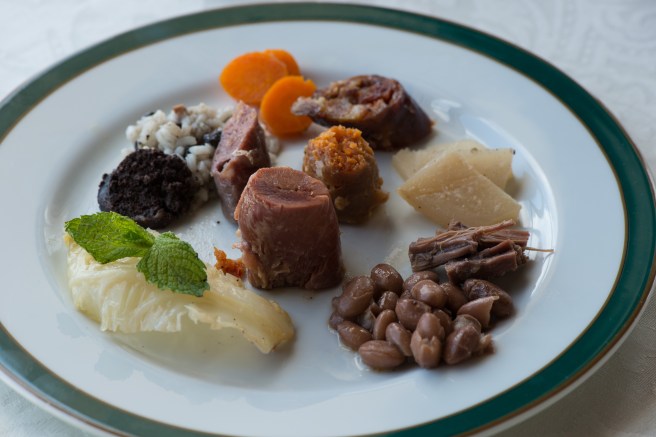
CL Logo In France they call it “pot au feu, “ in Italy “bollito misto,” in Spain “cocido Madrileño.” In Portugal we call it “cozido.” The concept is the same, but the taste differs remarkably from region to region. Cuts of meats that require long periods of cooking are combined with sausages, potatoes, chickpeas, cabbages, and other vegetables. There are no gimmicks, no complex sauce reductions, no overpowering spices, only great ingredients.

In the island of Azores, they prepare the cozido by burying the pot in volcanic soil, where it cooks slowly in geothermal heat. There are no volcanos in continental Portugal, so we have to use regular stoves to do the cooking.

One of the best cozidos is served every Sunday by Companhia das Lezírias, near Vila Franca de Xira, 50 Kms from Lisbon. It is a posh cozido made with wild game that imparts a unique taste to the preparation.

Trying this delicacy requires planing, since it is indispensable to make reservations  in advance. Call the Companhia das Lezírias to book a table for a group of friends and, when the time comes, you’ll enjoy a very satisfying meal in the company of very happy friends. CL cozido

Click here for the website of the restaurant and here for directions. You can make reservations by calling 263 654 985 or emailing rest.coudelaria@clix.pt. 

Porto de Santa Maria

Porto de Santa Maria @_

The Portuguese are so obsessed with the freshness of their fish that they prefer to consume it on the coast, to make sure the fish does not need to travel. This obsession is the reason why there are so many restaurants on the “marginal,” the seaside road that connects Lisbon to Cascais. Our favorite is Porto de Santa Maria, which has served outstanding fish and seafood since 1947. Everything on the menu is wonderful: grilled fish, oysters, clams, shrimp, stuffed spider crab, and lobster rice.

Porto de Santa Maria is famous for its fish baked in bread, a technique to cook a whole fish that keeps it moist and succulent. Savoring this culinary delight while enjoying the magnificent ocean view is simply unforgettable.

Porto de Santa Maria is located in Guincho, 30 km from Lisbon. You can make reservations by telephone (351 214 879 450 ) or email (reservas@portosantamaria.com). Click here for the restaurant’s web site, here for a virtual visit to the restaurant, and here for a live camera view of the beach.

Heaven in Lisbon

DCIM101GOPRO


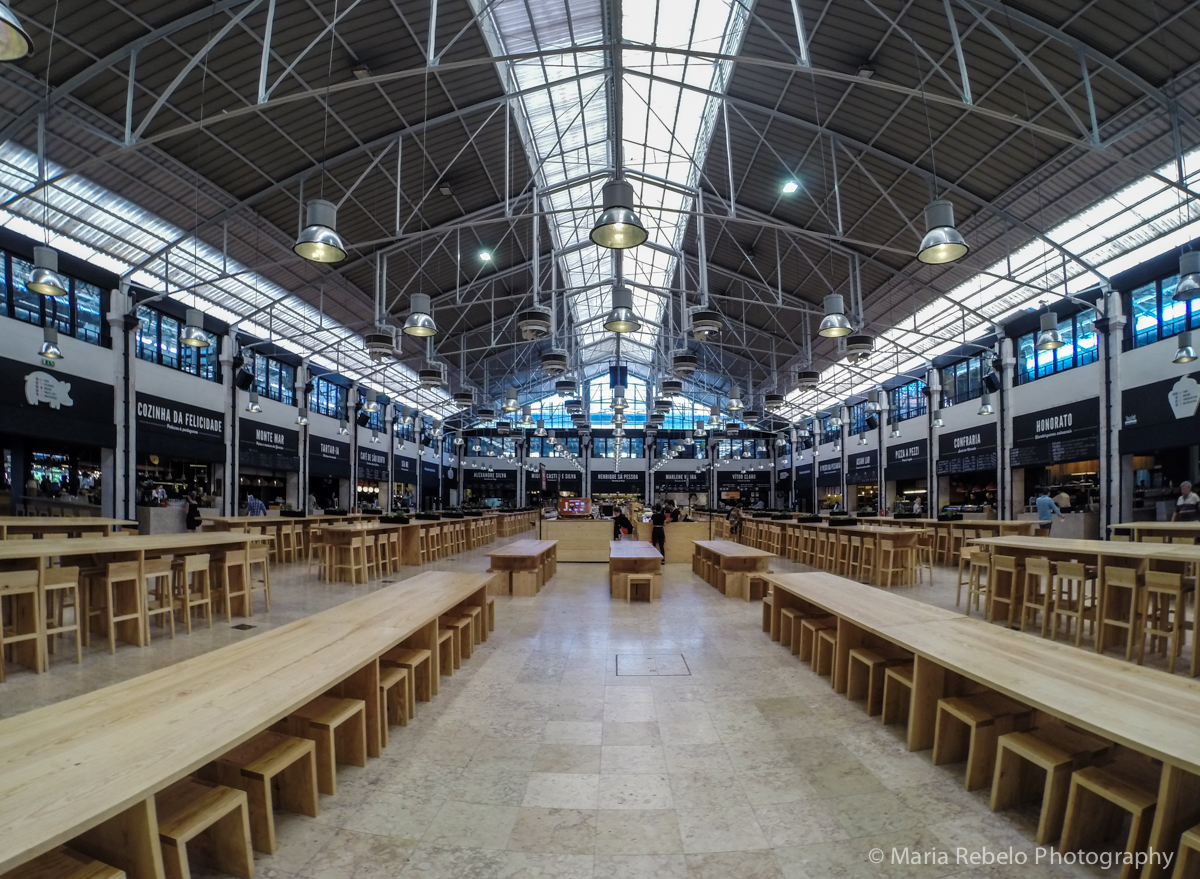
We dreamed we had died and gone to heaven. Paradise, it seemed, was a vast pavilion, sparsely furnished with long communal tables and bathed in a soft white light. To our astonishment, the air was perfumed not with incense but with the unmistakable aromas of Portuguese cooking: parsley and coriander, warm olive oil and garlic, salt cod, and cinnamon. All around us, great chefs beckoned, urging us to taste their creations. We sampled a delicate pastel de massa tenra by Miguel Castro e Silva, slow-roasted pork by Henrique Sá Pessoa, Marlene Vieira’s squid “pirolitos,” and a deeply comforting tomato soup by Alexandre Silva. Each dish felt like a small revelation.

When we woke up, we realized we had been dreaming about a real place. The magazine Time Out Lisbon transformed part of Mercado da Ribeira, one of the city’s historic food markets, into a hall where many of Lisbon’s finest restaurants maintain small outposts. For a modest sum, you can assemble a feast of your choosing, pair it with an excellent Portuguese wine, and dine at one of the long shared tables. It is, in its own unpretentious way, a little taste of heaven.

A beach fling

PraiadoAbano

First-time visitors to Lisbon are often surprised by its beauty. But, when you live in the capital city, you begin to take this beauty for granted and look around for something new. You don’t have to look far. Drive a few miles down the coast and you’ll find secluded beaches that will tempt your heart.

One of these beaches is Praia do Abano, on the coast of Cascais. Its cliff top offers breathtaking views of the Sintra mountain and the endless sea. Sheltered from the wind, Abano is the perfect place to enjoy a day in the sun.

There is a rustic restaurant on top of the cliff that you won’t find in tourist guides. It serves simple, wonderful food, such as amazing clams with irresistible country bread, delicious rabbit cooked in wine, and flavorful shrimp “açorda.” It is an unforgettable experience to dine there while the sun melts and the moon comes out to gild the sea with silver light.

An afternoon at Abano feels like a vacation. You return to Lisbon relaxed and content and, when you arrive at the capital, you are surprised by its beauty all over again.

The Abano beach is 21 miles from Lisbon. The telephone number of Restaurant Abano is 214870342.

A magical Summer soup

Composit 3F©

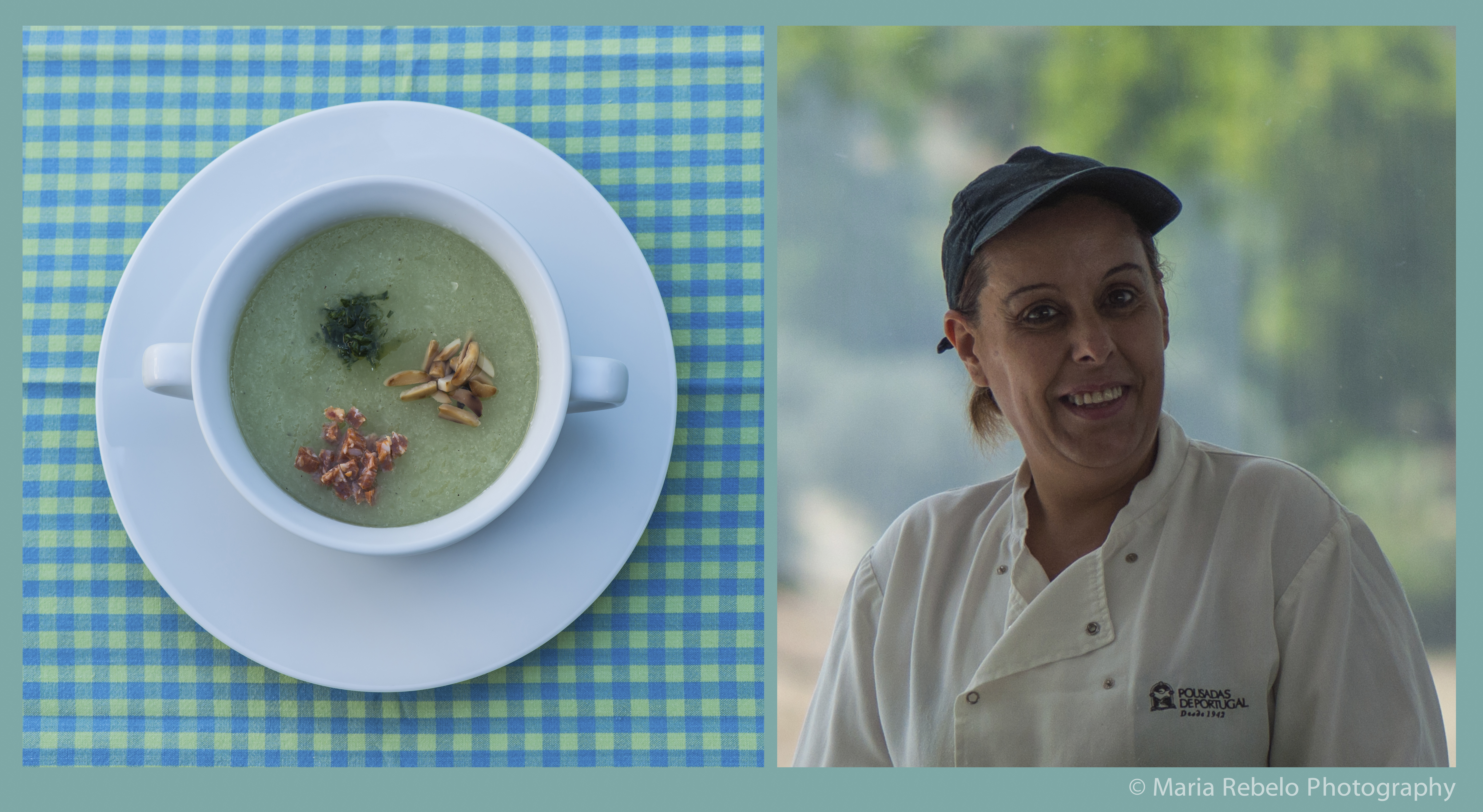
When we sat down for dinner in the beautiful esplanade of the Arraiolos Pousada, we expected good food and attentive service. We got much more than that. We were served a series of delicious dishes that harmonized perfectly with Alentejo wine and made us feel we were at the right place, at the right time.

The dinner started with two soups, a Summer cucumber soup, followed by a tomato soup with quail egg. We then had “migas” (an Alentejo specialty made with bread) with wild asparagus and lamb grilled with rosemary. The grand finale was a sampling of traditional convent desserts updated with great refinement.

We congratulated the chef, Elizabete Velez, who told us that she learned to cook with her mother and grandmother in a small village in Alentejo. She offered to give us the recipe for her delicious Summer cucumber soup because it is very easy to make. Here it is.

Elizabete Velez’s Summer cucumber soup

Get the very best cucumbers you can find. Peel them (this step is key because the peel is very bitter) and remove their seeds. Dice the cucumbers, season them carefully with salt, pepper, and great olive oil. Puree the mixture in a blender. Pour into small bowls, placing one or two ice cubes in each bowl. Garnish with toasted slivered almonds, small strips of cucumber peel, and Portuguese sausage (preferably from Alentejo!).

Imagine eating this soup in a warm Summer evening, as the sun sets over a grove of olive trees and the stars wait their turn to shine on the Arraiolos castle. It’s magical!

Click here for the Pousadas’ website and here for more photos of the Arraiolos Pousada.

Our favorite restaurant in Évora

BotequimdaMouraria-Edit©

Our favorite restaurant in Évora, Botequim da Mouraria, seats only eight people and takes no reservations. There are no tables, everybody eats at the counter. Domingos Canelas, the restaurant’s owner, recites the menu, an endless list of delicacies that includes wild asparagus, eggs laid by blissful chicken, incredible prosciutto from Alentejo, luscious figs, briny clams, succulent fish and meat. In the kitchen, his wife Florbela cooks these ingredients with great skill and refinement. When Domingos brings the food he smiles, anticipating our enjoyment.

We asked him to select a wine from the restaurant’s amazing list. Instead of choosing an expensive bottle, he decided to impress us with a perfectly chilled white wine from Herdade Grande. “In Portugal,” he said, “you don’t need to spend much money to drink great wine.” And we agreed, marveling at the perfect harmony between the wine and the food.

During our leisurely lunch, many customers came to the door and left because there were no seats available. And yet, Domingos didn’t  try to rush us. “You need time to enjoy the food of Alentejo,” he said.

We asked whether he planed to expand the size of the restaurant. He answered without hesitation: “I can only maintain this quality if I stay small.” At Botequim da Mouraria small is wonderful.

Botequim da Mouraria is at Rua da Mouraria, 16-A in Evora, tel. 266-746-775, email: botequim.mouraria@sapo.pt.

The best of both worlds

Azeitonas Bel Canto-F

Portugal is a country with century-old traditions. But it is also a place where a new generation is creating the future.

Consider the fruits of the Olea europaea, commonly know as olives. If you visit a Portuguese farmers market, you’ll find delicious olives cured in traditional ways. But if you dine at Belcanto, José Avillez’s wonderful restaurant in Lisbon, you’ll be served three invented olives. The first, a spherical olive that explodes in the mouth, is an homage to Avillez’s apprenticeship at elBulli. The second is a delicious black olive in a light crunchy tempura. The third is an inverted dry martini: the liquid is olive juice and the “olive” is a sphere of gin.

Which do you prefer, tradition or modernity? In Portugal you don’t have to choose.

Belcanto is located at Largo do São Carlos in Lisbon, tel. 21-342-0607.

A memorable sandwich

Sandes de leitão- ©mariarebelophotography.com

The Earl of Sandwich is credited with the idea of placing food inside two slices of bread. But it was Portuguese peasants who turned this aristocratic whim into something sublime.

In ancient times, peasants in Mealhada, a town in the Bairrada region, used to offer their largest pigs to the nobles who owned the land. The peasants were left with small pigs called “leitão” (“laytaoum”).  They roasted them in wood ovens, seasoned with garlic, bay leaves, olive oil, and plenty of white pepper. The meat, cut into slices and served inside country bread, produced amazing sandwiches.

One of our favorite side trips from Lisbon is to drive the 90 km to Mealhada to enjoy a freshly-made “leitão” sandwich, accompanied with local sparkling wine. On the way there, we visit the beautiful Batalha monastery. On the return, we stop by the enchanting Bussaco Palace for coffee and pastry. The delicious food and beautiful scenery always make for memorable trips.

There are many good restaurants in Mealhada serving “leitão à moda da Bairrada” (leitão Bairrada style). Two of our favorites are Meta dos Leitões (IC2, Estrada Nacional 1, Sernadelo, Mealhada, tel. 231 209 540, email: casadesarmento@gmail.com) and Pedro dos Leitões (Rua Alvaro Pedro no 1 Sernadelo, Mealhada, tel. 231 209 950).

Taberna da Rua das Flores

Taberna da rua das flores

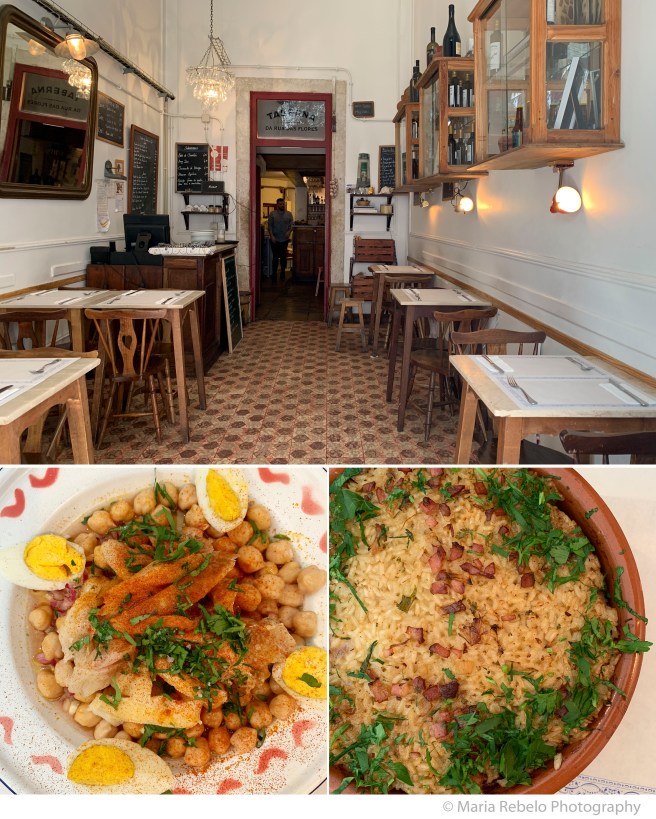
The name of this restaurant on Rua das Flores (flower street) combines the Portuguese word for tavern with the title of a famous novel: Tragedy on Rua das Flores, by the great 19th-century writer Eça de Queiroz.

The Taberna serves traditional home cooking. If you’re adventurous, try the excellent “iscas” (marinated liver).  Otherwise, you’ll find many other great choices, such as carrot and coriander soup, pork with sweet potato and zucchini, duck rice, and codfish with chickpeas. The quirky antique furniture helps create an unpretentious atmosphere. Prices are modest, so every meal has an happy ending.

Eça de Queiroz complained, through the words of one of his characters, that Lisbon lacked a fun place to eat supper after the Opera. One century later, this place exists. It is called Taberna da Rua das Flores.

The Taberna is located on Rua das Flores 103, tel. 351 21 347 9418, email: tabernadasflores@gmail.com.