Porto’s Ribeira district is always bustling with tourists snapping selfies and street performers vying for attention. Yet amid this lively chaos, there is a haven: a restaurant called Casario. This cozy space, with its terrace overlooking the river, is a collaboration between Granvinhos, the port wine company behind Quinta de Ventozelo, and two virtuoso chefs: Miguel Castro e Silva and José Guedes.
We strolled to Casario under ultramarine blue skies. The dining room, bathed in a warm glow, offered a welcoming ambiance. As soon as we settled at our table, the waiter presented a basket of enticing dark wheat bread. It was accompanied by velvety butter from the Azores and Ventozelo’s piquant olive oil. A refreshing rosé from Ventozelo filled our glasses, setting a playful mood for the meal.
Like Beethoven’s Ninth Symphony, dinner began with unforgettable notes: smoked eel seasoned with mustard and honey, served atop flatbread with a vinaigrette-dressed lettuce, and fried salted skate paired with pickled fennel and a celery and hazelnut purée.
This impressive start was followed by a harmonious sequence of courses. First came a moist and flavorful robalo, cooked at low temperature and served with a surprising yet felicitous combination of yellow peppers, turnip, and bok choy. Next was a whimsical shrimp and squid lollipop and chickpeas with two mushroom varieties: nutty boletos and earthy trompetas. The meal continued with a squid stuffed with spinach and sausage, bursting with flavor. Then came a briny turbot, paired beautifully with asparagus and a cockle called berbigão.
Dinner concluded on a sweet note with cinnamon ice cream, crème brûlée, and toasted pine nuts. A glass of 1994 Dalva port served as the perfect coda to this delicious meal.
It takes a lifetime to master the art of preparing a symphonic culinary experience like this one. Bravo, Miguel and José!
Casario is located at Praça da Ribeira, Viela do Buraco, 19, Porto, tel. 227-662-270. Click here for their website.
In 1926, the Michelin Guide began classifying restaurants into “vau l’etape” (worth stopping), “vaut le detour” (worth going out of your way for), and “vaut le voyage” (destination restaurants).
We are often asked which are the destination restaurants outside of Lisbon and Porto. Here are our very own recommendations listed in alphabetical order.
Chef Julie Marteleira and her sister Jennie left successful careers in Toronto to open a restaurant near the Portuguese village where their parents married. Alta, at Praia da Areia Branca, offers the freshest ingredients, exceptional preparation, and stunning ocean views.
Located in Évora, a beautiful Roman town, this restaurant seats only eight people and takes no reservations. It is worthwhile to arrive early to feast on the traditional food from Alentejo prepared by Florbela Canelas and served by her husband Domingos.
A royal retreat built by King Charles I and converted into a luxury hotel in the early 20th century. This place has everything: a majestic setting, iconic wines exclusive to the hotel, and delicious food prepared by Nelson Marques, a talented young chef.
Brazilian chef Michele Marques has lived in Portugal for so long that she almost lost her Brazilian accent. But her approach to cooking food in Alentejo remains unique—a magical combination of authenticity and creativity that always produces memorable meals.
This restaurant is in Porto Covo, a seaside village so beautiful that it inspired an eponymous song by singer Rui Veloso. Chef Ana Moura offers a cuisine that is elegant, creative, and full of flavor, making every meal feel like a summer vacation.
Chef Ricardo Nogueira is renowned throughout Portugal for his delicious roasted suckling pig. His restaurant is a gathering place for great Bairrada winemakers like Mário Sérgio, Filipa, and Luis Pato. The restaurant offers their wonderful wines at modest prices.
The culinary queen of the kingdom of Algarve did not inherit the throne. She conquered it by cooking the pristine seafood of the Algarve with such reverence and care that every meal is like a prayer.
In the shade of the castle at Alter do Chão Filipe Ramalho, serves a delicious evolution of traditional Alentejo cooking. Do not miss his classic tart, cooked with farinheira sausage made with chestnut flour, topped with pears cooked in wine, quince marmalade, and chard.
Located in Ervedosa do Douro, surrounded by some of the best vineyards in the Douro Valley, Dona Graça and her daughter Rosário use almost forgotten recipes to make food that satisfies the soul.
Casa Tradição is located near Lisbon’s old cathedral, a neighborhood rarely visited by locals. The restaurant has rustic decor, so we went in expecting a traditional meal. But our waiter mentioned a tasting menu, and we tried it.
Dinner began with an assortment of bread served with creamy nut butter and fragrant olive oil from Porto de Mós, the hometown of the restaurant’s chef, Samuel Mota.
Then, the unexpected delights started. First, a martini glass brimming with ice held a slice of apple marinated in citrus and spices, evoking the essence of a frozen sangria. Then, a crisp mini baguette layered with Serra cheese and exquisite Pata Negra prosciutto.
But the clearest sign that this would be a memorable night came next: a pastry resembling a pastel de nata crowned with smoked codfish and filled with a blend that echoes the flavors of traditional creamed codfish.
We were still recovering from this moment of deliciousness when we were served a cabbage tempura stuffed with migas made from beans and olives. The rich and satisfying taste was reminiscent of a Portuguese sausage called alheira.
The seafood entrée was stunning: a delicately cooked large Algarve shrimp served with a broth and fermented lupini beans. The fish course was a perfectly cooked corvina with asparagus and açorda made with fish roe.
The seventh step to culinary heaven was faux cabidela rice. Traditionally made with vinegar and chicken blood, it was ingeniously reimagined as a beetroot risotto, subtly enhanced with raspberry vinaigrette, and served with succulent guineafowl cooked with bacon.
The meal concluded with a moist pão de ló and a foam crafted from Serra cheese. Chef Samuel’s five-year tenure at the acclaimed Belcanto helped prepare him to follow his imagination. Though rooted in tradition, his creations brim with innovative, delicious culinary ideas.
Casa Tradição is located at Travessa do Almargem, n. 4, Lisbon, tel. 967-340-913. Click here for their website.
We heard from the culinary rumor mill that a famous Lebanese chef had moved to Lisbon and opened a restaurant called Touta. So, on a warm spring evening, we climbed the hill from Estrela to Campo de Ourique to try it out.
Rita Abou Ghazaly welcomed us into the gracious dining room decorated with Middle Eastern motifs. She served us hibiscus and rose-petal kombucha while Lebanese music filled the air with the same microtones we hear in fado.
Dinner started with a basket of Lebanese bread and cheese bonbons—crispy cheese treats wrapped in phyllo dough. Next came a plate of hummus, a combination of chickpeas and tahini sauce that is a staple of Middle Eastern cuisine. This rendition was the best we ever tried. It was topped with soujak meat, pickles, and aquafaba, a sumptuous emulsion of chickpea water that resembles whipped egg whites. It was quickly followed by grilled cabbage with lentils and beetroots delicately seasoned with cured lemons.
We tried a delicious soup made with a local fish called mero. It reminded us of cação soup, a traditional Alentejo recipe. Finally, we had a spectacular grilled black pork served with black beans, carob marshmallows, and a barbecue sauce made from molasses. Dessert was a simply perfect sweet croquette.
“What made you decide to open a restaurant in Lisbon?” we asked Rita. “Ask Waël,” Rita said, laughing, “it’s all his doing.” Waël Haddad told us he has had a crush on Lisbon since his first visit ten years ago. “I kept returning and brought my friend Rita and my cousin Touta, a celebrated Lebanese chef. With every visit, our love for the city deepened, and so we started looking for a restaurant location. We explored various neighborhoods until we stumbled upon this perfect spot with a ‘for sale’ sign. Now, here we are, living our dream.”
Chef Cynthia Bitar, affectionately known as Touta, came to greet us. She inherited her passion for cooking from her mother, a famous Middle East caterer. Touta has always been obsessed with cooking. “When I was a child and went on play dates, I often cooked in my friend’s kitchens. I think about food during the day and dream about it at night.”
She returned to her family’s catering business after training at the Paul Bocuse Academy in Lyon. But, like Waël and Rita, Touta fell for Lisbon’s charms. She was drawn to the similarity between Lebanese and Portuguese cuisines, the quality of local ingredients, and the warmth of the people. “I found amazing produce in the farmers markets. Try this carrot.” She sliced a small carrot in half so we could experience its aroma and enjoy its sweet taste.”
Touta took us to the grocery store at the back of the restaurant. Its shelves are full of products from Lebanon and jars with pickles, jams, fermented drinks, and preserved citruses that she prepared. We stayed past midnight, bewitched by Touta’s sensuous cuisine, sampling everything from molasses and infusions to spices like sumac and za’atar.
In the 15th and 16th centuries, trade with Africa, Asia, and South America turned Lisbon into a hub for global talent. The diverse influx of people profoundly influenced Portuguese culture, cuisine, and art. It is wonderful to see Lisbon once more attracting people who will bring the city to new heights. Welcome, Waël, Rita, and Touta!
Touta is located at Rua Domingos Sequeira 38 in Lisbon 960 49 49 49. Click here to go to the restaurant’s website.
Gaveto is a restaurant in Matosinhos where winemakers from the Douro Valley and the Vinho Verde regions often gather. It is easy for regulars to take for granted the meticulous selection of ingredients, the flawless execution of each dish, and the impeccable service. But this restaurant took a lifetime to build.
Its founder, Manuel Pinheiro, began his culinary journey at age 12, working in Porto at the home of the banker António Borges. At age 18, Manuel got a job in a restaurant owned by the Borges family. He started by hauling coal for the stove and washing countless pots and pans. Over time, he learned to cook, to run the kitchen, and to manage the dining room. Ten years later, Manuel put all this knowledge to use by buying a small restaurant in Porto and turning it into a popular spot.
In 1984, while shopping for fish at the Matosinhos market, Manuel learned that a spacious restaurant called Gaveto was up for sale. Tempted by the opportunity to attract a larger clientele, he purchased the place. The investment was so large that his wife Margarida cried for two weeks, worrying that they might soon be ruined.
Manuel involved his two sons, João Carlos (in the photo with his father) and José Manuel, in the business. Together, they turned Gaveto into a gastronomic landmark and built one of Portugal’s most impressive wine collections. Whenever they serve a rare wine from their cellar, João posts a photo of the bottle on Instagram captioned with his signature phrase: “There are days like this.”
The menu includes only traditional Portuguese fare, yet the offerings are so tempting that we always struggle with our choices. During our last visit, we hesitated about whether to get the iconic lobster rice, the legendary lamprey, the exquisite tiger shrimp, the perfectly grilled fresh fish, or the tripe with beans, which former President Mário Soares considered the best in the country.
When dessert time came, we debated whether to opt for one of the many puddings and tarts, get the traditional pão de ló, or taste the fine cheese that Manuel procures in the Estrela Mountain. These were not easy decisions. And at Gaveto, every day is like this.
The initial thrill of a new experience often fades with repetition, a phenomenon psychologists call hedonic adaptation. Somehow, this human trait does not manifest itself at Ceia, a restaurant in Lisbon that keeps reinventing itself, serving food that is always interesting, new, and delicious.
Ceia’s culinary team is currently headed by Chef Renato Bonfim, who previously worked at Adega, a Michelin-starred Portuguese restaurant in California. The menu is inspired by the pristine produce from Herdade no Tempo, a beautiful estate in Alentejo that follows regenerative agriculture practices.
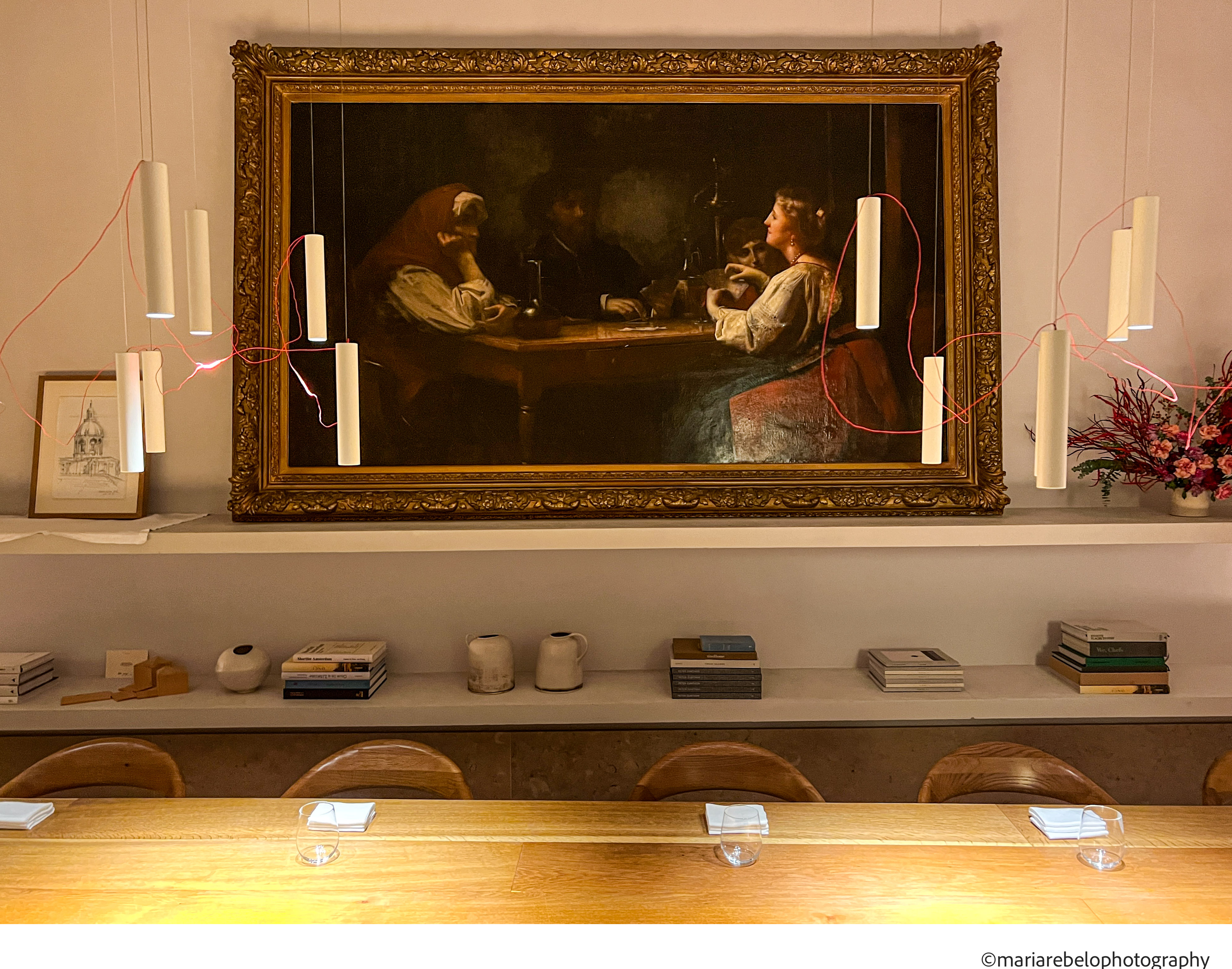
The restaurant, which is part of a project called Silent Living, is located on the ground floor of Santa Clara, an intimate hotel with privileged views of the Tagus River and the Pantheon. Kristin Liebold, a member of the Silent Living team, welcomed us to the spacious courtyard of the historical building that dates back to 1728. She presented us each with glasses of Ode, a refreshing wine crafted near Lisbon from Arinto grapes. As we mingled with other guests, Kristen appeared to whisper a magical incantation. Then a door swung open, unveiling a dining room so perfect it could be the setting for a Vermeer painting.
As we gathered around the table, Renato and his teammates Ricardo Cruz and Tiago Ramos came to greet us and, like the three kings, they brought three offerings. First, slices of sourdough bread accompanied by a sumptuous butter from the Azores and a luscious spread crafted from butter and a type of sausage called alheira. Second, a crispy tartelette made with perfectly seasoned lírio (greater amberjack) and vegetables. Finally, exquisite polenta cubes topped with aioli, garlic, and cheese and nestled in wooden boxes filled with bright yellow corn. Dardas, a bright vinho verde (green wine) made with the Avesso varietal, kept us in great company.
As we debated which of these offerings had most captivated our taste buds, Ricardo introduced a new chapter to our culinary adventure: an algae chowder. It is based on shio koji, a salted Japanese pudding encircled by algae cooked in a Bulhão Pato style. The preparation was crowned with a leaf of the rare Mertensia maritima. We were instructed first to eat the leaf, savor its unique oyster flavor, and then blend a small glass filled with chowder with the algae. The result was an unexpectedly delightful harmony of flavors.
As our glasses filled with a silky Dona Paulette from Quinta de Lemos in the Dão region, we were brought plates of octopus grilled in charcoal, topped with kale, and seasoned with an inventive mole made from grilled peppers and pomegranate—another unusual but perfect combination of flavors and textures.
The next dish featured crispy sarraceno wheat mixed with chanterelles and shiitake mushrooms seasoned with a sauce made from shallots, beer yeast, dehydrated apricots, and raisins. There was so much flavor to process that we closed our eyes to let our brain focus on the gastronomic sensations. A late harvest from the Douro Valley called Aneto complemented the earthy flavors of the dish with a delicate, effusive sweetness.
A sparkling wine made by Sidónio de Sousa in Bairrada ushered the arrival of a turbot from the Azores delicately cooked, dressed with beurre blanc and kombucha, topped with fermented turnip and kohlrabi and finished with a few drops of garum. This Roman fish sauce, which is once again being produced in the Troia peninsula after a hiatus of 15 centuries, added a unique depth to the dish.
The meat course was a succulent black pork served with a rich purée made from Jerusalem artichokes, chestnuts, and purple onion. It was served with a robust vinhão, a red wine made from a dyer grape called Sousão produced in the vinho verde region by Vale da Raposa.
The first dessert was an ensemble of panna cotta, chocolate, and matcha powder, garnished with leaves from Madeira that taste like passion fruit. A white port made by Alves de Sousa called Oliveirinha added a velvety smoothness to this symbiosis of flavors.
The second dessert was ginger and pumpkin cooked with Chinese spices, a praline made from pumpkin seeds and seasoned with pollen.
Our meal concluded with a refreshing lemongrass tea, quindin, a Brazilian coconut pudding, and truffles crafted from 70 percent pure chocolate from the island of São Tomé.
We lingered at the table, talking with the other guests about the culinary experience we had just enjoyed, so replete with unexpected pleasures and delights that we felt like we were dining at Ceia for the very first time.
Ceia is located at Campo de Santa Clara, 128. Lisbon. Click here for the restaurant’s website.
Blessed are those who open affordable restaurants that serve delicious food, for they bring joy to the world. Diogo and Tiago de Jesus, two brothers born into a family of restaurateurs, opened a pizzeria in Rua da Guiné, a quiet street near the busling Almirante Reis Avenue. Tong in cheek, they called it Jezzus.
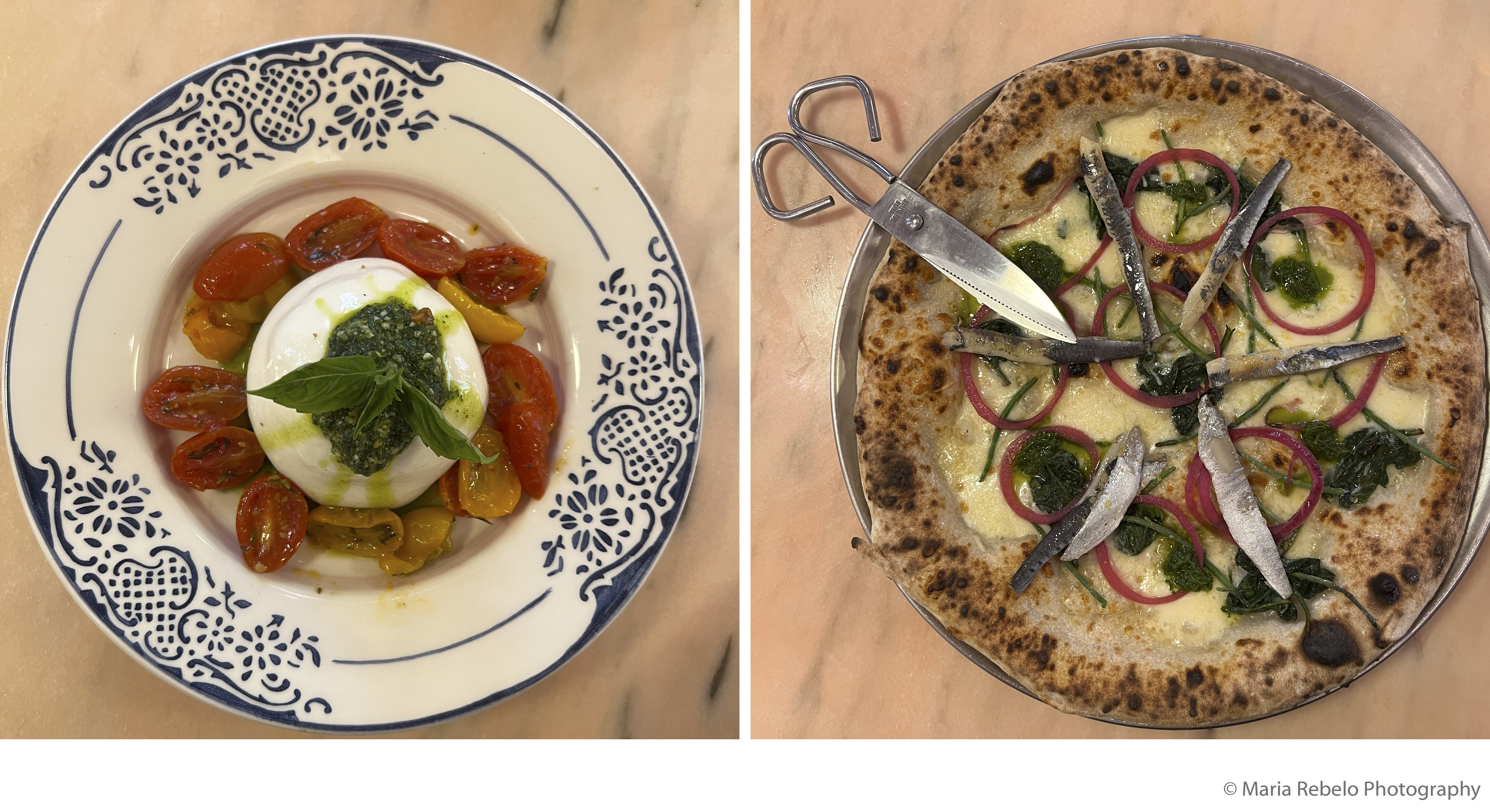
Inside the small restaurant, a dedicated team of cooks fires up mouthwatering Napolitan-style pizzas in an Italian oven fitted with a volcanic stone from Mount Vesuvius. The menu offers a mix of classics, like the timeless Margherita, and inventive creations inspired by Portuguese cuisine. These nouvelle pizzas include “Bulhão Pato,” which tastes like the namesake clam sauce, “Oh Pear,” featuring Rocha pears, and “Oh Diabo!,” adorned with slices of sinnfully spicy Portuguese sausage.
The five-cheese pizza adds to the traditional parmesan a tetrad of Portuguese cheeses: blue cheese from Azeitão, a rare velvet cheese made from the milk of serpentine goats, and “grande do viso,” a cow milk cheese with a rind washed in red wine. Our favorite pizza is Holly Sardine, made with immaculate marinated sardines from the Algarve.
While you wait for your pizza to cook, you can feast on a plate of savory black pork sausages or try the luscious artisanal burrata with tomato confit and basil pesto.
The exceptional quality of the ingredients, sourced from small, local producers, stands out. The pizzaria buys its flour from Paulino Horta, an artisanal miller. They ferment the dough from 47 to 72 hours using sourdough yeast, resulting in a light, easily digestible crust.
Diogo and Tiago say that making pizzas as good as theirs at home would be a miracle. We wholeheartedly agree.
Jezzus is located at Rua da Guiné, 1A, Lisboa, tel. 21-814-2186.
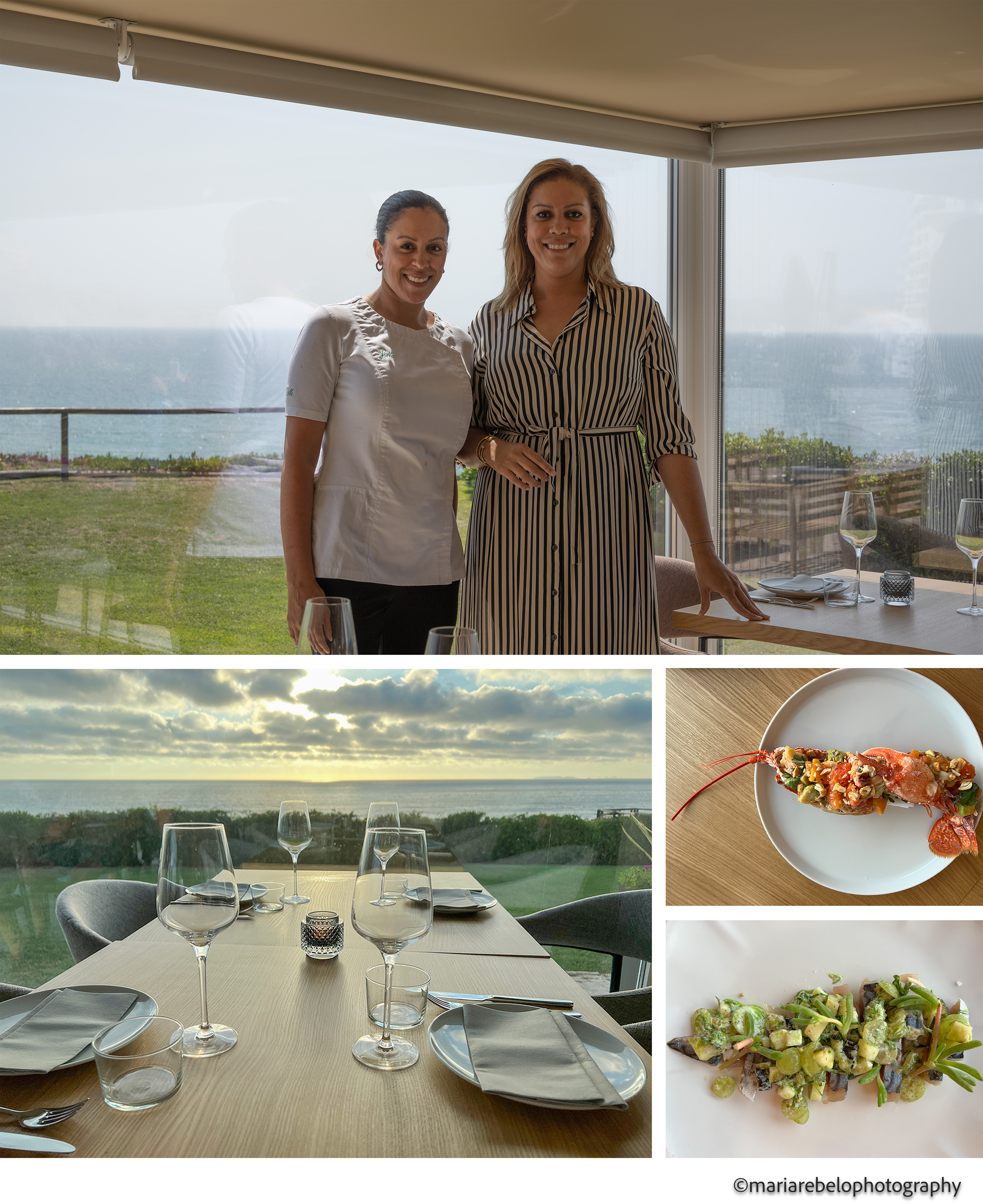
Alta, a new restaurant perched on a cliff overlooking Praia da Areia Branca, offers mesmerizing views of the Berlenga island and the endless sea. But it was hard to pay attention to the view once the tempting appetizers arrived at our table. First, a plump burrata adorned with an enticing tomato jam. Then, marinated mackerel seasoned with salicornia and green grapes—a culinary dance of saltiness, sweetness, and acidity. Next, fabulous codfish cakes–light, crisp, and full of flavor. Finally, a stunning lobster salad beautifully served in its shell.
In a blatant plea for attention, the sun began to set, painting the sky with brilliant yellow hues. We admired the spectacle, but our focus shifted to the main courses: mouthwatering seafood rice and a succulent roasted pork belly. The menu tempted us with many other delights, such as grilled fish and codfish confit. The meal ended with a taste of sweetness from slices of chocolate and ricotta cakes.
Alta has become popular since opening on June 10, so it’s best to make a reservation. But even waiting for a table is a pleasure–we can sit on the esplanade drinking an aperitif and taking in the magnificent vistas.
Chef Julie Marteleira and her sister Jennifer moved from Toronto to Praia da Areia Branca to create Alta. Even though they were born in Canada, this venture feels like a homecoming. Their parents, Joana and Joaquim, got married in Abelheira, a quaint village you can see from the restaurant. Julie dreamed of one day working in Portugal. We’re all lucky that her dream has come true.
Alta is located at Alameda a Ver-o-Mar, no 1, Praia da Areia Branca, Lourinhã, tel. 261 422 310.
Life is made of connections and disconnections. Fernando Sousa and Margarida Batista had a restaurant in Viseu, our hometown, for many years. We lived in the same city without ever crossing paths. Nine years ago, the couple moved to Vouzela, a quiet village in the countryside. We heard about their restaurant from Abílio Tavares da Silva during a visit to the Douro valley. Since then, we have tried a few times to make reservations but received a friendly message telling us the restaurant was fully booked. Finally, we managed to email with enough lead time to secure a table for lunch.
We got off the highway, following the sign that reads Vouzela, and soon we were driving on a narrow, winding road. The sight of granite dominates the landscape. There is granite on every hill, and these stones are used in street pavements, exterior walls, and church façades.
Fernando greeted us with a promise: “I will take care of you.” He manages the dining room, and Margarida does the cooking. We sat at the table, and soon a pleasant Dão wine made with the classic trio of local red grapes, Alfrocheiro, Touriga Nacional, and Jaen, filled our glasses.
Then Fernando brought a wood turntable with rice cooked in the oven with mushrooms, sausages, and meats, and golden veal accompanied by vegetables and roasted new potatoes. Both dishes have sumptuous flavors. The veal melts in the mouth, and the rice is deeply satisfying.
Fernando showed us with pride a photograph of Maria de Lurdes Modesto, the chef who codified traditional Portuguese cooking, taken when she visited them. It is natural that Modesto, who prized flavor above all, liked this restaurant.
Margarida is a simple place. What makes it shine is Fernando’s copious affability and Margarida’s gifted cooking. What else do we need?
Margarida is located at Rua Mousinho de Albuquerque 33 in Vouzela, tel. 936 935 843, email margarida.vouzela@gmail.com. It is a small restaurant; reservations are a must.
Belmiro is the kind of restaurant that is increasingly hard to find in Lisbon. It does not prepare food to look good on Instagram. It does not seek originality for its own sake. Instead, it cooks classics of the Portuguese cuisine with good-quality, seasonal ingredients.
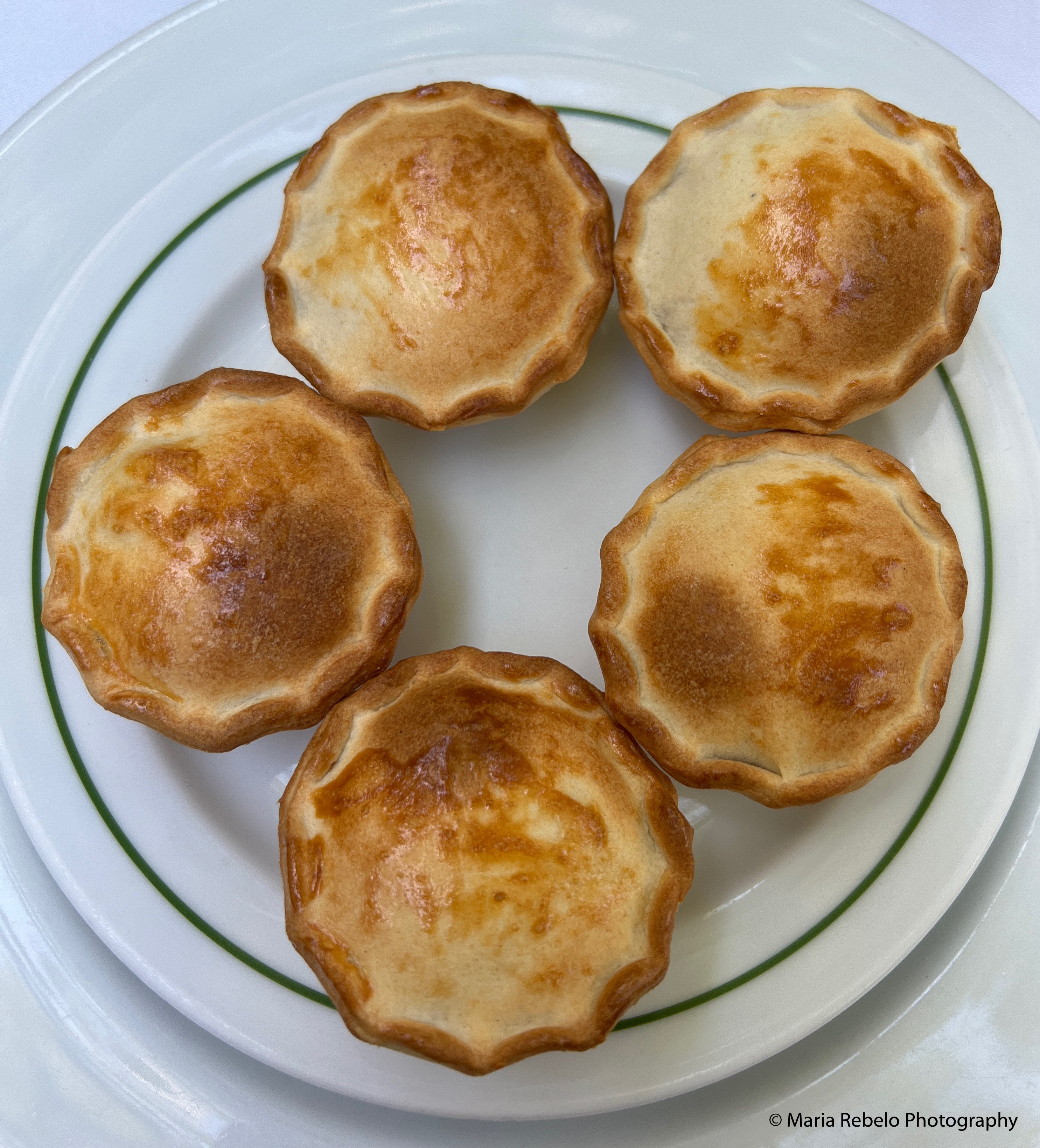
The restaurant is named after Belmiro de Jesus, an old hand who’s been a chef at places like Salsa & Coentros. Belmiro is famous for his mouthwatering “empadas,” small pies with delightful fillings. And he is a virtuoso at cooking partridge and hare. He prepares them with rice, in “açorda,” with beans, and much more. The menu is seasonal, it changes to reflect what’s fresh in the market. If you can’t decide what to choose, a good rule of thumb is to order anything cooked in a “tacho” (a saucepan).
We like to go to Belmiro with friends and ask the chef to prepare a few entrées we can all share. Accompanied by some good bottles of wine, the meal always turns into a party.
Belmiro is located at Paço da Rainha 66, Lisbon, tel. 21 885 2752.



 Salt of Portugal