M.O.B., stellar wines from the Dão region

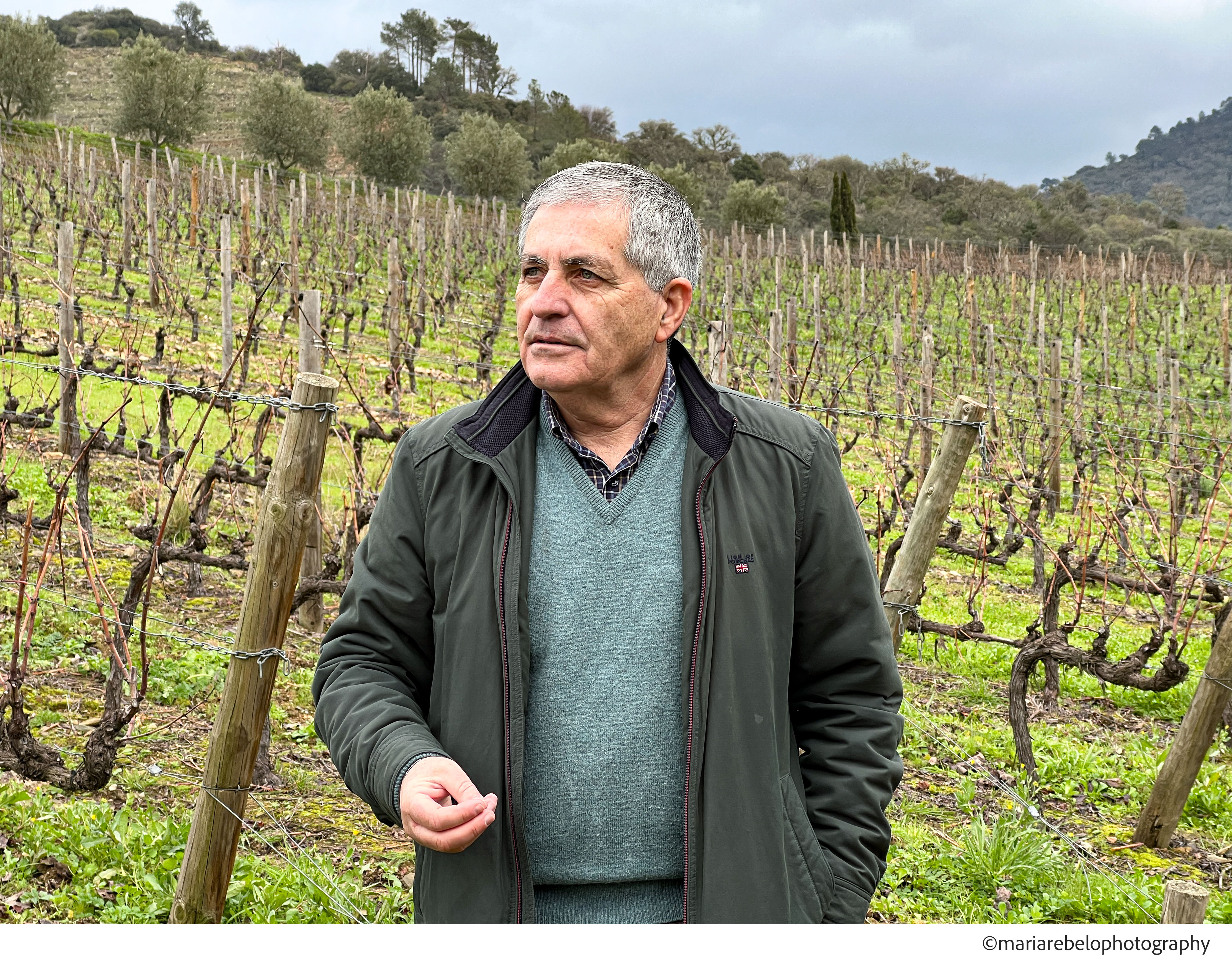
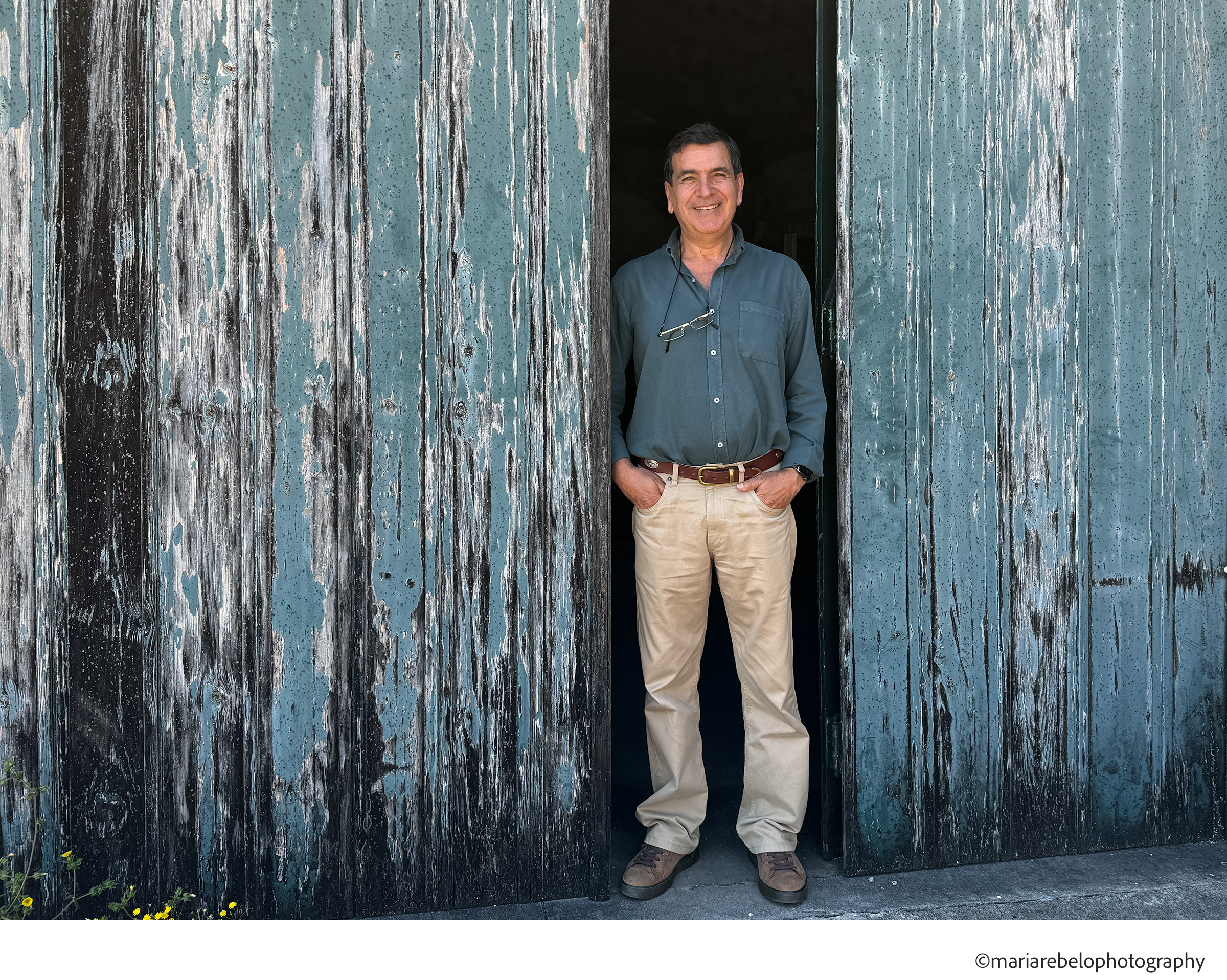
In 2010, a leisurely lunch in the picturesque Dão region brought together four wine producers. Three came from the Douro Valley: Jorge Serôdio Borges, Jorge Moreira, and Francisco Olazabal. Their host was Álvaro de Castro, a renowned winemaker from the Dão region, known for the finesse of his wines.

Jorge Serôdio Borges and his wife lead Wine & Soul, a cornerstone of excellence in the Douro Valley. Jorge Moreira has achieved great recognition for his project, Poeira, and for the wines he has made at Quinta de La Rosa. Francisco Olazabal heads the iconic Quinta do Vale Meão. This estate was planted in the late 19thcentury by his great-grandmother, Dona Antónia Ferreira, the person who sowed the seeds of the success that the Douro Valley enjoys today.

The three friends are passionate about the freshness and refinement that can be found in old Dão wines. During lunch, they mused about one day making wine together in the Dão region.

A year later, Álvaro de Castro reached out, encouraging them to make this dream come true: “I need your help to promote the Dão region. There’s an aging producer looking to lease his estate, Quinta do Corujão, in Seia. If you’re serious about launching a project in the Dão region, this is a good opportunity.”

The Douro winemakers visited the 10 hectares of vineyards cultivated on granite terroir at 550 meters of elevation at the base of the Estrela Mountain. They decided to lease the property to make wine together. They called their brand M.O.B., a memorable name composed from the initials of their surnames.

By going to a different region, the three masters of the Douro Valley became students once again. The same varietals behave very differently in Dão and in the Douro Valley. In the Dão region, the climate is cooler, and the soils are granitic. In the Douro region, the summers are hot, and schist is prevalent in the soils.

Douro wines are famous for their intensity. In the Dão, the trio embraced a low extraction approach, aging the wine in old oak barrels that round the tannins without imparting new flavors to the wine. The result is lighter wines that are delicate and transparent, preserving the fruit’s freshness and showing an almost floral character. 

M.O.B. was a success because wine enthusiasts quickly recognized the exceptional quality-to-price ratios of the wines. Five years after their first harvest, the trio purchased Quinta do Corujão and leased five hectares of old vineyards in Gouveia, where white and red grapes are planted together. 

Their outstanding introductory wine is called “Lote 3” because it is a harmonious blend of the three emblematic grape varietals from the Dão region: Touriga Nacional, Afrocheiro, and Jaen. Their stellar premium wines bear the names of Seia and Gouveia before the Roman occupation (“Senna” and “Gauvé”).

A crucial element in the M.O.B. project is the strong camaraderie and mutual respect the winemakers have for each other. Like in Alexandre Dumas’s famous novel, their motto is: “All for one, and one for all.” 

Throughout the harvest season, they take turns visiting the vineyards daily, each making decisions informed by the insights of the vintner who visited the day before and leaving information for the one who follows the next day. This relay race produces wines that win our palate with their charm and elegance.

M.O.B. is a story of three musketeers who journeyed from the Douro Valley to the Dão region, where, thanks to a close-knit friendship, they conquered a new terroir and crafted exceptional wines.

Mouchão’s timeless wines

Turning from the asphalt road onto the rustic path that leads to Mouchão is like entering another century. The route is lined with secular eucalyptuses that perfume the air with their fragrance.  On the left, there are picturesque vineyards. At the road’s end, the winery comes into view. It is where, for more than 140 years, some of the most renowned wines in Alentejo have been produced. 

“The winemaking style remains faithful to tradition,” explains Hamilton Reis, Mouchão’s enologist. “We embrace a philosophy of minimal intervention and meticulous attention to every detail. However, we also harness modern viticultural and oenological knowledge to anticipate and solve problems.” 

What sets Mouchão apart is its unique location. The vineyards are planted on an old riverbed that creates a microclimate, lending freshness to the wines. The underground water sustains the vines during the scorching summers, so they don’t need to be irrigated. To access this subterranean water, the vines develop deep roots that absorb the polyphenols that contribute to the wines’ remarkable richness.

The grapes undergo gentle foot-treading to ensure a delicate extraction and avoid herbaceous notes. The wine ages in large barrels crafted from Brazilian macacaúba, mahogany, Portuguese oak, and chestnut. These old barrels no longer influence the wine’s taste but provide the right amount of micro-oxygenation.

Mouchão is famous as the birthplace of Alicante Bouschet in Portugal. This grape variety, created by French viticulturist Henri Bouschet, failed to thrive in France. At the end of the 19th century, two professors from Montpelier planted some Alicante Bouschet cuttings in Mouchão. Here, basking in the sunny Alentejo climate, the vines flourished, producing wines of intense color and flavor. Alicante Bouschet spread throughout the region and eventually found its way to the Douro Valley.

For six generations, Mouchão has belonged to the Reynolds, a Scottish family. Iain Reynolds Richardson, Mouchão’s current general manager, descends from Thomas Reynolds, who arrived in Portugal in 1824 to trade cork, wool, and other agricultural products. Thomas moved to Alentejo in 1932 and started producing cork in Mouchão. Making wine was a natural extension of his business. In 1890, John Reynolds his grandson, built a family home and some agricultural buildings on the estate. The iconic wine cellar was inaugurated in 1901.

For generations, the Alabaças, a traditional Alentejo family, worked on the estate tending to the vines and making the wines. It was hard manual labor–electricity only arrived in 1991.

In the aftermath of Portugal’s 1974 revolution, the estate was nationalized. The vineyards were abandoned, and the buildings and equipment fell into disrepair. João Alabaça worked tirelessly to minimize the destruction. But, despite his best efforts, by the time the estate was returned to the Reynolds family in 1986, the precious barrels had suffered serious damage. It took a dedicated team of coopers two years to painstakingly restore them. In the meantime, the best grapes were aged in the two barrels that had survived unscathed, labeled 3 and 4. The wine from these barrels, known simply as “Tonel No. 3-4,” achieved mythical status. However, as Hamilton explains, “The real magic lies not in the barrels, but in the quality of the grapes.”

The estates’ flagship wine, simply called Mouchão, was first bottled in 1949. It marries the robust Alicante Bouschet with various varietals, most notably Trincadeira. This wine is a true marvel, with a freshness and elegance unusual in Alentejo. It is a fitting homage to the unwavering dedication of generations of Reynolds and Alabaças.

Filipa Pato’s joyous wines

We met Filipa Pato and her husband, William Wouters, at Costa Nova, the beach where Filipa used to vacation as a child. Our dinner at Clube da Vela, a restaurant resembling a ship adrift on the waters of Aveiro’s Ria, was unforgettable.

Even though her family has produced wine for five generations, it was not easy for Filipa to start making wine. She didn’t own land, and she is the daughter of a legend. Her father, Luís Pato, is the visionary who placed wines made from baga, the red varietal from Bairrada, on the pantheon of the world’s finest wines. But, over time, Filipa painstakingly crafted splendid wines and forged her own legendary status. “In New York, they know me as Filipa’s father,” says Luís with pride.

After studying chemical engineering in Coimbra, Filipa interned at vineyards in France, Australia, and Argentina. She returned to Bairrada in 2001 for her inaugural harvest and bottled the wine in 2003. A Belgian distributor acquired half of the production. He sold some bottles to William Wouters, a genial chef and sommelier who owned Pazzo, an acclaimed brasserie and wine bar in Antwerp. William became a fan of Filipa’s wines. “At the time, no one knew the white grapes that Filipa uses–bical, arinto, cercial—so I called the wine a Portuguese Chablis,” says William. 

William and Filipa frequently crossed paths at wine events. Like in a fairy tale, their connection blossomed into love, culminating in their marriage in 2008. Filipa, who is intense, inquisitive, and creative, found a perfect partner in William, who is funny, focused, and organized. There is a great rapport between the two. Both are artists at heart, driven by a passion for crafting exceptional wines. 

Their wines have achieved tremendous success, earning a place in the lists of many renowned restaurants. The demand is so high that they sell through allocations—restaurants and distributors receive only a fraction of what they order. Each January, the couple runs out of wine to sell.

Enthusiasts from all corners of the globe make pilgrimages to meet these trailblazing winemakers. Just last autumn, Jonny Buckland, Coldplay’s guitarist and wine enthusiast, paid them a visit. 

The couple lives in Óis do Bairro, a picturesque village of 200 people that dates back to the Middle Ages. They employ ten people who do everything by hand. “We prioritize investing in people over machines,” says William. 

Their terroir is exceptional, with soil composed of clay and limestone from the Jurassic era. The proximity to the sea infuses the wines with a delightful salinity. The vineyards have low yields, but the quality of the grapes is superb. 

They own 32 parcels of land spanning 20 hectares. “Visiting our properties is like going on a safari,” says William. The portfolio includes centenary vines as well as vineyards that predate the phylloxera outbreak in the second half of the 19th century. One of their jewels is Missão, a vineyard planted with baga in 1864. 

A significant turning point in Filipa and William’s journey was their adoption of biodynamic farming practices. After enduring three years of reduced yields, their efforts began to bear fruit. Yields rebounded, and the grapes acquired a new vibrancy.

Eliminating chemicals attracted snails to the vineyards. To divert these mollusks from the grapevines, the couple planted foods that the snails find irresistible like fennel and fava beans. The biodynamic practices turned the fields into hubs of life, teeming with blooming flowers, wildlife, ladybugs, and other beneficial insects.

Because the space between vines is narrow, they employ sheep, pigs, and chickens instead of horse-drawn plowing. The pigs eat lots of grapes but, instead of lamenting the production losses, the couple takes pleasure in the pigs’ satisfaction.

Our tasting began with the festive 3B rosé sparkling wine, a perfect summer wine. The three Bs stand for Bairrada, the wine region, baga and bical, the two grape varietals. The color of the wine changes from year to year. “My wines wear no makeup; I work with what Mother Nature gives me,” says Filipa. 

Next, we savored a beguiling Blanc de Blancs sparkling made from a trio of white grapes: bical, cercial, and Maria Gomes. Its creamy and refreshing character delighted our senses.

Our glasses were then filled with a 2020 Nossa Calcário white made from bical, ranked high on the Wine Spectator list of the world’s finest wines. You do not need wine critics to appreciate the excellence of this wine, with its exquisite minerality and saline notes. It is made in their village, which in the 19th century was considered the best terroir for white wines in Bairrada. 

We embarked on a journey back in time with Post Quer..s Baga, a red wine produced in amphoras. This delicate wine has a transparency and purity that is rare in modern wines. Filipa does not coat the amphoras, so the porous clay naturally softens the tannins of the baga.

Next came their flagship Nossa Calcário Red. It is made from baga grapes grown on small centenary vines. The result is an opulent wine with fine tannins that is wonderful to drink now but promises even greater rewards with age.

“In Bairrada, it is a tradition to start the meal with sparkling wine and end with sparkling wine,” says Filipa. The grand finale was a stunning sparkling made with a solera process initiated in 2001. 

The solera system uses a sequence of barrels. Every year, Filipa removes wine from the top barrel to use as the base for sparkling wine. This barrel is filled with wine from the barrel just below, which in turn gets filled by the barrel just below, etc. Finally, the bottom barrel is filled with new wine. The result is a moving average of all the harvests going back to 2001.

The wine was poured into a decanter designed by William and then served in white wine glasses. Just one sip of this nectar revealed why it was elected Wine of the Year by Portugal’s leading wine magazine—an exceptional honor in a country with so many distinguished winemakers. 

Filipa and Williams love traveling and meeting other winemakers. They return from these trips to Óis de Bairro inspired and energized, ready to craft wines like these that bring joy to the world. 

Clike here for Filipa Pato and William Wouters’ website.

How to open a bottle of champagne

France is famous for the sparkling wine produced in the Champagne region. But there are exceptional sparkling wines in other parts of the world. We’re particularly fond of the sparklings from Bairrada, which have a unique vibrancy and remarkable aging ability. 

During a recent visit to Bairrada, renowned winemaker Mário Sérgio from Quinta das Bageiras asked his son Frederico Nuno to teach us the art of uncorking a bottle of sparkling wine. 

Everybody knows the wine should be properly chilled and that, unless you won the grand prix, you should not shake the bottle. Start by carefully cutting away the foil covering the cork. Here’s the key tip: leave the wire cage encasing the cork intact. Removing it causes the cork to expand, making it challenging to extract. Instead, gently twist the cork with the wire cage in place. The cork should effortlessly leave the bottle with no wine spillage, letting only the delightful fragrances waft into the air.

“If the boss is in the house,” Frederico says, referring to his father, “we twist the cork slowly to ensure it comes out silently. If the boss is away, we remove the cork more briskly to hear the celebratory pop we associate with sparkling wine.”

To demonstrate the technique, Frederico opened a bottle of the splendid 2018 Quinta das Bageiras Grande Reserva, rosé sparkling wine. Once the bottle was open, there was no going back. Frederico poured the exquisite sparkling into elegant white wine glasses, allowing the wine to breathe and revealing its intricate aromas. We raised our glasses and toasted to Bairrada, a region that produces sparkling wines that rival the finest champagnes.

What to see on the Madeira Island

In July 1419, Portuguese navigators discovered an island covered by a lush forest in the middle of the Atlantic Ocean. They named it Madeira, after the Portuguese word for wood. Prince Henry, the son of King João I, paid for the expedition. He acted like a venture capitalist, funding sea voyages in return for 20 percent of what his sailors discovered.

Madeira was formed five million years ago by a volcanic eruption. Only four percent of the island is visible. The rest lies beneath the sea. It is a place of rare beauty, with lofty mountains and cobalt-blue waters.

Where should you stay in Madeira? We usually pick Funchal, the capital, as our base. There are plenty of hotels to choose from. We often stay at the Pestana Casino Park, an architectural landmark designed in 1966 by Oscar Niemeyer, one of the greatest architects of the 20th century. Niemeyer sought to preserve the island’s beauty and its picturesque, welcoming character. He succeeded, using the privileged location to create a sensuous building in harmony with the natural surroundings.  

What should you do in Madeira? Here are our top-10 favorite activities. 

1. Enjoy the beaches. We love the contrast of the black sand and the white sea foam. There is nothing like idling on the beach and bathing in the Atlantic ocean. Some favorite locations are Ponta de São Lourenço, Porto Moniz, and Garajau. 

2. Climb every mountain. Watching the sunset or sunrise in the mountains is an unforgettable experience. The breezes push the clouds up the mountains. Then, when the winds relent, the clouds descend like ethereal waterfalls. 

Pico do Areeiro, 1818 meters above the sea, is the highest peak that can be reached by car. It has several trails with awe-inspiring views. Cabo Girão, one of the first places sighted by the navigators, is an impressive lookout point.

Before driving or climbing up a peak or lookout point, it is prudent to check visibility conditions using the island’s webcam system.

3. Walk alongside a levada. In 1427, the Portuguese started building channels called levadas to bring water from the rainy north to the drier south, where most people live. A network of approximately 3,000 kilometers of levadas crisscrosses the island. Walking alongside these channels allows us to experience the magic of the Laurissilvia—the original forest that covered Madeira. There are so many walks that it takes a lifetime to explore them all. So far, our favorite is the Levada dos Balcões. The filmmaker Werner Herzog says that we know the world by walking. Madeira is the perfect place to put this credo into practice.

4. Visit a rum distillery. Henry the Navigator imported sugar cane from Sicily to plant in Madeira. At the time, sugar was so rare it was called white gold. Madeira became Europe’s leading sugar supplier until the first half of the 16th century when Brazil replaced it. Today, the island’s sugar is mainly used to make sugar-cane rum.  

At Porto da Cruz, you can visit a rum factory powered by a steam engine that is a relic of the first industrial revolution. The rum is used to make a popular local drink called poncha. 

Scurvy, a disease caused by vitamin C deficiency, was a common seafaring affliction in the 15th and 16thcenturies. Sailors discovered they could protect against the disease by drinking a mixture of lemon, sugar-cane rum, and honey. They called this concoction poncha, an adaptation of the English word punch. In the mid-20th century, the drink became popular with locals who often recommend it as a remedy for various maladies. Beware that there’s no medical evidence of poncha’s curative powers. 

5. Visit Cámara de Lobos, a quaint fishing village where Whiston Churchill vacationed in 1950. He enjoyed spending time by the harbor painting watercolors of the seascape. Bar number 2, a gathering spot for fishermen, is famous for its poncha. The settlers found a colony of sea lions along the shoreline. They called these creatures “lobos marinhos” (marine wolves) and named the place after them. The sea lions have since migrated to the desert islands off the Madeira coastline.

5. Go to the Funchal farmers market. It is a feast of color, where tropical fruits vie for attention with exuberant spices. The island is so fertile that everything grows there, acquiring a unique taste imparted by the volcanic soil. We love the local bananas, which, just like Madeira wine, combine enticing sweetness with a pleasant acidity. At the fish stalls, you can see the riches of the sea—the black scabbard (called espada in Portuguese) that is a local favorite, the impressive tuna, and the colorful bodião. 

6. Explore the nuns’ valley and dine at Eira do Serrado. In 1566, French pirates laid siege to the island for 15 days, ransacking Funchal and killing many of its residents. The nuns of the Santa Clara Convent sought refuge in the heart of the island in a place now known as the nuns’ valley. They took with them their treasure, amassed over time from the donations of affluent families. The mother superior and the prioress buried the treasure in secret but they died without divulging its whereabouts. So, the treasure is still in the nuns’ valley, waiting to be found. 

You can drive from the valley to the mountaintop to dine at the Eira do Serrado hotel. It serves one of the best espetadas (succulent beef cubes artfully seasoned and grilled on laurel skewers) on the island. The restaurant’s veranda has breathtaking views of the encircling peaks and the nuns’ valley. Gazing upon this panorama, the poet Miguel Torga reflected, “Nietzsche said that you need wings to love the abyss. I’d posit that humans can adore the abyss as well, as long as they are born in Madeira.”

7. Visit Santana and Quinta do Furão. Santana is famous for its palheiros, houses painted in blue and red hues covered with straw-thatched roofs. Quinta do Furão is a hotel with generous views of the north of the island. Before dinner, you can visit the vineyards and see an old wine press like those described by the Roman historian Cato the Elder circa 160 BCE. It is wonderful to dine in the esplanade at Quinta do Furão, cooled by the breeze, our eyes feasting on the magnificent vistas.

8. Sail the ocean blue. Sailing on the waters surrounding Madeira helps us imagine the exhilaration felt by the Portuguese explorers when they first caught sight of the island. You might encounter playful dolphins or see a flock of cagarras—birds that like to slumber while gently drifting upon the water’s surface.

9. Ride a toboggan. Back in the 19th century, residents of Monte, a charming hilltop town overlooking Funchal, turned baskets used to carry vegetables into makeshift toboggans for exhilarating downhill rides. Today there are many “carreiros” who bring tourists down the hill, steering the toboggans with the help of shoes fit with robust rubber soles that function as brakes. There are often long lines, but the thrilling ride is worth the wait. 

10. Visit Blandy’s Lodge. Located in downtown Funchal, Blandy’s Lodge is the ideal place to learn about the wine that shares its name with the island. It is an elixir so alluring that it catalyzed global trade. Naval engineering, shipbuilding, logistics, and finance came together so that royals and aristocrats could enjoy Madeira wines all over the world.

Madeira wine is fortified—the yeast’s conversion of grape fructose into alcohol is interrupted by the addition of 96-proof vinic alcohol. The result is a wine that retains some sweetness. Following fortification, the wine is stored in hot attics for about three months. The natural warmth concentrates and caramelizes the wine, producing a delightful amber tint. Then, the wine is aged for at least five years. At Blandy’s, you can visit the attic where the wines are naturally exposed to heat, and the cellars where they age inside large American oak barrels. Then, embracing the advice of the ancient Greeks—”know thyself”—you can discover your favorite Madeira style: sercial (dry), verdelho (medium dry), bual (medium sweet), or malmsey (sweet).

Some final words: locals say that staying in Madeira for more than two weeks, makes it likely you will move to the island. 

Discovering the joys of port tonic

We always assumed that port tonic was a frivolous concoction enjoyed only by those who have not been initiated into the mysteries of port wine. But at an event hosted by Confraria do Vinho do Porto (the illustrious port-wine guild), famed Wine & Soul enologists Jorge Seródio Borges and Sandra Tavares da Silva greeted us with glasses of port tonic. Liberated from our snobbish preconceptions, we tried this libation for the first time. One sip told us everything we needed to know: this is the perfect drink for a hot summer day. Since then, when we crave a moment of jubilation, we treat ourselves to a port tonic. And while we first tried it in the summertime, we have since discovered that it brings us joy all year round.

Port Tonics are easy to make. Here’s the recipe we use. 

1. Fill a large glass to the brim with ice. 

2. Add two large orange peels, making sure they do not have any of the bitter white pith. 

3. Add 2 ounces of white port and 4 ounces of high-quality tonic water. Stir gently.

For a drier port tonic, use a dry white port like the splendid Chip Taylor Dry. For a sweeter version, use a sweet white port. 

Share with friends and celebrate life!

Mariana Salvador’s elegant wines

We were not surprised when a leading Portuguese magazine awarded the Wine of the Year prize to Vinha Negrosa, one of the wines produced by Marcelo Aráujo’s Textura Wines. These wines are like Audrey Hepburn–they have an elegance that is difficult to define and hard to imitate. Everything is in harmony from the moment when the cork frees the first aromas from the bottle to when we taste the delicate flavors of the wine.

Together with Luís Seabra, Mariana Salvador makes these wines in the Dão region. They use traditional varietals planted in granite soils near the sky, on the slopes of Portugal’s highest mountain, Serra da Estrela. The vineyards are in the coldest part of Portugal, with copious rainfall and high thermic amplitude between night and day. 

This is only Mariana’s third harvest at Textura, but she compensates for youth with intensity. She notices everything and speaks in rapid-fire sentences. When she likes someone’s comments, she replies “boa, boa” (good, good), as if the echo of the first word was unavoidable.

In lesser hands, the grapes could produce unbalanced wines with excessive tannins. But Mariana and Luis found a way to get the best out of the grapes. They make wines with minimal intervention, relying on natural fermentation to better express the properties of the varietals and the region. The result is a collection of graceful wines that are a joy to drink. 

Myths and secrets at Bussaco

King Charles I enjoyed hunting in the Bussaco forest so much that he decided to turn a local Carmelite monastery built in 1630 into a royal retreat. When construction began in 1888, the king engaged the most important Portuguese artists of the time in the project. 

It is a gorgeous place. Limestone from the nearby village of Ançã, carved with intricate motifs, decorates the outside. Beautiful tile murals and frescos depicting scenes inspired by literary works and historical events adorn the interiors. 

In 1910, Portugal abolished the monarchy and became a republic. The royal palace seemed destined to become a romantic ruin. But Alexandre de Almeida, a local entrepreneur, endeavored to save it. He negotiated a concession with the state to convert the palace into a luxury hotel. Inaugurated in 1917, it became a success with international celebrities like the mystery writer Agatha Christie.

In the 1920s, Alexandre de Almeida started bottling wines to serve in the dining room of the palace.  These wines gathered fame for their unique character and outstanding aging ability. 

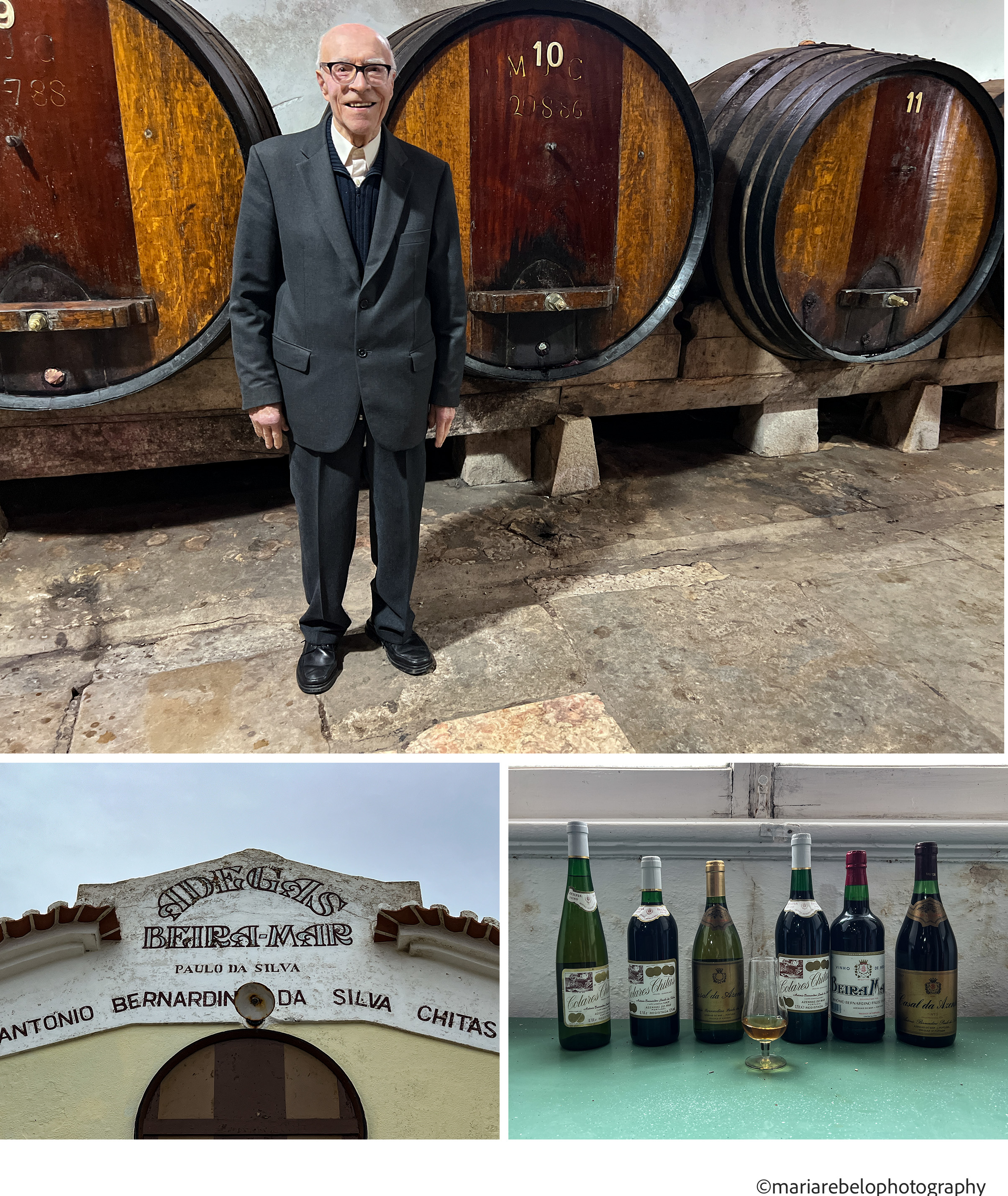
Alexandre de Oliveira, the founder’s grandson, currently runs the hotel group that operates the Bussaco Palace. One of his childhood friends, António Rocha, directed the hotel for many years. Fifteen years ago, António told Alexandre that he would like to give up his managerial role to focus on producing Bussaco wines. Knowing António’s passion for these wines, Alexandre accepted his proposal.

We met António in the palace cellar. He’s been spending many hours there, patiently recorking old bottles so the wine can continue to age gracefully. He showed us with pride wines bottled in the 1940s. “They flow from the bottle with remarkable freshness and vigor, ready to be enjoyed,” he told us.

“What makes Bussaco’s wines so special?” we asked António. “Great wine is 60 percent myth and 40 percent secrets,” António answered, smiling. Bussaco is located between Bairrada and Dão, so the wines are made with grapes from both regions. The red is made from Touriga Nacional and Baga, the emblematic grape from Bairrada. The white is made with Bical, Maria Gomes, and Encruzado. Total annual production is small, only 20,000 bottles. But the cellar stores 200,000 precious bottles hoarded over the last century. 

Later, we joined António at a vinic dinner for a small group of wine connoisseurs at the famed Mesa de Lemos. There were many interesting wines to try, and as the wine flowed, so did the conversation. António tuned out the words to focus on the aromas and tastes of the wines. When it was time to sample the Bussaco wines he brought, António tried to be impartial, appreciate qualities, and identify aspects that can be improved. This passion and dedication is the true secret of Bussaco’s wines. 

Click here, for the Bussaco Palace web site.

The maker of Barca Velha

Luís Sottomayor, the enologist who makes Barca Velha, an iconic Douro valley wine, is uncomfortable with his fame. He misses spending August in quiet solitude amidst the vines at Quinta da Leda, the large estate that produces most of the grapes used in Barca Velha. Today everybody wants to talk to him, journalists, sommeliers, and wine enthusiasts. They all want to discover the secret of Barca Velha.

Luís says the style was created by the legendary Fernando Nicolau de Almeida when he produced the first Barca Velha in 1952. Nicolau de Almeida traveled the Douro valley in search of grapes that could make an exceptional table wine and found them in a region called Douro Superior. He blended grapes from high altitudes that have acidity and freshness with those from low altitudes that have maturation, body, and color. This marriage of acidity and structure created a sublime wine that can age and improve for decades. 

Barca Velha is made with the best grapes that Sogrape, Portugal’s largest wine company, has in Douro Superior. The parcels are vinified separately and stored in casks. Luís creates a blend from the different barrels. If the resulting wine meets his exacting standards, he bottles it. Then the wait begins. He samples the wine with his team for four, five, six, sometimes seven years before deciding whether to label it Barca Velha or Reserva Especial. Since 1952, there have only been 20 vintages of Barca Velha and 17 of Reserva Especial. 

Luís says that some decisions are challenging but he was lucky to learn with the two masters who made Barca Velha before him, Fernando Nicolau de Almeida and José Maria Soares Franco. Luís was hired by Soares Franco in 1989 and became responsible for Barca Velha in 2007. 

“For how long should we store a Barca Velha?” we ask. Luís smiles and says he doesn’t like waiting too long to pull the cork from the heavy bottles that guard the precious wine. “Open it when you’re with good friends,” he recommends. Luís is a hunter, so he loves to pair Barca Velha with partridge or duck. “But the wine also can be enjoyed without food, especially by the fire on a cold winter night,” he says. 

We asked Luís about another remarkable Sogrape wine called Legado (the Portuguese word for legacy). “Barca Velha has a consistent style and is the expression of a large terroir,” says Luís. “Legado is the opposite. It comes from a small terroir– a vineyard planted in 1910 with eight hectares that produce only six or seven tons of grapes. Each vintage is a different chapter of the life of that vineyard.”

Luís grew up on a farm near Porto. His father, who studied enology in Dijon after the 2nd World War, worked in a port wine company. From an early age, Luís dreamed about being a winemaker. Now he makes wines that people dream about drinking.

Chocapalha’s fascinating wines

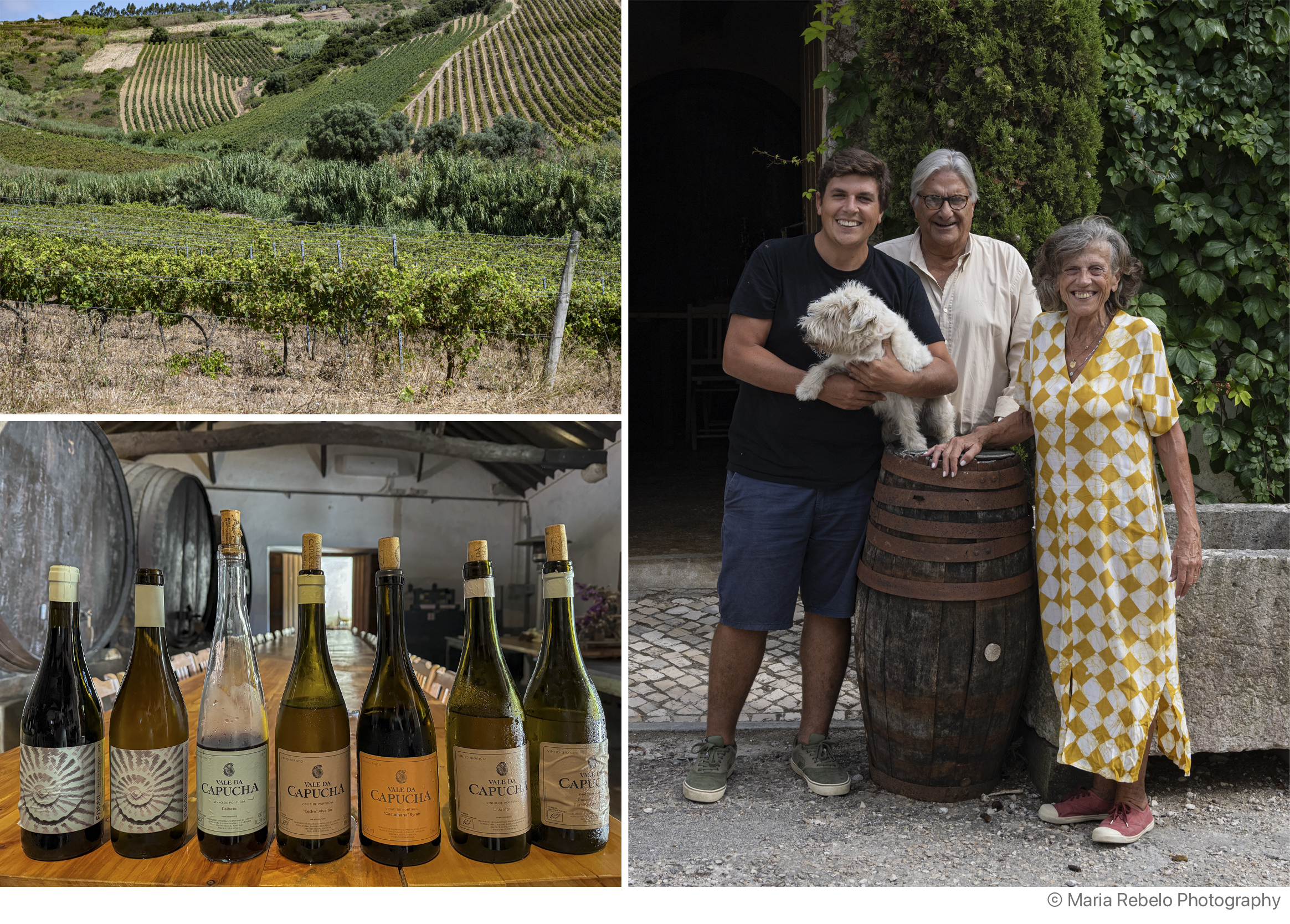
Some of our favorite wines come from an estate near Lisbon called Chocapalha. It has a privileged location. The Montejunto mountain protects the land from cold winds and the Atlantic breeze lends the wines an enticing freshness and acidity. The farm, which is known for its wines since the 16th century, has a hilly terrain with different sun exposures and soils rich in clay and limestone.

Chocapalha belonged since the 19th century to the family of Diogo Duff, a Scottish noble who came help the Duke of Wellington fight the Napoleonic troups. Paulo Tavares da Silva, a retired Portuguese Navy officer, and his Swiss wife Alice bought the estate from the Duff family in 1987. 

The journey to the glorious wines produced today was long and arduous. There was a modern winery to build, laborers to hire, new vineyards to plant, sustainable practices to implement, and many other tasks. When we first met Paulo, he told us that a visiting producer tried to discourage him by quoting a French aphorism: “wine is an easy business; only the first 200 years are hard.” But he and Alice were not deterred. They were driven by a passion for the land and a desire to create a legacy for future generations. For this reason, they paid from the start close attention to environmental issues. They want to see that the soil is alive, the vineyards are healthy, and the birds and animals are thriving. 

The family worked so hard that success came much sooner than anticipated. Alice and Paulo enlisted two of their daughters, Sandra and Andrea, to work at Chocapalha. Sandra, a renowned enologist, took time from Wine & Soul, the project she has in the Douro valley with her husband, to oversee the planting of the vineyards and the making of the wines. Andrea left a lucrative career in finance to manage the estate. Paulo works tirelessly in the vineyards. Alice graciously receives the many guests that visit the farm. 

The wines speak for themselves: they are pure and refined, produced with minimal intervention so that each glass can take our palate to the sunny hills of Chocapalha. 

There are many wines to try. There’s a Castelão with the elegance of a Pinot Noir and a Viosinho with the charm of a Chardonnay. Vinha Mãe has rich tannins and great concentration; it is a perfect companion for a cold winter night. The CH white, made with Arinto from old vines, is an aristocratic wine with subtle salinity. The wine is an homage to Alice (CH is the symbol of Switzerland, her homeland). The red Guarita, named after the farm’s sentry house, is an homage to Paulo. Produced with Alicante Bouschet, it is a symphony for the palate.

When you visit Chocapalha, you can taste their wines, visit the picturesque vineyards, and get to know a family passionate about creating some of the world’s most fascinating wines.

Chocapalha is located at Aldeia Galega da Merceana, 50 km from Lisbon. You can schedule a wine tasting by emailing chocapalha@chocapalha.com. Click here for their website.