The convent of the blue monks

Composit Évora

When we entered the Pousada dos Loios in Évora, we stepped on grounds that have seen war and peace, creation and destruction. The Arabs built a castle on this site that was destroyed by fire during the Portuguese war of 1383-85. In 1485, a local noble built a convent for the order of Loios on top of the castle ruins.

The villagers called the members of this order the blue monks because of the color of their robes. These religious men lived an austere life, working and praying in silence. Their serenity and wisdom led the royal family to choose them as confessors.

The convent was severely damaged by the 1755 earthquake and later rebuilt through the efforts of an enterprising priest. In 1834, Portugal abolished religious orders and the convent was closed down.

In 1963, the ancient building was converted into an historical hotel.  The cells of the monks were turned into comfortable rooms and elegant suites. The courtyard became a spacious breakfast room.

The Pousada is in the center of Évora and yet inside its thick stone walls the clatter of the city vanishes. Staying here for a few days felt like a long vacation. We were content and at ease in the convent of the blue monks.

The Pousada dos Loios in Évora is located on Largo do Conde de Vila Flor, tel. 351 266 730 070. Click here for the pousadas’ website and here for a large collection of photos of the hotel.


A roadside restaurant

Composit Pombal

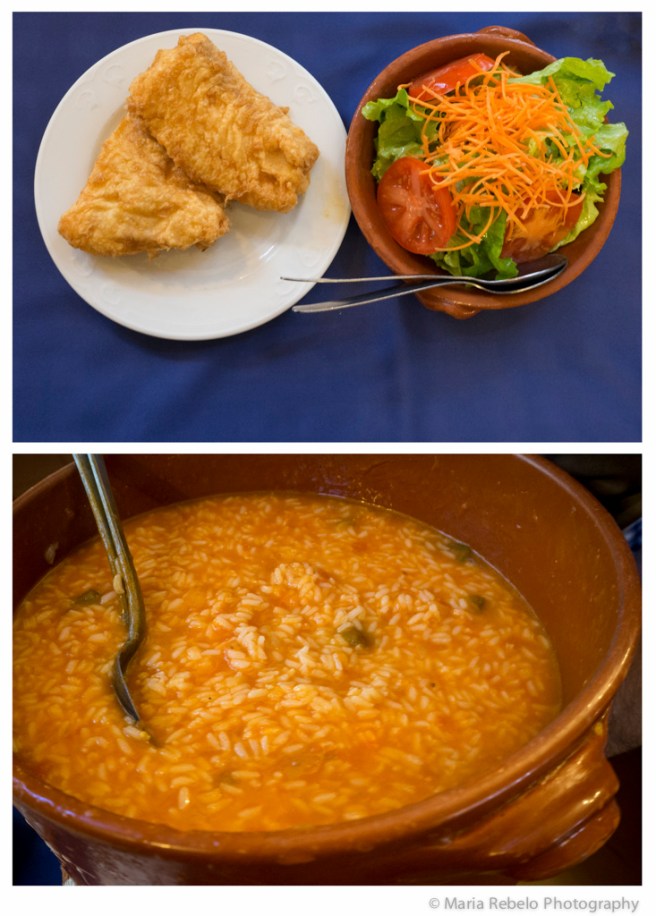
Before highway A1 was built, it took a long time to drive from the north of Portugal to Lisbon. To make the trip easier to endure, our parents liked to stop at a small roadside restaurant in Pombal called Manjar do Marquês. As soon as we sat down, we were served a delicious tomato rice with a choice of accompaniments, such as codfish cakes, veal milanese, or fried hake.

After a long hiatus, we recently returned to Manjar do Marquês. We entered the restaurant’s new premises just off highway A1 with some trepidation. What if the food is not as wonderful as we remember it? Would we destroy our childhood memories? Luckily, some things never change: the tomato rice is as appetizing as ever.

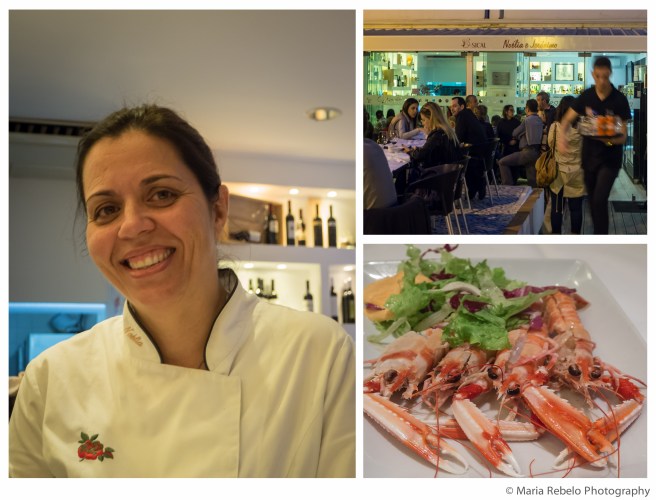
We asked the owner, Maria Graça, what makes her rice taste so good. She smiled and answered: “My husband really wanted to have a restaurant. I worked for the phone company and had no cooking experience. But I was very much in love with him, so I quit my job to become a cook. My food was different because everything I did, I did with love. And that continues to be true.”

Today Maria Graça is 84 years old and still works 10 hours a day at the restaurant. Could her hearty tomato rice be the key to longevity?  It’s worth stopping by Manjar do Marquês to find out.

Manjar do Marquês is located on Estada Nacional 1 (IC2), Pombal, 170 km north of Lisbon, tel. 236-218-818. Click here for the restaurant’s website.

Artistic pots and pans


JV_114_HDR-Edit

Silampos (“seelumpoos”) is a Portuguese brand of cookware that has produced great pots and pans since 1951. Joana Vasconcelos, a Portuguese contemporary artist, used these pans to build giant high-heel shoes. These sculptures were given pride of place in the Room of the Throne when Vasconcelos showed her work at the Ajuda Palace in Lisbon.

What would D. Maria Pia, the queen who lived in this palace, think about Vasconcelos’ work? We like it. And we always liked Silampos pots and pans, even before they mingled with artists in the royal court.

Bolo Bolacha

Bolo de bolacha

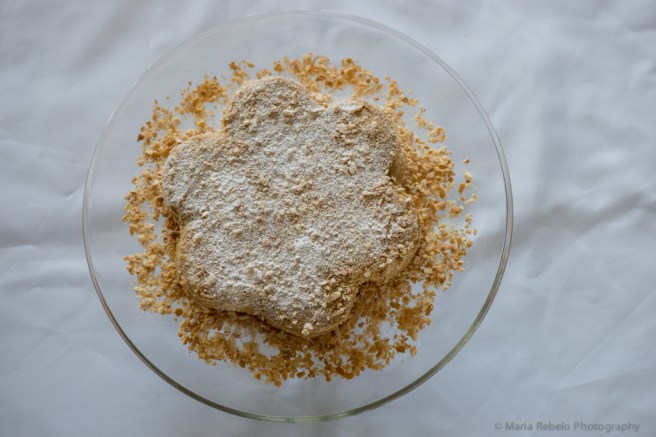
Plato thought that the circle was a symbol of the divine. Alberti, an Italian architect, considered it the perfect shape. But no one was more obsessed with the circle than Guarino Guarini, a brilliant Baroque architect. His buildings are made of concave and convex spaces delineated by circles. One of his most important works, the church of Santa Maria da Divina Providência in Lisbon, was famous for its undulating facade. Sadly, the church was destroyed by the 1755 earthquake.

By happenstance, the circular shapes included in Guarini’s treatise, Architettura Civile, resurfaced in Portugal in the 20th century in the design of the popular bolo bolacha (biscuit cake). This cake is made with the circular Maria biscuits invented in 1874 by an English baker to celebrate the marriage of the Duke of Edinburgh with the Russian Duchess Maria Alexandrovna. To make the cake, the biscuits are dipped in strong coffee, layered with buttercream and then assembled according to designs that would make Guarini proud.

If you see bolo bolacha on a restaurant menu, give it a try. Like the circle, it is simple, but divine.

Lisbon treasures

Composit Viuva Lamego

We’re often asked whether you can see Lisbon in a day or two. Sure, you can drink an espresso at Brasileira, take a brisk walk through Rossio and Terreiro do Paço, climb to Alfama to tour the castle, and rush right back down to go to Belém. Once there, you can try the famous Pasteis de Belém and go for a quick visit of the Jerónimos monastery and the Belém tower.

You’ll have seen a lot, but you will not know Lisbon. The city doesn’t reveal itself on a one night stand. To understand Lisbon, you must take the time to walk around and discover its many hidden gems.

One of these gems is Viúva Lamego, a store that has sold handmade tiles and ceramics since 1849. The blue-tiled back of the building faces the bustling Avenida Almirante Reis. If you walk around in search of the main entrance, you’ll be rewarded with the sight of one of the most exuberant facades in Lisbon.

There are many other jewels to discover in Lisbon: beautiful gardens, graceful architecture, quaint shops, enticing vistas, and wonderful neighborhood restaurants.

Those who discover some of these treasures get hooked and as soon as they depart, they start planning to come back.

The Viúva Lamego building is located on Largo do Intendente Pina Manique, 25.

Eating by the sea in Azores

OLYMPUS DIGITAL CAMERA

Beira Mar, a family-owned restaurant in the Azores island of Terceira, has been a favorite dinning destination for four decades. It is always busy so, if you don’t have a reservation, you’ll probably have to wait for a table.

The service is orchestrated by a small troupe of waiters who move with elegance and speak with eloquence about fish and seafood. We could not tell whether they had trained as ballet dancers or as marine biologists.

Our meal started with “cracas,” a local type of seafood that has a delicate crab-like meat and a wonderful salty juice. We then sampled some orange delicacies called “lapas” that were briny and full of flavor.

Next, we had some amazing boca negra (black mouth), a fish that in continental Portugal we call cantaril. We also tried some wonderful species that were new to us: cântaro, bicudas, and lírio. They were all incredibly fresh and arrived at the table grilled to perfection. Terras de Lava, a white wine from the nearby Pico island, was the perfect complement to all this bounty from the sea.

Beira Mar is a simple place; no money was wasted on decoration or fancy silverware. And yet, the restaurant feels luxurious because we can enjoy the sunset over the harbor while feasting on the precious flavors of the sea. It is the kind of luxury we love.

Beira Mar’s address is Canada do Porto, number 46, São Mateus, Terceira, Azores, tel.  295 642 392. Reservations are highly recommended.

The coolest place in Viseu

OLYMPUS DIGITAL CAMERA

The coolest place in Viseu is called Carmo 81. It is an art gallery where you can have a drink, listen to live music, watch a movie, attend a workshop or simply hang out. Located on a winding street in the heart of the old city, the name of the gallery doubles as its address: Rua do Carmo, 81.

The gallery occupies a space that was for many years a farming equipment store. The thick granite walls and elegant oak beans retired from a hard life of selling irrigation equipment to pursue their dream of being surrounded by art.

Viseu is already the coolest place in Portugal during July, when the Ephemeral Gardens festival fills this ancient city with art installations, live music and modern dancing. Now, with Carmo 81, Viseu is cool all year round!

Carmo 81 is located on Rua do Carmo 81, Viseu, tel. 232 094 366. Click here to see a list of upcoming events.

A tavern called Wednesday

Quarta-Feira rest composite

André Freire, the manager of the beautiful Évora pousada, urged us to try a tavern called Quarta Feira (the Portuguese word for Wednesday). “It’s a special place,” André said with a smile. “There’s no menu; you have to trust Zé Dias, the owner, and go with the flow.”

As soon as we entered the restaurant, we became friends with Zé Dias. He moved to Évora from a village in Beira Alta called Quarta Feira, the name he used for the restaurant. Dias worked as a typographer until he opened this tavern 25 years ago with Luisa Batista, a great local cook.

Dias’ enthusiasm for food, wine and life in Alentejo is infectious. Everything he serves comes from people he knows well, from the producers of cheese and sausages to the maker of the clay pots that are integral to Luisa Batista’s cooking. When we asked Dias how he managed to convince Paulo Laureano, a renowned Portuguese enologist, to make the house wine for Quarta Feira, Dias replied “Of course he said yes; we’ve been friends for a long time.”

Our dinner started with slices of local sausages and prosciutto made with black pork from Alentejo. Then a warm sheep cheese seasoned with oreganos arrived, busting with flavor. Next, we had some wonderful mushrooms cooked in mushroom water, seasoned with olive oil, garlic and coriander. “The secret is all in the timing,” Dias tells us and we believe him because at this point we believe everything he says.

The meal’s main event was the house specialty: black iberian pork shoulder marinated in wine cooked slowly in a clay pot. It was so delicious that our taste buds scintillated with delight. The dessert was composed of dried figs, walnuts, cooked quince, and samplings of two conventual desserts.

The meal ended with a glass of licoroso from Herdade do Mouchão. This sweet wine with notes of fruits and spices was a perfectly simple ending to a simply perfect meal.

Zé Dias is a philosopher king who disguises as a tavern owner so that he can share with his guests the joy of living in Alentejo.

Taberna Típica Quarta Feira is on Rua do Inverno 18, Évora, tel. 266 707 530.

Quinta do Vallado

Quinta do Valado Composit

We wonder whether god created the Douro as a test. It gave the region poor soils and a mountainous terrain, scorching Summers and freezing Winters. But if humans persevered and made a living in this land, they would be rewarded with magnificent wines.

The soil, composed of schist and granite, forces the vines to struggle and produce small grapes that are full of flavor. No one believed more in these grapes than Dona Antónia Ferreira. She made a fortune producing port wine in the beginning of the 18th century and reinvested it all in the Douro, owning at one point 37 vineyards.

This Summer we had the privilege of visiting one of these vineyards, the Quinta do Vallado,  which dates back to 1716. We toured the cellars and tasted some of the quinta’s great table wines.

At the end of our visit, we drank some wonderful old tawny port. With our glasses full of this golden nectar, we toasted the people of the Douro and their magnificent wines.

Quinta do Vallado is located in Vilarinho dos Freires, Peso da Régua, tel. 254 323 147. Click here for their web site.

Wedding by the sea

OLYMPUS DIGITAL CAMERA

If you can, get married by the sea. You’ll see boats sailing trough the waves without a care in the world. And you’ll realize that boats have keels that keep them stable during storms.

That is what marriage is. Two people who are each other’s keels so they can remain steady in the face of storms and sail joyfully through the waves of life.

The photo is from the Pousada de Angra do Heroísmo, located in the beautiful São Sebastião fort in Azores. Click here for the Pousada’s web site.