Beauty in the details

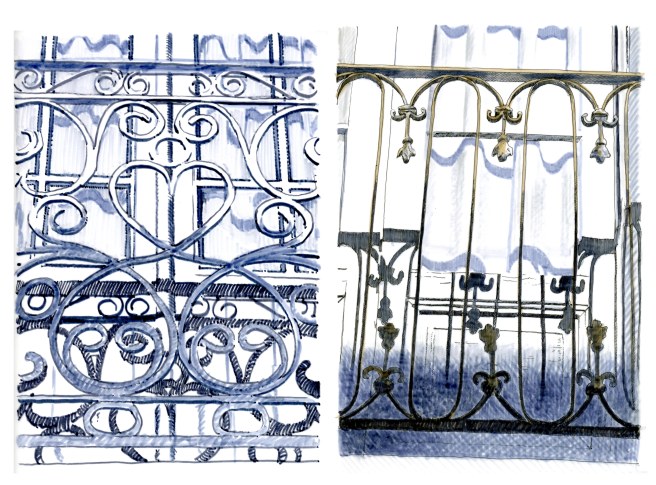
Desenhos de Janelas
Varandas, Rui Barreiros Duarte, ink on paper, 2016.

When you visit Portugal you need to sleep well to rest your eyes, because as soon as you wake up there’s so much to see!

A walk in an old neighborhood is a visual feast of architectural details. Doors, windows, roofs, and balconies tell us about the craftsmanship of their builders and the dreams of their owners. Each is a distinctive brush stroke on the beautiful canvas that is Portugal.

Ebora cerealis

OLYMPUS DIGITAL CAMERA

If you’re traveling in Alentejo, follow the advice of ancient travelers and spend some time in Évora. The city is included in the Antonine itinerary and is mentioned in Pliny the Elder’s Natural History as Ebora Cerealis in reference to the surrounding fields of cereals.

Évora was occupied by Celts, Gauls, Phoenicians, and Persians. But it was Quintus Sertorius, the general who conquered the city in 80 B.C., that gave Évora its architectural jewel: a Roman temple with elegant corinthian columns. Known as the temple of Diana, it is more likely to have been dedicated to Jupiter.

There’s much to see in Evora: a beautiful basilica, elegant university buildings, and peaceful convents. And the food and wine are great everywhere.  You can choose a restaurant blindfolded and have a wonderful meal. If Pliny was writing today, he might call the city Ebora Delicia.

The apple of paradise

OLYMPUS DIGITAL CAMERA

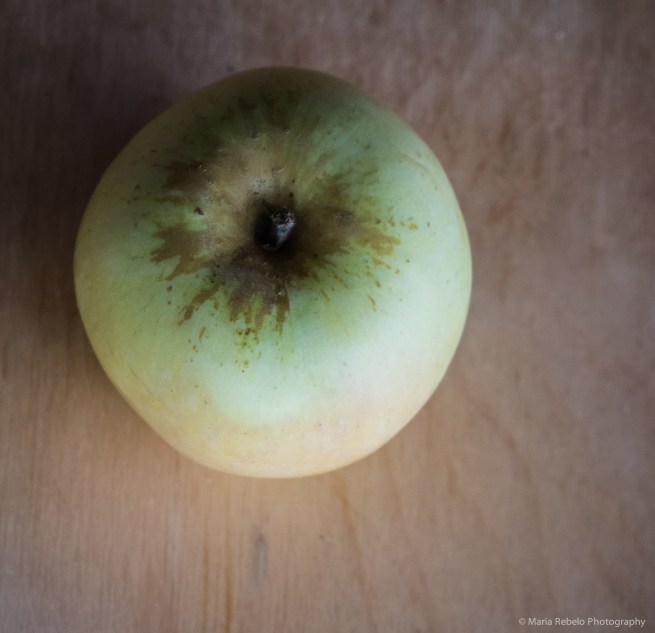
The best apple we’ve ever tried is a Portuguese variety called Bravo de Esmolfe. It was discovered two centuries ago in a small Beira-Alta village called Esmolfe.

You can find prettier apples, but don’t be fooled by the unassuming look of Bravo de Esmolfe. Its taste is a revelation, the perfect combination of sweetness and tartness. And its inside is so full of antioxidants that it makes us feel immortal.

Biting into a Bravo de Esmolfe helps us understand Adam’s temptation and makes us wonder whether the village of Esmolfe was once the Garden of Eden.

If you visit Portugal in Fall or Winter, don’t miss the chance to try Bravo de Esmolfe, an apple that belongs in paradise.

The glorious food of a rural past

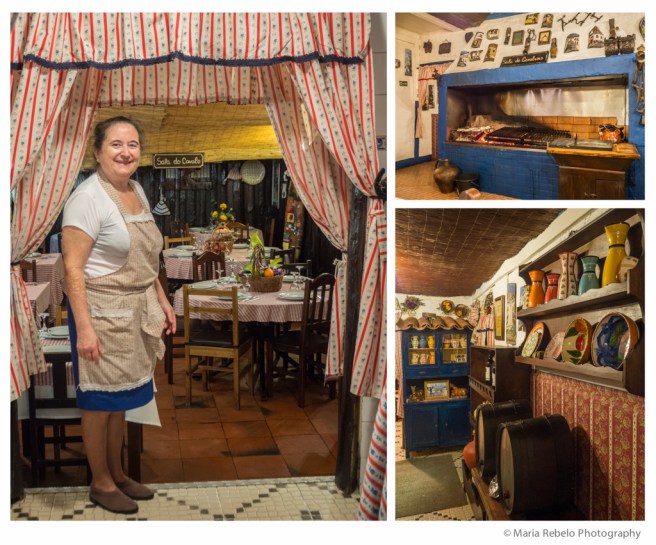
Composit - solar dos amigosWhen you dine at Solar dos Amigos, you take a trip back to a time when people grew their own food, so cooking was informed by a deep knowledge of ingredients.

We realized that our meal was going to be extraordinary when Luisa Nunes, the restaurant owner, brought a small plate of pataniscas (fried codfish) that were wonderfully light and full of flavor. We liked them so much that we tried two other codfish preparations. The first was Tiborna, roasted codfish combined with potatoes, olive oil, and garlic. It is a traditional recipe, but this version shined because of the pristine ingredients and immaculate execution. The second was codfish campino style, a delicious, airy combination with cabbage and white beans baked inside a country bread.

Our first meat dish, fried lamb chops, reminded us of how extraordinary the taste of lamb can be. The grand finale was Cascos à Ribatejo—veal grilled in the huge fireplace of the main dining room. The veal was succulent, tender, and deeply satisfying.

Throughout the meal, different types of bread and vegetable sides were brought to our table: an unforgettable warm corn bread (broa) seasoned with garlic and olive oil, a hearty bean rice, and much more. The food was blissfuly married with the house wine, a bold red produced by Luisa’s octogenarian father.

Luisa is a master of the art of hospitality. Even though the restaurant has four spacious dining rooms, she seems to be everywhere, chatting with regulars, welcoming new clients, making sure the food and service are perfect. Luisa loves the restaurant so much that she never vacations and feels bored on Wednesdays, the day Solar dos Amigos closes. It is her passion that makes dining at Solar dos Amigos such an exceptional experience.

The greatest food in Portugal was not inspired by the kitchens of palaces and noble houses. It comes from a rural tradition that is perfectly reflected in the food of Solar dos Amigos.

Solar dos Amigos is located on a small village called Guisado, 100 km north of Lisbon. The restaurant’s address is Rua Principal, 49, Guisado, Caldas da Rainha. Even though the restaurant is large, it is a good idea to make reservations. Their telephone number is 262-877-135. Click here for their website.


The first sunset

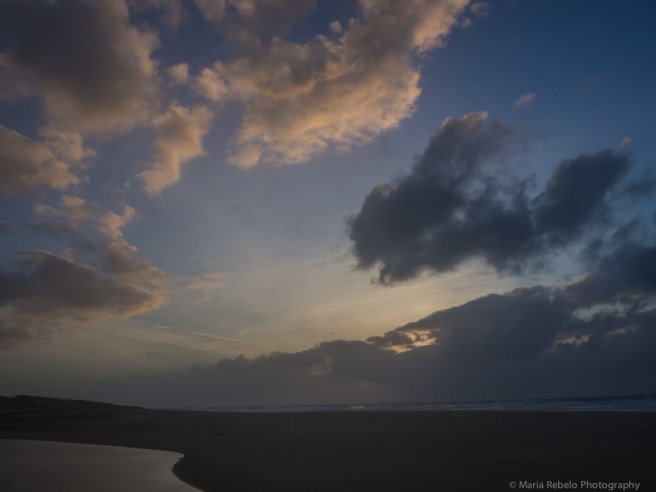
The Romans marked each new year by hammering a nail into the door post of the temple of Jupiter. We prefer to photograph the sunset on the first day of the year, hoping it holds a clue for what the year will bring.

Today, the sun slept all day behind clouds. But at the last moment, it spread its rays and lit the sky, as if to reassure us that there will be many beautiful sunsets in the New Year.  We hope you’ll come to Portugal to share some of these sunsets with us. Happy New Year!


Wood saints

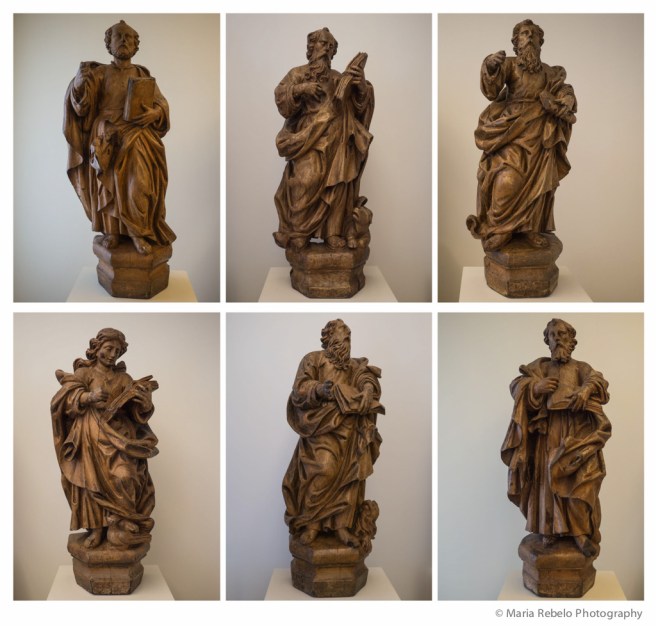
Christmas Card 2015

The Grão Vasco museum in Viseu houses an exquisite collection of wood statues from the 18th century. The names of the sculptors who created these pieces have long been lost. What remains is the mastery with which they used their mallets and chisels to breathe life into wood.

The Grão Vasco museum is located at Adro Sé in Viseu, tel 232 422 049.

The Lisbon Pousada

PousadaLisboaLisbon has a wonderful new historical hotel: the Lisbon Pousada, located in the old royal-palace courtyard known as Terreiro do Paço.

Until the middle of the 18th century, ministers, nobles and other power brokers constantly stamped the soil of this courtyard with their footprints. But, after the 1755 earthquake destroyed the royal palace, the king moved to Ajuda and the courtyard lost its illustrious traffic.

In the 20th century, Terreiro do Paço regained its status as the walkway of power. The new hotel occupies the Ministry of Internal Affairs building. It was here that Salazar, the man who ruled Portugal from 1926 to 1970, had his office.

The pousada is decorated with numerous historical artifacts, including models for many of the statues that adorn the city. The rooms are elegant and comfortable with windows that frame beautiful views of downtown Lisbon: stucco buildings, ancient tiles, pink roofs, the walls of St. Jorge’s castle, and the northern margin of the Tagus river. Salazar’s old office is now a spacious bedroom suite.

It is said that in stressful times, Salazar avoided the main entrance of the building, using instead a discreet back door. This back door is now closed. Surrounded by elegance and comfort, pampered by the hotel’s well-trained staff, stress is the last thing on the mind of the guests of the Lisbon Pousada.

The Lisbon Pousada is located at 31, Praça do Comércio, tel. 351 21 040 7640. Click here for the pousadas’ website and here for a large collection of photos of the hotel.

The Estrela Basilica

OLYMPUS DIGITAL CAMERA

One of the buildings often found next to a Roman forum is the basilica. It served as a place where people could meet. Basilicas had no statues of Roman gods and had beautiful light that came in through windows near the roof, so they were a favorite gathering place for early Christians.

The plan of the basilica was later adopted for the construction of important churches. Lisbon has an elegant basilica at Estrela, built in 1790 by Queen  Maria I.

Few people seem to know that one can climb the stairs to the roof of the Estrela basilica and enjoy in peaceful silence breathtaking views of the city. It is a perfect place to meet Lisbon.

Convent delights

Composit Ovos Moles

Ovos Moles is the name of a store in Lisbon that sells traditional sweets made from recipes created in Portuguese convents. These wonderful desserts are procured from small producers who often kept the original recipes in their family for several generations. They are indescribable delights made of eggs, sugar, flour, fruits, and nuts.

It is a privilege to be able try and compare so many of these exceptional desserts. After all, in times gone by, we would have had to commit to a monastic life to enjoy the heavenly concoctions that Ovos Moles offers.

Ovos Moles is located at Calçada da Estrela, 140-142, tel. 919303788. Click here for their website.


Ruby, Vintage or Tawny?

2 Port wines

People in the Douro valley say that babies and port wines are often born at night. Port producers let the grape juice ferment for about three days. They choose the perfect moment to add a neutral grape spirit (aguardente) that stops the fermentation before the yeast eats all the grape sugar. This moment often comes in the middle of the third night.

Most of the Douro grapes are used to produce ruby ports. These ports are first stored in cement or stainless-steel vats to prevent oxidation, then bottled. The result is a wine that retains a dark ruby color and fresh fruit flavors.

When the quality of the grapes is exceptional, port-wine producers declare a vintage year. These ports are stored in wood casks for one or two years and then bottled. With little exposure to air, the wine is dark red. Aging brings out complex flavors, such as notes of vanilla, chocolate, and blackberry.

The best grapes are also used to produce tawnies. These ports are aged for many years in casks made of Portuguese chestnut and oak. This aging process creates complex flavors and gives the wine a silky mouthfeel. The small amount of air that circulates through the tiny pores of the wood oxidizes the wine slightly, changing its color from red to amber.

It is wonderful to share a glass of ruby port with new friends. But there’s nothing like drinking old vintages and tawnies with old friends.