Convent delights

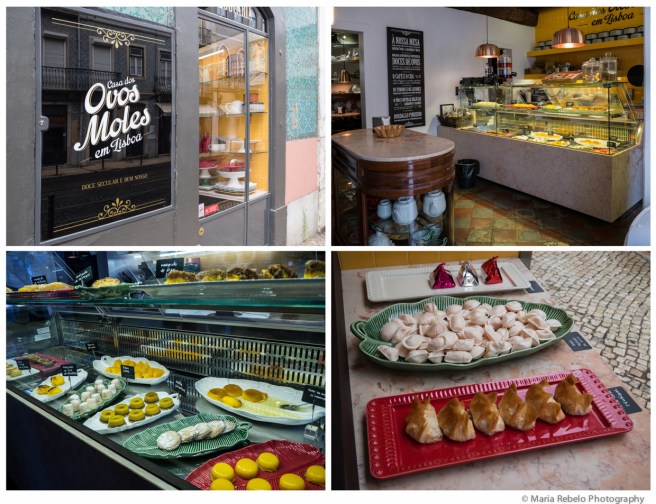
Composit Ovos Moles

Ovos Moles is the name of a store in Lisbon that sells traditional sweets made from recipes created in Portuguese convents. These wonderful desserts are procured from small producers who often kept the original recipes in their family for several generations. They are indescribable delights made of eggs, sugar, flour, fruits, and nuts.

It is a privilege to be able try and compare so many of these exceptional desserts. After all, in times gone by, we would have had to commit to a monastic life to enjoy the heavenly concoctions that Ovos Moles offers.

Ovos Moles is located at Calçada da Estrela, 140-142, tel. 919303788. Click here for their website.
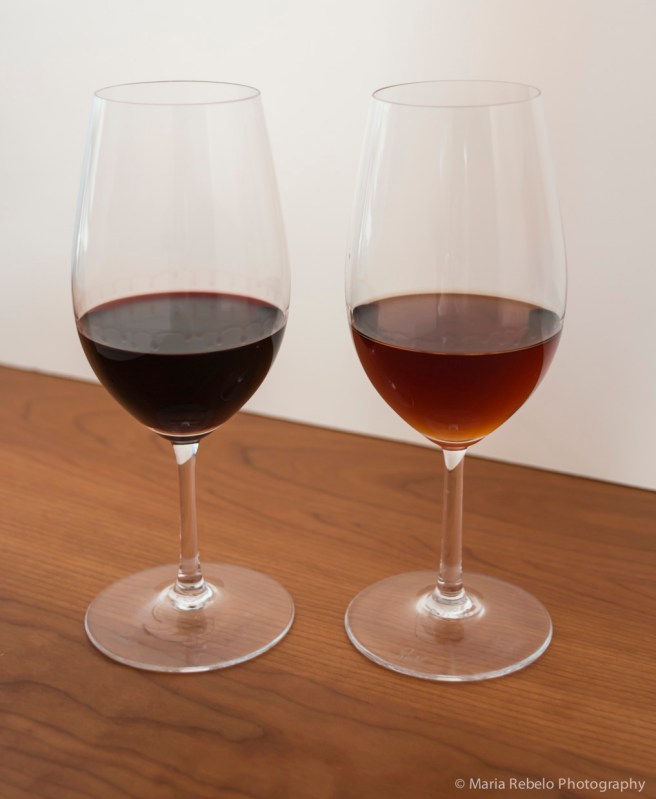


Ruby, Vintage or Tawny?

2 Port wines

People in the Douro valley say that babies and port wines are often born at night. Port producers let the grape juice ferment for about three days. They choose the perfect moment to add a neutral grape spirit (aguardente) that stops the fermentation before the yeast eats all the grape sugar. This moment often comes in the middle of the third night.

Most of the Douro grapes are used to produce ruby ports. These ports are first stored in cement or stainless-steel vats to prevent oxidation, then bottled. The result is a wine that retains a dark ruby color and fresh fruit flavors.

When the quality of the grapes is exceptional, port-wine producers declare a vintage year. These ports are stored in wood casks for one or two years and then bottled. With little exposure to air, the wine is dark red. Aging brings out complex flavors, such as notes of vanilla, chocolate, and blackberry.

The best grapes are also used to produce tawnies. These ports are aged for many years in casks made of Portuguese chestnut and oak. This aging process creates complex flavors and gives the wine a silky mouthfeel. The small amount of air that circulates through the tiny pores of the wood oxidizes the wine slightly, changing its color from red to amber.

It is wonderful to share a glass of ruby port with new friends. But there’s nothing like drinking old vintages and tawnies with old friends.

Sophia’s cookbook

We spent a memorable afternoon with Maria Azevedo Coutinho Vasconcelos e Souza, an aristocratic octogenarian who was a close friend of the great poet Sophia de Mello Breyner Andersen.

Sophia liked to eat well and was a great cook. One day, she gave Maria a handwritten cookbook with her favorite recipes. This little book shows Sophia’s attention to detail and joie de vivre.

In the first page, Sophia lays out some general advice:

1 – smell everything before cooking;

2 – use small amounts of salt and pepper; they mask the natural taste of the ingredients;

3 – salt the fish just before cooking;

4 – be faithful to the nature and the truth of every flavor.

“This book is a proof of her friendship,” Maria told us, “and friendships like ours are becoming rare because they require something that is increasingly scarce: time.”

The rebirth of Lisbon

DCIM103GOPRO

One of the most beautiful monuments in Lisbon is a ruin. The Carmo convent, founded in 1389, was destroyed by the earthquake that stroke Lisbon on November 1, 1755. The convent’s gothic arches were left reaching towards the sky, asking questions for which we have no answers.

Today, Carmo is a place of peace and tranquility. For we know that from the ashes of the old city, a new Lisbon was reborn.

The Carmo convent is located in the homonymous Largo do Carmo in Lisbon.

A monarchic cake

Dona Amélia

In 1901, the Portuguese royal family traveled to the islands of Madeira and Azores. The visit was a great honor for the local populations, but presented them with a difficult problem: how do you choose a gift for monarchs who have everything?

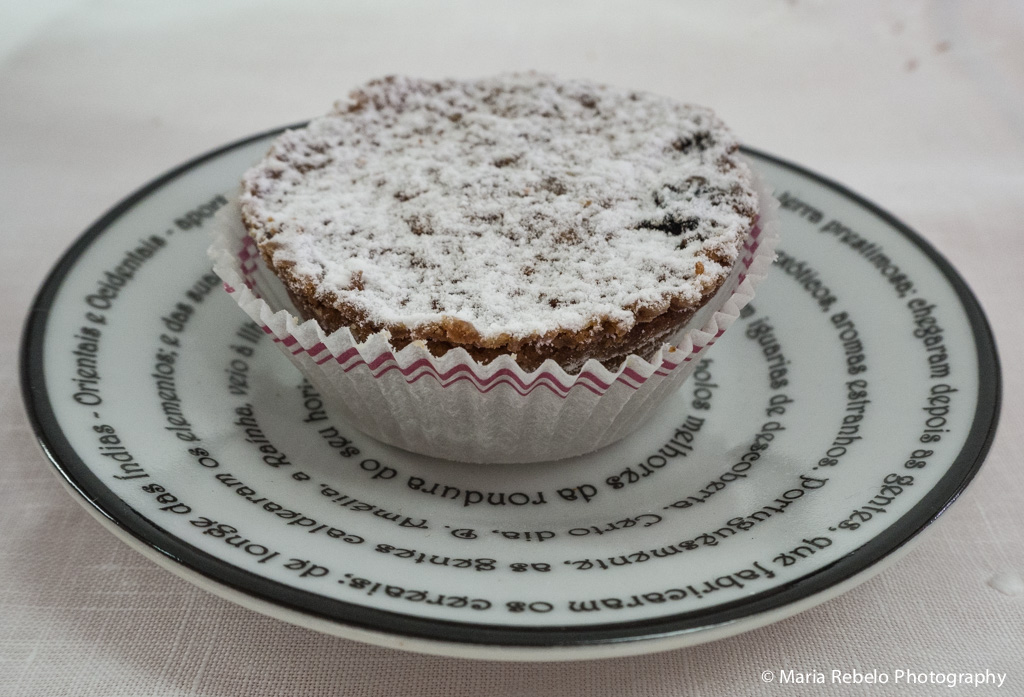
The Azores, Terceira Island, offered Queen Dona Amélia a new cake made with local ingredients: corn flour, raisins, sugar cane molasses, and cinnamon. The queen enjoyed it so much that the new creation became known as the Dona Amélia cake.

More than a century later, the cake continues to be popular in the Terceira island and for a good reason. We loved the Donas Amélias we tried at O Forno, a great pastry store in downtown Angra do Heroism.

The ability of royalty to inspire the delicious Donas Amélias makes us wonder whether we should restore the monarchy.

O Forno is located on Rua São João in Angra do Heroismo, Terceira, Azores, tel. 295 213 729.

The Alcobaça game

Alcobaça Composite

It can be hard to visit monuments with little kids, so it is always a good idea to engage them in a game. If you visit Alcobaça, a beautiful abbey in the middle of Portugal, you can ask your kids to go on a treasure hunt. They can look for stones with carved initials and photograph them. This game can turn an otherwise boring visit into a memorable one.

Masons often carved their personal marks on stones placed in the parts of the cathedral where they worked. They did it to show pride in their work but also to claim the work as theirs so they could get paid.

Centuries later, these signatures remind us of the humble people whose hard work created a legacy of enduring beauty.

Memorable pastries from Vila Real

Crista de GaloMore than a century ago, a baker from Vila Real was given four secret recipes from the local Santa Clara convent. The pastries she made with these recipes were so extraordinary that she decided to turn her bakery into a pastry store.

Today, her great grandchildren continue to use the same prized recipes at Casa Lapão, a pastry store in Vila Real. Their most popular pastry is called “Crista de Galo,” which means rooster comb.  We recommend that you try them with your eyes closed so you can better appreciate the heavenly combination of the flaky dough with the egg and almond filling.

If you’re near Vila Real, a stop at Casa Lapão can turn an ordinary day into a memorable one.

Casa Lapão is located at Rua da Misericórdia 53/55, Vila Real, tel 259 324 146, email casalapao@gmail.com. Click here for their website. 

Relaxing in the Gerês pousada

Pousada do Gerês

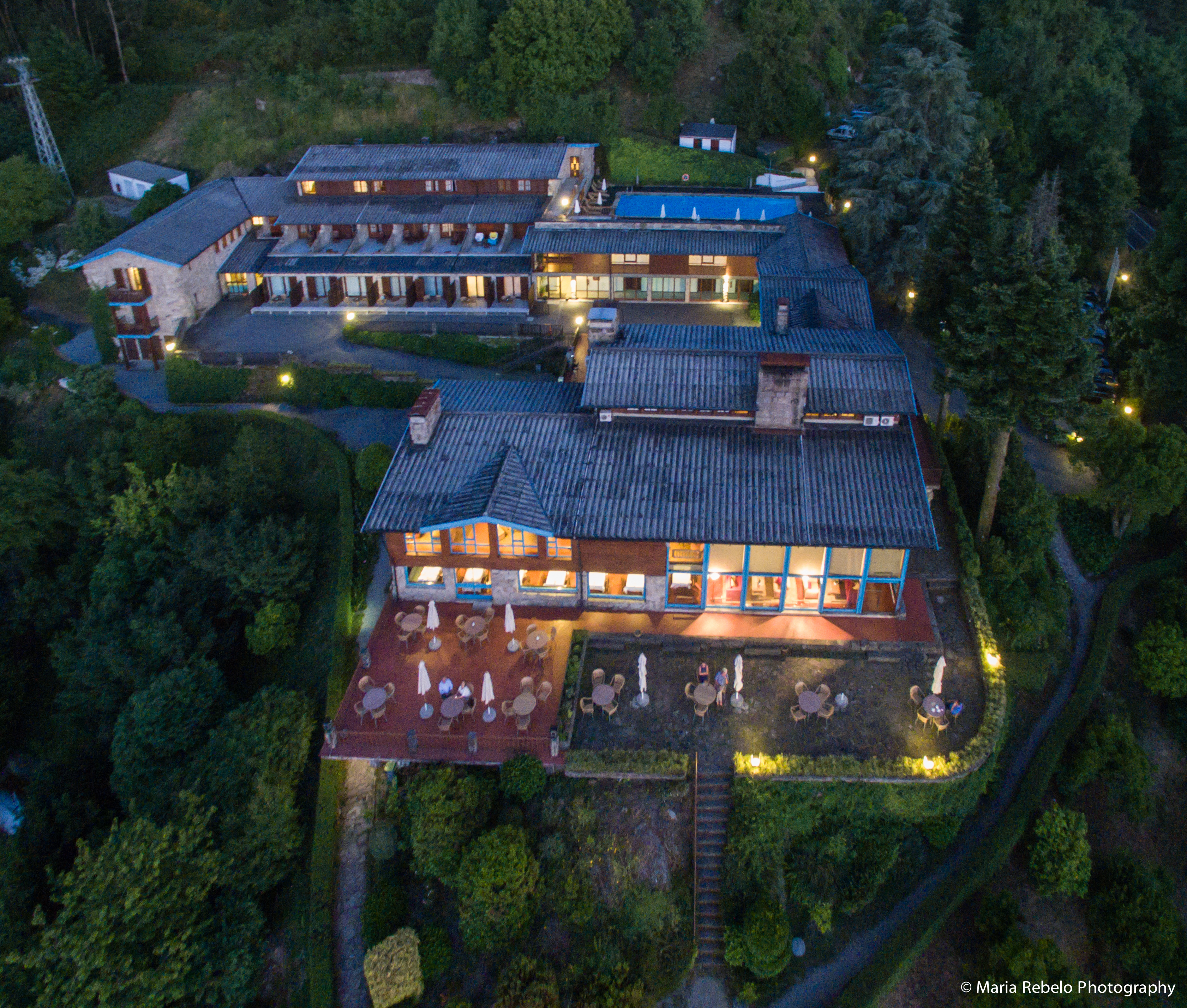
If words could describe how great it is to stay at the Caniçadas pousada in Gerês, you would not need to drive up the Gerês mountain to find this hotel ensconced in the woods, overlooking the Cávado river. But even poets would have trouble putting into words the feeling of starting the day sitting in the hotel’s veranda, our eyes feasting on the spectacular vistas.

The origins of the hotel go back to 1951, when temporary accommodations were built for a group of engineers working on a dam on the Cávado river. Naturally, the engineers chose a location with an amazing view. In 1968, the building was converted into a hotel and an annex was built to house the chauffeurs of the wealthy patrons who came to Gerês to recharge their energies.

The staff of the pousada gave us wonderful recommendations for what to do in Gerês: trails to hike, rivers to swim, horses to ride, traditional villages to visit, and culinary specialties to try.

We greatly enjoyed these activities, but we also loved returning to the pousada at the end of the day to sit in the veranda and watch the sun bid farewell to the Gerês mountain.

The Caniçadas hotel is part of a network of hotels called pousadas. Click here for the pousadas’ website and here for a large collection of photos of the hotel.

Beach moments

OLYMPUS DIGITAL CAMERA

Life is like a train trip. We eagerly anticipate getting to the next station but, once we’re there, we can’t wait to move on.

Much of life is a blur, like the views from a moving train. We remember the arrivals and departures of those we love. And we remember some of the train stops, when the pace of life slows down.

For us, many of these leisure moments are spent on a Portuguese beach. We recall the beauty of the seaside, the wonderful weather, the delicious food and, most of all, those who shared these happy moments with us.