There’s something about dining on the beach that makes the food taste even better. Perhaps it’s the salty breeze that stirs the appetite or the beauty of the ocean that awakens the senses.
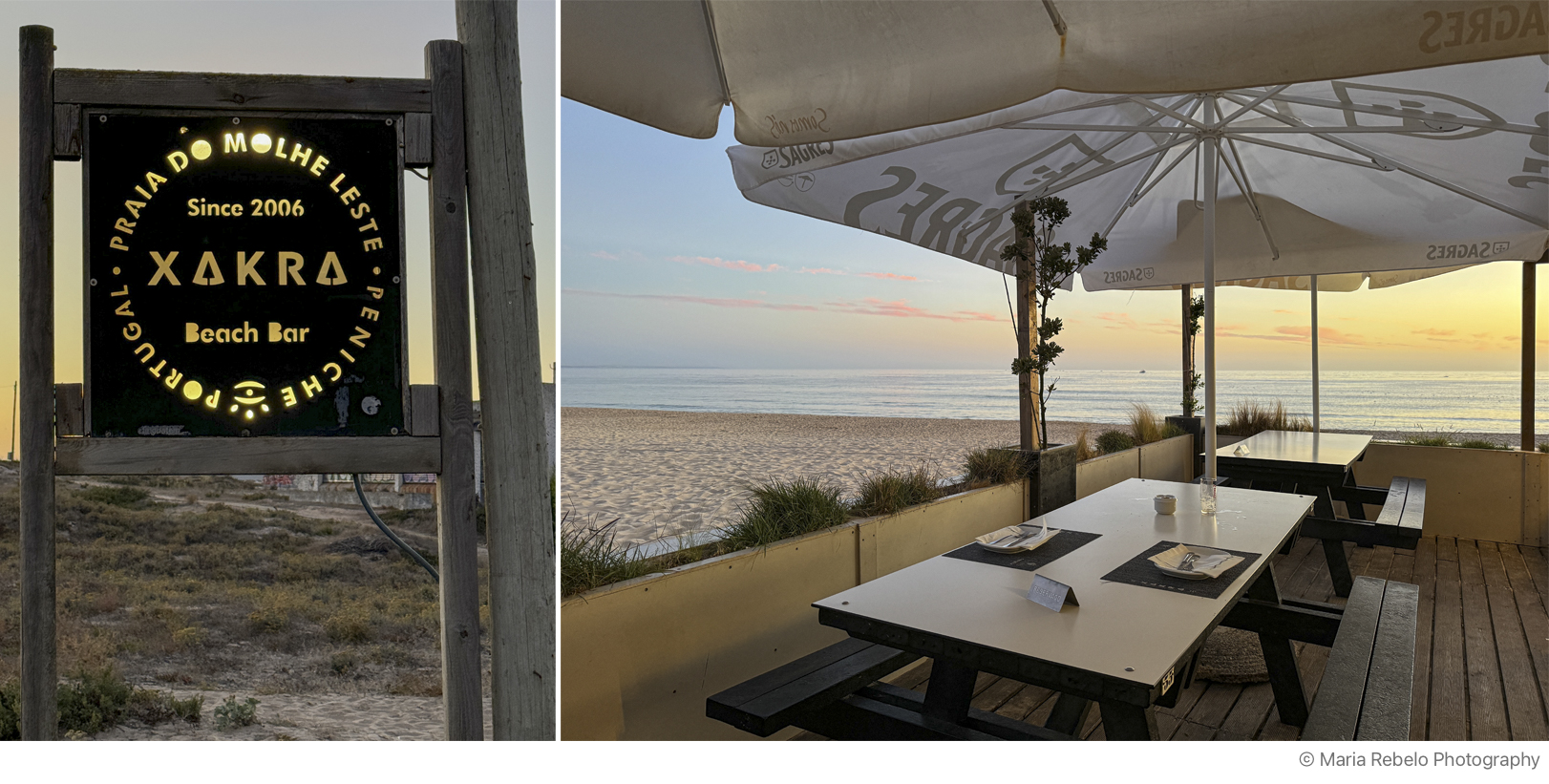
It used to be easy to find simple beachside restaurants that served freshly caught fish. But, as the price of wild fish went up, these places have become increasingly rare. That is why we were so delighted when some friends took us to Xakra at Molhe Leste, a beach in Peniche favored by surfers because of the consistency of its waves.
Xakra’s decor is plain, but the view is luxurious. We ordered two starters, a soup, and a main course. The first starter was berbigão, a flavorful cockle prepared with olive oil, coriander and garlic. The second was a wonderful skate salad simply dressed with olive oil, vinegar, and onion.
The fish soup had delicately cooked fillets immersed in a creamy vegetable broth. The vegetables of the land harmonize surprisingly well with the fruits of the sea.
Finally, the pièce de résistance was freshly caught turbot perfectly grilled and served with small potatoes, cabbage, and a sprinkle of cornbread crumbs.
Xakra has been delighting guests since 2006. We’re sorry it took so long to discover it, but now we know!
Xakra is situated at Praia do Molho Leste in Peniche. For reservations, please call 965 172 166.
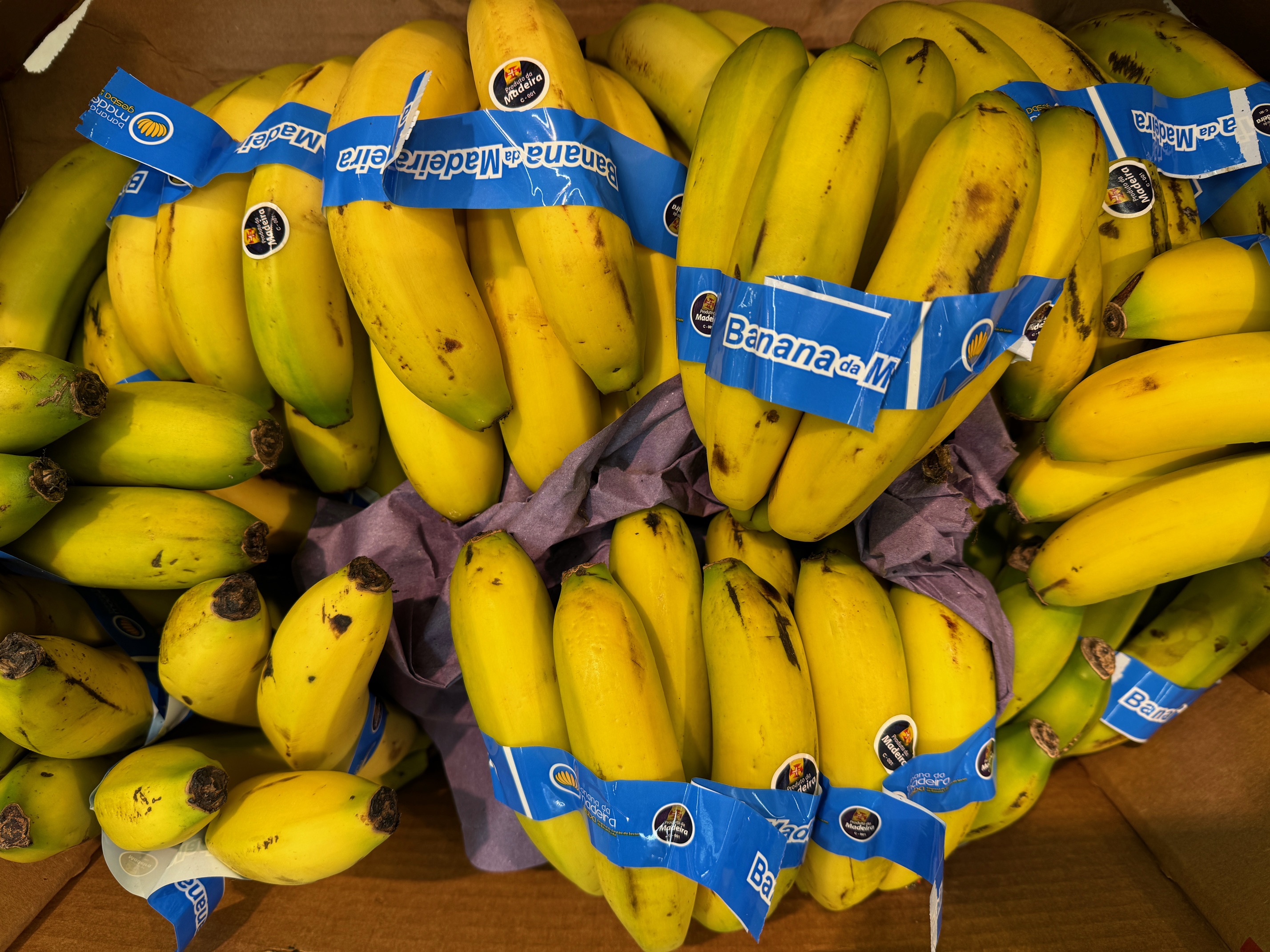
One of the simple pleasures of life in Portugal is savoring the delicious bananas produced on Madeira Island. Portuguese sailors brought bananas from West Africa in the 15th century. By 1552, according to British traveler Thomas Nichols, they were already being cultivated in Madeira. The island’s subtropical climate, characterized by mild temperatures and high humidity, provides perfect conditions for growing bananas.
Madeira farmers produce bananas on a limited scale and harvest them by hand. Smaller than the common Cavendish variety, they are sweeter and more flavorful, with a delightful lemony taste and a creamy texture. Try them, and you will see!
The tomato is a South American fruit that traveled to Europe on sailboats in the 16th century and, over time, conquered the cuisines of the Old World. Like travelers who adapt to foreign lands, tomatoes developed distinct characteristics in different regions. In the Douro Valley, the warm days, cool nights, well-drained soils, and abundant micronutrients produce tomatoes with exceptional flavor, texture, and succulence.
Every year, on the third Friday of August, the Douro Valley comes alive with a festival dedicated to the heirloom tomato. Winemakers submit tomatoes grown in their vegetable gardens to this friendly competition, an opportunity to enjoy some light-hearted fun before the serious work of the harvest begins. Renowned chefs like Miguel Castro e Silva prepare the food and vintners pour their wines, creating a festive atmosphere.
The tomatoes are served at peak ripeness, blessed with a pinch of Castro Marim sea salt, and anointed with sacred olive oils from the Douro Valley. A panel of judges, composed of chefs and food experts, conducts a rigorous blind tasting to elect the finest tomatoes.
This year, a small producer, Casa da Quinta dos Ferreiros took first place. Wine & Soul, acclaimed for their iconic Pintas and Guru wines, received second place. Third place was awarded to the Mateus Palace.
The festival is open to the public. If you dream of mingling with famous chefs and winemakers at a picturesque Douro Valley estate, mark your calendar for the third Friday of August. You can email greengrape@greengrape.pt to join the mailing list. One word of advice: once you receive your invitation in late July, answer immediately—the event sells out in less than an hour!
Porto’s Ribeira district is always bustling with tourists snapping selfies and street performers vying for attention. Yet amid this lively chaos, there is a haven: a restaurant called Casario. This cozy space, with its terrace overlooking the river, is a collaboration between Granvinhos, the port wine company behind Quinta de Ventozelo, and two virtuoso chefs: Miguel Castro e Silva and José Guedes.
We strolled to Casario under ultramarine blue skies. The dining room, bathed in a warm glow, offered a welcoming ambiance. As soon as we settled at our table, the waiter presented a basket of enticing dark wheat bread. It was accompanied by velvety butter from the Azores and Ventozelo’s piquant olive oil. A refreshing rosé from Ventozelo filled our glasses, setting a playful mood for the meal.
Like Beethoven’s Ninth Symphony, dinner began with unforgettable notes: smoked eel seasoned with mustard and honey, served atop flatbread with a vinaigrette-dressed lettuce, and fried salted skate paired with pickled fennel and a celery and hazelnut purée.
This impressive start was followed by a harmonious sequence of courses. First came a moist and flavorful robalo, cooked at low temperature and served with a surprising yet felicitous combination of yellow peppers, turnip, and bok choy. Next was a whimsical shrimp and squid lollipop and chickpeas with two mushroom varieties: nutty boletos and earthy trompetas. The meal continued with a squid stuffed with spinach and sausage, bursting with flavor. Then came a briny turbot, paired beautifully with asparagus and a cockle called berbigão.
Dinner concluded on a sweet note with cinnamon ice cream, crème brûlée, and toasted pine nuts. A glass of 1994 Dalva port served as the perfect coda to this delicious meal.
It takes a lifetime to master the art of preparing a symphonic culinary experience like this one. Bravo, Miguel and José!
Casario is located at Praça da Ribeira, Viela do Buraco, 19, Porto, tel. 227-662-270. Click here for their website.
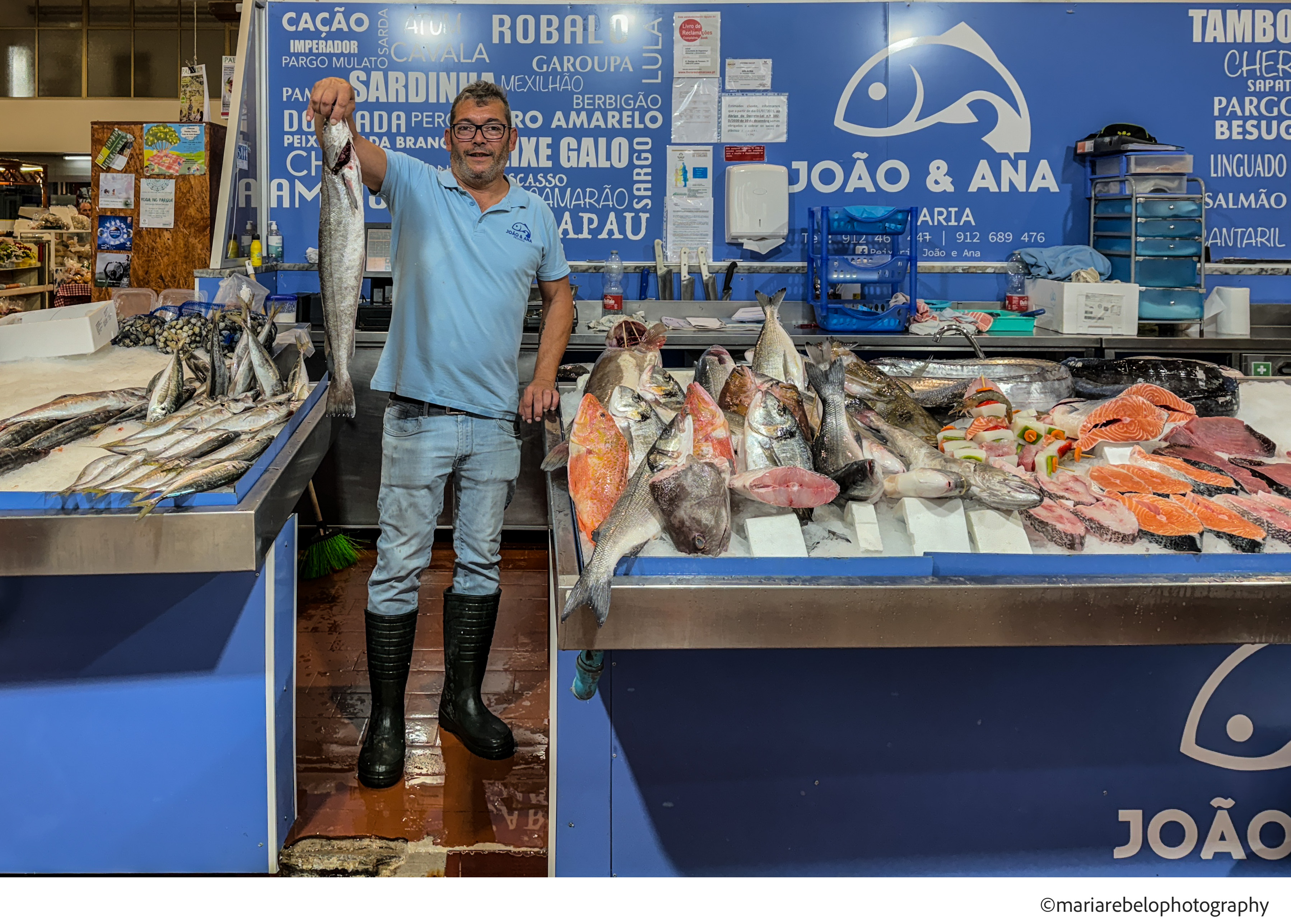
João Branco owns a fish stall in the Lourinhã market where he sells the freshest fish and finest seafood. He knows a lot about the fruits of the sea because his family has been in the fish business for nearly a century–both his mother and grandmother were fishmongers.
João shared a story about a couple who had friends coming over for a “caldeirada,” a traditional fish stew, but had never prepared it before and found the task daunting. João reassured them, saying, “No worries. Bring me a large pot, and I’ll prepare everything. All you need to do is put it on the stove until it’s cooked.” The next day, the customers called to tell João that their guests thought it was the best caldeirada they’d ever had. Whenever their friends return for the famous caldeirada, João prepares the pot, ensuring success every time. João generously shared his recipe with us so you, too, can impress your friends.
João Branco’s Fisherman Stew
João only uses fish without scales because finding scales in the stew can detract from the culinary experience. He also advises against using sardines because their strong taste can overpower the other fish. João does not use laurel because it can also overshadow the delicate flavors of the fish.
He arranges the vegetable layers at the bottom of the pot and places the fish on top. This technique allows the fish to cook in steam, ensuring it is ready at the same time.
Ingredients:
Olive oil (100 ml)
2 sliced onions
4 minced garlic cloves
One sliced red pepper
One sliced green pepper
2 ripe sliced tomatoes
500 grams of sliced potatoes
A teaspoon of smoked paprika
Cayenne pepper
White wine (100 ml)
Beer (100 ml)
Parsley
Coriander
Salt
Navalheiras (small crabs, cut in half, optional)
Shrimp (optional)
Squid or cuttlefish (optional)
One kilogram of assorted fish including tamboril (monkfish), safio (conger eel), raia (skate), and cação (dogfish).
Instructions:
Choose a pot large enough to accommodate two or three layers of potatoes and the fish.
Wash all the ingredients.
Cover the bottom of the pot with olive oil.
Add a layer of sliced onions, garlic, tomatoes, and red and green peppers.
Add a layer of sliced potatoes.
Repeat the layers of onions, garlic, peppers, tomatoes, and potatoes.
Place the fish on top of these layers, ensuring it cooks in the steam from the layers below.
Drizzle the white wine and beer on top of everything.
Season with salt, smoked paprika, and cayenne pepper.
Optionally, you can add navalheiras (small crabs) cut in half for extra flavor. You can also add some sliced cuttlefish or squid and top the fish with shrimp. The shrimp cooks faster than the fish. Once it is cooked, remove the shrimp, peel it, and serve it with the stew.
Cover the pot and cook over medium heat. You don’t need to add any water because the vegetables naturally release plenty of it.
Season with parsley and coriander before serving.
If preparing this delicious stew feels like too much work, bring a large pot to the Lourinhã market and ask João if he’ll prepare it for you.
Torres Vedras, a charming town near Lisbon nestled among hills planted with vineyards, is steeped in Portuguese history. Its castle helped defend the kingdom during medieval times, and the town served as the headquarters for the troops that fought against the Napoleonic invasions.
However, for us, Torres Vedras is synonymous with a Portuguese cornbread called broa. Some years ago, a friend brought us bread made with corn and rye flour from a pastry shop called São Pedro. Since then, we have made regular pilgrimages to satisfy our devotion to this delicious treat.
Despite our persistent attempts, the secrets behind São Pedro’s cornbread remain elusive. Over the years, our inquiries have been met with vague responses such as “It’s a traditional recipe from the north of Portugal.” The resulting mystery only adds to the cornbread’s allure, compelling us to keep returning to Torres Vedras.
Pastelaria São Pedro is located at Rua Dona Teresa Jesus Pereira 34-A, Torres Vedras, tel. 261 321 133.
In 1926, the Michelin Guide began classifying restaurants into “vau l’etape” (worth stopping), “vaut le detour” (worth going out of your way for), and “vaut le voyage” (destination restaurants).
We are often asked which are the destination restaurants outside of Lisbon and Porto. Here are our very own recommendations listed in alphabetical order.
Chef Julie Marteleira and her sister Jennie left successful careers in Toronto to open a restaurant near the Portuguese village where their parents married. Alta, at Praia da Areia Branca, offers the freshest ingredients, exceptional preparation, and stunning ocean views.
Located in Évora, a beautiful Roman town, this restaurant seats only eight people and takes no reservations. It is worthwhile to arrive early to feast on the traditional food from Alentejo prepared by Florbela Canelas and served by her husband Domingos.
A royal retreat built by King Charles I and converted into a luxury hotel in the early 20th century. This place has everything: a majestic setting, iconic wines exclusive to the hotel, and delicious food prepared by Nelson Marques, a talented young chef.
Brazilian chef Michele Marques has lived in Portugal for so long that she almost lost her Brazilian accent. But her approach to cooking food in Alentejo remains unique—a magical combination of authenticity and creativity that always produces memorable meals.
This restaurant is in Porto Covo, a seaside village so beautiful that it inspired an eponymous song by singer Rui Veloso. Chef Ana Moura offers a cuisine that is elegant, creative, and full of flavor, making every meal feel like a summer vacation.
Chef Ricardo Nogueira is renowned throughout Portugal for his delicious roasted suckling pig. His restaurant is a gathering place for great Bairrada winemakers like Mário Sérgio, Filipa, and Luis Pato. The restaurant offers their wonderful wines at modest prices.
The culinary queen of the kingdom of Algarve did not inherit the throne. She conquered it by cooking the pristine seafood of the Algarve with such reverence and care that every meal is like a prayer.
In the shade of the castle at Alter do Chão Filipe Ramalho, serves a delicious evolution of traditional Alentejo cooking. Do not miss his classic tart, cooked with farinheira sausage made with chestnut flour, topped with pears cooked in wine, quince marmalade, and chard.
Located in Ervedosa do Douro, surrounded by some of the best vineyards in the Douro Valley, Dona Graça and her daughter Rosário use almost forgotten recipes to make food that satisfies the soul.
Casa Tradição is located near Lisbon’s old cathedral, a neighborhood rarely visited by locals. The restaurant has rustic decor, so we went in expecting a traditional meal. But our waiter mentioned a tasting menu, and we tried it.
Dinner began with an assortment of bread served with creamy nut butter and fragrant olive oil from Porto de Mós, the hometown of the restaurant’s chef, Samuel Mota.
Then, the unexpected delights started. First, a martini glass brimming with ice held a slice of apple marinated in citrus and spices, evoking the essence of a frozen sangria. Then, a crisp mini baguette layered with Serra cheese and exquisite Pata Negra prosciutto.
But the clearest sign that this would be a memorable night came next: a pastry resembling a pastel de nata crowned with smoked codfish and filled with a blend that echoes the flavors of traditional creamed codfish.
We were still recovering from this moment of deliciousness when we were served a cabbage tempura stuffed with migas made from beans and olives. The rich and satisfying taste was reminiscent of a Portuguese sausage called alheira.
The seafood entrée was stunning: a delicately cooked large Algarve shrimp served with a broth and fermented lupini beans. The fish course was a perfectly cooked corvina with asparagus and açorda made with fish roe.
The seventh step to culinary heaven was faux cabidela rice. Traditionally made with vinegar and chicken blood, it was ingeniously reimagined as a beetroot risotto, subtly enhanced with raspberry vinaigrette, and served with succulent guineafowl cooked with bacon.
The meal concluded with a moist pão de ló and a foam crafted from Serra cheese. Chef Samuel’s five-year tenure at the acclaimed Belcanto helped prepare him to follow his imagination. Though rooted in tradition, his creations brim with innovative, delicious culinary ideas.
Casa Tradição is located at Travessa do Almargem, n. 4, Lisbon, tel. 967-340-913. Click here for their website.
We heard from the culinary rumor mill that a famous Lebanese chef had moved to Lisbon and opened a restaurant called Touta. So, on a warm spring evening, we climbed the hill from Estrela to Campo de Ourique to try it out.
Rita Abou Ghazaly welcomed us into the gracious dining room decorated with Middle Eastern motifs. She served us hibiscus and rose-petal kombucha while Lebanese music filled the air with the same microtones we hear in fado.
Dinner started with a basket of Lebanese bread and cheese bonbons—crispy cheese treats wrapped in phyllo dough. Next came a plate of hummus, a combination of chickpeas and tahini sauce that is a staple of Middle Eastern cuisine. This rendition was the best we ever tried. It was topped with soujak meat, pickles, and aquafaba, a sumptuous emulsion of chickpea water that resembles whipped egg whites. It was quickly followed by grilled cabbage with lentils and beetroots delicately seasoned with cured lemons.
We tried a delicious soup made with a local fish called mero. It reminded us of cação soup, a traditional Alentejo recipe. Finally, we had a spectacular grilled black pork served with black beans, carob marshmallows, and a barbecue sauce made from molasses. Dessert was a simply perfect sweet croquette.
“What made you decide to open a restaurant in Lisbon?” we asked Rita. “Ask Waël,” Rita said, laughing, “it’s all his doing.” Waël Haddad told us he has had a crush on Lisbon since his first visit ten years ago. “I kept returning and brought my friend Rita and my cousin Touta, a celebrated Lebanese chef. With every visit, our love for the city deepened, and so we started looking for a restaurant location. We explored various neighborhoods until we stumbled upon this perfect spot with a ‘for sale’ sign. Now, here we are, living our dream.”
Chef Cynthia Bitar, affectionately known as Touta, came to greet us. She inherited her passion for cooking from her mother, a famous Middle East caterer. Touta has always been obsessed with cooking. “When I was a child and went on play dates, I often cooked in my friend’s kitchens. I think about food during the day and dream about it at night.”
She returned to her family’s catering business after training at the Paul Bocuse Academy in Lyon. But, like Waël and Rita, Touta fell for Lisbon’s charms. She was drawn to the similarity between Lebanese and Portuguese cuisines, the quality of local ingredients, and the warmth of the people. “I found amazing produce in the farmers markets. Try this carrot.” She sliced a small carrot in half so we could experience its aroma and enjoy its sweet taste.”
Touta took us to the grocery store at the back of the restaurant. Its shelves are full of products from Lebanon and jars with pickles, jams, fermented drinks, and preserved citruses that she prepared. We stayed past midnight, bewitched by Touta’s sensuous cuisine, sampling everything from molasses and infusions to spices like sumac and za’atar.
In the 15th and 16th centuries, trade with Africa, Asia, and South America turned Lisbon into a hub for global talent. The diverse influx of people profoundly influenced Portuguese culture, cuisine, and art. It is wonderful to see Lisbon once more attracting people who will bring the city to new heights. Welcome, Waël, Rita, and Touta!
Touta is located at Rua Domingos Sequeira 38 in Lisbon 960 49 49 49. Click here to go to the restaurant’s website.
If you’re looking for a unique gift from Lisbon for a food-loving friend, we have just the thing. Can the Can, a restaurant in Terreiro do Paço, sells flasks of garum. This fermented fish sauce created by the Greeks was coveted throughout the Roman Empire. Like Asian fermented fish sauces, it enhances flavor, adding a rich umami taste.
The Troia peninsula in Setúbal is home to sprawling remains of piscinae, large basins used by the Romans for salting and fermenting fish. Along Portugal’s Atlantic seaboard, this region is ideal for garum production, thanks to its plentiful fish stocks and a climate favorable for fermentation.
Maria da Luz and Vitor Vicente, two entrepreneurs, revived the production of garum in Troia using mackerel (favored by the Greeks), swordfish, tuna, sea bream, octopus, mullets, and sardines (our favorite).
In the Roman Empire, garum was a symbol of extravagance. Pliny the Elder described it in his Natural History as a “liquoris exquisiti,” an exquisite liquor. Priced on par with the rarest perfumes, it was reserved for the tables of the affluent. Today, thanks to Can the Can, this nearly forgotten delicacy is both accessible and affordable.
Can the Can is located at Terreiro do Paço, 82/83 in Lisbon. Click here for their website.





 Salt of Portugal