How Humans Made the Soil of the Douro Valley

This is the second lecture about the Douro Valley by the great viticulturist António Magalhães. Today’s theme goes literally beneath the surface. After exploring the climate in our first session, we turn to the second pillar of the region’s terroir: its soil.

A Soil Made by Hand

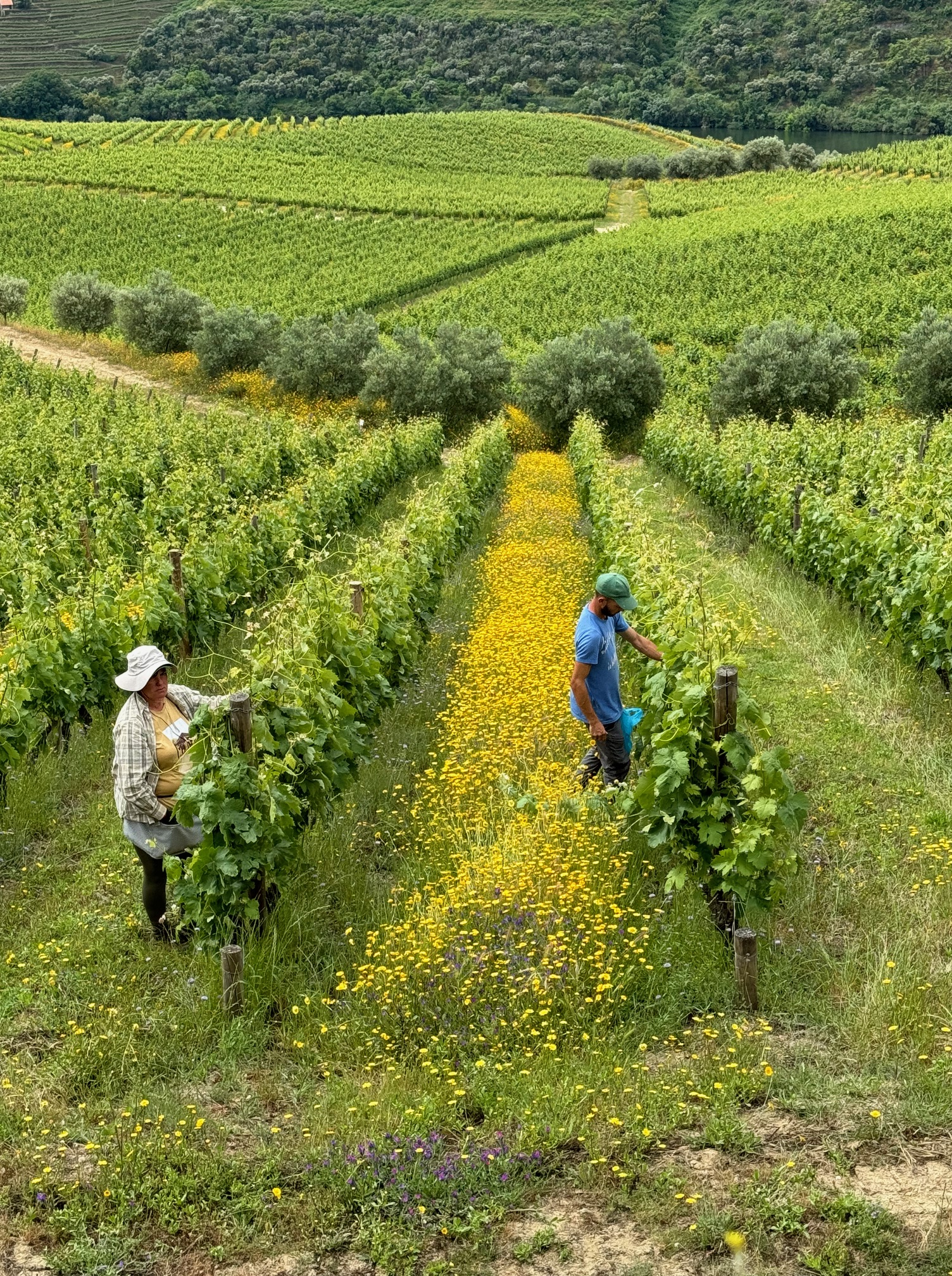
When you walk through a vineyard in the Douro Valley, take a moment to look down. You see the slow artistry of nature, which over millions of years created the schist beneath your feet, and the tireless toil of generations who transformed it into living soil where vines can thrive.

The Douro’s deep valleys were carved over millennia by the river and its tributaries. On those steep slopes, the native soils, known as leptosols, are little more than a palm’s depth of earth resting on hard schist. Left untouched, they would never have sustained flourishing vines.

But in the Douro, people refused to accept nature’s limits. Over the course of centuries, they created anthrosols — soils made by human hands. The locals call the act saibrar, agronomists surribar: it means breaking rock to create soil where vineyards can grow.

The photograph shows that the schist bedrock appears brittle and easily broken. Above it lies the soil created by human labor. Look closely, and you can see the vine roots reaching down, searching for that last drop of water that keeps them alive through the scorching summer heat.

The image illustrates the words of the Marquis of Villa Maior, from his 1875 treatise, Practical Viticulture:

“The longevity of the Douro and Burgundy vines is due to the extraordinary development of their roots, favored by the nature of the subsoil.”

Breaking Rock to Grow Life

Until the late 19th century, surribar was done with nothing more than pickaxes and iron bars. In the 20th century, dynamite was introduced, followed later by bulldozers and hydraulic excavators. Yet the goal remained the same: to give each vine at least a meter and a half of soil depth.

The schist fractures almost vertically, allowing roots to slip deep between its plates. There, the vine finds not abundance but balance: less than 1.5 percent organic matter, yet perfectly aerated and rich in minerals. These fractured layers also ensure excellent drainage, carrying away excess rainwater while retaining just enough moisture for the vines to endure the long dry season. It is a poor soil that yields noble fruit, a reminder that in wine, perhaps as in life, struggle builds character.

Stones and Gravel

Kneel in a Douro vineyard and you’ll see a glittering mosaic of crushed stone and gravel. To outsiders, it looks barren; to the vines, it’s paradise.

In 1947, agronomist Álvaro Moreira da Fonseca, who devised the Douro’s vineyard classification, ranked soils by their gravel content. His creed, simple and enduring, can be expressed in words worthy of being carved in stone: “Vines thrive on stony ground.”

The gravel plays alchemy with the elements: reflecting sunlight by day, releasing heat by night, regulating the vine’s rhythm. It stores warmth, tempers vigor, and transforms scarcity into intensity.

Counting by the Thousands

António says that “The poorer the soil, the closer the vines.” Douro farmers compensate for the soil’s low fertility by planting vines at higher densities. Each vine produces modestly, but together they create abundance. Instead of counting hectares, growers speak of milheiros — groups of a thousand vines.

After the phylloxera epidemic, the rebuilt terraces — socalcos — reached a density of 6.5 milheiros per hectare, enough to make every meter of stone wall worthwhile. 

Sculpting the Mountain

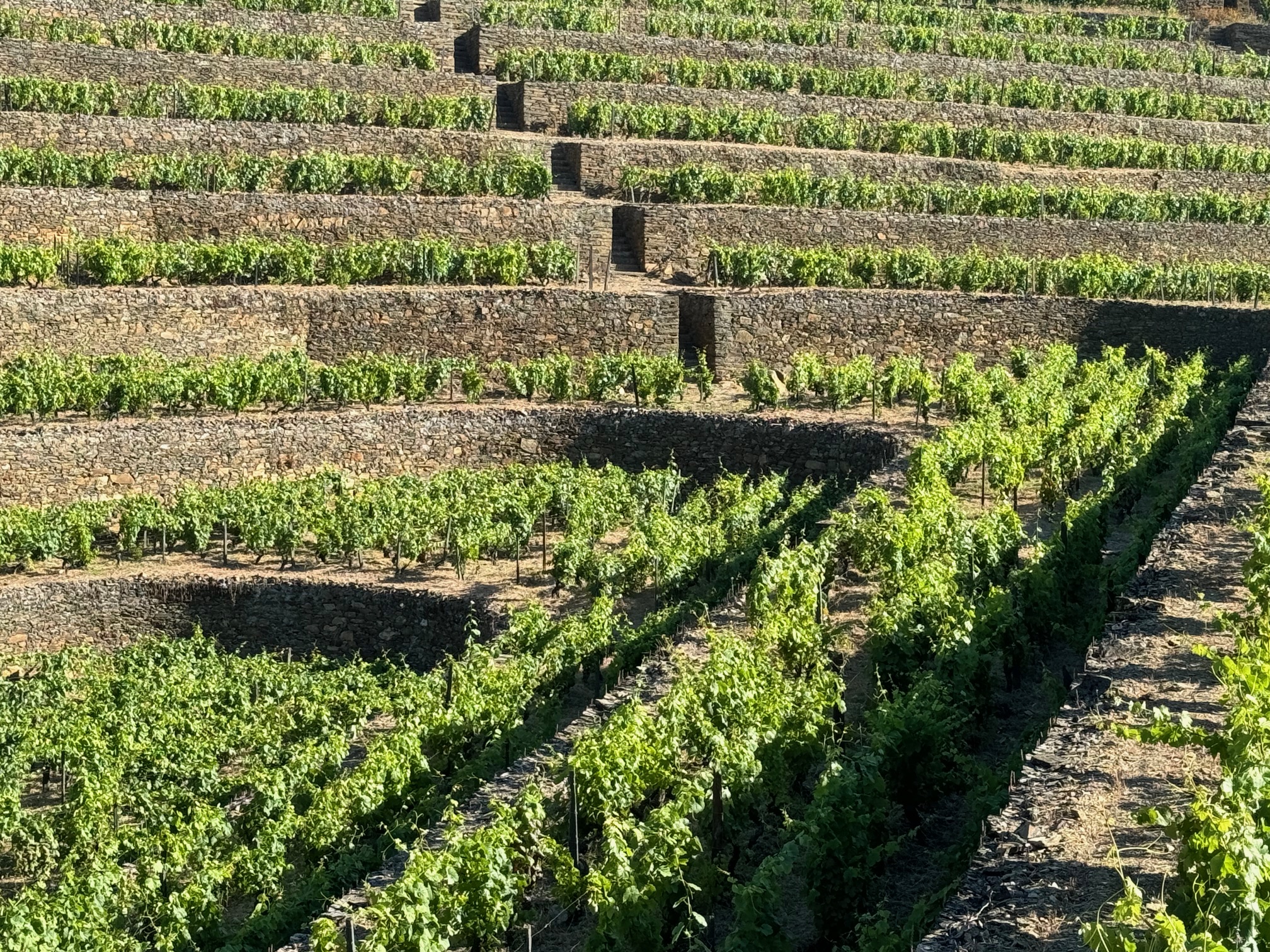
Rain, the same force that helped carve the Douro, also threatens to destroy it. The solution lies in building terraces to prevent soil from sliding away. During the surriba, the stones brought to the surface are removed and reused to build the vineyard walls. This operation, called despedrega, is a practice that makes the back-breaking labor of surribar more rewarding.

Some of the terraces devastated by phylloxera were never replanted. Many owners, overcome with despair, abandoned the region to rebuild their lives elsewhere. Others chose to start anew, replanting vines on gentler slopes with more forgiving soils and milder climates. 

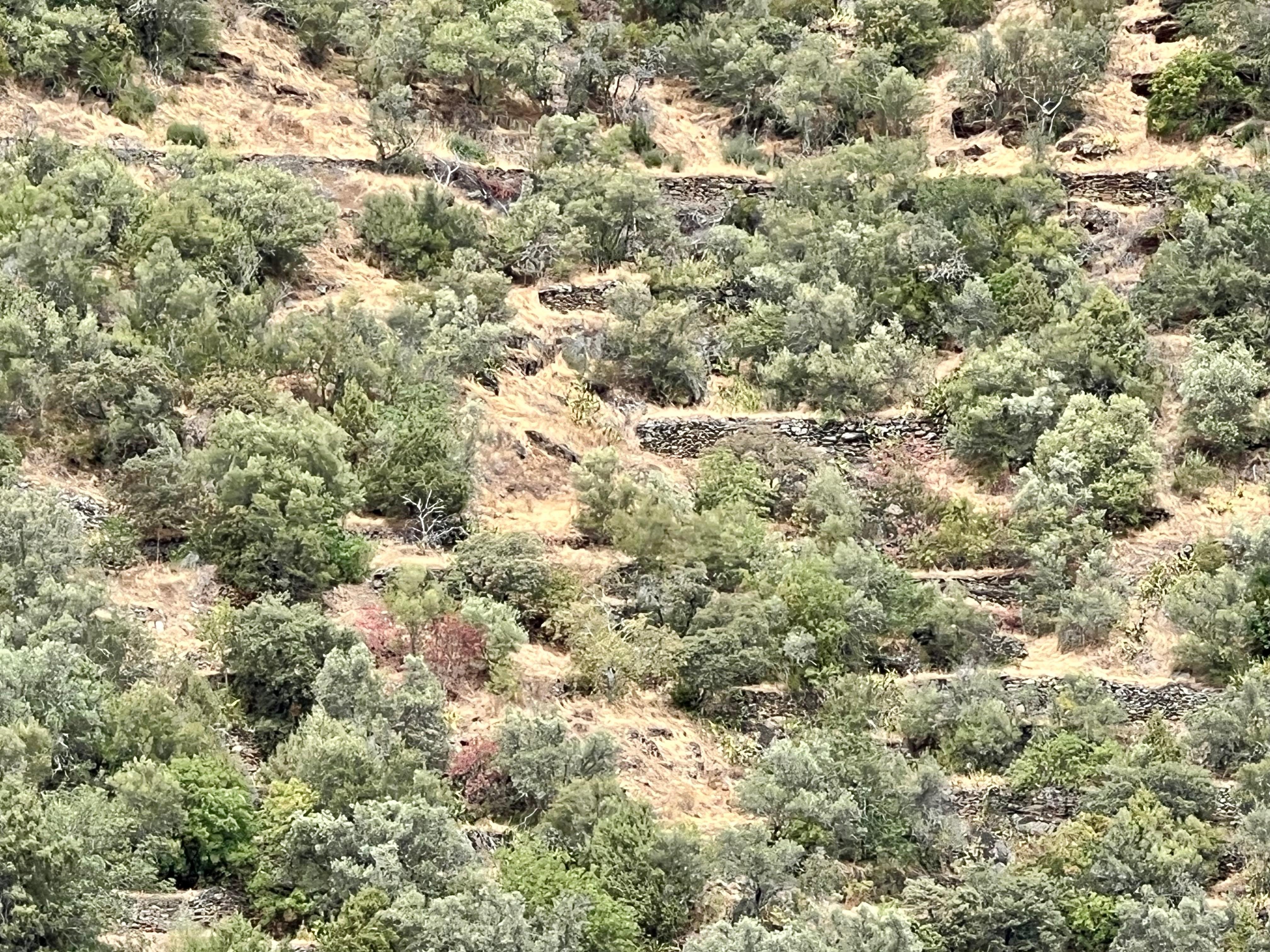
These abandoned terraces, known as mortórios, have been reclaimed by the Mediterranean forest. Their stone walls, now entwined with wild vegetation, stand as silent witnesses to a tragic chapter in the Douro’s history.

The oldest terraces, built after phylloxera, were supported by dry-stone walls, feats of balance and beauty where each stone rests “one upon two.” In the 1960s, as labor became scarce and tractors arrived, new earth-banked terraces (patamares), depicted below, took their place — practical but less graceful.

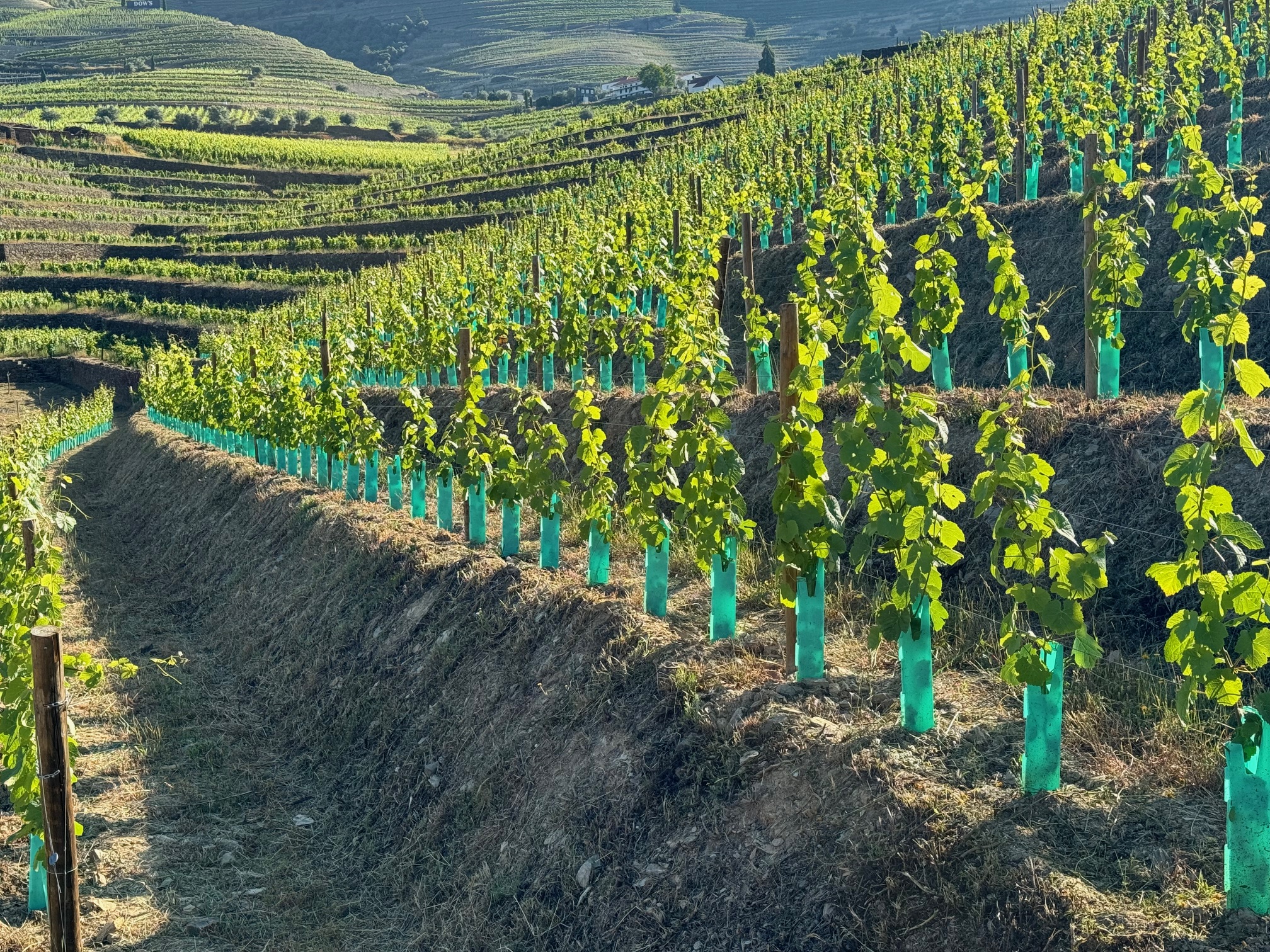
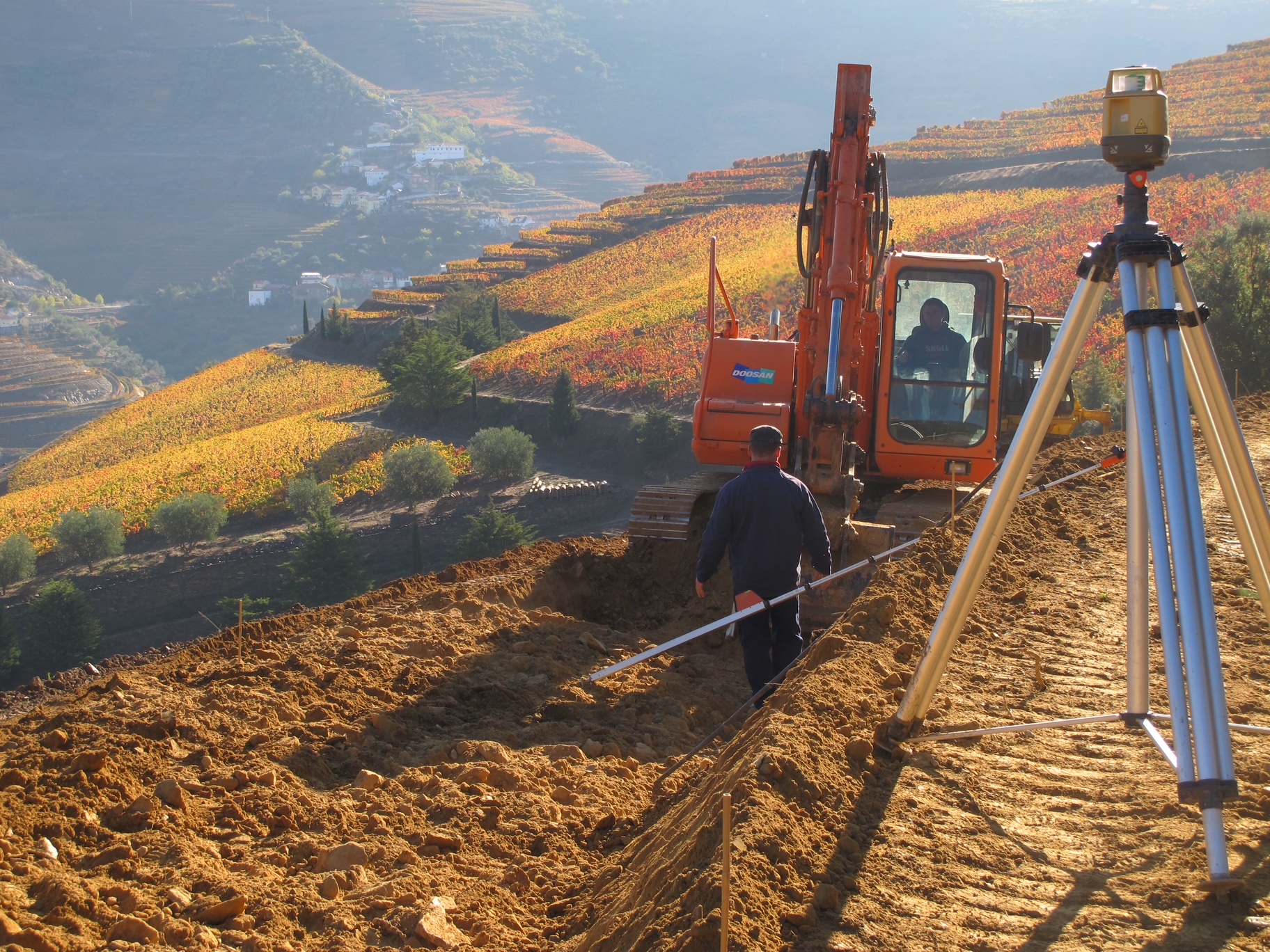
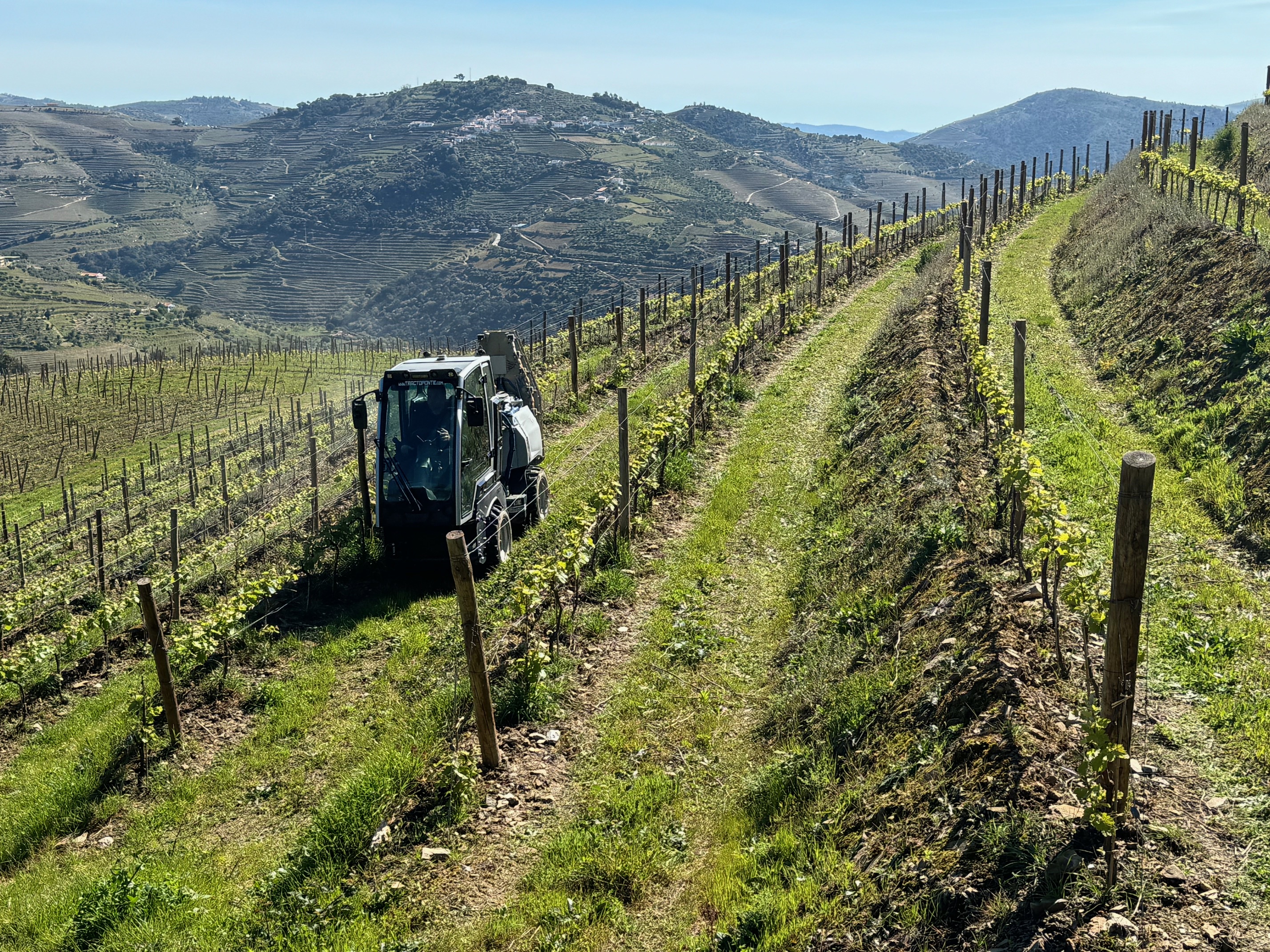
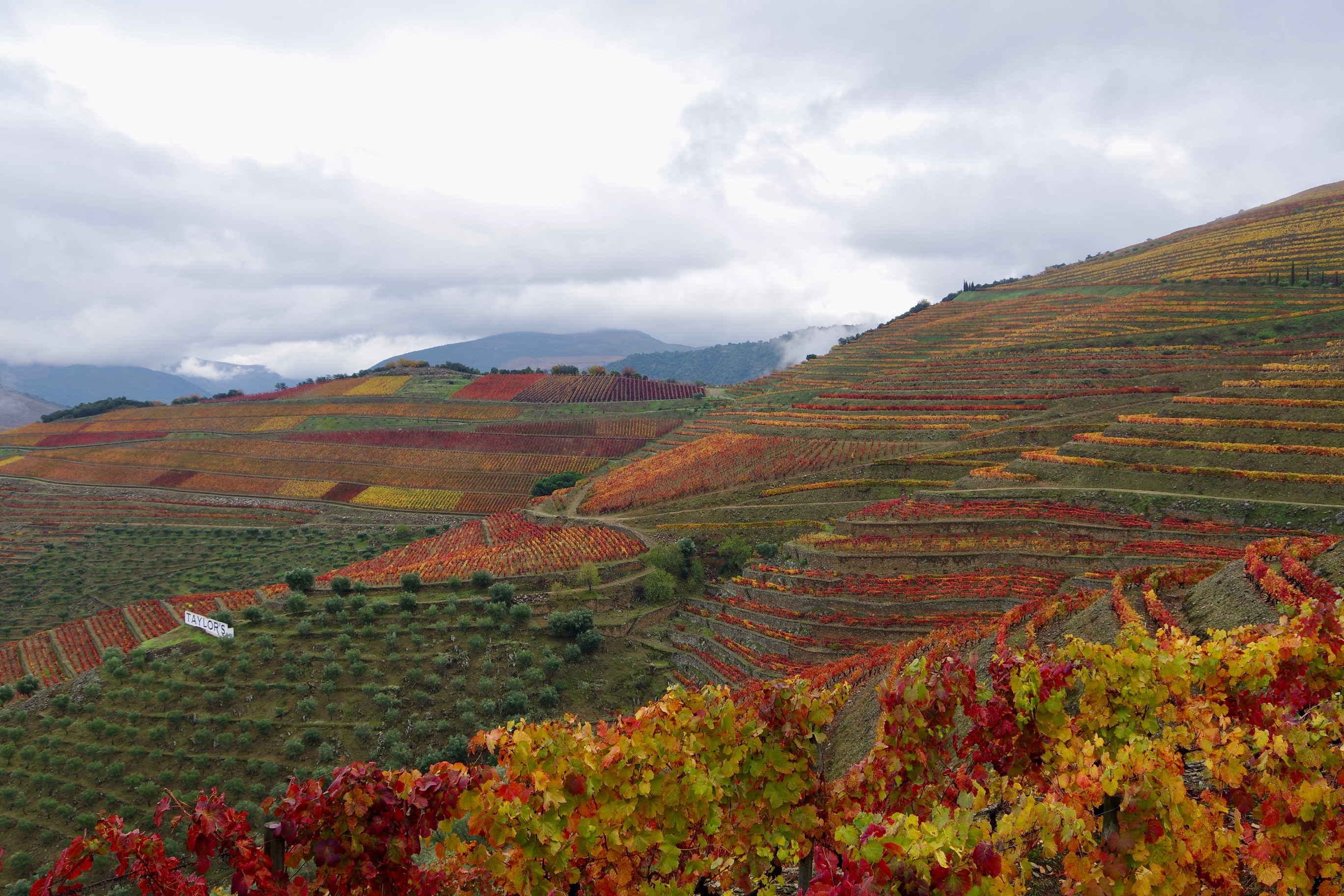
At the turn of this century, António Magalhães and David Guimaraens, the head winemaker of Taylor’s Fladgate, combined the beauty of the old dry-stone terraces with the practicality of the modern earth-banked ones. Inspired by California’s Benziger Family Winery, they built narrow terraces, just 1.5 meters wide, each with a single vine row and a gentle 3 percent slope to drain rainwater safely. Precision-leveled by laser, this innovation protects against erosion while preserving the Douro’s graceful geometry. 

Root and Rock

The phylloxera plague that ravaged European vineyards in the late nineteenth century arrived at the Douro in 1863-64.

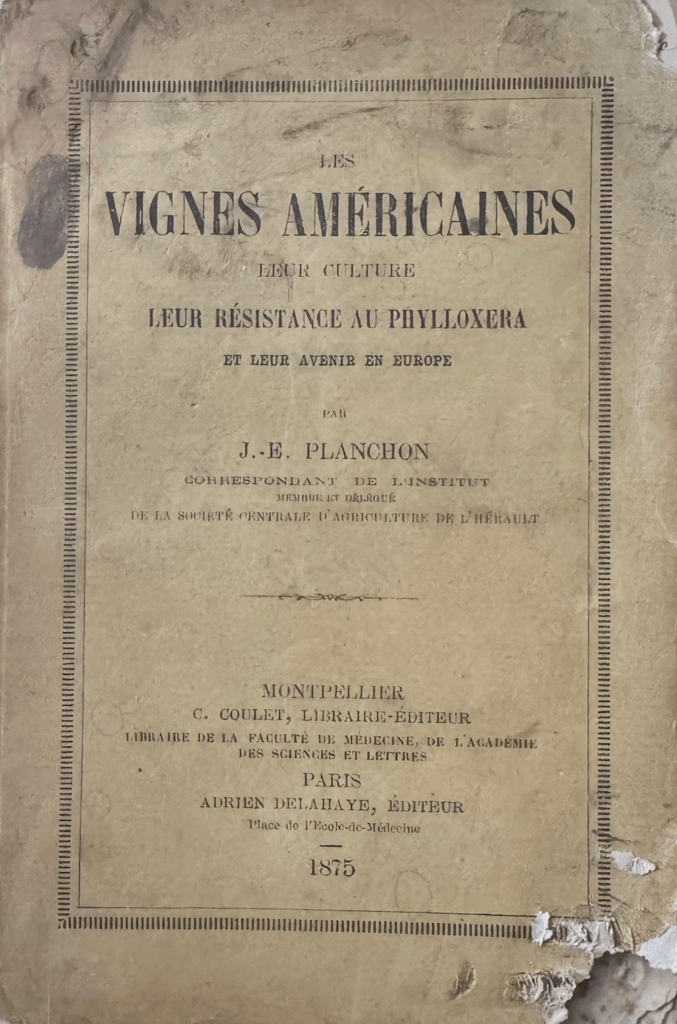
Salvation only came after Jules-Émile Planchon, a French botanist, and Charles Valentine Riley, an American entomologist, discovered that grafting European grapevines (Vitis vinifera) onto American rootstocks could save the vines. 

One such rootstock, Rupestris du Lot, thrived on the Douro’s poor, dry, schistous hillsides.

It seems to facilitate potassium absorption. This mineral helps regulate the opening and closing of tiny pores on leaves, called stomata, which control transpiration and CO₂ uptake — both essential to photosynthesis.

For decades, the Rupestris du Lot anchored the valley’s post-phylloxera vineyards, its deep-seeking roots echoing the surriba’s purpose: to connect life to stone. Even as newer, more productive hybrids replaced it, António continues to praise its quiet virtues — longevity, restraint, and resilience — the very qualities that define the Douro itself.

Granite Lagares

The granite lagares of the Douro are among the most enduring symbols of the region’s winemaking heritage. Their coarse surfaces help regulate temperature during fermentation and impart a tactile connection to the land — the sensation of grape skins and must mingling with the mineral essence of granite itself.

For centuries, blocks of rock were quarried from places like Vila Pouca de Aguiar, Portugal’s self-proclaimed “granite capital,” where the stone’s density allows it to be cut into large rectangular slabs. 

António concludes his lecture with poetic words: “In the Douro where I grew up, the grapes journey from rock to rock — ripening in the heat of schist and fermenting in cool granite lagares.”

What to Visit

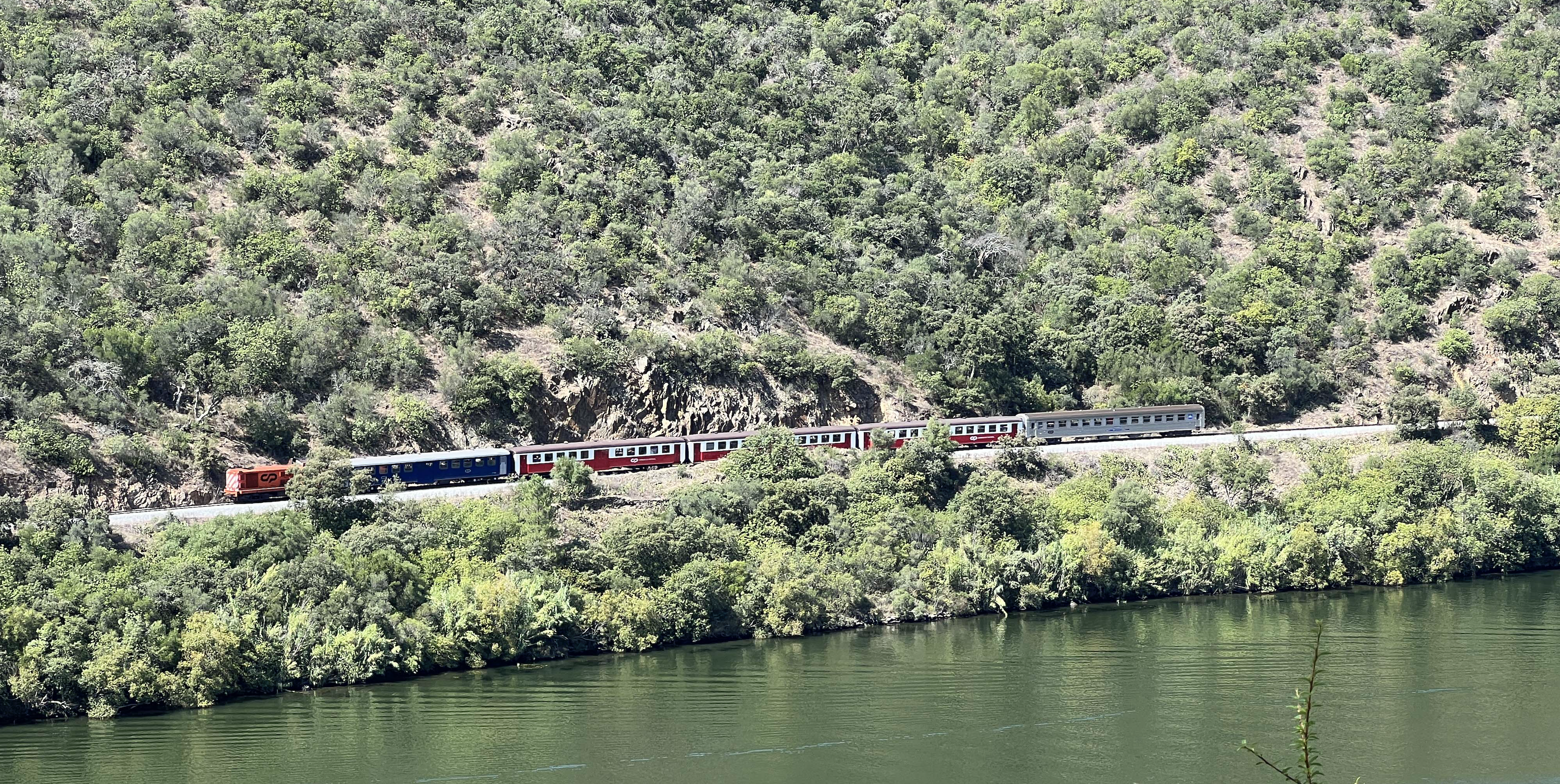
The train trip from Pinhão to Pocinho offers a geology lesson. Along the slopes that flank the railway, you see the leptosol with its thin layer of soil above the parent rock.

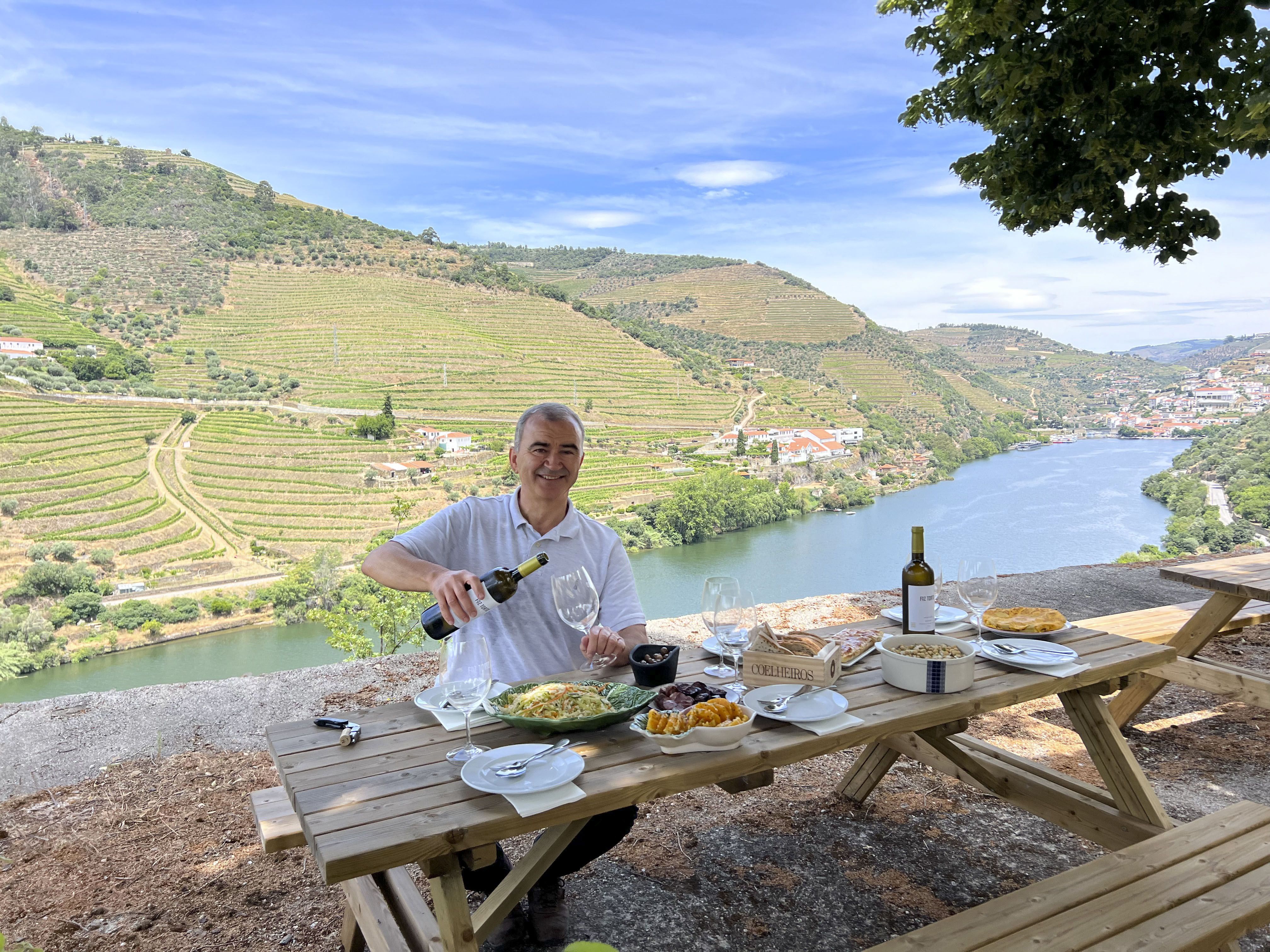
The art of building dry stone walls is beautifully explained at the Wine Museum in São João da Pesqueira, a town whose historic center also deserves exploration. The visit whets the appetite for lunch at Toca da Raposa, in Ervedosa do Douro, about 8 kilometers away along the National Road 222, heading toward the mouth of the Torto River — another magical tributary that shapes the wines of the Douro, alongside the Pinhão River. In the summer, you can also book an unforgettable picnic at the Foz Torto estate with our friend Abílio Tavares da Silva.

António recommends reading “Taste the Limestone: A Geologist Wanders Through the World of Wine,” by Alex Maltman. You’ll return home with a deeper understanding of soils and their decisive role in defining terroirs across the world.

A Journey Through the Douro’s Three Regions with António Magalhães

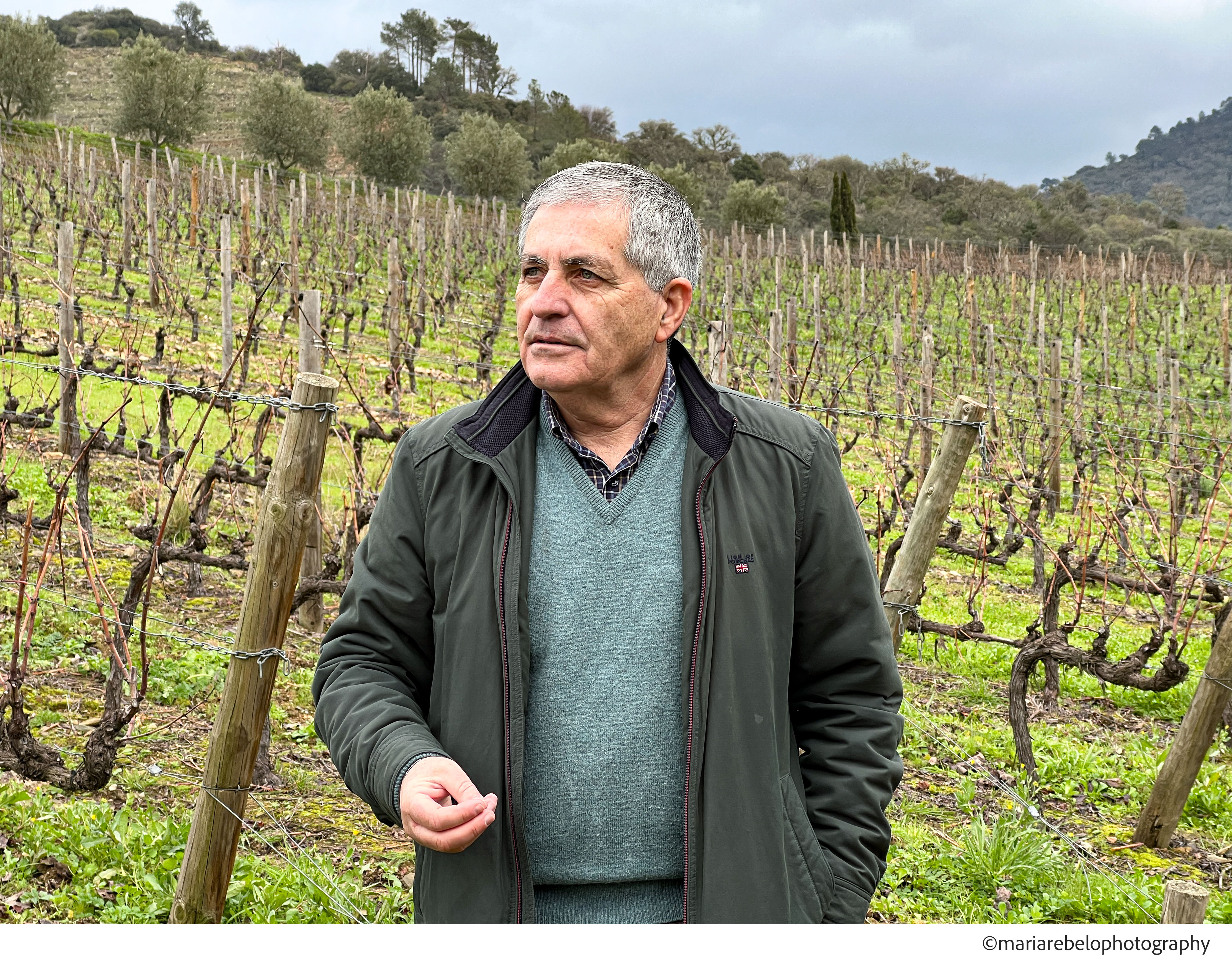
António Magalhães, former chief viticulturist of Taylor Fladgate, is revered throughout the Douro for his deep knowledge of its vineyards and terroir. He graciously agreed to give us a series of master classes about the Douro, and what follows are notes from the first of these sessions—an insider’s look at one of the world’s most extraordinary wine regions.

About António

António was born in Régua, in the heart of the Douro. Both of his parents came from families who cared for their own vineyards. He often spent time at his maternal grandfather’s estate, where his love for the Douro was first nurtured. Although he never inherited land, his studies were guided by a single calling: to work among the vines of his native valley.

A Land of Mountains and Microclimates

The Douro is immense — 250,000 hectares of rugged mountains, of which only 44,000 are occupied by vineyards. It is the largest mountain viticulture region in the world, and the only one with a Mediterranean climate crossed by a navigable river that flows into the Atlantic Ocean.

The basin of the Douro, the largest in the Iberian Peninsula, is shared by Portugal and Spain. Its main river and tributaries flow through a tapestry of vineyards across wine regions: Ribera del Duero, Rueda, Cigales, Toro, and Arribes, in Spain, Douro and Távora-Varosa in Portugal. You could say that the Douro is a river of wine.

The Douro’s rise as a great wine region began in 1703, when Portugal signed the Methuen Treaty with England, opening trade between the two nations. Douro’s Port wine became popular in England, and demand soared. Vineyards spread, and some producers began to cut corners—darkening their wines with elderberry juice and sweetening them with sugar. Port’s reputation faltered, and trust among English importers began to erode.

To restore order, avoid the use of fertile land for viticulture, and protect Port’s reputation, the Marquis of Pombal created the world’s first demarcated wine region in 1756. The Companhia Geral da Agricultura das Vinhas do Alto Douro, a public company, marked its boundaries with granite pillars known as marcos pombalinos and classified its vineyards. The finest plots produced the prized vinhos de feitoria, destined for the great British trading houses (feitorias) in Porto. Wines of intermediate quality, the vinhos de embarque, were partly exported, while the more modest vinhos de ramo were reserved for local consumption. With this demarcation, a singular landscape was born, shaped by nature’s hand and human will.

It was fortuitous that there was open land in Gaia, near Porto, on the southern bank at the mouth of the Douro. There, the north-facing slopes and the cooler, more humid weather provided ideal conditions for storing and aging wine. With its quality safeguarded and easy access to an Atlantic port from which ships could carry it abroad, Port wine flourished, becoming prized around the world.

The Douro River flows west to meet the Atlantic at Porto (Álvaro Moreira da Fonseca (1944–45)).

The climate and regions of the Douro

On what António calls the “Olympic podium” of terroir, climate wins gold, soil takes silver, and grape varieties bronze. Today, we focus on climate.

Vines don’t need irrigation, but they do require at least 500 mm of rainfall per year. In the Douro, however, the irregular rainfall and rapid runoff down the steep slopes increase that need to about 600–700 mm. The timing of that rain is crucial. It rains about as much in Pinhão, at the center of the Douro, as in Paris—around 640 mm annually. However, in the capital of France, rain falls throughout the year, whereas in the Douro, the rain is in tune with the vines’ vegetative cycle: it falls mainly in autumn and winter, when the vines are dormant. Planted in the right places, Douro vineyards never suffer from thirst, only from heat.

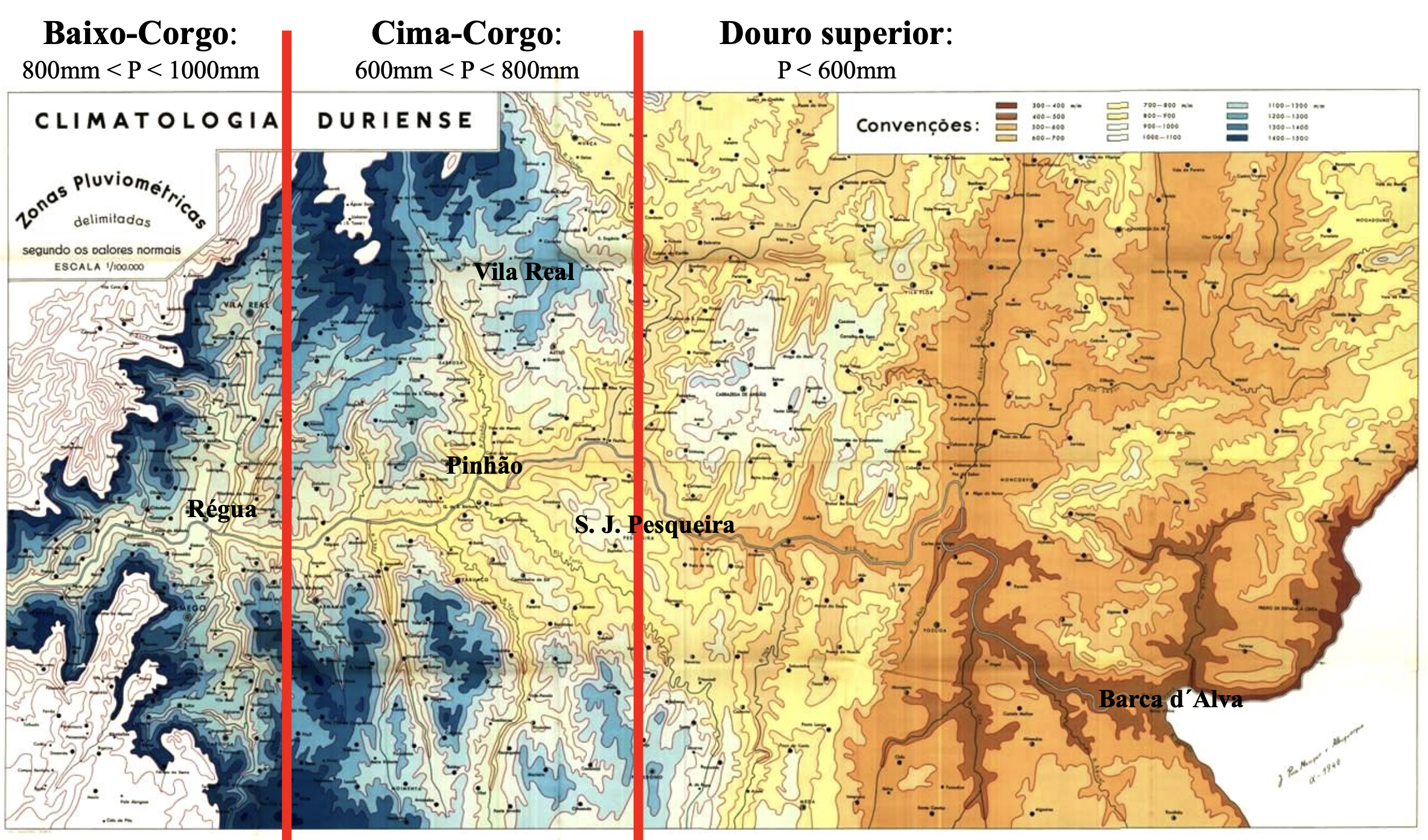
The distribution of rainfall divides the Douro into three distinct subregions. Baixo Corgo is lush and green, blessed with 800 to 1,000 mm of rain each year. Cima Corgo, home to the great Port houses, is drier, with 600 and 800 mm. Farther east lies Douro Superior — sun-scorched, rugged, and remote, where rainfall often falls below 600 mm.

Rainfall in the Douro: blue = high, yellow = medium, orange = low.

Vineyards are abundant in Baixo Corgo and sparse in Douro Superior, where cultivation is possible only in small islands with favorable microclimates. In recent decades, irrigated vines have appeared in Douro Superior, yet they rarely produce grapes suitable for making Port.

The scholar Alfredo Guerra Tenreiro wrote that “there is a uniqueness in the Douro climate that one can feel in the uniqueness of Port wine.” In the 1940s and 1950s, he mapped the aridity of the Douro using a simple measure: average temperature multiplied by 100, divided by rainfall. As one moves west or climbs the surrounding hills, aridity decreases because the temperature falls and rainfall increases. 

As we ascend the hills that flank the Douro and its tributaries, the temperature drops roughly 0.65°C per 100 meters. With peaks rising to 600 or 700 meters, temperatures can be as much as 3.6°C cooler than in vineyards planted near the river, at 100 meters of altitude.

Orientation also matters. South-facing slopes are, on average, two degrees warmer than north-facing ones during the summer — a subtle difference with dramatic effects. It explains why the Douro can yield everything from festive sparkling wines, such as Celso Pereira’s Vértice, to bright whites, velvety reds, and opulent Ports.

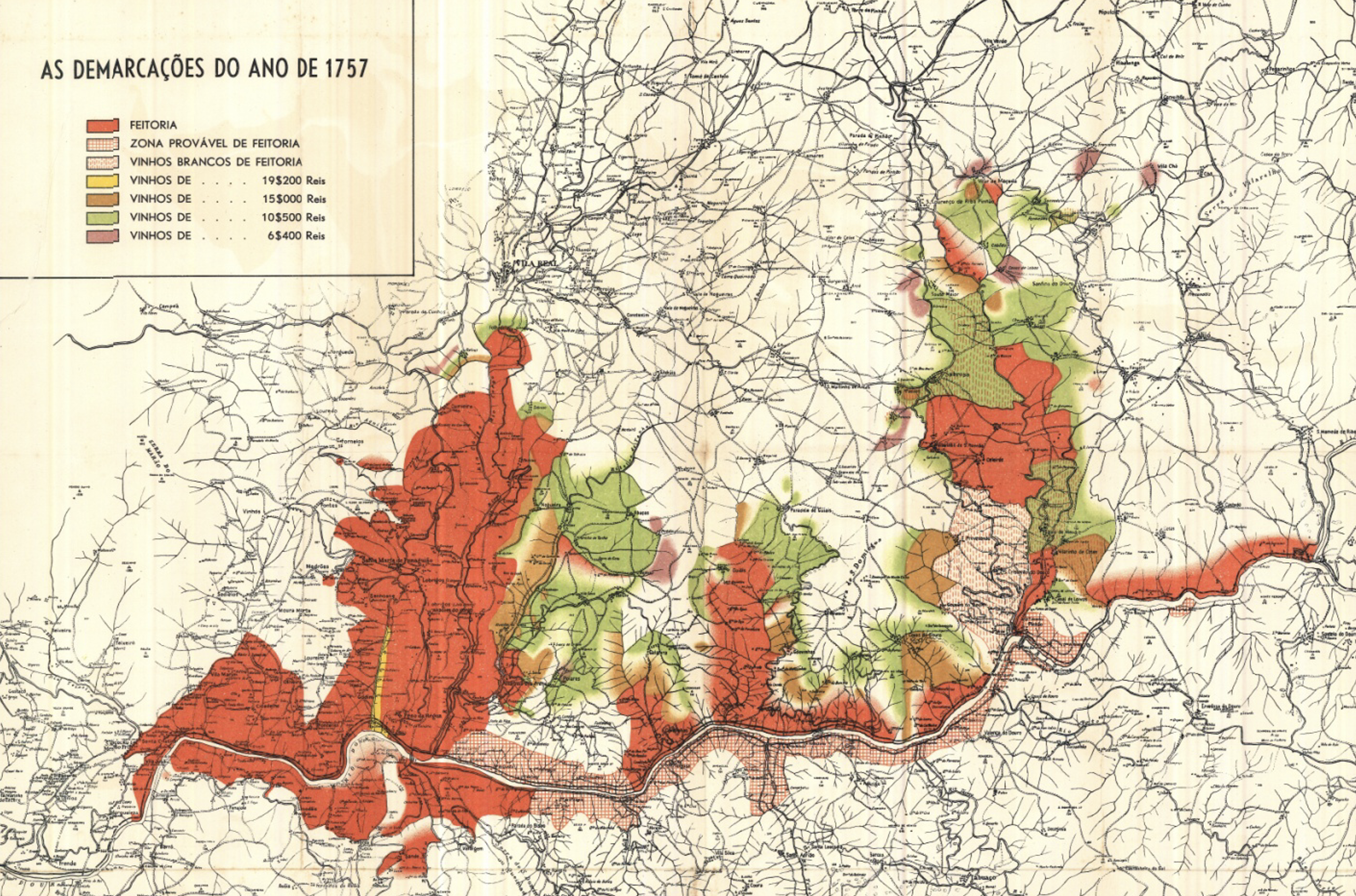
Álvaro Moreira da Fonseca used location, altitude, and orientation to craft his brilliant classification of the region’s vineyards, grading them from A to F. This system still underpins the benefício rules that determine how much of a vineyard’s production can be used for Port wine. His maps, drawn in 1944 and 1945, are masterpieces. Fonseca set 500 meters as the upper limit for Port production, deducting points for vineyards planted above that line.

Map by Álvaro Moreira da Fonseca (1944–45). Red marks top wine areas.

Looking at Fonseca’s maps, we see a “blessed valley” — Vale de Mendiz, where the Pinhão River meets the Douro. There, rainfall from the Baixo Corgo meets the warmth of the Cima Corgo, producing wines of exceptional balance. It is no coincidence that iconic estates like Quinta do Noval and Wine & Soul call Vale de Mendiz home.

Traveling Through the Douro

António recommends visiting the Douro between mid-May and mid-November, staying for several days to ensure you catch a sunny spell. Gray skies hide some of the valley’s splendor.

He suggests two journeys for those eager to understand the Douro.

First, drive along the A24 highway from Vila Real to Régua, crossing the Marão mountain — an invisible wall separating cool Atlantic air from the dry Mediterranean hinterland. You’ll cross the Baixo Corgo moving perpendicular to the course of the Douro River. The landscape is breathtaking, and along the way you can feel the shifts in temperature and altitude that shape the character of Douro wines. 

Begin in Vila Real at 450 meters of altitude, and as you descend toward Régua, at 100 meters, feel the temperature rise and watch the hills unfold into a sea of vines. Olive trees stand like sentinels at the edges of vineyards. Climb toward Lamego, at 540 meters, and feel the air cool once more. The whitewashed houses, stone wine lodges, and hillside villages lend a human touch to the landscape, making the journey unforgettable.
In Régua, stop at Aneto, a small, family-run restaurant where hospitality flows as generously as the wine produced in their own estate. In Lamego, stop at Pastelaria Velha da Sé for a bola de carne (savory meat-filled bread), visit the cathedral, the Escadório de Nossa Senhora dos Remédios, a Baroque stairway, and admire the Ribeiro da Conceição theater, a miniature La Scala.

The second journey is by train, linking three UNESCO World Heritage sites: Porto, the Douro, and the Côa Museum, which preserves paleolithic art.

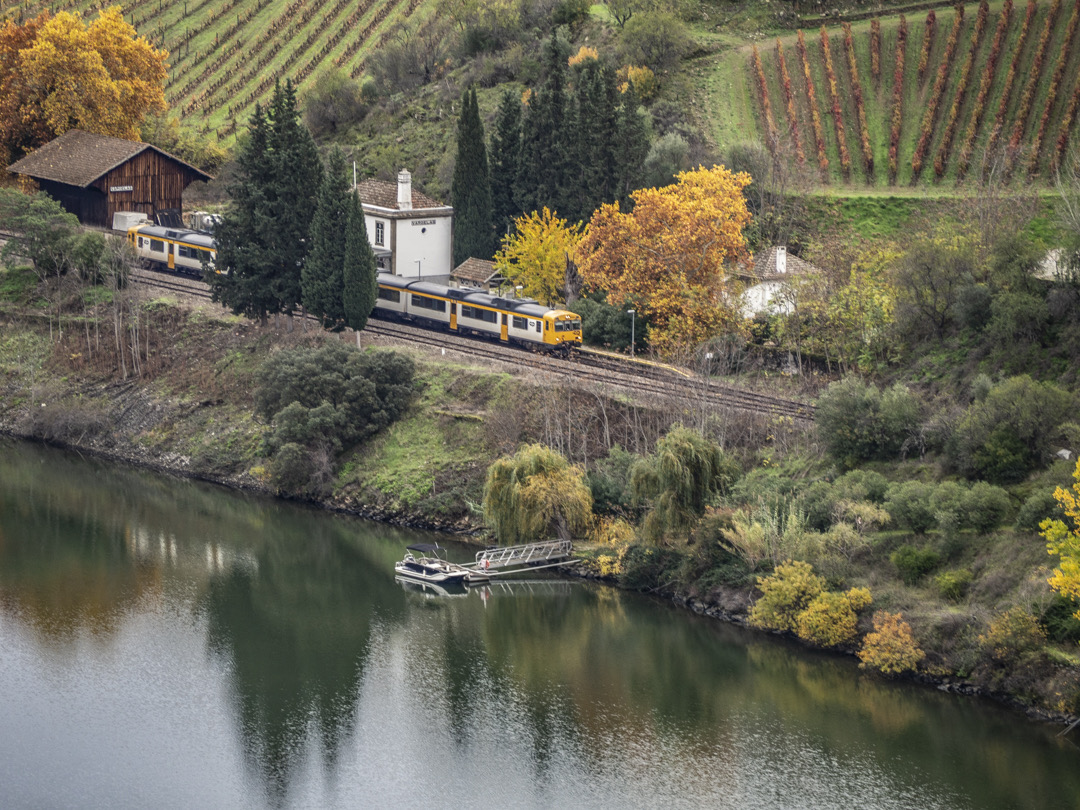
The hills were carved to lay the train tracks, turning the voyage into a geology lesson on Douro’s mother rock, the schist. Its cleavage is almost vertical, allowing the vine roots to penetrate deeply into the cracks in search of precious water.

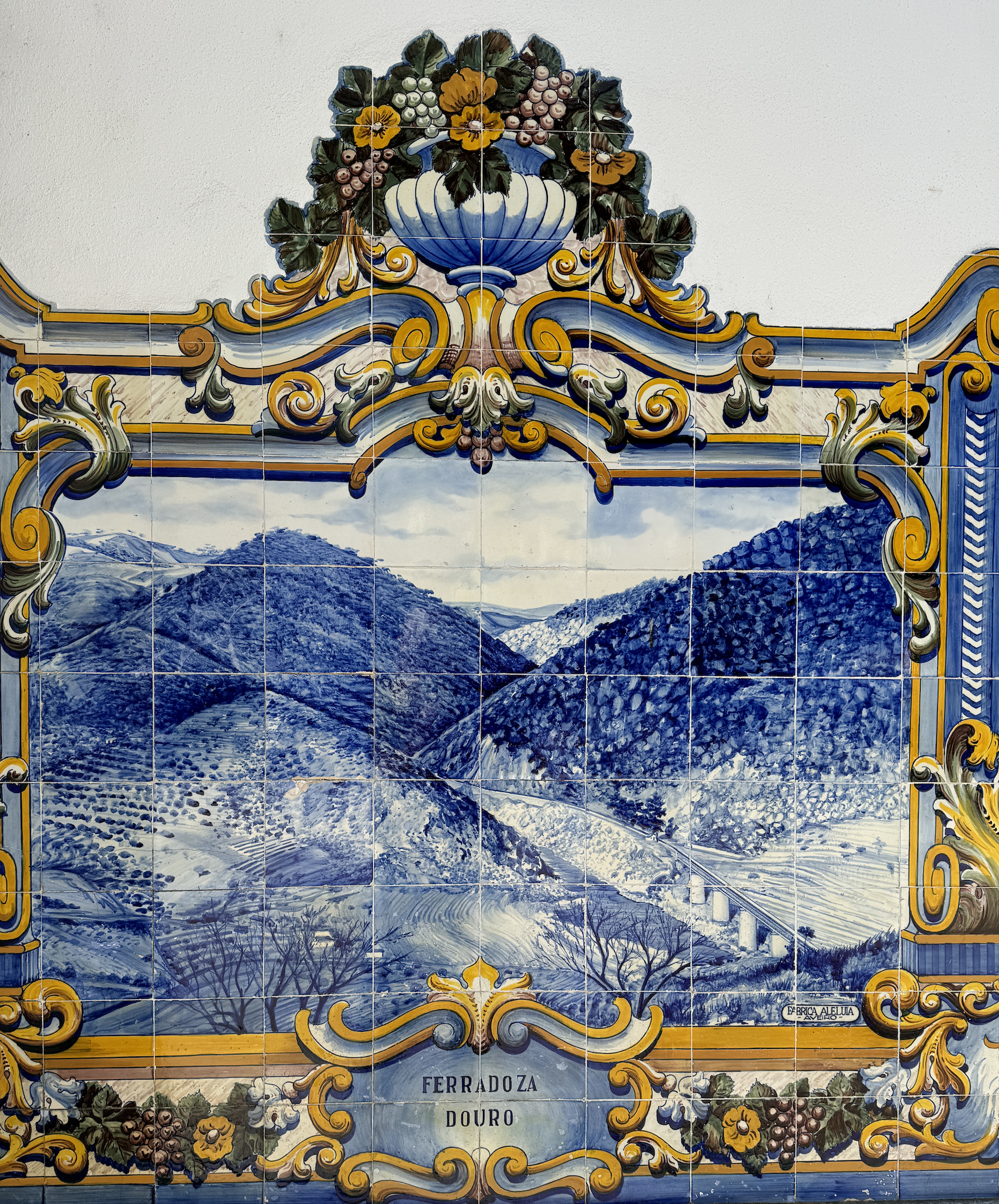
As the train leaves Régua, schist terraces rise and curve around the river. Disembark at Pinhão and linger a few days visiting nearby wine estates. Before you go, admire the station’s twenty-four azulejo panels, made in 1937 by the Aleluia Factory in Aveiro. They depict the Douro landscape and trace the making of Port—from the harvest of sun-ripened grapes to the voyage of slender rabelo boats, which carry barrels to the cellars of Vila Nova de Gaia.

Continue upriver through the Cima Corgo, the heartland of Port. In bygone days, train-station restaurants were famed for their quality. Calça Curta, at Tua Station, keeps this tradition alive. Farther along, stop at Ferradosa Station to dine at Toca da Raposa, celebrated for its regional cooking. 

As the train enters the Douro Superior, the air turns drier, the heat more intense, the hills steeper. At Cachão da Valeira, the landscape shifts to granite. Today, the river glides wide and serene, but it once raged against a massive granite barrier that made navigation perilous. Here, in 1861, tragedy struck: a boat capsized carrying two iconic figures—Dona Antónia Ferreira, owner of vast wine estates, and the Baron of Forrester, an English merchant and mapmaker who devoted his life to the region. According to legend, Dona Antónia survived, buoyed by her billowing skirts, while the Baron drowned, dragged down by the gold coins in his pockets. 

In summer, cicadas sing for travelers along the stretch between the Valeira gorge and Pocinho. As you near Pocinho, the heat intensifies—writer Francisco José Viegas once quipped that “hell’s heat comes from Pocinho.” Stop at Taberna da Julinha, a local restaurant that, in the summer, serves the valley’s celebrated tomatoes, bursting with flavor and sweetness.

The Côa Museum lies about 10 kilometers from the train station. There, you can contemplate the largest and oldest ensemble of open-air Paleolithic engravings in Europe. Horses, deer, and goats emerge from the stone, their lines layered in a dance of timeless motion. Dine on the museum’s terrace, overlooking the river laid bare in all its austere beauty—terraces and cliffs carved by nature and human will.

The Future of the Douro

The Douro was forged in hardship. Its people labored to carve terraces from unforgiving slopes; its vines learned to endure searing summers and biting winter frosts. Yet this endurance may be the valley’s greatest gift. It has prepared the Douro to face the trials of a changing world.

António Magalhães, keeper of Douro secrets

You might not be familiar with António Magalhães, the chief viticulturist of the famed Taylor-Fladgate port house, but if you enjoy exceptional port wines, you’ve likely experienced the fruits of his labor. António has worked for more than three decades in the rolling terraces of the Douro Valley. Throughout this time, nature has gradually revealed to him some of its winemaking secrets. Patience has been essential in this apprenticeship. It can take many years to grasp the impact of viticulture choices on wine production.

António is known for his thoughtful character and gentle disposition. But beneath this demeanor lies a powerful intellect–he has the rigor of a scientist, the curiosity of a historian, and the eloquence of a poet. He believes in combining scientific methods with traditional wisdom and has a deep reverence for the mysteries of winemaking. 

In collaboration with a statistician, António sought to unravel some of these mysteries, analyzing climate data since 1941 to identify weather patterns associated with vintage years, the finest for port wine production. They discovered that these years share three characteristics. First, the average temperature in July is less than 24.5 degrees Celsius. Second, two-thirds of the rain falls during the dormancy period (from November to February) and one-third during the growth period (from March to June). Third, there is less than 20 millimeters of rain in September. A small amount of rain at harvest time helps refine the grapes, says António, but too much rain in September fills the grapes with water and promotes fungal diseases. To António’s delight, they found that exceptional vintage years often deviate from the norm in unique ways, a testament to the magic of port wine.

Another facet of this magic is the art of blending. The Douro’s diverse microclimates provide winemakers with a rich palette to adapt to the annual variations in weather. They skillfully blend diverse varietals from vineyards with different locations, altitudes, and sun exposure. António has a profound understanding of the art of blending grounded on his comprehensive knowledge of the Douro subregions—the rain-soaked Baixo Corgo, the moderately wet Cima Corgo, and the arid Douro Superior. 

He has studied how grape varietals were adapted to counter the crisis created by phylloxera, an American insect that decimated European vines in the second half of the 19th century. The blight reached the Douro region in 1862-63 and became a severe problem in 1872. Farmers noticed that Mourisco, a varietal with lackluster enological properties, was the most resistant to phylloxera. For this reason, Mourisco was crossed with Touriga Nacional, considered the finest pre-phylloxera varietal, to create Touriga Francesa. The name, which means French Touriga, was likely chosen to honor the French school of viticulture and its contribution to creating phylloxera-resistant varietals. 

António also analyzed the various types of American vine roots brought from places like Texas to the Douro Valley to graft European vines and increase their resilience to phylloxera.

Since 1992, António has worked closely with David Guimaraens, the chief enologist at Taylor-Fladgate. Every year, António and David write several letters to the farmers who produce grapes for Taylor-Fladgate, offering insights into the vines’ current conditions and the most effective viticulture practices to respond to them. This educational effort is vital to the quality of the Taylor-Fladgate ports.

Concerned with the impact of heavy rainfall on soil erosion, António and David developed a new model for the terraces where the vines are planted. They had an epiphany while visiting the Benziger family, a biodynamic wine producer in California. It started to rain torrentially, and as they ran for shelter, they noticed that the rain was running with them. They realized that this kind of drainage, created by a three percent gradient, is what the Douro Valley needs.

António and David asked earthmoving companies to find a bulldozer narrow enough to fit in the terraces and capable of creating a three percent inclination. One of the companies found a second-hand machine used in rice plantations in the south of Portugal. The company’s manager called to say that the machine had an unusual device. “Bring it along,” said António. It turned out that the device was a laser that greatly simplified the task of creating a three percent slope. They later learned that the Benziger farmland had been graded by Chinese workers, who were likely to be familiar with the three percent inclination used in rice cultivation.

The Taylor-Fladgate farms stand out for their beauty because António is a sculptor of landscapes. He knows that cultivating a vineyard, planting a tree, or building a stone wall alters the scenery, and like an artist, he selects colors that harmonize, proportions that feel human, rhythms that please the eye.

António is passionate about researching the history of the Douro region. He often visits Torre do Tombo, a vast national archive with documents spanning nine centuries of Portuguese history. The writings of Álvaro Moreira da Fonseca (the creator of the vine quality scoring system still in use), the Baron of Fladgate, John Croft, José Costa Lima, A. Guerra Tenreiro, and many other Douro luminaries are his constant companions.

His extensive knowledge of history gives him a unique appreciation for the sacrifices made by generations of workers who have toiled in the Douro region. This understanding is evident in how António interacts with the people he manages. His sincere appreciation for their efforts earns him the loyalty and trust of his collaborators.

Today, António Magalhães retires as Taylor-Fladgate’s chief viticulturist. This milestone marks the beginning of a new chapter. We hope that António can now find the time to write a treatise on viticulture so that, as the climate continues to change, his erudition can illuminate the future of the Douro Valley.

Garum from Troia

If you’re looking for a unique gift from Lisbon for a food-loving friend, we have just the thing. Can the Can, a restaurant in Terreiro do Paço, sells flasks of garum. This fermented fish sauce created by the Greeks was coveted throughout the Roman Empire. Like Asian fermented fish sauces, it enhances flavor, adding a rich umami taste.

The Troia peninsula in Setúbal is home to sprawling remains of piscinae, large basins used by the Romans for salting and fermenting fish. Along Portugal’s Atlantic seaboard, this region is ideal for garum production, thanks to its plentiful fish stocks and a climate favorable for fermentation. 

Maria da Luz and Vitor Vicente, two entrepreneurs, revived the production of garum in Troia using mackerel (favored by the Greeks), swordfish, tuna, sea bream, octopus, mullets, and sardines (our favorite). 

In the Roman Empire, garum was a symbol of extravagance. Pliny the Elder described it in his Natural History as a “liquoris exquisiti,” an exquisite liquor. Priced on par with the rarest perfumes, it was reserved for the tables of the affluent. Today, thanks to Can the Can, this nearly forgotten delicacy is both accessible and affordable.

Can the Can is located at Terreiro do Paço, 82/83 in Lisbon. Click here for their website.

Myths and secrets at Bussaco

King Charles I enjoyed hunting in the Bussaco forest so much that he decided to turn a local Carmelite monastery built in 1630 into a royal retreat. When construction began in 1888, the king engaged the most important Portuguese artists of the time in the project. 

It is a gorgeous place. Limestone from the nearby village of Ançã, carved with intricate motifs, decorates the outside. Beautiful tile murals and frescos depicting scenes inspired by literary works and historical events adorn the interiors. 

In 1910, Portugal abolished the monarchy and became a republic. The royal palace seemed destined to become a romantic ruin. But Alexandre de Almeida, a local entrepreneur, endeavored to save it. He negotiated a concession with the state to convert the palace into a luxury hotel. Inaugurated in 1917, it became a success with international celebrities like the mystery writer Agatha Christie.

In the 1920s, Alexandre de Almeida started bottling wines to serve in the dining room of the palace.  These wines gathered fame for their unique character and outstanding aging ability. 

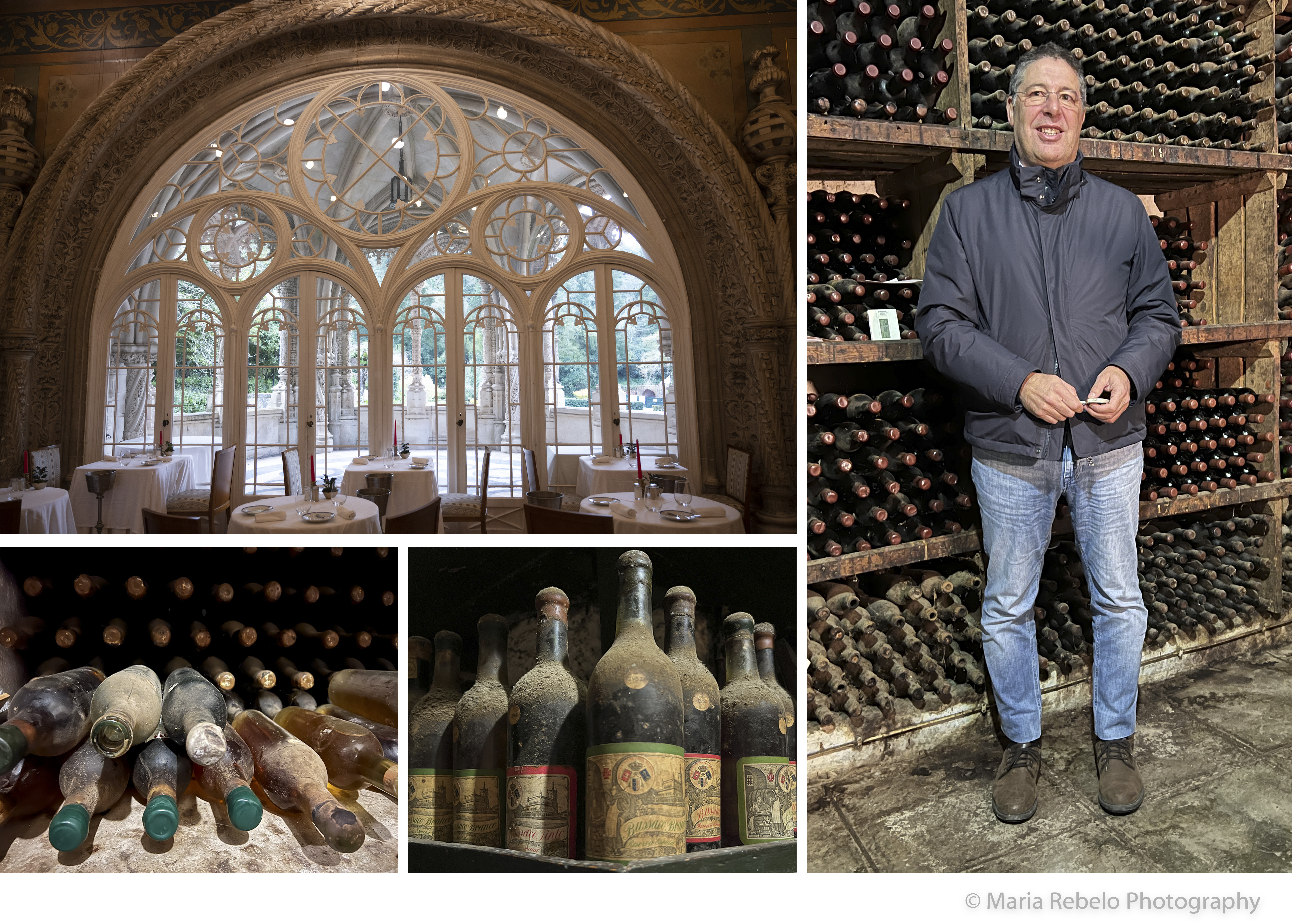
Alexandre de Oliveira, the founder’s grandson, currently runs the hotel group that operates the Bussaco Palace. One of his childhood friends, António Rocha, directed the hotel for many years. Fifteen years ago, António told Alexandre that he would like to give up his managerial role to focus on producing Bussaco wines. Knowing António’s passion for these wines, Alexandre accepted his proposal.

We met António in the palace cellar. He’s been spending many hours there, patiently recorking old bottles so the wine can continue to age gracefully. He showed us with pride wines bottled in the 1940s. “They flow from the bottle with remarkable freshness and vigor, ready to be enjoyed,” he told us.

“What makes Bussaco’s wines so special?” we asked António. “Great wine is 60 percent myth and 40 percent secrets,” António answered, smiling. Bussaco is located between Bairrada and Dão, so the wines are made with grapes from both regions. The red is made from Touriga Nacional and Baga, the emblematic grape from Bairrada. The white is made with Bical, Maria Gomes, and Encruzado. Total annual production is small, only 20,000 bottles. But the cellar stores 200,000 precious bottles hoarded over the last century. 

Later, we joined António at a vinic dinner for a small group of wine connoisseurs at the famed Mesa de Lemos. There were many interesting wines to try, and as the wine flowed, so did the conversation. António tuned out the words to focus on the aromas and tastes of the wines. When it was time to sample the Bussaco wines he brought, António tried to be impartial, appreciate qualities, and identify aspects that can be improved. This passion and dedication is the true secret of Bussaco’s wines. 

Click here, for the Bussaco Palace web site.

The Correio-mor palace

We visited the Correio-mor palace in Loures on a sunny winter morning. The building was the country house of the family that, for two centuries, had a monopoly on mail distribution in the Portuguese empire. When the 1755 earthquake destroyed their Lisbon home, the family relocated to Loures and made this palace their permanent residence.

The ornate gates opened with ease as if they were expecting us. We stepped into a spacious courtyard that overlooks the Baroque building. Our first stop was the kitchen. White and blue tiles reflect the bright light that pours through the windows. The tiles depict the delicacies served at the palace: fish, game, vegetables, and fruits. A lonely marble table sits in the middle of the room, longing for the days when armies of cooks crowded around it to prepare sumptuous banquets. Across from the kitchen, we see vast wine cellars that once stored the fruits of many harvests.

An elegant staircase takes us to the noble floor. The limestone steps show the gentle wear that only shoes made of silk and soft leather can produce. At the top of the stairs, a hallway overlooks the expansive garden. We admire the ancient pine trees that have seen all the parties and heard all the gossip. Impassive, they sway in the wind, revealing nothing.

It is easy to get lost inside the palace. There are many elegant rooms with lavishly decorated ceilings and walls covered with tiles depicting naval scenes, hunting expeditions, and garden parties. 

At the Correio-mor palace we do not feel the stress of the modern world, only the gilded ease of aristocratic life. 

You can rent the Correio-mor palace for movies, weddings, and other special events. Click here for the palace’s website.

A convent in Alentejo

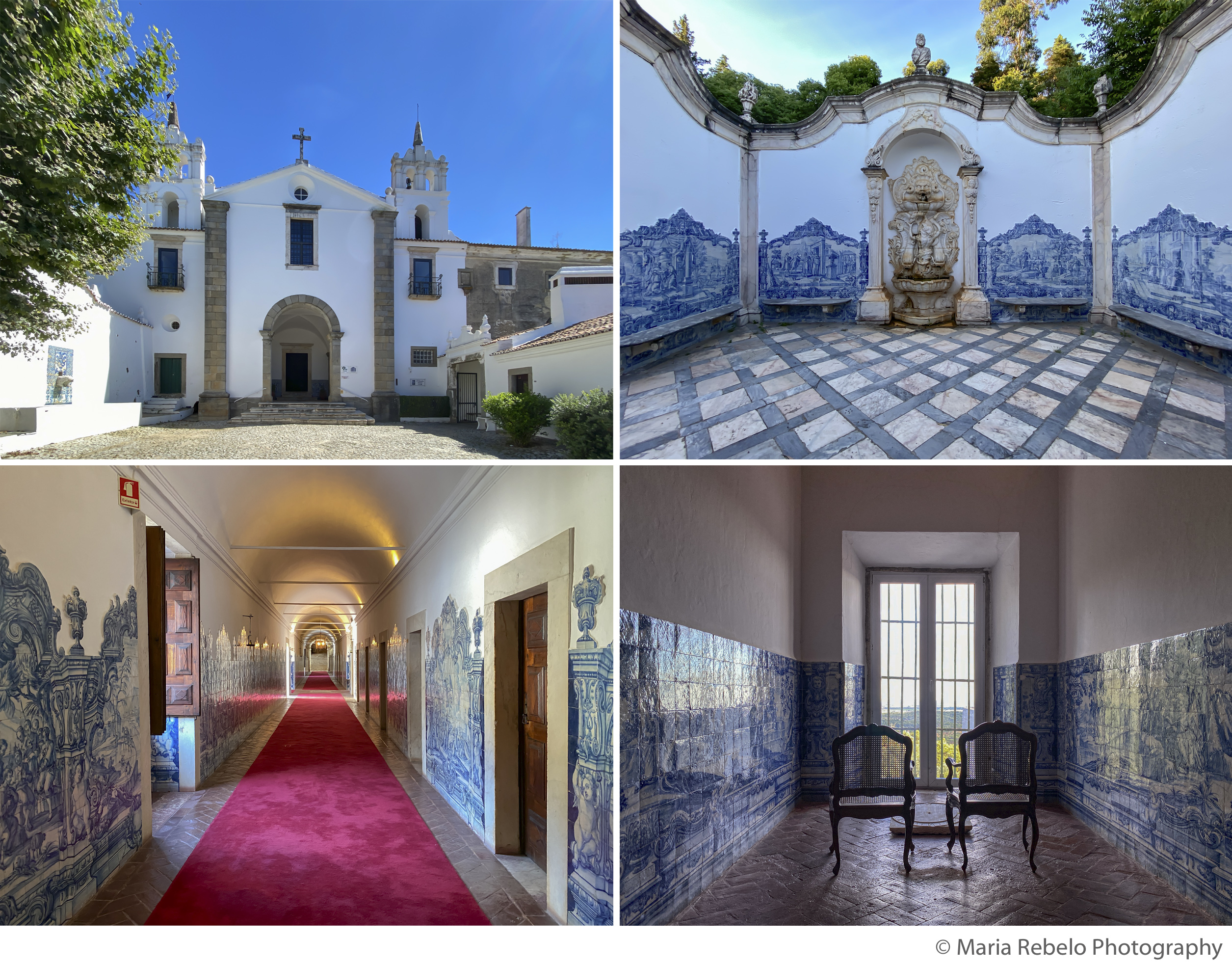
It is hard to believe that there’s a monastery larger than Lisbon’s Rossio plaza in the middle of Alentejo. Driving on the winding roads of the d’Ossa mountain, we almost lost faith. But we were climbing, and that is always a good omen. Convents often occupy mountain tops so that monks can be closer to heaven.

The first glimpse of the building is easy to miss. The sprawling monastery hides behind 600 hectares of olive trees, pines, oaks, ashes, and oleanders. After a few more twists and turns, we arrived at the Convent of São Paulo.

Marília Nanitas came out to greet us. She works for the foundation that manages the hotel. “Can you tell us the story of this place?” we asked with curiosity.  “I can tell you a good lie, which is better than a half-truth,” she replied teasingly. Then, she lent us a book about the history of the convent. 

What we learned from this tome is that it took centuries to build this monastery. The first edifice was a hermitage erected in the year 315. In 446, an earthquake partially destroyed the structure. When in 715 the Arabs invaded the region, the hermits abandoned the sanctuary.

The second king of Portugal, Sancho I, decided in 1182 to rebuild the hermitage as a monastery. In 1372, Dona Brites, the daughter of King Dom Pedro I and Inês de Castro, donated her lands near the convent to the monks. The royal family provided steady support, financing the glorious collection of cobalt blue tiles installed between 1710 and 1725. 

After the state abolished religious orders in 1834, the convent was disputed for 37 years by two municipalities, Estremoz and Redondo. Before leaving the monastery, the monks protected the tiles with plaster walls. It is thanks to their ingenuity that more than 50,000 tiles have survived to this day.

When the government auctioned the convent and the surrounding lands, Henriqueta Leotte Tavares purchased it with her dowery. It was a dream to own a place like this. But also a burden, a responsibility to history. Over the next two centuries, Henriquetta’s family used their income from agriculture to restore the convent. The first generation built a factory that made tiles to repair the roof. The second generation hired carpenters to rebuild the doors and windows. 

Henrique Lotte Tavares, a chemical engineer, belongs to the third generation. He has no descendants, so he decided to turn the convent into a hotel to preserve it for posterity. Between 1989 and 2009, Henrique oversaw countless renovations.  In 1993, he created a foundation to manage the hotel and continue the restoration work.

How was life in the monastery? The Latin word “silentio” inscribed in the tiles reminded the monks of their vow of silence. There are many fountains, perhaps because the sound of flowing water makes silences feel less awkward. The monks could talk only on their way to lunch or dinner. To make the most out of these convivial moments, the friars walked slowly through the corridor that leads to the dining room, which became known as “passos perdidos” (lost steps).

We too walked slowly on the long corridors of the convent to savor the moments spent in this beautiful place so far from the hurries of modern life, so close to the tranquility of heaven.

The Convento de São Paulo is located at Aldeia da Serra d’Ossa in Redondo, Évora. Click here for the hotel’s website.

An oyster feast

After his masterclass on olive oil, Edgardo Pacheco left behind some tasting glasses. When we asked him for the easiest way to return them, he answered with an invitation: “Do you want to join me for an oyster tasting?” How could we say no?

We met at JNcQuoi, an elegant restaurant in Lisbon’s Avenida da Liberdade. Edgardo introduced us to Rui Moreira, the president of the Portuguese aquaculture association, and two oyster producers, Hugo Castillo from Aquanostra and Pedro Ferreira from Exporsado. They are part of a small group of entrepreneurs who are passionate about oysters. Their mission is to take advantage of Portugal’s unique maritime terroir to produce exquisite oysters. Most of their production is exported to France, but their oysters are increasingly popular in Portuguese bars and restaurants.

We learned that Portugal has an oyster variety called Gryphoea Angulate that, by happenstance, became popular in France. In 1868, a French ship called the Morlaisien departed from Setúbal loaded with Portuguese oysters. The ship was caught in a storm and sought refuge in Gironde, a port in Bordeaux. By the time the storm cleared, the oysters had spoiled and were thrown overboard. Some of the oysters were still alive and propagated in French waters. When, in the 1920s, an epidemic decimated the oyster variety cultivated in France (Ostrea Edu­lis), local oyster farmers and merchants embraced the Portuguese oysters. Known as “les Portugaises,” they were both produced in France and imported from Portugal. Unfortunately, in the 1970s, an epidemic infection combined with environmental pressures increased the mortality rate of the Gryphoea Angulate. For this reason, most Portuguese producers currently grow an oyster variety from Japan called Crassostrea Giga.

The oysters consumed in restaurants around the world come from oyster farms. Wild oysters are generally scrawny and insipid. The French call them “rabbit ears” because of their large elongated shells. 

Oysters are raised in ocean water inside bags. They live on the microscopic algae in seawater, so no feeding is required. Still, oyster farming is a lot of work. Just like champagne bottles undergoing remuage, oyster bags need to be turned daily. This turning creates small fractures in the edges of the shells that result in rounder shells. It also produces better-tasting oysters, perhaps because the mollusk gets fatter when it does not grow a large shell. 

A waiter interrupted our conversation by announcing the arrival of two large trays of oysters seemingly floating on crushed ice. “We will first taste the oysters with water,” instructed Edgardo, “and then pair them with a couple of wines.” 

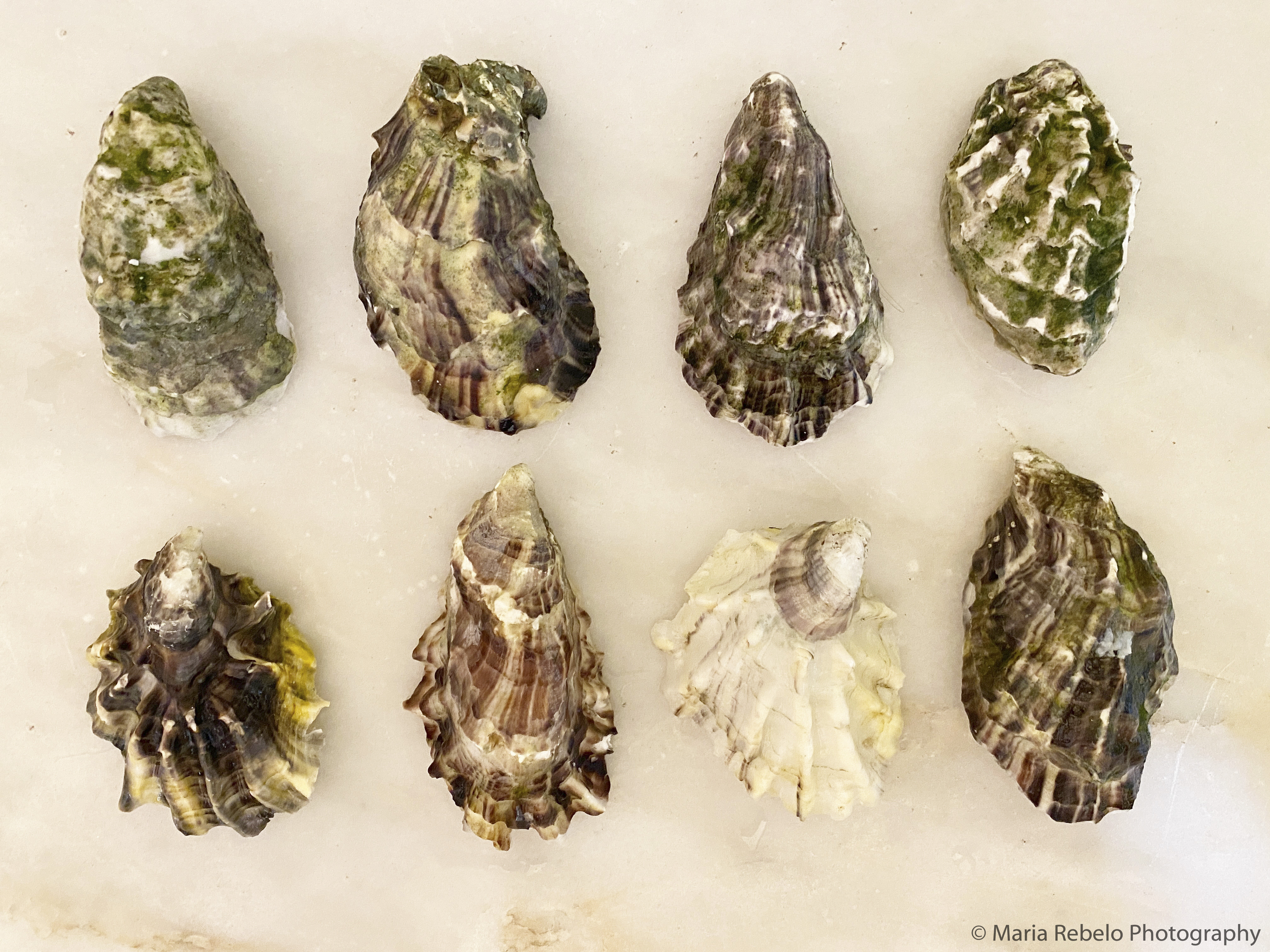
We picked up one of the shells and held it for a moment to admire its sculptural beauty. Then, we tasted the delicate mollusk. It has the exhilarating taste of the sea! But, unlike sea water, oysters sate our appetite leaving us deeply satisfied.

There were oysters from seven producers and four regions: Aveiro (António Sá and Ilha dos Puxadoiros), Sado (Aquanostra and Exporsado), Alvor (Alvostral and Ostraselect), and Ria Formosa (Francisco Frazão).

These oysters vary in fatness, texture, iodine content, sweetness, and saltiness. Larger oysters are sweeter because they have a bigger muscle, which is the sweetest part of the mollusk.  Some oysters have more iodine than others because of differences in the terroir where they are raised.

Jonathan Swift famously wrote that “It was a brave man who first ate an oyster.” It was also a desperate man. Oysters are notoriously difficult to open. Hugo Castillo gave us small knives that made us feel like pirates and taught us how to open an oyster without using a power drill. It does get easier with practice. 

Once our oyster was open, Hugo told us to clean it, discarding the water that is mixed with debris. Then, we cut the nerve and flip the mollusk to improve its appearance on the shell. A couple of minutes later, the oyster magically replenishes the shell with water. It can do this trick up to seven times, which is one of the reasons why oysters survive for about ten days in a cold environment outside the ocean. 

José de Brito, a Portuguese oyster merchant, discussed the best way to eat oysters in his 1957 book “Oysters, Culinary and Health” (As Ostras na Saúde e na Cozinha). His advice is as relevant today as when it was written: “Oysters are best eaten raw so that their nutrients and delicate seafood taste remains intact. A little lemon juice, a dash of pepper, and, for those who like it, a little butter and we have a delicious dish. Accompanied by a cold, dry white wine, it is a culinary treat that can satisfy even the most refined palates.” 

But which white wine should we choose? Luckily, Diogo Yebra was there to help us. Diogo is the sommelier at JNcQUOI, as well as the producer of some interesting garage wines called Vinhos à Parte. Diogo explained that, with their salty, strong umami taste, oysters overpower most wines. It is difficult to find a harmonious marriage where neither the wine nor the oysters are dominant in the palate. Champagne and chardonnay are standard choices. 

Instead of a chardonnay, Diogo served Druida, a white wine made in the Dão region with a local varietal called encruzado. Produced with grapes grown in granite soils, it has a minerality and acidity that complement the flavors of the oysters. It was an inspired choice. 

Next, we tried Sílica, a sparkling blanc de noir from Bairrada made with baga, a red varietal.  It is full of freshness, with citrus aromas that accentuate the taste of the oysters and cleanse the palate. Another terrific choice. 

We learned many lessons from this oyster tasting orchestrated by Edgardo. But, the most important takeaway is that Portugal is a paradise for oyster lovers. The quality of the oysters is exceptional and the price is modest. Pair them with a suitable white Portuguese wine and you have a ready-made culinary feast!

Edgardo Pacheco wrote some great articles about oysters in the August 28, 2021 edition of Fugas, a magazine about food, wine, and travel published as part of Público, a daily newspaper. If you read Portuguese, click here to access the articles.  

The chalet of the Countess of Edla

We stood outside the charming house hesitating. Should we go in? What gives us the right to see this royal love nest? But it was a cold, windy morning. With this feeble excuse, we stepped inside the cozy chalet where king Ferdinand II lived with his second wife, the opera singer Elise Hensler.

The king’s first wife was queen Dona Maria II. When they married, he was a dashing young man with an impressive mustache and a regal name: prince Ferdinand Georg August of Saxe-Coburg and Gotha. The couple enjoyed a blissful marriage. Together, they had 11 children.

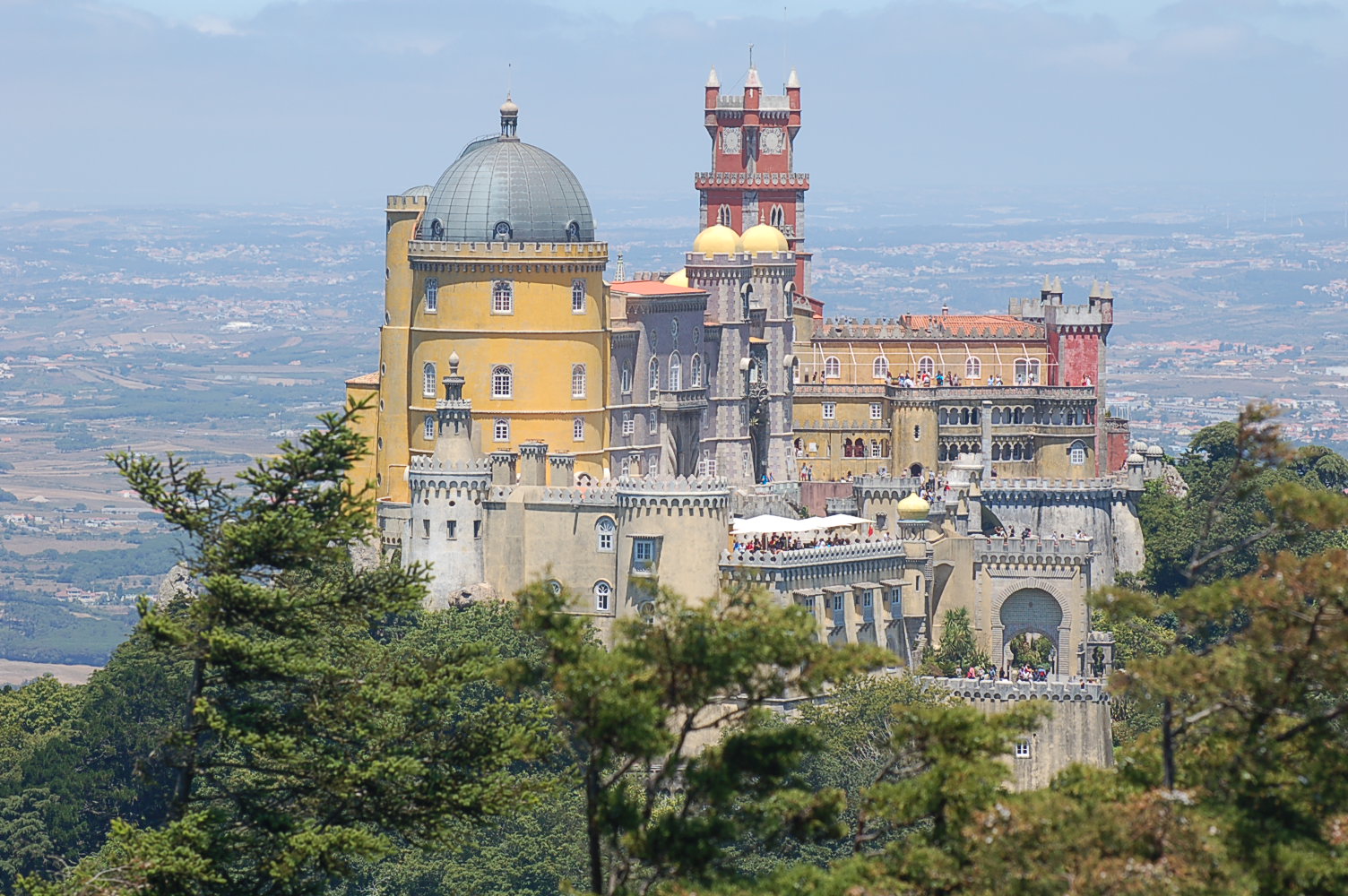
Ferdinand avoided interfering in state affairs, devoting his time to various artistic interests. His most important project was planning and building the fairy-tale Pena Palace and turning the barren surroundings into the lush landscape we enjoy today. When the queen died of childbirth in 1853, Ferdinand was devastated. He was offered the throne of Spain but preferred to stay in Portugal, living in peace in his beloved Pena Palace.

A night out at the opera in 1860 changed his life. The king saw Elise Hensler on stage at the São Carlos Opera in Lisbon and fell in love. They started a passionate love affair that culminated with their marriage in 1869. Elise received the title of the Countess of Edla.

The prince and the countess built this lovely chalet on the grounds of the Pena palace. Inspired by alpine architecture, it is meticulously decorated with references to nature. Cork is used as both insulation and decoration. The exterior walls are painted to simulate wood.

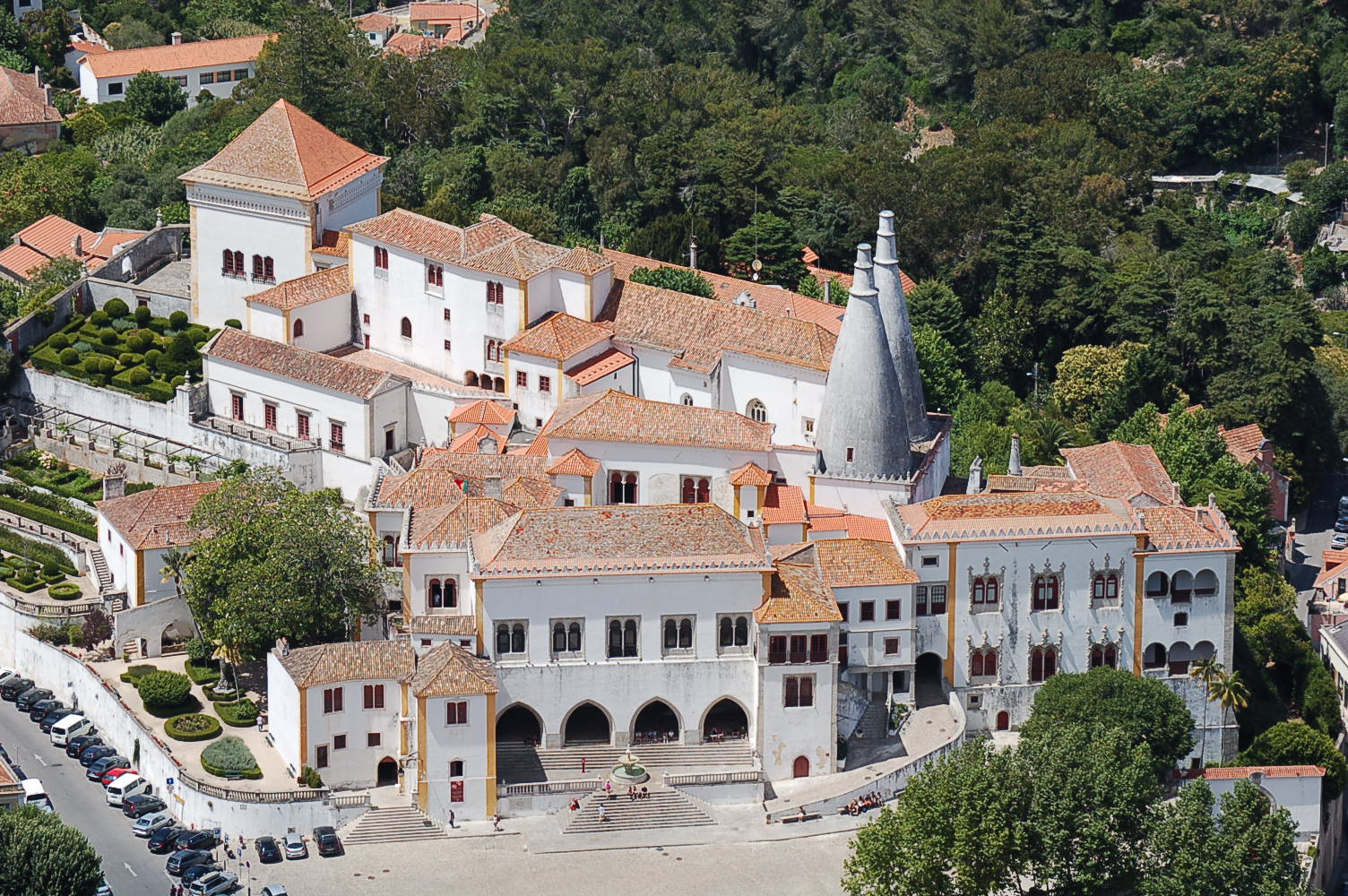
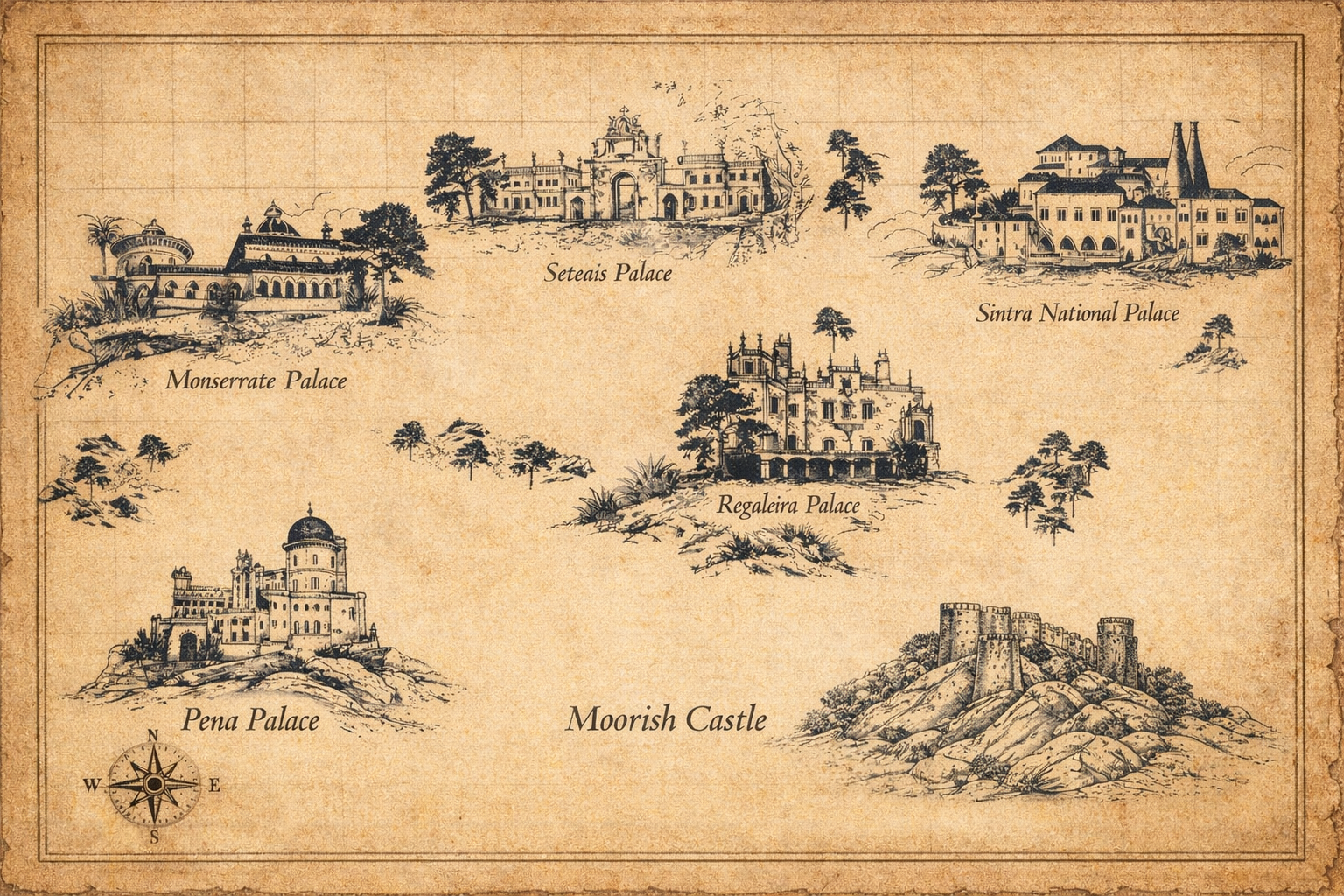
The Pena and National Sintra palaces project power and wealth. At the chalet everything is intimate and private, the power of the state surrendered to the power of love.

Click here to book a visit to the chalet of the Countess of Edla.

Josefinas

“Pede dextro,” advised the Romans. In Ancient Rome, you could curry favor with the gods by entering a house or a temple with the right foot. 

The importance of putting the best foot forward was not lost on architect Filipa Júlio. In 2013, she created a luxury line of footwear called Josefinas inspired by the shoes worn by classical ballerinas. Each shoe is handcrafted with exquisite materials by talented Portuguese artisans. 

The company strives to make the experience of receiving and wearing their shoes unforgettable. Each pair arrives with a handwritten message by the team that produced it. A “chief officer of customer delight” dreams up festive packaging, customizations, and surprise deliveries.
In a world where elegance is often associated with uncomfortable high heels, Josefinas combine grace with comfort. As these flat shoes gained cult status among fashionistas, the company felt external pressure to adopt industrial production processes that would support fast growth. But Josefinas’ managers resisted. They reinforced their commitment to unhurried, meticulous manufacturing methods. They cultivated their brand ethos: shoes designed by women for women. And they used some of the fruits of the brand’s success to support women-rights causes. For all these reasons, we’re certain that Roman goddesses favor Josefinas. 

Click here for Josefina’s website and here for their Instagram page.