Legendary moments at Quinta da Boavista

Quinta da Boa Vista Composit

Some quintas in the Douro valley experienced one legendary moment. But Quinta da Boavista experienced two. The first came in May 1809 when Joseph James Forrester rented the quinta to work on his masterpiece, a detailed map of the Douro river. This map quickly became an indispensable reference for port-wine makers. It also made Forrester one of the most important figures in the port-wine trade. Forrester fought for the production of high-quality wines that reflected the unique terroir of the Douro valley. As a recognition for his service, king Dom Pedro V made him a Baron.

The second moment happened thanks to Marcelo Lima and Tony Smith, a duo of entrepreneurs who bought the quinta in 2013. They realized that the grapes from Boavista, grown in some of the Douro’s tallest terraces, are like precious stones. So they went in search of a master jeweler who could polish them. They knew that the ideal person would be Jean-Claude Berrouet, the enologist responsible for 44 vintages of Château Pétrus. But he had retired in 2007, took very few consulting jobs and had never worked in Portugal.

In July 2013, Marcelo and Tony brought Jean-Claude to Boavista. The enologist stood on the varanda of the house of the Baron of Forrester for a long time contemplating an iconic vineyard named Oratório (oratory) after its shape. When he finally broke the silence, he said “Ça c’est fort!” Marcelo and Tony smiled–they had found his jeweler. Since then, Jean-Claude has worked with Rui Cunha, the quinta’s resident enologist, to perfect the way in which wines from different parcels are blended. He also brought his profound knowledge of the Bordeaux oak barrel producers to choose the ideal barrels for aging the grapes from each vineyard.

When the first vintage of Oratório came out, Marcelo, Tony, and Jean-Claude sat on the terrace overlooking the vineyard. Jean-Claude took time to evaluate the color of the wine, appreciate its delicate aromas and to take a few sips. When he finally broke the silence, he said “C’est un grand vin!”

Click here for the website of Quinta da Boavista.

The story of Portugal

OLYMPUS DIGITAL CAMERA

Travel is like so much else; we get what we put into it.  You’ll enjoy a trip to Portugal much more if you learn a little about the rich history of this small corner of the world.

But what should you read?  Travel guidebooks reduce centuries of history to a few lines, leaving us with little more than a boring list of names and dates. History books, on the other hand, are often so dense with scholarship that it is easy to get lost.

Luckily, John dos Passos, a great American writer whose father was from the island of Madeira, produced a highly readable account of Portugal’s age of discovery. His book introduces us to the main protagonists that shaped this golden era. Through their triumphs and defeats, their joys and tears, we learn the story of Portugal.

John Dos Passos, The Portugal Story: Three Centuries of Exploration and Discovery, Doubleday, 1995.

Quinta do Crasto

Composit Quinta do Crasto

In ancient times, the Romans built on the Douro valley a “castrum,” which means fort in Latin. The fort was surrounded by steep hills descending towards the Douro river with perfect exposure to the sun. Even though it was hard work to plant vines in this treacherous terrain, the Romans embraced the challenge. They knew that the vines would please Bacchus, the god of wine, and that he would reward them with great vintages.

There is no record of the quality of the wines made by the Romans on these hills. But we know that by 1615 the estate, called Quinta do Crasto in honor of the old Roman fort, was producing superior wines.

The Quinta is situated on the right bank of the Douro river between Régua and Pinhão. The views are spectacular and so are the table and port wines which regularly receive high accolades from wine critics. We think Bacchus would be pleased.

Click here for the Quinta do Crasto website.


A convent carved in rock

Composit Capuchos

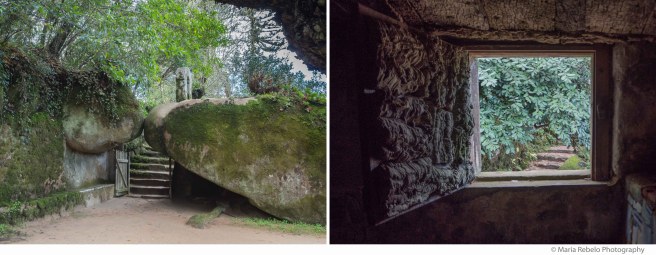
The most poignant monument in Sintra is not a palace or a castle. It is the Convent of the Capuchos, also known as the Convent of the Holly Cross. Founded in 1560, it is a place where monks lived a life of frugality and contemplation.

Long before architects designed buildings in harmony with their surroundings, this convent was built to blend into the landscape of the Sintra mountain. Made primarily out of rock, its interior is lined with cork to offer some protection against the cold and dampness of Winter.

In 1581, when Portugal was under Spanish domination, king Philip of Spain and Portugal visited the Sintra convent and declared: “In all my kingdoms there are two places that I highly prize, the Monastery of Escorial for being so rich and the Convent of the Holly Cross for being so poor.”

We wonder how the monks experienced the passage of time. Did time pass slowly in tiny droplets of interminable minutes? Did their minds transcend the discomfort of the body to find richness in the life of the spirit?

Madeira rediscovered

OLYMPUS DIGITAL CAMERA

In 1418, on All Saints’ Day, Portuguese navigators discovered the island of Porto Santo off the coast of Africa. After more exploration, they realized that Porto Santo is part of a lush subtropical archipelago. The largest island in the archipelago was covered by dense forests so the sailors named it “ilha da Madeira,” the wooded island.

Madeira was planted early in the 15th century with vines from many varietals, including verdelho, sercial, and malvasia. The style of wine making evolved until producers learned to make fortified wines that could survive long sea voyages. The fermentation process is interrupted by adding alcohol so that the yeast does not consume all the grape sugar. The wines are then aged for at least a decade in bottles or wood barrels. Madeira producers discovered that the wine stored in barrels that returned from sea voyages in hot climates had improved in quality. So, they started refining some of their wines by exposing them to heat.

In the 17th and 18th century, Madeira wine became a major export. From East to  West, aristocrats demanded this wine full of complexity and allure.

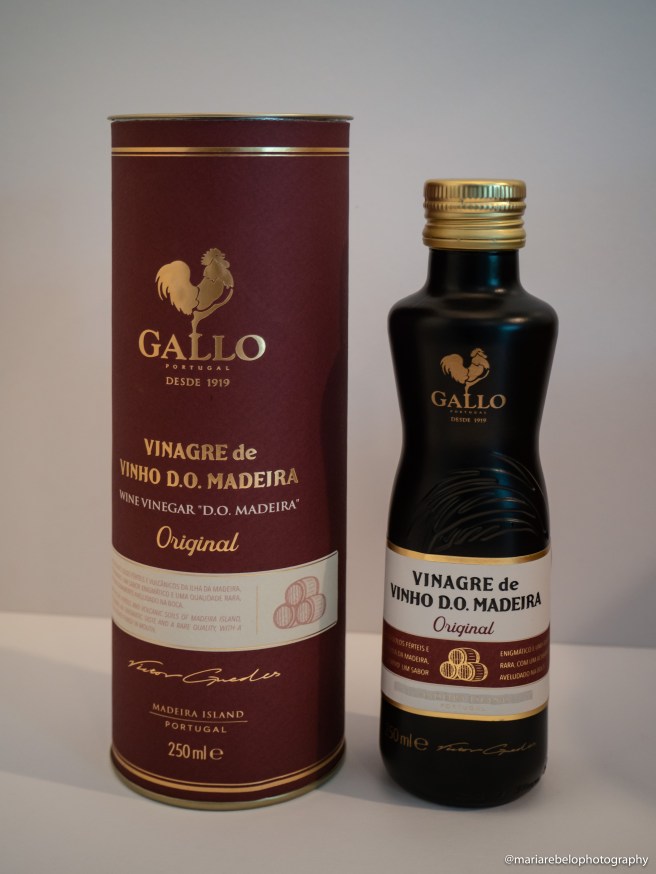
Six centuries after Madeira was discovered, we can taste a remarkable vinegar made with Madeira wine by a great olive-oil producer called Gallo. The acidity and sweetness are perfectly balanced to create a seductive vinegar like no other. Try it while you can, for soon gourmets from East to West will demand their salads dressed with this star vinegar.

Sleeping in a medieval castle by the Sado river

Composite Alcácer

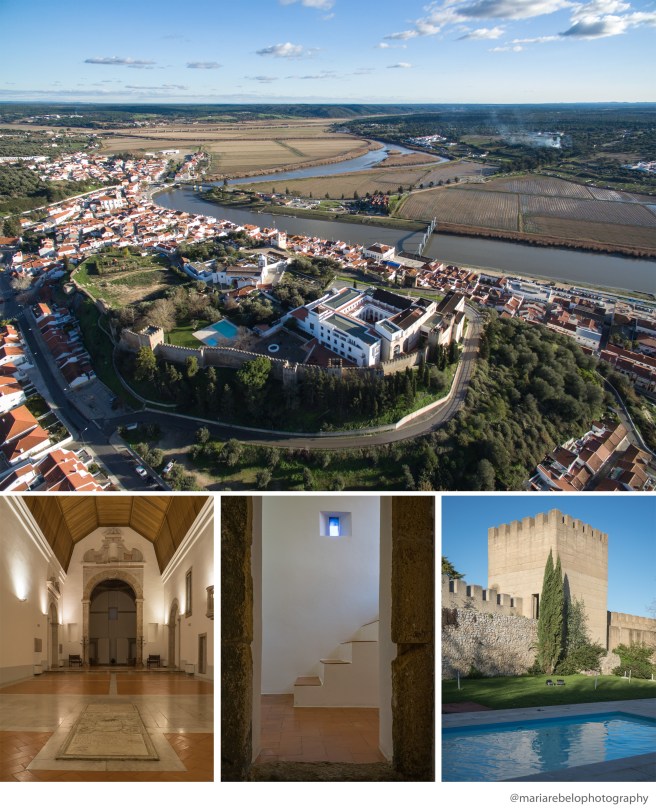
One hour away from Lisbon, you can stay in an historical hotel that occupies a medieval castle with wonderful views of the Sado river and the rice fields of Alcácer of Sal. It is a place where people have gathered since the Iron Age to worship the gods above.

For more than 2,000 years, people came to Alcácer do Sal to farm the land, tend to herds of sheep and goats and produce salt on the marshes of the Sado river. The Sado made it all possible, its waters bestowed fertility on the land and carried boats loaded with agricultural products to far away lands. Underneath the pousada there are remnants of Greek pottery and Egyptian jewelry, foreign luxuries purchased with the fruits of the Sado river.

In the 2nd century BC, Alcácer was conquered by the Romans who made it a center for the production of wool and salt. With their penchant for grandiose names, the Romans named the city Salacia Urbs Imperatoria.

In the 6th century AC, the Visigoths conquered the territory that is now Portugal. But life did not change in Alcácer until the moorish conquered the city in the middle of the 8th century AC. They built the caste and made the town an important trading outpost.

The first king of Portugal, D. Afonso Henriques, conquered Alcácer in 1160. But the moors fought back and it was only in 1217 that Alcácer became a permanent part of the Portuguese territory. The castle was then converted into a monastery occupied by the order of Saint James.

In the 17th century, the old monastery was adapted to welcome the nuns of Saint Claire of Assisi. The new building was called the Convent of Her Lady of Aracaeli.

The Pousada is a magical place. Every window frames a beautiful landscape. Every step reminds us that we are on hallowed ground. But hard decisions have to be made: should we stay by the spacious hotel pool relaxing or go see the gorgeous beaches of the coast of Alentejo?

Here’s a link to the pousadas’ website. You can find a large collection of photos of the pousadas at www.mariarebelophotography.com.

The bells of Mafra

RBD_Mafra_dezembro
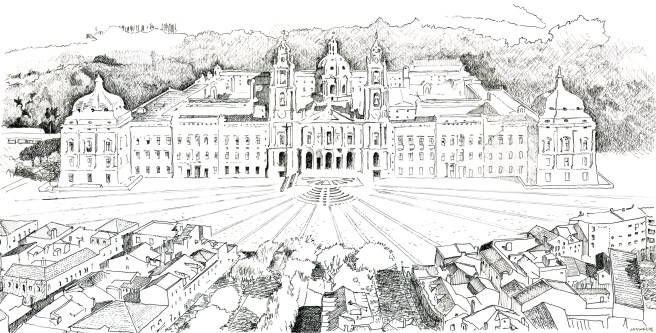
The Mafra Convent, Rui Barreiros Duarte, ink on paper, December 2016.

In 1711, king Dom João V vowed that if he was blessed with a son, he would construct a convent in Mafra. When a son was born in 1714, Dom João V spared no expense to fulfil his promise. By one count, the building has 880 rooms and 4,500 doors and windows. The convent includes a magnificent palace for the royal family and a basilica made of the purest marble, with intricate altars lavishly decorated with gold leaf.

To top it all, the king commissioned a 200-ton carillon. According to legend, when the craftsmen quoted the price of the carillon, they remarked that the cost seemed too dear for a small country like Portugal. Offended, the king replied: “I didn’t realize the bells were so cheap! I would like two sets.”   And so, two sets were made. Nicholas Levach made 57 bells for the North tower in Liége.  Willem Witlockx made 49 bells for the South tower in Antwerp.

The convent has many other bells: liturgical bells used in religious ceremonies, lecture bells that signaled the beginning and end of study periods, agony bells that rang when a monk was dying, refectory bells that reminded monks of their meal times, and the codfish bell that sounded in days when people should abstain from eating meat.

The carillon and some of the other bells were used to mark the passage of time with minuets and other compositions. In a world where musical sounds were rare, the bells of Mafra filled the village with harmony and grace.

Finding happiness in Sintra

Market products

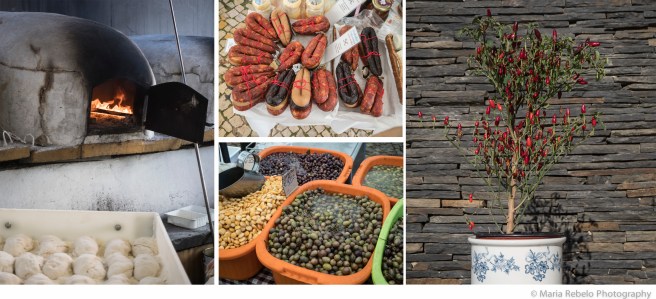
There’s a farmer’s market in São Pedro de Sintra since the 12th century. Nowadays it runs every second and fourth Sundays of each month. It is a great place to buy local fruits and vegetables, artisanal sausages, olives and cheese. Wood-fired ovens bake chouriço bread, filing the air with appetizing aromas.

We saw a farmer selling a small capsicum frutescens tree loaded with little red peppers.  Five centuries ago, Portuguese navigators brought this plant from South America to Africa, where the Bantu people called its fiery pepper “piri piri.” From Africa, the Portuguese took the plant to India where it changed the course of Indian cuisine.

How could we resist bringing home this symbol of the first age of globalization? “Trim the tree in March and you’ll have piri piri peppers between August to January,” advised the genial farmer. We got into the car feeling ecstatic at this unexpected find. Who knew that happiness is a piri piri tree?

The São Pedro market is located on Largo D. Fernando II, São Pedro de Sintra.

Quinta Dona Maria

Quinta D. Maria Winery

Estremoz is a town in Alentejo famous for its white marble. The same geological conditions that fashioned its pristine stones created limestone soils perfect for wine production. So it’s no wonder that there are so many wineries around Estremoz.

The prettiest of them all is Quinta Dona Maria. The estate, which dates back to 1718, was purchased by King João V and offered to Dona Maria, a courtesan with whom he fell in love. In the 19th century, the estate was bought by the Reynolds, a family of British merchants who came to Portugal to produce cork and wine. The current owner, Julio Bastos, inherited the estate from an aunt who married into the Reynolds family.

Bastos got his passion for wine from his father. Every year, father and son came to the harvest so that young Julio could be initiated into the mysteries of wine making. Bastos is particularly fond of Alicante Bouschet, a varietal brought to Alentejo by his family in the 19th century.

Eager to produce extraordinary wines, Bastos entered into a partnership with Lafite Rothschild. But when the Rothschild team started uprooting his old family vines to plant French varietals, Basto decided to go his own way.

He nurtured the old vines and used 17th century marble tanks to tread the grapes. The result are wines with a unique personality: rich and earthy with elegant aromas and a smooth finish.

Production volumes are low, so these wines are hard to find. If you’re traveling in Alentejo, stop by Quinta Dona Maria and take home these exquisite wines made in soils nourished by the love of the land and blessed by the richness of marble.

Click here for the website of Quinta Dona Maria.

Imagining new worlds at the Sagres pousada

Pousada de Sagres

Every Portuguese kid learns that Sagres is the place “where land ends and the sea begins.” It was here that Henry the Navigator launched the voyages that led to the discovery of new worlds.

The Sagres pousada has a spectacular location on a cliff that overlooks the fort built by Henry the Navigator in the 15th century. In 1587, the fort was captured by the British pirate Francis Drake who used it as a base of operation for two turbulent months. Rebuilt after the 1755 earthquake, the fort stands as a tribute to the golden age of discovery.

There’s a lot to do and see near the pousada: alluring beaches, small fish restaurants, quaint villages, and expansive seascapes. But it is also great to relax in the veranda of our room and contemplate the sea that enticed the Portuguese to leave the safety of their homeland to venture into the unknown.

Here’s a link to the pousadas’ website. You can find a large collection of photos of the pousadas at www.mariarebelophotography.com.