The Guimarães pousada

DCIM104GOPRO

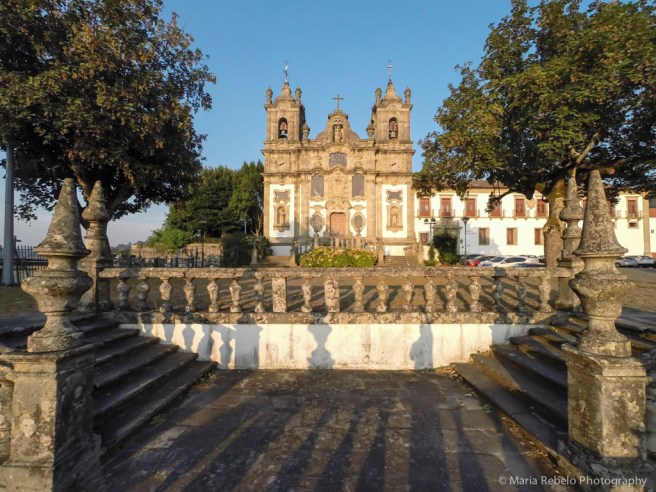
The narrow, meandering road that leads to the Guimarães pousada is good at keeping secrets; it gave us no glimpse of what this historical hotel looks like. When we arrived late in the afternoon, we were stunned to see the imposing granite facade of the church adjacent to the monastery bathed in golden light. Did the architects position the church to benefit from the sun’s exposure or did the sun move so it can shine on the magnificent building?

The origin of this monastery is intertwined with the early days of Portugal as a nation. It was built in the 12th century in fulfillment of a promise. Dona Mafalda, the wife of the first king of Portugal, vowed to fund the construction of a monastery for the order of Saint Augustine if she gave birth without complications. The monastery was named after the patron saint of expectant mothers, Santa Marinha.

In the 16th century, the monastery was transferred to the order of Saint Jerome. The monks offered university degrees in the arts and the humanities that attracted students from the royalty and nobility.  It was during this time that the chapter room, the place where monks read chapters of the bible, and the famous Saint Jerome terrace, an outdoors meditation space, were built.

In 1834, when the state abolished the religious orders, the monastery was sold and became a private residence. In the 1950s, a fire destroyed part of the building and turned it into a ruin.

In the 1970s, the Portuguese government bought the monastery and hired architect Fernando Távora to convert it into an historical hotel. Távora did a masterful job of restoring the old and integrating it with the new.

Every morning we took a walk in the romantic woods that surround the pousada. It is a place with no traces of modern civilization, where damsels in silk dresses and knights in shining armor would not be out of place. We returned to the pousada summed by the chanting of the waters that flow from the fountain in the Saint Jerome terrace. Every minute spent in this terrace was a moment of zen.

The pousada has a proud gastronomic tradition. Its kitchen staff has accompanied the president on foreign diplomatic visits to showcase Portugal’s culinary heritage. The restaurant, decorated with elegant blue tile panels, occupies the space that was once the cellar. We tried two delicious entrées: baby goat rice and roasted black-pork shoulder. They were followed by an artisanal ice cream based on a traditional dessert from Guimarães: toucinho do céu. It is the kind of divine treat you would expect from a convent.

The Guimarães pousada is a history lesson, a gourmet destination, and the perfect place to rest and recharge.

The Guimarães Pousada is located at Largo Domingos Leite de Castro, Lugar da Costa, Guimarães tel. 351 253-5112-49. Click here for the pousadas’ website.


The ducal palace of Vila Viçosa

Palácio Vila Viçosa

Portugal is a dream reborn in the prairies of Alentejo. In 1580, the king of Portugal died without an heir and the king of Spain inherited the throne of Portugal. After six decades of Spanish domination, a small group of nobles organized a coup to restore independence. They wanted to make Dom João of Braganza, a duke with royal blood who lived in Vila Viçosa, king of Portugal.

The king of Spain had arranged a marriage between Dom João and a Spanish aristocrat, Dona Luisa de Gusmão, hoping she would persuade the duke to support the Spanish rule. Instead, Dona Luisa became a passionate advocate for Portugal’s independence.

Dom João worried that the rebellion was likely to fail. He was willing to die for his country but did not like risking the fate of his wife and children. Dona Luisa convinced him to go forward with the words: “I would rather be queen for a day than duchess for life.” Portugal regained independence on December 1, 1640 and the duke became king João IV.

The ducal palace of Vila Viçosa is still owned by the House of Braganza. A visit to the palace is a rare glimpse into the domestic life of the royal family.

Dom Carlos, who ruled between 1889 and 1908, loved to vacation at Vila Viçosa. A talented painter, he covered the palace walls with his oils and watercolors. It was here that the king slept his last night before returning to Lisbon where he was assassinated.

There’s an elegant garden in the back of the palace that has no flowers. Catherine of Braganza, the Portuguese princess who married Charles II of England, banned flowers from royal gardens after learning that the king liked to pick them for his mistresses. In deference to Catherine, flowers were removed from the garden of the ducal palace.

The visit’s grand finale is the magnificent royal kitchen. It is equipped with 2.4 tons of copper pots used to prepare the elaborate banquets offered by the royal family to visiting aristocrats and foreign dignitaries.

If you’re traveling in Alentejo, don’t miss the chance to see the palace of Vila Viçosa, a retreat of kings where history was made.


The Queluz pousada

Composit Queluz.JPG

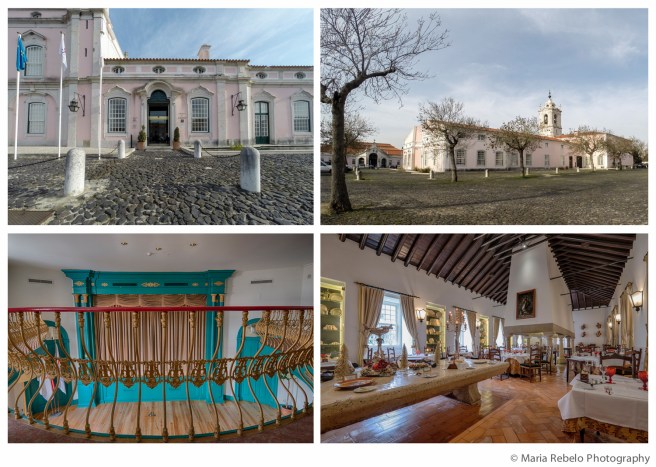
Once upon a time, there was a prince called Pedro who was calm and handsome. As the younger brother of the king, he did not expect to have to perform royal duties. So he devoted his energies to the construction of a palace in the village of Queluz where he could host hunting parties.

The king died and his daughter Maria inherited the throne. Her volatile temperament made many fear for the future of the kingdom. Pedro was asked to marry his niece, so that he could help rule Portugal. The prince accepted this arranged marriage as an obligation. But the queen fell in love with her dashing prince and her devotion was such that he fell in love with her.

The Queluz palace became a royal project, financed by the river of gold and diamonds that flowed from Brazil. A French architect, Jean Baptiste Robillon, was hired to build a palace that would rival Versailles. The original plan was inspired by the harmonious royal marriage: it included two symmetrical buildings that complemented each other.

After the first edifice was built, the royal couple spent as much time as they could at Queluz. They lived a blissful life, surrounded by their six children in one the world’s most graceful palaces.

Before the construction of the second building began, these happy times came to an end: Dom Pedro died of a stroke. The queen never recovered from this loss and her elder son replaced her as the prince regent.

In 1819, to mark the birth of a granddaughter of the old queen, the royal family built the watch tower of the second building planned for Queluz. Later, a private theater and servant quarters were later added to the tower.

In 1995, the watch-tower building and the old palace kitchen were converted into an historical hotel called Pousada Dona Maria I.

If you’re planning to divide your time between Lisbon and Sintra, Queluz is a superb location. You can wake up in the morning to the singing of birds, enjoy a wonderful breakfast, and walk to the Queluz palace before other visitors crowd in. You can drive or take the train to Lisbon (12 km) or Sintra (16 km). And return in the evening to this enchanting place that preserves the romance and splendor of an age gone by.


The Pousada Dona Maria I is located at Largo do Palácio Nacional, Queluz, tel. 351 21 435 6158. Click here for the pousadas’ website and here for a large collection of photos of the hotel.

Bussaco’s mystical wines

Buçaco Branco

Karl Baedeker, the famous guidebook writer, recommended a visit to Bussaco in his “Spain and Portugal, a Handbook for Travelers,” published in 1908. Here’s what he wrote:

“The royal domain of Bussaco vies with Sintra in natural beauty. In variety of trees and shrubs, the woods are without a rival in Europe and the views ranging from the Atlantic to the Estrela mountain are as picturesque as they are extensive. […] The woods […] include not only trees indigenous to Portugal but also a large number of exotic varieties, some brought home by the Portuguese navigators as early as the 16th century.”

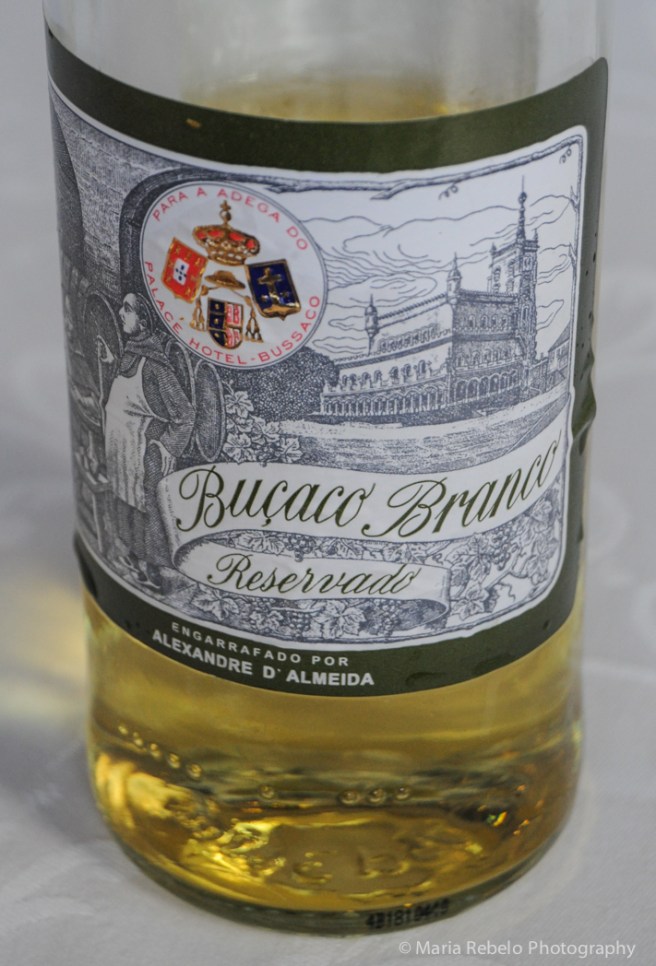
Baedeker arrived too early to appreciate one of the great pleasures of Bussaco, which is the wine produced by the Bussaco Palace Hotel. The first bottles date back to 1917.

The Palace Hotel owns no vineyards, it buys its grapes from the Bairrada and Dão region. The quality of the wine comes from the careful grape selection and the meticulous traditional methods used in production. Bussaco wines taste great when they are young and taste even better when they lived for some decades. Both whites and reds are famous for their longevity.

These wines are difficult to buy, the easiest way to try them is to stay at the magnificent Palace Hotel. The cellar of the palace stores thousands of bottles going back to the 1920s. Trying these old Bussacos can be a mystical experience. The cellar walls are used to hearing visitors say words like divine, blessed, and sacred. These words would have delighted Friar João Batista, the Carmelite monk who started making wine in Bussaco in the 17th century.

Click here, for the Bussaco Palace web site.

A fruitful exchange

OLYMPUS DIGITAL CAMERA

According to legend, when Portuguese navigators reached China in the 16th century, they offered Chinese dignitaries a rose bush. The Chinese felt that this gift was an insult–the bush was full of thorns and had no flowers. To signal their displeasure, they offered the Portuguese a tree whose fruit was tart and hard to digest.

The Chinese planted the bush and when the first roses bloomed they marveled at their beauty and perfume.

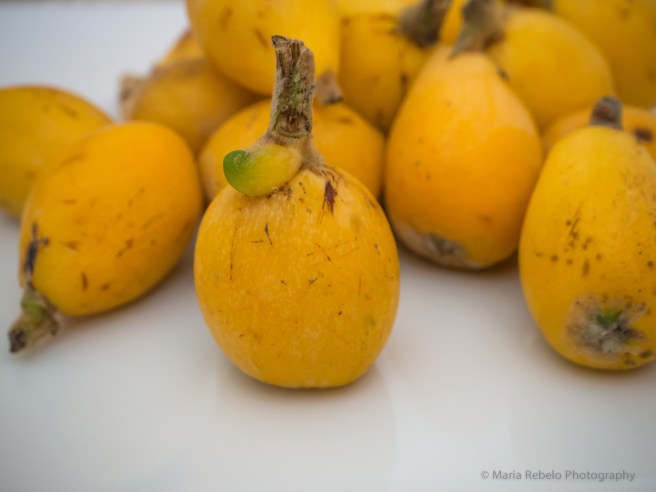
The Portuguese planted the tree and loved its fruit because the sunny weather had made it deliciously sweet. They called it “nêspera” (loquat).  It is the first fruit to ripen in the Spring. If you’re in Portugal during this season, don’t miss the chance to try it!

The convent of the blue monks

Composit Évora

When we entered the Pousada dos Loios in Évora, we stepped on grounds that have seen war and peace, creation and destruction. The Arabs built a castle on this site that was destroyed by fire during the Portuguese war of 1383-85. In 1485, a local noble built a convent for the order of Loios on top of the castle ruins.

The villagers called the members of this order the blue monks because of the color of their robes. These religious men lived an austere life, working and praying in silence. Their serenity and wisdom led the royal family to choose them as confessors.

The convent was severely damaged by the 1755 earthquake and later rebuilt through the efforts of an enterprising priest. In 1834, Portugal abolished religious orders and the convent was closed down.

In 1963, the ancient building was converted into an historical hotel.  The cells of the monks were turned into comfortable rooms and elegant suites. The courtyard became a spacious breakfast room.

The Pousada is in the center of Évora and yet inside its thick stone walls the clatter of the city vanishes. Staying here for a few days felt like a long vacation. We were content and at ease in the convent of the blue monks.

The Pousada dos Loios in Évora is located on Largo do Conde de Vila Flor, tel. 351 266 730 070. Click here for the pousadas’ website and here for a large collection of photos of the hotel.


Beauty in the details

Desenhos de Janelas
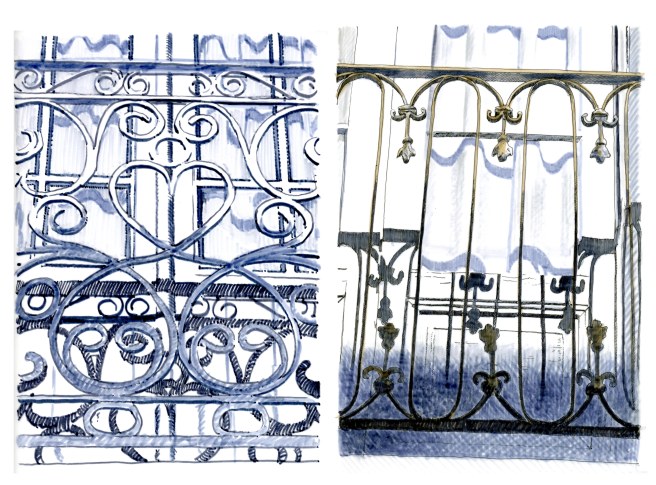
Varandas, Rui Barreiros Duarte, ink on paper, 2016.

When you visit Portugal you need to sleep well to rest your eyes, because as soon as you wake up there’s so much to see!

A walk in an old neighborhood is a visual feast of architectural details. Doors, windows, roofs, and balconies tell us about the craftsmanship of their builders and the dreams of their owners. Each is a distinctive brush stroke on the beautiful canvas that is Portugal.

Ebora cerealis

OLYMPUS DIGITAL CAMERA

If you’re traveling in Alentejo, follow the advice of ancient travelers and spend some time in Évora. The city is included in the Antonine itinerary and is mentioned in Pliny the Elder’s Natural History as Ebora Cerealis in reference to the surrounding fields of cereals.

Évora was occupied by Celts, Gauls, Phoenicians, and Persians. But it was Quintus Sertorius, the general who conquered the city in 80 B.C., that gave Évora its architectural jewel: a Roman temple with elegant corinthian columns. Known as the temple of Diana, it is more likely to have been dedicated to Jupiter.

There’s much to see in Evora: a beautiful basilica, elegant university buildings, and peaceful convents. And the food and wine are great everywhere.  You can choose a restaurant blindfolded and have a wonderful meal. If Pliny was writing today, he might call the city Ebora Delicia.

The first sunset

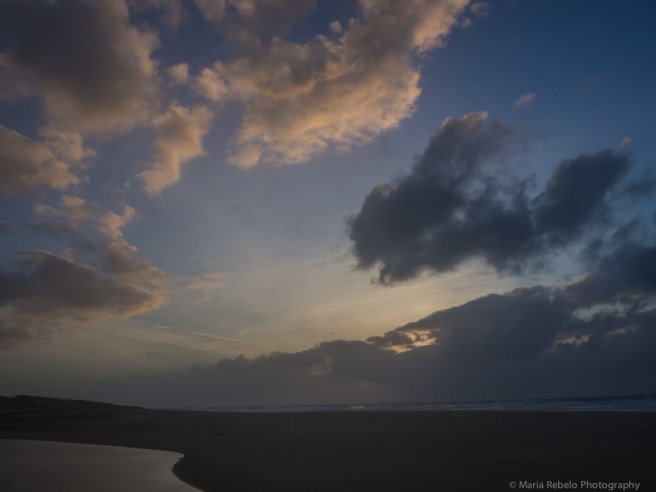
The Romans marked each new year by hammering a nail into the door post of the temple of Jupiter. We prefer to photograph the sunset on the first day of the year, hoping it holds a clue for what the year will bring.

Today, the sun slept all day behind clouds. But at the last moment, it spread its rays and lit the sky, as if to reassure us that there will be many beautiful sunsets in the New Year.  We hope you’ll come to Portugal to share some of these sunsets with us. Happy New Year!


Wood saints

Christmas Card 2015

The Grão Vasco museum in Viseu houses an exquisite collection of wood statues from the 18th century. The names of the sculptors who created these pieces have long been lost. What remains is the mastery with which they used their mallets and chisels to breathe life into wood.

The Grão Vasco museum is located at Adro Sé in Viseu, tel 232 422 049.