The Lisbon Pousada

PousadaLisboaLisbon has a wonderful new historical hotel: the Lisbon Pousada, located in the old royal-palace courtyard known as Terreiro do Paço.

Until the middle of the 18th century, ministers, nobles and other power brokers constantly stamped the soil of this courtyard with their footprints. But, after the 1755 earthquake destroyed the royal palace, the king moved to Ajuda and the courtyard lost its illustrious traffic.

In the 20th century, Terreiro do Paço regained its status as the walkway of power. The new hotel occupies the Ministry of Internal Affairs building. It was here that Salazar, the man who ruled Portugal from 1926 to 1970, had his office.

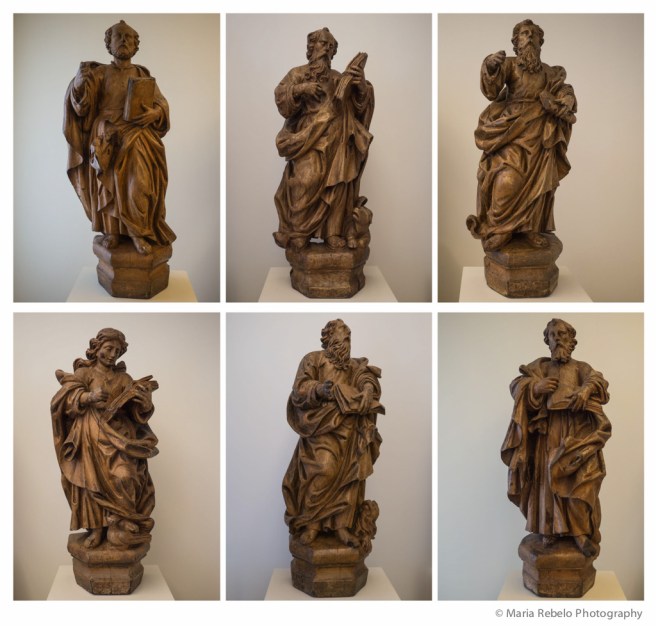
The pousada is decorated with numerous historical artifacts, including models for many of the statues that adorn the city. The rooms are elegant and comfortable with windows that frame beautiful views of downtown Lisbon: stucco buildings, ancient tiles, pink roofs, the walls of St. Jorge’s castle, and the northern margin of the Tagus river. Salazar’s old office is now a spacious bedroom suite.

It is said that in stressful times, Salazar avoided the main entrance of the building, using instead a discreet back door. This back door is now closed. Surrounded by elegance and comfort, pampered by the hotel’s well-trained staff, stress is the last thing on the mind of the guests of the Lisbon Pousada.

The Lisbon Pousada is located at 31, Praça do Comércio, tel. 351 21 040 7640. Click here for the pousadas’ website and here for a large collection of photos of the hotel.

The Estrela Basilica

OLYMPUS DIGITAL CAMERA

One of the buildings often found next to a Roman forum is the basilica. It served as a place where people could meet. Basilicas had no statues of Roman gods and had beautiful light that came in through windows near the roof, so they were a favorite gathering place for early Christians.

The plan of the basilica was later adopted for the construction of important churches. Lisbon has an elegant basilica at Estrela, built in 1790 by Queen  Maria I.

Few people seem to know that one can climb the stairs to the roof of the Estrela basilica and enjoy in peaceful silence breathtaking views of the city. It is a perfect place to meet Lisbon.

A monarchic cake

Dona Amélia

In 1901, the Portuguese royal family traveled to the islands of Madeira and Azores. The visit was a great honor for the local populations, but presented them with a difficult problem: how do you choose a gift for monarchs who have everything?

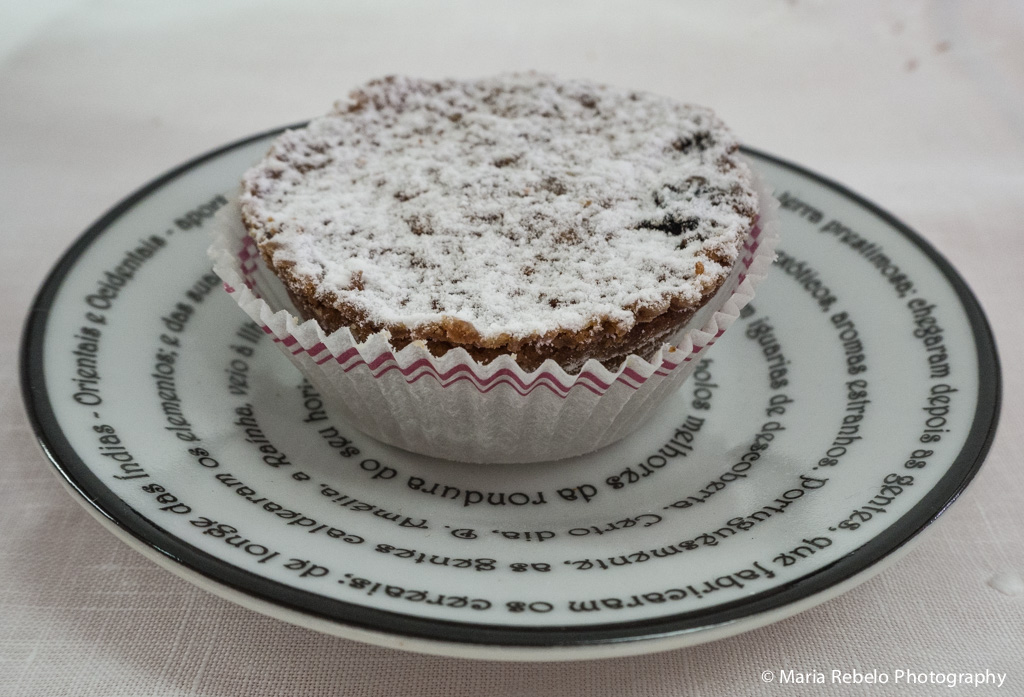
The Azores, Terceira Island, offered Queen Dona Amélia a new cake made with local ingredients: corn flour, raisins, sugar cane molasses, and cinnamon. The queen enjoyed it so much that the new creation became known as the Dona Amélia cake.

More than a century later, the cake continues to be popular in the Terceira island and for a good reason. We loved the Donas Amélias we tried at O Forno, a great pastry store in downtown Angra do Heroism.

The ability of royalty to inspire the delicious Donas Amélias makes us wonder whether we should restore the monarchy.

O Forno is located on Rua São João in Angra do Heroismo, Terceira, Azores, tel. 295 213 729.

The Alcobaça game

Alcobaça Composite

It can be hard to visit monuments with little kids, so it is always a good idea to engage them in a game. If you visit Alcobaça, a beautiful abbey in the middle of Portugal, you can ask your kids to go on a treasure hunt. They can look for stones with carved initials and photograph them. This game can turn an otherwise boring visit into a memorable one.

Masons often carved their personal marks on stones placed in the parts of the cathedral where they worked. They did it to show pride in their work but also to claim the work as theirs so they could get paid.

Centuries later, these signatures remind us of the humble people whose hard work created a legacy of enduring beauty.

Peniche’s golden waves

OLYMPUS DIGITAL CAMERA

In 1786 a Spanish galleon, San Pedro de Alcantara, departed from Peru loaded with a fortune in silver and gold and a precious botanical collection of tropical specimens. The galleon also carried a famous passenger: Fernando Tupac Amaru, an inca whose father had started the most successful uprising against Spanish rule in Peru.

The ship’s captain used a French map that omitted the position of the Berlenga islands. This error had tragic consequences: on the night of February 2, 1786 San Pedro de Alcantara shipwrecked near Papoa, a small peninsula on the coast of Peniche. Almost everybody died but Tupac Amaru managed to swim ashore.

The Spaniards hired divers from all over Europe to come to Peniche help salvage the galleon’s treasures. They also succeeded in recapturing Tupac Amaru.

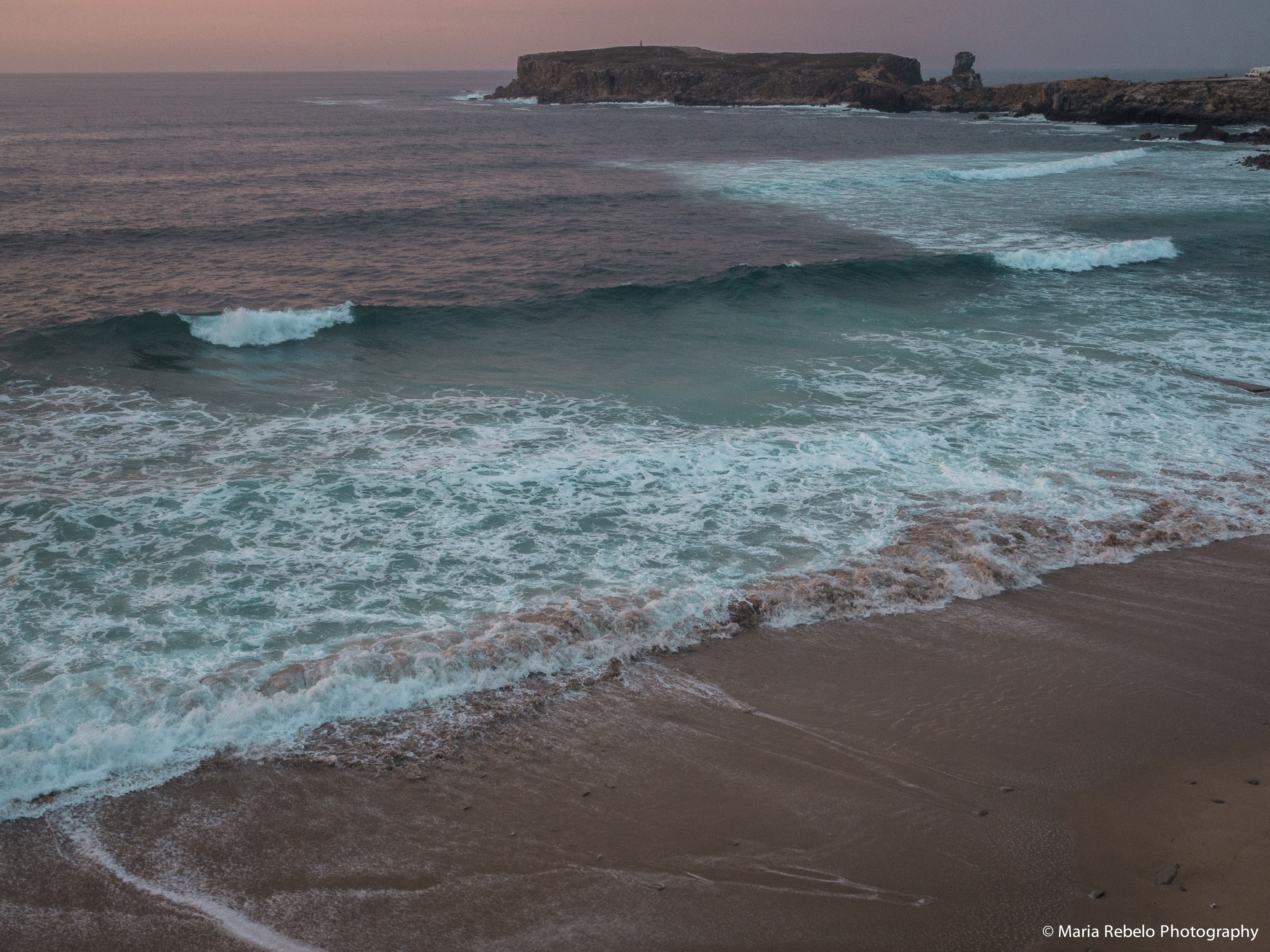
Today, Peniche’s perfect tubular waves attracts surfers from all over the world. How many of them know that beneath those waves once lied a fortune in silver and gold?

A pink palace in the Algarve

358 - Pousada de Estói - @mariarebelophotography.comFIt takes a long time to build a beautiful palace. An Algarve aristocrat started in 1840 to build the Estoi palace in an estate near Faro. When he died, his son took over. But by 1893, the building was still unfinished and seemed destined to become a decorative ruin. It was then that a wealthy landowner bought the palace and spent a fortune on its completion. The sumptuous inauguration took place in May 1909. Decades later, the palace was abandoned.

In 2009, a century after its inauguration, Estoi opened once again, this time as a luxury historical hotel. It is a place out of a fairytale, its opulent salons and elegant gardens restored to their original glory.

Our stay at Estoi was an extraordinary experience. Some days, we relaxed by the pool and spent time admiring the statues, fountains and myriad of architectural details. Other days, we went to the beach and enjoyed the pleasures of the sea even more than usual. For we knew that when the day was done, we would have our pink palace to return to.

The Estoi palace is part of a network of historical hotels called Pousadas. Click here for the Pousadas’ website and here to see a large collection of photos of the palace.

Monserrate: a must-see palace in Sintra

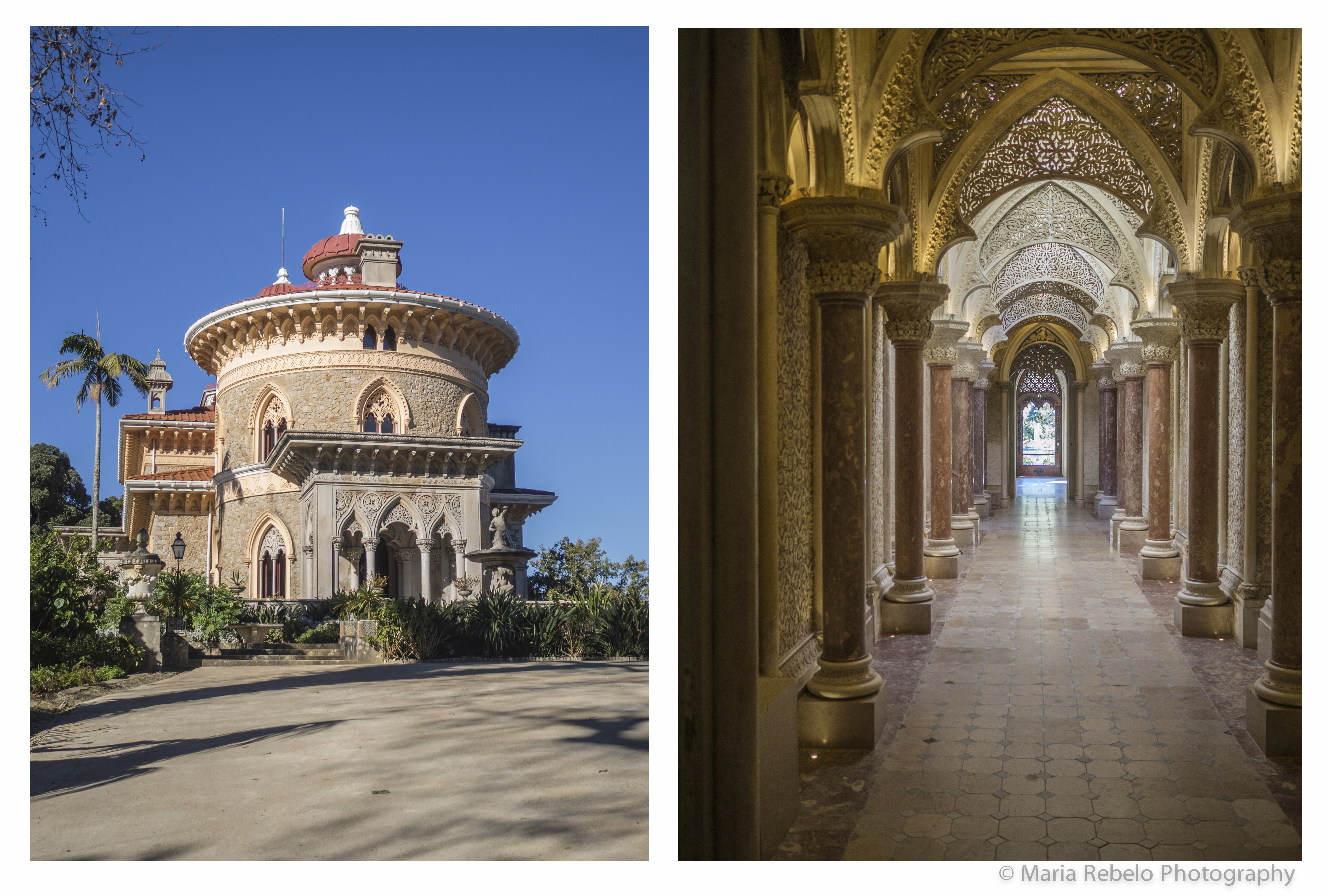
Monserrate - ©mariarebelophotography.comSintra has many romantic palaces but each has something unique to offer. One of our favorites is Monserrate, a palace surrounded by luscious gardens built in 1856 by Francis Cook, a famous British art collector.

When the Portuguese government bought the estate in 1949, the palace was in disrepair. The costly restoration work started in 1999 and only finished recently. It was worth the wait. We now have the privilege of seeing how the palace looked when the Danish writer Hans Christian Andersen visited it in 1866. Here’s what he wrote:

“Large white bell-flowers hang from one tree; pearl-shaped, rose-colored berries from another, juicy fruits and sun-filled colored flowers grew here. Down over the smooth velvet lawn rippled the clear spring water. Above this fresh green, the castle rose in Moorish style, a fit subject for the Arabian Nights or a romantic fairy picture. The sun sank into the sea, which became rose-colored; the brightness of the sea and sky was reflected magically upon the marble white walls and decorations, filling with light the large mirror-clear window panes. The air was so warm, so still, so penetrated with the perfume of flowers, that one felt carried away from reality.”

Silent inspiration

OLYMPUS DIGITAL CAMERA
Carmelite nuns lived most of their days in silence and solitude. The local peasants offered them agricultural products, including numerous eggs. The nuns used the egg whites to starch their clothes and the egg yolks to make desserts.

One day, the nuns received a bag of the finest, whitest wheat flour they had ever seen. They decided to try to make something special with this gift. The flour was combined with water to create a “virgin dough” that was left to rest. The nuns then stretched the dough and let it rest again. To get the most out of the rare flour, they repeated this stretching-resting cycle until the dough was so thin they could read the bible through it.

The dough was cut into rectangles and used to wrap a delicate mixture of egg yolks and sugar. The nuns used a feather to spread some melted butter over the dough and baked the pastries in the oven. Finally, they dusted them with powdered sugar. The result was so extraordinary that a new tradition was born. Whenever the nuns received fine white flour, they made these unique pastries and offered them to the sick and the poor.

When the religious orders were abolished in Portugal in 1834, the Carmelite nuns shared the recipe for this exquisite pastry with the families that gave them shelter. Two Portuguese towns, Tentúgal and Vouzela have competing versions of the original Carmelite recipe. Each town claims their pastry is the best. They are both extraordinary expressions of the silent inspiration of Carmelite nuns.

The pastries produced in Tentúgal are sold in many coffee and pastry shops throughout Portugal. Vouzela pastries are harder to find, they are mostly sold in Viseu and other locations close to Vouzela. They are well worth a special trip.

The Óbidos Pousada


Obidos Composit The first king of Portugal, Dom Afonso Henriques, laid siege to the Óbidos castle for two months, but the moorish population resisted his attack. One moonless night, a beautiful lady came down from the castle to speak to the king. She told him that, even though she lived in the castle, she was not moorish. And that she had a recurrent dream she had to fulfill. The king was to attack the castle’s main door. At the same time, he would send a small group of soldiers to the back. There, the lady would leave an open door to let them in. Their surprise attach would secure the victory of the Portuguese troops.

The king of Portugal feared falling into a trap. But something about the lady’s demeanor convinced him to adopt her plan. The next day, the castle back door was indeed open and the Portuguese conquered Óbidos. The king looked everywhere for the beautiful lady, but she had vanished.

The castle of Óbidos was converted into a beautiful historical hotel. After entering though the front door, the one the king attacked, you find a romantic place with wonderful views of the countryside. One of the best views is just outside a door painted red. It is the door the lady left open.

In the dining room two beautiful windows, the sun and moon windows, give us a choice between seeing the sunset and the moonrise. This choice between astral spectacles is one of the many enchanting details that makes a stay at the pousada so memorable.

The pousada is the perfect place to stay at Óbidos. After all, who wouldn’t want to be treated like royalty in a medieval town?

Click here for the Pousadas’ website and here for more photos of the Óbidos Pousada.

The Seteais palace

The Seteais Palace, Rui Barreiros Duarte, ink on paper, 2014.

Seteais means seven sighs, a name inspired, according to legend, by the romance between a Portuguese noble and a Moorish princess.

The Seteais palace was built in Sintra in 1787 by the Dutch consul and later sold to the wealthy Marquis of Marialva.

In 1954, the palace was converted into a luxury hotel. Booking a room at Seteais guarantees you’ll have a memorable experience. If you don’t stay at the hotel, you can still experience its unique atmosphere by visiting the elegant bar for a glass of white port before dinner.

In 1802, the Marquis of Marialva invited the Prince Regent, John IV and his wife for a visit. To celebrate the occasion, the Marquis built an archway decorated with busts of the royals. A Latin inscription praises the prince for his wisdom and prudence. No one could guess that five years later the Portuguese royal family would flee to Brazil to escape Napoleon’s troops.

The echoes of these twists and turns of Portuguese history have long faded. What remains, is one of the most romantic places in the world.

 Click here to see the Seteais Palace website.