The governor’s palace

Palácio do Governador

Just when we think that Lisbon told us all her secrets, the city finds new ways to surprise and delight us. This time we discovered a new hotel called Palácio do Governador (the governor’s palace).  Located near the Tagus river, it occupies a 16th century manor house that once belonged to the governor of the Belém neighborhood.

The governor’s room overlooks the Tower of Belém which used to be connected to the house through an underground passage. Near this passage, you can find the ruins of a Roman factory that produced garum, a fish sauce used in Roman cuisine.

We had a wonderful stay. The hotel integrates old and new with ease, offering  comfortable rooms and elegant public spaces. The service is attentive and the location is perfect.

Our only source of anxiety was the temptation to forego breakfast at the hotel and walk over to the Confeitaria dos Pasteis de Bélem to start the day with a heavenly pastel de Belém.


Palácio do Governador is located on Rua Bartolomeu Dias 117, in Lisboa, tel. 212 467 800. Click here for the hotel’s website.

Worshiping the sun in Belém

MAAT Composit

If you’re visiting Lisbon, we recommend spending an afternoon in the Belém neighborhood. We like to start by sitting at one of the tables of the old Confeitaria de Belém to enjoy an espresso with a warm pastel de Belém. We eat the pastry slowly, taking small bites while the aroma of cinnamon and vanilla surround us and the taste of cream, eggs and sugar melts in our mouth.

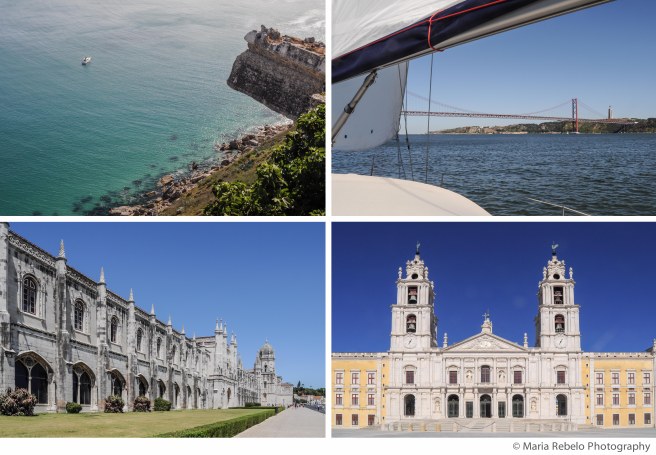
We are then ready to stroll by the river to the Belém tower. Before the 1755 earthquake, the tower was close to the middle of the river. It was equipped with cannons meant to protect the city from pirates. But instead of scaring marauders, the beautiful tower made Lisbon more alluring and desirable.

Our next stop is the Monument to the Discoveries. It marks the point of departure of the caravels that sailed into the unknown seas to discover new lands.  From there, we cross the garden surrounded by olive trees to visit the Jerónimos Monastery. It is a majestic monument that celebrates the age of discovery in a gothic style that makes exuberant use of maritime motifs.

After spending much of the afternoon visiting the past, it’s time to look at the future. We like to arrive 45 minutes before sunset to the next destination: the new Museum of Art, Architecture and Technology, known as MAAT. Designed by British architect Amanda Levet, the sensuous building looks like a ship that could sail into space. Its roof has become a favorite destination for sun worshipers. Standing there, we see the Tagus river change into orange vests to praise the star that divides night and day while the white museum glows in the golden light. Five centuries after the construction of the Belém tower the MAAT makes Lisbon feel young and desirable again.

The MAAT is located at Av. Brasília, Central Tejo in Belém, Lisbon. Click here for the MAAT’s website. 


The luxurious Dom Feijão

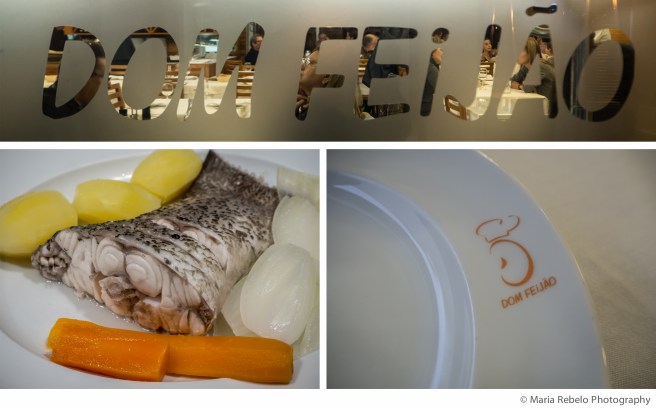
Dom Feijão

There are plenty of “tascas” in Lisbon, small informal restaurants that offer seasonal menus at low prices. But when locals want to have a nice meal with friends or family, they don’t go to a tasca. They prefer to pay a little bit more and eat at a neighborhood restaurant with better ingredients and service.

One of our favorite neighborhood restaurants in Lisbon is Dom Feijão (Sir Bean), a place with generous portions, modest prices and top-notch ingredients. What’s the catch? You have to be persistent to get a reservation or be prepared to wait for a table. The waiters don’t answer the reservations phone line when they’re very busy and they’re almost always very busy.

The restaurant is popular with families, on our last visit the place was full of grandparents, parents and children sharing the pleasures of the table.

Before we had time to open the menu, our waiter brought us some delicious fried marinated sardines and a plate of the same black-pork prosciutto they serve in heaven on special occasions.

We’d seen a large “sável,” a prized river fish, in the restaurant’s refrigerator so we asked the waiter whether we could order it. “Not today,” he replied “The sável has to be thinly sliced and marinated for a few hours. Sorry, but we cannot rush the preparation.”

We ordered instead poached cherne (sea bream). It was deliciously succulent, a reminder that when the ingredients are perfect, simple preparations are the best.

Next, we had grilled “secretos,” divine slices of fatty black pork. Two decades ago, these cuts of black pork were exported to Spain. Since then, the Portuguese have wised up and started consuming them. Exports suffered but our happiness boomed.

We ended the meal with some grilled codfish. The waiter asked what was our favorite part of the codfish so he could ask the chef to prepare it. Large tranches of codfish swimming with roasted potatoes in a sea of olive oil made our delights.

We told chef João Araújo how much we enjoyed the meal. “We’re a simple restaurant that serves traditional Portuguese food,” he said. “Our only luxury is the ingredients we use.”   This is, of course, the kind of luxury we fancy.

Dom Feijão is located near the posh Avenida de Roma at Largo Machado de Assis 7 D, tel. 21 846 4038. There’s a convenient paid garage underneath the restaurant. You can ask the waiter to validate your parking.

A bread revolution

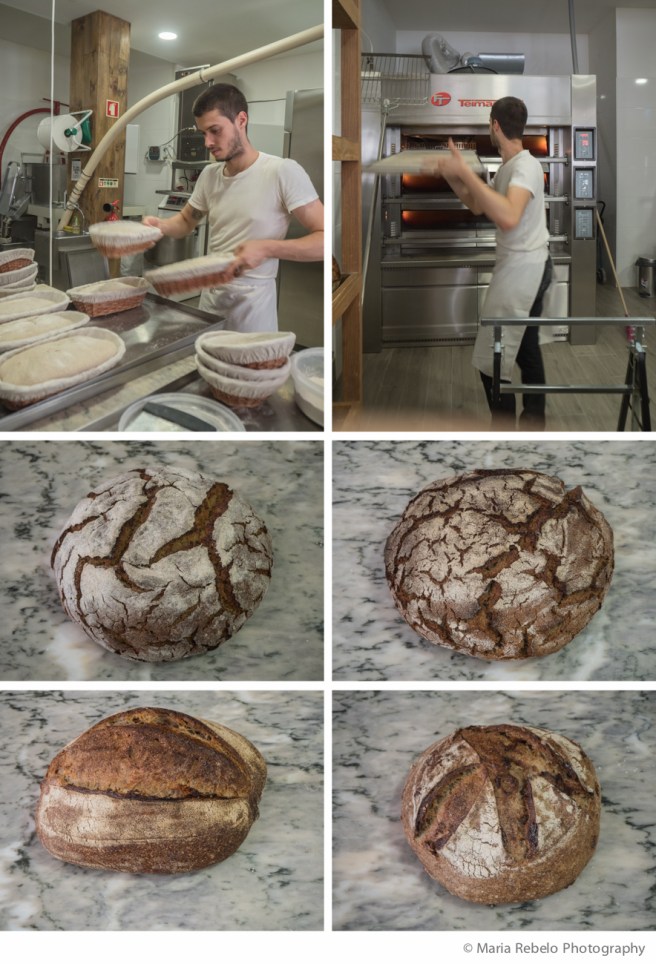
Composit GlebaDiogo Amorim was working as a chef at the famous Fat Duck when Heston Blumenthal, the restaurant’s head chef, decided to improve the bread they serve. Diogo liked the project so much that he decided to return to Portugal to research Portuguese bread. He traveled from north to south in search of old grains that have low yields and no gluten but are rich in flavor and nutrients. He studied how old windmills used to process these grains to make superior flours.

In a small village, he found a pair of extraordinary mill stones from La Ferté-sous-Jouarre, a region of France renowned for the quality of its mill stones. Diogo brought the stones to Lisbon, so that he could mill the grains only a few hours before baking to obtain more flavor and freshness. He convinced a few farmers to supply him with old grains and opened a bakery called Gleba.

Diogo bakes four times a day two sourdough breads (barbela wheat and rye) and a white corn bread called “broa”. Every day, he makes special editions, like wheat bread with dried figs and cinnamon or rye with galega olive paste from Alentejo.

There’s a steady stream of customers coming into the bakery. Diogo takes time to talk to all of them and smiles with pride when they praise his creations: “your bread is a revelation,” “your “broa” tastes like the one my grandmother used to make,” “I haven’t tasted bread this good since my childhood.”

Diogo Amorim is starting a bread revolution and the people of Lisbon are rising to support him.

Gleba is located on Rua Prior Crato, nº 16 in Lisbon, tel. 966 064 697. Click here for the bakery’s web site,


Belcanto

Composit Bel Canto

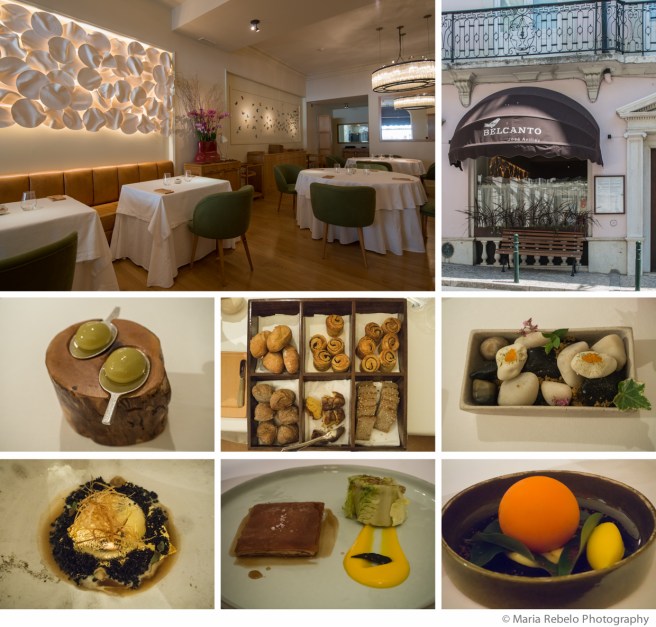
Perhaps it’s not a coincidence that Belcanto, the most celebrated restaurant in Lisbon, is close to the São Carlos opera house. Decorated with whimsical porcelain plates, the restaurant looks like a stage and its meals are as thrilling as a great opera performance.

Our lunch’s overture was composed of small bites often included in the couvert of traditional restaurants:  tremoços (lupini beans), olives, and a carrot and garlic salad. The presentation was unusual–they were served on top of Portuguese cobblestones. But the real surprise was that they all turned liquid once we bit into them, filling our mouth with explosions of flavor. This culinary prelude was accompanied by Vicentino, a wine from Zambujeira do Mar that left our paletes refreshed with hints of green pepper.

There were more surprises. First, a fake edible stone covered with salmon caviar. Then, crispy chicken skin with corn coriander and liver, a combination that tastes like roasted chicken. Next, a delicious algae cornet filled with tuna served inside a flower pot.

A genial waiter introduced a chorus of breads made from corn, buckwheat, quinoa, and puff pastry. Next came a duet for clams and “lingueirão” (razor clams) accompanied by a 1979 Porta dos Cavaleiros, a velvety red wine from the Dão region produced in the birth year of chef Avillez.

Then the arias started. The first was a Golden Egg–an egg cooked at a low temperature, covered with gold leaf and adorned with threads of fried leek. It arrived with a lively Arinto white wine made by António Maçanita in Pico, a volcanic island in the Azores archipelago.

The second aria was called Ocean Dive: a pristine sea bass (robalo) cooked in sea water with seaweed, “salicórnia” (samphire), razor clams, and mussels. We were still savoring the final chords of this crowd pleaser when a new theme was introduced: a flavorful remake of the bucolic “cozido” that the chef’s grandmother used to prepare with boiled meats and cabbage. It came with a vigorous 2012 Bruto from the Douro region.

The performance reached its climax with another traditional recipe reinvented: the roasted piglet from Bairrada. We don’t know what culinary sorcery was used to produce this perfect combination of crispy skin and juicy roasted meat. All we can tell you is that the result is magical.

A new theme was introduced by a duo of pre-desserts: a raspberry sorbet and an “abade de priscos” pudding. They were followed by a tangerine dream made from frozen juice and filed with tangerine sorbet. Vila Oeira, a rare dessert wine from Carcavelos harmonized with these sweet delights. Coffee and mignardises brought our meal to a blissful finale.

You have to be patient to dine at Belcanto. The restaurant is booked for weeks in advance. But it’s worth the wait to experience such an unforgettable culinary performance.

Belcanto is located at Largo do São Carlos in Lisbon, tel. 21-342-0607.


Fairy tales

Composit Fairy Tales

In October 1956, the Duke of Edinburgh embarked on a long tour of the Southern Hemisphere without his wife, Queen Elizabeth II. There were rumors that the couple was going to separate.

When the Duke arrived in Portugal in February 1957, the Queen flew from England to meet him. For four days the royal couple did what so many other tourists do in Portugal. They ate canned sardines, sailed on the Tagus river, toured the Jeronimos monastery,  visited Mafra and the Nazaré beach. Then, they flew back to England and lived happily ever after.

Portugal is a place where fairy tales can come true.

The most famous fish monger in Lisbon

OLYMPUS DIGITAL CAMERA

Until the middle of the 20th century, street fish sellers called “varinas” were a common sight in Lisbon. They carried a basket of fresh fish on their heads and attracted customers with their catchy slogans and charismatic personalities.

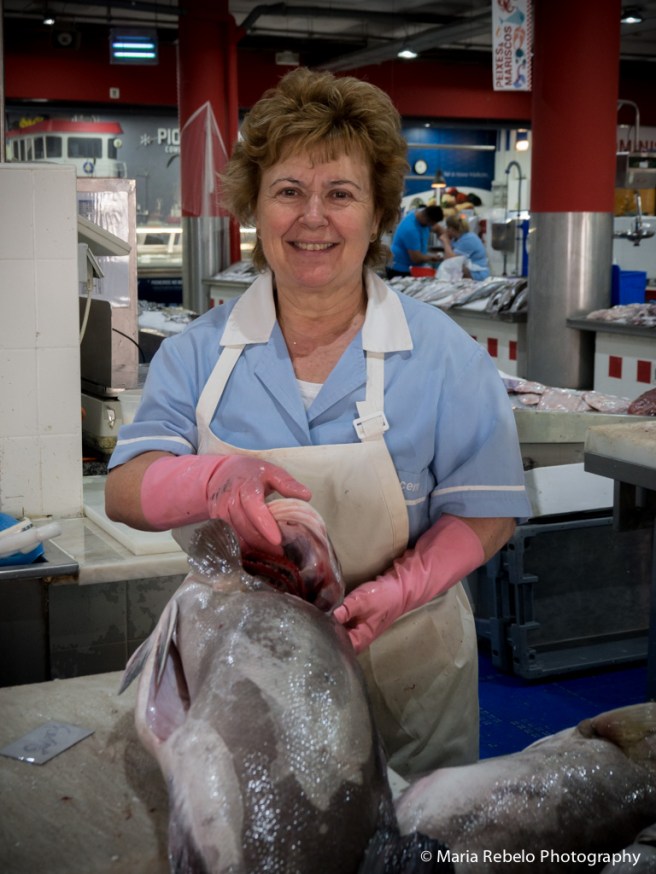
Varinas are a relic of the past, but some of the best fish in Lisbon is still sold by a charismatic woman. Many restaurants in the capital city order their fish from Açucena Veloso.

Visiting Açucena at Mercado 31 de Janeiro is a fascinating experience. It was in a stall in this market that she started selling fish at nine years of age. Today, she owns 23 stalls.

The quality and variety of Açucena’s fish would astonish the patrons of Tokyo’s famous Tsukiji fish market.  But it is not easy to gather these marine treasures. Açucena wakes up every weekday at 2:00 am to make sure she buys the best fish the sea has to offer. Despite her long work hours, she’s always in a good mood. “Look at these ocean jewels” she says with pride pointing to fish that go by quaint names like rascasso, cantaril, and emperador.

When Albert Einstein visited Lisbon in 1925, he wrote in his diary about a fascinating varina with a proud, mischievous look. We think he would have loved meeting Açucena Veloso.

Açucena Veloso’s fish stalls are at Mercado 31 de Janeiro, Rua Engenheiro Vieira da Silva, 31, tel. 91 721 8169

Post scriptum: Açucena Veloso died tragically in a car accident in January, 2018. Her daughter Susana and the rest of the family continue to run the fish stalls with the same dedication to quality and service as before. Açucena would be proud. 

Mystical jesuits

jesuita-da-tartine

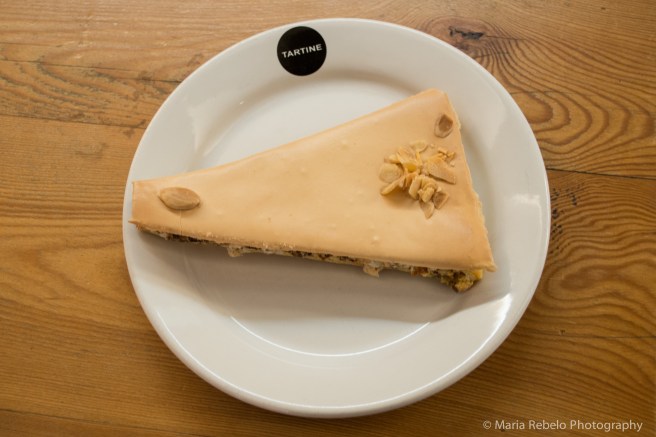
We have a major weakness for a Portuguese pastry called “jesuita.” Its shape and color resemble the habits of Jesuit priests, hence the name.

The “jesuita” was invented more than a century ago by a Spanish pastry chef who worked in Santo Tirso, a town in the north of Portugal. It combines puff pastry with two egg-based creams. The whites and the yolks are separated. The yolks are used to make a cream that is layered inside the puff pastry. The whites are used for the frosting.

The quality of “jesuitas” varies from satisfying to divine, depending on the excellence of the ingredients and the exactness of the execution. One of the best “jesuitas” we ever tried came from a wonderful pastry store near Chiado called Tartine. We bit into this delight, and the yolks and whites reunited into a mystical explosion of flavor!

Tartine is located on Rua Serpa Pinto, 15-A, tel 21-342-9108. Click here for their web site.

Two geniuses

Fernando Pessoa

We often celebrate rulers and conquerers, but a country without artists is just a mount of dust. Artists are the tellers of tales, the architects of meaning. During the 20th century, Portugal was recreated by the writing of Fernando Pessoa and reshaped by the painting of José de Almada Negreiros. They left us a country with a richer identity and a deeper imagination.

The paintings in the photo bring together these two great Portuguese artists. The first painting (on the left) was commissioned in 1954 by the owner of a restaurant where Orpheus, a modernist group that included Almada and Pessoa, used to gather. The second painting (on the right), commissioned by the Calouste Gulbenkian Museum in 1964, is a mirror image of the original.

Pessoa visited Almada’s first exhibition and declared that the painter was not a genius. Out of respect, Almada did not paint Pessoa while the poet was alive. Because the exuberant portrait that the painter carried in his mind and later transferred to canvas shows that Almada was a genius.

If you’re in Lisbon, do not miss the exhibition of the works of Almada Negreiros on display at the Calouste Gulbenkian Museum until June 7, 2017.


The last harbor

OLYMPUS DIGITAL CAMERA

The existence of one of Lisbon’s best fish restaurants has been a closely guarded secret for more than half a century. Its name is “Último Porto” (the last harbor). Now that the secret is out, we might as well confess everything.

The restaurant is tucked away in the corner of one of Lisbon’s harbors (Rocha do Conde de Óbidos). It is not a glamorous place. But for fish lovers it is heaven.

There are tables inside and an esplanade surrounded by containers that is very pleasant when the weather is warm. It is easy to park and the walk to the restaurant is beautiful with the river in front of us and the city on our back.

“Último Porto” opens only for lunch and it is always full of locals. Grilled fish is the main event and the stars of the show are the “salmonetes” (mullets). Their skins are colored with yellow and orange hues, their flavors as bold as their colors. But, there are many other great choices, from sea bass to codfish.

Many restaurants showcase their fish in a refrigerated display. Others bring a fish platter to the table so that customers can choose what they want. At Último Porto, the fish is treated like a work of art—shielded from light and protected from the elements. It only leaves the refrigerator to go to the grill where it is cooked to perfection. It is this care that makes the last harbor our first choice for grilled fish in Lisbon.

Último Porto is located in the Estação Marítima Da Rocha Conde d’Óbidos, tel. 21 397 9498. It only serves lunch and reservations are a must.