How to open a bottle of champagne

France is famous for the sparkling wine produced in the Champagne region. But there are exceptional sparkling wines in other parts of the world. We’re particularly fond of the sparklings from Bairrada, which have a unique vibrancy and remarkable aging ability. 

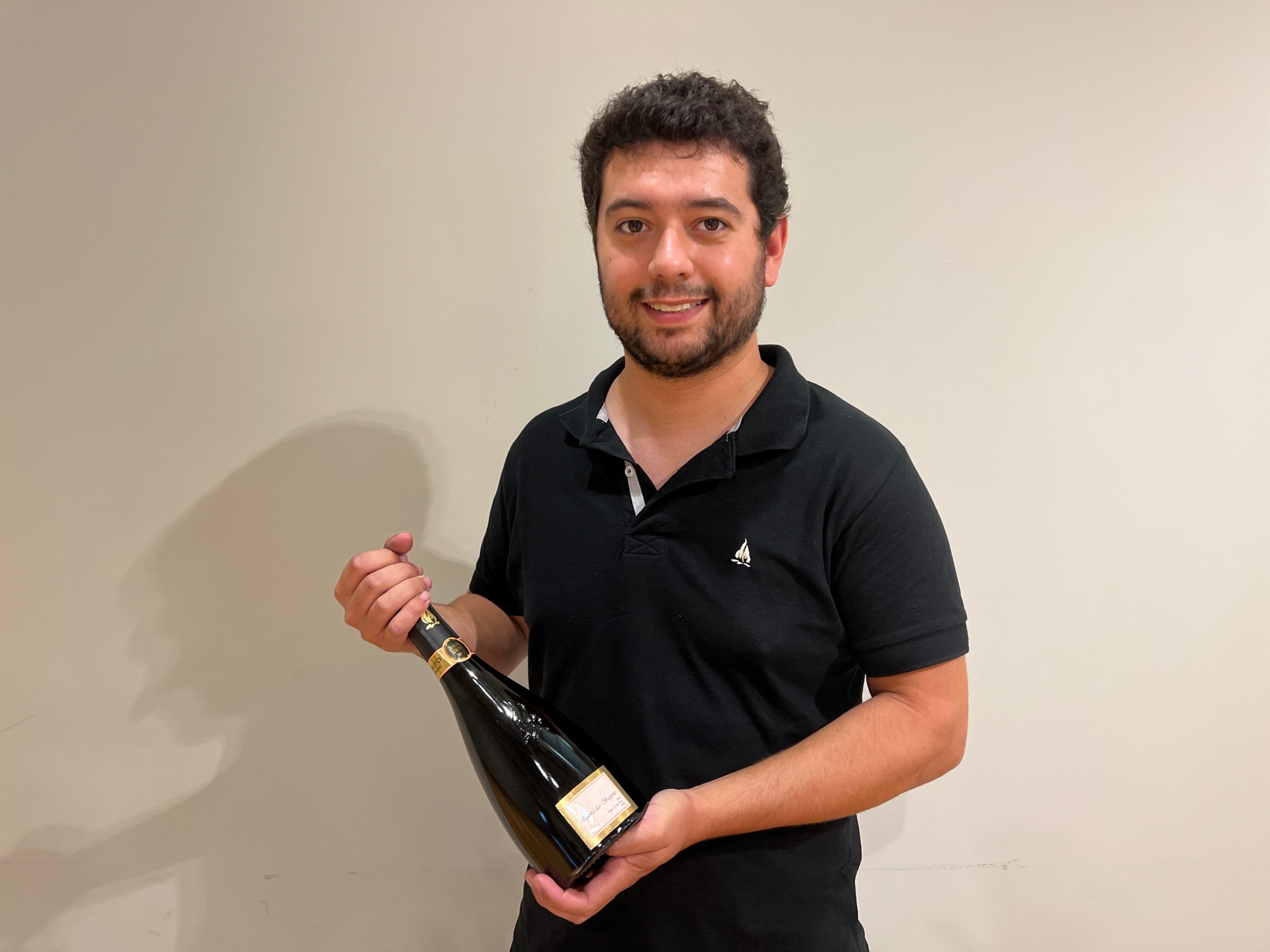
During a recent visit to Bairrada, renowned winemaker Mário Sérgio from Quinta das Bageiras asked his son Frederico Nuno to teach us the art of uncorking a bottle of sparkling wine. 

Everybody knows the wine should be properly chilled and that, unless you won the grand prix, you should not shake the bottle. Start by carefully cutting away the foil covering the cork. Here’s the key tip: leave the wire cage encasing the cork intact. Removing it causes the cork to expand, making it challenging to extract. Instead, gently twist the cork with the wire cage in place. The cork should effortlessly leave the bottle with no wine spillage, letting only the delightful fragrances waft into the air.

“If the boss is in the house,” Frederico says, referring to his father, “we twist the cork slowly to ensure it comes out silently. If the boss is away, we remove the cork more briskly to hear the celebratory pop we associate with sparkling wine.”

To demonstrate the technique, Frederico opened a bottle of the splendid 2018 Quinta das Bageiras Grande Reserva, rosé sparkling wine. Once the bottle was open, there was no going back. Frederico poured the exquisite sparkling into elegant white wine glasses, allowing the wine to breathe and revealing its intricate aromas. We raised our glasses and toasted to Bairrada, a region that produces sparkling wines that rival the finest champagnes.

Vinum acer from Bairrada

OLYMPUS DIGITAL CAMERA

Most vinegar consumed around the world is made through industrial processes that work fast but generally produce insipid results. Luckily, there is an increasing number of producers making delicious artisanal vinegars.

“It is easy to make fine vinegar, all you need is good wine and patience,” says Mário Sérgio, the winemaker of Quinta das Bageiras in Bairrada. “Fill about two-thirds of an oak barrel with good-quality wine and forget about it for 10 years. Sure enough, the wine will turn into vinegar.” The Romans seem to have followed a similar recipe–the Latin word for vinegar, vinum acer, means sour wine.

We took a bottle of Mário Sérgio’s artisanal vinegar home and were amazed at the difference it made. Its tangy taste transforms salads from good to great. Cooking with this vinegar enhances the food we prepare in ways that are subtle but profound.


Mário Sérgio, a Portuguese vigneron

OLYMPUS DIGITAL CAMERA

The people of Epernay, a town at the heart of the Champagne region, know more about sparkling wine than almost anyone in the world. So it is remarkable that Mario Sérgio, a producer from Bairrada, found a market for his sparkling wines in Epernay.

This success has been more than a century in the making–Mário is a 4th generation wine maker. His 81-old father still labors 10 hours a day tending to the vineyards.

Mário’s family used to sell their grapes to the famed Caves São João. In 1989, at age of 23, Mário decided to reserve the grapes to make his own wines under the label Quinta das Bágeiras. From the beginning, he paid no attention to what is most fashionable or profitable. Instead, he focused on making great wines in Bairrada.

One of the first hints that Mário was on the path to greatness came in 2001 when, in a blind tasting organized in France, the judges selected two wines: a very expensive Château Haut-Brion and a modestly-priced Quinta das Bágeiras garrafeira.

Mário shuns everything that is artificial. He uses no yeasts, no filtering, no stabilization techniques. Reds are made with old wine presses using the notoriously difficult baga varietal. Sparkling wines are all Natural Brut, an exacting style that requires that there be no residual sugar in the wine.

Just like the French vignerons, Mário buys no grapes. All his wines are produced from grapes hand picked in his properties.  He knows every parcel and plants vines only in soils that can produce excellent results. “I am often offered grapes from properties adjacent to mine. But many times, the soil and sun exposure are completely different from those of the parcels I own.”

Mário is particularly proud of the vineyard that produces the grapes for Pai Abel, a wine named after his father. He makes 2,000 bottles a year. Using a practice that is rare in Portugal, he sells 80 percent “en primeur” to lucky subscribers who buy the wine at a discount two years before it is ready for delivery.

A profound believer in the aging potential of Bairrada whites, he stored his 1994 white wine for 12 years before releasing it for sale. When he brought home a bottle to share with his wife, she told him: “There’s no market for aged white wine, you’ll never sell a single bottle.” When by the end of the meal the bottle was empty, she conceded that “maybe you’ll sell some of this wine.” Mário sent a couple of bottles to his friend Dirk Niepoort. In return, he received the biggest compliment a wine maker can give to another: Dirk asked to buy all the stock of Quinta das Bágeiras 1994 white!

Every Saturday, Mário Sérgio opens the door of his winery to visitors. If you’re a wine lover, it is hard to find a more enjoyable way to spend a Saturday than to pay a visit to Quinta das Bageiras.

Quinta das Bágeiras is located at Rua Principal nº598, Fogueira in Sangalhos (N 40º 29.109′ ; W 8º 29.969′), tel. 234 742 102, email mariosergio@quintadasbageiras.pt. Click here for their website.