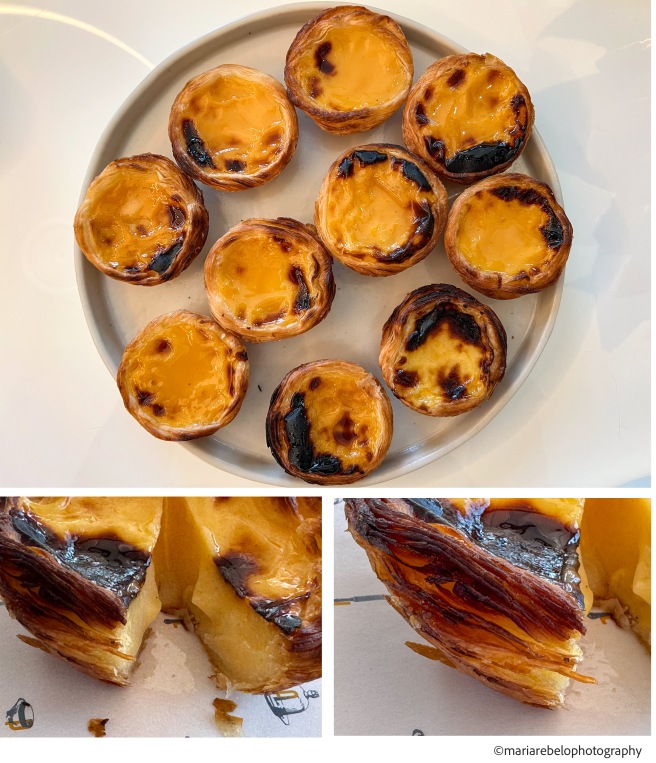
Savoring pasteis de nata at Hotel do Bairro Alto

In Lisbon, pastéis de nata inspire near-religious devotion. And with good reason–these delicate tarts, made of flaky layers of puff pastry and filled with a luscious cream of eggs and milk, offer a glimpse of heaven on earth.

Some Lisboetas are devoted to a neighborhood pastry shop that proudly displays the words Fabrico Próprio on its façade, signaling that its pastries are made in-house. But the city’s most revered pastry sanctuary is the Antiga Confeitaria de Belém, which has been drawing pilgrims since it first opened its doors in 1834.

Manteigaria is a more recent cult whose crisp, lemon-kissed tarts have earned a loyal following. Its original Chiado location has become a popular pastry shrine.

There is also Pastelaria Aloma, a bakery in Campo d’Ourique, which rose to fame after winning national competitions in 2012 and 2013.

Just when we thought we had tasted all the city’s holy pastries, we stumbled upon a new revelation, hidden in plain sight at the recently renovated Hotel do Bairro Alto. Its pastéis are extraordinary. The custard, radiant yellow and delicately scented, has just the right touch of sweetness. The crust is golden, crisp, and exquisitely flaky with seven layers that echo Lisbon’s seven hills.

When we asked the servers about the recipe’s ingredients, they nodded politely and walked away. But on the final morning, a waitress slipped us a handwritten note with the ingredients. The secret? The filling is made not with cream, but with milk and cornstarch, lending it an ethereal lightness. The crust’s sublime texture is achieved through a blend of butter and pork lard.

So here is an insider’s tip: if you find yourself near Chiado, step into the Hotel do Bairro Alto and take the elevator to the fifth floor. Settle into the serene terrace overlooking the Tagus River and order some pasteis de nata. As you sit there, savoring these sweet devotions, you’re likely to find yourself at peace.

Hotel do Bairro Alto, Praça Luís de Camões 2, Lisbon, tel. 213 408 288, email: reservations@bairroaltohotel.com. Click here for the hotel’s website.
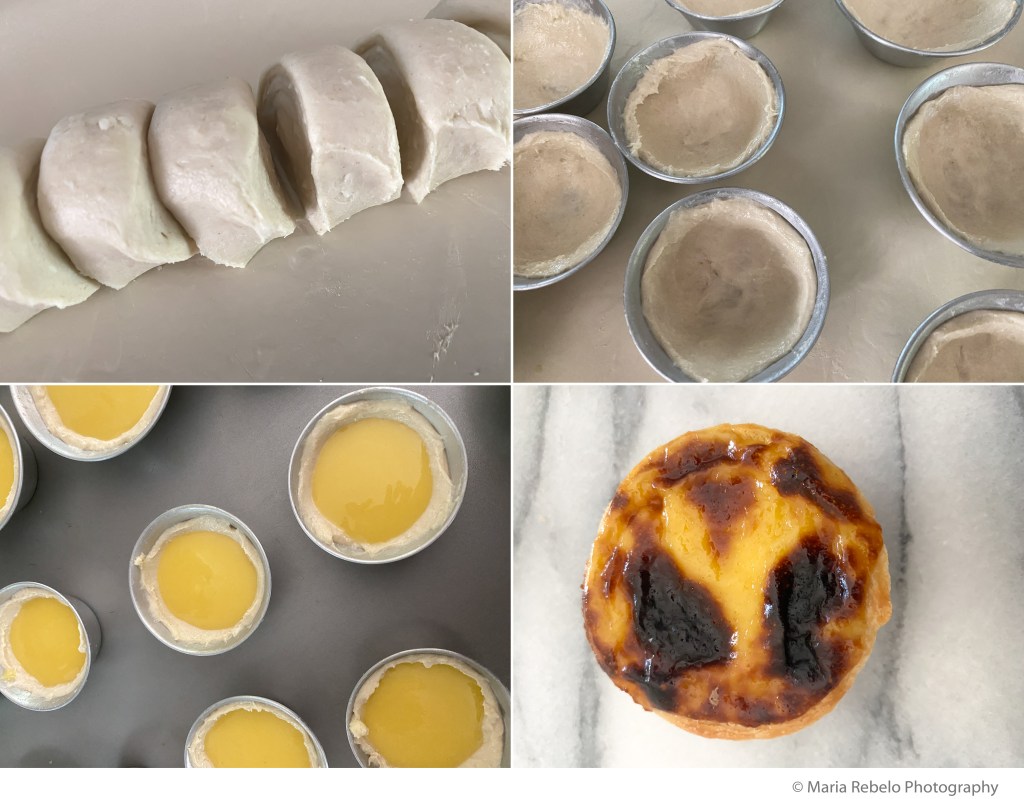
Making pasteis de nata

Do not try this recipe at home unless you’re desperate! Which is how we feel. Far from a purveyor of “pasteis de nata,” how else can we satiate our craving for these divine custard tarts?

We opened with trepidation “Cozinha Tradicional Portuguesa” (Portuguese Traditional Cooking), the imposing tome of vernacular recipes compiled by the legendary Maria de Lurdes Modesto. The old pages creaked, surprised to be turned with such urgency.

Modesto’s instructions assume we know what we’re doing. They’re more like jazz lead sheets than classical music scores. She tells us the key elements of the recipe and expects us to improvise the rest.

The ingredients are humble:  flour, butter, cream, eggs, sugar, water, and lemon. We started by making a version of rough puff pastry, folding the dough to create delicate layers of butter and flour.  After a few hours of work, we were rewarded with two dozen delicious pasteis de nata. 

All the effort that went into making these pastries made us appreciate Portugal even more. It is a place where it is ordinary to find the extraordinary: heavenly pasteis de nata sold for a modest price in every street corner. 

Here’s the recipe.

Ingredients for the puff pastry: 500 grams of flour, 500 grams of butter, 2 to 3 deciliters of water, and salt. 

Ingredients for the filling: 5 deciliters of cream, 8 egg yolks, 3 tablespoons of flour, 200 grams of sugar, and one lemon peel.

Melt the salt in warm water and divide the butter into three equal portions. Place the flour on a stone table and make a hole in the middle of the flour to pour the water. Kneed the mixture until it becomes homogeneous and let it rest for 20 minutes.

Next, stretch the dough into a square form.  Knead some of the butter until it has the same consistency as the dough. Spread one third of the butter over the dough, leaving a strip of one inch at the edges of the square. Fold the dough from bottom to top and from left to right, making sure that the fold fits perfectly at edges and on the sides. Stretch the dough again forming a square. Repeat the operation twice, first using the second third and then the last third of the butter.

Stretch the dough as thinly as possible. Cut it in stripes and fold into long rolls. Cut the rolls into pieces of 2 to 3 centimeters. Place the dough at the center of a small mold. Moist your thumb in water and spread the dough to the edges of the mold. 

To prepare the filling, mix all the ingredients and bring them to a boil. Remove from the heat and wait until the mixture cools down. Fill the molds with the cream. Place the molds in a very hot oven (250 to 300 degrees centigrade). Once the custards come out of the oven and cool, you can sprinkle them with icing sugar and cinnamon.