Poetic clams

Marcel Proust immortalized the madeleine in literature, yet the French never renamed the delicate cake in his honor. There are no “prousteleines” or madeleines à la Proust. By contrast, one of Portugal’s most iconic dishes bears the name of a minor 19th-century poet and noted gourmet: clams à Bulhão Pato.

The preparation is simple. Heat olive oil with garlic in a pot that can hold all the clams in a single layer, add the clams, and once they open, finish with a generous handful of chopped coriander and a squeeze of fresh lemon juice.

The dish celebrates the flavor of Portuguese clams—use anything less, and the result will fall short. Order clams à Bulhão Pato at a seaside restaurant, and you’ll understand why they are culinary poetry.

Portuguese razor clams

We know nothing about the biology of the lingueirão (Portuguese razor clam). All we know is that, when steamed, it releases the scent of the ocean and we feel we are on the high seas. Use the cooking water to make lingeirão rice and the result is a dish with complex flavor. Guests will think you have been cooking for hours, reducing sauces, combining delicate infusions. And all you did was take advantage of the amazing biology of the lingueirão.

Percebes

OLYMPUS DIGITAL CAMERA

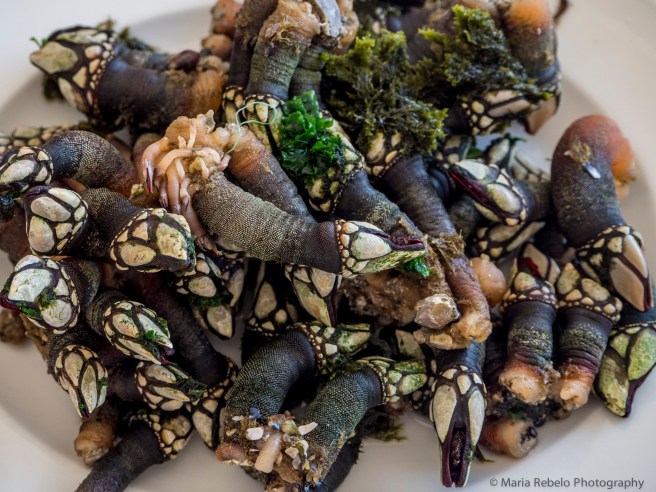
You eat these pre-historic looking crustaceans by twisting off their heads and exposing their meat. They taste and smell like the sea and they are great with beer.

The English name for percebes, “gooseneck barnacles,” comes from the medieval theory that they are embryonic barnacle geese. This theory conveniently explained why flocks of geese would suddenly appear out of nowhere (the fact that birds migrate was not known in the Middle Ages).

In any case, do not worry. There are no recent reports of percebes flying off the plate to migrate south.

Berbigão


Put yourself in the shells of the “berbigão.” You are constantly outshined by your cousins the clams.  Clams star in famous Portuguese dishes such as “carne the porco à Alentejana” (pork with clams).  Berbigão gets roles in minor culinary productions such as “arroz de berbigão,” a rice used to accompany other dishes. But forget what the critics say. Cook berbigão with a little olive oil and garlic and you will feel its star power.