Chef Marlene Vieira is a star

Since the dawn of civilization, Babylonians, Egyptians, and Greeks have studied the skies to chart the stars. But these luminous bodies shined whether or not they were included in celestial atlases.

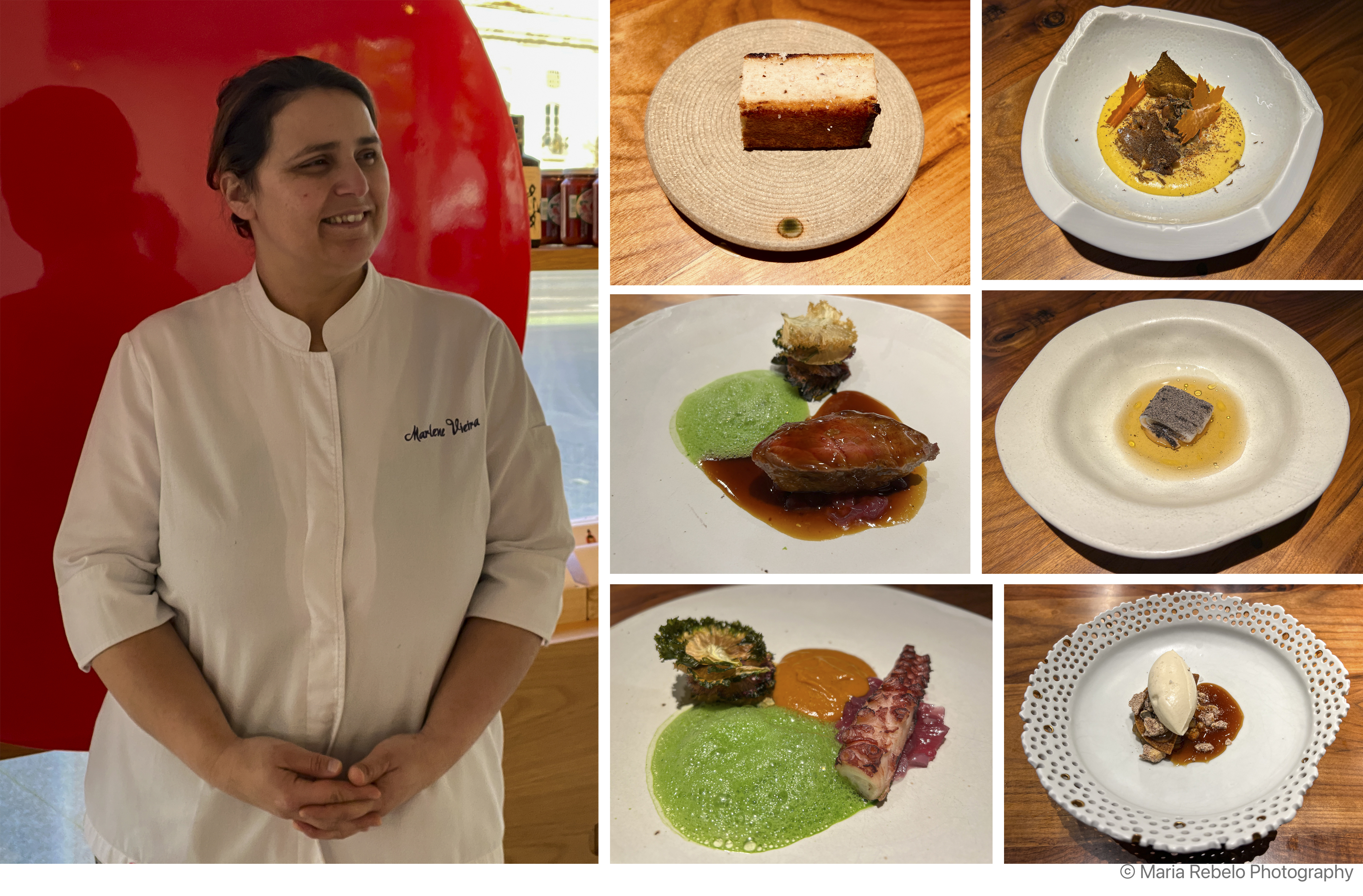
Last Tuesday, Marlene received a Michelin star—a richly deserved honor that celebrates her extraordinary talent and dedication. But long before this important accolade, her light had already illuminated the world of gastronomy. What fuels her radiance is the belief that cooking is an act of love. Each time we dine at her Zun Zum restaurant, we feel not just deeply satisfied but cared for.

Now, at the restaurant that bears her name, Marlene is elevating Portuguese cuisine to new heights. The space exudes serenity, with the kitchen at its heart—an altar where ingredients are transformed into a transcendent gastronomical experience. The menu evolves constantly, and once a recipe leaves, it does not return, making each meal a singular experience.

Guiding this culinary journey alongside Marlene is Chef Mário Cruz. He searches land and sea for exquisite treasures—sea urchins, Algarve red shrimp, wild mushrooms, cuttlefish, mullet, octopus, and partridge. 

The food is visually stunning, but, more importantly, it is delicious and it has soul. The irresistible cornbread, kneaded from white corn, wheat, and rye, follows Marlene’s grandmother’s recipe. The Azorean bluefin tuna, cured as if it were prosciutto, accompanied by gazpacho served in a bowl lined with sumac, transported us to the Algarve, to a sunlit table by the sea.

The partridge is cooked according to a famous recipe. During the Napoleonic invasions, General Junot’s troops looted the library of the Alcântara Monastery. Among the stolen manuscripts was a recipe for partridge stuffed with foie gras and truffles. Junot sent it to his wife, who introduced it to France as “Partridge, Alcântara style.” The renowned chef Auguste Escoffier declared it one of the finest spoils of the Napoleonic wars. Marlene’s reimagined version of this historic dish is so extraordinary that it might provoke another French invasion.

Marlene Vieira is a star–not because she has been recognized among the constellations of fine dining, but because she has always shined.  If you find yourself in Lisbon, take the time to sit at her table to savor the brilliance of her cuisine.

Marlene is located at Av. Infante D. Henrique, Doca do Jardim do Tabaco, Lisboa, tel. 351 912 626 761, email marlene@marlene.pt.

Fuso, a landmark restaurant

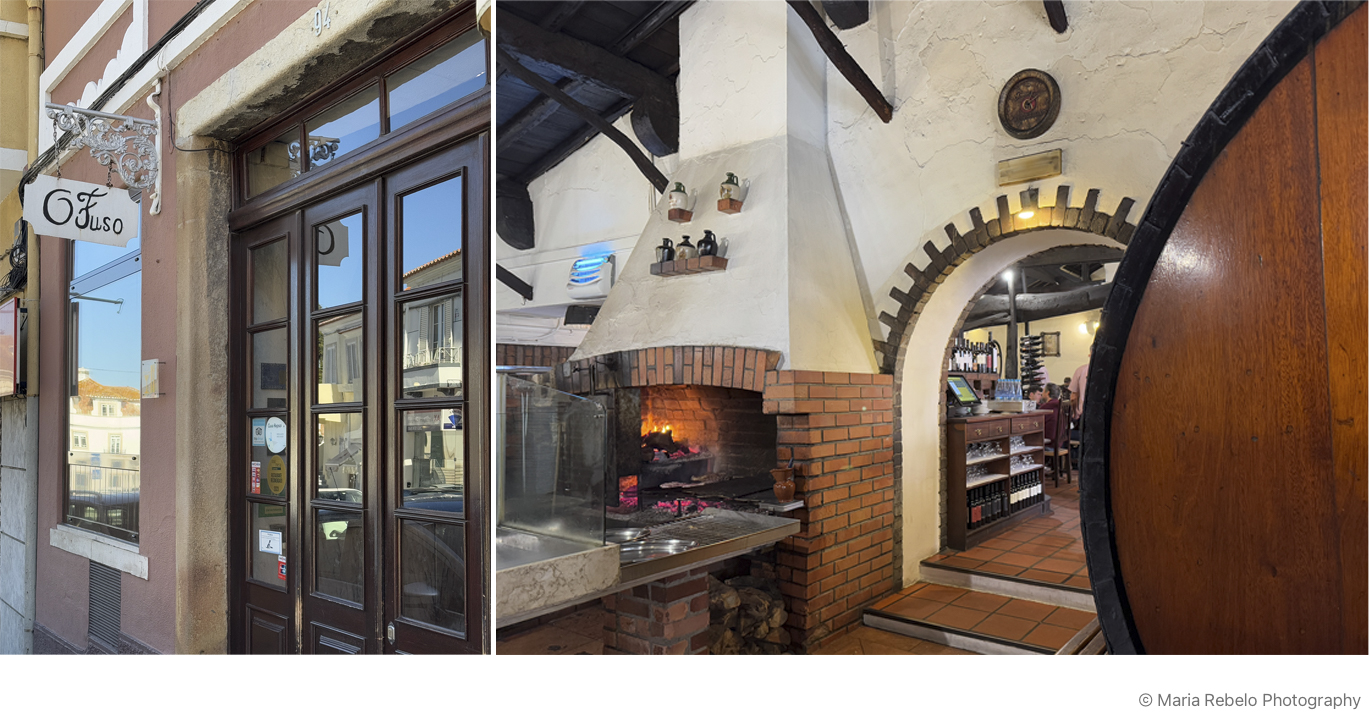
Located in Arruda dos Vinhos, 20 miles north of Lisbon, Fuso is a restaurant from another era. It opened its doors, in the space once used as a winery and a tavern, on March 9, 1973.

The concept for the restaurant was created by Fernando Guerra Cardoso, a successful car salesman who enjoyed socializing over food. He persuaded his friend, Armindo Mera Dominguez, to open a restaurant serving oversized portions that encouraged people to bring their friends. Today, the restaurant is run by the great-grandchildren of both founders.

Diogo Coucello, Fernando’s great-grandson, leads a team of 30 waiters and kitchen staff, ensuring seamless service for up to 300 guests. Reservations are essential—Fuso is always full. 

Since 1973, the menu has remained unchanged, focusing on two signature dishes: charcoal-grilled codfish and bone-in rib steak. Your meal can begin with delectable appetizers such as prosciutto, savory sausages, or grilled shrimp and end with various desserts, ranging from roasted apples to egg puddings and chocolate cake. But the main attractions are grilled codfish and steak.

You can find these dishes in many other restaurants, but Fuso’s renditions are exceptional. The codfish, imported from Norway, is meticulously selected for its succulence and rich flavor. The rib steak, consistently tender and tasty, has been sourced from the same butcher since the restaurant’s inception.

Fuso’s rustic décor has remained untouched since its opening. The restaurant’s name refers to the fuso, or spindle—a large wooden screw—attached to the wine press that still occupies the center of the dining room. The entrance is dominated by towering wine barrels made from exotic wood and a grand charcoal grill glowing with embers.

In a world where everything feels fleeting, it’s a privilege to eat at a restaurant that has been a gathering place for friends who love food for over half a century.

Fuso is located at Rua Cândido dos Reis, 94, Arruda dos Vinhos, tel. 263 975 121, 263 978 547.

Quinta de São Sebastião

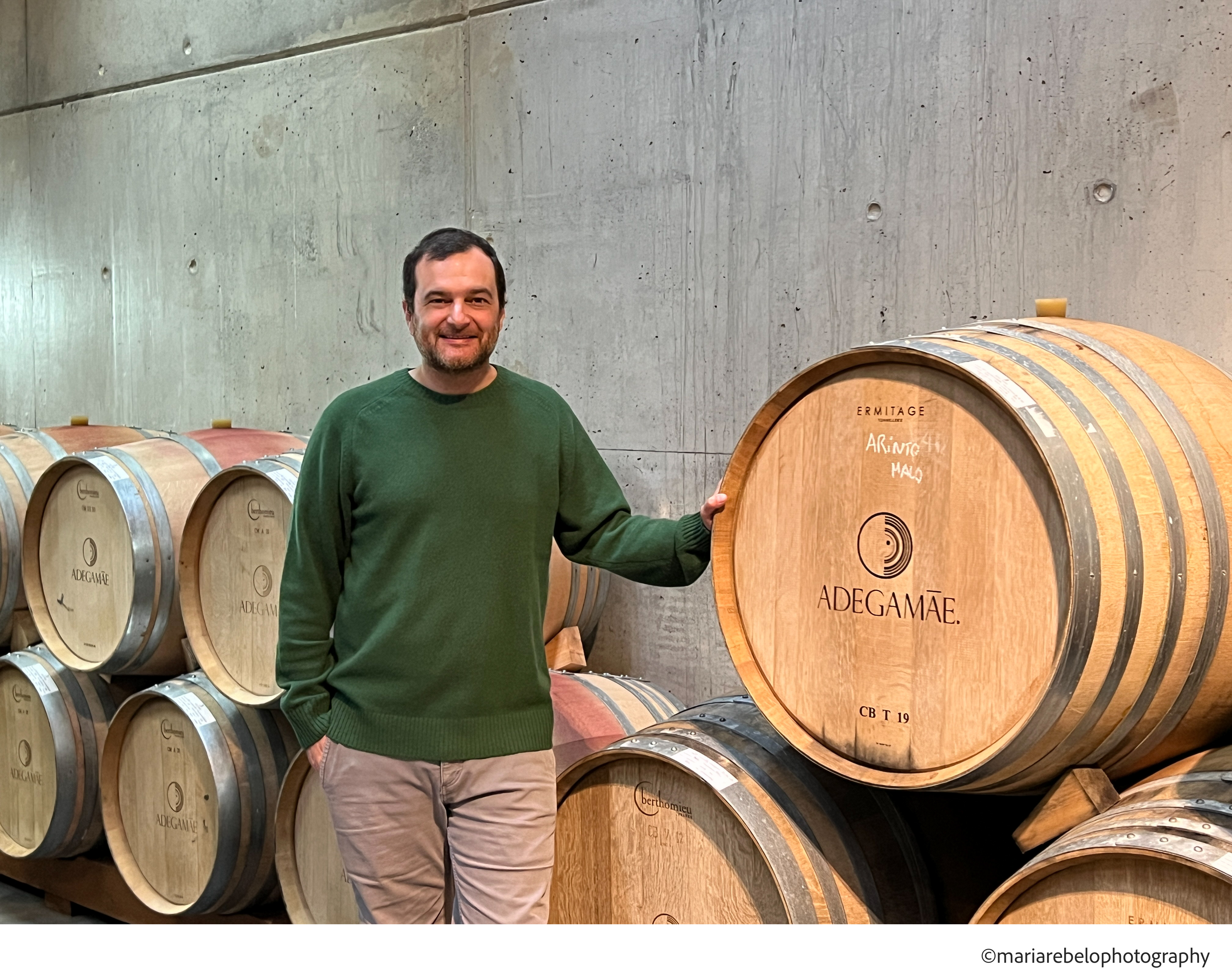
Francisco Melícias, the general manager of Quinta de São Sebastião, invited us to visit the estate. So, we traveled along narrow roads that wind through villages where houses are nestled among vineyards until we arrived at Arruda dos Vinhos.  This historic town, established in 1160 by Portugal’s first king, owes its name, “wine route,” to its role as a transit point for wines transported by horse-drawn carts to Lisbon.

Arruda’s soils, predominantly limestone and clay with patches of sand, create ideal conditions for viticulture. Limestone promotes deep root growth and imparts minerality and acidity to the wines, while clay retains water, adding richness and structure. The region’s rolling hills and refreshing Atlantic breezes lend complexity to its wines.

The town is steeped in history and faith. São Sebastião, its patron saint, is credited with three miracles. First, in the 14th century, Arruda was spared from the bubonic plague that devastated much of Portugal. Second, in 1755, the town escaped the earthquake, tsunami, and fires that reduced nearby Lisbon to ruins, prompting King José I and his family to seek refuge in Arruda. Third, in the late 18th century, the region’s sand patches protected its vineyards from the phylloxera pest that devastated European vineyards.

Our journey continued up a steep hill to Quinta de São Sebastião, an estate established in 1755. We visited the chapel, once part of a monastery founded by monks who sought peaceful retreat. Francisco tells us that during the Napoleonic invasions, the estate played a role in the Lines of Torres Vedras, a network of fortifications built in 1809–1810 to defend Lisbon against Napoleon’s troops. Today, the remnants of these fortifications are a reminder of the estate’s historical importance.

In the 1980s, António Parente, an industrialist, bought Quinta de São Sebastião and invested in its future. The vineyards, planted on steep hills with different exposures, offer diverse terroirs that allow winemaker Filipe Sevinate Pinto to create distinctive blends. These wines combine traditional local varietals like Touriga Nacional with carefully selected French grapes.

We sampled some remarkable wines in the estate’s tasting room, which overlooks a picturesque riding arena where horses are trained. The 2022 Reserva Branco, a blend of Arinto, Cercial, and Sauvignon Blanc, has a pleasurable intensity and minerality. The Sauvignon Blanc provides a seasoning touch that allows the blend to shine. A surprising single-varietal made from Cercial, a grape known as Esgana-Cão in the Douro Valley, impressed us with its elegance and freshness. The Provence-style rosé, Dona Aninhas, pays tribute to António Parente’s mother with its delightful balance and vibrant acidity.

We also tried three reds. The first, a Reserva, is a blend of Touriga Nacional, Merlot, and Sousão. The aromatic Touriga complements the delicate Merlot, while the lively Sousão provides a touch of exuberance. The second, a blend of Alicante Bouschet and Syrah is intense, offering a beautiful harmony of flavors. Finally, the Grande Reserva—a daring mix of Merlot and Sousão— captivated us with its depth, complexity, and character. This wine is an ode to joy!

Quinta de São Sebastião is building on its rich heritage to create wines that are distinctive and deeply enjoyable.

Quinta de São Sebastião is situated in Arruda dos Vinhos. Click here for their website.

Alheiras

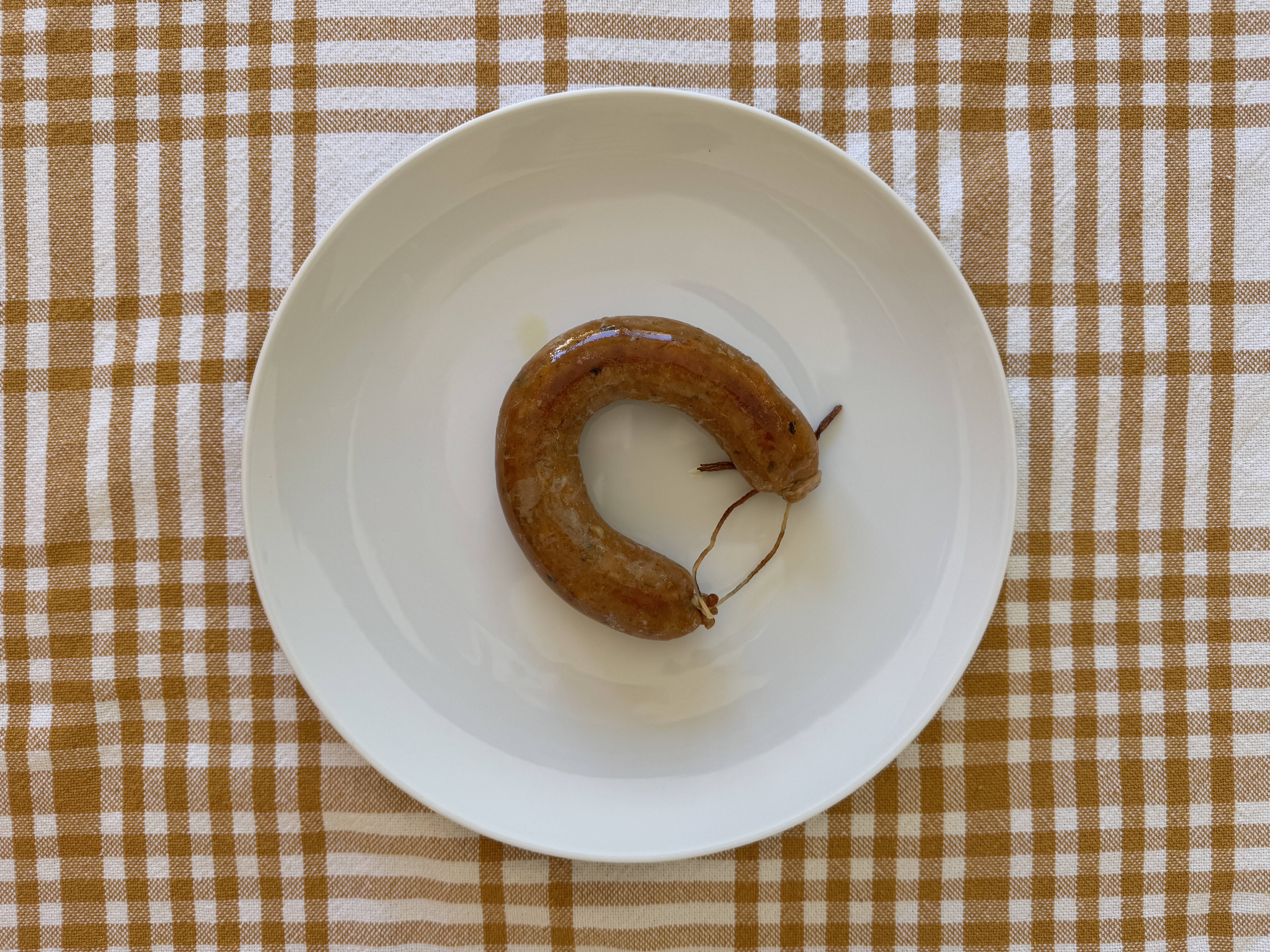
The origin of alheiras (pronounced ahl-yay-ras), a traditional Portuguese sausage, is intertwined with the history of Portugal’s Jewish community during the reign of King Dom Manuel I (1495–1521). 

Dom Manuel sought to strengthen Portugal’s standing in Europe by marrying the daughter of the Spanish Catholic Monarchs, Ferdinand of Aragon and Isabella of Castile. However, the union came with a condition: Portugal had to adopt Spain’s policies toward Jews, forcing them to either convert to Christianity and become “New Christians” or leave the country.

Jewish dietary laws forbid the consumption of pork, a staple of Portuguese cuisine. To avoid persecution, New Christians ingeniously created a pork-free sausage using bread, garlic, and other meats such as poultry or game. These sausages, known as alheiras (from alho, the Portuguese word for garlic), were smoked to resemble traditional pork sausages, allowing Jewish families to appear to conform to local customs.

Today, alheiras are a cherished element of Portuguese cuisine, particularly in the Trás-os-Montes region, where they originated. The town of Mirandela is especially famous for its alheiras. Although modern recipes often include pork, these sausages stand out for their distinctive flavor.

Preparing alheiras is far more complex than making traditional chouriços. To make chouriços, pork is marinated in vinha d’alhos—a flavorful blend of garlic, bay leaf, salt, olive oil, paprika, and wine—before being stuffed into casings and smoked until dry. In contrast, alheiras require meticulous preparation: a variety of meats are carefully cooked and then combined with bread and spices before filling the casings and smoking the sausages. Every detail is crucial in this labor-intensive process.

The finest alheiras we’ve ever tasted are crafted by Maria da Graça Gomes and her daughter, Rosário Buia, at Toca da Raposa in the Douro Valley. They are made with an exquisite mix of meats, including rabbit and pheasant, and seasoned with great finesse. Grilled, lightly fried in olive oil, or baked in the oven, these sausages are a culinary feast.

Toca da Raposa makes alheiras between November and January. You can place an order by calling 969951191.

Jeropiga

Foreign residents often wonder how they’ll know they’ve been embraced as locals.  A simple test involving jeropiga (pronounced zheh-roh-pee-guh), a traditional Portuguese beverage, provides the answer.

Jeropiga is made by combining grape must (freshly pressed, unfermented grape juice) with aguardente, Portuguese brandy. The brandy kills the wild yeast that lives on the skin of the grapes, preventing it from converting the grapes’ fructose into alcohol. The result is a fortified drink with an alcohol content between 16 and 20 percent that preserves the grapes’ natural sweetness. It is the perfect pairing for roasted chestnuts.

You cannot generally buy jeropiga. Farmers make it in small batches for personal consumption and to share with friends. Receiving a bottle is a clear sign that someone regards you as a local.

People rarely tell you where they got their jeropiga, but we’re happy to reveal that ours comes from our friend Raul Reis. Not content with growing the finest potatoes in Portugal, he also makes wonderful jeropiga in Sobral, a village near Lourinhã. This region is known for the excellence of its brandies, so it is no wonder Raul’s jeropiga is so great. 

Bordallo Pinheiro

If you’re looking for last-minute holiday gifts, check out Bordallo Pinheiro, an irreverent Portuguese ceramics brand. 

Rafael Bordallo Pinheiro, born in 1846 to an artistic family, learned to draw and paint with his father. He started his career as a cartoonist focused on political satire and then brought the same playful spirit to his ceramics work. 

His cabbage-shaped tableware, exuberant animal motifs, and unique use of bright colors and textures become iconic, recognized for their artistry and distinct Portuguese flair. 

These timeless pieces have been crafted in the same factory in Caldas da Rainha since 1884. But the old factory is also learning new tricks. Over the past 15 years, contemporary designers have been invited to answer the question: what would Bordallo Pinheiro design today? Their imaginative answers honor the legacy of the great ceramist, producing pieces that, like the originals, surprise and delight.

Bordallo Pinheiro ceramics bring fun and joy to our dining tables, turning every meal into a special occasion.

Click here for the Bordallo Pinheiro website.

Finding perfection at Ervamoira

“When my father came home from work, he would spend hours studying military maps,” recalls Jorge Rosas, the CEO of Ramos Pinto, a port wine house founded in 1880 by his great-grandfather, Adriano Ramos Pinto. “He was searching for the perfect farm in the Douro Superior, a region he believed could produce exceptional wines like the legendary Barca Velha.”

Sitting on the floor with an old magnifying glass that had lost its handle, Jorge’s father, José António, pored over contour lines in search of flat land. He wanted to find terrain that was easier to cultivate than the steep slopes that dominate the Douro Valley. From Friday to Sunday, José António drove through rustic roads, to visit locations he had marked on the maps.

One day, crossing a remote mountain path, he found his dream farm. “Shangri-La!” he exclaimed. The estate, then planted with cereals, was called Ervamoira. It was love at first sight—a love so strong that his wife often felt jealous of the farm. Determined to buy it, José António contacted the owners in Lisbon. Despite having little attachment to the estate, they hesitated to sell a property that had been in their family for generations.

An avid trout fisherman, José António donned his fishing gear to fish in the rivers that cross Ervamoira, the Coa, and the Douro, even though he knew they had no trouts. Fishing was merely an excuse to immerse himself in the landscape, imagining the vineyards he might one day plant.

In the aftermath of the 1974 revolution, many farms were nationalized. Fearing expropriation, the owners of Ervamoira agreed to sell. Despite his family’s concerns about buying an estate amid so much uncertainty, José António seized the opportunity. “My father is a cereal killer,” jokes Jorge, alluding to how the cereal fields were soon replaced with vineyards.

At Ervamoira, José António introduced innovative viticultural practices. He assigned each grape varietal to a separate plot. Instead of using traditional terraces, he planted vines on platforms that facilitate mechanization. High-density planting forced roots to delve deep for nutrients, enhancing quality through higher polyphenol content and increasing drought resistance.

But a shadow loomed over paradise. In the early 1990s, plans resurfaced to construct a hydroelectric dam that would flood the estate. Horrified, José António fought tirelessly against this project. The discovery of a Roman tomb and ancient coins on the property provided fleeting hope, but archaeologists deemed the finds insufficient to halt the dam project.

Desperate, José António entered his wines into international competitions, receiving numerous awards. But not even these accolades could stop the project.  “What now?” he wondered. “Only a miracle can save the farm,” his cousin, João Nicolau de Almeida, remarked.

Then, a miracle happened. Archaeologists discovered prehistoric cave engravings near Ervamoira.  An expert who secretly evaluated the site revealed that the engravings are about 30,000 years old. It was widely assumed that outdoor prehistoric art couldn’t survive millennia of exposure to the elements. Ervamoira proved otherwise.

The discovery attracted the attention of the Portuguese media but failed to sway the government. Deliverance came from an unexpected source. A Portuguese émigré, who had been Jacqueline Kennedy’s butler, read about the engravings in a local newspaper. He shared the news with an acquaintance at The New York Times, and the newspaper published an article titled “Vast Stone Age Art Gallery Is Found but Dam May Flood It.” The story sparked an international outcry that led to the abandonment of the dam project.

Today, Ervamoira thrives. Its grapes contribute to the iconic Duas Quintas wines, made from a blend of grapes from two farms—Ervamoira and Bons Ares. The schist soils of Ervamoira, at 150 meters altitude, lend structure, while Bons Ares, perched at 550 meters with limestone soils, adds refreshing acidity.

Ervamoira’s magic is unmistakable. Nestled in the remote Douro Superior beyond the Cachão da Valeira—a region inaccessible until Queen Maria I spearheaded efforts to make the Douro River navigable—it is a gem of the Douro Valley, a dream that a miracle made come true.

Please click here for information on how to visit Ervamoira.

The pleasures of a Solo lunch

To find the finest place for lunch in Lisbon, you must head toward the majestic Pantheon, a baroque limestone masterpiece that took three centuries to build. The adjacent plaza, Campo de Santa Clara, overlooks the “sea of straw,’’ the stretch of the Tagus River that reflects the golden sunlight, resembling a field of wheat.

A short walk leads you to number 128, where the understated entrance of the elegant Santa Clara 1728 hotel awaits. From Tuesdays to Saturdays, the hotel’s dining room, home to the renowned Ceia restaurant, transforms into a lunch haven called Solo.

The meal begins with the comforting aroma of warm, house-made sourdough bread served with creamy butter.  It continues with a starter and main course paired with a glass of wine and ends with dessert. The menu is updated every two to three weeks to reflect what is seasonal.

The starters are a testament to culinary finesse, featuring options like delicate Hamachi kissed with ponzu and coriander, requeijão–a soft cheese from the Estrela mountain–adorned with grapes and a touch of balsamic vinegar, or duck escabeche infused with the sweetness of ripe tomatoes.

The main courses are equally enticing, including choices like tender roast beef accompanied by grilled lettuce hearts and anchovy vinaigrette, creamy orzo with pumpkin, spinach, and truffles, or line-caught fish paired with pumpkin, hazelnut, and a rich bouillabaisse.

For the sweet ending, will you choose the tropical freshness of Azorean pineapple with yuzu syrup and finger lime? Or the indulgent richness of chocolate ganache with seasonal fruits?

Sharing the experience with a friend doubles the delight. The chef can split two menus, letting you savor two different starters, main courses, and desserts.

Solo’s exceptional cuisine is rooted in its “soil to table” philosophy. Most ingredients are sourced from Herdade no Tempo, a farm in Alentejo that uses regenerative and holistic practices to nurture the soil and support biodiversity. Chef Renato Bonfim and his team transform these pristine ingredients into dishes that celebrate the gifts of nature and the joy of cooking. 

From the artful presentation to the gracious service and intimate ambiance, every detail at Solo turns lunch into an experience that lingers in our memory long after the last bite.

Solo is located at Campo de Santa Clara, 128. Lisbon. Click here for the restaurant’s website.

Wines of the land and sea at Serenada

A woman named after a flower crafts enchanting wines on a farm called Serenada, which her family has owned for over three centuries. It sounds like a fairy tale, but the wines are as real as the spell they cast.

As a young girl, Jacinta Sobral had no idea she was destined to become a winemaker. In 1961, one year after getting married, her father, António Sobral, planted a vineyard at Serenada with twelve grape varietals. He crafted his wines with little more than his hands, heart, and the wisdom gained through experience. The vineyard thrived, and in 1970, he decided to plant more vines.

As for Jacinta, she wandered down a different path. She studied the secrets of chemistry and became a microbiologist. But in 2004, as António’s health began to fade, he expressed a desire to teach Jacinta to make white wine. “Anyone can make red wine, but white wine—that is art,” he said. António showed Jacinta the delicate process of decanting free-run juice while preserving the fine lees, which enhance the wine’s texture and complexity.

When António passed away in 2006, he left various properties to his other children but bequeathed Serenada to Jacinta. She felt like a spell had been cast, binding her to the vines. Determined to honor her father, she enrolled in a Master’s program in Agricultural Engineering. There, she found that her background in microbiology was like a magic key, unlocking the mysteries of winemaking. She immersed herself in enology textbooks and crisscrossed Europe to learn from other producers. 

Serenada is rich in geological diversity. There are schist soils near the ancient Grândola mountain, veins of manganese and iron, and fields of clay and sand. These nutrient-poor soils stress the grapevines, prompting them to grow deeper roots in search of water and minerals. The cooling Atlantic breeze slows grape ripening, fostering complex flavors while preserving acidity. The result is wines that are fresh, balanced, and vibrant.

Unburdened by convention and free to follow her imagination, Jacinta began exploring different vinification and aging techniques, from fermenting the must in Roman clay amphoras to aging bottles in a cave once mined for pyrite, the mineral known as fool’s gold.

The most remarkable discovery came in 2017 when Jacinta submerged wine bottles 15 meters deep into the ocean. There, the bottles slept in silence, rocked by the waves and shielded from the sun’s light. Eight months later, when Jacinta tasted the wine, she was astonished. These ocean-aged wines were unlike any she had experienced—smooth, ethereal, as if blessed by the ocean’s spirit.

Serenada has a handful of rooms where you can stay, each offering a peaceful retreat surrounded by pines and oak trees. Guests can enjoy scenic walking and cycling trails, delicious meals, picnics, and wine tastings.  It’s the perfect place to savor Jacinta’s mesmerizing wines that capture the essence of land and sea.

Serenada is located near Grândola in Alentejo. Click here for their website. 

Covilhetes, small pies full of flavor

Covilhetes are small meat pies cherished in Vila Real, a town near the Douro Valley. Their origins date back over two centuries when they were sold at religious fairs. By the mid-19th century, covilhetes had become a staple in restaurant and café menus, often served with oven-baked rice. Their popularity has endured ever since.

In 2015, a guild was established to safeguard the authenticity and quality of covilhetes. The unique taste of these pies reflects the premium ingredients used, such as fine flour, Maronesa veal (from a breed native to the Marão mountains), and local sausages.

Though recipes for covilhetes exist, mastering the art of crafting their delicate, flaky pastry and intricate oval crust resembling planetary orbits is challenging. Fortunately, pastry shops in Vila Real’s historic district, such as Pastelaria Gomes, Casa Lapão, and Loja do Covilhete, produce daily batches of these heavenly pies, fresh from the oven, ready to delight our palates.