Lunch with Dirk Niepoort

Niepoort Composit_

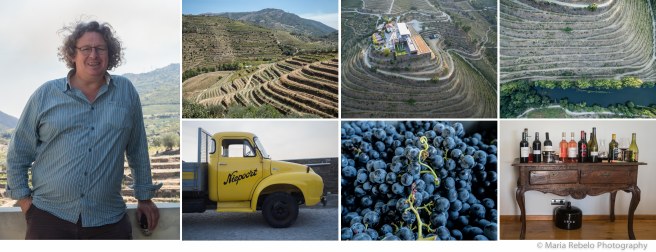
We got in touch with Dirk Niepoort, a legendary Douro valley wine maker, through a common friend. We asked Dirk whether we could come by Quinta de Nápoles to take some photographs. “Why don’t you come for lunch?” he replied. And so we did.

Dirk welcomed us to the dining room and started opening a few wine bottles. There were 20 people getting seated around the table. A few were Summer interns who came from afar to apprentice with Dirk. Others were people related to the wine business, enologists, producers, sommeliers of starred Michelin restaurants.

There were no speeches, Dirk circulated around the table sitting in different places so that he could talk to everybody. His demeanor is shy but his charisma is obvious. When he talks to someone, he makes them feel like they are the only people in the room.

The table was set with pataniscas (fried cod) and pasteis de massa tenra (turnovers) made with a sausage called alheira.  Dirk poured everybody some Redoma Reserva, his brilliant white wine made from 80-year old vines. Plates steaming with a hearty country soup were passed around. Soon our glasses were filled with an experimental “vinho verde” (green wine). We were still savoring its bright, lightly sparkling taste when another star white wine from the Niepoort stable arrived: the luxurious Coche.

When Dirk sat in our table corner, we asked him to explain his wine-making philosophy. Discussing wine with Dirk Niepoort is like playing chess with Gary Kasparov. Both are so many moves ahead that they are playing a different game. Most of the world is producing bolder wines with higher alcohol, more taste, deeper color. Dirk is doing the opposite. He wants to produce wines that are fresher, more aromatic, with less alcohol, less extraction and concentration. “Once we start drinking these lighter wines, we might find the old styles boring,” he says.

Dirk created a new project called Nat’cool to promote some of these new wines. He generously invited a few young wine makers to join this project. One of these wine makers, Luís Cândido Silva, was with us at lunch. Luis served his Primata, a wine that is easy to drink with bright acidity and only 9 percent alcohol.

Terrines of savory octopus rice filled the table as Dirk poured Blah, Blah, Blais a wine that is a testament to his generosity. Dirk gave Frederick Blais, a regular Summer intern from Canada, the opportunity to make this wine with old vines from one of the Niepoort’s estates!

A serra cheese started to circulate, accompanied by a wine with a tong-in-cheek name: Clos de Crappe. “It’s a technical disaster that worked out great,” Dirk said grinning.

Local pastries were served with an ice wine made by Dirk’s young daughter. She floated around the table like a fairy, serving her wine and enchanting everybody.

Finally, we tried two Niepoort port wines from 2005, a Late Bottled Vintage and a Colheita. These twin wines have different personalities but both share the richness and depth that only the Douro can produce.

It was time to say goodbye. We thanked Dirk for his generosity and walked towards the parking lot with the other guests. We have different professions, backgrounds and nationalities. But we all felt the same: we were descending from the mount Olympus of wine, where we had tasted nectars made for the gods.

Click here for the Niepoort wines website.

A Portuguese chair

Composit Chairs

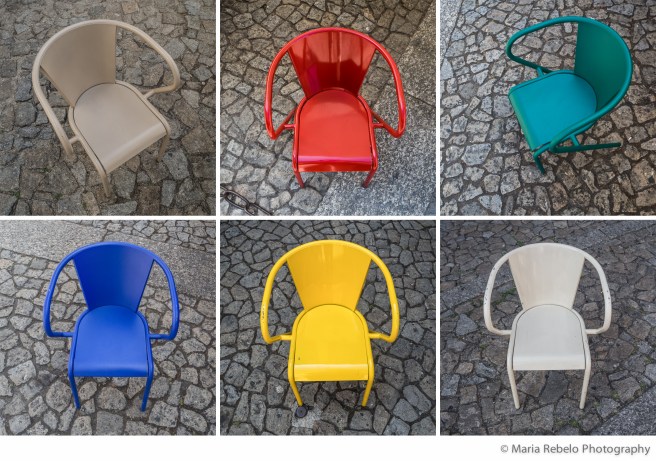
Late in the afternoon, groups of friends gather in cafés and esplanades all over Portugal to enjoy the last rays of sun and talk about their lives. They seat on metal chairs painted in bright colors that create a festive atmosphere.

These chairs were designed half a century ago by a craftsman called Gonçalo Rodrigues dos Santos. They are elegant but sturdy and can be stacked for storage. These virtues make them perfect pieces of urban furniture for enjoying leisure and celebrating friendships. If you visit Portugal be sure to try them!

The Gonçalo chair is produced by Arcalo. Click here for their web site.

Óbidos becomes a literary village

Óbidos Bookstores-Edit

It’s not like Óbidos needs any more attractions. This beautiful medieval town is a must-see destination in Portugal. Inside its castle walls live the echoes of an age of chivalry that is long gone.

Now that books are disappearing, their cellular fibers replaced by electric impulses, Óbidos has created unique bookstores in ancient spaces.

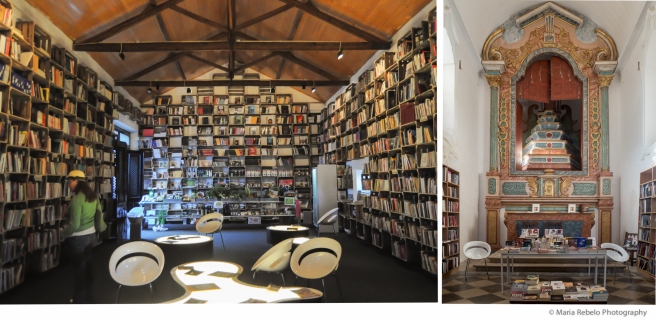
One of our favorites is Livraria do Mercado (the market bookstore). It occupies the wine cellar of an old manor house and doubles as an organic market. Here, the fruits of the land share the space with the fruits of the imagination, everything stored inside one thousand rustic wooden boxes.

Another favorite is Livraria Santiago which occupies a 12th century church. It is a peaceful place where books wait in silence for the readers who seek their blessings.

These bookstores transformed Óbidos into a literary village, a place where the thick castle walls protect the precious art of reading.

Click here to see the list of Óbidos bookstores.


The luxurious Dom Feijão

Dom Feijão

There are plenty of “tascas” in Lisbon, small informal restaurants that offer seasonal menus at low prices. But when locals want to have a nice meal with friends or family, they don’t go to a tasca. They prefer to pay a little bit more and eat at a neighborhood restaurant with better ingredients and service.

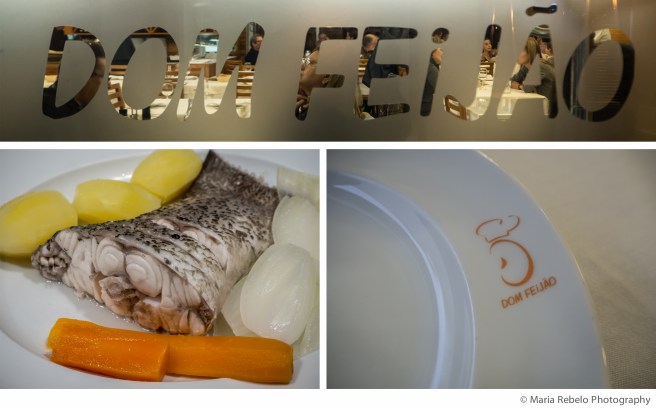
One of our favorite neighborhood restaurants in Lisbon is Dom Feijão (Sir Bean), a place with generous portions, modest prices and top-notch ingredients. What’s the catch? You have to be persistent to get a reservation or be prepared to wait for a table. The waiters don’t answer the reservations phone line when they’re very busy and they’re almost always very busy.

The restaurant is popular with families, on our last visit the place was full of grandparents, parents and children sharing the pleasures of the table.

Before we had time to open the menu, our waiter brought us some delicious fried marinated sardines and a plate of the same black-pork prosciutto they serve in heaven on special occasions.

We’d seen a large “sável,” a prized river fish, in the restaurant’s refrigerator so we asked the waiter whether we could order it. “Not today,” he replied “The sável has to be thinly sliced and marinated for a few hours. Sorry, but we cannot rush the preparation.”

We ordered instead poached cherne (sea bream). It was deliciously succulent, a reminder that when the ingredients are perfect, simple preparations are the best.

Next, we had grilled “secretos,” divine slices of fatty black pork. Two decades ago, these cuts of black pork were exported to Spain. Since then, the Portuguese have wised up and started consuming them. Exports suffered but our happiness boomed.

We ended the meal with some grilled codfish. The waiter asked what was our favorite part of the codfish so he could ask the chef to prepare it. Large tranches of codfish swimming with roasted potatoes in a sea of olive oil made our delights.

We told chef João Araújo how much we enjoyed the meal. “We’re a simple restaurant that serves traditional Portuguese food,” he said. “Our only luxury is the ingredients we use.”   This is, of course, the kind of luxury we fancy.

Dom Feijão is located near the posh Avenida de Roma at Largo Machado de Assis 7 D, tel. 21 846 4038. There’s a convenient paid garage underneath the restaurant. You can ask the waiter to validate your parking.

Extraordinary Portuguese tea

CháCamélia Composit

Camellias reign supreme in the gardens of the north of Portugal. They love the rainy, temperate climate and the slightly acidic soil. The first camellias were probably brought from China by Portuguese merchants five centuries ago. These merchants also brought back some leaves that, when infused in hot water, produced an extraordinary drink called tea.

Tea is made from the leaves of a camellia shrub called sinensis. If camellias grow so well in the north of Portugal, how come no one has tried to produce tea there in the last five centuries? The answer is that tea production requires great patience, there’s a five-year lag between the plantation and the first harvest. It also demands knowledge, dedication, and the humility to accept the whims of nature. These are the same traits necessary to produce port wine. Perhaps that is why Dirk Niepoort, whose family has traded port since 1842, and his wife Nina Gruntkowski had the courage to venture into tea production.

Knowing that Dirk and Nina share a passion for tea, a friend offered them a small tea shrub. They planted it in a cold corner of their garden in Oporto and made each other a promise. If the plant survived, they would try to produce tea in the north of Portugal. The plant thrived, so in 2011 Dirk and Nina imported 200 shrubs and planted them first in their garden in Oporto and then in one of the Niepoort properties, close to sea. This year they harvested the first leaves.

Nina took us on a tour of the lush plantation. She talks about her plants with great affection. “These are my babies,” she said with pride “they will have a very happy life.” The production process is entirely organic and the leaves are harvested manually. Haruyo san and Shigeru Marimoto, a couple who produces premium organic tea in Japan, offered Dirk and Nina technical assistance. Producing tea is as complex as producing wine. But while enologists have plenty of time to make adjustments to their wines, tea leaves are processed in just four nerve-wrecking hours right after the harvest.

We tasted several premium green teas produced by the Marimotos. Some are mixed with herbs and flowers produced in Portugal, such as lemongrass, rose petals, elder flowers, and lemon verbena. They offer a wide palate of floral, grassy and nutty flavors.

We then sampled one of Dirk and Nina’s experiments: oolong tea aged in port-wine barrels. It is a blend of east and west that is enticing and new.

Finally, Nina brought out a small can, took out some leaves and brewed one more cup of tea for us. “Try it,” she said, her eyes shining with excitement. “It is the first tea made in continental Portugal.”

We closed our eyes to sip the precious liquid. It does not taste like Chinese or Japanese tea. It has the understated elegance of a great port. And it marries the exuberance of the Douro valley with the melancholic aroma of the sea. Why did we have to wait five centuries to drink this Portuguese tea? Perhaps it was the time required to wait for someone like Dirk and Nina, someone with the audacity to forsake the ordinary to strive for the extraordinary.

Click here for the Chá Camélia web site.

Making Alenquer a food destination

Casta 85.jpg

In the 19th century, Alenquer was one of Portugal’s premier wine regions. Its fortunes waned for much of the 20th century. But the tide turned and Alenquer rightly regained its status as a prized wine destination. A young chef called João Simões wants to help Alenquer become a food destination as well.

João apprenticed at the Ritz and worked in many posh hotels and restaurants. Three years ago, he decided to return to his roots to recover and renew the culinary traditions of the region where he was born. He uses local products like quails and Rocha pears and works with farmers on projects like producing goat cheese in the Montejunto mountain. His restaurant is called Casta 85. Casta means varietal, a reference to the region’s wine tradition. The number 85 refers to the chef’s birth year.

The dining room is decorated with furniture procured in the chef’s village. It is a pleasant space that overlooks the Alenquer river. This tributary of the Tagus flows proudly through town, reveling from the praise it received in Luis Vaz de Camões’ epic poem, the Lusíadas.

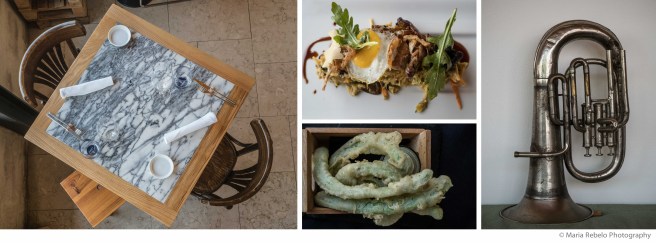
Casta 85’s service is relaxed and attentive. Ana Santana, our genial server, met the chef when they both played in a brass band. The chef’s old instrument is now part of the decoration and some of the band’s brashness inspires the intense, harmonious food.

We tried appetizing alheira croquettes with apple sauce and crisp green bean tempura with garlic mayonnaise. Next, came a delicious quail Brás style served with a quail egg, fried onion and cassava chips. Our meal ended with a luscious duck leg served over a risotto of mushrooms and asparagus.

We returned from Alenquer through a scenic road that took us though countless vineyards. We can’t wait to go back to visit the wine quintas and have another great lunch at Casta 85!

Casta 85 is located at Largo do Espírito Santo, 31 in Alenquer, tel. 915 761 911.

A joyous view

Vista Alegre-Montebelo

In the early 19th century, Portugal’s royal family and nobility served their meals on expensive porcelain imported from China. José Pinto Bastos, an entrepreneur,  saw in this fashion a business opportunity: he decided to produce porcelain in Portugal. It was a risky venture because the process for porcelain production was a closely guarded secret. So, Pinto Bastos started by making glass and crystal to finance his porcelain experiments.

He found the name of his brand and the perfect location for his factory on a hill near Ilhavo that overlooks the “ria,” an elongated body of water where fresh water mixes with salty water. On top of the hill there’s a beautiful church built in 1696 by a bishop who liked the location because of its “vista alegre” (joyous view).

In 1824, Pinto Bastos built a house adjacent to the chapel and a factory called Vista Alegre. There, he started to unravel the secrets of porcelain making. A team of workers labored day and night to feed large ovens with coal or wood so they could burn at 1,400 degrees Celsius for 40 hours in a row.

After much trial and error, a few pieces of porcelain were finally produced. But these pieces had a light gray color which was much less attractive than the pure white of Chinese porcelain.  Out of desperation, Pinto Bastos sent his son to Sèvres, the famous French porcelain factory, to ask for technical assistance. The young man came back with bad news: porcelain production requires a rare mineral rock called kaolin. Pinto Bastos was not deterred, he searched all over Portugal for this precious rock. Eventually, he found a large deposit a mere 20 km from his factory.

By 1835 Vista Alegre was producing excellent porcelain. Over the years, it became one of Portugal’s most cherished brands and a very successful business.

When, after a long sleep, China woke up to the world in the late 20th century, it flooded the market with cheap porcelain. Vista Alegre had trouble competing and for a while it looked like Portugal would, once again, buy all its porcelain from China. But Vista Alegre found new owners who modernized its factories. They also built a new hotel around the original Pinto Bastos family home, an interesting museum that traces the history of Vista Alegre, and stores where visitors can buy the company’s products.

The new wing of the hotel overlooks the “ria” and the old Pinto Bastos house was converted into elegant suites. It is a thrill to stay in this porcelain palace and enjoy its joyous view.

Click here for the website of the Montebelo Vista Alegre hotel. 

Mugasa

OLYMPUS DIGITAL CAMERA

Bairrada is a region in the center of Portugal known for its refreshing sparkling wine and its “leitão” (roasted suckling pig). The best leitão in Bairrada comes from a restaurant called Mugasa located in the middle of nowhere in a small village called Fogueira.

The restaurant’s owner, Álvaro Nogueira, retired from a desk job and opened a small café in 1981. He wanted to learn the art of roasting piglets to turn his café into a restaurant. But the learning curve was steep until one of his cousins, a master roaster, offered to teach him.

After this jump start, Álvaro kept perfecting his art. In 1991, he entered a competition organized by a gastronomic society and won first prize.

“Why is roasting so difficult?” we asked Álvaro. ” Every pig is different, with a different size and fat content. We use six wood-fired ovens and every oven is different. We have to make constant adjustments to guarantee perfection. That is why we only roast four piglets per oven, to have time to make all the necessary adjustments.”

“In the first 20 minutes, the oven has to be very hot, between 280 and 300 degree Celsius to make the outside crunchy. Then we cover the wood with ashes to bring down the temperature. There are many details so we have to pay close attention. The traditional seasoning made with garlic, lard, white pepper, and salt is important but you cannot use it to cover up mistakes.”

We sat at the table to try Mugasa’s leitão. It is indeed remarkable, crunchy on the outside, succulent on the inside, with just enough seasoning to accentuate the taste of the meat.

Álvaro is very proud of the celebrities that drive to Fogueira just to eat at his restaurant. But he is even more proud of his son Ricardo. “My son is the best master roaster in Portugal,” Álvaro said smiling. “He learned my secrets and discovered new ones.”

Many Bairrada wine makers eat regularly at Mugasa, so you often overhear discussions about weather conditions and grape maturation. The restaurant offers some of the best wines from these producers at very attractive prices.

The formula for Mugasa’s success is easy to write down but hard to replicate: amazing leitão plus great Bairrada wine = unforgettable meals.

Mugasa is located at Largo da Feira, Fogueira, Aveiro, tel. 234 741 061


A bread revolution

Composit GlebaDiogo Amorim was working as a chef at the famous Fat Duck when Heston Blumenthal, the restaurant’s head chef, decided to improve the bread they serve. Diogo liked the project so much that he decided to return to Portugal to research Portuguese bread. He traveled from north to south in search of old grains that have low yields and no gluten but are rich in flavor and nutrients. He studied how old windmills used to process these grains to make superior flours.

In a small village, he found a pair of extraordinary mill stones from La Ferté-sous-Jouarre, a region of France renowned for the quality of its mill stones. Diogo brought the stones to Lisbon, so that he could mill the grains only a few hours before baking to obtain more flavor and freshness. He convinced a few farmers to supply him with old grains and opened a bakery called Gleba.

Diogo bakes four times a day two sourdough breads (barbela wheat and rye) and a white corn bread called “broa”. Every day, he makes special editions, like wheat bread with dried figs and cinnamon or rye with galega olive paste from Alentejo.

There’s a steady stream of customers coming into the bakery. Diogo takes time to talk to all of them and smiles with pride when they praise his creations: “your bread is a revelation,” “your “broa” tastes like the one my grandmother used to make,” “I haven’t tasted bread this good since my childhood.”

Diogo Amorim is starting a bread revolution and the people of Lisbon are rising to support him.

Gleba is located on Rua Prior Crato, nº 16 in Lisbon, tel. 966 064 697. Click here for the bakery’s web site,